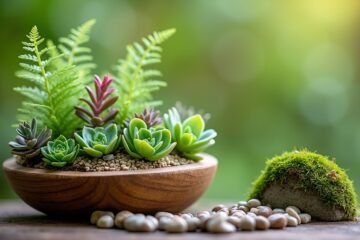
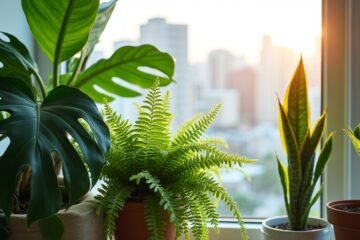
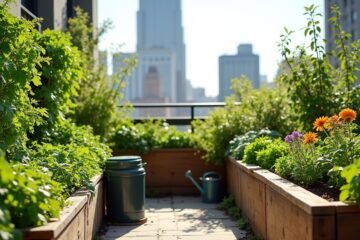
Ready to spice up your kitchen? Starting your indoor herb garden is like throwing a flavor party right at home! Pick easy herbs like basil for your pasta or mint for invigorating iced tea. Grab a fun container—maybe a colorful ceramic pot? Don’t forget to use a well-draining potting mix to keep your herbs happy. With a sunny spot or a grow light guiding their growth, your indoor garden will flourish. Want to discover more tips? Let’s keep going!
Choosing the Right Herbs for Indoor Gardening
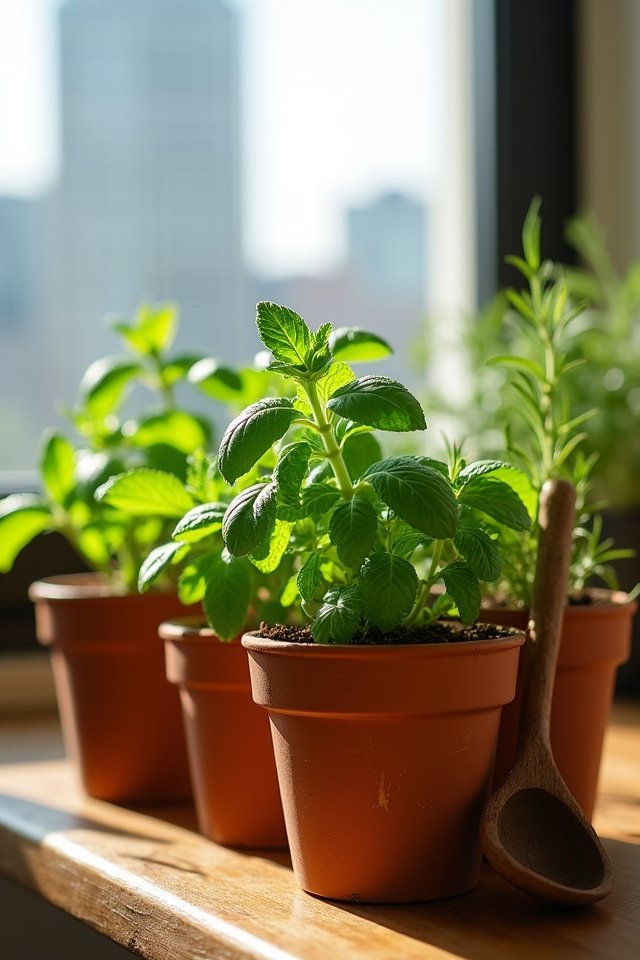
When you’re ready to plunge into the world of indoor gardening, choosing the right herbs can feel like picking the perfect toppings for your favorite pizza—exciting yet slightly intimidating! For beginners, popular culinary herbs like basil and parsley are fantastic choices. They’re not just easy to grow; they’ll elevate your dishes like a sprinkle of magic! Imagine snipping fresh basil for a pasta sauce or adding parsley to your salads, bursting with flavor! You might also consider mint—it’s invigorating and can be a delightful surprise in your iced tea. Think of your herb garden as a little flavor factory, ready to spice up your culinary creations. So, roll up your sleeves, and let’s get growing!
Selecting the Ideal Containers
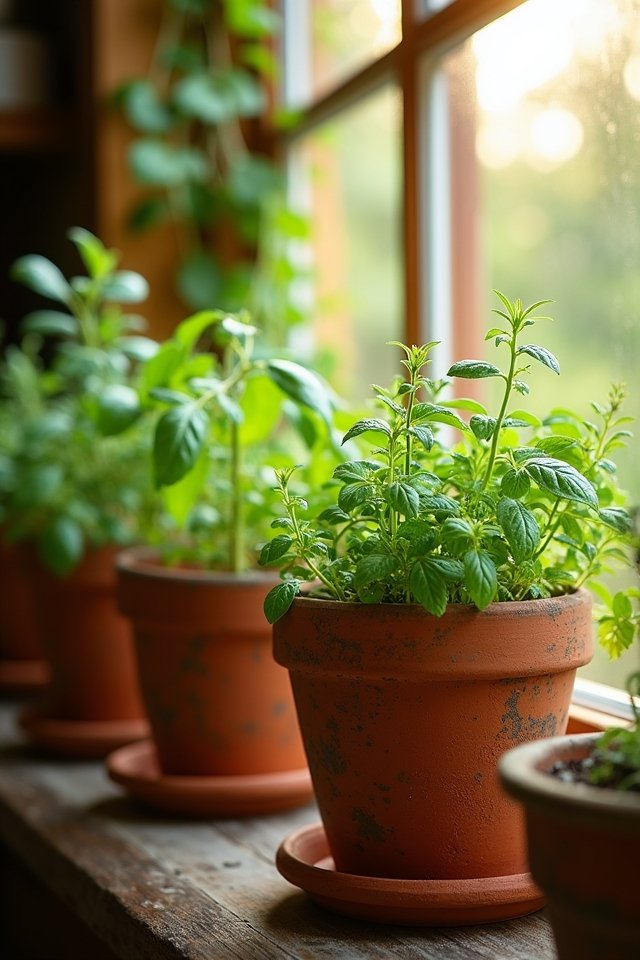
Choosing the right herbs is just the beginning of your indoor gardening adventure—now it’s time to think about where those green beauties will call home! Selecting the ideal containers is vital. Think about container materials—ceramic, plastic, or even repurposed tin cans can add charm. Each material brings its own flair, so choose what speaks to you! When it comes to container sizes, remember: your herbs need room to grow. A small pot might work for a lone basil plant, but for a vibrant mix, opt for larger containers or even window boxes! Don’t forget drainage holes; they’re essential for preventing root rot! So, let your imagination run wild, and create a beautiful, functional space for your indoor herb haven!
Understanding Soil Requirements
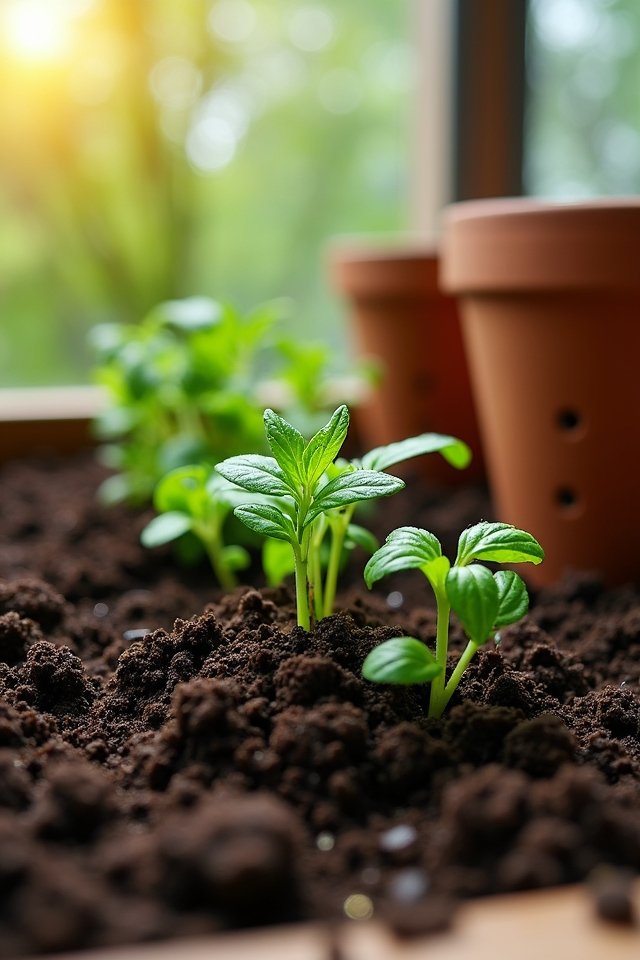
While you might think that any old dirt will do, understanding soil requirements is essential for your indoor herb garden’s success! The right soil types can make all the difference. You’ll want a mix that drains well yet retains moisture, like a potting mix combined with perlite or vermiculite. This combo keeps your herbs happy and hydrated!
Don’t forget about nutrient balance—herbs love a little boost, so consider adding organic fertilizer. Picture your plants sipping on a nutrient-rich smoothie, thriving and bursting with flavor!
Experimenting with different soil mixes can be fun—who knows what unique taste your herbs will develop? So, roll up your sleeves and dig into the world of soil; your culinary masterpieces await!
Proper Lighting for Your Herb Garden
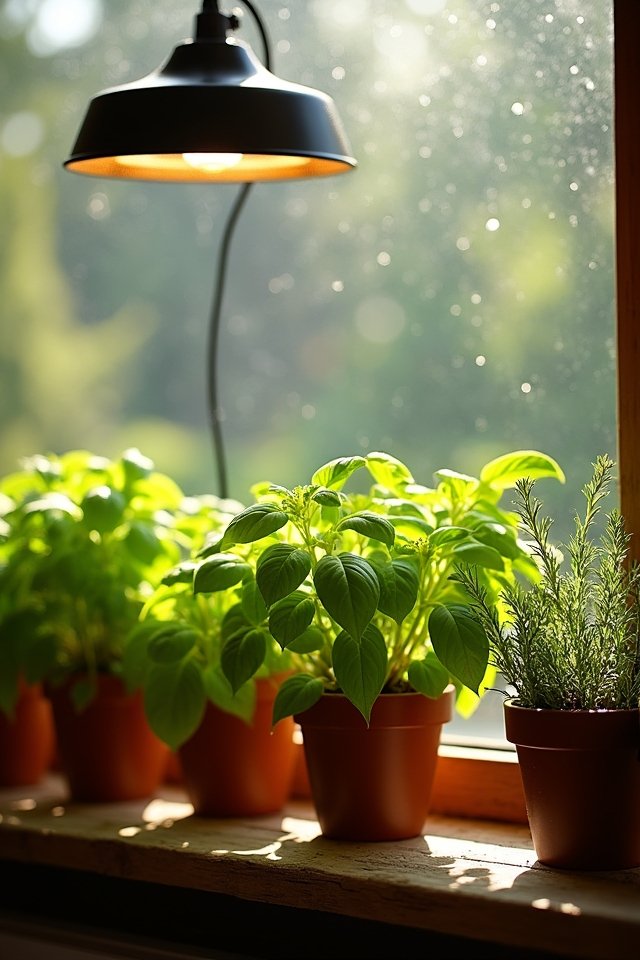
Just imagine your herbs basking in the warm glow of sunlight, their leaves reaching for the light like enthusiastic little green hands! To keep your indoor herb garden thriving, you need to master the art of lighting. Natural light is your best friend, so place your herbs near a sunny window. Six to eight hours of direct sunlight a day will make them pop with flavor! But what if the sun’s shy? No worries! Artificial light can step in. Use full-spectrum grow lights for 12-16 hours daily, mimicking that glorious sunlight. Position those lights just a few inches above your plants; they’ll feel like they’re in a sunny paradise! Brighten your space and watch your herbs flourish! Exciting, right?
Watering Techniques for Indoor Herbs
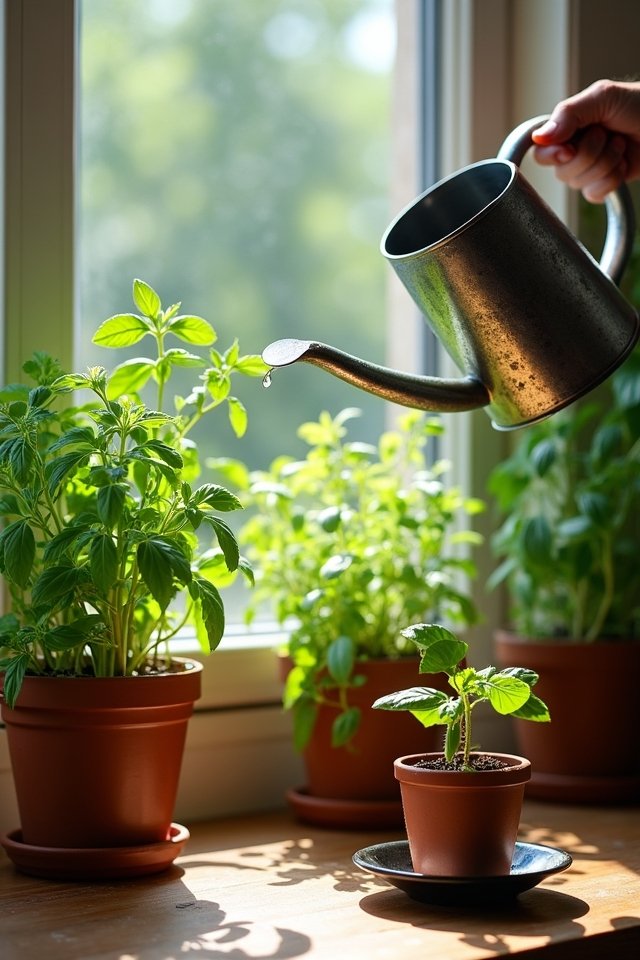
Watering your indoor herbs can feel like a delightful dance! Finding the perfect rhythm is key, and that starts with your watering schedule. Check the moisture levels regularly—stick your finger in the soil, and if it feels dry, it’s time to hydrate! Remember, overwatering is like stepping on a dance partner’s toes; it can lead to root rot. Instead, aim for a gentle sprinkle, allowing the water to soak in deeply but infrequently. Basil loves a good drink, while rosemary prefers a bit of dryness—so tailor your approach! And don’t forget, your herbs are like little green divas, craving attention and care. Treat them right, and they’ll reward you with vibrant flavors and delightful aromas!
Maintaining Temperature and Humidity
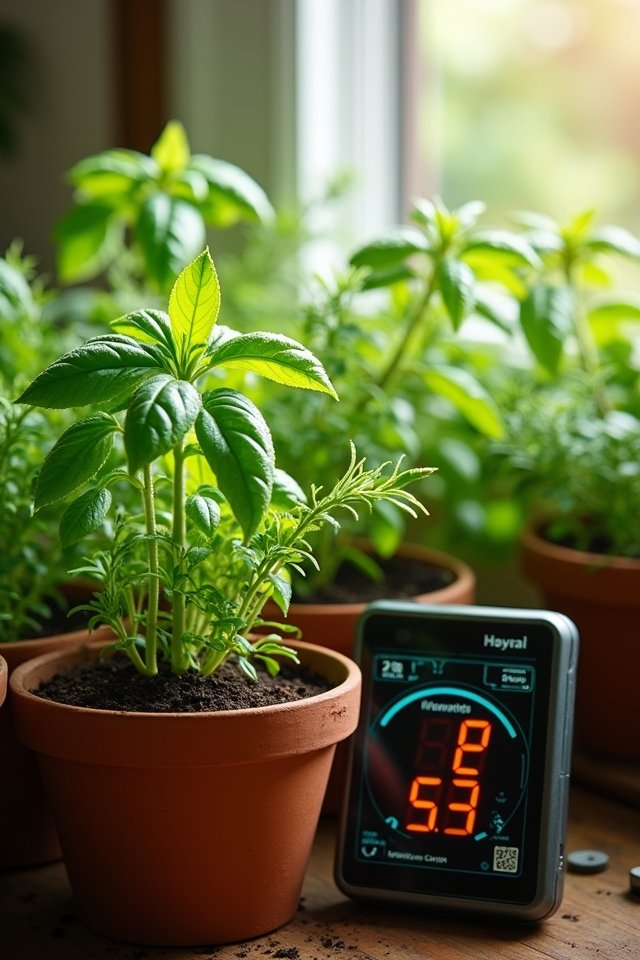
To keep your indoor herb garden thriving, it’s essential to create the perfect atmosphere—like a cozy café for your green friends! Temperature regulation is key; herbs love warmth but can’t stand extreme heat. Aim for a comfortable 65-75°F. Got a drafty window? Move your plants to safety!
Now, let’s talk humidity control. Those leafy wonders crave a bit of moisture, so consider misting them or placing a small humidifier nearby. You want them feeling fresh, not dry as a desert! If you notice crispy leaves, your herbs are sending out a distress signal. So, keep that humidity balanced and your temperatures just right, and your indoor herb garden will flourish like a vibrant, bustling bistro! Happy gardening!
Fertilizing Your Herb Plants
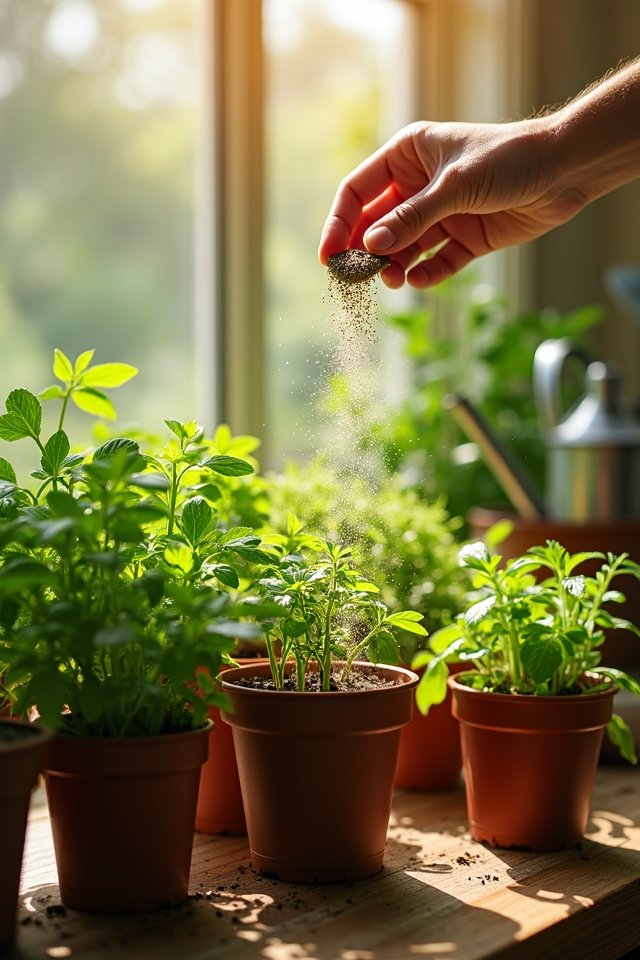
After you’ve set the right temperature and humidity for your indoor herb garden, it’s time to give those plants a little extra love with some fertilizer! Think of organic fertilizers as your herb plants’ secret sauce, packed with essential herb nutrients. Just like you enjoy a hearty meal, your herbs crave nourishment too! A balanced, organic option, like worm castings or fish emulsion, can work wonders. Mix it into the soil every four to six weeks, and watch your basil and thyme thrive! Remember, a little goes a long way! Too much fertilizer can burn those tender roots—yikes! So, sprinkle wisely, and your indoor garden will flourish, filling your home with delightful aromas and fresh flavors that’ll leave you smiling!
Pruning and Harvesting Herbs
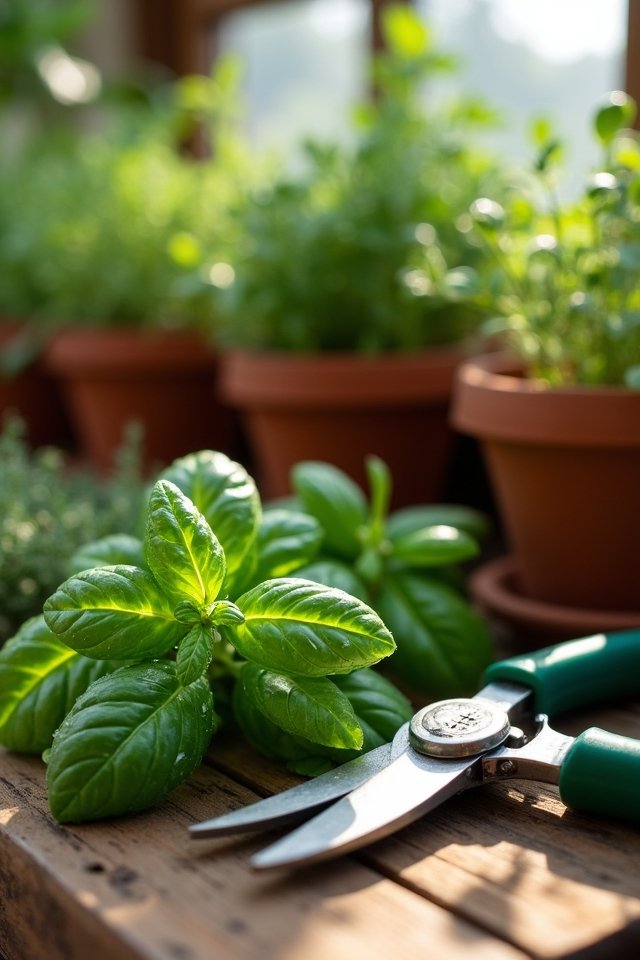
While your herbs are busy growing, don’t forget that pruning and harvesting are just as important! Pruning techniques can help your plants thrive, giving them space to breathe and grow fuller. Snip away those leggy stems and dead leaves—your herbs will thank you!
Here are some quick harvesting tips to keep in mind:
- Use sharp scissors for clean cuts, avoiding bruising.
- Harvest in the morning when oils are most fragrant.
- Take only a third of the plant at once to prevent stress.
- Pinch leaves from the top to encourage bushier growth.
- Always wash your hands before touching those delicious herbs!
With these practices, you’ll create a vibrant indoor garden that flourishes with flavor!
Pest Management in Indoor Gardens
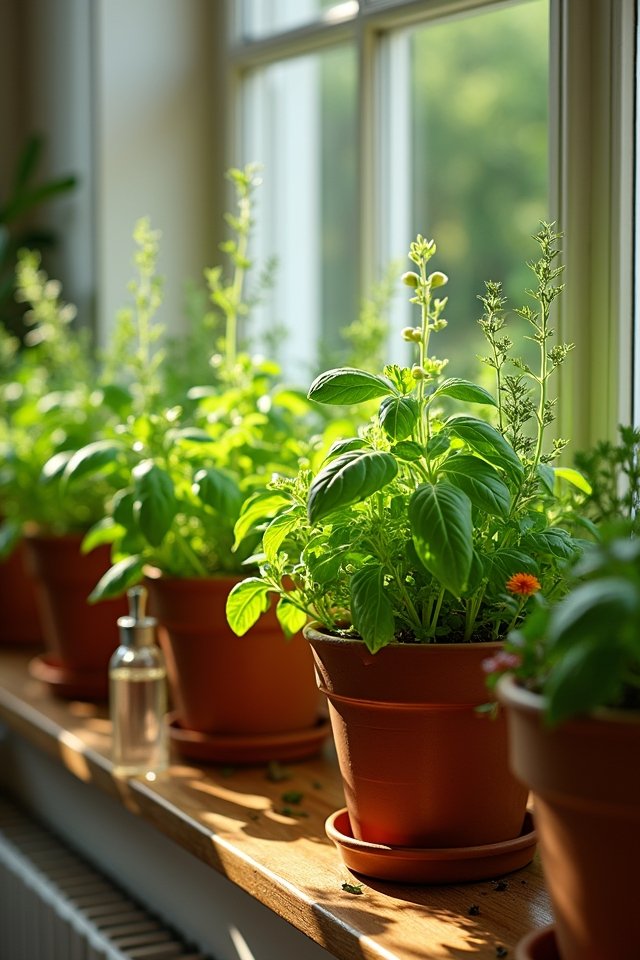
Your indoor herb garden might be flourishing, but don’t forget that it can attract some uninvited guests! Those pesky pests can turn your vibrant oasis into a battlefield. Don’t panic! You’ve got options! Welcome natural predators like ladybugs or lacewings—they’re like tiny guardians for your plants. Or, whip up organic solutions using ingredients you probably have in your pantry. A spray made from water, dish soap, and garlic can be a game changer! Just imagine the aroma of fresh herbs, free from unwanted munchers. Regularly inspect your plants, and don’t hesitate to remove any infested leaves. Remember, a little vigilance goes a long way in keeping your indoor haven healthy and thriving! Let’s keep those herbs happy!
Creative Ways to Use Fresh Herbs
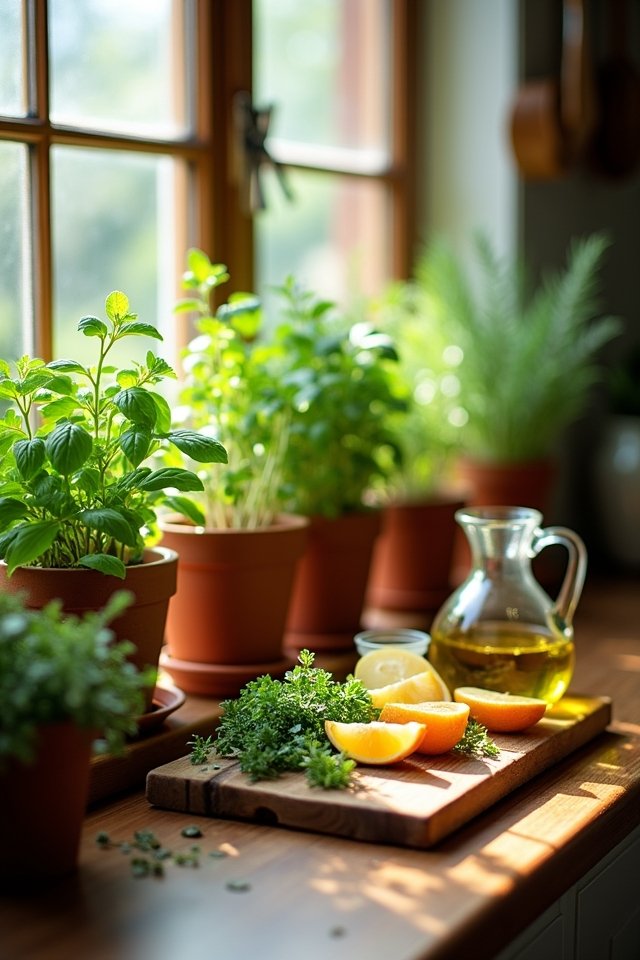
Imagine stepping into your kitchen and being greeted by the vibrant scents of fresh basil, mint, and rosemary! You’ve got the perfect ingredients to spark culinary creativity. Why not immerse yourself in some herb-infused recipes? Picture a zesty basil pesto drizzled over pasta or a invigorating mint salsa that dances on your taste buds!
Here are some creative uses for your fresh herbs:
- Basil-infused olive oil for dipping bread
- Minted lemonade that cools you down on a sunny day
- Rosemary roasted potatoes for a savory twist
- Thyme in your scrambled eggs for breakfast bliss
- Herbal tea blends that warm your soul and soothe your senses
With these ideas, you’ll transform every meal into a delightful experience!
Troubleshooting Common Indoor Herb Issues
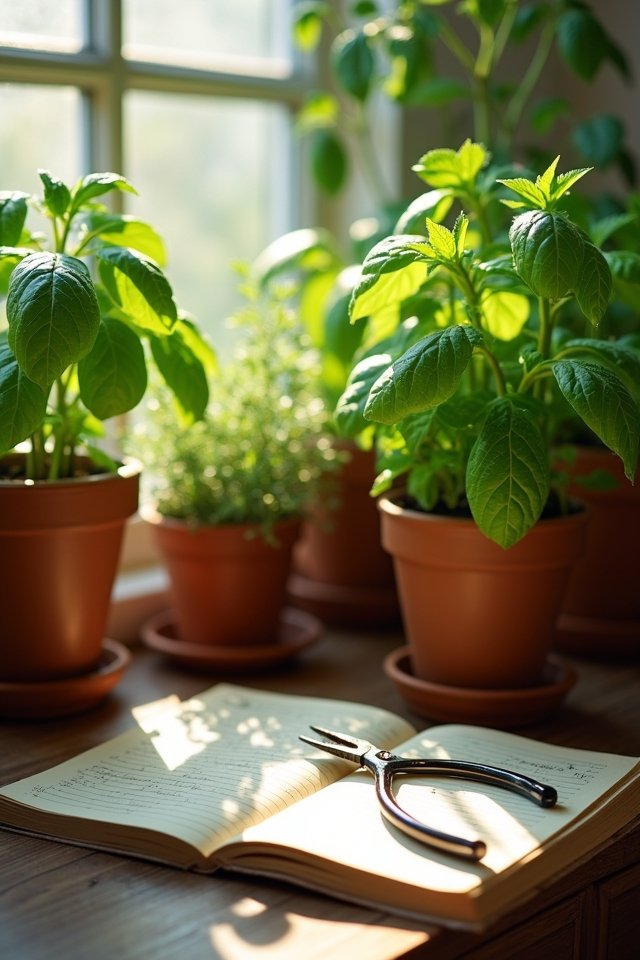
Fresh herbs can elevate your cooking to new heights, but what happens when your indoor garden doesn’t thrive as expected? Don’t worry! You’re not alone in this aromatic adventure. First, check for herb diseases like powdery mildew, which can spread faster than gossip at a dinner party! If your leaves are yellowing, it might be environmental stress—too much or too little water can turn your basil into a sad, wilted mess. Make sure your herbs get ample sunlight, but not too much direct heat. Adjusting your watering schedule can be like tuning a fine instrument, bringing harmony back to your garden. With a little patience and observation, you’ll have a thriving indoor oasis that makes your meals sing!
Frequently Asked Questions
How Long Does It Take for Herbs to Grow Indoors?
Growing herbs indoors can be a delightful journey! Depending on the herb and your growing conditions, you might see sprouts in just a week or two. For instance, basil typically takes 7-14 days, while rosemary can take up to 3 weeks! As your herbs mature, you’ll relish the fresh scents wafting through your space. Isn’t that just dreamy? With a little patience and care, you’ll have a mini herb haven in no time!
Can I Start an Indoor Herb Garden in Winter?
Absolutely, you can start an indoor herb garden in winter! Sure, winter presents its challenges, like lower light and cooler temperatures, but don’t let that stop you! With the right setup—think bright LED grow lights and a cozy windowsill—you can create a thriving mini-garden. Imagine snipping fresh basil or thyme for dinner while snowflakes dance outside! So, grab those pots and seeds, and let your indoor gardening adventure begin!
What Herbs Are Easiest for Beginners to Grow?
Thinking about starting your herb garden? You’ll love how easy it is! Basil types like Genovese or Thai are perfect for beginners—just imagine their aromatic leaves enhancing your dishes! Use herb containers that fit your space, and you’ll feel like a kitchen wizard! Don’t forget chives and mint, both of which sprout like enthusiastic little friends. With a sprinkle of patience, you’ll soon have a flavorful garden right at your fingertips!
How Often Should I Rotate My Herb Pots?
You should rotate your herb pots every week to guarantee even sunlight exposure. Think of your herbs like sunbathers—too much sun on one side leads to a lopsided tan! Move them around so they soak up that glorious light. If your pots are by a window, give them a gentle spin. It’s a simple twist for happier, healthier herbs! Plus, you’ll get to admire their lush green beauty from every angle!
Is It Safe to Use Herbs Grown Indoors in Cooking?
Absolutely, it’s safe to use herbs grown indoors in cooking! When you practice herb safety while indoor gardening, you’re not just growing plants; you’re cultivating flavor explosions! Just wash your herbs gently before tossing them into your dishes. Imagine fresh basil adding a burst of aroma to your pasta! Plus, knowing exactly where your herbs come from makes every bite feel like a culinary hug. So, chop away and enjoy your homegrown goodness!