Starting your indoor herb garden is easier than pie! Grab some fresh basil that smells like summer and zesty cilantro to elevate your tacos! Just find stylish pots with drainage holes, and a nutrient-rich potting mix to get going. Don’t forget about light—herbs love a sunny spot or grow lights! Water gently and check the soil for dryness, and before you know it, you’ll have a fragrant bounty! Want tips on harvesting your herbs? Keep going!
Choosing the Right Herbs for Your Indoor Garden
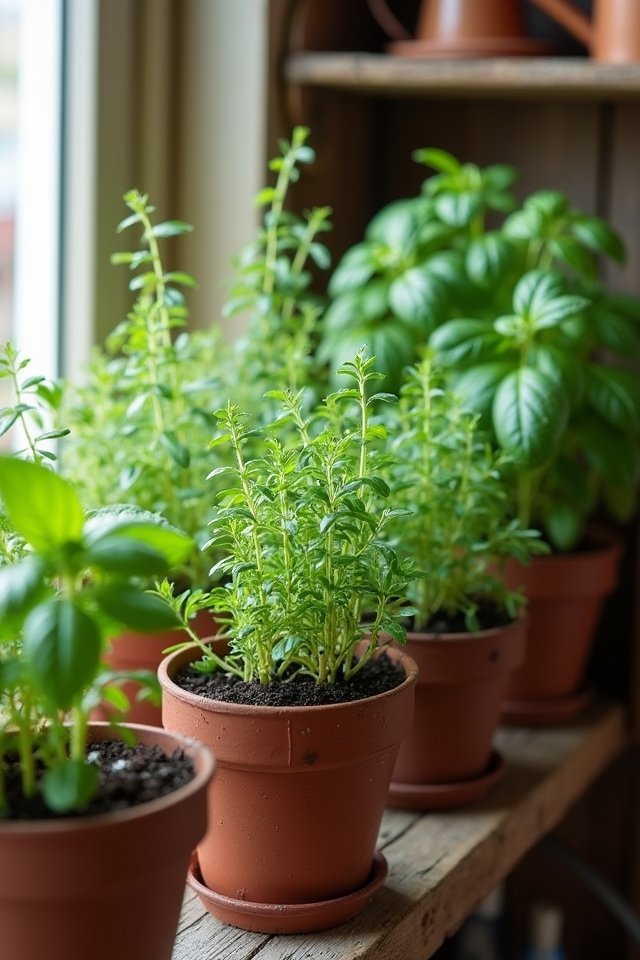
Have you ever wondered which herbs will thrive in your cozy indoor garden? Your herb selection is essential to creating delightful flavor profiles that elevate every dish! Imagine snipping fresh basil for your pasta, its sweet aroma like a warm hug from the garden. Or, picture bright, zesty cilantro lifting your tacos to new heights!
Consider herbs like thyme and oregano, which add earthy notes, perfect for savory meals. If you’re feeling adventurous, try growing lemon balm for an invigorating twist in teas. Each herb brings its own personality, just like your favorite friends! So, pick herbs that excite your taste buds and complement your cooking style. With the right choices, your indoor garden will be your culinary playground!
Essential Supplies for Growing Herbs Indoors
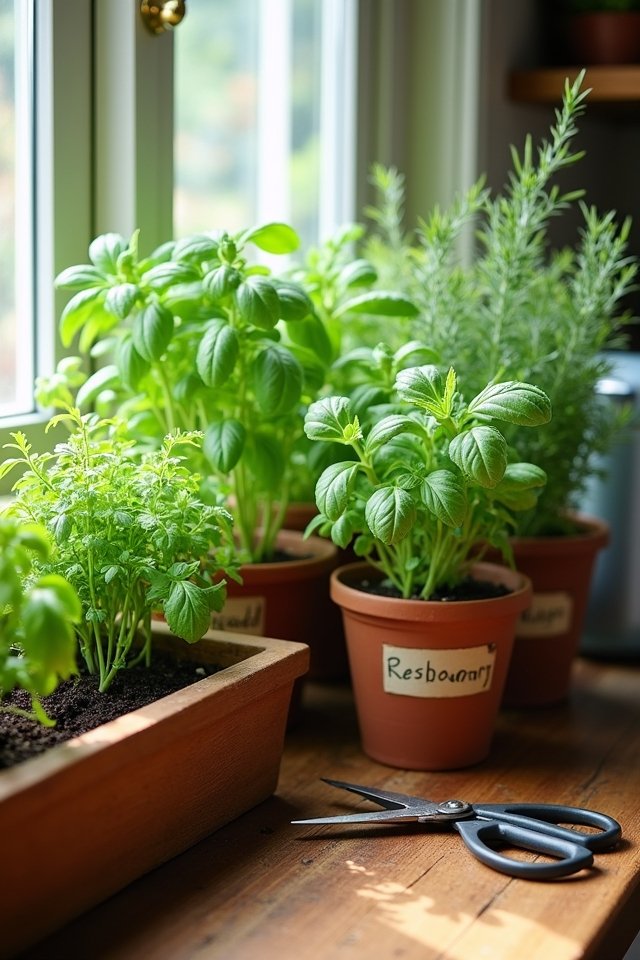
Now that you’ve selected the perfect herbs for your indoor garden, it’s time to gather your growing gear! First up, snag some stylish herb pots that fit your kitchen vibe. Choose pots with drainage holes to keep roots happy and thriving. You’ll also need potting soil that’s rich in nutrients—think of it as a cozy blanket for your herbs!
Don’t forget a thermometer to monitor indoor temperature; most herbs love a warm 65-75°F. Consider investing in a humidity tray to maintain moisture, especially during dry seasons. And if you’re feeling fancy, a moisture meter can save you from underwatering disasters! With these essentials, you’ll be on your way to a flourishing indoor herb paradise!
Optimal Lighting Conditions for Indoor Herbs
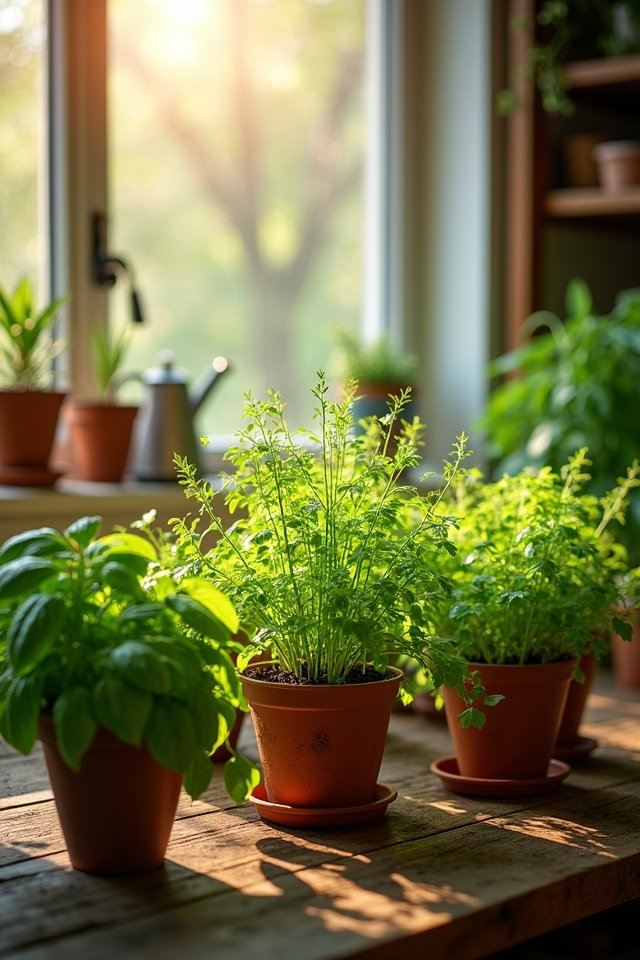
When it comes to growing your indoor herbs, lighting is like a warm hug that helps them thrive! You need at least six hours of bright, natural light each day to keep those little green wonders happy. If your windows aren’t cutting it, don’t fret! Grow lights are your secret weapon. They offer the perfect spectrum of light—like a mini sun for your herbs! Position them just a few inches above your plants, and watch them stretch and dance towards the glow. Rotate your herbs occasionally, so they don’t play favorites with one side. Remember, herbs like basil and cilantro crave that light boost. It’s like giving them a spa day—who wouldn’t love that? Let your herbs bask in their radiant paradise!
Soil and Potting Considerations
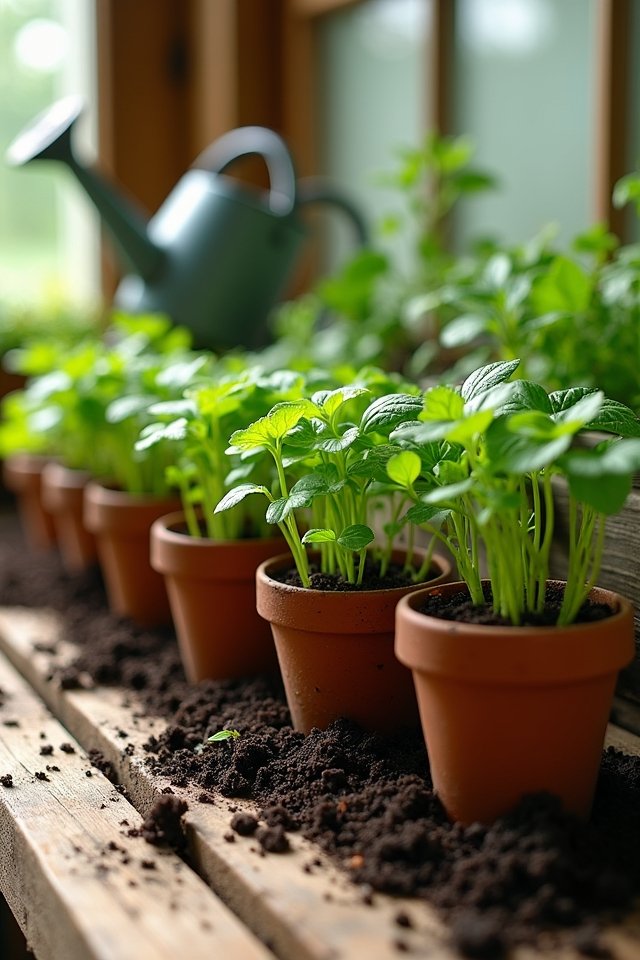
After ensuring your herbs have the perfect lighting, it’s time to think about where they’ll call home! Choosing the right soil types and potting techniques makes all the difference. You want your herbs to thrive, not just survive.
- Use a well-draining mix, like potting soil blended with perlite or vermiculite, to prevent soggy roots.
- Opt for pots with drainage holes; nobody likes standing water, right?
- Consider self-watering pots for those moments when life gets busy—your herbs will thank you!
Watering and Maintenance Tips
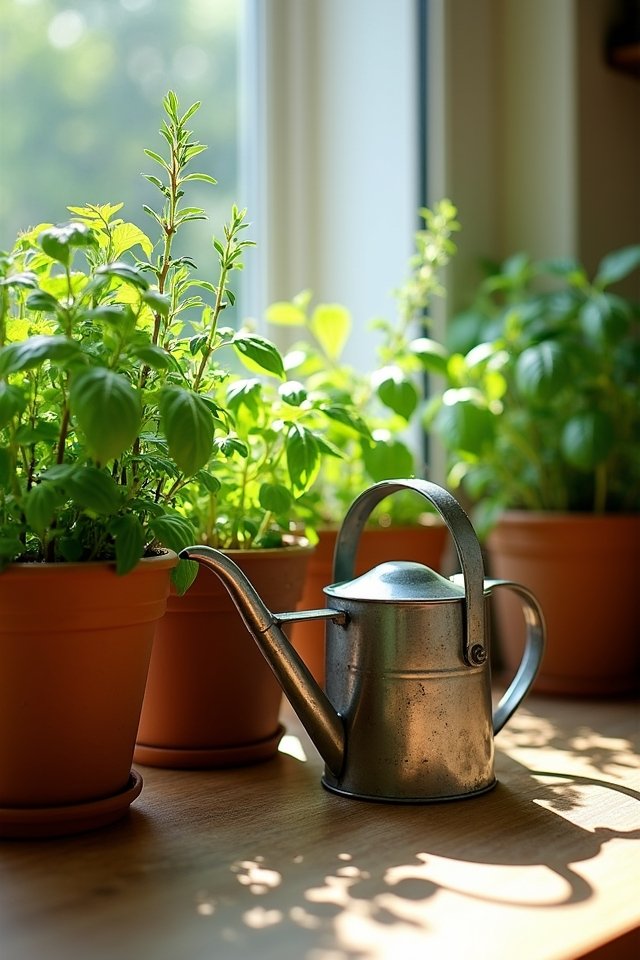
While it might seem simple, watering your herbs can feel like a delicate dance! You don’t want to drown them, but you also can’t let them parched. Use effective drainage techniques like pots with holes—think of them as tiny lifeboats for your plants! Aim for a nutrient balance by mixing water-soluble fertilizer into your routine. You’ll want to give each herb a gentle drink, soaking the soil until moisture drips from the bottom. Check the top inch of soil; if it’s dry, it’s time to water. Remember, each herb has its own thirst—basil loves it damp, while rosemary prefers a bit of dryness. So, dance your way through watering, and watch your indoor garden flourish!
Harvesting and Using Your Homegrown Herbs
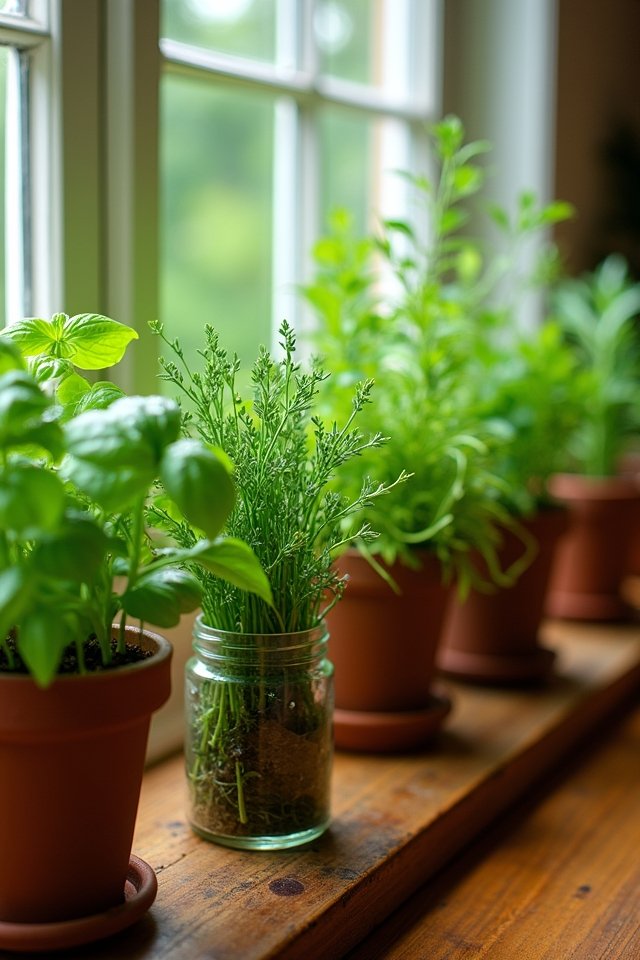
As you step into the delightful world of harvesting your homegrown herbs, you’re in for a treat! Nothing beats the aroma of fresh basil or mint wafting through your kitchen. To make the most of your harvest, use these innovative harvest techniques:
- Snip leaves early in the morning for peak flavor.
- Trim stems just above a leaf node to encourage growth.
- Gather herbs throughout the season to keep your plants thriving!
Once harvested, explore herb preservation methods like drying, freezing, or making infused oils. Imagine a cozy winter evening, savoring the taste of your summer harvest! By following these steps, you’ll turn your fresh herbs into culinary delights, keeping your indoor garden vibrant and inspiring! Are you ready to elevate your cooking?
Frequently Asked Questions
Can I Grow Herbs Indoors Year-Round?
Absolutely, you can grow herbs indoors year-round! Did you know that 70% of herb enthusiasts enjoy fresh flavors all year? When selecting herbs, think about basil, mint, or rosemary. They thrive with proper indoor lighting—like LED grow lights. Picture lush green leaves and the sweet scent wafting through your kitchen! It’s like having a mini garden paradise! Just keep an eye on watering and enjoy your fresh, homegrown herbs anytime!
What Pests Should I Watch for With Indoor Herbs?
When growing indoor herbs, watch out for pesky pests like aphids and spider mites! They’re like uninvited guests at your garden party. You can tackle aphid control by introducing ladybugs, those charming little predators! For spider mites, increase humidity and give your herbs a gentle spray. Keeping a close eye on your plants is key! After all, healthy herbs not only taste great but also bring a lively touch to your space!
How Do I Prevent Indoor Herb Plants From Wilting?
Keeping your indoor herbs perky is like giving them a spa day! First, control humidity—aim for that sweet spot around 40-60%. Use a humidifier or a pebble tray to keep moisture in the air. Next, pay attention to light requirements; most herbs crave bright, indirect sunlight for about 6 hours daily. Rotate your pots for even sun exposure! If they start wilting, don’t panic—just adjust those factors, and watch your plants thrive!
Are There Any Herbs That Are Toxic to Pets?
Absolutely, some herbs can be toxic to pets! Keep your furry friends safe by avoiding plants like rosemary and sage, which can cause tummy troubles. Think of them as prickly hedgehogs—cute but risky! Always check for herb safety and make pet precautions a priority. If you’re ever in doubt, a quick internet search can save you from unwanted vet visits. Your pets will thank you for it! Keep those tails wagging!
Can I Use Regular Garden Soil for Indoor Herbs?
Sure, you can use regular garden soil for indoor herbs, but it’s not always the best bet! Think of indoor soil types like a cozy blanket for your plants. Herb potting mix is specially crafted for ideal growth, providing drainage and nutrients. Mixing in some perlite or coconut coir can boost your soil’s performance! So, why not treat your herbs to the best? They’ll reward you with vibrant flavors and fresh aromas!