Want your urban garden to shine? Start by understanding your plants’ sunlight needs—sunflowers crave full sun, while ferns love cozy shade! Observe how sunlight dances through your space, tracking it like a good detective. Plant taller specimens on the north side, and consider using vertical gardening techniques to save space. Don’t forget those reflective surfaces to amplify light in shady spots! Excited to learn more about unlocking your garden’s potential? Keep exploring!
Understanding Sunlight Requirements for Different Plants
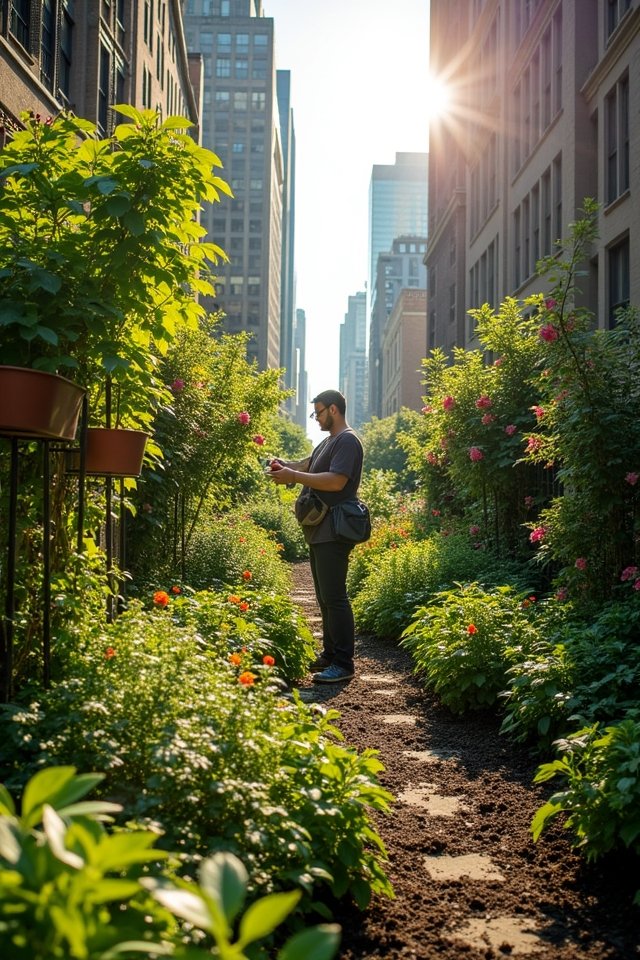
Have you ever wondered why your sunflowers seem to thrive while your ferns droop like sad little gremlins? It all comes down to sunlight requirements! Sunflowers love basking in full sun, soaking up rays like enthusiastic beachgoers, so you’ll want to plant them in a sunny spot. On the other hand, ferns prefer a shadier hangout—think of them as the introverts of the plant world, thriving under the gentle filter of dappled light. Some stunning options, like hostas or astilbes, also crave that cozy shade. It’s essential to know what each plant loves to keep them happy and vibrant! By understanding these sunlight preferences, you can create a harmonious urban oasis that bursts with life and color!
Assessing Your Space for Optimal Sunlight Exposure
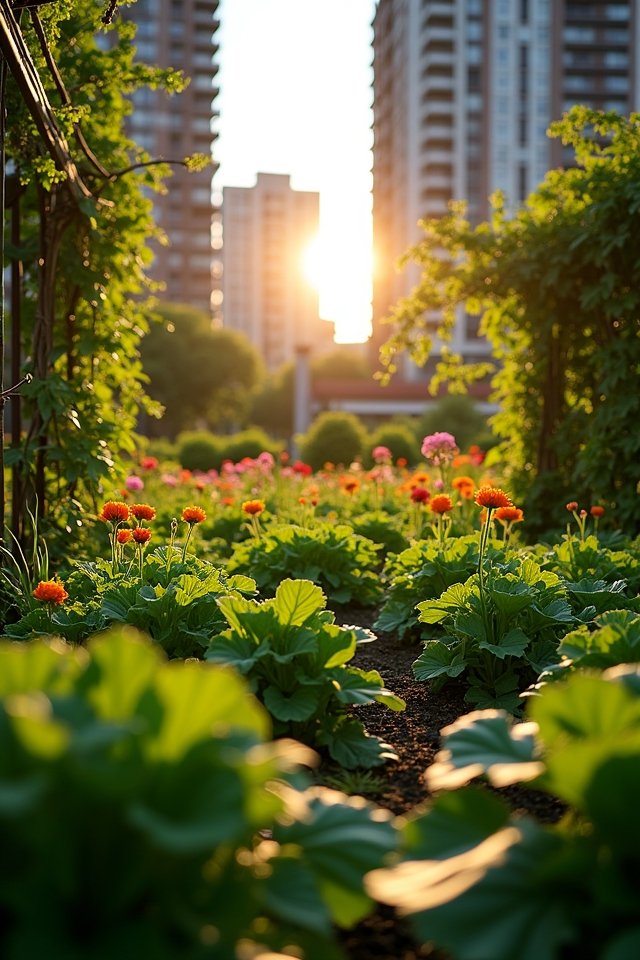
Ready to turn your outdoor space into a thriving urban garden? You’ve gotta assess your sunlight exposure first! Take a stroll during sunny days and observe where the light dances through your space. Think of it as a game of hide and seek! Is there a towering tree blocking precious rays, or perhaps a charming balcony that gets sun from dawn till dusk? Keep a sun diary for a week, jotting down spots that bask in sunlight and those that linger in shadows. Remember, your plants need at least 6 hours of direct sunlight. By uncovering these hidden gems, you’ll create a vibrant oasis, where veggies, herbs, and flowers flourish like never before! Isn’t that the dream?
Planning Your Garden Layout for Maximum Light
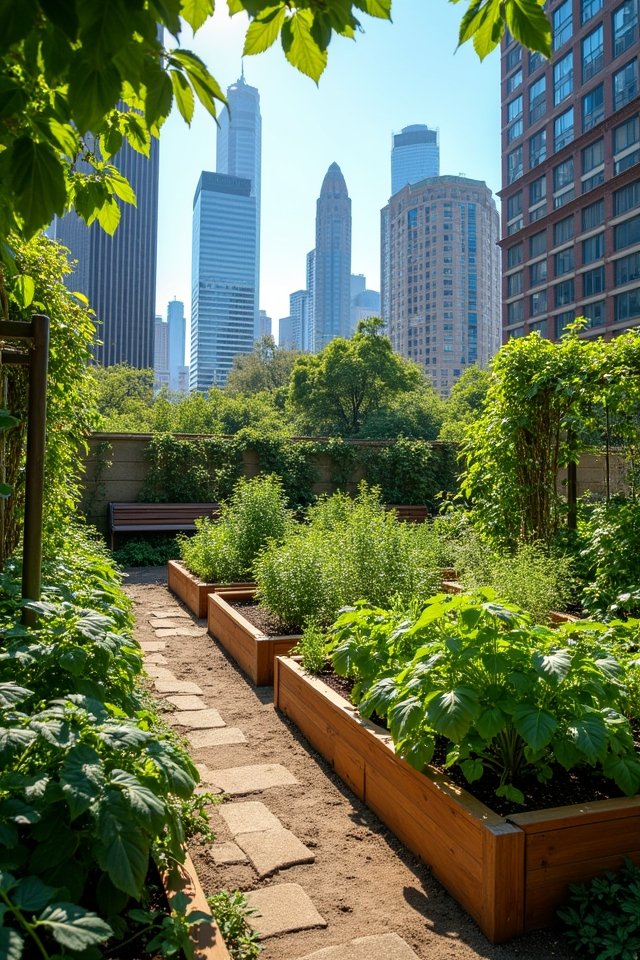
When you think about it, planning your garden layout is like crafting a masterpiece—you want to make sure every section gets its share of golden sunlight! Imagine excitedly watching your plants flourish because they’re perfectly positioned. To achieve that, focus on these essential tips:
- Layer Your Plants: Place taller plants on the north side to block shading on shorter ones.
- Create Pathways: Design pathways that allow you to navigate without obstructing honeyed sunlight from reaching your greens.
- Rotate Crops: Switch plant placements each season; it makes for a delightful surprise and optimizes light exposure!
Utilizing Vertical Gardening Techniques
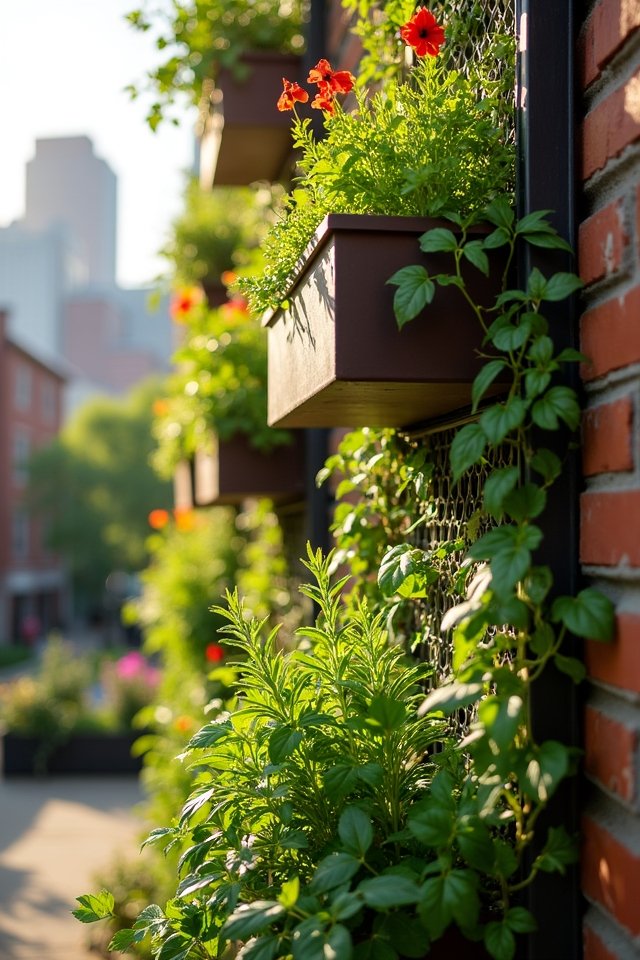
How can you transform even the tiniest of spaces into a lush greenery haven? Vertical gardening is your answer! Picture rows of vibrant herbs, cascading flowers, and fresh veggies climbing skyward, defying the limits of your urban landscape. You can create a stunning wall of greenery using trellises, pocket planters, or even repurposed pallets. How about a dazzling cucumber vine draping down like a green waterfall?
Just imagine harvesting fresh mint right from your living room wall! You’ll maximize your sunlight while giving your plants room to breathe. Plus, vertical gardens can add a playful touch, turning bland walls into living art! So grab those climbing plants, and let’s make your walls work harder—because who said walls can’t bloom?
Choosing the Right Containers for Sunlight Management
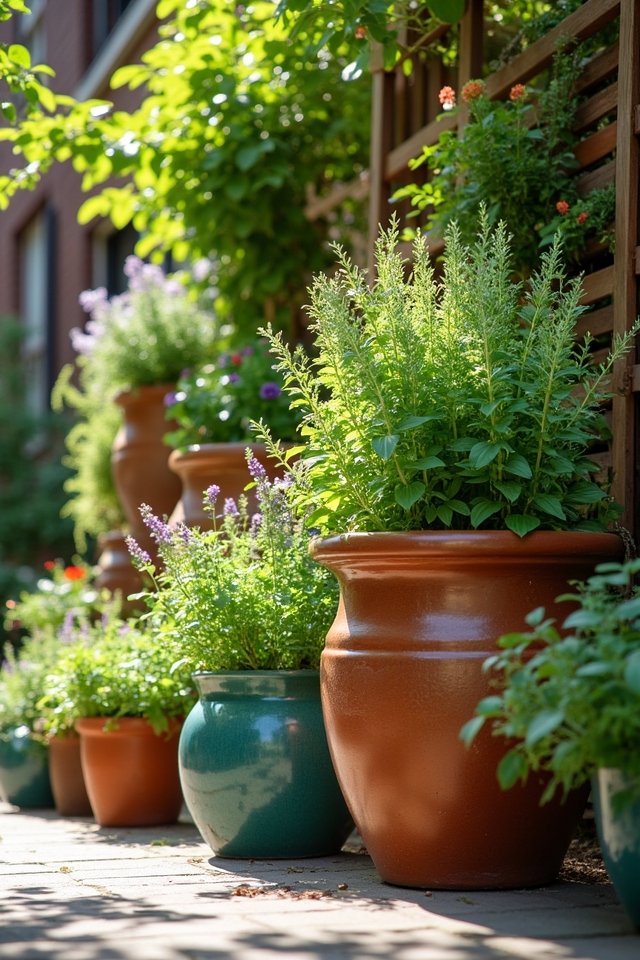
To guarantee your plants bask in all their leafy glory, choosing the right containers is essential, especially when it comes to sunlight management! Think of your containers as cozy homes for your plants, maximizing their sun exposure. Here are three crucial tips to contemplate:
- Material Matters: Go for light-colored or reflective containers that repel heat. They’ll keep your plants cool and happy!
- Size Counts: Bigger pots allow for greater root growth and moisture retention. Think of a mansion versus a tiny shoebox!
- Drainage Is Key: Ascertain your containers have drainage holes to prevent waterlogged roots—a surefire way to make your plants miserable!
Choose wisely, and watch your urban garden flourish in the warm embrace of the sun! 🌞
Incorporating Reflective Surfaces to Enhance Light
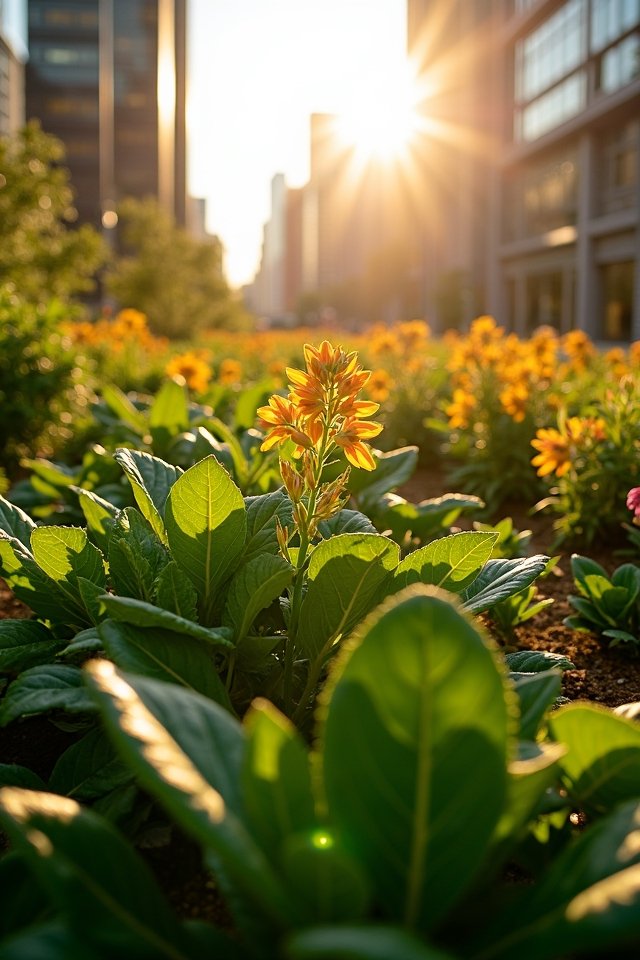
While it might seem like sunlight is the only thing your plants crave, incorporating reflective surfaces can work wonders in boosting their light exposure! Think of mirrors, shiny panels, or even painted surfaces that catch and bounce light around your garden. By strategically placing these reflective gems, you can create a dazzling sunbath for your plants, maximizing photosynthesis like never before!
For example, a simple mylar sheet behind a row of veggies can dramatically enhance light distribution. Or, how about repurposing an old aluminum foil in a creative way? Your plants won’t just survive; they’ll thrive! With a little innovation, you can turn your urban oasis into a radiant paradise, ensuring each leaf gets the warm hug of sunlight it deserves!
Timing Your Planting for Seasonal Sunlight Variations
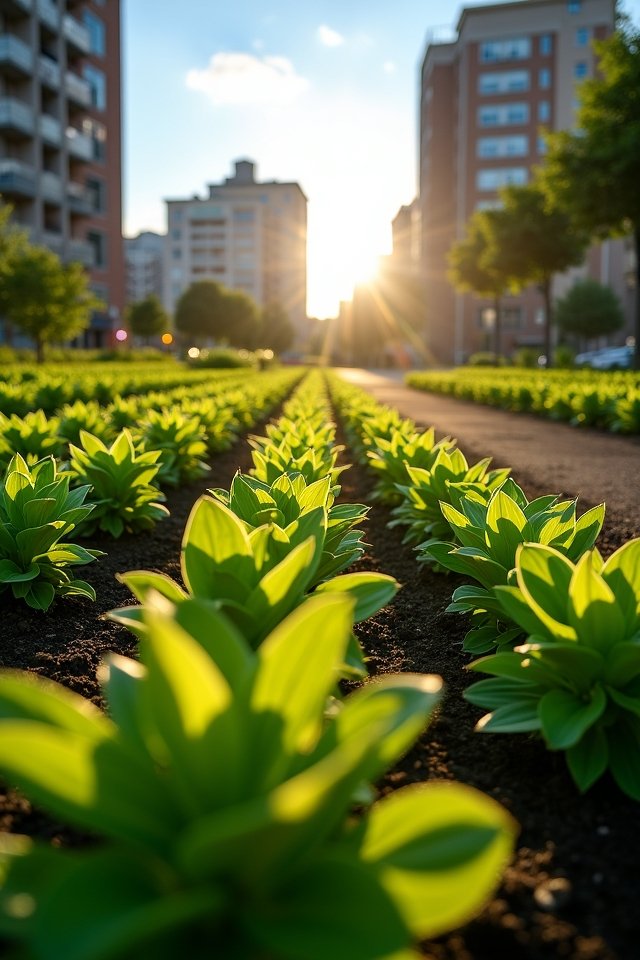
As you bask in the brilliance of your reflective surfaces, don’t forget that timing is everything when it comes to growing your urban garden! You want to make the most of those fleeting seasonal rays, right? Here’s how to nail your planting schedule:
- Spring Start: Plant leafy greens early to catch those gentle rays, giving them a head start!
- Summer Sizzle: As temperatures peak, opt for heat-loving plants like tomatoes or peppers; they’re sunshine’s best friends!
- Fall Finish: Wrap up with root veggies that thrive as daylight wanes, like carrots and beets.
With the right timing, your garden will bask in abundant harvests! So, welcome each season’s dance and let your garden glow with vibrant life! 🌻
Managing Shadows From Structures and Neighbors
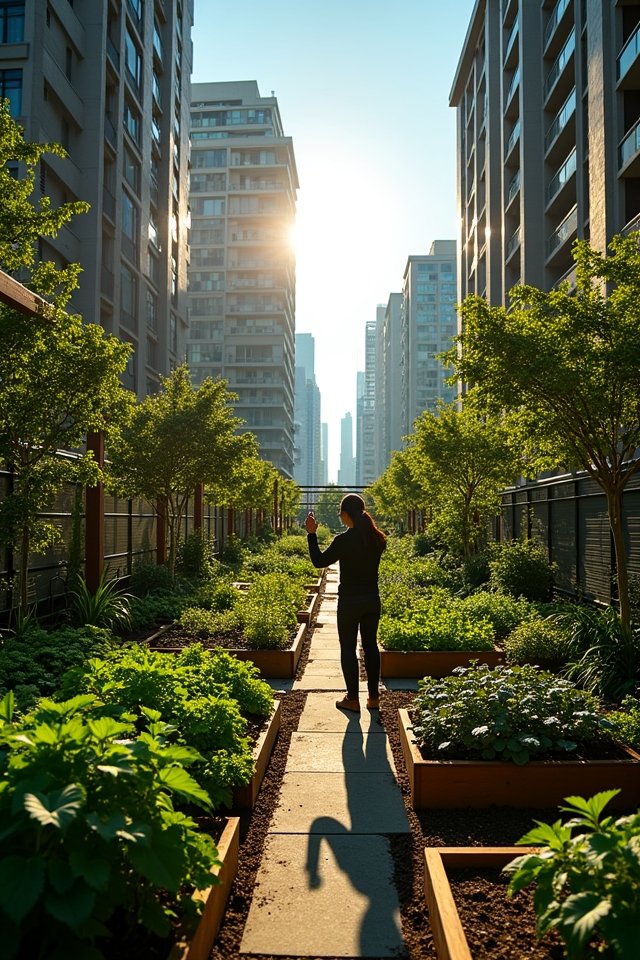
Even though you’re excited to watch your urban garden flourish, managing shadows from nearby structures and neighbors can feel like a game of hide and seek! To guarantee your garden gets enough sunlight, look around and identify those sneaky shadows—buildings, tall fences, or even that gigantic oak tree next door. Consider rearranging your layout; why not position shorter plants where shadows linger and reserve sunny spots for your tomatoes? You might also try using reflective materials like mirrors or aluminum foil to bounce light onto shaded areas. Planting vertically can save precious light, too! With a bit of creativity, you’ll transform those pesky shadows into opportunities for growth. After all, every cloud—err, shadow—has a silver lining!
Frequently Asked Questions
How Do I Improve Sunlight Exposure With Limited Space?
You’re facing the sunlight puzzle in your cozy space! Don’t worry, you can make it work. First, try vertical gardening; it’s like building a leafy skyscraper! Use reflective materials, like mirrors or white walls, to bounce sunlight around—think of it as sun-sharing magic! Place taller plants at the back and smaller ones in front, so everyone gets their fair share of golden rays. Happy gardening, and may your plants thrive like a summer picnic!
Which Plants Thrive in Partial Sunlight Conditions?
Imagine walking into a garden bursting with vibrant greens and cozy shadows. Plants like ferns and hostas thrive in partial sunlight, creating a stunning display in your urban oasis! They love dappled light and can transform a shady corner into a lush retreat. Think of them as your garden’s cool friends, always ready to party in lower light. So, why not invite them over and let them work their leafy magic? Your space will glow!
What Tools Help Measure Sunlight Intensity in My Garden?
To measure sunlight intensity in your garden, you can use a light meter! It’s like a sun-spotting buddy that tells you just how much light your plants are basking in. Smart phone apps, like Sun Surveyor, can guide you, too. Need something classic? A simple ruler can help track shadows throughout the day! Just think of it as your secret weapon against sparse sunlight. Your garden deserves to soak up the golden glow!
Can Sunlight Optimization Reduce Pest Problems in Urban Gardens?
Imagine your garden bursting with energy, not a pest in sight! By optimizing sunlight, you create a thriving ecosystem. Healthy plants are like well-fed warriors; they naturally repel pests! Think about it—when your veggies soak up that golden sun, they grow robust and resilient, making them less attractive to those pesky intruders. It’s like giving them a fortress of light! So, shine on! Your garden deserves all the brilliance it can get!
How Do Weather Patterns Affect Sunlight Availability Throughout the Year?
Weather patterns really shake things up for sunlight availability! Imagine this: in winter, clouds blanket the sky like a cozy quilt, blocking that glorious sun. Spring’s sunny surprise often brings longer days, while summer’s hotter rays are a gardener’s dream! But don’t forget, fall sneaks in with shorter daylight. You can track these changes like a weather detective, adjusting your gardening strategy to keep your plants as happy as a cat in the sun!