Indoor gardening can feel like a delightful escape, but watch out for those sneaky mistakes! Overwatering is like giving your plants a soggy hug—too much can drown their roots. Picking the wrong plants? That’s like bringing a cat to a dog show! Don’t forget about light; south-facing windows are a sunbather’s paradise for succulents! And pests? They’re the unwanted guests nobody wants at the party. Stick around, and you’ll discover more secrets to thriving greenery!
Overwatering Plants
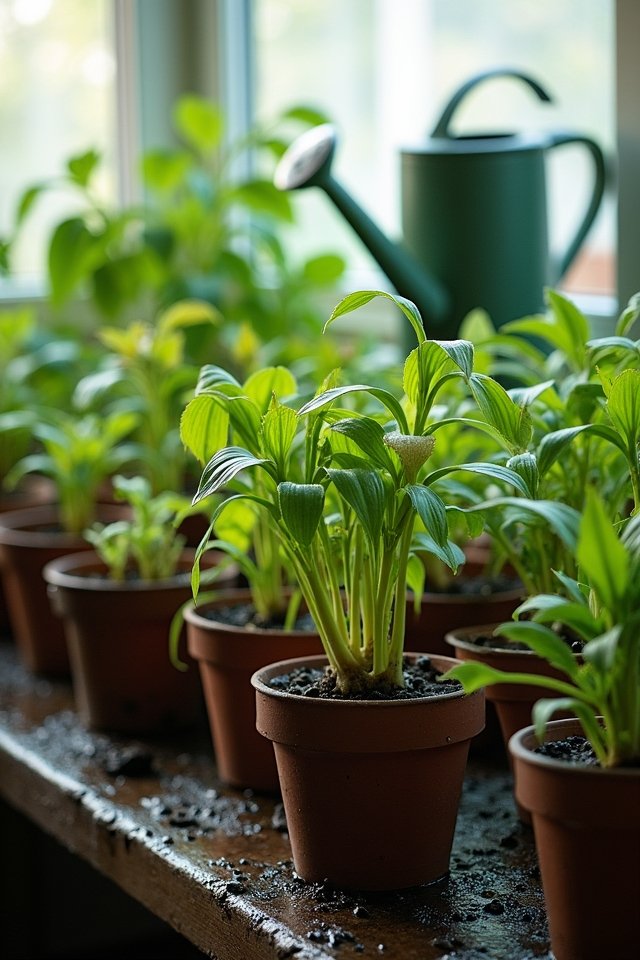
When you’re nurturing your indoor plants, it might surprise you to learn that too much water can be just as harmful as not enough! Overwatering can suffocate roots, making them gasp for air, much like you would after a sprint. It’s crucial to guarantee proper soil drainage; stagnant water can lead to root rot, turning your green thumb into a sad stump!
Instead, aim for a balance. Use pots with drainage holes and well-aerated soil that retains just enough moisture. Think of your plants as little divas—they love a drink but don’t want to swim! Keep an eye on the topsoil; if it’s consistently wet, your plants might be plotting a rebellion! So, let’s keep those roots happy and thriving!
Choosing the Wrong Plants
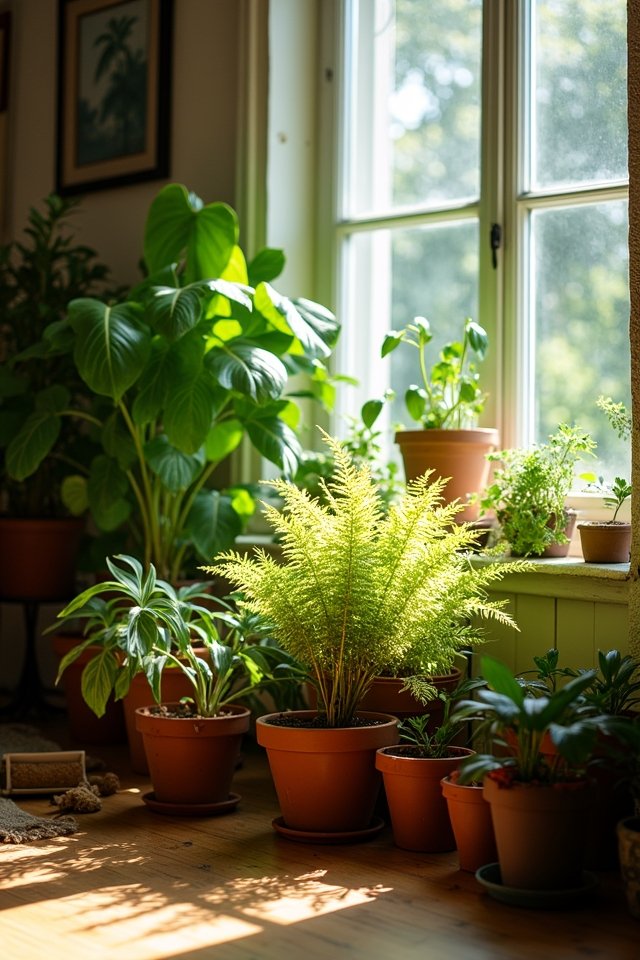
Choosing the right plants for your indoor garden can feel like dating—if you pick the wrong one, it might just leave you heartbroken! You wouldn’t want a high-maintenance partner, right? The same goes for plants! Think about plant compatibility: some thrive together, while others are more like oil and water. Before diving in, check out beginner resources that match your lifestyle and space. For instance, if you love succulents, don’t add a fern to the mix, unless you’re ready for drama! Imagine a cactus and a tropical plant arguing over humidity—yikes! By choosing plants that get along, you’ll create a harmonious oasis that delights your senses and nurtures your spirit! Happy planting!
Ignoring Light Requirements
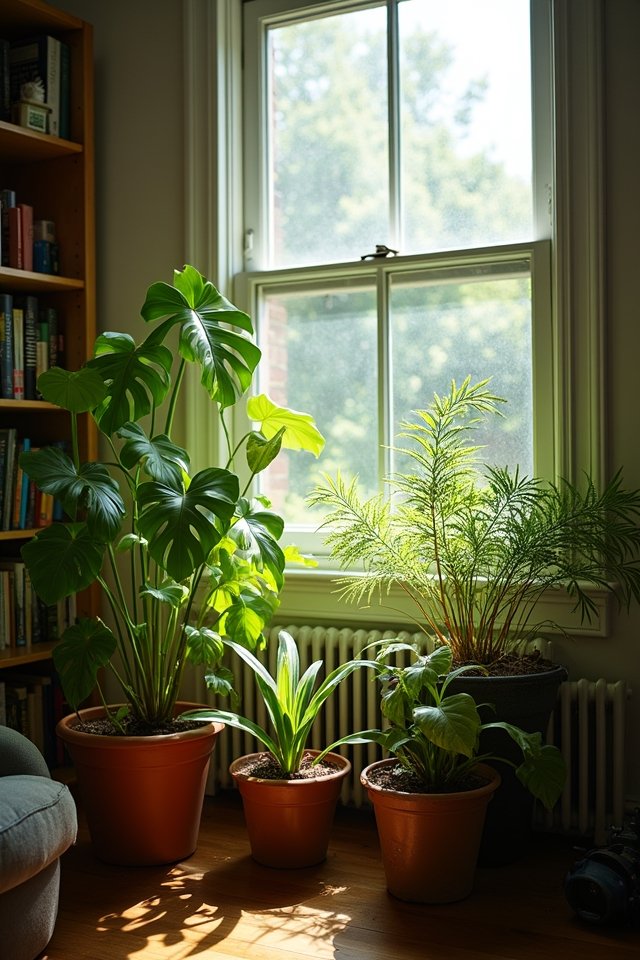
Even if you think you’ve got the green thumb, ignoring light requirements can throw a wrench in your indoor gardening plans! Your plants are like sunbathers; they crave just the right light intensity to flourish. If you don’t provide it, you might end up with sad, droopy leaves instead of vibrant greenery.
Here are three key aspects to reflect on for ideal plant positioning:
- Bright Light: Place sun-loving plants like succulents near south-facing windows.
- Indirect Light: Position ferns or peace lilies in filtered light to keep them happy.
- Low Light: Make a cozy corner for snake plants or pothos; they thrive in dim spaces!
Neglecting Pest Control
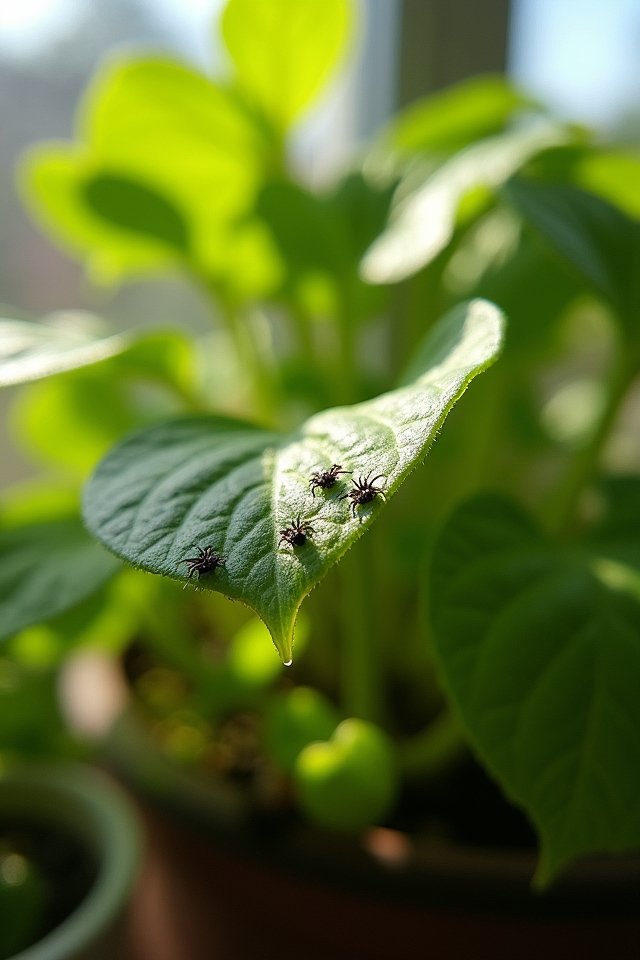
While you’re busy nurturing your indoor jungle, it’s easy to overlook the tiny invaders that can wreak havoc on your hard work! Pests like aphids and spider mites can sneak in, munching on your beloved leaves. To keep your green haven thriving, start with pest identification. Spot those unwelcome guests early! Then, consider natural remedies—like a homemade soap spray. Just mix a few drops of dish soap with water, and spray it on affected plants. It’s like giving your plants a revitalizing shower! Remember, a little vigilance goes a long way. Don’t let those creepy crawlies ruin your botanical masterpiece. Keep an eye out, and your indoor garden will flourish, free from pest troubles! Isn’t that a win-win?
Using Improper Soil
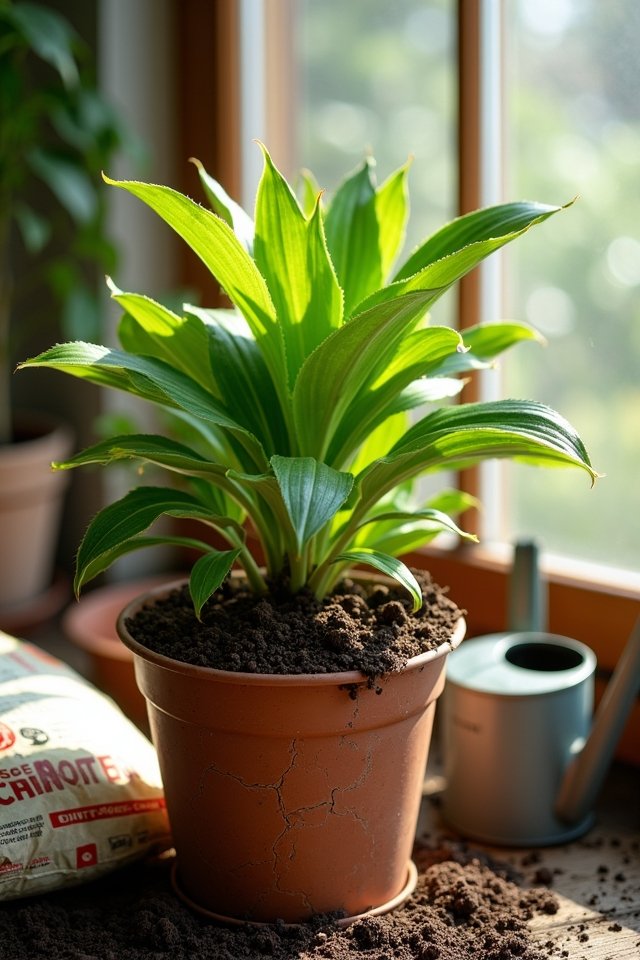
After you’ve tackled those pesky pests, it’s time to focus on the foundation of your plants’ happiness: the soil! Using improper soil can be a real buzzkill for your indoor garden. Different soil types affect your plants’ growth, and poor drainage can drown them. Here are three essential tips to guarantee your soil sets your plants up for success:
- Choose the Right Soil Type: Use potting mixes tailored for your specific plants—cacti love gritty soil, while ferns thrive in moisture-retentive blends!
- Check Soil Drainage: Make sure water flows freely; soggy roots are a recipe for disaster!
- Rotate Your Soil: Refresh your soil mix regularly to maintain its nutrient balance.
Happy planting! Your plants will thank you! 🌱
Skipping Fertilization
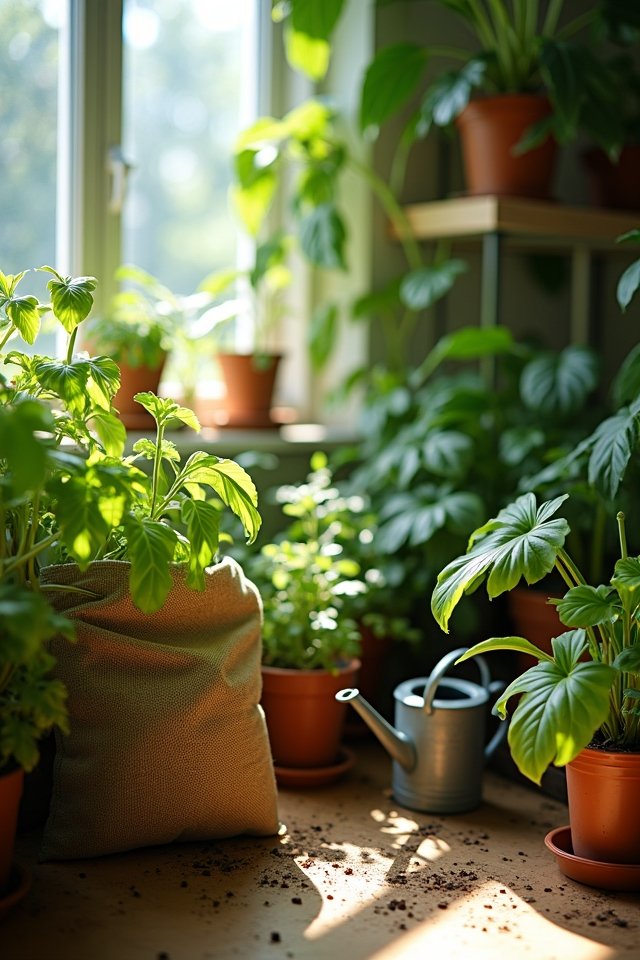
A little fertilizer goes a long way in keeping your indoor garden vibrant and flourishing! Think of it as a daily coffee fix for your plants—without it, they’re just dragging through the day! Different fertilizer types like liquid, granule, or slow-release can help you achieve that perfect nutrient balance. Ever noticed how plants seem to dance when they’re happy? That’s your cue! Just imagine lush, green leaves and colorful blooms all around you! But, don’t go overboard; too much fertilizer can burn those little roots. It’s all about finding that sweet spot! So, grab your favorite fertilizer and watch your indoor jungle thrive—your plants will thank you with their beautiful growth! Isn’t that the goal?
Forgetting to Prune and Maintain
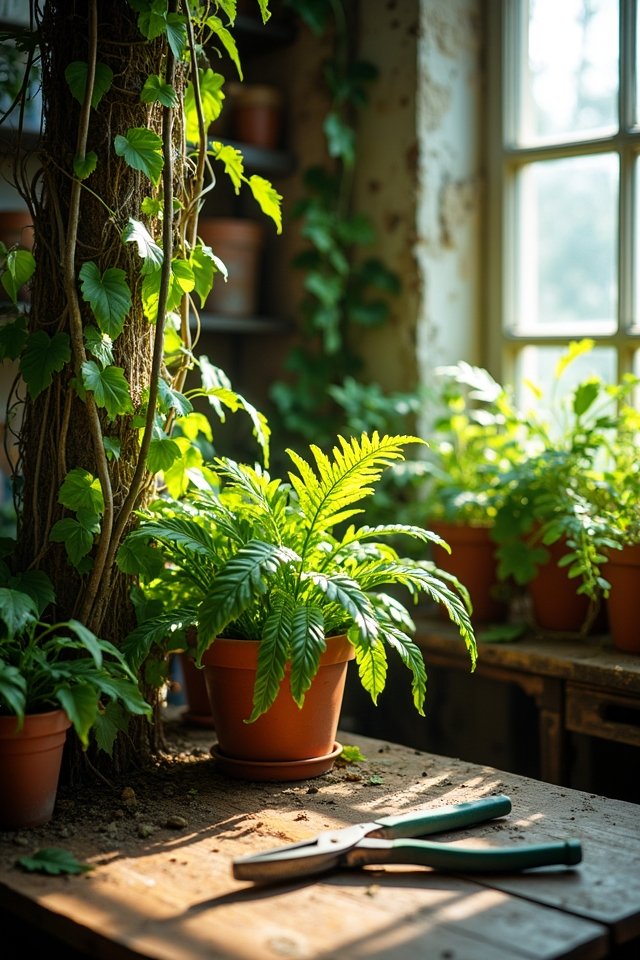
Neglecting to prune and maintain your indoor plants can lead to a jungle that’s less “paradise” and more “chaos!” Just imagine your beautiful greenery turning into a wild mess, with leaves fighting for sunlight and branches tangling like a bad hair day! To keep your indoor oasis thriving, adopt these essential pruning techniques and stick to a maintenance schedule:
- Trim those overgrown leaves – Snip away the excess to promote healthier growth!
- Remove dead or yellowing foliage – It’s like decluttering your plant’s living space!
- Shape your plants – Create stunning silhouettes that enhance your interior design!
Regular pruning not only brings order but also boosts air circulation and light exposure. So, grab those scissors and transform your chaos back into a lush paradise!
Frequently Asked Questions
How Can I Tell if My Plant Is Root-Bound?
Is your plant a prisoner in its pot? You might be dealing with root-bound signs! Check for roots poking out of drainage holes or circling the pot’s edge. If the plant’s growth has slowed or leaves are wilting, it’s time for a change! Use repotting techniques like gently loosening the roots and choosing a larger pot. Your green friend will thrive in its new space, and you’ll feel like a gardening rock star!
What Are the Signs of a Nutrient Deficiency?
Spotting a nutrient deficiency’s like playing detective in your garden! Yellowing leaves? That could signal a nitrogen deficiency. If your plant’s leaves turn purple, phosphorus might be low. And if those edges curl up like a sad taco, potassium’s probably missing. Don’t let a nutrient imbalance ruin your green paradise! Keep an eye out for these deficiency symptoms, and your plants will thrive like they’re on a growth spree! Happy gardening!
Can Indoor Plants Survive in Low Humidity?
Sure, indoor plants can survive in low humidity, but think of them like a fish out of water! While some plants adapt to drier humidity levels, they may struggle. Consider adding a humidifier or placing a tray of water nearby to boost moisture. Plants like snake plants and ZZ plants are champions in low humidity! Just remember, if your leaves start browning, it’s time to reassess those humidity levels! Keep your green friends thriving!
How Often Should I Rotate My Plants for Even Growth?
You should rotate your plants every couple of weeks to encourage even growth patterns! Just like you enjoy a change of scenery, your plants crave it too! Imagine them stretching toward the light, yearning for that sweet sunshine. Keep an eye on how they lean; if they’re reaching more to one side, it’s time for a little plant rotation! This simple act can turn your indoor garden into a lush, happy paradise! 🌱
Are There Specific Tools I Need for Indoor Gardening?
You’ll definitely want some essential gardening tools to kickstart your indoor jungle! A sturdy pair of pruning shears is like your trusty sidekick, helping you snip away dead leaves. Don’t forget a moisture meter—it’s your plant’s personal assistant! Potting soil, plant pots, and a watering can are must-have indoor gardening supplies too. With the right tools, you’ll be nurturing your green friends like a pro! So, are you ready to dig in?