If you’re tired of those pesky garden pests munching on your plants, you’ve got some fantastic organic options! Try neem oil to send aphids packing, or whip up a soapy solution that smothers soft-bodied critters. Don’t forget companion planting: marigolds with tomatoes are a dynamic duo! Sprinkle diatomaceous earth to create a sandcastle barrier against crawlers or mix up some fiery pepper spray. Ready for even more tricks to keep your garden thriving?
Neem Oil Applications
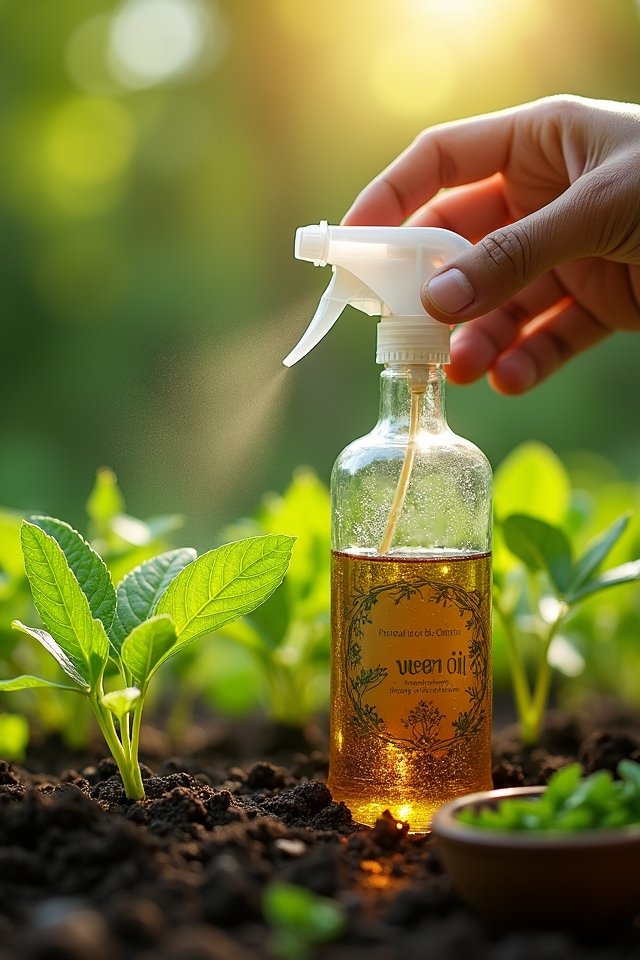
When it comes to organic pest control, neem oil is like a superhero in a bottle! Its benefits are vast, making it a must-have for your garden arsenal. You can use neem oil applications to tackle pesky aphids, spider mites, and even whiteflies. Just mix it with water and a few drops of dish soap, then spray it on your plants for a revitalizing shield against invaders!
Imagine your plants soaking up this liquid magic, fortifying their defenses. Plus, it’s biodegradable! Want to keep your veggies safe while feeling eco-friendly? Neem oil’s got your back! So, get ready to wave goodbye to those garden gremlins and welcome your greener, healthier garden adventure with neem oil! Isn’t that a win-win?
Insecticidal Soap Solutions
If you’re on a quest to protect your garden from unwanted pests, insecticidal soap solutions can be your trusty sidekick! Think of it as your garden’s secret weapon—just a simple blend of soapy water that packs a punch against pesky bugs. When you spray it on soft-bodied pests like aphids or spider mites, the soap disrupts their cell membranes, leaving them feeling like they’ve just taken a wild rollercoaster ride! You can whip up your own solution by mixing a few tablespoons of liquid soap with water. Just remember to test a small plant area first. It’s eco-friendly, effective, and a breeze to use! So why wait? Jump into this innovative pest control method and watch your garden thrive!
Companion Planting Techniques
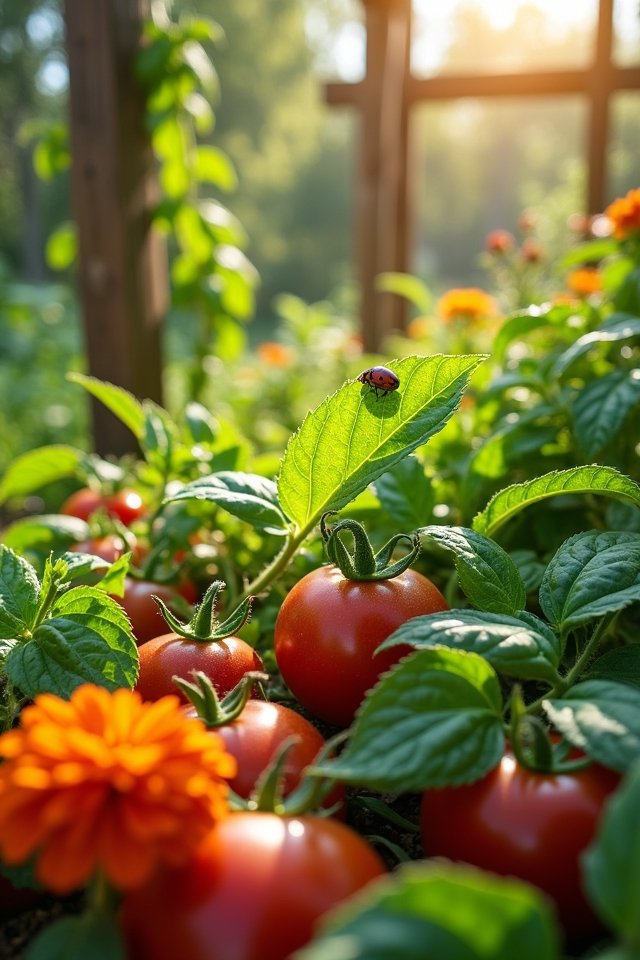
Ready to spice up your garden? Immerse yourself in the world of companion planting! It’s like matchmaking for your plants. Certain plant pairings can create natural pest avoidance, making your garden thrive. For instance, plant marigolds near tomatoes to ward off pesky nematodes, or pair basil with peppers for a flavor boost and aphid control. Imagine the vibrant colors and delightful aromas dancing together in your garden! You’ll not only enjoy a stunning landscape, but you’ll also reduce the need for chemicals. So why not give it a whirl? With the right companions, your plants will flourish like best buddies at a garden party! Let’s get those plant pairings working for you! Happy gardening!
Diatomaceous Earth Uses
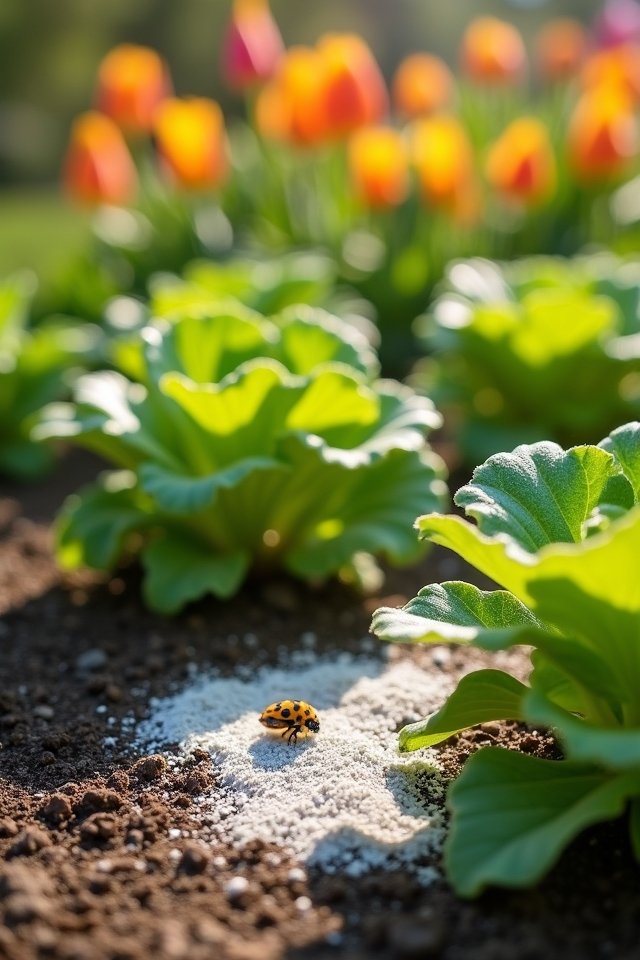
Diatomaceous earth, that magical powder made from tiny, fossilized algae, is a gardener’s secret weapon! You’ll love its many diatomaceous earth benefits. Here’s how to use it effectively:
- Pest Control: Sprinkle it around your plants to deter crawling insects like ants and slugs. They’ll think twice before crossing that powdery barrier!
- Soil Amendment: Mix it into your soil; it helps with drainage and aeration, giving roots room to breathe and thrive.
- Garden Clean-Up: Use it to dust off plants affected by pests, soaking up moisture and creating an inhospitable environment for those pesky critters.
With proper diatomaceous earth application, you’ll be on your way to a healthy, flourishing garden that’s the envy of your neighborhood! Happy gardening!
Garlic and Pepper Sprays
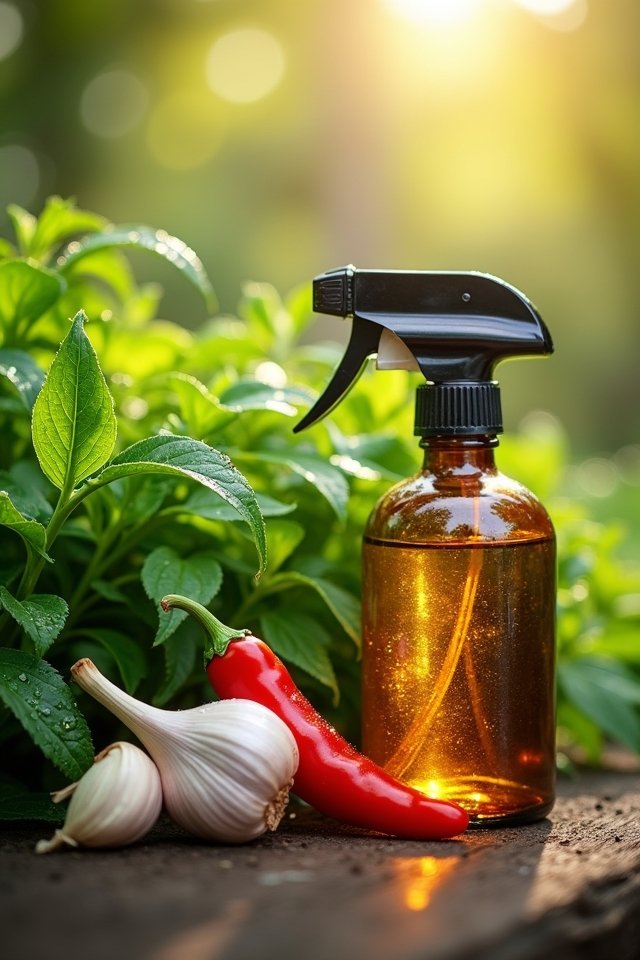
Garlic and pepper sprays are like a superhero duo for your garden, ready to fight off pesky pests! These sprays harness the powerful garlic properties and fiery pepper extracts to create a potent pest deterrent. Just imagine spritzing a mix of crushed garlic and hot pepper in your garden, creating a spicy shield against unwanted critters.
The pungent aroma of garlic sends pests running for cover, while the heat from the pepper extracts adds an extra kick! You can easily whip up your own concoction at home—just blend, strain, and dilute! Using this innovative spray not only protects your plants but also keeps your garden chemical-free. Who knew fighting pests could be so simple and effective? Give it a shot!
Beneficial Insects Introduction
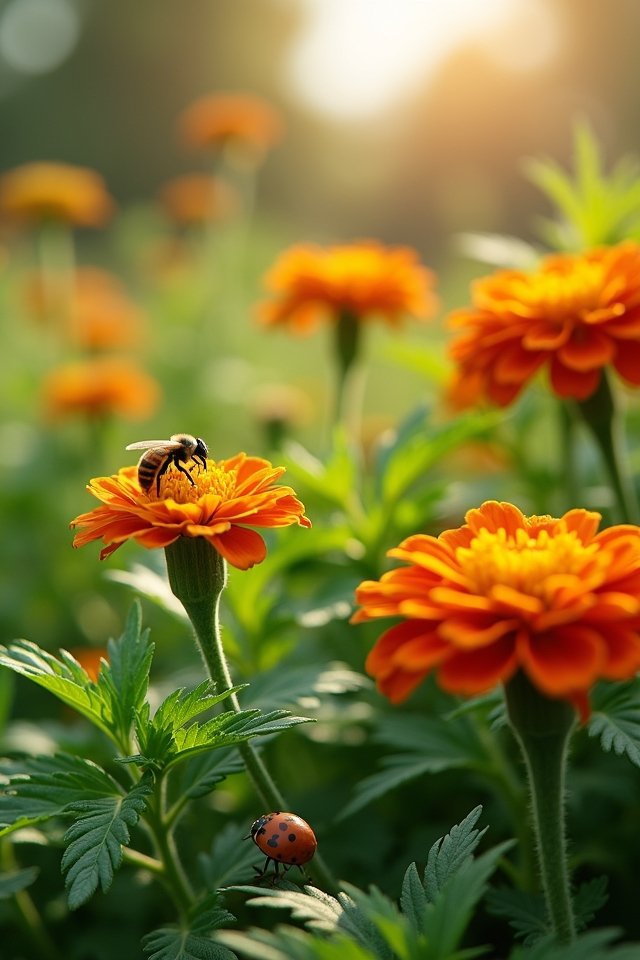
While garlic and pepper sprays are fantastic for keeping pests at bay, there’s another natural ally that can turn your garden into a thriving paradise: beneficial insects! Imagine a vibrant ecosystem buzzing with life. Here’s how to invite these tiny heroes into your garden:
- Ladybug Release: These charming critters gobble up aphids like candy. Just sprinkle them around your plants, and watch the magic unfold!
- Pollinator Attraction: Plant flowers like marigolds and lavender. They’ll draw in bees and butterflies, ensuring your garden blooms beautifully.
- Encourage Natural Predators: Create habitats with native plants. This invites spiders and lacewings, keeping pests in check naturally.
Physical Barriers and Traps
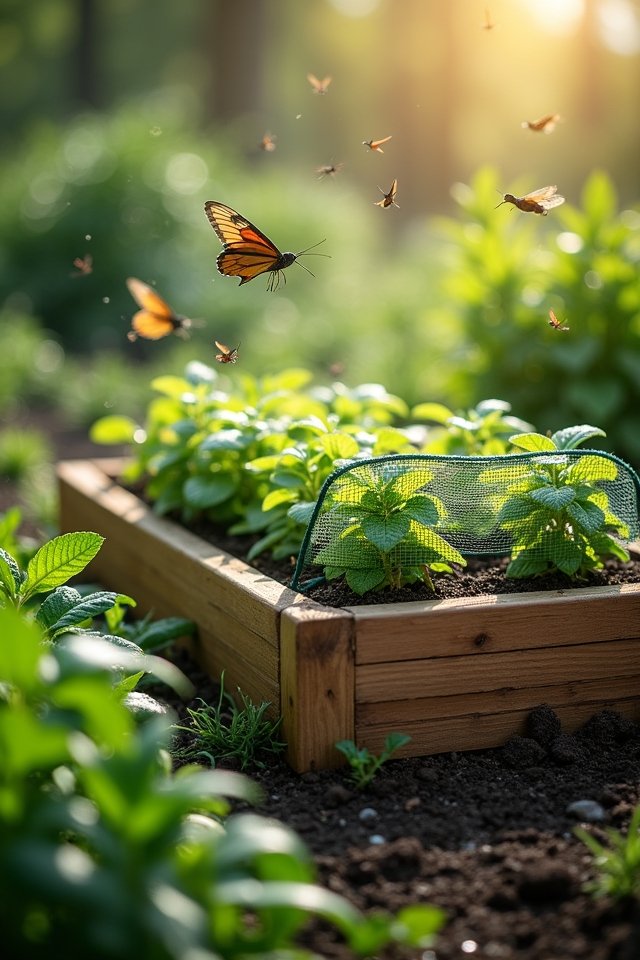
When you’re battling pesky garden invaders, physical barriers and traps can feel like your secret weapon! Imagine a cozy fortress for your plants—row covers swoop in like caped crusaders, shielding your veggies from hungry pests. They’re breathable, letting sunlight and rain in while keeping the critters out.
Sticky traps are another clever defense! Place them strategically, and watch as those sneaky invaders get caught in a sticky situation—literally! They’ll be stuck faster than you can say “organic gardening.” Plus, it’s fascinating to see what bugs are lurking around your garden.
Homemade Organic Sprays
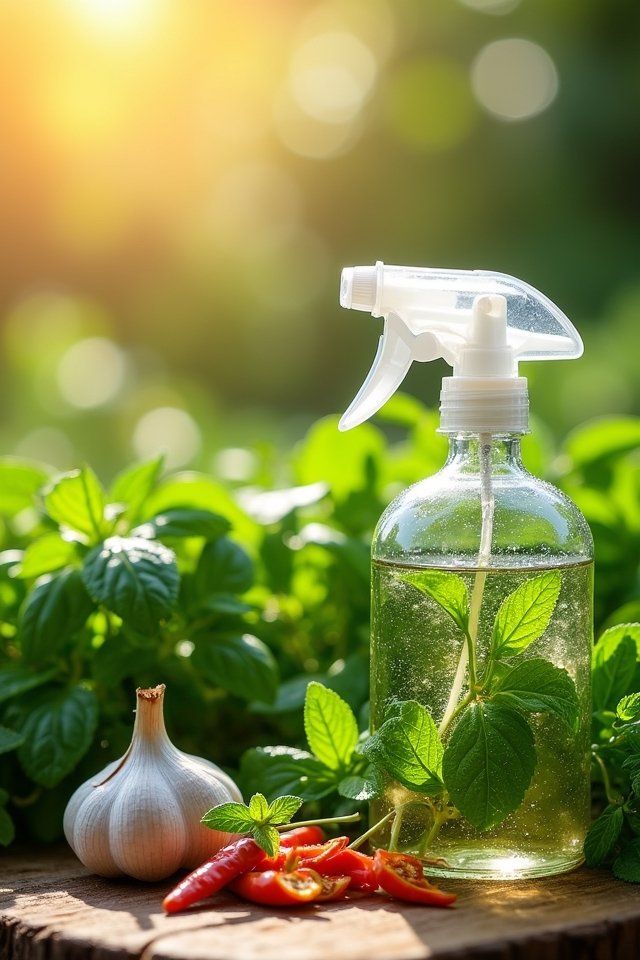
Ready to release your inner gardener? Let’s plunge into the world of homemade organic sprays! You can whip up powerful homemade remedies using simple ingredients. Here are three herbal mixtures you can create:
- Garlic Spray: Blend garlic cloves with water, strain, and spray on plants to deter pests.
- Pepper Spray: Mix hot pepper flakes with water. This fiery concoction keeps those critters at bay!
- Soap Spray: Combine liquid soap with water to smother soft-bodied insects like aphids.
These innovative sprays are not just eco-friendly; they’re also easy to make! With a little creativity, you’ll transform your garden into a pest-free paradise. So, why wait? Grab your ingredients and start spraying! Your plants will thank you!
Essential Oils for Pest Repellent
If you’re looking to keep those pesky pests away without resorting to harsh chemicals, essential oils might just be your garden’s new best friend! Citrus oils, like lemon and orange, have a fresh, zesty aroma that not only brightens your garden but also repels unwanted critters. Just imagine a citrusy shield protecting your precious plants! Then there’s peppermint oil, a minty marvel that sends pests packing. Mix a few drops with water, and you’ve got an invigorating spray that smells delightful to you but leaves pests in a tizzy! Why let bugs munch on your greens when you can harness nature’s fragrant power? Give these oils a try and watch your garden thrive without a chemical cloud!
Crop Rotation Strategies

To keep your garden flourishing and pest-free, crop rotation might just be your secret weapon! By rotating your crops, you enhance crop diversity and boost soil health, making pests think twice before invading. Here are three innovative strategies to ponder:
- Alternate Families: Swap out plants from different families each season. For example, follow tomatoes with beans to break pest cycles.
- Soil Enrichment: Plant legumes like peas after heavy feeders like corn to naturally replenish nitrates in the soil.
- Seasonal Timing: Plant faster-growing crops alongside slower ones, like radishes with carrots, to maximize space and confuse pests!
With these techniques, you’ll not only outsmart pests but also create a vibrant ecosystem in your garden! Isn’t that a reason to celebrate?
Frequently Asked Questions
How Do I Know if Pests Are Affecting My Garden?
How can you tell if pests are sneaking into your garden? Keep an eye out for garden damage signs like wilting leaves or tiny holes, almost like nature’s little bite marks! Use pest identification techniques—check for unwelcome guests like aphids or caterpillars hiding under leaves. Spotting these critters is like playing detective! Remember, a well-loved garden shouldn’t look like it’s been through a food fight. Happy gardening, you fabulous plant parent!
Are Organic Pest Control Methods Safe for Pets?
Think of your garden as a pet playground! The good news? Most organic pest control methods are pet-friendly options, but it’s wise to take safety precautions. Always check labels to verify they’re safe for your furry friends. For instance, neem oil‘s a fantastic choice—it’s gentle yet effective! Just remember, a little caution goes a long way. So, let your pets roam while you tackle those pesky bugs, and keep your garden thriving!
Can I Use These Methods in Indoor Gardens?
You can use organic pest management methods in your indoor gardening adventures! Just imagine your plants thriving, free from pesky invaders! Try neem oil or insecticidal soap—both are safe and effective. They’ll help keep those little critters at bay while leaving your indoor oasis untouched. Just remember, a little goes a long way! So, why not welcome innovation and let your indoor garden flourish? Your plants will thank you with vibrant growth!
How Often Should I Apply Organic Pest Control Treatments?
You might think applying organic pest control is a one-and-done deal, but it’s more like a dance! Aim for treatment intervals every 7 to 14 days, adjusting based on pest pressure. Picture a garden party—sometimes you need to refresh the snacks! If you spot critters lingering, increase your application frequency. Remember, a little vigilance goes a long way in keeping your plants happy and healthy! Isn’t that a delightful thought?
What Are the Signs of Beneficial Insects in My Garden?
You’ll know you’ve got beneficial insects buzzing around your garden when you spot ladybugs munching on pesky aphids or lacewings flitting about! These little allies are nature’s pest control superheroes, swooping in to save your plants. Look for tiny wasps that lay eggs in harmful pests, too. The excitement of seeing these helpful critters is like finding hidden treasure! Keep your eyes peeled, and you’ll be amazed at the garden magic happening right before you!