Embracing seasonal techniques for year-round gardening is like dancing with nature! When you sync your planting with the seasons, your garden thrives, and you get to enjoy fresh veggies at their best. Think of bright summer tomatoes or crisp autumn spinach—delicious, right? Plus, using methods like crop rotation and cover crops keeps your soil healthy and your plants happy. Who wouldn’t want a thriving garden party all year long? Stick around to uncover more fantastic tips for your garden adventure!
Understanding Seasonal Planting Cycles
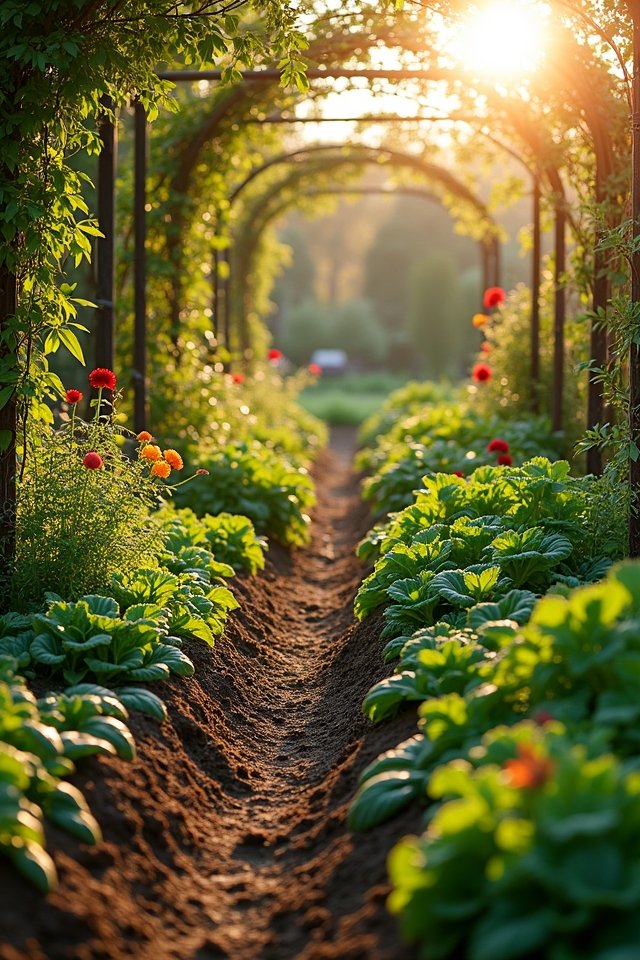
When you welcome the rhythm of seasonal planting cycles, you’re not just gardening—you’re dancing with nature! Imagine planting schedules that sync with the earth’s heartbeat, each season offering a fresh palette of vibrant seasonal varieties. Spring’s crisp air invites you to sow peas and radishes, while summer’s warmth calls for tomatoes and vibrant peppers. How exciting is that? As autumn approaches, you can harvest those delicious crops and prepare for winter’s cozy greens, like kale and spinach! By adopting these cycles, you’re not just growing food; you’re creating a dynamic garden that thrives in harmony with nature. So, grab your seeds, embrace those planting schedules, and let the seasons inspire your green thumb! Isn’t that just delightful?
Benefits of Crop Rotation
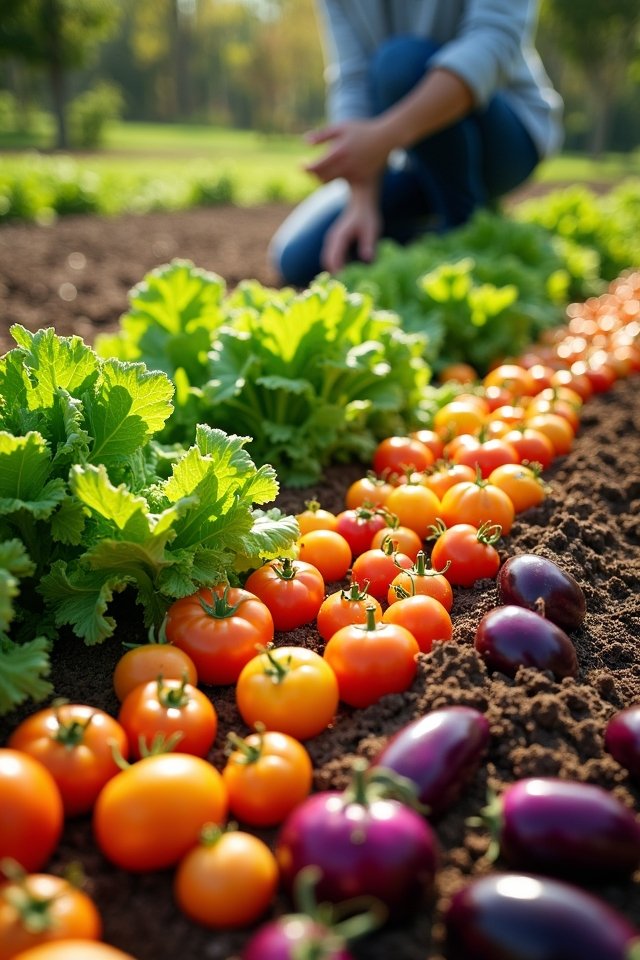
Crop rotation is like giving your garden a much-needed spa day! It rejuvenates your soil nutrients, helping your plants thrive. By switching up your crops, you break the cycle of pests and diseases. Imagine a tomato plant waving goodbye to the same old nematodes, thanks to its new neighbor, beans! This playful change boosts pest resistance, making your garden a fortress against unwanted invaders. You’ll also notice healthier plants, as different crops draw and replenish various nutrients in the soil. Plus, who wouldn’t want to keep their gardening routine fresh and exciting? Rotate those crops, and let your garden dance through the seasons! It’s a simple trick with big rewards—your plants will thank you!
Utilizing Cover Crops for Soil Health

Even if you think your garden’s soil is fine, incorporating cover crops can work wonders! Imagine lush, green plants growing in your garden’s off-season, their roots digging deep, improving soil structure like tiny architects. These amazing plants boost soil improvement by preventing erosion and enhancing nutrient management. When you plant legumes, for instance, they fix nitrogen in the soil, creating a feast for your vegetables come spring! Plus, when you turn them under, they add organic matter, making your soil as rich as chocolate cake. Who wouldn’t want that? So, next time you think about your garden, consider giving those cover crops a shot! Your soil will thank you, and your plants will thrive like never before!
Extending the Growing Season With Season Extenders
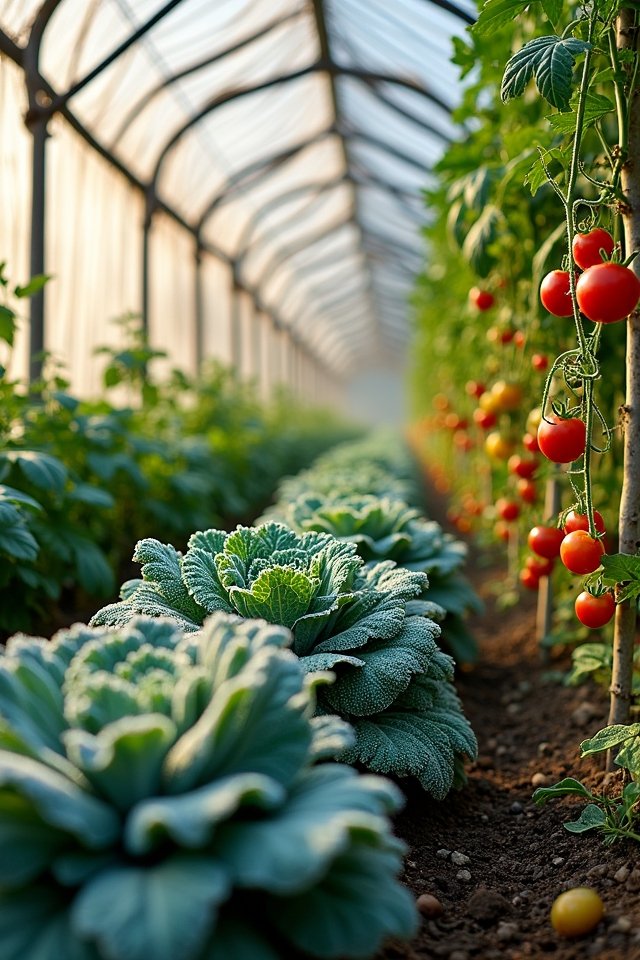
Imagine stepping into your garden, where fresh vegetables are still thriving, even as the first frost approaches! With innovative season extenders like row covers and cold frames, you can transform your gardening game. These garden structures act like cozy blankets, keeping your plants warm and happy. Picture those delicious tomatoes and crisp greens enjoying an extended vacation while others are left out in the cold!
You can also use hoop houses to create a mini-greenhouse effect, perfect for nurturing seedlings into robust plants. Why let the seasons dictate your harvest? With a little creativity and the right tools, you can savor those garden-fresh flavors well into winter! Welcome the magic of season extenders, and let your green thumb flourish all year round!
Companion Planting for Pest Management
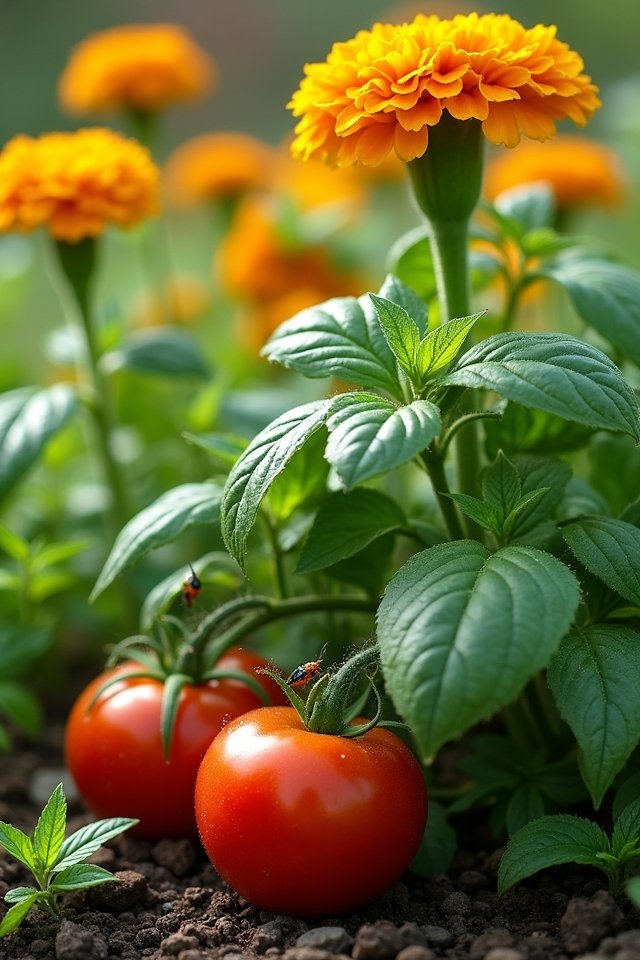
While you’re busy tending to your beloved garden, have you ever thought about teaming up your plants for a little extra help? Companion planting is like matchmaking for your garden! By pairing certain plants, you can create a natural pest management system that’s both clever and effective.
Consider these dynamic duos:
- Marigolds: Fantastic pest deterrents, keeping harmful bugs at bay.
- Basil: Attracts beneficial insects like bees and ladybugs.
- Nasturtiums: A trap for aphids, saving your veggies!
- Garlic: Its strong scent repels a host of pests.
With strategic partnerships in your garden, you’ll enjoy a healthier harvest and a vibrant ecosystem. Who knew teamwork could taste this good?
Adapting to Climate Changes
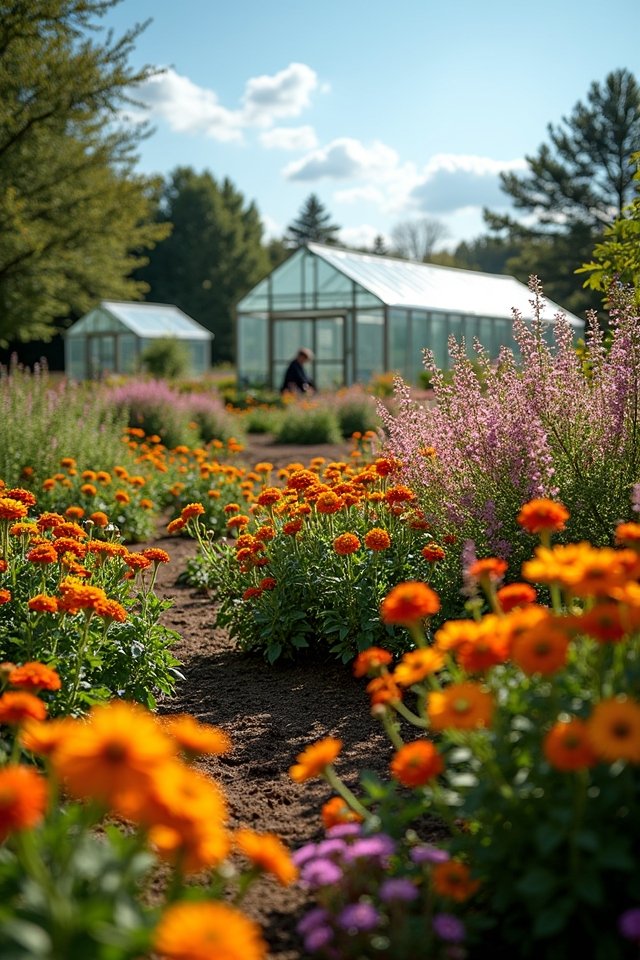
Your garden isn’t just a patch of earth; it’s a lively ecosystem that can adapt and thrive, even as the climate changes around it! By cultivating microclimate awareness, you’ll discover those hidden pockets of warmth or shade, where your plants can flourish despite shifting weather patterns. Imagine tucking your tomatoes into a sunny corner, sheltered from the harsh winds, like giving them a cozy blanket! You can also experiment with drought-resistant plants that dance in the heat, or vibrant greens that thrive in cooler temps. Welcome these innovations, and you’ll turn climate challenges into opportunities for creativity and growth. Who knew adapting could be so much fun? So, ready to give your garden a fighting chance? Let’s dig in!
Maximizing Harvests Throughout the Year
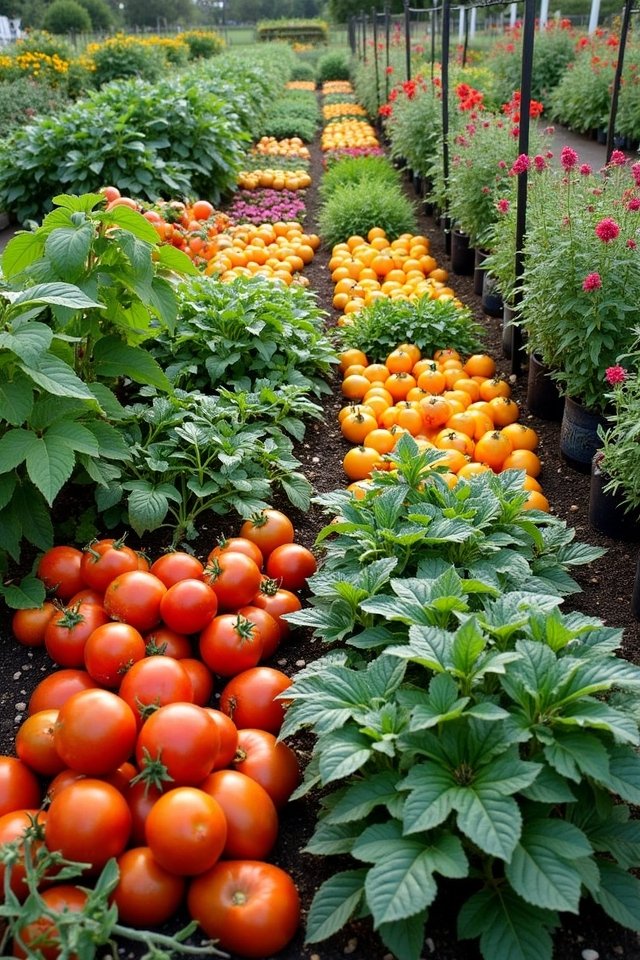
To maximize your harvests throughout the year, you’ll need to think like a plant whisperer, tuning into their needs and the seasonal rhythms of nature! Adopt innovative intercropping strategies and discover year-round varieties that keep your garden bustling with life. It’s like having a culinary buffet at your fingertips!
- Plant cool-season crops alongside warm-season varieties for overlapping growth.
- Rotate your crops to boost soil health and yield.
- Use companion planting to deter pests naturally.
- Explore unique varieties like winter kale or spring radishes.
Imagine biting into a fresh tomato in December! With these techniques, you’ll not only savor every bite but also celebrate nature’s ever-changing beauty. Happy gardening! 🌱
Frequently Asked Questions
What Tools Are Essential for Seasonal Gardening Techniques?
When you immerse yourself in seasonal gardening, some essential tools can make your life easier! You’ll need quality pruning shears for snipping away those pesky branches. A sturdy spade’s perfect for digging and turning soil, while a reliable watering can keeps your plants quenched. Don’t forget gloves to protect your hands from dirt and thorns! With the right gardening supplies, you’ll feel like a wizard conjuring blooms and veggies all year round! Exciting, right?
How Do I Choose the Right Cover Crops for My Area?
Choosing the right cover crops is like picking the perfect dance partner! You need to match them to your local climate. For instance, if you’re in a cooler area, consider winter rye or clover, which thrive in the chill! They’ll enrich your soil and keep erosion at bay. If it’s warmer, try buckwheat for quick growth. Just remember, the right match makes all the difference in your garden’s rhythm! Ready to boogie?
Can Seasonal Techniques Benefit Container Gardening?
Seasonal techniques can totally jazz up your container gardening game! Imagine vibrant tomatoes in summer, then switching to cozy kale in winter—how cool is that? By choosing the right containers, like those with good drainage, you can maximize your seasonal crops’ growth. Plus, rotating your plants keeps pests at bay! So, why not welcome the seasons? You’ll create a colorful, thriving garden that’s a feast for the eyes and your taste buds!
What Are Some Common Mistakes in Seasonal Gardening?
Did you know that around 70% of novice gardeners overwater their plants? That’s like giving a fish a bath! One common mistake is poor soil selection; the wrong mix can suffocate roots. You want a blend that breathes! Instead of drowning your plants, try checking moisture levels before watering. Keep an eye on those little green beauties! Remember, gardening should feel like a dance, not a wrestling match with Mother Nature!
How Can I Track My Planting Dates Effectively?
To track your planting dates effectively, grab a gardening journal and create a planting calendar! Jot down when you sow seeds, transplant, or harvest. It’s like having a roadmap for your garden adventure! Consider using colorful stickers or doodles—who doesn’t love a bit of flair? Remember, keeping it organized not only enhances your garden’s beauty but also keeps you from scrambling like a chicken in a heatwave! Happy planting!