Want to supercharge your organic garden? Start by pairing tomatoes with basil—it’s like peanut butter and jelly for plants! Marigolds? They’ll be your colorful pest-busting buddies! Don’t forget to tuck beans in with leafy greens; those little legumes fix nitrogen like gardeners’ magic! And remember, veggies love friends! By mixing sunflowers for shade and fast-growing radishes with slow carrots, you’ll maximize space and flavor. Stick around, and you’ll reveal even more foolproof tips!
Understanding Companion Planting Basics
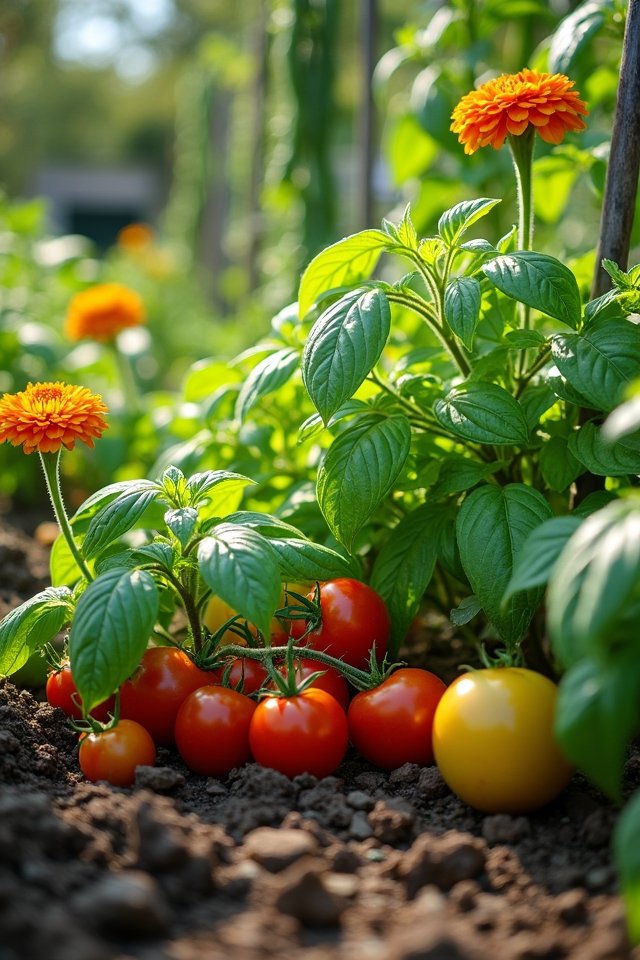
When you think about planting your garden, have you ever considered how certain plants can be best buddies? It’s true! This magical relationship is called plant synergy. Visualize this: tomatoes cozied up with basil, their growth patterns perfectly aligned. Basil repels pests, while tomatoes thrive! Isn’t that a delightful duo?
When you mix plants wisely, they help each other flourish. Think of it as nature’s way of creating a supportive community. For instance, marigolds not only add a splash of color but also keep nematodes at bay. Imagine your garden bursting with life and flavor, all because you paired the right plants! So, why not welcome these friendships and watch your garden thrive like never before? Happy planting!
Selecting Compatible Plants
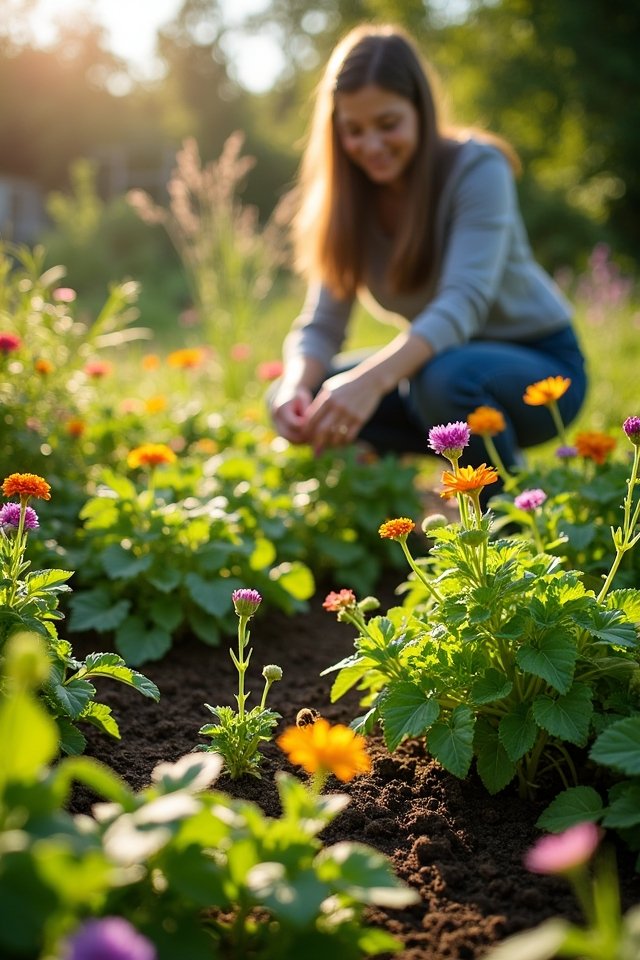
How do you know which plants will make the best buddies in your organic garden? Start by considering their plant characteristics and growth habits! For instance, pairing tall sunflowers with delicate lettuce creates a natural shade, protecting those tender greens from burning sun. Meanwhile, vibrant marigolds can lure pesky pests away from your precious tomatoes—talk about a garden superhero!
Don’t forget about compatibility; some plants, like beans, fix nitrogen in the soil, benefiting leafy greens nearby. Think of your garden as a community, where each plant plays a unique role, like a band harmonizing together! So, mix and match wisely, and watch your garden thrive with the help of these fabulous plant pals! Happy planting!
Enhancing Soil Health Through Companion Planting
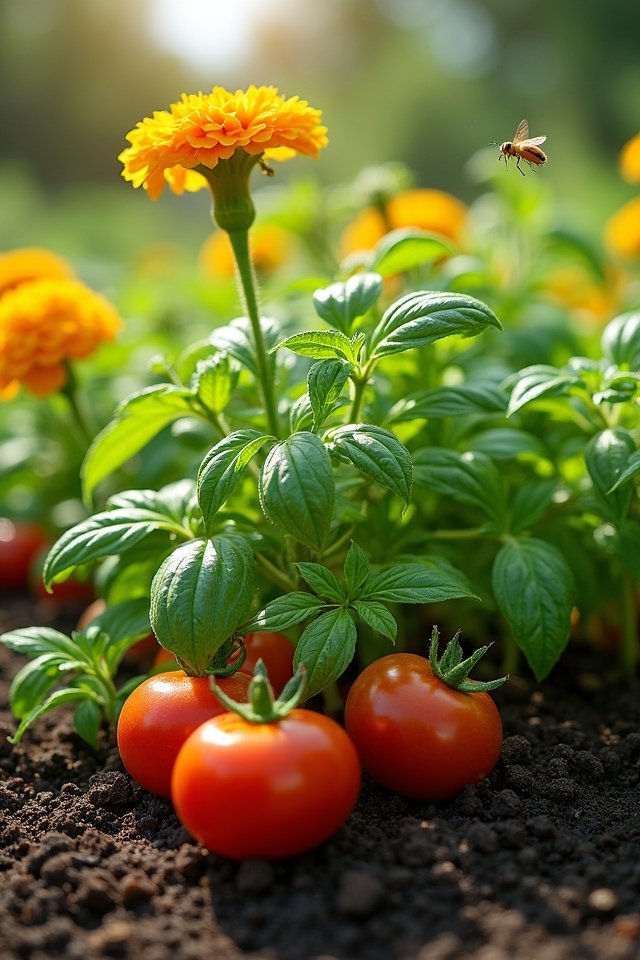
A thriving garden isn’t just about pretty plants; it’s also about the soil beneath your feet! By using companion planting, you can supercharge your soil health. Imagine planting legumes like peas alongside heavy feeders such as corn. Those little legume roots interact with the soil, fixing nitrogen and making it richer! Plus, when you mix in organic soil amendments, like compost or worm castings, you’re inviting beneficial microbes to the party. These guys help break down nutrients, making them available for your plants. So, why not create a symphony of root interactions? Your garden will thank you with vibrant growth and bountiful harvests! Isn’t it exciting to think about the magic happening right under your nose?
Natural Pest Control Strategies
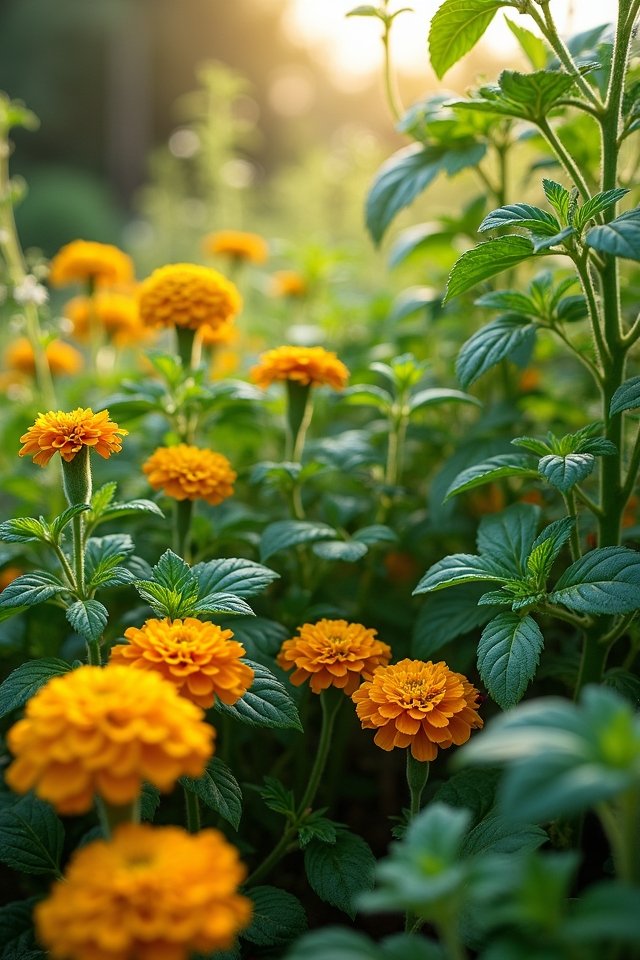
Natural pest control strategies can transform your garden into a thriving paradise! Imagine a lush haven where beneficial insects, like ladybugs and lacewings, dance among your plants, munching on pesky pests. You can attract these tiny warriors by planting flowers like marigolds and yarrow, which lure them in like a sweet siren’s song.
And let’s not forget about pest repellents! Homemade sprays—think garlic or hot pepper—can send those unwanted guests packing. Mix a little soap with water, and voilà! You’ve got a potent shield. Who knew fighting pests could be this fun? Adopt these innovative tactics, and watch your garden flourish while keeping those chemical sprays at bay. Happy gardening, you eco-warrior!
Maximizing Space and Yield
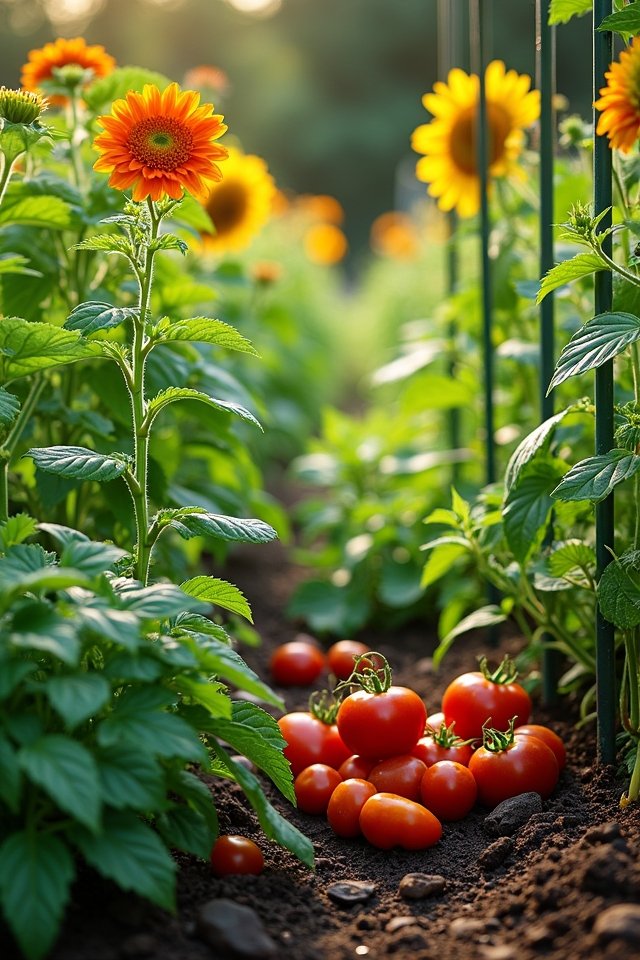
With your garden buzzing with beneficial insects, it’s time to make the most of every inch! Space optimization is your secret weapon for yield improvement. Ever tried vertical gardening? Imagine lush tomatoes climbing up trellises, leaving ground space for vibrant herbs below! Pair fast-growing radishes with slow-maturing carrots; they’ll share the same plot without fuss. Don’t forget intercropping—planting compatible crops together, like beans and corn, creates a mini-ecosystem! This not only maximizes space but also boosts overall productivity. Got a sunny corner? Fill it with pollinator-friendly flowers to attract bees, while sneaky cucumbers vine around their stems. So, why let any precious space go to waste? Get creative, and your garden’s bounty will surprise you!
Seasonal Considerations for Companion Planting
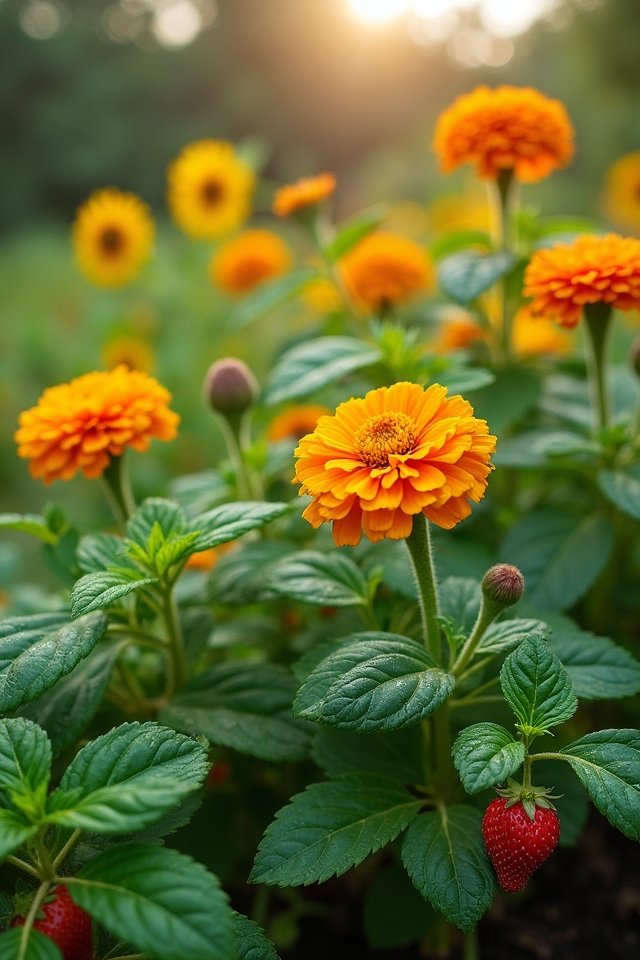
When planning your garden, understanding the seasons can be a game-changer! Spring planting sets the stage for vibrant growth, so consider pairing fast-germinating radishes with slower-growing carrots. The radishes’ll be harvested before the carrots need space, maximizing your yield! As summer fades, think ahead to fall harvesting. Planting garlic in the fall alongside overwintering spinach not only keeps pests at bay but also guarantees a delicious bounty come spring. It’s like a secret garden handshake! Remember, your choices now affect future flavors, so welcome the seasonal rhythms, and let nature guide you. Combining plants according to their seasonal needs isn’t just smart; it’s innovative gardening at its best! Ready to dig into some seasonal magic? Let’s get growing!
Frequently Asked Questions
Can Companion Planting Improve Taste and Nutrition of Crops?
Imagine biting into a luscious tomato that’s bursting with flavor—it’s like a summer day in your mouth! Companion planting can enhance taste and provide nutritional benefits. For instance, pairing basil with tomatoes not only boosts their flavor but also increases their vitamin content. Who knew that friendship in the garden could lead to such delicious outcomes? So, let your plants mingle, and you’ll enjoy tastier, healthier crops to savor!
How Do I Know if Plants Are Truly Compatible?
To know if plants are compatible, check their growth habits and plant characteristics! For instance, tall sunflowers can shade delicate herbs, while bushy beans support climbing plants. Explore how they thrive together! Imagine your garden as a bustling community—some plants prefer the spotlight, while others enjoy the shade. Have fun experimenting! Just like friends, some plants get along famously, while others create drama. Keep an eye on their interactions, and you’ll discover the magic!
What Are the Signs of Poor Companion Plant Choices?
If you’ve picked incompatible species, your garden might feel like a high school cafeteria with cliques! Poor choices can lead to nutrient competition, where plants fight over the same soil treasures. You’ll notice stunted growth, yellow leaves, or even wilting plants—like they’re throwing a drama queen fit! Watch for pests that seem to flock to certain plants, too. Remember, happy plants create a harmonious garden, while discord can turn your paradise into a battleground!
Can Companion Planting Help With Soil Erosion?
Companion planting’s like a superhero for your garden, providing soil stabilization and effective erosion control! When you mix deep-rooted plants, like peas, with ground-covering allies, like clover, you create a sturdy network that holds the soil tight. Think of them as a cozy blanket wrapping your earth, preventing it from washing away during storms. Isn’t that neat? So, why not give it a try and watch your garden flourish while staying put?
Is There a Specific Planting Schedule for Companions?
Absolutely, there’s a planting calendar that’ll guide you with seasonal pairings! Just like a dance, plants thrive when they’re in sync. For instance, plant tomatoes and basil together in summer—it’s a match made in garden heaven! You’ll enjoy bountiful harvests while keeping pests at bay. Look out for your local frost dates, too; timing is everything! So, grab your planner, and let the gardening fun begin! Isn’t it exciting?