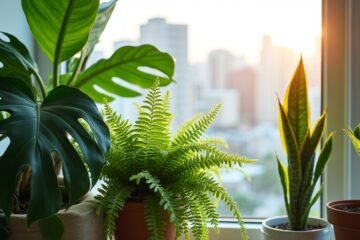
If you’re looking to brighten up those dim corners of your home, low light containers are perfect for amazing plants like the resilient snake plant that stands like a proud soldier, or the enchanting pothos gracefully trailing down. You can’t go wrong with a peace lily, boasting elegant blooms that dance in the shadow! These plants thrive on your care while providing a cozy, green haven. Curious about how to keep them blooming and healthy? Let’s explore!
Understanding Low Light Conditions
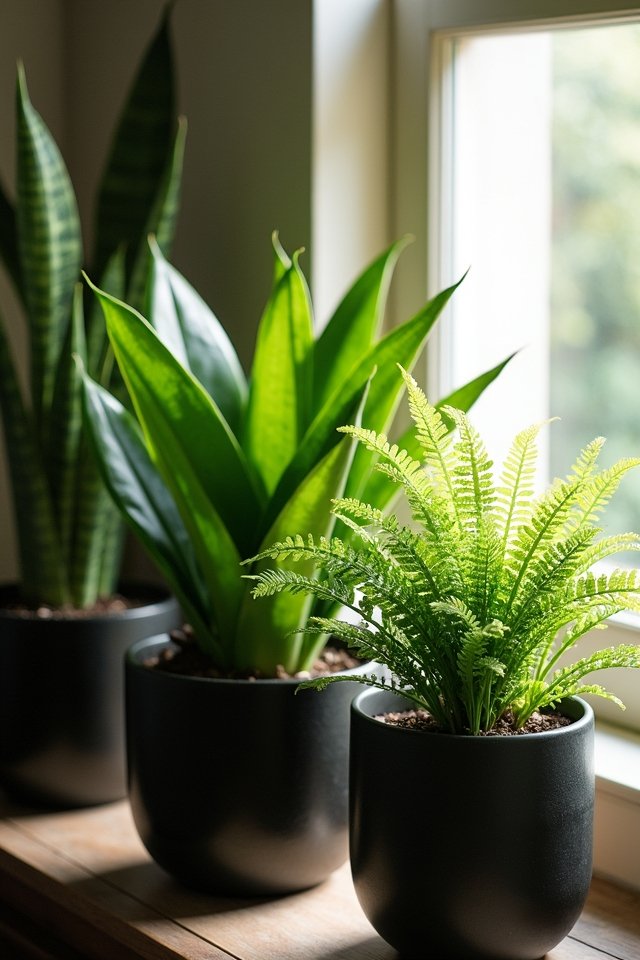
When you think about low light conditions, you might imagine a dark cave or a mysterious forest at twilight—but don’t worry, your home isn’t that gloomy! Instead, think of cozy corners or softly lit rooms where light intensity is just a whisper. Plants thrive in these settings thanks to their remarkable adaptability. Take the snake plant, for instance; it’s like the superhero of low-light environments, boldly reaching for the sky even with minimal light. Or consider the pothos, which gracefully trails down like a green waterfall, effortlessly adjusting to dim spaces. These plants show that even in less-than-ideal conditions, life finds a way! So, welcome the shadows, and let your indoor jungle flourish! Isn’t that a comforting thought?
Ideal Soil Mix for Low Light Containers

The secret ingredient to a thriving low-light container garden is a well-balanced soil mix! Think of it as your plants’ cozy blanket, offering just the right warmth and comfort. For ideal soil drainage, mix equal parts of potting soil, perlite, and coconut coir. This combo lets excess water escape while keeping roots happy and dry! You’ll also want to make sure nutrient retention, so sprinkle in some organic compost. It’s like a gourmet meal for your leafy friends! Don’t forget to check the pH; a slightly acidic balance keeps those nutrients available. Imagine your plants sipping on that delicious mix, thriving in their low-light haven! Isn’t it time you pampered your plants with the best?
Best Container Types for Shade Plants

Choosing the right container for your shade-loving plants can make all the difference! You want your greenery to flourish, right? Here are three fantastic container types that’ll keep your plants happy:
- Ceramic Pots – These beauties not only look stunning but also retain moisture well, perfect for shade plants!
- Fabric Grow Bags – Lightweight and breathable, these innovative pots encourage healthy root growth while being super easy to move.
- Wooden Planters – Offering a rustic charm, these containers can be built in various pot sizes, blending beautifully with your outdoor space.
Top 10 Low Light Plants for Containers
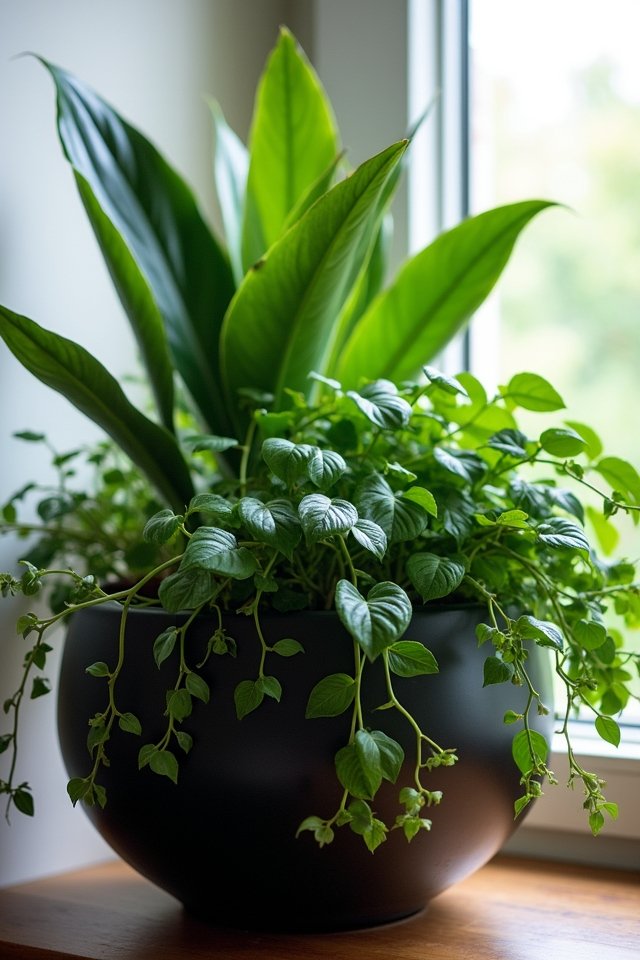
If you think your dark corners can’t thrive with beautiful plants, think again! Here are the top 10 low light plants that’ll flourish in containers, even in those cozy shadows. The snake plant and ZZ plant are like the superheroes of the plant world—tough and resilient! The peace lily adds delicate elegance, while the pothos plant trails gracefully, perfect for hanging. Don’t forget the cast iron plant, which thrives on neglect! The Chinese evergreen brings lush color, and the fiddle leaf offers a dramatic touch. Spider plants and dracaena marginata balance style with easy care, while the philodendron brasil vines with flair. With these beauties, your space will feel vibrant and inviting, even without direct sunlight!
Care Tips for Low Light Container Plants
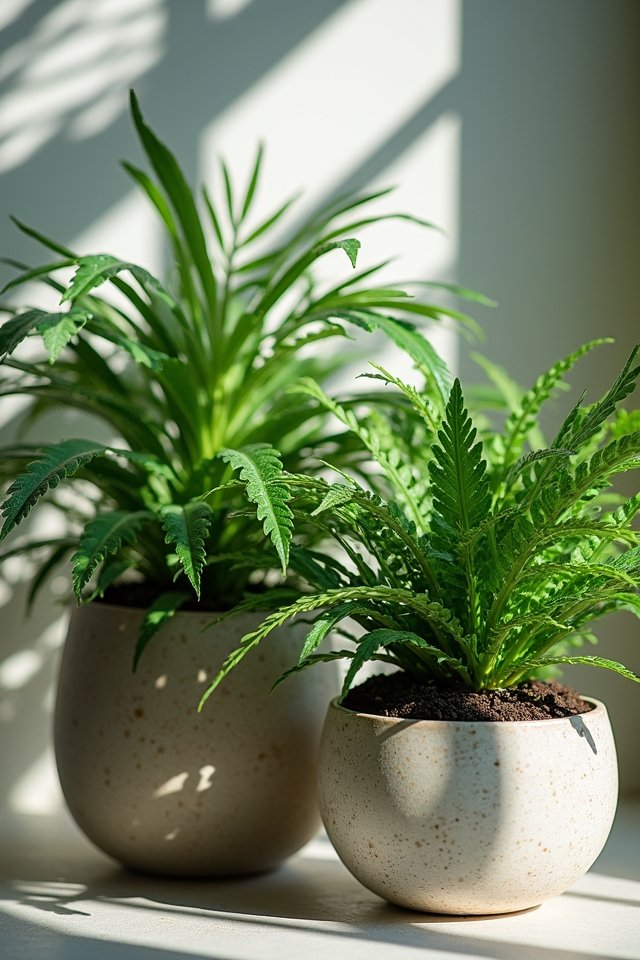
While you might think low light means low care, you’ll be pleasantly surprised to discover these green beauties thrive with just a bit of attention! To keep your low light container plants happy, follow these care tips:
- Understand their light requirements: Place them near a north-facing window or in rooms with filtered sunlight; they’ll love you for it!
- Perfect container placement: Rotate your pots every few weeks to guarantee all sides get some light. This avoids the dreaded “leaning” look!
- Dust off those leaves: Wipe away dust regularly to maximize their photosynthesis power; it’s like giving them a spa day!
With these simple steps, your plants will flourish, bringing vibrancy to your space. Who knew low light could shine so bright?
Watering Needs of Low Light Plants

Many low light plants are like that friend who thrives on minimal fuss—just the right amount of water, and they’re happier than a cat in a sunbeam! These beauties don’t need a deluge; instead, aim for consistent moisture retention in their soil. You’ll want to check the top inch—if it’s dry, it’s time for a drink! Overwatering can drown their roots, leading to unhappy plants and poor root health. So, you’re not just watering; you’re nurturing! Consider using pots with drainage holes to avoid soggy situations. And remember, each plant has its quirks, so get to know their preferences. Isn’t it exciting to see them flourish with just a sprinkle of love? Happy watering!
Fertilization Strategies for Container Gardening

Once your low light plants are happily hydrated, it’s time to give them a little extra love with the right fertilization strategies for container gardening! You want your plants to thrive, right? Here’s how:
- Choose the right fertilizer types: Go for a balanced, water-soluble fertilizer that’s perfect for indoor plants. Think of it as a delicious smoothie for your green friends!
- Mind your application frequency: Feed them every 4-6 weeks during the growing season. Just like you wouldn’t skip breakfast, don’t skip their meals!
- Tailor to your plants: Some love more nutrients than others. Observe their growth—like a chef tweaking a recipe until it’s just right!
With these tips, your low light plants will be the envy of the neighborhood! Happy gardening!
Common Pests and Diseases in Low Light Plants

Even though low light plants can be resilient, they’re not immune to common pests and diseases that can sneak in and wreak havoc! You might find spider mites or mealybugs lurking, ready to invade your leafy friends. Pest identification is key—look for tiny webs or white fuzzy spots!
Don’t fret, though; disease prevention is easier than you think! Regularly check your plants for yellowing leaves or unusual spots, which could signal trouble. Keep humidity levels balanced, as overly damp environments invite fungal diseases. A simple routine of wiping down leaves and using natural insecticidal soap can keep those pesky invaders at bay. Remember, a watchful eye is the first step toward a thriving, low-light oasis! Happy gardening!
Combining Plants for Aesthetic Appeal
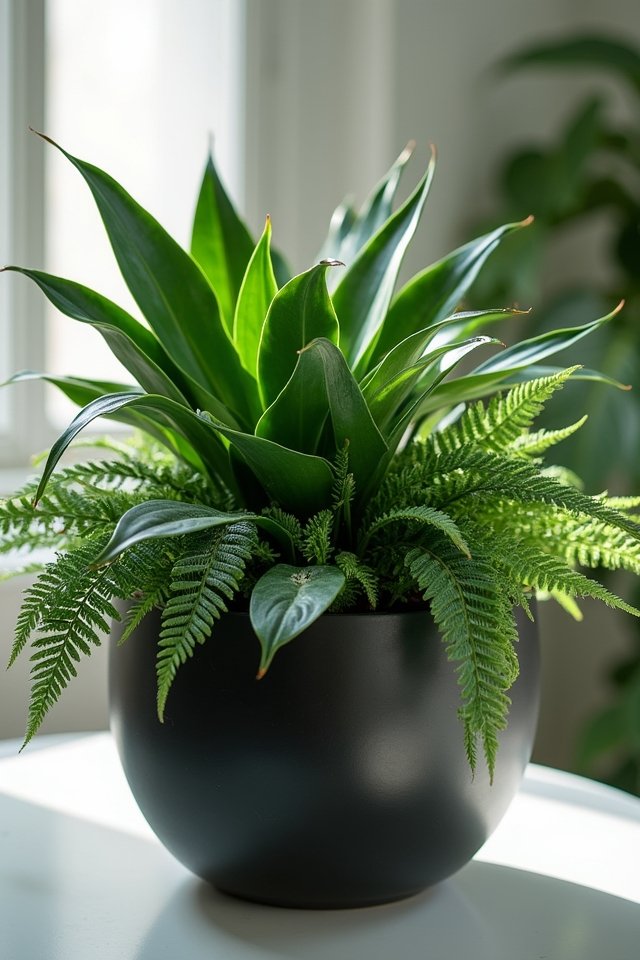
When it comes to combining plants for aesthetic appeal, think of it as creating your own little green masterpiece! You can elevate your indoor space with stunning color combinations and delightful texture contrasts. Here are three ideas to spark your creativity:
- Pair a vibrant, deep green snake plant with the soft, feathery leaves of a fern for a lush feel.
- Combine the bright, cheerful hues of a pothos with the rich, dark tones of a ZZ plant—talk about a showstopper!
- Mix the smooth, waxy texture of a peace lily with the rough, textured surface of a cast iron plant for an eye-catching contrast.
Start mixing and matching, and watch your low-light container transform into a fabulous focal point!
Seasonal Considerations for Low Light Gardening

As the seasons change, so do the needs of your low-light plants, and keeping them happy can feel like a dance! During spring, it’s all about vibrant seasonal planting—think fresh ferns and cheerful pothos. As summer heats up, watch for temperature fluctuations; your plants might need a little extra shade. Fall invites cozy vibes, so consider adding textured plants like snake plants, which thrive in dim light. In winter, when sunlight’s scarce, you may want to rotate your pots to maximize their exposure to any available light. Don’t forget to adjust your watering routine too! It’s a thrilling challenge, but with a little care, your low-light garden can flourish through every season! Isn’t that just delightful?
Frequently Asked Questions
Can Low Light Plants Survive Indoors Without Natural Sunlight?
Low light plants can thrive indoors without natural sunlight—think of them as the ninjas of indoor gardening! They’ve got unique light requirements, allowing you to create a green oasis even in dim corners. Consider a snake plant or pothos; they’re low-maintenance and resilient. Just remember, they still need a little love and care—like a cozy blanket on a chilly day! So, give your home some leafy charm, and watch them flourish!
How Often Should I Rotate My Low Light Container Plants?
You should rotate your low light container plants every couple of weeks! Just think of it as giving them a mini vacation! This plant rotation helps guarantee even light exposure and prevents them from leaning. Imagine your snake plant basking in glory! While rotating, check for any signs of distress—like droopy leaves or soil that’s too dry. A little TLC goes a long way, and your leafy friends will thrive! Keep it fresh!
Are There Specific Low Light Plants Safe for Pets?
If you’re looking for pet-friendly plants, consider the delightful spider plant or the charming Boston fern. Both are non-toxic options that’ll brighten your space without endangering whiskers or wagging tails. Imagine your furry friend sniffing around a lush green oasis! Watch them frolic without a worry! Just remember, while these plants are safe, it’s still wise to keep an eye on curious pets. Happy planting! Your home’ll be a vibrant haven!
Can I Use Artificial Light for Low Light Plants?
Absolutely, you can! Think of artificial light as the sun’s little helper, making your plants dance with joy! For low light plants, LED lights and fluorescent bulbs are your best friends. Aim for about 12-16 hours of light duration daily—like a perfect summer day! Just imagine your greenery soaking up that glow, thriving like it’s on vacation! So go ahead, light up their world and watch your indoor jungle flourish! 🌱✨
What Temperature Range Is Best for Low Light Container Plants?
For your low light container plants, the ideal temperature range is between 65°F to 75°F. Think of it like a cozy blanket—perfect for your leafy friends! During the winter, remember to make seasonal adjustments, keeping them warm and snug. If temperatures drop too low, they might sulk, just like you would on a chilly day. So, keep an eye on the thermometer, and your plants will thank you with vibrant growth!