The best soil mix for your raised beds is equal parts peat moss and composted manure! This combo works like magic, retaining moisture while packing in nutrients your plants crave. Think of peat moss as a cozy blanket, and the composted manure as a hearty meal—together, they help your plants grow strong and vibrant! Want to know what else helps your garden thrive? Stick around for more tips and tricks to elevate your gardening game!
Understanding Soil Composition
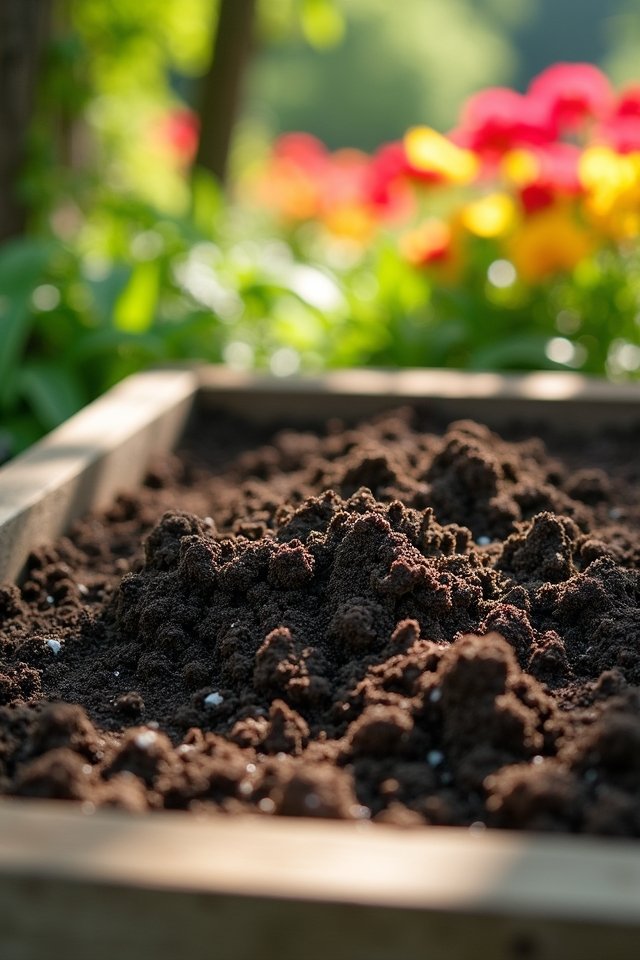
When you dig into gardening, understanding soil composition is like uncovering the treasure map to your plant’s success! Different soil types, like sandy, clay, or loamy, each have unique traits that impact your plants’ growth. Imagine sandy soil as a fast-running river, draining water quickly, while clay acts like a stubborn sponge, holding onto moisture. And let’s not forget about pH levels! They’re the secret spice that can make or break your garden. Most plants thrive in a slightly acidic to neutral range, between 6.0 and 7.0. So, grab that pH meter and dive deep! With the right soil composition, you’re not just planting seeds; you’re crafting a blossoming masterpiece! Ready to dig in? Let’s get innovative!
Key Ingredients for Raised Bed Soil Mix
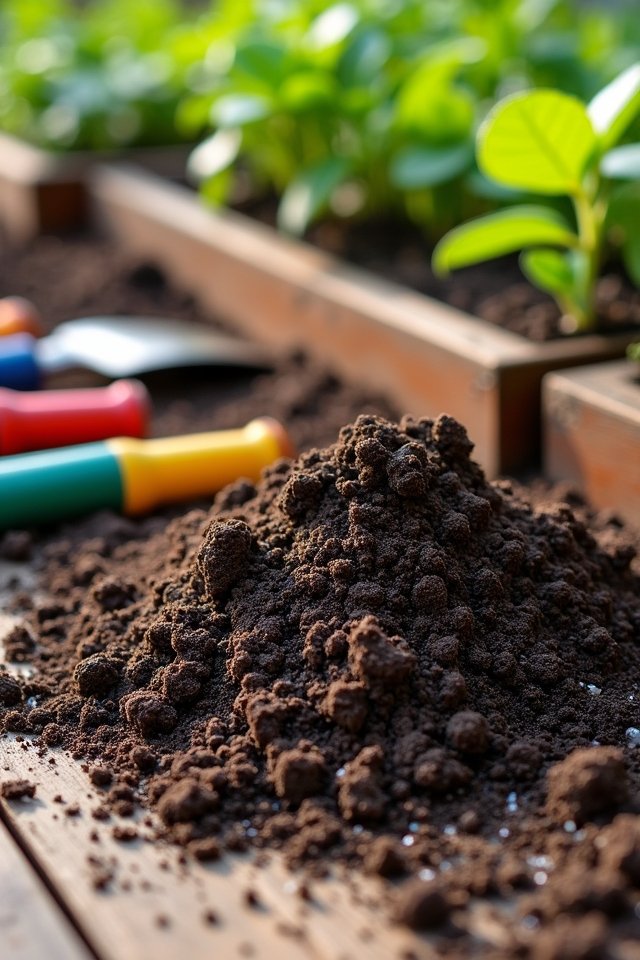
To create the perfect soil mix for your raised beds, you’ll want to blend a few key ingredients that work together like a well-rehearsed band! First up, grab some peat moss—it’s like a sponge, holding moisture and providing aeration for those enthusiastic roots. Next, toss in some composted manure, the rockstar of nutrients! It enriches your mix with essential vitamins and minerals, giving your plants a healthy boost. Think of it as a tasty smoothie for your garden! Combine these ingredients in equal parts, and you’ve got a winning formula. With this mix, your plants will thrive, and your garden will sing with vibrant colors. Ready to dig in and watch your green dreams flourish? Let’s do this!
The Importance of Drainage
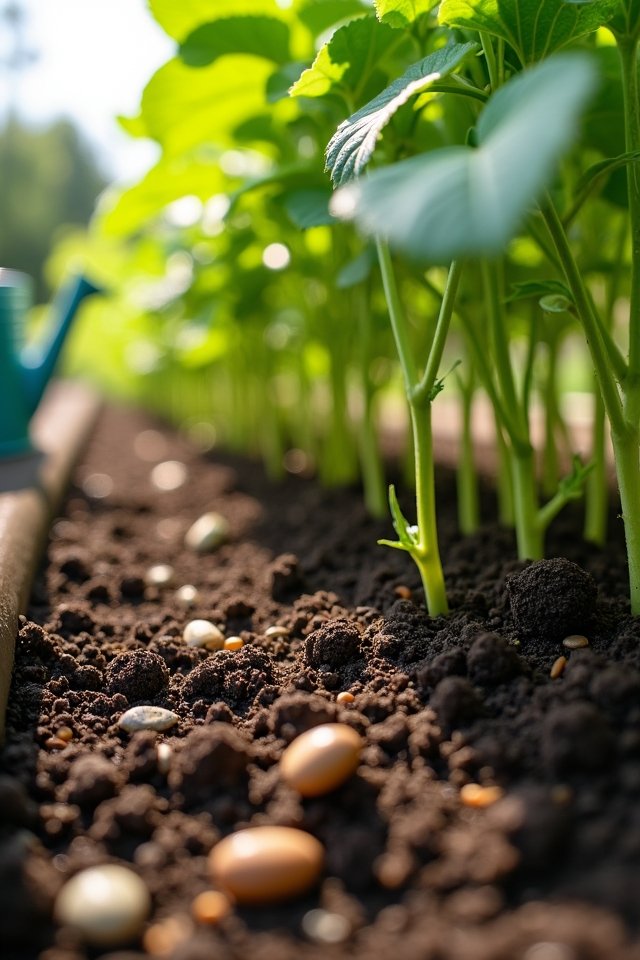
You’ve got your key ingredients for that perfect raised bed soil mix, but there’s one more superstar you can’t ignore—drainage! Think of it as your garden’s lifeboat. Without proper drainage solutions, water can pool like a bad party guest, drowning your plants in soggy despair. You want soil aeration to be a breeze, not a chore! Mixing in materials like perlite or coarse sand can create pathways for air and water, ensuring your plants breathe easy. Imagine roots stretching out, feeling the freedom of well-drained soil! So, don’t skimp on drainage—your plants will thank you with vibrant growth and bountiful harvests. After all, who wants a garden that’s more swamp than sanctuary? Let’s keep it fresh and fabulous!
Organic Matter and Nutrients
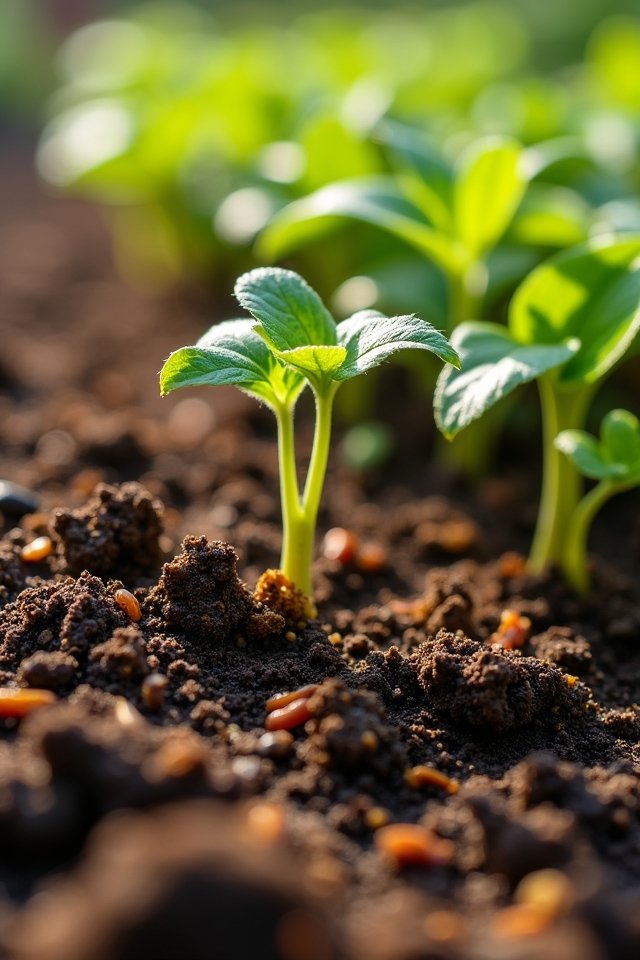
While the right balance of drainage is essential, organic matter and nutrients are the heartbeat of your raised bed soil. Think of compost as a smoothie for your plants—packed with the nutrients they crave! The compost benefits are immense, enriching your mix with microbial life and essential minerals. You want a nutrient balance that’s just right, not too rich that your plants get a bellyache! Picture your soil like a well-tuned orchestra, where every element plays its part in harmony. Adding well-rotted manure or leaf mold can amplify those benefits! So, dig in and get creative! Layer in diverse organic materials, and watch your plants thrive like they’re on a nutrient spree! What’s not to love about that?
Customizing Your Soil Mix for Different Plants
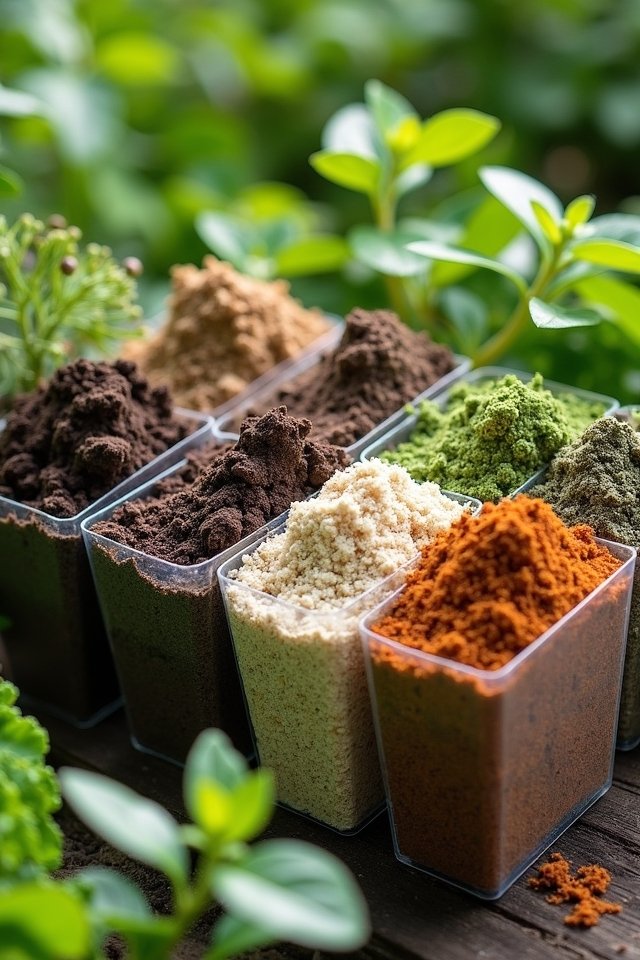
When you think about customizing your soil mix for different plants, it’s like preparing a special recipe tailored just for their tastes! Every plant has its own requirements, right? For instance, tomatoes love slightly acidic soil with a pH around 6.0 to 6.8, while blueberries thrive in a more acidic mix, around 4.5 to 5.5. You wouldn’t want to serve a gourmet meal without the right ingredients, so mix in organic matter like compost or peat moss to boost nutrients! And don’t forget drainage! Adding perlite or vermiculite can make your mix light and fluffy, giving roots room to breathe. So, roll up your sleeves, and let’s whip up those soil masterpieces for thriving plants! Happy gardening!
Tips for Maintaining Soil Health in Raised Beds
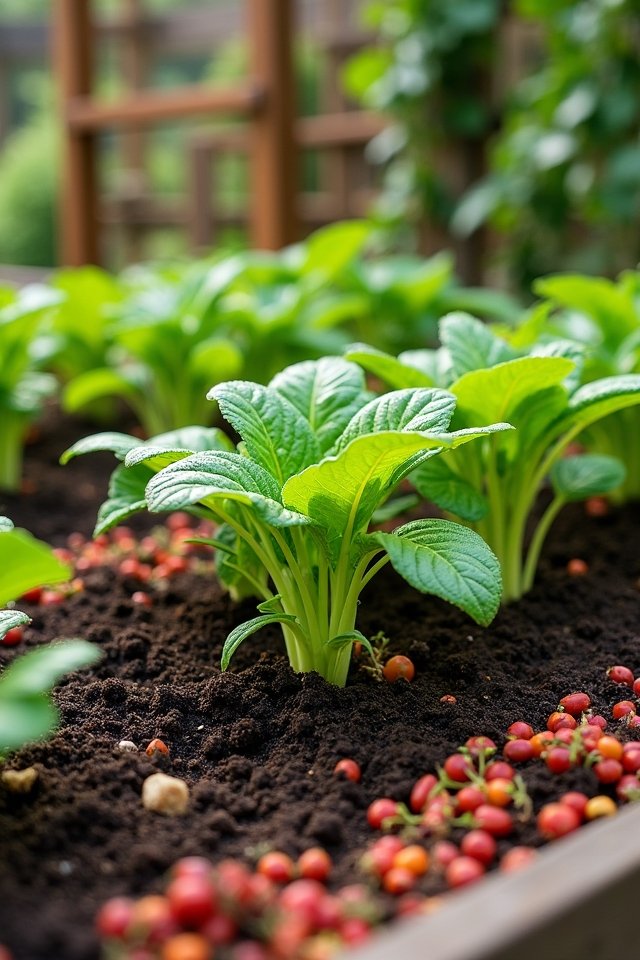
So, you’ve mastered the art of crafting the perfect soil mix for your beloved plants—now it’s time to keep that soil healthy and happy! First, welcome soil testing like it’s your new best friend. This helps you understand nutrient levels, so you can adjust accordingly. Think of it as giving your soil a health check-up! Next, practice crop rotation; it’s like a revitalizing vacation for your soil. By changing where you plant each season, you’ll keep pests guessing and nutrients balanced. And don’t forget to add organic matter—like compost—regularly! It’s like a spa day for your garden, rejuvenating the soil and boosting plant growth. With these tips, your raised bed will thrive like never before!
Frequently Asked Questions
How Often Should I Replace the Soil in Raised Beds?
You should replace the soil in your raised beds every few years, but don’t fret! Think of it as a soil replenishment party! During seasonal maintenance, check for signs of compaction or nutrient depletion. If your plants look less vibrant than a summer sunset, it’s time to rejuvenate. Mixing in compost or organic matter can revitalize your garden, like a revitalizing drink on a hot day! Keep it lively, and your plants will thank you!
Can I Use Garden Soil in Raised Beds?
You might be tempted to use garden soil in your raised beds, but hold on! While garden soil can offer benefits like nutrient richness, it often brings pesky weeds and poor drainage along for the ride. Raised beds, with their limitations, need a special mix to thrive. Think of it like a cozy blanket for your plants! Instead, try a blend of compost and topsoil for happy, healthy veggies. Your garden will thank you!
What Are the Signs of Poor Soil Quality?
You’ll spot poor soil quality when you see signs like soil compaction, making it as hard as a rock! If your plants struggle to grow, it’s likely due to a nutrient imbalance—think of it as them missing out on a delicious buffet! Look for dry, cracked surfaces or sparse vegetation. If your soil feels like concrete instead of fluffy goodness, it’s time to rejuvenate it. Happy gardening!
Is It Better to Buy Premixed Soil or Make My Own?
Choosing between premixed soil and making your own is like picking between a delicious cake and baking it yourself! Premixed benefits include convenience; you get quality soil without the hassle. However, homemade drawbacks can leave you frustrated, as mixing your own demands time and precision. If you’re after a tailored blend, go DIY! But if you want to dig in right away, grab that premix and let the planting begin! Isn’t gardening thrilling?
How Deep Should My Raised Bed Soil Be?
Soil depth in your raised bed is key for healthy roots! Aim for at least 12 inches, but if you’re feeling adventurous, go for 18 inches! Deep soil allows roots to stretch and breathe, just like you do after a long day. Think of it as giving your plants a cozy, spacious apartment! Don’t forget, the deeper the soil, the more moisture and nutrients they can soak up. Ready to dig in? Let’s grow!