If you’re aiming for a bountiful raised bed garden, you need a winning soil mix! Combine loamy soil with compost, peat moss, and perlite for a nutrient-rich, breathable blend. Imagine your plants thriving in a cozy, nourishing bed, just like a spa day for their roots! Add in worm castings for an extra nutrient boost, and watch those veggies burst with flavor! Curious about seasonal maintenance or specialty mixes? Stick around; there’s plenty more to uncover!
Understanding Soil Composition
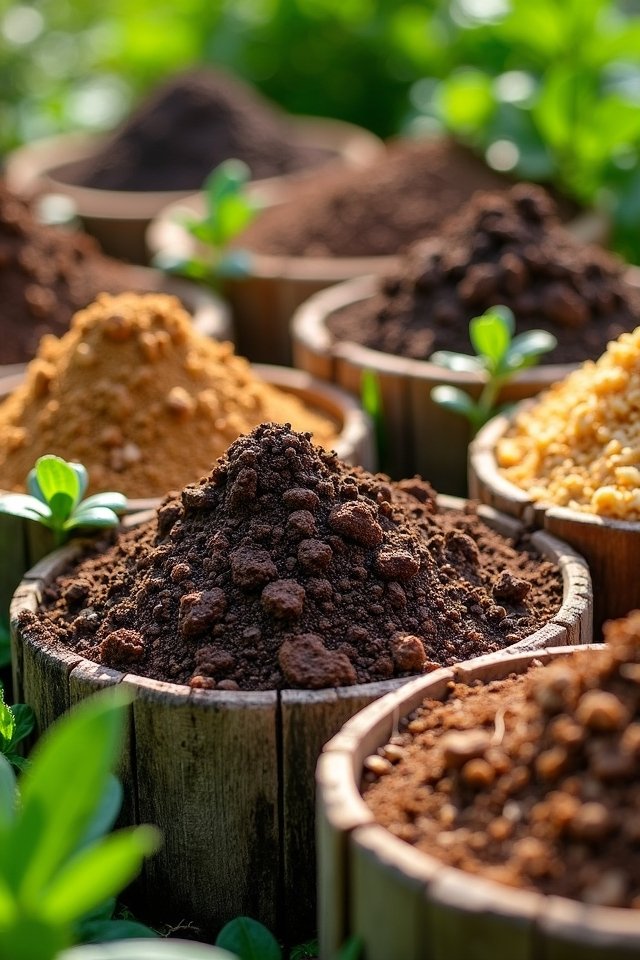
When you dig into raised bed gardening, understanding soil composition is like discovering the secret sauce for your plants! Imagine your soil as a gourmet dish, where every ingredient plays an essential role. The right mix of soil particles—sand, silt, and clay—can create a nutrient-rich haven. You want that perfect nutrient balance, like a symphony where each note harmonizes beautifully!
Too much clay? Your plants might feel like they’re stuck in quicksand! Not enough organic matter? They’ll be starving for nutrients! So, blend compost, peat moss, and vermiculite to create a luscious, textured mix. It’s like giving your plants a VIP ticket to the growth party! Ready to whip up your soil masterpiece? Let’s get growing!
The Importance of Drainage
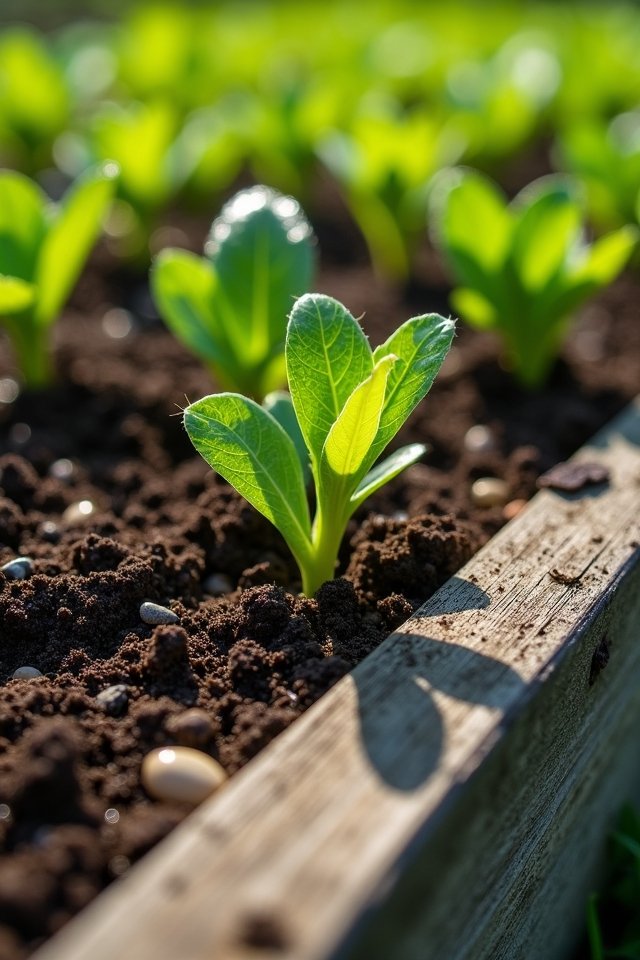
While you might think soil is just dirt, it’s actually the lifeblood of your garden, and drainage is its heartbeat! Without proper drainage solutions, your plants could drown in soggy soil, suffocating their roots. Imagine your plants gasping for air, just like you would after a long swim! Good soil aeration allows roots to breathe, promoting healthy growth and vibrant blooms. When you mix in materials like perlite or sand, you create a fluffy, breathable environment. Think of it as giving your plants a cozy, airy home! So, don’t skimp on drainage—your garden deserves the best! After all, happy roots lead to flourishing gardens, and who wouldn’t want that? Let’s get those plants thriving!
Compost: The Nutrient Powerhouse
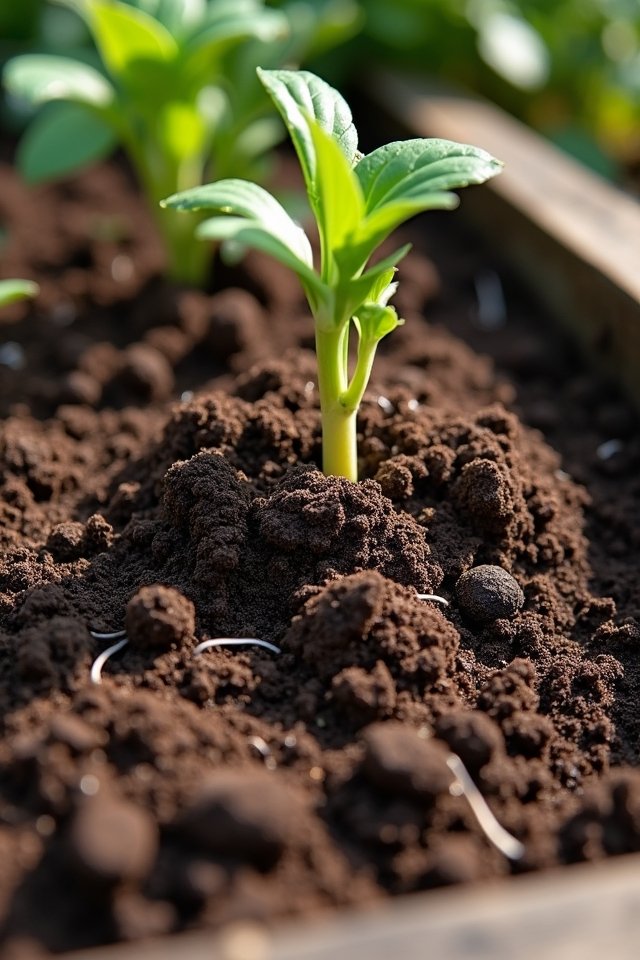
Compost is like a magical elixir for your garden, turning kitchen scraps and yard waste into a nutrient powerhouse! The compost benefits are endless, making your raised beds thrive like never before. Imagine rich, dark soil that smells like earth after a rainstorm, bursting with life!
Here are three compost types to supercharge your gardening:
- Kitchen Compost: Banana peels, coffee grounds, and veggie scraps, oh my!
- Yard Compost: Grass clippings, leaves, and small branches create a vibrant mix!
- Worm Castings: These slimy little treasures pack a punch of nutrients!
Choosing the Right Base Soil
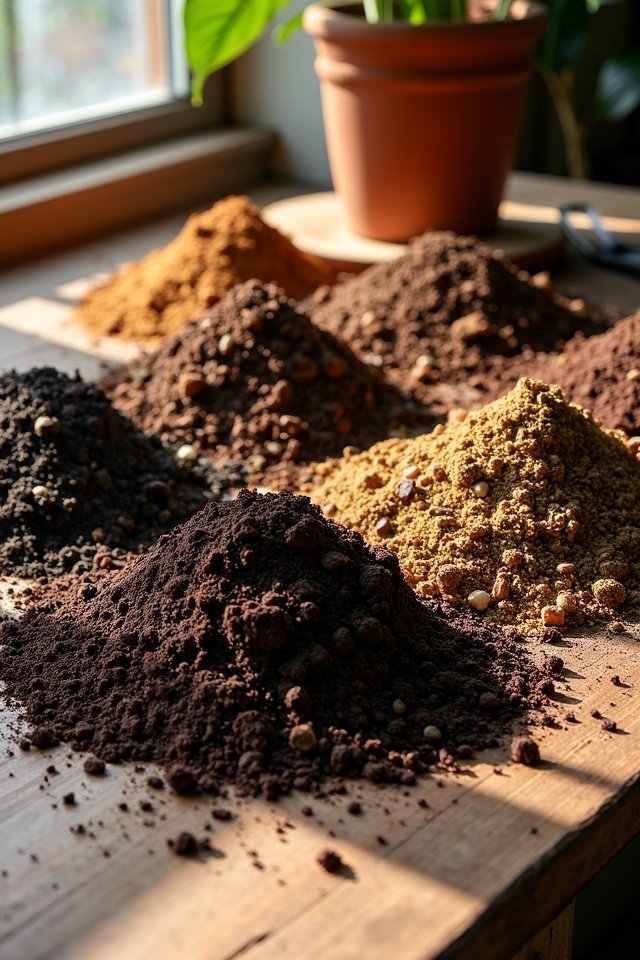
Choosing the right base soil for your raised beds is essential if you want your plants to flourish! Think of your garden as a cozy home—its foundation matters. When it comes to base soil selection, look for a mix that balances soil texture; ideally, you want loamy soil. Loam feels like a soft, buttery hug for your roots!
Avoid overly sandy or clay-heavy options, which can leave your plants feeling stranded. Instead, aim for a blend that retains moisture while draining excess water, creating a happy medium. Consider testing your soil for pH levels, too! Who knew base soil could be so intriguing? Immerse yourself in this adventure, and your plants will reward you with lush, vibrant growth!
Incorporating Organic Matter
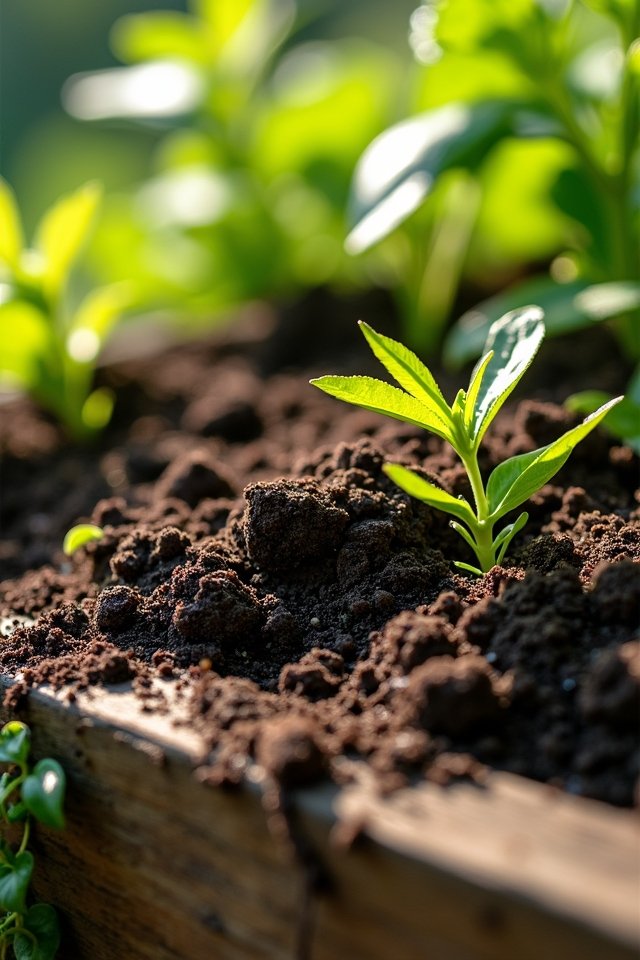
Incorporating organic matter into your raised bed soil is like adding the secret ingredient to your favorite recipe—it transforms everything! Imagine your plants thriving with rich nutrients and vibrant colors. You can achieve this by mixing in:
- Worm castings for their amazing benefits, like boosting plant growth and enhancing soil structure.
- Green manure, which adds essential nutrients while improving soil texture, giving your plants a cozy home.
- Compost, a delightful blend of kitchen scraps and yard waste, that creates a nutrient-rich environment.
These organic wonders not only nourish your garden but also promote beneficial microorganisms. So, get ready to dig in! Your plants will thank you, and you’ll discover the joy of lush, bountiful harvests. Who knew gardening could be this rewarding?
The Role of Mulch in Soil Mixes
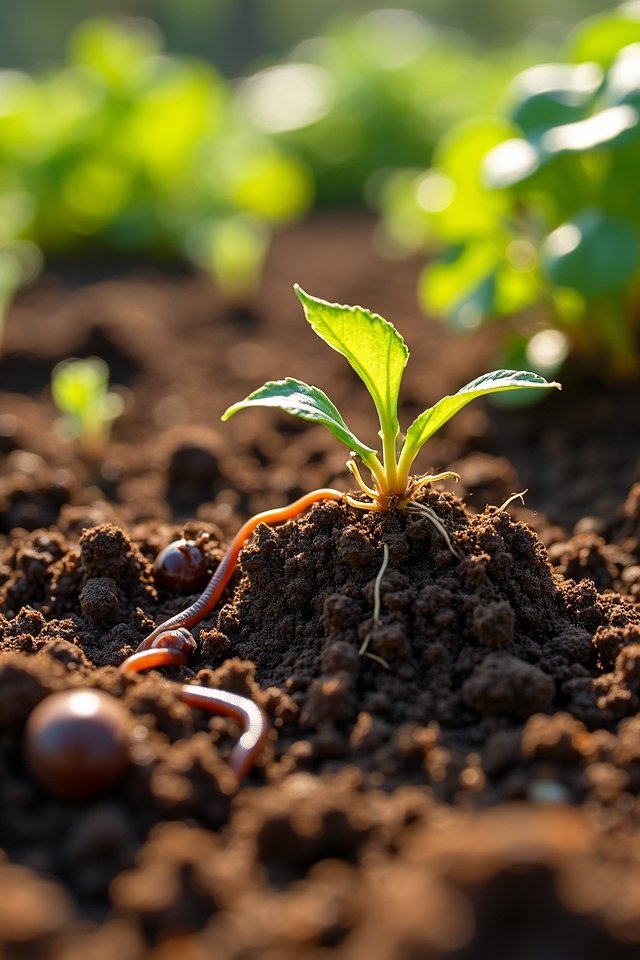
Mulch is like a cozy blanket for your garden beds, offering protection and nourishment all at once! Imagine your plants snuggling under a warm layer that keeps moisture in while keeping pesky weeds out. That’s the magic of mulch benefits! By applying a thick layer, you’re not just decorating your garden; you’re also practicing effective weed suppression. Less competition means your plants can thrive and soak up all the nutrients they need! Plus, as mulch breaks down, it feeds your soil, making it richer and more vibrant. So, go ahead and experiment with different types—straw, wood chips, or shredded leaves. Your plants will thank you, and you’ll enjoy a thriving garden oasis that’s as beautiful as it is bountiful!
Specialty Mixes for Specific Plants
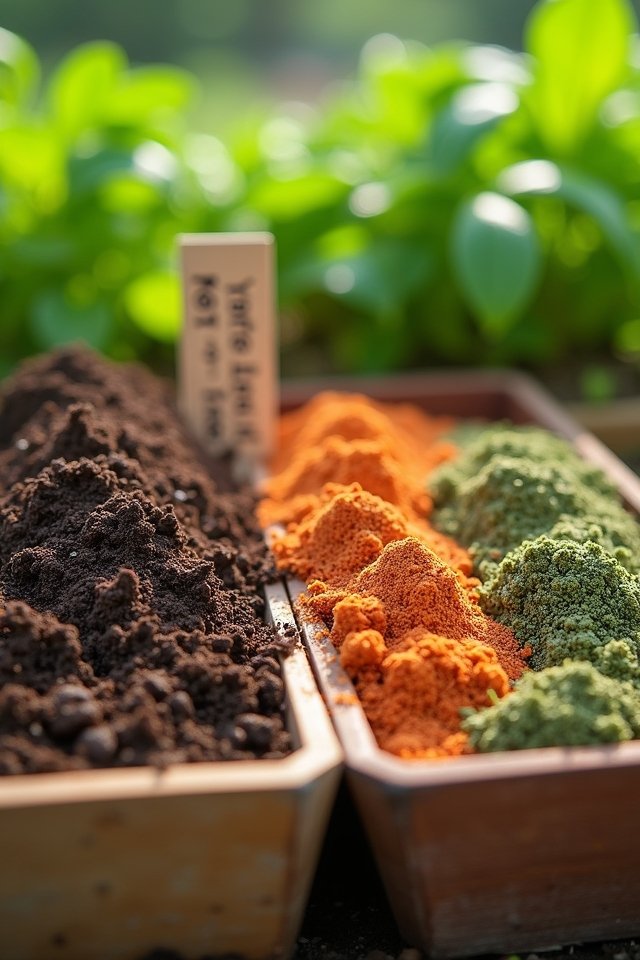
When it comes to crafting the perfect soil mix for your raised bed, think of it like tailoring a suit—different plants have unique needs! For those keen on innovation, consider creating specialty mixes.
- Herb specific mixes: Think rich, aromatic blends of peat, compost, and sand for basil and thyme.
- Vegetable blends: Combine loamy topsoil with organic matter and nutrients for tomatoes and peppers to thrive.
- Flower power: Mix in perlite and vermiculite for your vibrant blooms, ensuring they get the drainage they crave.
Testing and Adjusting Ph Levels

Understanding the pH levels of your soil is like checking the temperature before diving into a pool—you want it just right! You can’t just guess; pH testing is essential for thriving plants. Grab a simple soil test kit, and in minutes, you’ll know if your soil’s too acidic or alkaline. If it’s out of whack, don’t fret! You can make adjustments with effective soil amendments. Need to raise the pH? Sprinkle some lime! Want to lower it? Try adding sulfur—easy peasy! Remember, your plants will thank you when they’ve got the perfect pH balance, flourishing with vibrant colors and bountiful yields. So, roll up those sleeves, and let’s get testing! Your garden deserves it!
Seasonal Maintenance of Soil Mixes
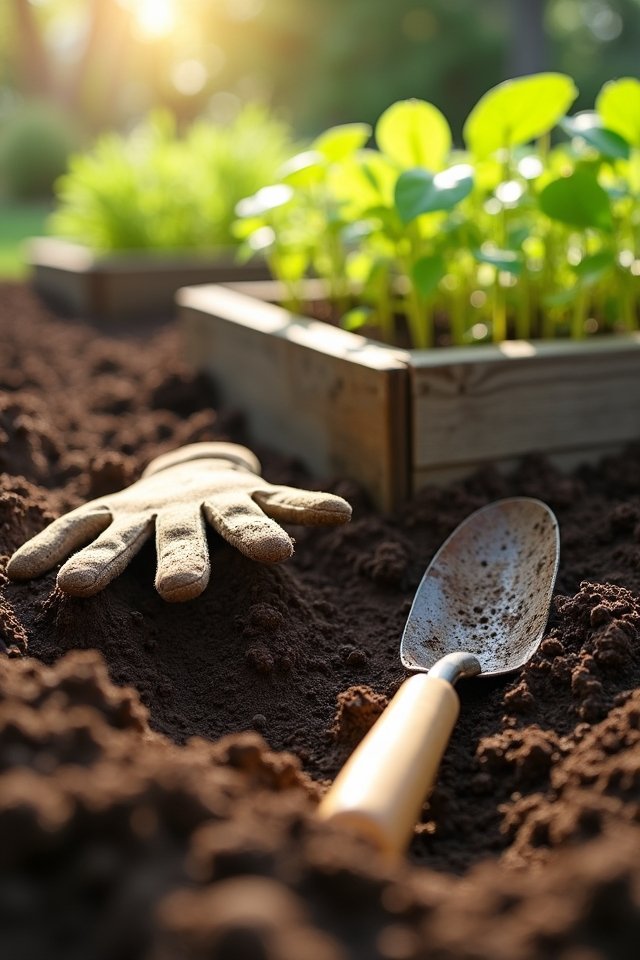
To keep your raised bed garden thriving, seasonal maintenance of your soil mix is like giving your plants a rejuvenating spa day! You’ll want to make those seasonal adjustments and guarantee good soil replenishment. Imagine this:
- Refreshing nutrients: Add organic compost for that nutrient boost your plants crave!
- Aerating the soil: Loosen compacted soil—think of it as a gentle massage for those roots!
- Testing moisture levels: Confirm your soil retains just the right amount of water—like a perfectly hydrated sponge!
With these quick steps, your soil will be ready to support vibrant growth. So, grab your gardening gloves and give your plants the pampering they deserve! After all, happy soil equals happy plants!
Frequently Asked Questions
How Often Should I Replace the Soil in My Raised Beds?
You should replace the soil in your raised beds every 2 to 3 years for ideal soil health! Think of it like giving your garden a fresh start. Seasonal maintenance is key, so consider adding compost or organic matter each spring. If you notice poor drainage or nutrient depletion, it’s time to refresh! Your plants will thrive like never before, and you’ll enjoy bountiful harvests that’ll make your neighbors green with envy!
Can I Use Garden Soil in My Raised Bed Mixes?
You can use garden soil in your raised bed mixes, but beware of the drawbacks! While garden soil offers nutrients and a natural feel, it often compacts and drains poorly, like a soggy sponge! Mixing it with compost or peat can create a fabulous blend. Imagine your plants thriving in a fluffy, rich environment! So go ahead, try garden soil, but balance it out for the best results. Your veggies will thank you!
What Is the Ideal Depth for Raised Bed Soil?
Imagine this: your raised bed’s like a cozy little apartment for plants! The ideal depth for raised bed soil is usually around 12 to 18 inches. This depth allows for that perfect soil composition, letting roots stretch and drink in nutrients. You’ll reap fabulous raised bed benefits, like better drainage and fewer weeds! So, dig deep, and watch your garden flourish—your plants will thank you for their luxurious living quarters!
How Do I Store Leftover Soil Mix for Later Use?
Got some leftover soil mix? Great! For ideal soil storage and preservation, keep it in a cool, dry place—think of it as a cozy blanket for your plants! Use airtight containers or heavy-duty bags to prevent moisture and pests from crashing the party. Label them, so you won’t forget what’s inside. And hey, don’t hesitate to mix in some compost later for a nutrient boost! Your future garden will thank you!
Can I Use Soil From My Yard for Raised Beds?
Isn’t it tempting to dig up that rich, dark soil from your yard? While yard soil can bring benefits, like nutrients from your garden, you’ve gotta think about soil quality concerns. It might be compacted or full of weeds! Mixing it with compost can boost its magic! Just imagine your plants thriving in a cozy, nutrient-rich bed. So, go ahead, but be smart about it—your veggies will thank you!