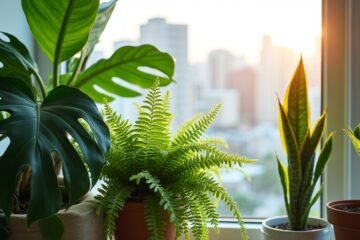
Starting a raised bed garden is so exciting! First, pick a sunny spot with good drainage—think of it as your plants’ happy place. Choose rot-resistant wood like cedar, and craft beds about 4 feet wide and 12 to 24 inches high. Fill them with nutrient-rich soil, mixing in compost to create a lush home! Don’t forget to water wisely and stay on the lookout for pesky critters! Want more tips to get those veggies thriving? Keep going!
Choose the Right Location
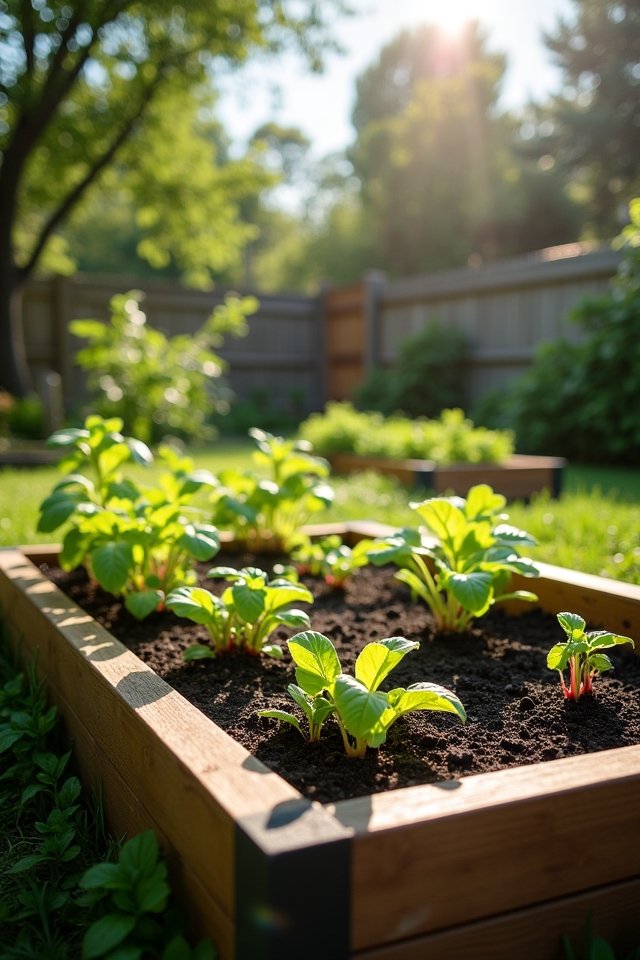
Choosing the right location for your raised bed garden is like picking the perfect spot for a picnic—sunny, breezy, and just far enough from the ants! You’ll want to scout an area that gets at least six hours of sunlight daily. Imagine your plants soaking up those rays, thriving like they’re on a tropical vacation! But don’t forget about drainage considerations. If rainwater lingers like an unwanted guest, your plants could drown. Look for a spot where water drains away easily, maybe on a slight slope. Picture your bed nestled in a cozy corner, surrounded by vibrant blooms and fluttering butterflies. By carefully choosing this prime real estate, you’ll set the stage for a flourishing garden and endless satisfaction!
Select Quality Materials
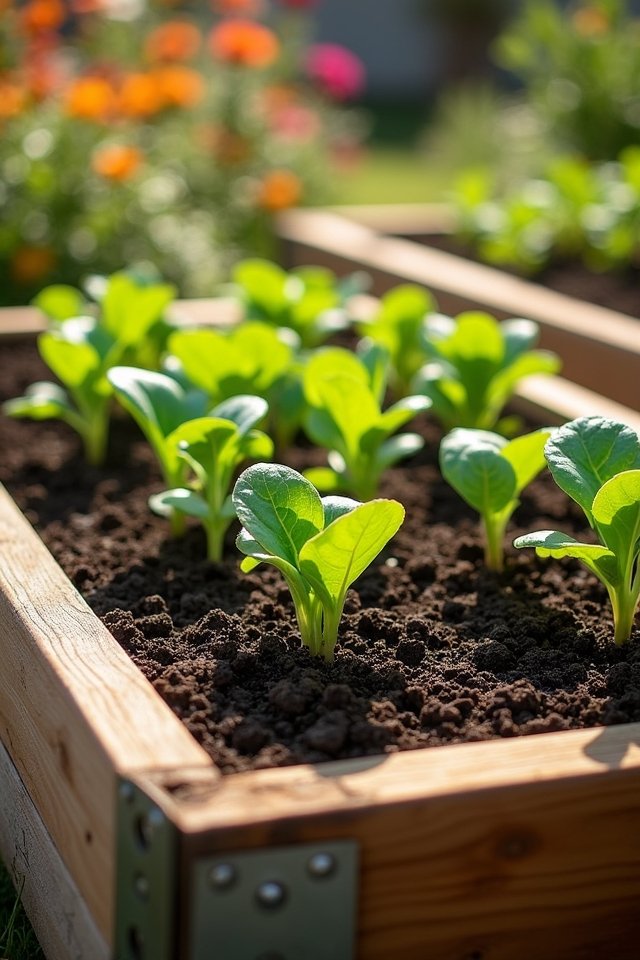
Once you’ve found that perfect sunny spot for your raised bed garden, it’s time to think about what materials you’ll use to build it. Choosing the right wood types is essential for garden durability! Cedar and redwood are fantastic options; they’re naturally resistant to rot and pests. Imagine the rich, warm hues of cedar contrasting with vibrant green plants! If you’re feeling innovative, consider composite materials too—they’re eco-friendly and can last for years without splintering. Avoid pressure-treated lumber—those chemicals can leach into your soil. Think about the look you want, too. A rustic charm or sleek modern design? Your raised bed is your garden’s canvas! So gather those quality materials, and let your gardening adventure begin!
Determine the Size of Your Beds
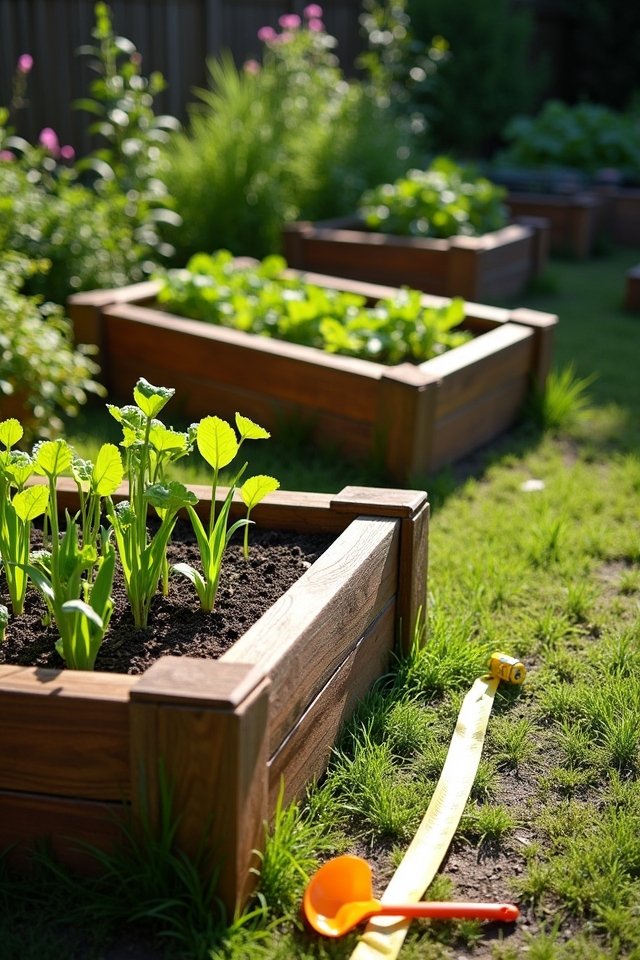
When it comes to raised bed gardens, size truly matters! You’ll want to get the bed dimensions just right for your space and plants. Consider how much room you have and what you want to grow.
- Standard sizes are often 4 feet wide by 6 to 8 feet long.
- Aim for a height of 12 to 24 inches for easy access.
- Keep in mind the width; you should be able to reach the center without a gymnastics routine!
- Think about your climate; taller beds can warm up faster in spring.
- Don’t forget aesthetics; larger beds can create a striking focal point in your yard!
With the right size, you’ll be well on your way to a flourishing garden!
Prepare the Soil Properly
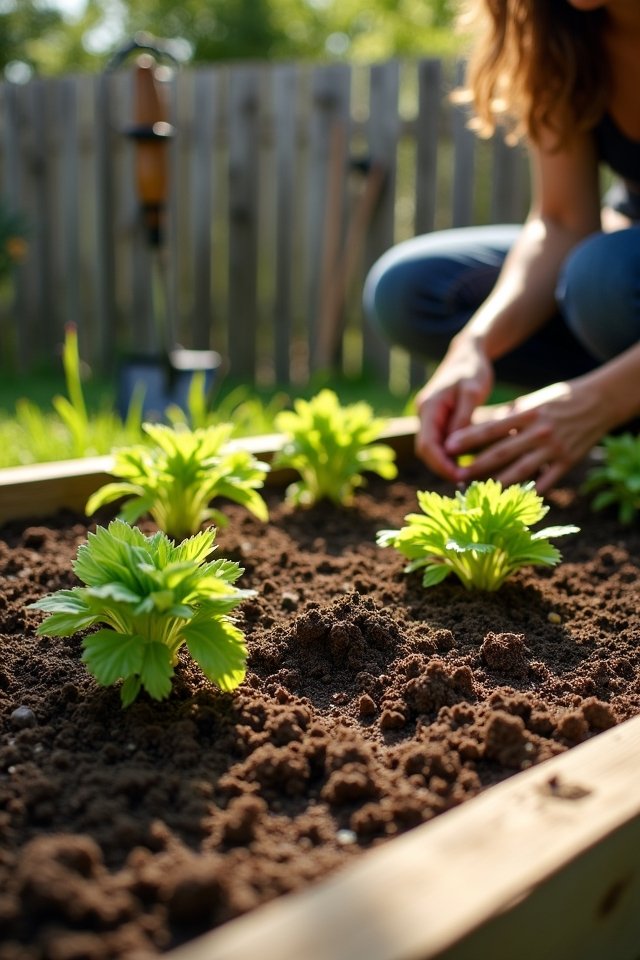
Before you plunge into planting, it’s essential to give your soil the royal treatment it deserves! Think of your soil as the foundation of a cozy home for your plants. Start with soil testing—this will reveal what nutrients are missing. Who doesn’t want a thriving garden, right? Once you know what you’re working with, it’s time to mix in some soil amendments. Consider compost, well-rotted manure, or even worm castings to supercharge your soil! These magical ingredients improve structure, drainage, and fertility. Picture your plants dancing with joy in that nutrient-rich haven! So roll up your sleeves, dig in, and create a vibrant environment where your garden can flourish. Your green thumbs will thank you later!
Plan Your Garden Layout
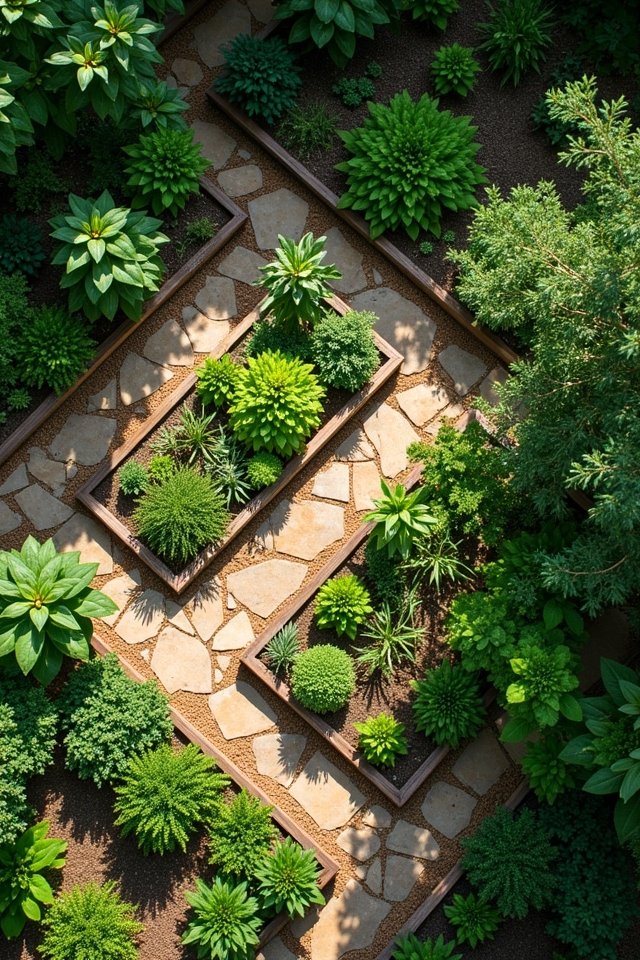
Creating a thoughtful garden layout can feel like planning a party—every plant has a role to play! Imagine your garden theme as a vibrant tapestry, where colors and textures intertwine. Consider these innovative tips for your layout:
- Use companion planting to boost growth and repel pests.
- Group plants by height, so taller ones don’t overshadow shorter guests.
- Design pathways for easy access, like a dance floor for your plants!
- Leave space for future expansions—your garden’s just getting started!
- Incorporate vertical elements, like trellises, for added flair!
With a little creativity, you’ll create a lively garden that not only looks great but thrives! So, are you ready to host your very own botanical bash? 🌼
Select Suitable Plants
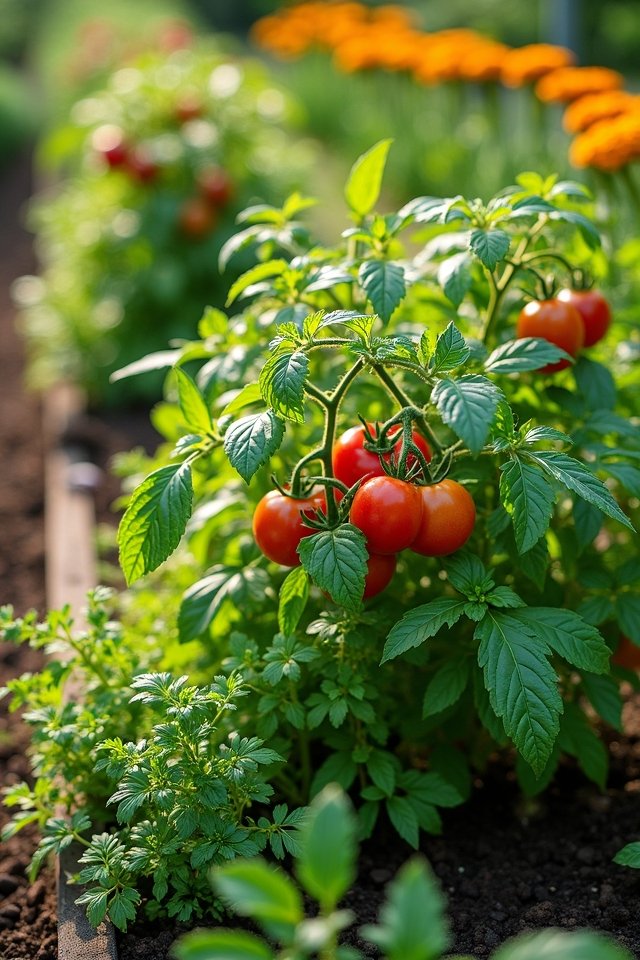
Selecting suitable plants for your raised bed garden is like assembling a dream team—each player brings unique strengths to the field! Think about companion planting; pairing plants like tomatoes and basil can boost growth and flavor. Imagine that heavenly aroma wafting through your garden! For seasonal selection, opt for cool-weather crops like kale and radishes in the spring, then switch to vibrant summer favorites like peppers and zucchini. Visualize that colorful harvest waiting for you! Don’t be afraid to mix flowers with veggies—marigolds can deter pests while adding a splash of color! Remember, the right combination can create a thriving ecosystem. So, get excited and let your creativity blossom! What will your dream team look like?
Implement Efficient Watering Techniques
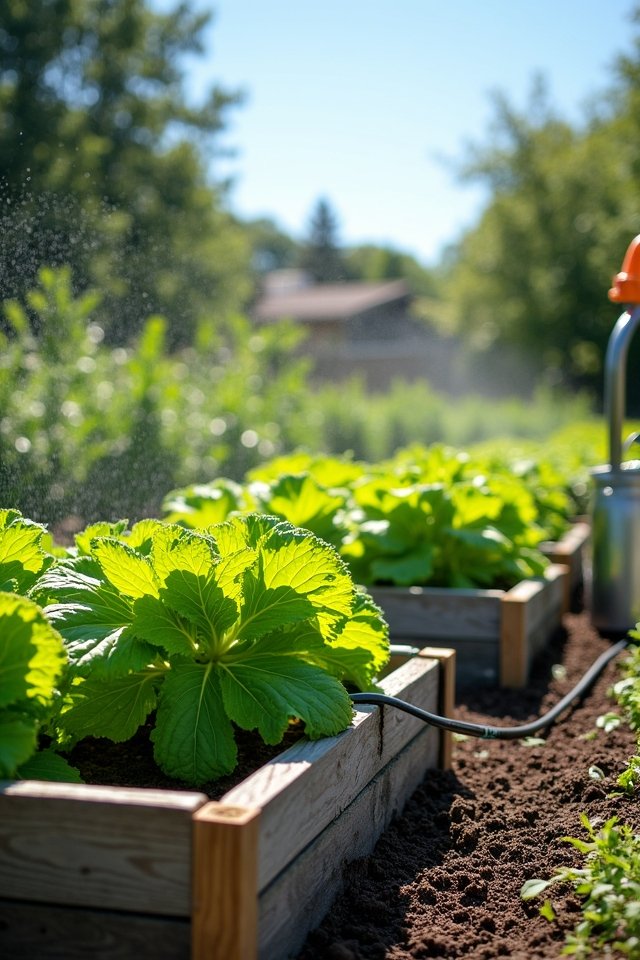
Watering your raised bed garden can feel like a balancing act, especially when you want those plants to thrive! You don’t want a soggy mess or a parched desert. So, why not adopt innovative watering techniques? Drip irrigation is a game-changer, delivering water directly to the roots, saving time and resources. Plus, using rain barrels can help catch those precious raindrops, turning Mother Nature into your garden’s best ally!
- Install drip lines for precise watering.
- Collect rainwater to conserve resources.
- Water early in the morning for maximum absorption.
- Check soil moisture regularly to avoid overwatering.
- Use a timer to streamline your routine.
With these techniques, your garden will flourish, and you’ll feel like a horticultural genius!
Use Mulch for Weed Control
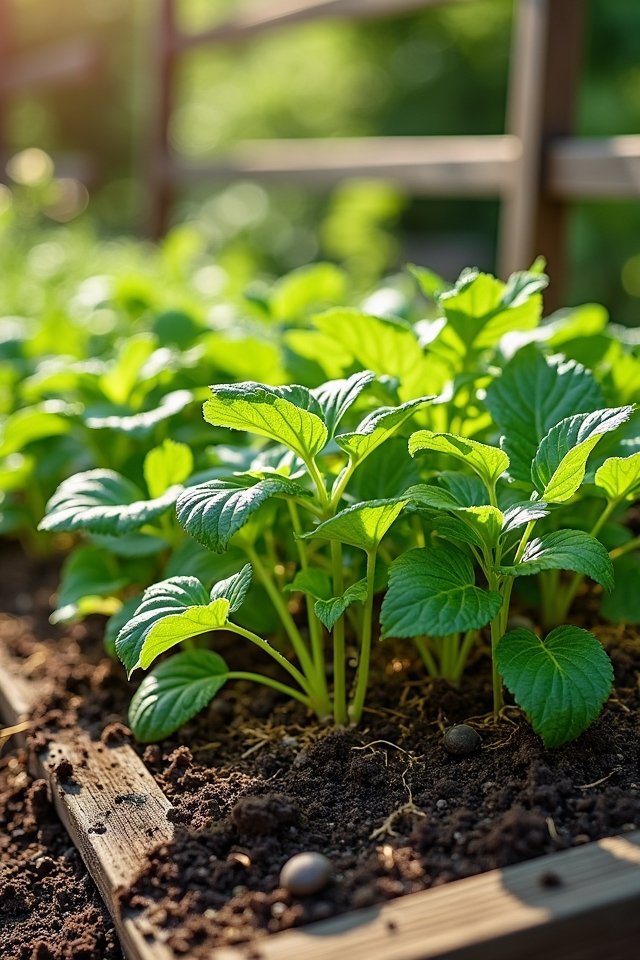
Weeds can feel like uninvited guests at a garden party, right? Luckily, you can shoo them away with organic mulching! Picture a cozy blanket of mulch types, like straw, wood chips, or shredded leaves, hugging your soil. This layer acts as a shield, blocking sunlight and preventing those pesky weeds from sprouting. Plus, it retains moisture, so your plants stay hydrated and happy. Want to get innovative? Try using cardboard as a base layer before adding your preferred mulch. It’s like a two-for-one deal! Not only does it suppress weeds, but it also enriches your soil as it breaks down. So, grab that mulch and transform your raised bed garden into a thriving oasis free from unwanted guests!
Monitor for Pests and Diseases

As you immerse yourself in the wonderful world of gardening, keeping an eye out for pests and diseases is essential—after all, you want your plants to thrive, not just survive! Regularly checking your plants isn’t just a good habit; it’s a crucial step in pest identification and disease prevention.
Here are some tips to keep your garden healthy:
- Inspect leaves for tiny holes or discoloration.
- Look under leaves for sneaky pests like aphids.
- Keep an eye out for unusual spots or wilting plants.
- Use beneficial insects, like ladybugs, to combat pests naturally.
- Apply organic treatments at the first sign of trouble.
Stay vigilant, and your garden will flourish like never before! Who knew gardening could be such an adventure?
Rotate Crops Annually
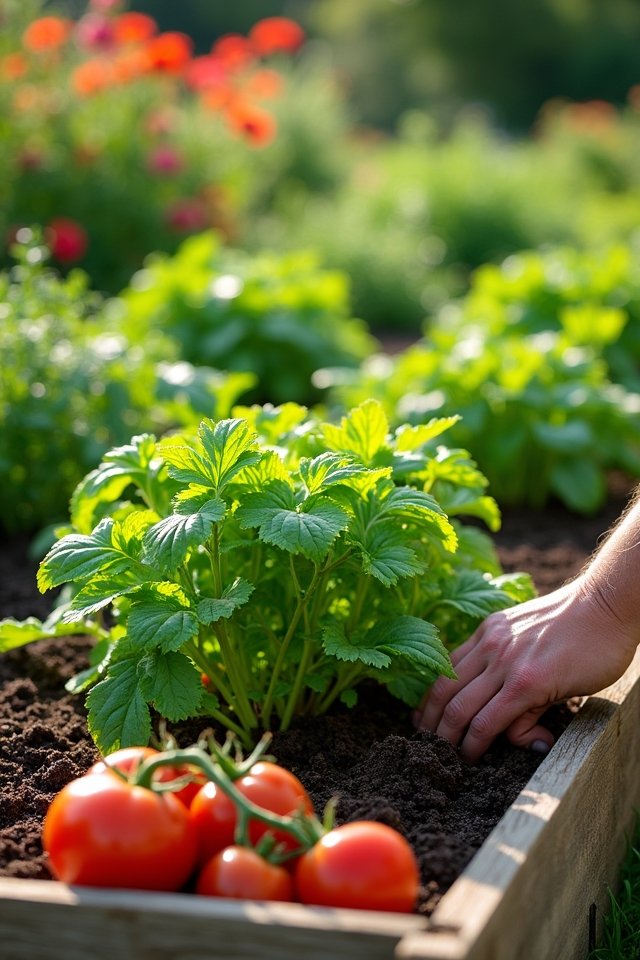
After you’ve tackled pests and diseases, it’s time to think about how to keep your soil happy and healthy! One fantastic way to do this is by rotating your crops annually. Think of it as giving your soil a revitalizing makeover! By mixing up your plants each year, you’ll enhance crop diversity and keep those soil nutrients buzzing. For example, if you planted tomatoes last year, try beans or carrots this time. It’s like a delicious surprise party for your soil! Not only does this prevent nutrient depletion, but it also reduces the risk of pests and diseases. So, give your garden a little shake-up each season, and watch it thrive like never before! Isn’t that exciting?
Frequently Asked Questions
How Much Sunlight Do Raised Beds Need Daily?
Your raised beds need about six to eight hours of sunlight daily! Think of your plants as sunbathers, soaking up those rays to grow strong and vibrant. For ideal garden placement, choose a spot that’s not shaded by trees or buildings. Imagine a sun-drenched paradise! If your plants look leggy or pale, they’re probably craving more light. So, find that perfect sunny spot and let your garden flourish!
Can I Use Pressure-Treated Wood for Raised Beds?
You might be wondering if you can use pressure-treated wood for your raised beds. While it can look great and hold up well, there’s a catch! The chemicals used for treatment could leach into your soil, affecting wood safety for your veggies. If you’re aiming for a pristine garden aesthetics, consider rot-resistant options like cedar or redwood instead. They’ll keep your garden as vibrant as a summer sunrise, without the worries!
How Deep Should My Raised Bed Be for Vegetables?
Oh, you thought you could skimp on depth for your veggies? Not a chance! For raised bed dimensions, aim for at least 12 inches deep—think of it as a cozy blanket for your roots! If you’re growing larger plants like tomatoes, 18 inches is even better. This soil depth allows for healthy growth and moisture retention. So, get digging! Your future harvest will thank you for giving those veggies room to thrive!
What Is the Best Way to Protect Plants From Frost?
To protect your precious plants from frost, you’ve got some nifty options! Frost blankets are like cozy pajamas for your garden, shielding delicate leaves from chilly air. Plant covers can be your garden’s superhero capes, too! Just drape them over your plants at night, creating a snug little haven. Don’t forget to remove them during sunny days, or your plants might feel like they’re in a sauna! Keep your greens warm and thriving!
How Do I Extend the Growing Season in Raised Beds?
Wanna extend your growing season in those fabulous raised beds? You’ve gotta think creatively! Try using row covers or cold frames to trap warmth, like a cozy blanket for your plants. Choose resilient plant selections—think kale, spinach, or even hardy radishes—that thrive in cooler temps. And hey, don’t forget to mulch! It’s like giving your plants a warm hug. With these tricks, you’ll be gardening long after the frost bites!