To keep your raised beds thriving, you’ve got to outsmart those pesky pests! Start by identifying culprits like aphids or cucumber beetles, and invite friendly bugs like ladybugs to your garden party. Use companion planting—marigolds with tomatoes repel nasties, while basil lures in helpful insects. Don’t forget homemade sprays with peppermint or neem oil! And let’s not overlook regular checks on your plants. It’s like a daily garden hug! Want to uncover more secrets to protect your plants?
Understanding Common Pests in Raised Beds
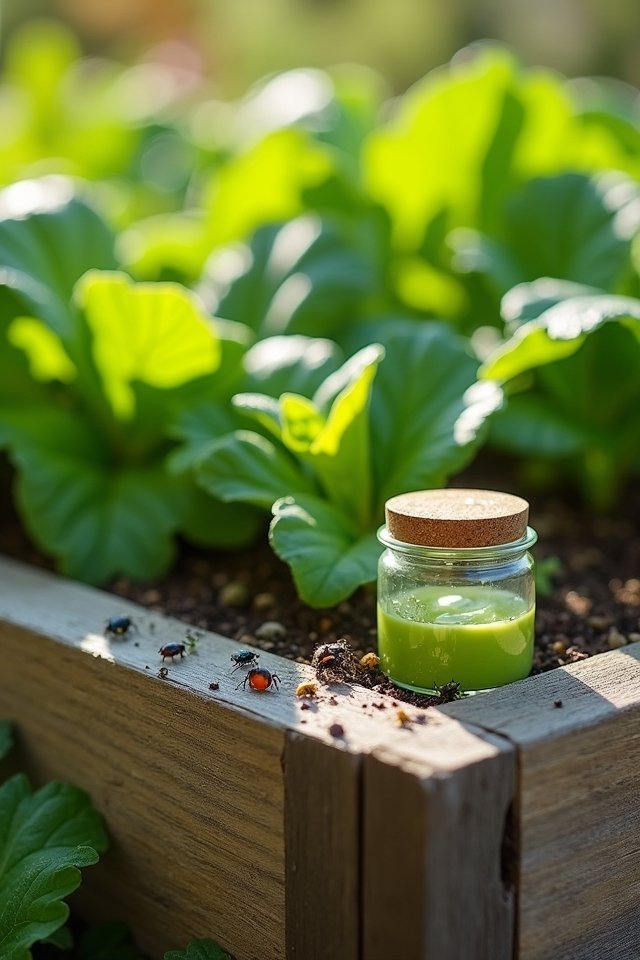
When you step into your garden, it’s like entering a vibrant world bursting with life—but not all of that life is welcome! To truly enjoy your green oasis, you need to master pest identification techniques. Think of pests as pesky intruders at a party—like aphids or cucumber beetles, they can ruin the fun! By understanding their life cycles, you’ll know when they’re most vulnerable. For instance, did you know that recognizing the larvae stage of a moth can save your precious greens? Keep your eyes peeled for those tiny critters! With a little diligence and some innovative strategies, you can protect your raised beds and guarantee your plants thrive. After all, who wants uninvited guests munching on their hard work?
Natural Predators and Their Role
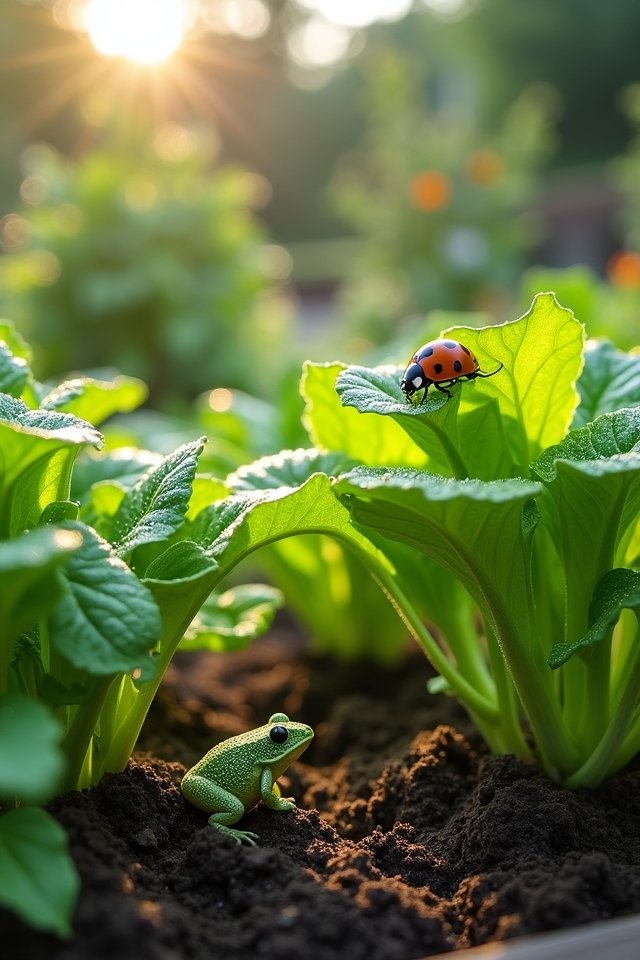
While you’re nurturing your plants in those cozy raised beds, don’t forget about the superheroes lurking nearby! Beneficial insects, like ladybugs and lacewings, swoop in to save the day by munching on pesky pests. They’re like your garden’s tiny bodyguards! To attract these champions, create predator habitats with native plants, such as daisies and yarrow. These flowers not only brighten your garden but also provide welcome shelter for these helpful critters. Imagine spotting a ladybug, its vibrant red armor glistening in the sun, as it feasts on aphids! By inviting these natural allies, you’re not just enhancing biodiversity; you’re also cultivating a thriving ecosystem. So, let nature do its magic and watch your garden flourish!
Companion Planting for Pest Management
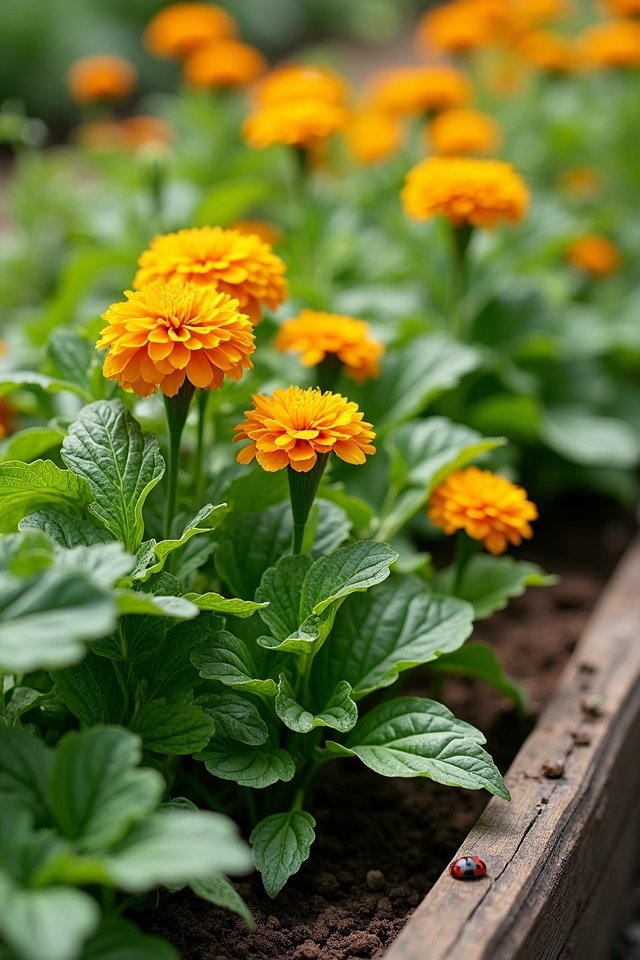
Just like having a trusty sidekick can make a superhero even more formidable, companion planting can boost your garden’s defenses against pests! Imagine pairing vibrant marigolds with your tomatoes; those cheerful flowers repel pesky nematodes and aphids. Or how about planting basil alongside your peppers? This dynamic duo not only elevates flavors but also attracts beneficial insects that feast on harmful pests. Adopt innovative plant pairings that create a thriving ecosystem in your raised beds! You’ll love how beneficial herbs like dill and cilantro draw in pollinators while keeping unwanted bugs at bay. So, why not harness nature’s teamwork? Your garden will flourish, and you’ll enjoy bountiful harvests—without the chemical fuss! Who knew pest management could be so charming?
Homemade Organic Pest Sprays
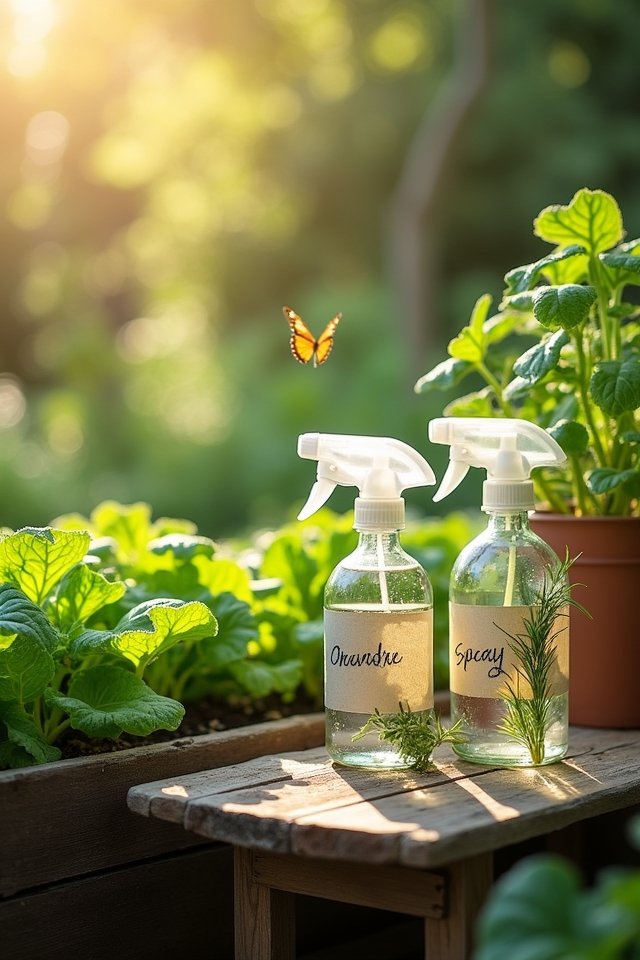
Who says you need to break the bank for pest control? You can whip up your own homemade organic pest sprays using simple ingredients. Try creating herbal infusions with peppermint or chamomile; they smell delightful and deter those pesky critters! Just steep the herbs in hot water, let it cool, and strain. For an extra kick, add a few drops of essential oils like neem or lavender. These oils pack a powerful punch against unwanted bugs! Spray your mixture on your plants, and watch pests scurry away, leaving your garden thriving and fragrant. It’s like giving your plants a spa day! So, roll up your sleeves and craft your own pest-busting elixirs—your garden will thank you!
Physical Barriers and Traps
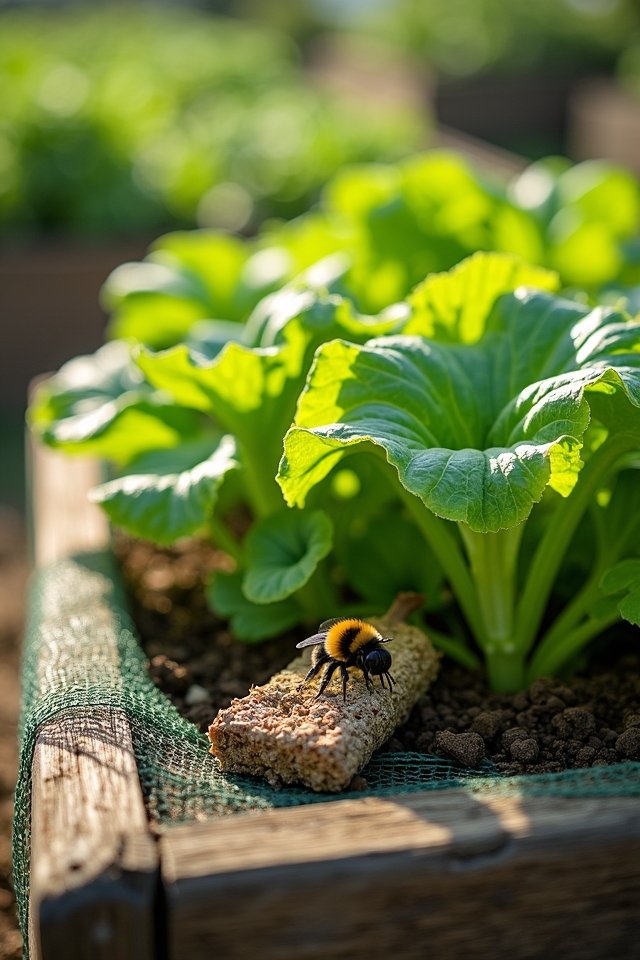
If you’re looking to protect your precious plants without resorting to harsh chemicals, physical barriers and traps are your new best friends! These innovative techniques not only deter pests but also keep your garden thriving.
- Row covers can shield your plants from hungry insects while allowing sunlight and rain to nurture them.
- Insect traps catch those pesky critters before they wreak havoc, letting you enjoy your harvest stress-free.
- Using copper tape can prevent slugs and snails from munching on your greens.
Imagine your plants thriving under a protective blanket, free from the threat of pests! Plus, you’ll feel like a gardening superhero, battling unwanted invaders with clever strategies. So, get ready to welcome these effective pest control methods!
Soil Health and Pest Prevention
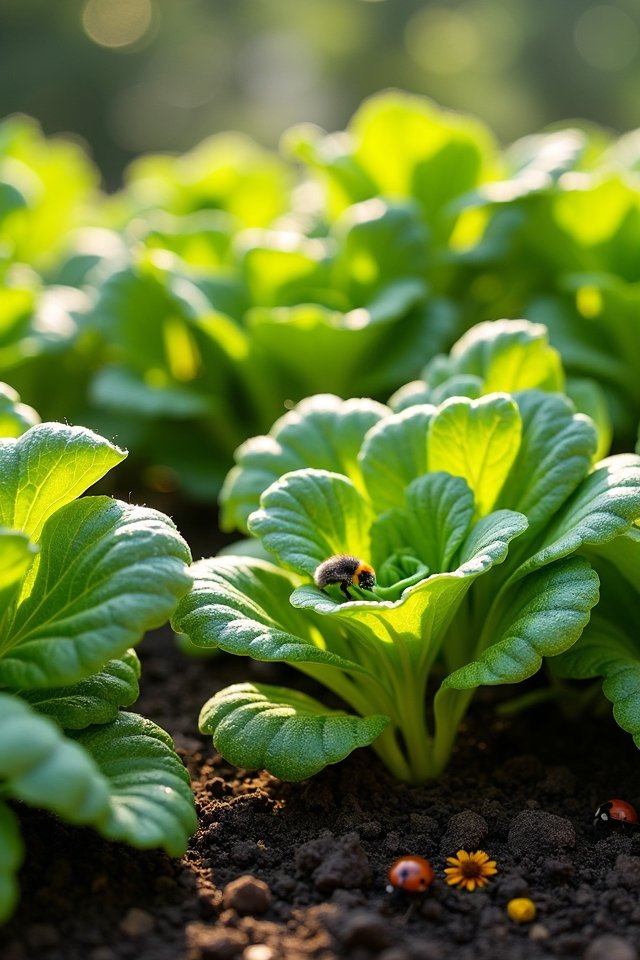
While you might think of soil as just dirt, it’s actually a living ecosystem that plays an essential role in pest prevention! Healthy soil brims with soil nutrients and beneficial microbes, creating a vibrant habitat for your plants. Think of these microbes as tiny superheroes, fighting off pests and diseases while boosting plant growth. When you nourish your soil, you’re not just growing vegetables; you’re building a fortress! Compost and organic matter can supercharge your soil, attracting those friendly microbes. Ever seen a thriving garden? It’s like a party for earthworms and ladybugs! So, feed your soil, and it’ll reward you with bountiful harvests, leaving pests scratching their heads in confusion! Who needs chemical sprays when your soil’s got your back?
Monitoring and Maintaining Pest Control Strategies
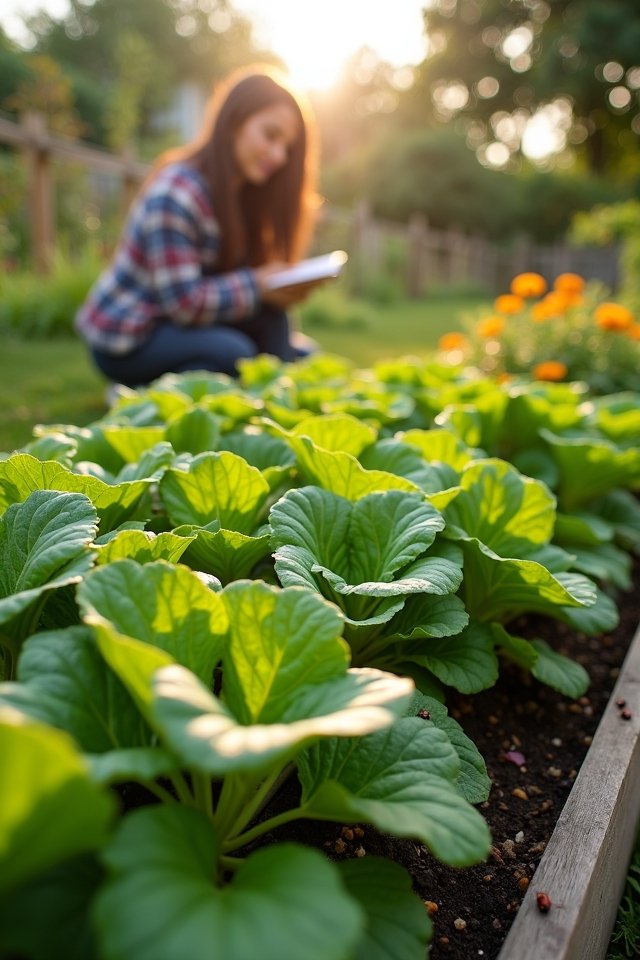
As you immerse yourself in the world of organic pest control, keeping a watchful eye on your garden is essential for success! Monitoring your plants isn’t just a chore; it’s a thrilling adventure! By employing effective pest observation techniques, you’ll catch those pesky invaders before they wreak havoc.
Consider these strategies to maintain your pest control game:
- Track pest population thresholds—know when to act!
- Use sticky traps or insect cameras to monitor activity—technology is your friend!
- Regularly inspect your plants for signs of distress—your garden communicates!
Frequently Asked Questions
Can I Use Essential Oils for Pest Control in Raised Beds?
You can use essential oils for pest control, and they’re surprisingly effective! Think of them as nature’s powerful superheroes, fighting off unwanted critters. Oils like peppermint and lavender not only smell divine but also act as fantastic pest repellents. Just mix a few drops with water and spray it around your garden. Your plants will thrive, and you’ll keep those pesky bugs at bay. Isn’t that a win-win? Go on, give it a try!
What Are the Best Plants for Attracting Beneficial Insects?
Imagine your garden buzzing with life! To attract beneficial insects, consider companion planting with vibrant marigolds, sweet alyssum, or fragrant borage. These plants act like a magnet, drawing in pollinators while keeping pests at bay. Think of them as the charming hosts of a garden party! You’ll create a stunning pollinator garden that not only looks beautiful but also helps your plants thrive. Why not give these friendly companions a chance?
How Often Should I Apply Homemade Pest Sprays?
You should apply your homemade pest spray every 7 to 14 days for the best results! Think of it like watering your plants—consistency is key! The frequency boosts homemade spray effectiveness, keeping those pesky pests at bay. If rain washes it away, reapply sooner! And hey, don’t worry if you miss a week; just jump back in! Your garden will thank you with vibrant colors and healthy growth, like a joyful dance of nature!
Are There Any Pests That Can Harm My Soil Health?
Did you know that 40% of soil health can be compromised by pests? Certain critters, like nematodes and grubs, can turn your garden into a mini disaster zone! They introduce soil contaminants, disrupting nutrient cycles and affecting plant growth. It’s like having unwanted guests at a party! Keep an eye on pest cycles—intervening early prevents bigger issues later. So, stay vigilant and protect your soil like it’s a treasure chest!
What Signs Indicate My Raised Bed Needs Pest Control?
You’ll know your raised bed needs pest control when you see common pest signs like chewed leaves or tiny holes in your veggies. Use pest identification techniques, like checking for webbing or droppings, to pinpoint the culprits. Plus, if you spot wilting plants that seem to be sulking, it’s a red flag! Don’t ignore those signs—think of them as your garden’s SOS call! Time to spring into action and save your plants!