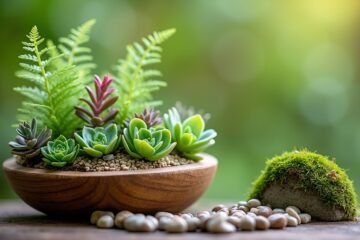
This season, you should definitely plant vibrant snap peas, crunchy radishes, and lush spinach in your raised beds! These cool-loving veggies thrive in early spring, creating a delightful garden scene that’s bursting with color and flavor. Imagine sweet tender peas and zesty radishes in your salads! Just make sure you time your planting right; too early and you might hit a chilly surprise! Stick around to uncover more fun spring planting tips and tricks!
Spring Planting Options
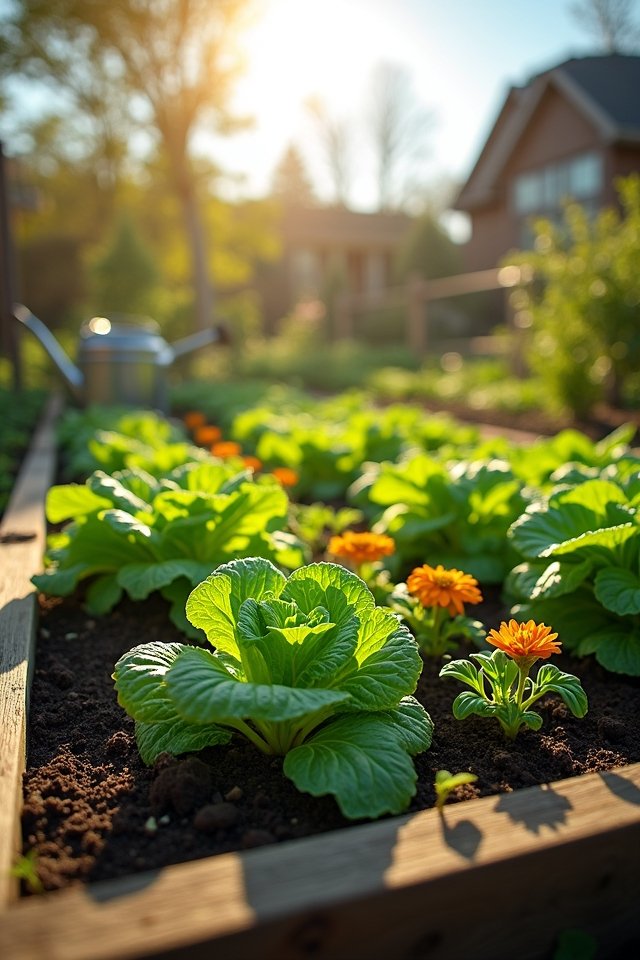
As the frost melts away and the sun begins to warm your garden, you might find yourself itching to dig in and plant something fabulous! Spring’s the perfect time to welcome vibrant spring vegetables like crisp snap peas, tender radishes, and lush spinach. These beauties thrive in cool soil and can give your garden that fresh zing you crave. Don’t forget to check your planting schedules! Timing is everything—planting too early can lead to disappointment. Aim for late March to early April for the best results. Imagine the joy of plucking your own crunchy veggies for a salad! So grab that trowel, and let’s create a garden that bursts with flavor and color! Happy planting!
Summer Favorites for Raised Beds
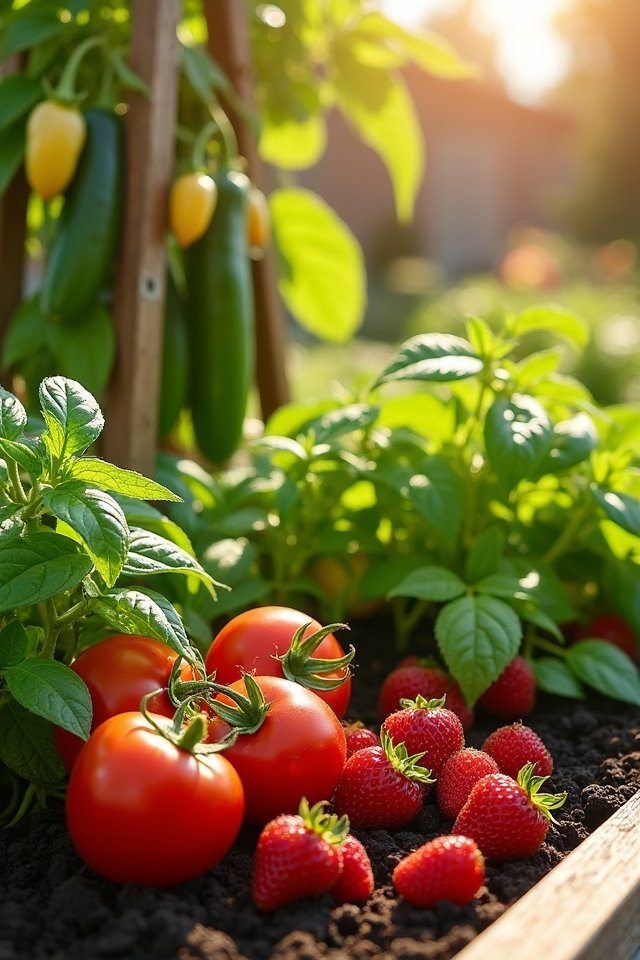
When the heat of summer rolls in, your raised beds can transform into a vibrant oasis bursting with flavor! Visualize this: luscious heirloom tomatoes, their colors ranging from deep crimson to sunny yellow, dangling like jewels among leafy green plants. These beauties aren’t just pretty; they pack a punch of sweet, tangy goodness that’ll make your taste buds dance!
And don’t forget bush beans! They’re the easy-going friends of your garden, sprouting quickly and producing delicious pods that crunch with every bite. Just imagine tossing them into a summer salad or grilling them beside your favorite dish. So, roll up your sleeves, welcome the sun, and let your raised beds become a delicious summer retreat! What are you waiting for? Get planting!
Fall Crops to Consider
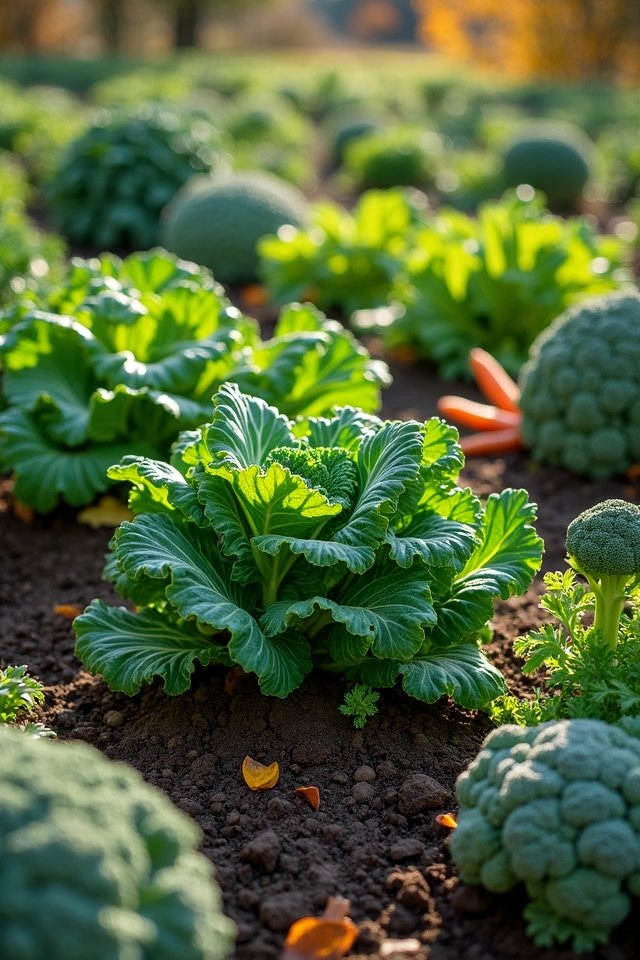
After the sizzling summer days fade into cooler evenings, your raised beds still hold plenty of potential! Fall is the perfect time to experiment with diverse kale varieties that thrive in cooler weather. Imagine the vibrant colors of your garden, with deep greens and purples swaying in the breeze! These leafy wonders not only taste amazing but are packed with nutrients.
Now, let’s dig into root vegetables! Carrots, beets, and turnips love the crisp air, growing sweeter as temperatures drop. Picture pulling a freshly harvested carrot from the earth like a treasure—there’s nothing quite like it! So, roll up your sleeves, grab your trowel, and transform your raised beds into a fall feast that’ll impress even the pickiest eaters!
Winter Preparation and Planting
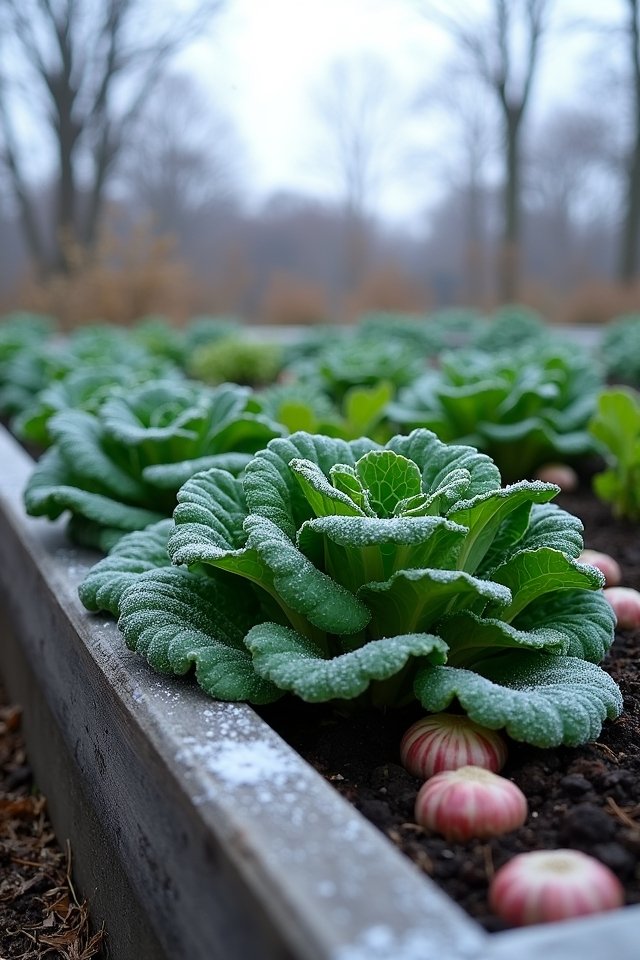
Getting your raised beds ready for winter might feel like a chore, but think of it as preparing your garden for a cozy hibernation! Start by adding a thick layer of winter mulching—think of it as a warm blanket for your plants. This will help insulate the soil and keep those roots snug as a bug! Don’t forget about frost protection; consider using row covers or cold frames to shield your tender greens from icy winds. You could even plant hardy winter crops like kale or garlic for a fresh surprise come spring! So, grab your gloves, and let’s make your garden a winter wonderland, ready to bloom anew when the sun returns! Who knew winter prep could be so exciting?
Companion Planting Strategies
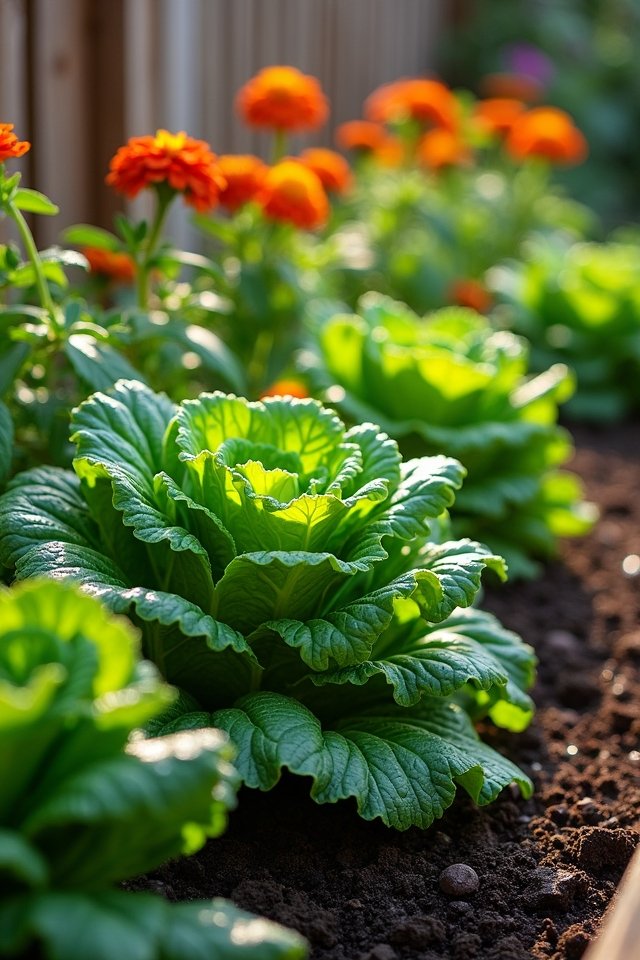
Companion planting can feel like a secret garden dance, where each plant knows its role and plays it beautifully! You’ll find that certain companion plants can boost growth, flavor, and even pest management. For instance, planting marigolds alongside tomatoes can deter pesky nematodes—talk about a dynamic duo! Basil loves hanging out with peppers, enhancing their taste while keeping aphids at bay. Isn’t that clever? You can create a vibrant tapestry of colors and scents, while also ensuring your plants thrive. Just imagine the satisfaction of harvesting healthy veggies, knowing your garden’s a haven for harmony! So, get ready to mix and match your companions, and watch your raised beds flourish like never before! Happy planting!
Frequently Asked Questions
How Do I Prepare My Raised Beds for Planting?
To prepare your raised beds for planting, start by giving them a good clean! Remove old debris and weeds, like a spring cleaning for your garden. Then, mix in some rich compost to boost your soil’s health—think of it as a nutritious smoothie for your plants! Check for drainage and apply smart planting techniques like companion planting. You’re not just growing veggies; you’re creating a vibrant, delicious masterpiece! Ready to dig in?
What Soil Amendments Should I Use for Optimal Growth?
Think of your soil as a cozy blanket for your plants! To guarantee ideal growth, sprinkle in rich compost; it’s like a gourmet meal for your veggies. Organic fertilizers, such as bone meal or fish emulsion, work wonders too! They feed your soil and boost those roots, making them dance with joy. So, mix these magical amendments, and watch your raised beds transform into a flourishing paradise! Isn’t gardening just the best?
How Often Should I Water My Raised Bed Plants?
When it comes to watering frequency, think of your plants like thirsty friends—they need a drink, but not too much! Check the moisture retention of your soil. If it feels dry an inch down, it’s time to water! Generally, watering every 2-3 days works wonders, but adjust based on weather. If it’s scorching outside, they might need a splash daily! Remember, dry plants are sad plants! Keep them happy and hydrated!
Can I Plant Perennials in Raised Beds?
Absolutely, you can plant perennial varieties in raised beds! Imagine vibrant flowers like lavender and echinacea, blooming year after year. To get started, use proper planting techniques: guarantee good drainage and space them well for airflow. Picture a garden that’s not just a one-hit wonder, but a stunning, fragrant masterpiece! It’s like investing in a long-term relationship with your garden. So, roll up your sleeves and enjoy creating your perennial paradise!
How Do I Protect My Plants From Pests and Diseases?
To protect your plants from pests and diseases, try using organic pesticides—they’re like superhero capes for your garden! You can also adopt companion planting; think of it as matchmaking for plants! For instance, marigolds are fantastic partners for tomatoes, keeping those pesky aphids at bay. Regularly inspect your plants, too; think of it as your garden’s health check-up. With a little love and care, your garden will thrive beautifully!