To create a thriving raised bed garden, start with a super soil mix of rich loamy soil, compost, and luscious peat moss—think of it as giving your plants a luxurious spa day! Water them deeply, like you’re quenching their thirst after a hot summer run, checking that the soil feels like a damp sponge. Don’t forget to spice things up with crop rotation each season and keep an eye out for pesky pests. Want to know more secrets?
Choosing the Right Soil Mix
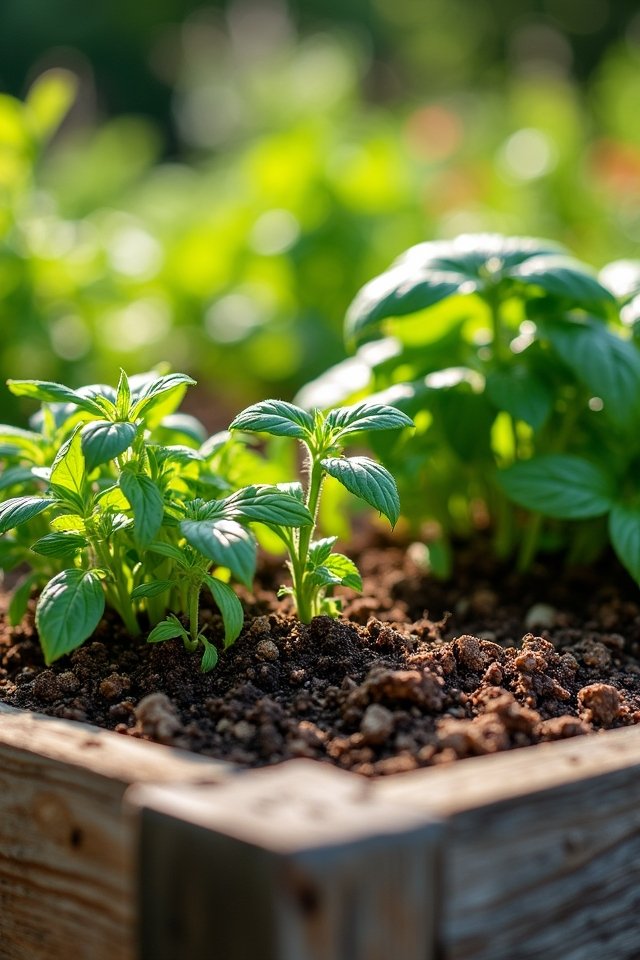
When it comes to choosing the right soil mix for your raised bed garden, it’s not just a matter of digging up dirt from your yard! You’ll want to blend various soil components to create a nutrient-rich environment. Think of it as crafting a gourmet recipe—mix loamy soil, compost, and peat moss for that perfect texture. Don’t forget drainage considerations! You wouldn’t want your plants to drown, right? A good rule of thumb is to add perlite or vermiculite to keep things airy and light. Imagine your roots stretching out, basking in well-drained soil, soaking up nutrients like a sponge! So, roll up your sleeves, and let’s create a thriving oasis for your plants. Your garden will thank you!
Regular Watering Practices
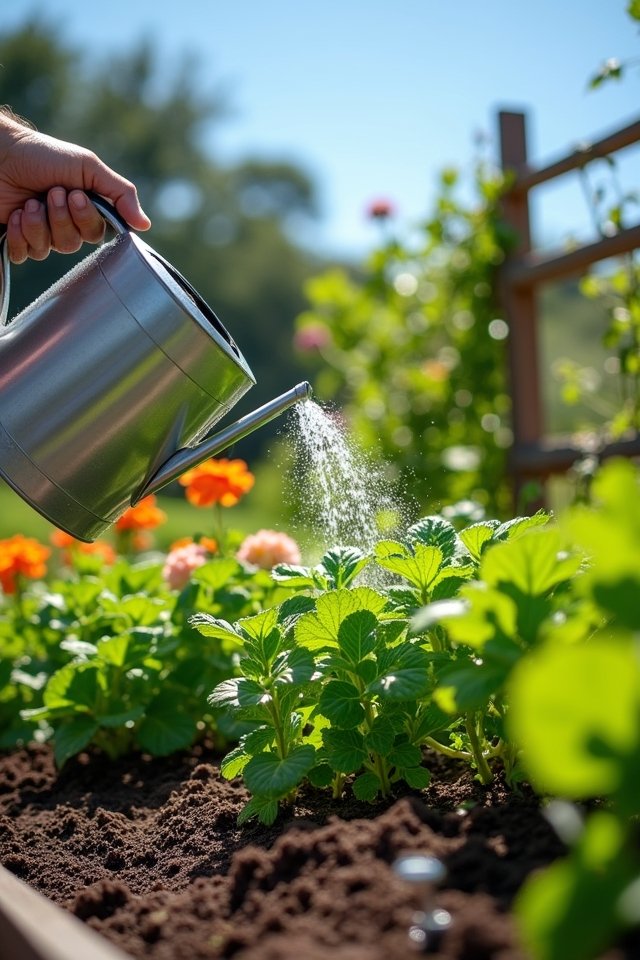
Though it may seem simple, regular watering practices can make or break your raised bed garden! Imagine those thirsty plants, enthusiastically stretching toward the sky, begging for hydration. You’ve got options, like drip irrigation, which delivers water directly to the roots, ensuring maximum moisture retention. This means less waste and happier plants!
Check the soil’s moisture level regularly; it should feel like a damp sponge, not a soggy mess. Water early in the morning or late in the evening to minimize evaporation—your plants will thank you! And don’t forget to adjust your watering schedule during heat waves or rainstorms. After all, every drop counts! So, roll up your sleeves and plunge into those watering practices—your garden will flourish like never before!
Implementing Crop Rotation
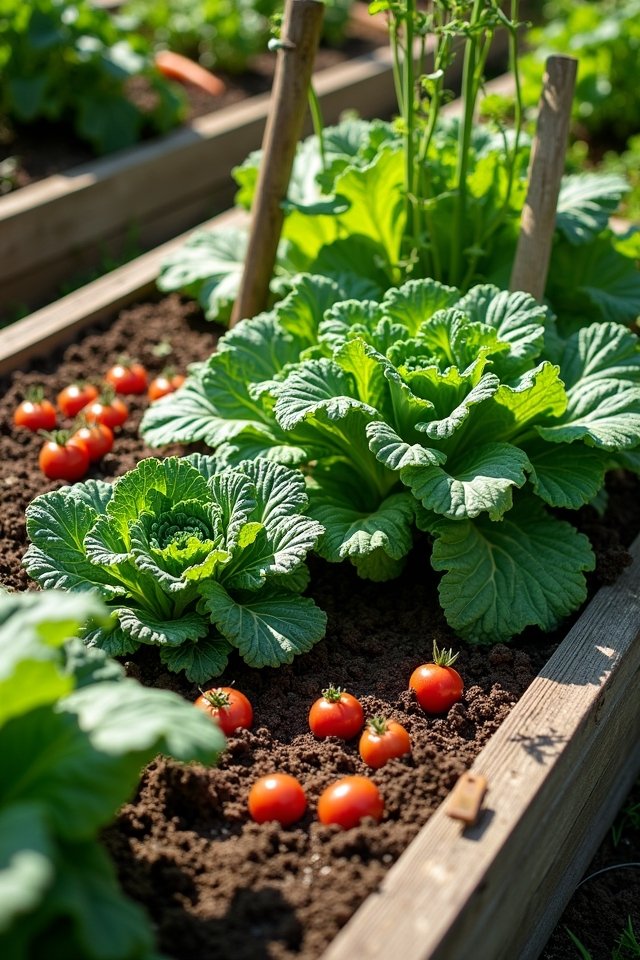
Implementing crop rotation can feel like giving your garden a rejuvenating makeover! Imagine your plants dancing to a new tune each season. By switching up your crops, you’ll reveal incredible crop benefits, like improved soil health and reduced pest pressure. Start with a simple rotation schedule: plant legumes one year to fix nitrogen, then follow with leafy greens for a nutrient boost. Next, add fruiting plants like tomatoes, which thrive off the previous crops’ leftovers! Your garden will flourish, and you’ll feel like a gardening wizard! Plus, rotating crops keeps things fresh and exciting—who wants the same old veggies every year? So, grab your planner, sketch out those rotation schedules, and watch your garden thrive like never before!
Managing Pests and Diseases

As you immerse yourself in the vibrant world of gardening, managing pests and diseases can feel like a quirky game of whack-a-mole! First, focus on pest identification—spotting those sneaky critters before they wreak havoc. Inspect your plants regularly; don’t let aphids or caterpillars catch you off guard! Once you’ve identified a pest, consider organic treatments like neem oil or insecticidal soap. They’re gentle on your plants but tough on unwanted guests! You can also introduce beneficial insects like ladybugs, nature’s little pest control agents. Remember, a healthy garden is all about balance. Keep your plants robust with proper watering and nutrients, and they’ll stand strong against diseases. Let your garden thrive, and enjoy the innovation of organic solutions!
Seasonal Maintenance and Preparation
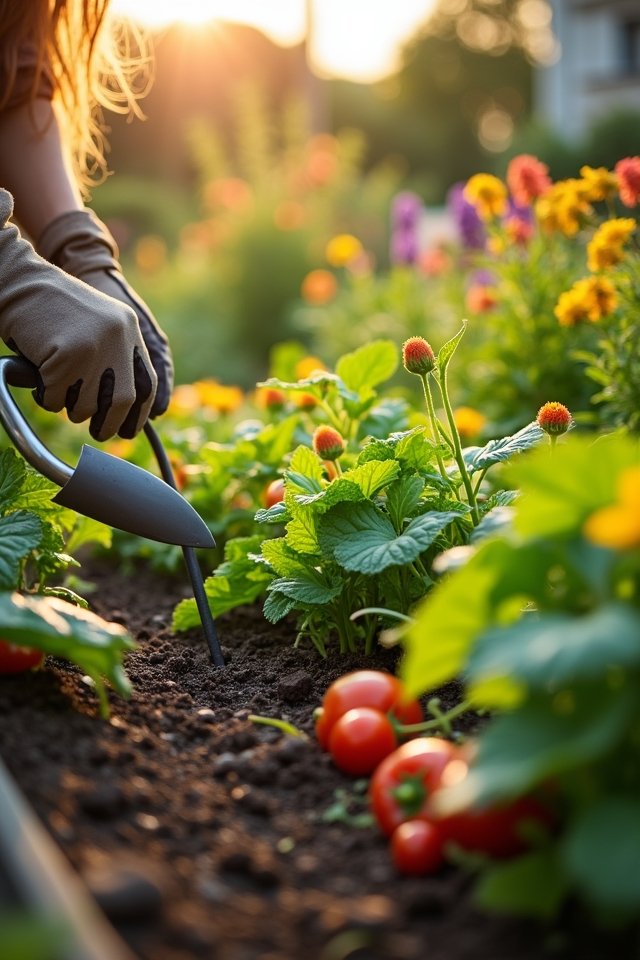
When you think about your raised bed garden, you might imagine it thriving under the warm sun and gentle rains, but don’t forget that seasonal maintenance is the secret sauce to keeping your plants happy and healthy! Spring preparation is your golden opportunity to refresh the soil, adding compost like a nourishing blanket, while ensuring those seeds get the best start possible. Don’t skip a beat when it’s time for fall cleanup either! Pull out spent plants, like a magician revealing a clean stage, and add a layer of mulch to protect your soil from winter’s chill. Trust me, these steps are like giving your garden a cozy hug! Ready to plunge into the seasons? Your plants will thank you!
Frequently Asked Questions
How Deep Should My Raised Bed Be for Optimal Plant Growth?
For ideal plant growth, aim for a raised bed depth of at least 12 to 18 inches. This gives plant roots plenty of room to stretch and explore, just like a kid in a candy store! Deeper beds let you grow a wider variety of plants, from deep-rooted carrots to lofty tomatoes. Plus, they improve drainage, keeping your garden happy and thriving. So dig deep, and watch your garden flourish!
Can I Use Treated Wood for My Raised Bed Construction?
You might be tempted to use treated wood for your raised bed, but hold on! While it looks great, garden safety is essential. Treated wood can leach chemicals into your soil, potentially endangering your plants and health. Instead, think of using cedar or redwood; they’re naturally resistant and create a cozy, rustic vibe. Imagine your veggies thriving without worries! So, choose wisely and let your garden flourish with joy and safety!
What Types of Plants Grow Best in Raised Beds?
When it comes to raised beds, you’ll find that seasonal vegetables thrive beautifully! Think of vibrant tomatoes and crisp lettuce, growing together like best friends. Companion planting works wonders, too! For instance, pairing basil with tomatoes not only saves space but boosts flavor, like a culinary duet. Just imagine the aroma wafting through your garden! So, why not experiment? Immerse yourself, mix and match, and watch your raised bed transform into a lush paradise!
How Often Should I Test My Soil Ph?
Think of your soil as a secret garden whispering its needs! You should test your soil pH levels at least once a year. This way, you can catch any imbalances early, like a superhero swooping in to save the day! If you notice your plants struggling, test more often—every season, if you like! A simple pH test can help you create a flourishing paradise, ensuring your plants thrive in their cozy beds!
Can I Use a Raised Bed for Perennial Plants?
Absolutely, you can use a raised bed for perennial varieties! Imagine vibrant flowers and tasty herbs returning year after year—what a delight! When you choose your planting techniques, think about spacing; it allows each plant to thrive. For example, mix lavender with echinacea for a colorful display and a lovely scent. You’ll love how less maintenance means more time to enjoy your garden’s beauty! Ready to dig in and create your own perennial paradise?