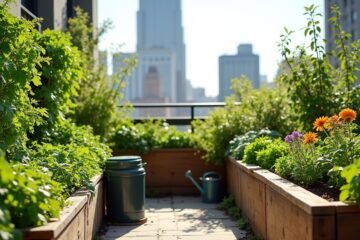
Want a thriving small garden? Think of companion planting as your plant’s best friend matchmaker! Pair vibrant tomatoes with aromatic basil to amp up flavor and chase off bugs. Don’t forget cheerful marigolds to keep pesky pests away while drawing in helpful pollinators. Use vertical structures for climbing beans and herbs below to save space. This lively mix creates a beautiful, productive ecosystem! Stick around to discover more fun tips and tricks for your garden journey!
Understanding Companion Planting Basics
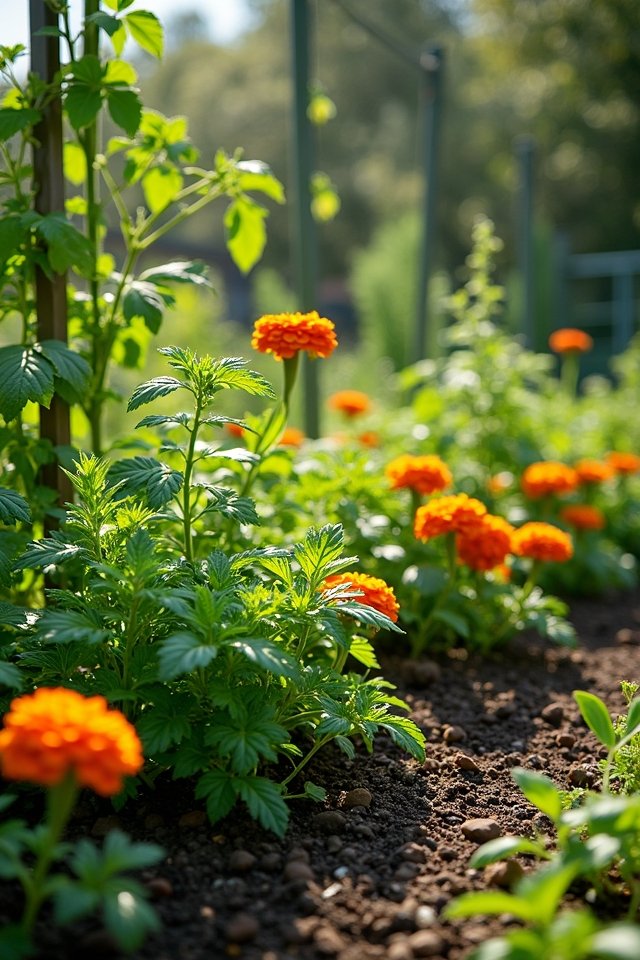
Companion planting is like hosting a dinner party for your garden—some plants just get along better than others! Think of it as forming plant alliances that create incredible growth synergy. For instance, pairing tomatoes with basil is a match made in culinary heaven; the basil not only enhances the tomato’s flavor but also helps repel pesky pests. Imagine your plants chatting and sharing secrets, each boosting the other’s growth while you sip lemonade nearby! By understanding these relationships, you can transform your small garden into a thriving ecosystem. So, why settle for lonely plants when you can cultivate a vibrant community? Immerse yourself in companion planting, and watch your garden flourish like never before! Let’s get planting!
Choosing the Right Plants for Your Garden
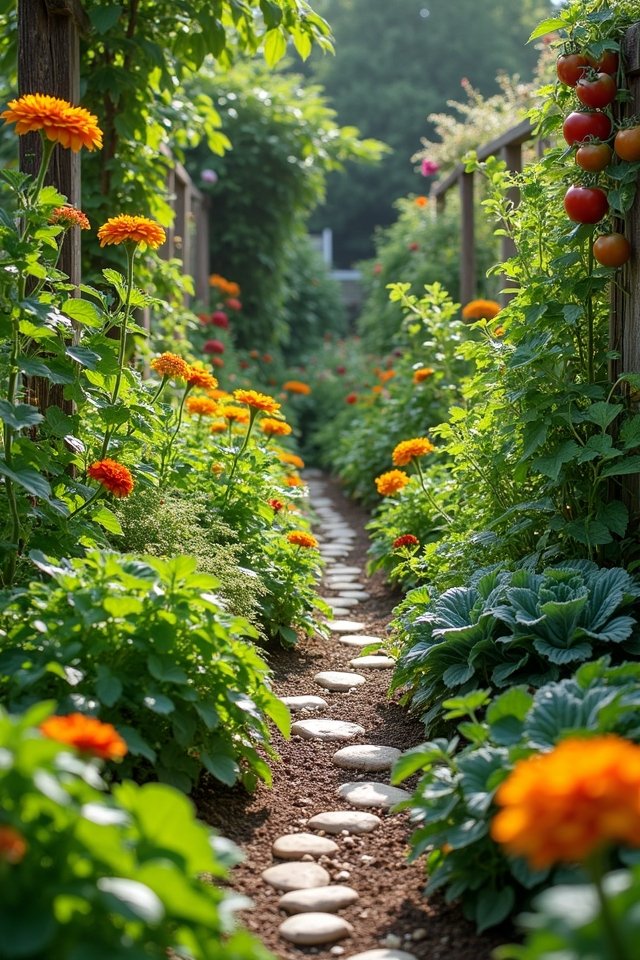
When you’re planning your garden, it’s essential to choose the right plants to create a harmonious and flourishing space! Think of your garden as a vibrant orchestra—each plant plays a vital role. For herb selection, consider basil and tomatoes, a classic duo that thrives together. They not only complement each other’s flavors but also repel pests! Now, let’s talk about flower pairings—marigolds and nasturtiums are like the cheerful backup singers to your veggies, attracting pollinators and keeping harmful insects at bay. Imagine the splashes of color they’ll bring, making your garden a feast for the eyes! So, mix and match wisely, and watch your garden blossom into a delightful symphony of scents and sights! Isn’t that exciting?
Maximizing Space With Vertical Planting
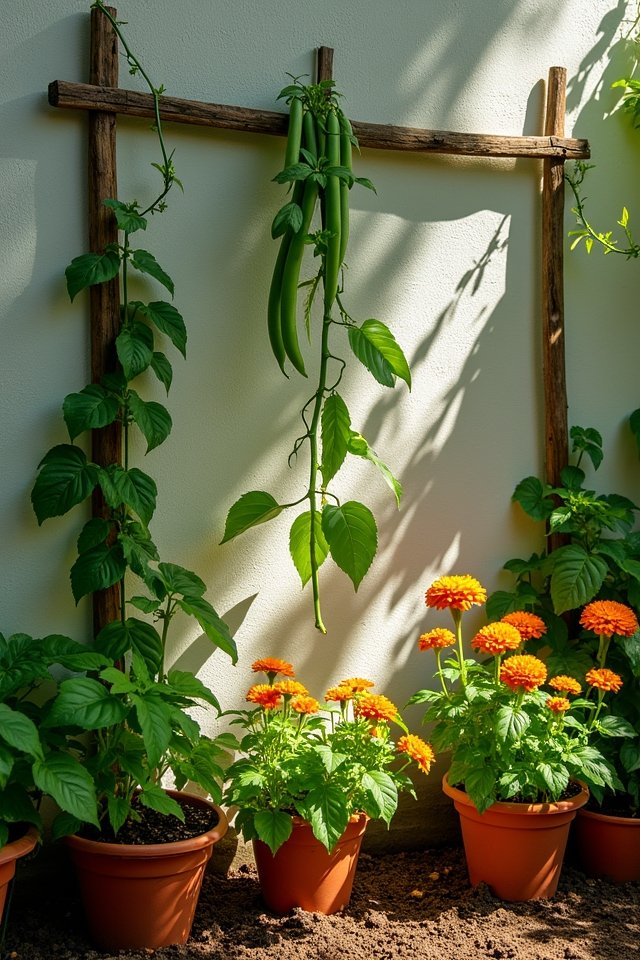
Have you ever dreamed of turning a tiny garden into a lush paradise? With vertical planting, you can! Imagine climbing beans spiraling up a trellis, while fragrant herbs like basil thrive below. By using vertical structures, you’ll maximize your space and create a stunning visual feast!
Plant layering is key here—think of it as a delicious garden lasagna. Place tall plants like tomatoes at the back, medium herbs in the middle, and delicate flowers at the front. You’ll not only save space but also create a vibrant tapestry of colors and textures. Plus, it’s a fun way to boost your garden’s productivity! So, grab those planters and let your creativity climb to new heights!
Natural Pest Control Through Companion Planting
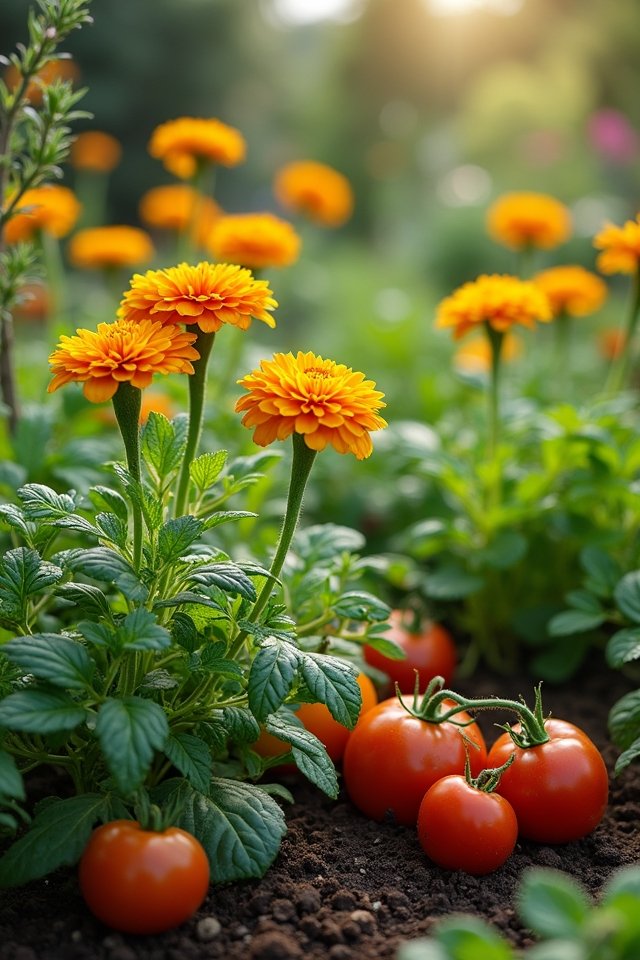
While pests can feel like unwelcome guests crashing your garden party, you’ve got a secret weapon at your fingertips: companion planting! By pairing plants wisely, you can create natural pest deterrents that make your garden thrive. For instance, planting marigolds alongside tomatoes not only beautifies your space but also repels pesky nematodes. Plus, certain herbs, like basil, attract beneficial insects such as ladybugs and lacewings, turning your garden into a buzzing hub of helpful allies! Imagine watching these tiny superheroes swoop in to save your crops! So, adopt the magic of companion planting. With clever combinations, you’ll keep those pests at bay while nurturing a vibrant, lively garden that’s the envy of the neighborhood. Isn’t nature just brilliant?
Enhancing Soil Health and Nutrients
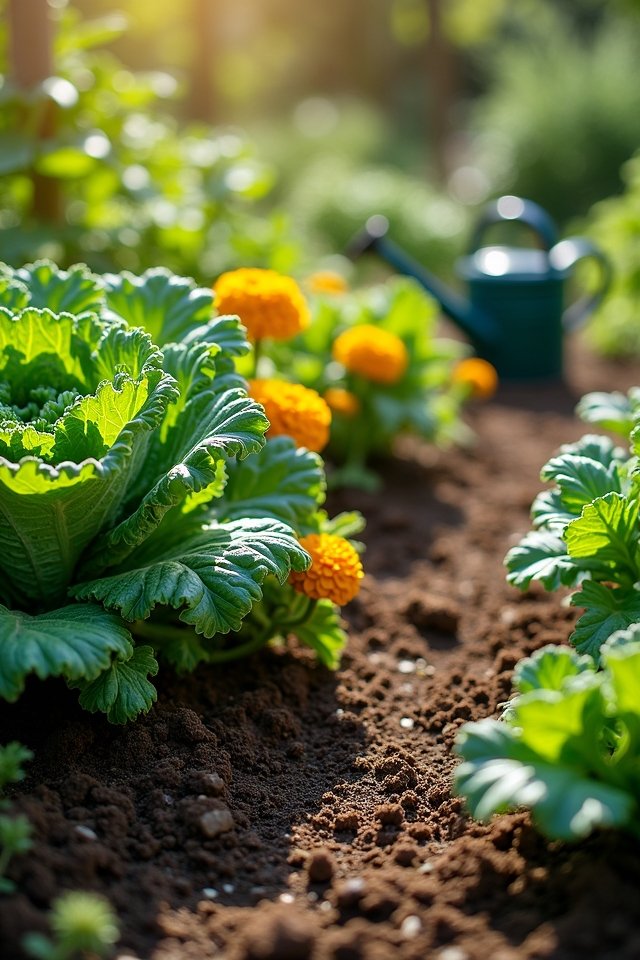
To truly thrive in your garden, enhancing soil health and nutrients is a must! Think of your soil as a treasure chest. By adding soil amendments like compost or aged manure, you’re filling it with rich nutrients. Isn’t that exciting? Plus, when you practice nutrient cycling—like rotating crops or planting legumes—you’re creating a dynamic, self-sustaining ecosystem. It’s like giving your garden a magic potion!
Imagine the vibrant colors of your plants, thriving with energy. You’ll see better growth and tastier veggies! So, get your hands dirty and mix those amendments in. Your plants will thank you, and who knows, you might even discover a hidden talent for gardening! Let’s dig in and watch your garden flourish!
Seasonal Planting Strategies for Small Gardens
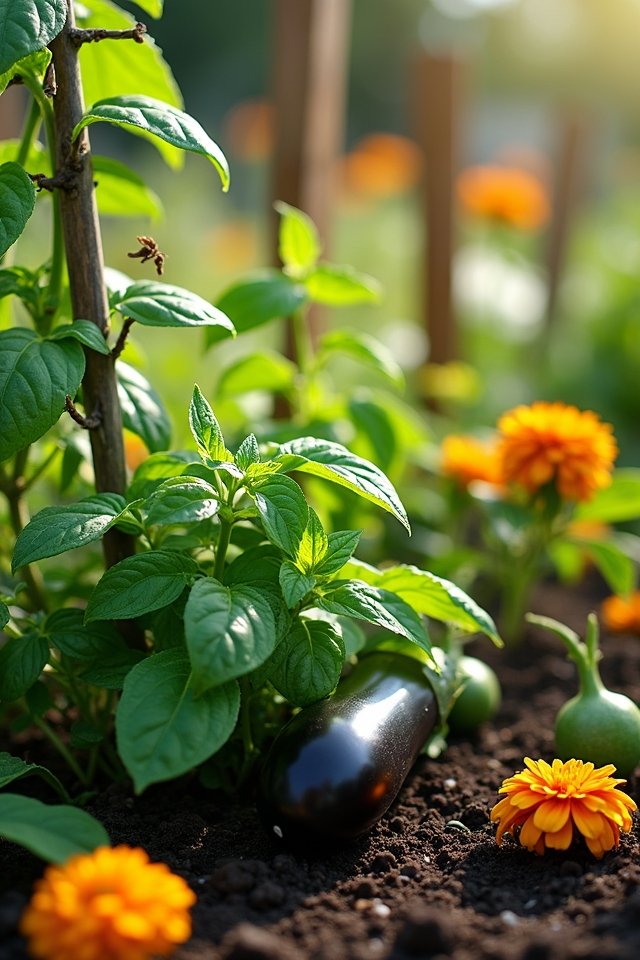
When you think about planting in your small garden, timing can make all the difference! Spring planting is like a fresh canvas waiting for your artistic touch. Imagine vibrant tomatoes, spicy peppers, and fragrant basil bursting to life under the warm sun! But don’t stop there; fall planting can be just as rewarding! Picture crunchy kale, sweet carrots, and cozy herbs snugging in for a winter nap. By staggering your crops, you maximize space and flavor. Consider companion planting too—like pairing marigolds with your veggies to keep those pesky pests at bay! So grab your trowel, welcome the seasons, and let your garden flourish with innovative delight. Isn’t nature just the best partner in crime?
Frequently Asked Questions
Can Companion Planting Improve the Taste of Vegetables?
Absolutely, companion planting can lead to taste enhancement in your veggies! When you pair basil with tomatoes, for example, their flavors dance together like a perfect duet, creating a richer taste. You’ll find that certain combinations, like carrots and onions, can work wonders for flavor improvement, too. Imagine biting into a carrot so sweet it feels like sunshine! So, why not experiment? Your taste buds will thank you for it!
What Are the Best Companion Plants for Herbs?
Ah, the delightful world of herb pairings! You’ll want to cozy up basil with tomatoes; they’re like best friends at a picnic! Mint loves to chill with peas, offering a invigorating twist. Also, rosemary and thyme dance beautifully together, creating aromatic companions that elevate any dish. Picture your garden bursting with flavors, each herb complementing the other. Who wouldn’t want that? So, get planting and let those herbs share their secrets!
How Does Companion Planting Affect Pollinators?
Companion planting’s like throwing a garden party for pollinators! When you mix colorful flowers with your veggies, you create diverse pollinator habitats that attract beneficial insects. Think of it as a buffet for bees and butterflies. For instance, planting marigolds alongside tomatoes not only brightens your garden but also invites those buzzing buddies! Who wouldn’t want a swarm of helpful insects buzzing around? So, get planting and watch your garden come alive!
Are There Any Plants That Should Never Be Paired Together?
Did you know that 30% of plants can actually clash when paired together? It’s true! Some incompatible plants, like tomatoes and potatoes, create toxic combinations that stunt each other’s growth. Imagine trying to share a tiny apartment with someone who hogs the bathroom—frustrating, right? So, steer clear of these duos! Instead, think of your garden as a harmonious concert, where each plant plays its role beautifully together. Happy gardening!
Can Companion Planting Work in Container Gardens?
Companion planting can thrive in container gardens! Think of it as a dance party for your plants. Basil loves hanging out with tomatoes, boosting their flavor and warding off pests. Use space utilization strategies like stacking herbs above root veggies, maximizing your garden’s potential. Just envision vibrant colors and delicious aromas wafting through the air! Why not experiment and see what unique pairings you can create? Your taste buds will thank you!