Got a small garden that’s under attack? Don’t worry! Start by identifying pesky pests like aphids or snails. Use natural repellents, such as garlic spray or marigolds, to keep them at bay. You can even set up sticky traps as a crafty defense! Try companion planting, pairing tomatoes with basil to fend off aphids. Maintaining garden cleanliness is like giving your plants a spa day! Keep exploring and discover even more sneaky strategies to protect your green paradise!
Understanding Common Garden Pests
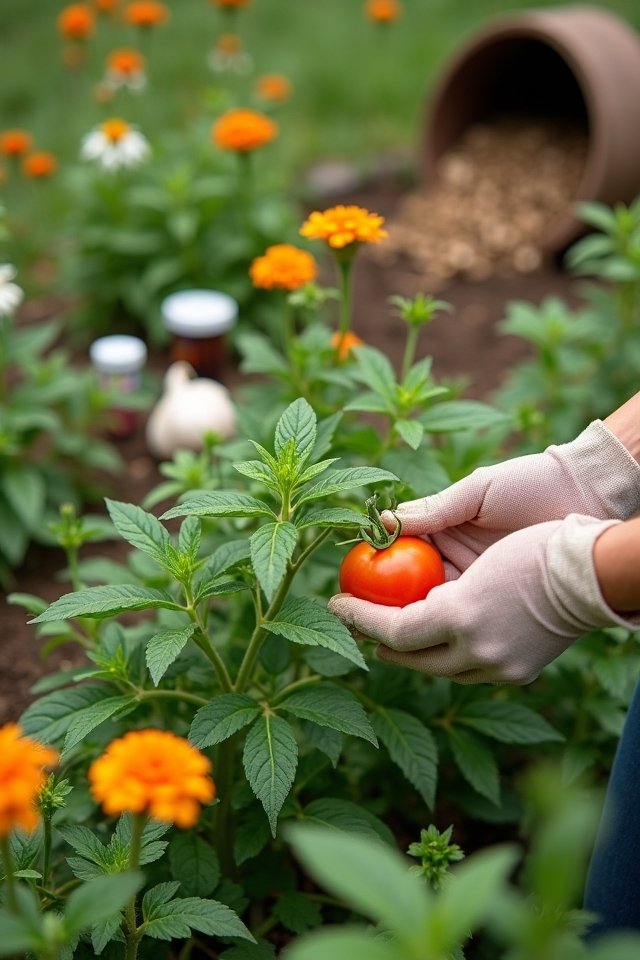
Gardening is like hosting a party—everyone’s invited, including some uninvited guests! When you’re out there, you’ll want to be sharp at identifying pests. Imagine this: aphids munching on your cherished rosebuds or snails sliding in for a midnight snack! Knowing the pest life cycles is essential. For instance, those pesky caterpillars start as beautiful butterflies, but by the time they’re munching on your lettuce, it’s too late! Keep an eye on the little critters before they invite their friends. You’ll want to catch those unwelcome guests early. So, grab your magnifying glass, channel your inner detective, and get ready to protect your garden! After all, a thriving garden is the best party of all!
Preventative Measures to Deter Pests
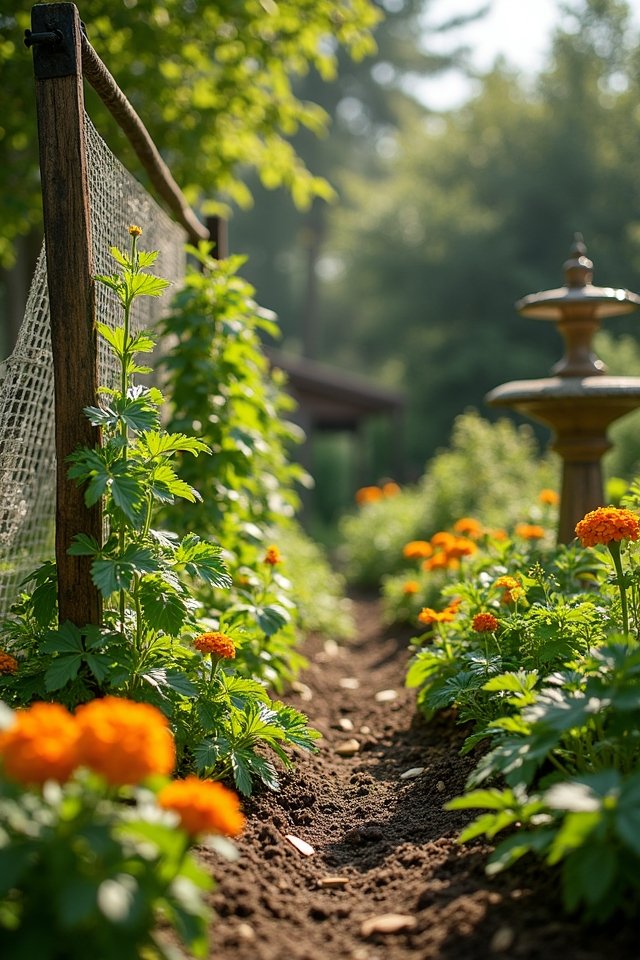
While it might be tempting to wait for pests to show up before taking action, a little prevention can go a long way in keeping your garden thriving! Think of your garden as a fortress; armed with natural repellents, you can ward off unwanted invaders. For instance, planting marigolds creates a fragrant barrier that keeps aphids at bay. Seasonal strategies are essential too! In spring, consider rotating your plants to confuse pests, while summer calls for sprinkling diatomaceous earth around your veggies. Plus, don’t forget to keep your garden tidy—debris is like an open invitation to pests! So, gear up, get creative, and adopt these innovative tactics to create a pest-free paradise! Your plants will thank you!
Organic Pest Control Solutions
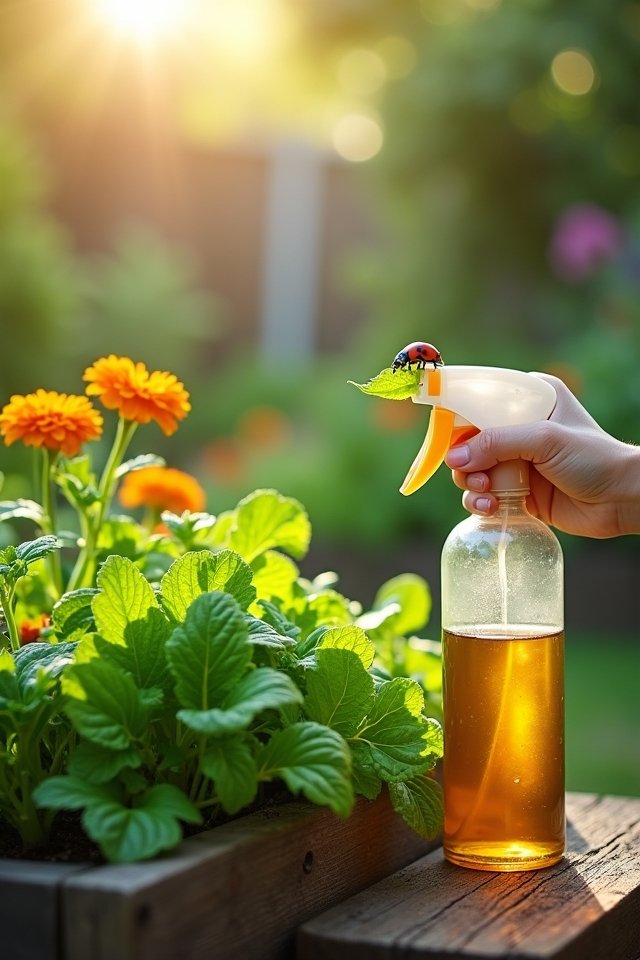
When it comes to keeping your garden healthy and happy, organic pest control solutions are like your secret weapon! Imagine your plants thriving while you repel pesky invaders with natural repellents, like garlic spray or neem oil. These eco-friendly options are not only safe for your garden but also for the environment.
You can also invite beneficial insects, like ladybugs and lacewings, to your garden party! They’re nature’s little bodyguards, munching on aphids and other harmful pests. Plus, planting marigolds or nasturtiums can naturally deter unwanted guests.
Physical Barriers and Traps
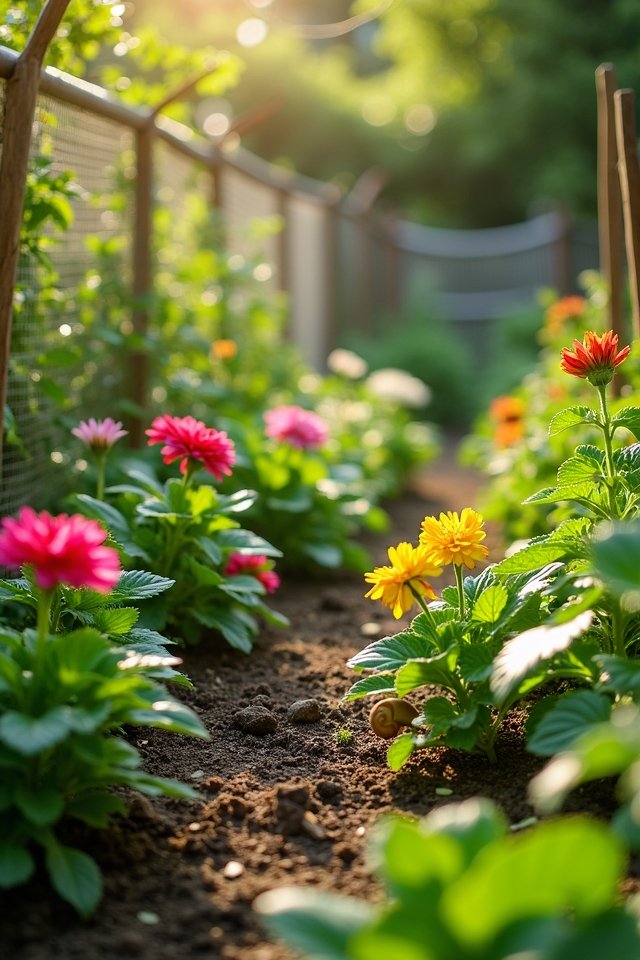
To keep those sneaky pests at bay, think of physical barriers and traps as your garden’s sturdy fortress! These methods are not just effective; they can be downright fun! Here are four innovative tactics you’ll love:
- Row Covers: Imagine a protective blanket that shields your precious plants from hungry insects!
- Sticky Traps: Picture a colorful sticky pad that catches pests like a fly paper superhero!
- Floating Row Covers: They’re like magic cloaks, allowing sunlight in while keeping pests out!
- Fencing: A charming little wall that stops critters from munching on your beloved veggies!
Try these tactics, and watch your garden thrive, pest-free! Who knew pest control could feel this empowering? Now, go build that fortress!
Companion Planting for Pest Management
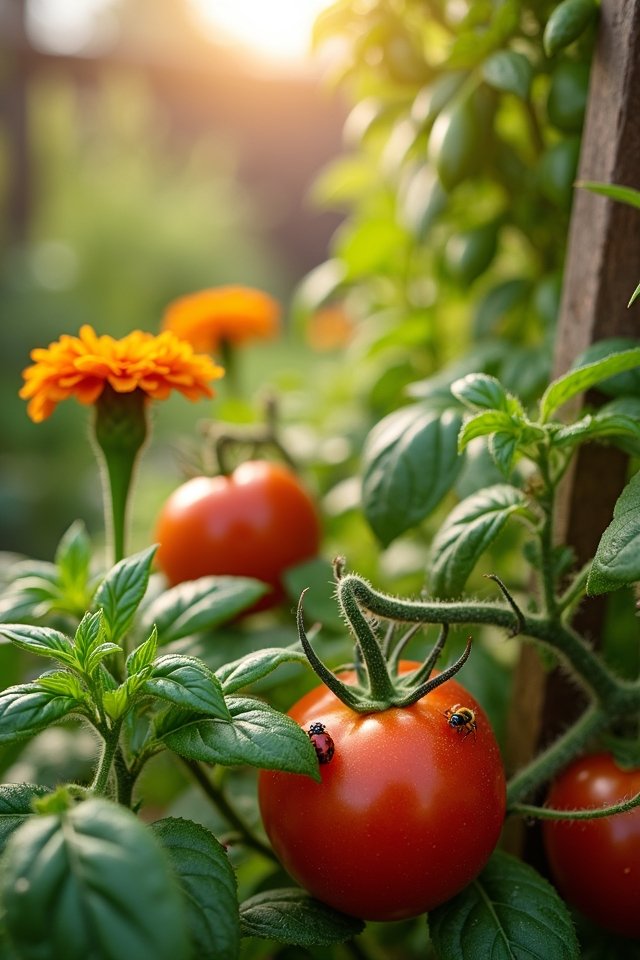
Imagine your garden as a bustling neighborhood where plants live side by side, each one helping the other thrive! Companion planting is like hosting a fabulous garden party—certain plant pairings invite beneficial insects that feast on pests. For example, marigolds attract ladybugs, those delightful little guardians of your veggies! Pair tomatoes with basil, and watch how they uplift each other’s flavors while deterring pesky aphids!
You’ll feel like a garden maestro, orchestrating harmony in your patch. By grouping plants wisely, you’re not just growing; you’re creating a vibrant ecosystem! So, why not let your plants mingle? They’ll protect each other, and you’ll enjoy a flourishing garden. It’s a win-win—your plants will thank you, and so will your taste buds!
Maintaining Garden Health for Pest Resistance
Keeping your garden healthy is like giving it a cozy blanket on a chilly night—it wraps your plants in comfort and protection! To boost soil health and guarantee robust plant nutrition, follow these simple yet effective steps:
- Rotate your crops to prevent nutrient depletion—variety is the spice of life!
- Add compost regularly; it’s like a gourmet meal for your soil.
- Mulch generously to retain moisture and keep weeds at bay—your plants will thank you!
- Water wisely; deep watering encourages strong roots, just like a good workout helps you build muscles.
Frequently Asked Questions
What Are the Best Times to Inspect for Pests in My Garden?
You’ve got to pick your moments wisely! Morning inspections are like a fresh cup of coffee—invigorating and full of potential. You can spot those sneaky pests before they wreak havoc! Evening checks, on the other hand, are like a cozy bedtime story; you can catch critters as they come out to play. So, grab your magnifying glass and enjoy the thrill of the hunt! It’s all about timing, my friend! Happy gardening!
How Do Weather Conditions Affect Pest Activity in Small Gardens?
Weather conditions can really shake things up for pests in your garden! Temperature fluctuations can send critters scurrying, while high humidity levels can make them feel right at home. Think of it like a rollercoaster for bugs—when it’s warm and muggy, they thrive! So, when it’s sunny, you might see fewer pests, but don’t let your guard down. Keep an eye out after rainy days; they’ll come out to play!
Can Pets or Wildlife Contribute to Pest Problems in My Garden?
Pest problems can pop up when pets play and wildlife wanders! Your furry friends might dig up delightful plants, while curious critters can cause chaos. For instance, a playful pup might unearth seedlings, exposing them to pesky pests. Wildlife interactions, like squirrels stealing seeds, can lead to bigger issues. Keep an eye on your garden’s activity and create barriers to protect your plants. After all, a happy garden is a healthy garden!
What Should I Do if My Pest Control Methods Fail?
If your pest control methods fail, don’t panic! Try alternative methods like planting marigolds, which repel pesky critters with their vibrant blooms. You could also introduce beneficial insects, like ladybugs, to munch away on the bad guys. Remember, pest prevention is key—keeping your garden tidy and healthy can make a huge difference! So, roll up your sleeves, get creative, and watch your garden thrive, just like a well-orchestrated symphony of nature!
How Can I Safely Dispose of Dead Pests Found in My Garden?
So, you’ve got a little “garden surprise” on your hands—let’s talk dead pest disposal! First, wear gloves; you wouldn’t want to mix up your gardening and hygiene! Place the unfortunate critter in a sealed bag, like a tiny, uninvited guest heading out. Toss it in the trash or compost if it’s safe—imagine it returning to nature! Keeping your garden clean not only looks good but also helps prevent future visitors. Happy gardening!