Got a tiny balcony or a kitchen windowsill? No problem! Choose compact, flavorful herbs like basil, chives, and parsley; they’ll add zest to your dishes! Try vertical gardening with shelves, making your herb wall the envy of your culinary friends. Use pretty pots with good drainage and keep them in sunny spots to soak up that glorious light. Don’t worry, you’ll have fresh herbs at your fingertips! Curious about more tips? There’s plenty left to explore!
Choosing the Right Herbs for Limited Space
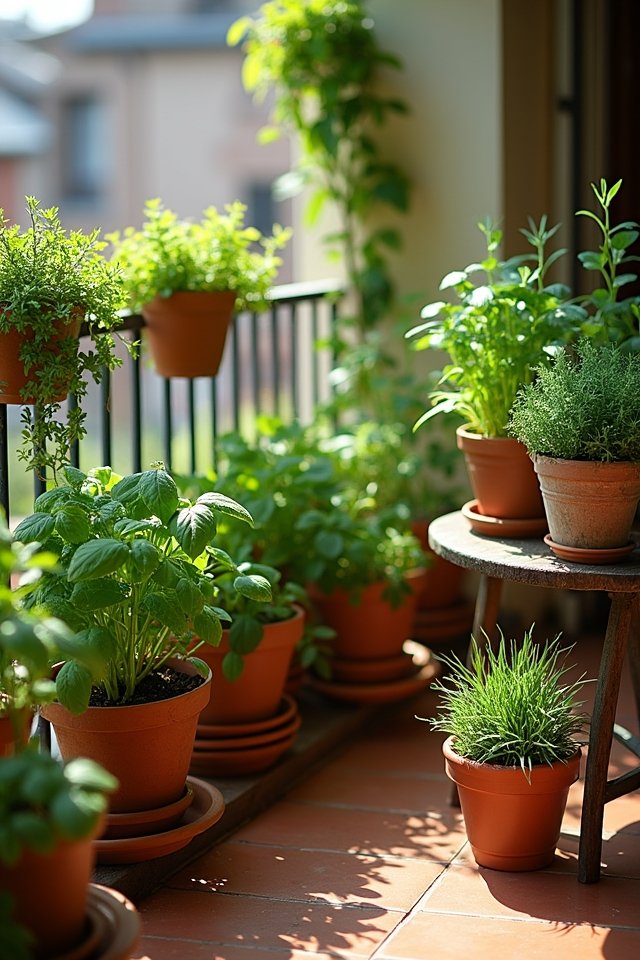
When you’re tight on space, choosing the right herbs can feel like a game of Tetris—each piece has to fit perfectly! You’ll want to focus on herb selection that maximizes your limited area. Think compact and flavorful! Basil, chives, and parsley are fantastic choices; they’re small yet mighty in taste. Try mixing them in a single pot for vibrant color and easy access. And don’t forget about the magic of dwarf varieties! They’re like the adorable sidekicks of the herb world, bringing big flavors without hogging space. Consider pairing herbs that thrive together, like rosemary and thyme, for efficient space optimization. With a bit of creativity, you can turn your small garden into a powerhouse of flavors!
Vertical Gardening Solutions for Herbs
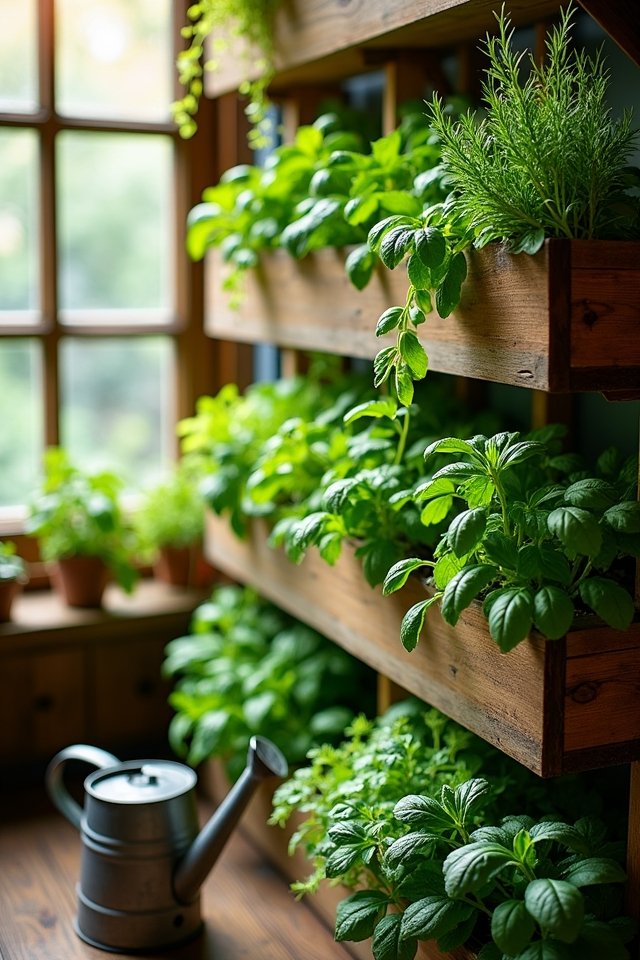
If you’ve ever dreamed of a lush herb garden but felt stifled by space, don’t fret! Vertical gardening is your ticket to herb heaven. Imagine an herb wall, bursting with vibrant basil, fragrant thyme, and zesty cilantro, transforming your small area into a green paradise! You can easily create this by using stacking shelves. Just mount them against a wall, and voilà! Each tier becomes a home for your favorite herbs. Not only does this save floor space, but it also adds a striking visual element to your home. Plus, who wouldn’t want a stunning herb display that’s both functional and fabulous? It’s like having a mini jungle at your fingertips—ready to elevate your culinary adventures!
Container Gardening Techniques
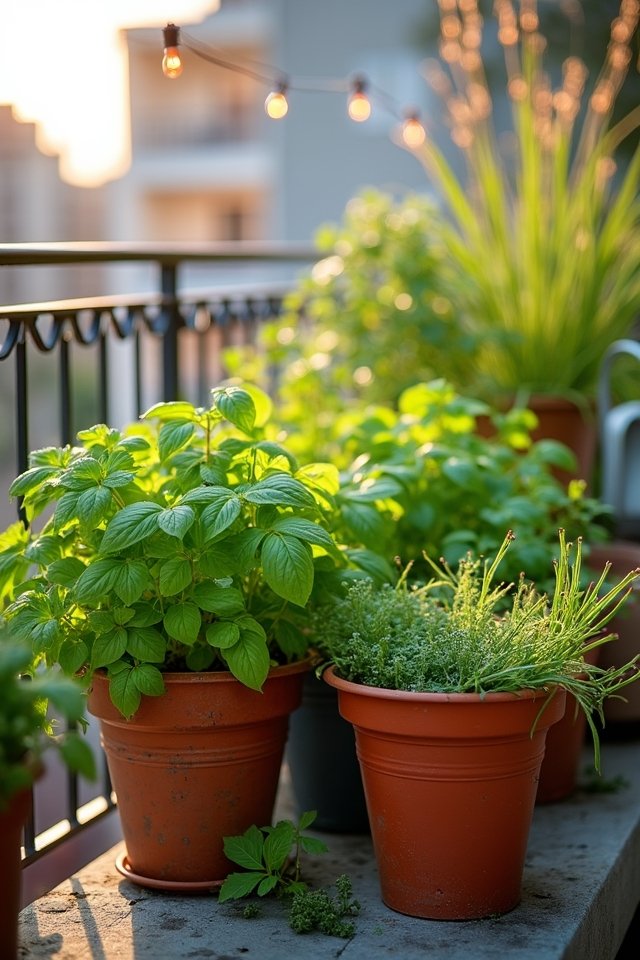
Got a tiny balcony or a cozy patio? You can still release your inner gardener! Start with smart container selection. Choose pots with good drainage; think of them as your herbs’ cozy homes. Terracotta or ceramic pots not only look great but also help regulate moisture.
Next, master potting techniques! Use a high-quality potting mix, mixing in some perlite for drainage—it’s like giving your herbs a fluffy mattress! When planting, don’t overcrowd; allow each herb some breathing room. Basil loves it sunny, while mint prefers a bit of shade—who knew herbs had such personalities?
Maximizing Sunlight Exposure
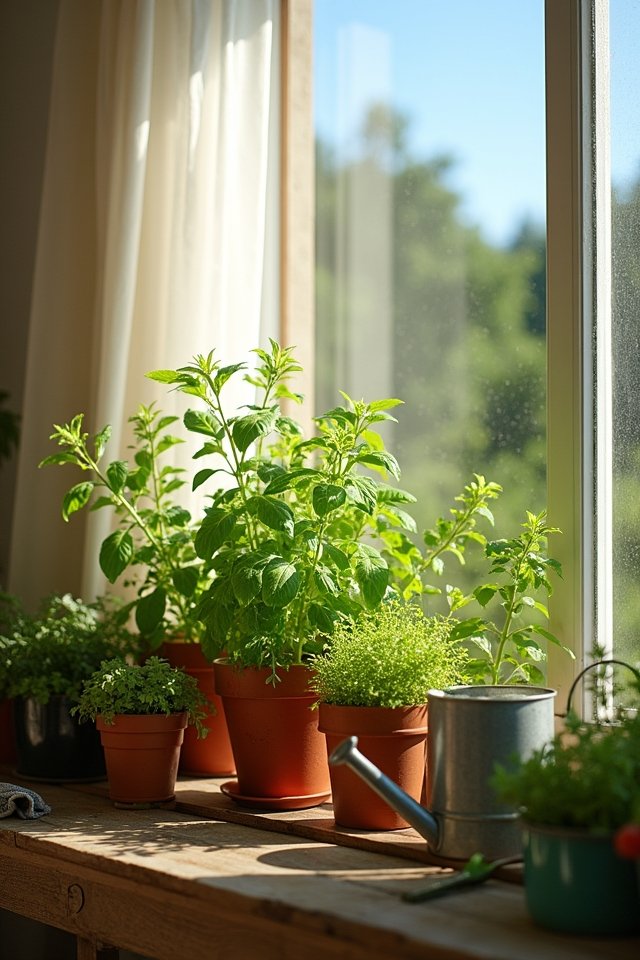
To truly thrive, your herbs need their daily dose of sunshine—think of it as their morning coffee! The right sunlight angles can turn your tiny garden into a vibrant oasis. Here are four innovative tips to maximize that precious sunlight:
- Choose the Right Spot: Place your herbs where they’ll catch the most sun, like a sunny windowsill or balcony.
- Use Reflective Surfaces: Mirrors or light-colored walls can bounce sunlight onto your plants, giving them an extra boost!
- Rotate Containers: Periodically turning your pots can help guarantee all sides get equal sun exposure.
- Implement Shading Solutions: Use lightweight curtains or shade cloth to protect delicate herbs from harsh afternoon rays.
Soil and Fertilization Tips
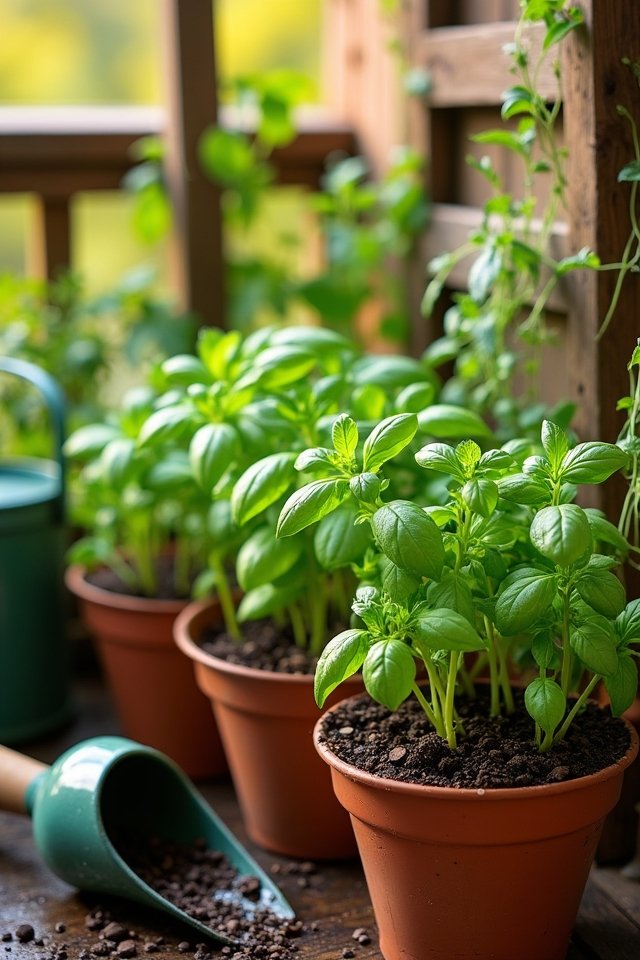
While you might think that herbs just need sunshine and water to thrive, the secret lies in their soil and nutrition! Think of soil types like cozy beds for your herbs; they need the right fit to flourish. A well-draining mix with organic matter, like compost, keeps them happy and healthy. You wouldn’t want to sleep on a lumpy mattress, right? Try adding organic fertilizers, like worm castings or fish emulsion, to give your herbs a tasty boost! They’ll soak it up like a sponge, resulting in vibrant, flavorful growth that’ll make your dishes sing. And remember, a little love goes a long way. So go ahead, pamper your herbs with the best soil and nutrition for a bountiful harvest!
Efficient Watering Practices
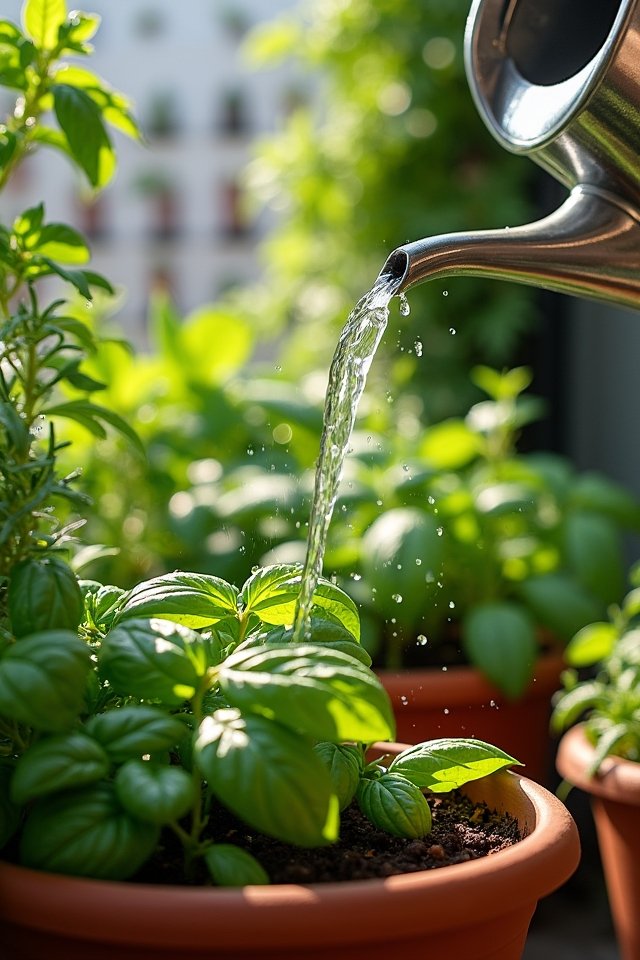
When it comes to watering your herbs, timing is everything! You want to keep those fragrant leaves lush and vibrant, right? Efficient watering practices can help you achieve just that! Consider these innovative techniques:
- Drip Irrigation: This method delivers water directly to the roots, minimizing waste and ensuring every drop counts!
- Mulching: A layer of mulch retains moisture, keeping your herbs happy and hydrated.
- Watering Early or Late: Watering during cooler times prevents evaporation, making sure your herbs drink up all the goodness.
- Soil Moisture Meters: These nifty gadgets help you monitor moisture retention, so you won’t drown or starve your herbs!
Stay smart with your watering, and your culinary garden will flourish like never before! 🌱
Companion Planting for Herbs
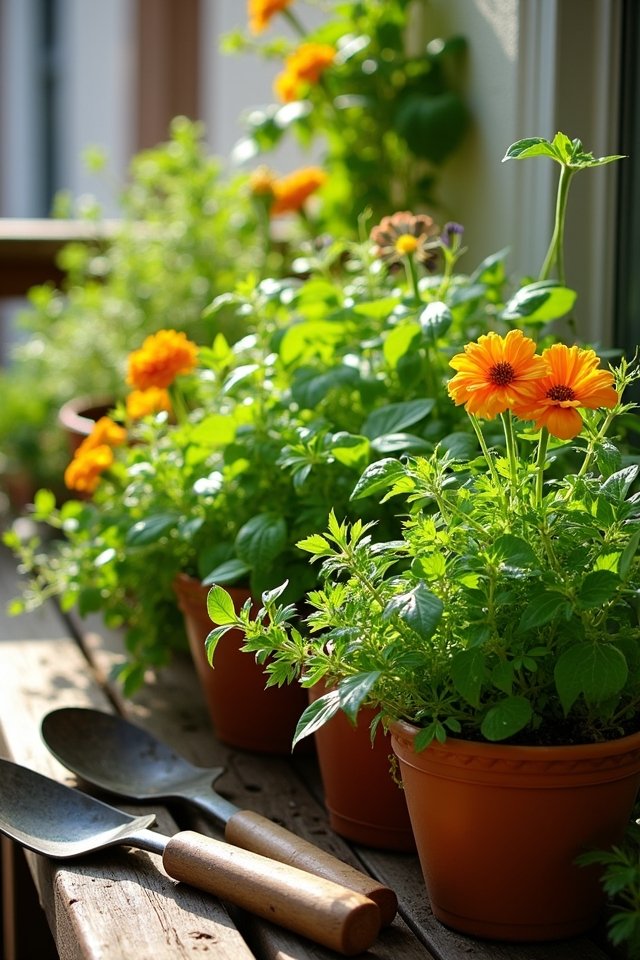
Companion planting isn’t just a clever gardening trick; it’s a way to create a thriving herb haven! Imagine pairing basil with tomatoes, where their flavors dance together in perfect harmony. Not only do these herb pairings elevate your dishes, but they also naturally deter pests! Basil’s strong scent keeps those pesky flies at bay while the tomatoes thrive in a supportive environment. You can also plant rosemary alongside cabbage; its aroma confuses cabbage moths, offering brilliant pest control. Why not experiment with mint near your carrots? The mint’s invigorating fragrance keeps unwanted critters away. With a little planning, you’ll transform your small space into a vibrant, aromatic oasis. Ready to make your herb garden the talk of the town? Let’s get planting!
Seasonal Care and Maintenance
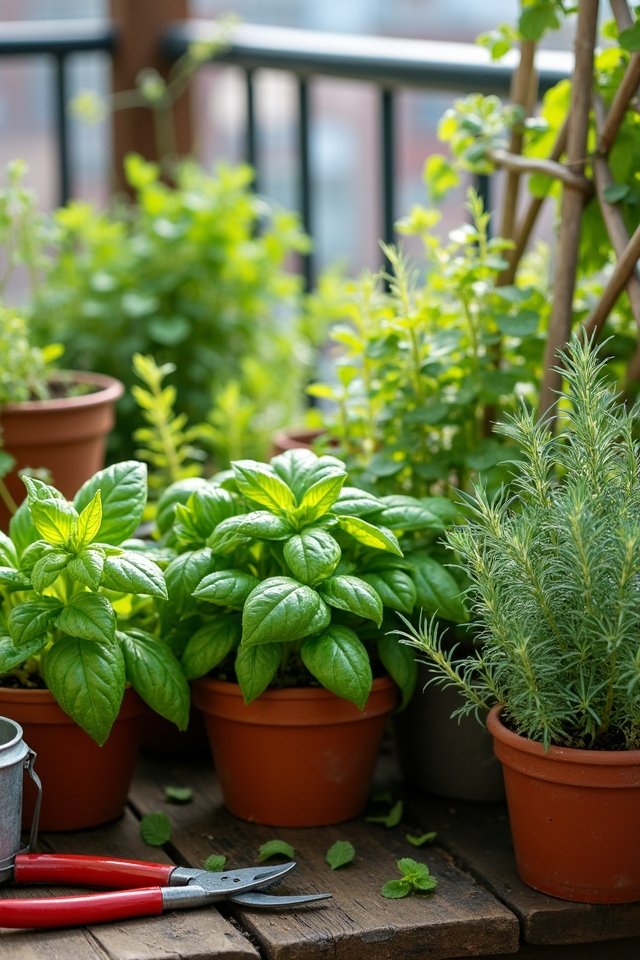
Taking care of your herb garden throughout the seasons is like nurturing a friendship—it requires attention, love, and a little bit of know-how! Here are four essential tips to keep your herbs thriving:
- Pruning Techniques: Regularly snip away dead leaves and spent flowers to encourage bushy growth. Think of it as giving your herbs a stylish haircut!
- Pest Management: Keep an eye out for pests. Use organic sprays or introduce beneficial insects—it’s like inviting friends to the party!
- Watering Wisely: Adjust your watering routine as seasons change; herbs don’t like soggy socks!
- Fertilizing: Feed your herbs with a balanced fertilizer during the growing season to guarantee they’re strong and flavorful!
Embrace these tips, and your herb garden will flourish beautifully!
Frequently Asked Questions
How Do I Prevent Pests in My Small Herb Garden?
Imagine this: your small garden is a bustling city, and pests are the uninvited guests! To keep them at bay, you’ll love using natural pest deterrents. Try mixing water with a few drops of dish soap as a gentle spray—think of it as a bubble bath for your plants! You can also plant marigolds; they’re like bodyguards against pesky bugs. Welcome organic remedies, and watch your herbs thrive in peace! Isn’t that cool?
Can I Grow Herbs Indoors Without Natural Light?
Absolutely, you can grow herbs indoors without natural light! Just grab some indoor herb lighting, like those nifty artificial grow lamps. They mimic sunlight, so your herbs won’t feel neglected! Imagine lush basil and fragrant thyme thriving under their warm glow. Set the lamps about 12 inches above your plants, and let their magic work wonders. Plus, it’s like having your own little garden party right in your cozy kitchen—how fun is that?
What Are the Best Herbs for Beginners?
Imagine snipping fresh basil, the aroma bursting like a summer garden in your kitchen! For beginners, you can’t go wrong with easy herb choices like basil, mint, and chives. They’re resilient and forgiving, perfect for your first gardening adventure. Basil adds flavor to pasta, while mint refreshes your drinks! Plus, chives make every dish pop! Ready to plunge into it? These best beginner herbs will make your culinary dreams bloom with joy!
How Often Should I Harvest My Herbs?
You should harvest your herbs regularly to guarantee peak herb quality! Think of it like picking ripe fruit—timing is everything. Aim for once a week, or whenever leaves are lush and vibrant. Snipping just above a leaf node encourages bushy growth, much like giving your plant a stylish haircut! If you wait too long, herbs can get woody and bitter. So go ahead, get those scissors ready and enjoy the fresh flavors!
Are There Any Herbs That Are Toxic to Pets?
Imagine your home as a cozy garden, where every plant brings joy, but beware! Some herbs, like rosemary and thyme, can be toxic to our furry friends. It’s essential for pet safety that you keep these little troublemakers out of paws’ reach! Instead, think of delightful basil or parsley—perfectly safe and oh-so-scrumptious! Keeping your pets safe while nurturing your green thumb is a beautiful dance; let’s make it a joyful one!