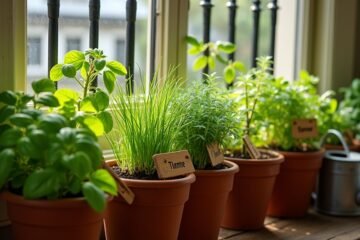
Got herbs in low light? Don’t fret! Start with shade-tolerant varieties like basil and mint—they love those cozy corners! You can also jazz things up with artificial grow lights; aim for 12-16 hours, and watch your plants dance with delight. Maximize sunlight by using reflective surfaces or sheer curtains to soften harsh rays. Don’t forget to prune regularly and keep the soil just right—moist, but not soggy. Curious about more tips to turn your herbs into a lush oasis? Stick around!
Choose Shade-Tolerant Herb Varieties
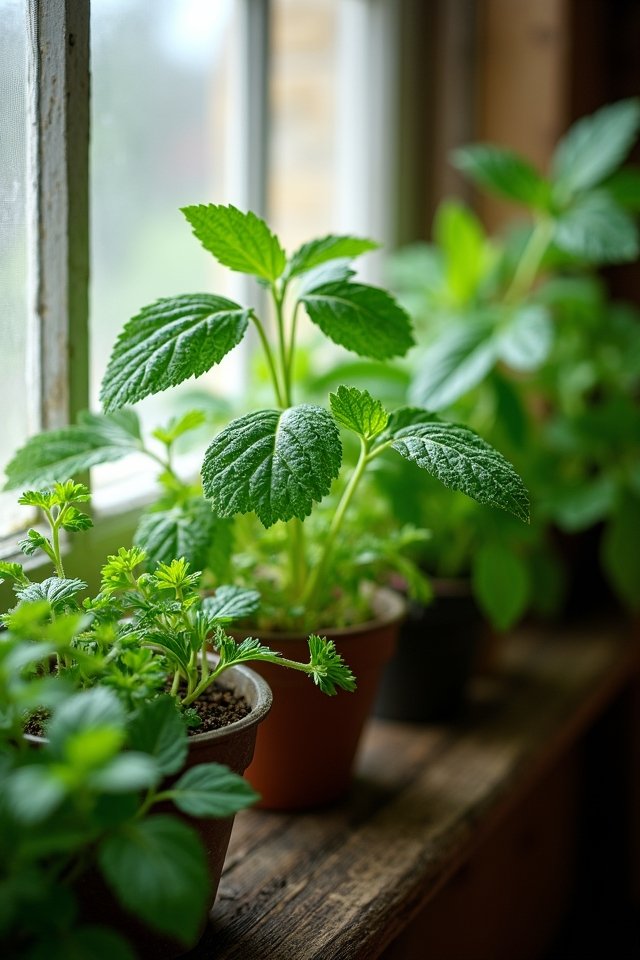
When you think about growing herbs, you might picture sun-drenched gardens bursting with vibrant colors, but don’t fret if your space lacks that golden touch! You can still enjoy a bounty of flavor by focusing on shade-tolerant herb varieties. Think about basil, mint, and chives—these green wonders thrive in lower light conditions. When making your herb selection, remember their light requirements; some herbs, like parsley, can handle partial shade beautifully. It’s like having a secret garden where your herbs whisper to each other, sharing their aroma! Imagine snipping fresh mint for your tea or zesty chives for your baked potatoes. With a little creativity, you’ll discover that low light can lead to lush, flavorful delights!
Utilize Artificial Grow Lights
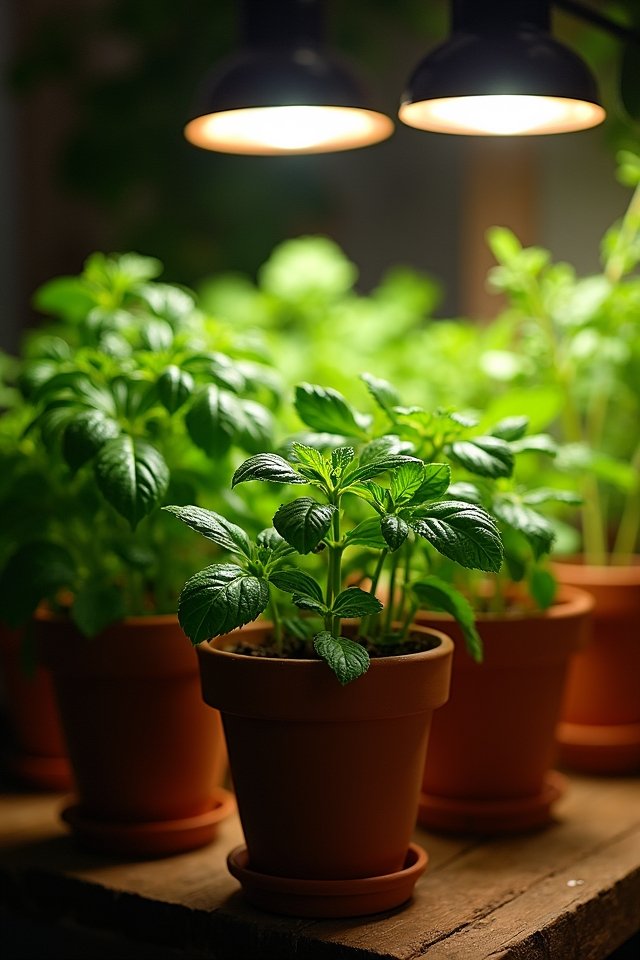
If you’ve ever wished for sun-kissed herbs but only have a cozy, dim corner to work with, artificial grow lights are your new best friends! These magical devices mimic the sun’s rays, transforming your indoor space into a thriving herb haven. LED options are particularly great because they’re energy-efficient and produce less heat, so your herbs won’t roast! Aim for about 12-16 hours of light duration each day to keep your greens happy and growing. Just think of it as giving your herbs a mini vacation in the tropics! With the right setup, you can enjoy vibrant basil, rosemary, or mint, even in low light. So, why not let your creativity shine bright with these illuminating solutions? Happy growing!
Maximize Indirect Sunlight Exposure
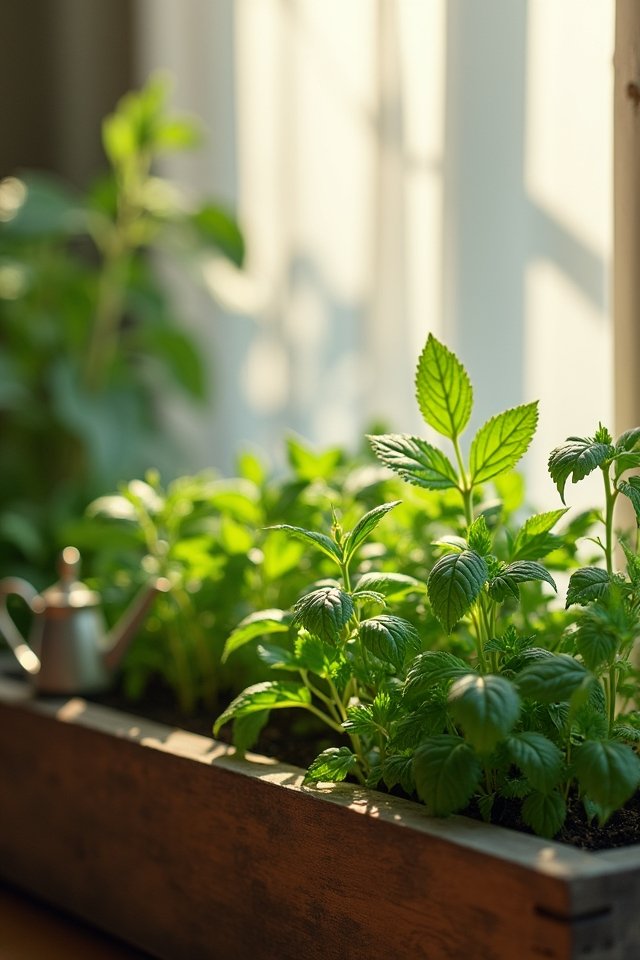
Did you know that maximizing indirect sunlight exposure can transform your indoor herb garden into a lush paradise? It’s easier than you think! Here are some clever indirect sunlight strategies you can implement:
- Reflective Surfaces: Use mirrors or shiny foil to bounce light onto your herbs, creating a sun-kissed vibe!
- Sheer Curtains: Hang sheer curtains to soften harsh sunlight while still allowing those precious rays to filter through.
- Light Shelves: Install shelves near windows to catch and reflect light, giving your plants a cozy spot to thrive!
Optimize Container Placement
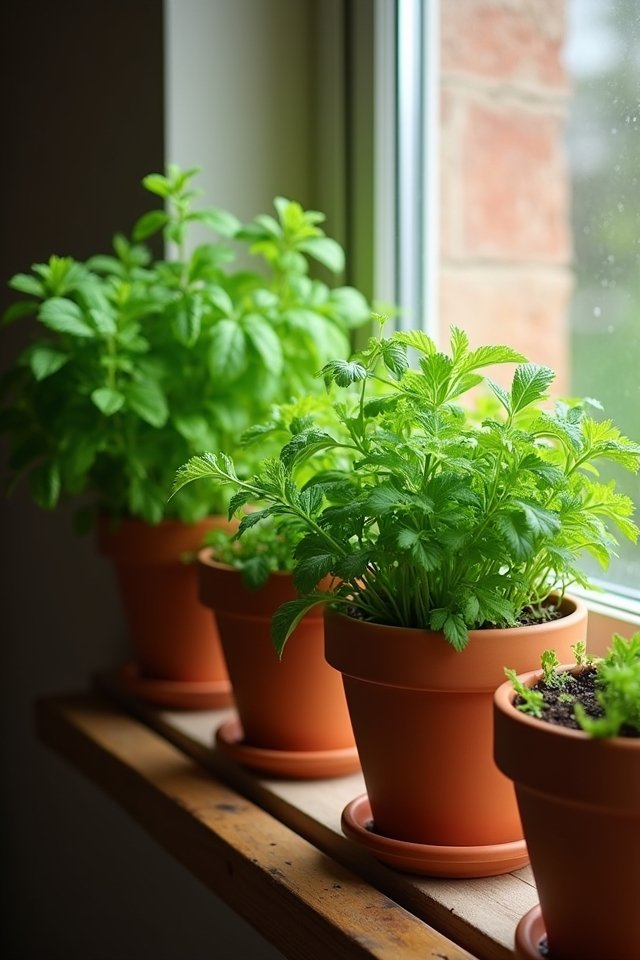
Maximizing indirect sunlight is just the beginning of your indoor herb garden adventure! Now, let’s explore container placement. Think of your herbs as a happy family—each needs just the right space to thrive. Use varying container heights to create visual interest, like a charming herb skyscraper! Taller pots can catch more light, while shorter ones fit snugly on windowsills. Don’t forget about ideal spacing; allow air to circulate between your herbs to prevent any awkward sibling squabbles over resources. Aim for about six inches apart—just enough for them to stretch their leafy arms! With a little creativity and a playful spirit, you’ll craft an indoor garden that’s not only functional but a feast for the eyes!
Maintain Proper Soil Moisture
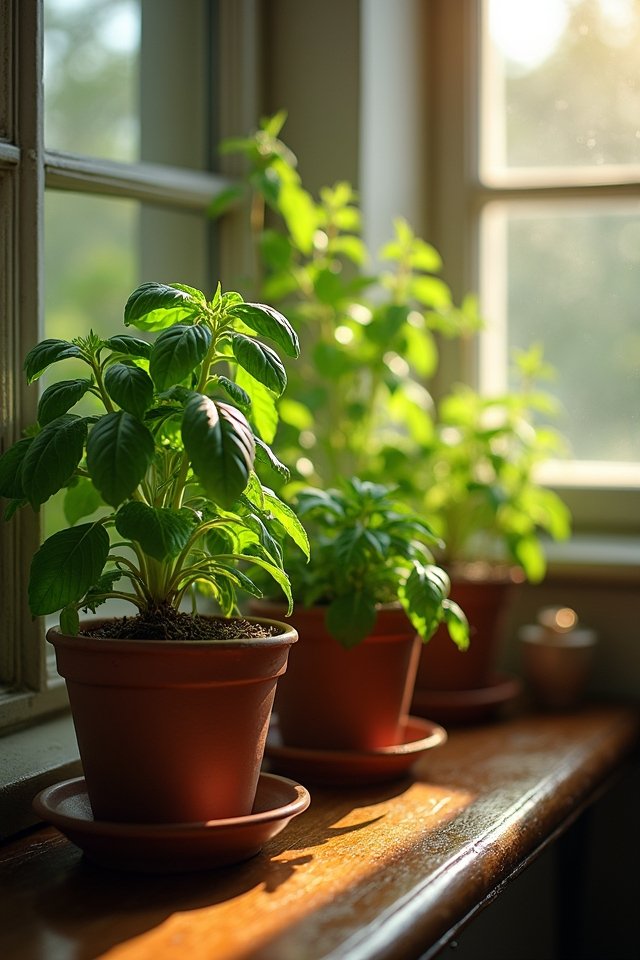
Keeping your herbs happy and healthy often boils down to one vital factor: soil moisture! Understanding moisture is essential, especially in low light. You want to strike that perfect balance—too much water and your herbs will drown, but too little and they’ll wither away. Here are three smart tips to keep your soil just right:
- Test the soil moisture with your finger; if it’s dry an inch down, it’s time to water.
- Guarantee proper soil drainage; use pots with holes to prevent soggy roots!
- Water consistently, but let the top layer dry out between watering—think of it as a revitalizing spa day for your plants!
With these simple strategies, your herbs will thrive like rock stars!
Prune Regularly for Healthy Growth
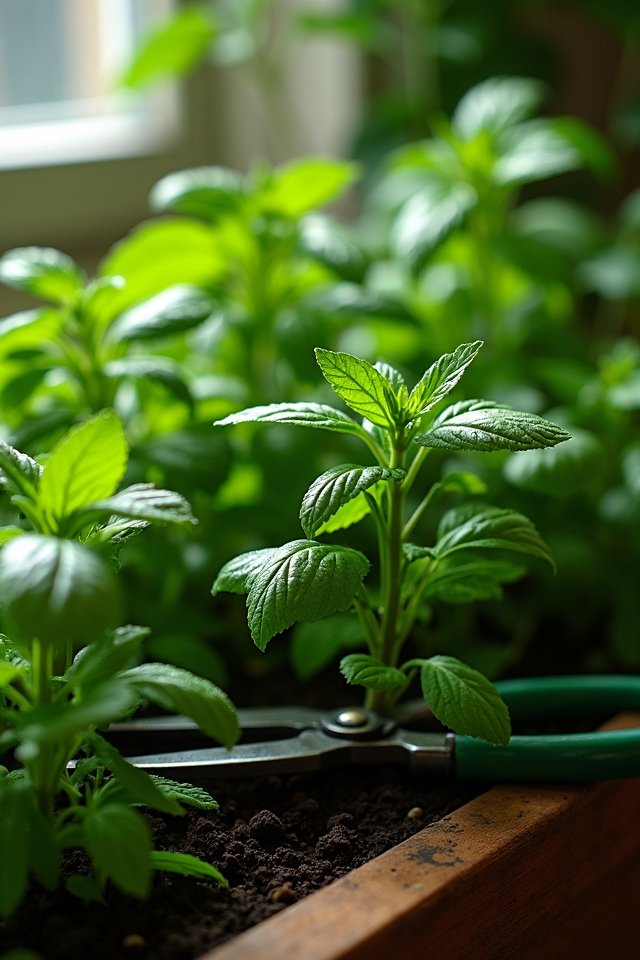
Once your herbs are happily hydrated, it’s time to give them a little TLC through regular pruning! Think of pruning as a haircut for your green friends; it keeps them looking fresh and encourages vibrant herb growth. Use simple pruning techniques, like snipping off those scraggly leaves or trimming back overgrown stems. This not only improves airflow but also promotes bushier plants—who doesn’t love a little more spice in their life? Just imagine plucking fragrant basil or mint, ready for your next culinary masterpiece! Remember, a little snip here and there can make a world of difference. So, grab those trusty scissors and get to work; your herbs will thank you with abundant flavor and energy!
Fertilize With Balanced Nutrients
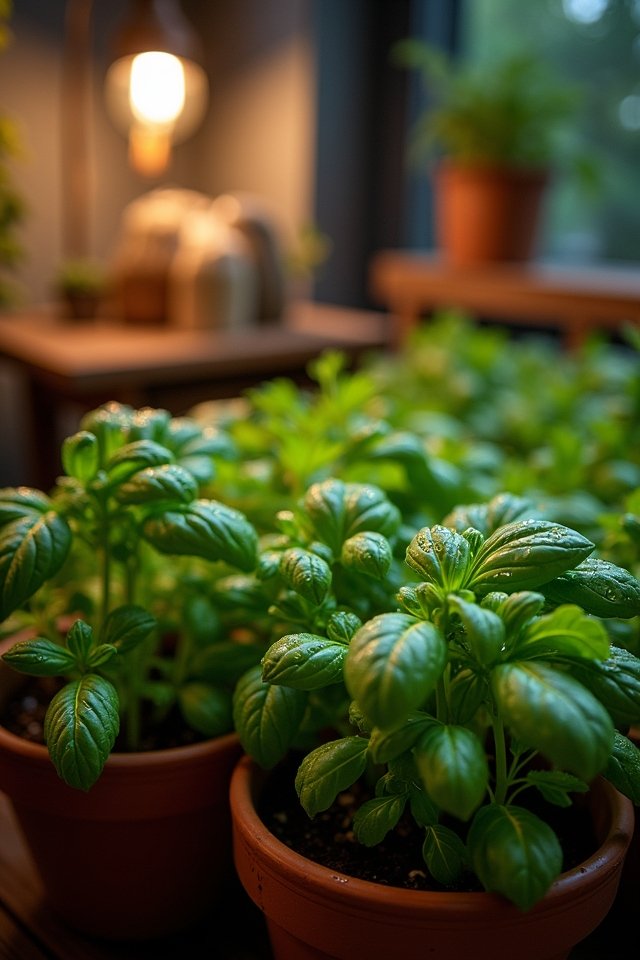
When you want your herbs to thrive, think of fertilizing as giving them a delicious feast! A nutrient balance is key, especially in low light. You wouldn’t want your herbs to go hungry, would you? Follow a fertilization schedule to keep their spirits high and growth vigorous. Here’s how to spice things up:
- Choose a balanced fertilizer, like a 10-10-10 mix, for even nutrition.
- Fertilize every 4-6 weeks to guarantee they don’t miss a meal!
- Watch for signs of hunger—yellowing leaves or slow growth means they need more love!
With the right balance of nutrients, your herbs will flourish, bringing fresh flavors to your kitchen. So, treat them well, and they’ll reward you with a vibrant bounty!
Ensure Good Air Circulation
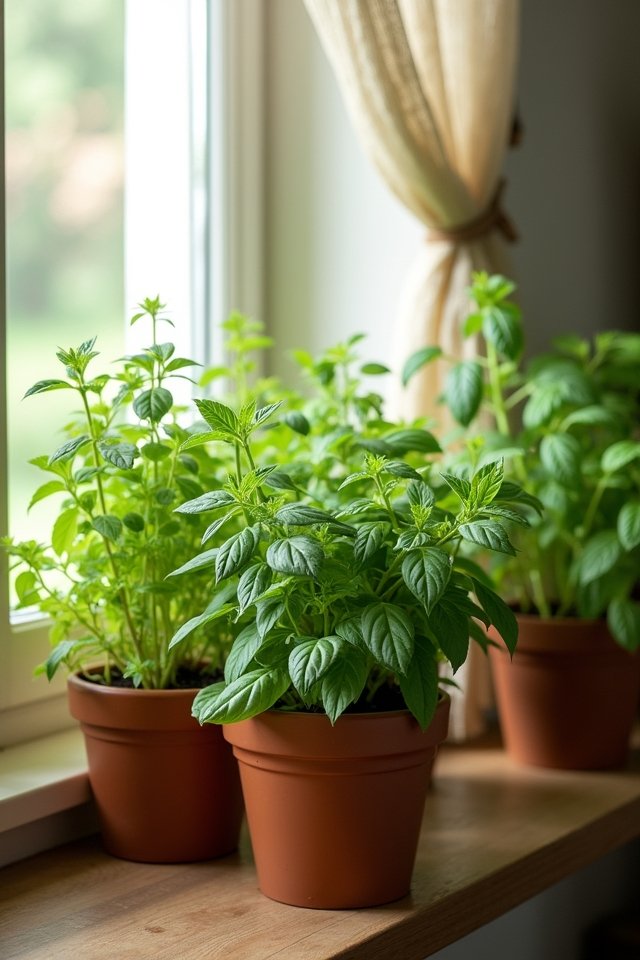
Good air circulation is like an invigorating breeze on a hot summer day—your herbs absolutely love it! To keep them thriving, try using airflow techniques like small fans or even strategically opening windows. This helps the air flow freely, preventing that dreaded stagnation. Remember, fresh air doesn’t just feel great; it’s essential for humidity control, too! Without it, your herbs might feel like they’re stuck in a sauna, which isn’t ideal. Positioning your plants where they can catch a gentle draft can work wonders. You’ll notice improved growth and happier leaves! Plus, who wouldn’t want their herbs to be the life of the party? Keep that air moving, and watch your herbs flourish like they’re on a vacation!
Monitor for Pests and Diseases
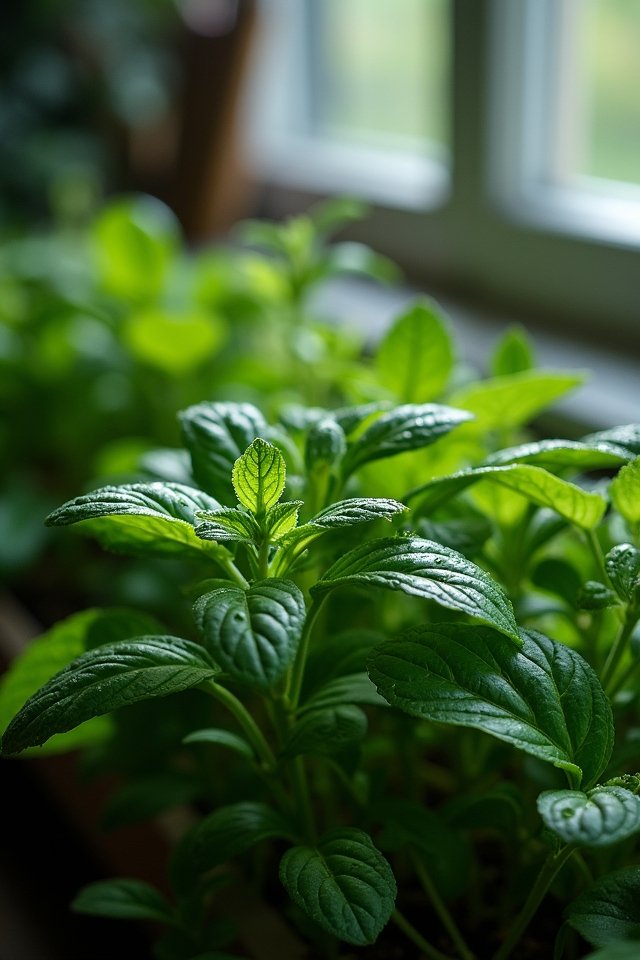
Keeping an eye out for pests and diseases is essential if you want your herbs to stay healthy and happy! A few tiny invaders can turn your thriving garden into a sad little patch. So, let’s talk about pest identification and disease prevention!
- Look for discolored leaves; they often signal a problem.
- Check for any sticky residue, which could mean aphids are throwing a party!
- Watch for webbing, a sure sign that spider mites are lurking.
Regularly inspecting your plants not only saves them but can also boost your gardening confidence! Plus, it’s like a treasure hunt—finding those sneaky pests before they wreak havoc. You’ve got this! Your herbs will thrive when you’re vigilant and proactive!
Experiment With Vertical Gardening Solutions
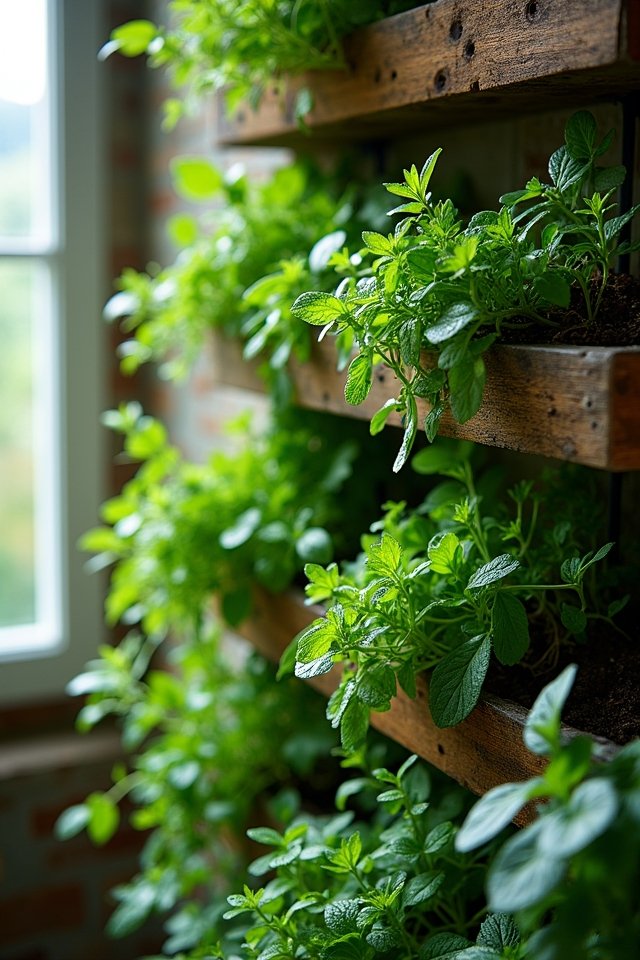
If you’ve ever wished your herbs could reach for the sun without hogging all the ground space, vertical gardening solutions might just be your new best friend! Imagine lush, vibrant living walls draping with basil, rosemary, and thyme, all thriving in a delightful vertical space. You can use wall-mounted planters or repurpose old pallets to create a stunning herb display!
Plus, elevating your plants not only saves room but also enhances air circulation, reducing the risk of mold. Don’t forget the joy of watching your herbs climb and cascade, giving your kitchen a fresh, green vibe! So, why not get creative and transform those empty walls into a fragrant herb garden? Your culinary adventures will thank you!
Frequently Asked Questions
Can I Grow Herbs Indoors Year-Round in Low Light?
Absolutely, you can grow herbs indoors year-round, even in low light! Some herb varieties, like mint and parsley, thrive in dim conditions. Think of your kitchen as a cozy greenhouse! Just grab some small pots, good potting soil, and maybe a grow light for a boost. You’ll be amazed at the fresh scents and flavors you can cultivate! Who knew indoor gardening could be this delightful? Your dishes will thank you later!
How Often Should I Water Herbs in Low Light Conditions?
Watering your herbs in low light can feel like tiptoeing through a garden of dreams! You’ll want to keep an eye on moisture levels; think of it as finding the perfect balance between a thirsty desert and a soggy swamp. Typically, every week should do, but poke your finger into the soil. If it’s dry an inch down, it’s time to give your plants a revitalizing drink! Happy herb-growing! 🌱
What Temperature Is Ideal for Low-Light Herb Growth?
For your herbs to thrive, the ideal temperature is between 65°F and 75°F. Think of it as a cozy blanket for your plants! Too cold, and they’ll shiver; too hot, and they’ll wilt faster than a forgotten salad. Keep an eye on those temps, and your herbs will flourish like a garden party! Remember, happy herbs mean tasty meals, so let’s keep them comfy and thriving, shall we?
Do Herbs Need a Specific Potting Mix for Low Light?
Absolutely, herbs thrive best in the right potting mix, even in low light! You’ll want a well-draining, nutrient-rich blend—think of it as a cozy blanket that keeps them comfy. A mix of potting soil, perlite, and compost works wonders. This blend meets their light requirements, ensuring they soak up moisture without feeling swamped. So, give your herbs that perfect potting mix, and watch them flourish like they’ve found a sunny paradise!
Can I Use Kitchen Scraps to Propagate Herbs in Low Light?
You can turn your kitchen scraps into a garden of herbs, even in low light. Envision this: you slice a green onion and toss the roots in water. In just days, new shoots sprout, like magic! Or try rooting basil cuttings in a jar—just keep it cozy and bright. It’s like giving your leftovers a second chance! So, grab those scraps and start your herb propagation adventure—it’s both fun and rewarding!