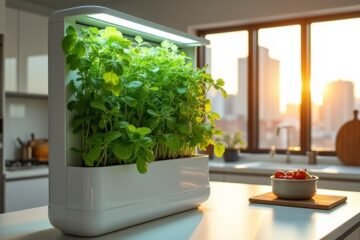
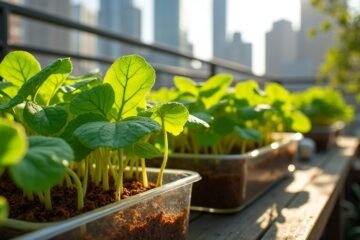
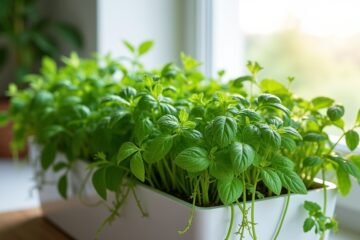
Transforming your cozy space into a lush indoor garden is a breeze! Start by choosing a deep water culture system for fast-growing plants like lettuce or vibrant tomatoes. Pair that with energy-efficient LED grow lights for a splash of sunshine! Opt for space-savvy herbs like basil and mint, while vertical gardening techniques stack plants beautifully on your walls. Invest in compact equipment like hydroponic kits, and soon, you’ll be in a green paradise! Want more tips? There’s so much more ahead!
Choose the Right Hydroponic System
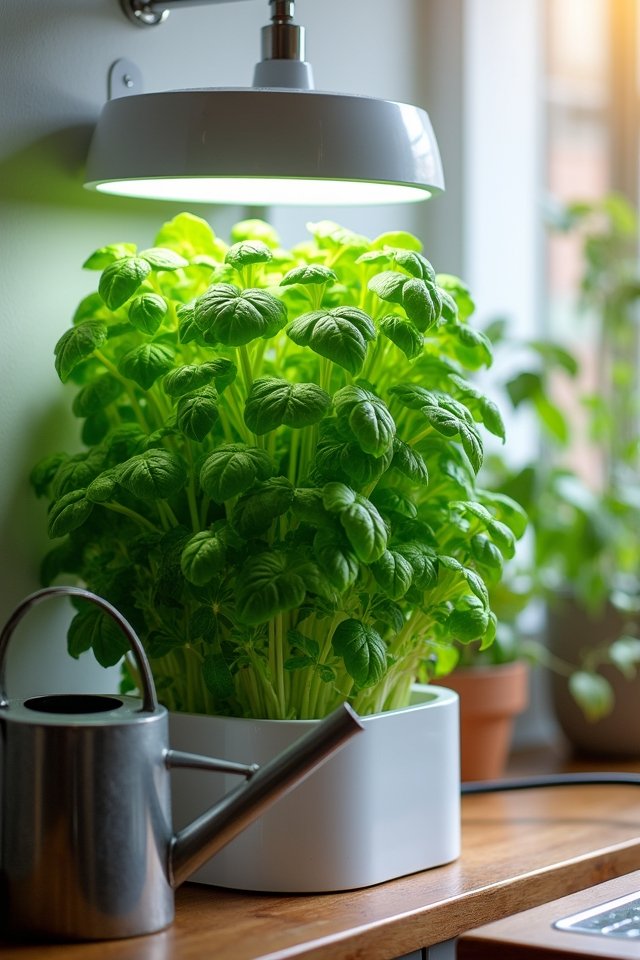
Choosing the right hydroponic system is like picking the perfect pair of shoes—it’s all about fit and comfort! You’ve got options like deep water culture, which immerses roots in nutrient-rich water, creating a thriving environment. Picture your plants happily floating, soaking up all that goodness! Then there’s the nutrient film technique, a sleek method where a thin film of nutrients flows over the roots. It’s like a gentle waterfall for your greens! Both systems have their perks, so consider your space and plant type. Are you going for lush lettuce or vibrant tomatoes? Each choice can revolutionize your indoor garden! So, lace up those gardening gloves and get ready to grow! What will you choose?
Optimize Lighting Solutions
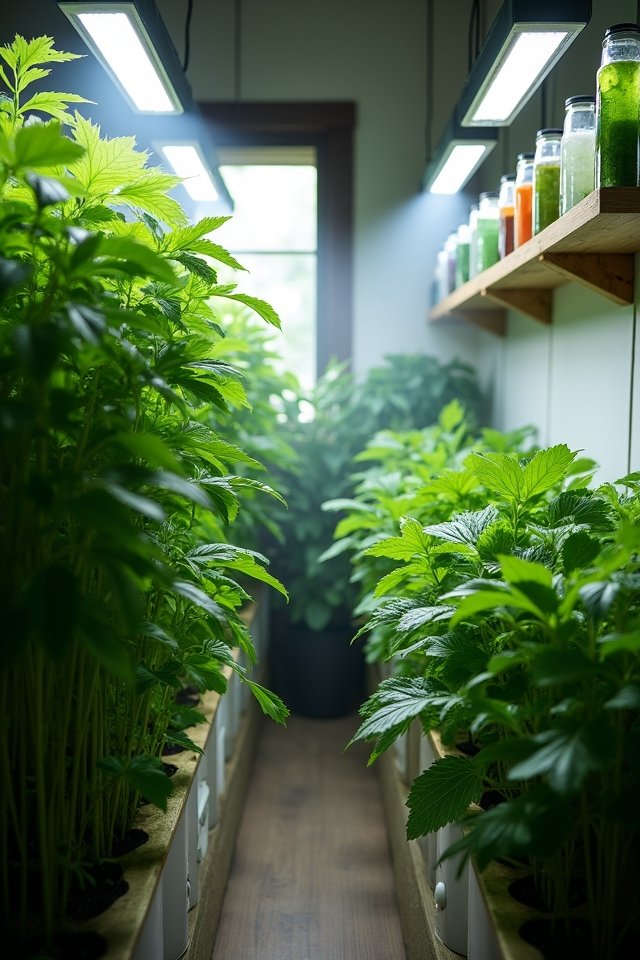
Once you’ve picked the right hydroponic system, it’s time to shine a light on your indoor garden! Think of your plants as sunbathers craving that perfect glow. LED options are a game-changer! They’re energy-efficient, long-lasting, and produce less heat, so your space stays cozy. Set up your light schedules wisely—most plants love about 12-16 hours of light daily. You can even mimic nature, giving them a “day” and “night” just like outside! Imagine your greens soaking up those rays, photosynthesizing with joy, and growing like there’s no tomorrow! Remember, the right light can turn any small space into a lush oasis. So, go ahead, let your garden bask in brilliance! Your plants will thank you!
Select Space-Efficient Plants
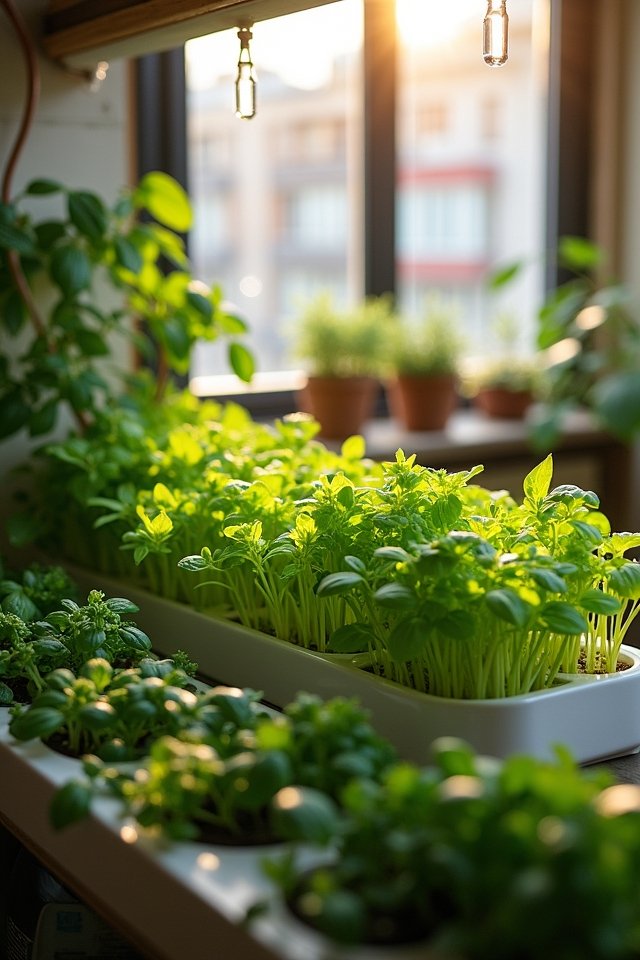
When it comes to selecting plants for your indoor hydroponic garden, there’s a delightful array of space-efficient options just waiting to be discovered! Think of vibrant herb varieties like basil, cilantro, and mint—they not only save space but also add zing to your meals! Leafy greens, such as lettuce and spinach, are perfect companions too. They grow quickly, filling your garden with lush greenery in no time. Imagine plucking fresh basil for your pasta or crisp lettuce for a crunchy salad right from your own home! Plus, these plants thrive in small pots, making them ideal for cozy nooks. So, get excited about your hydroponic adventure, and let these petite powerhouses transform your space into a green oasis!
Utilize Vertical Gardening Techniques
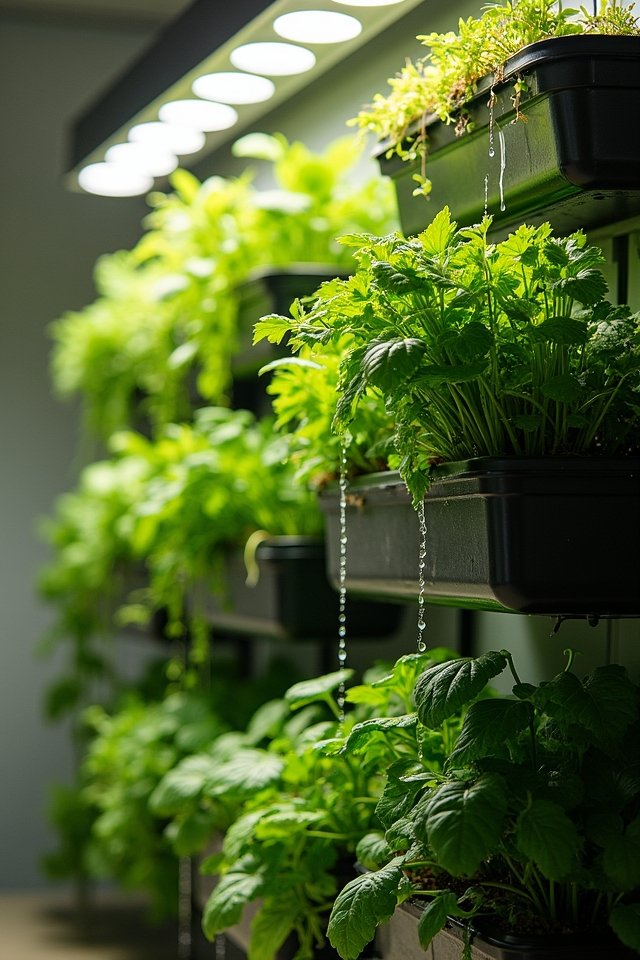
If you want to maximize your indoor hydroponic space, diving into vertical gardening techniques is a game changer! Imagine transforming your walls into lush green landscapes with wall planters! They’re perfect for herbs or trailing plants, creating a stunning visual display. Tower gardens are another fantastic option, stacking plants in a compact, efficient design. You can grow multiple layers of veggies, saving floor space and adding a touch of vertical flair! Plus, they’re easy to maintain and can fit snugly in corners. Ever thought of growing strawberries above your head? With these innovative methods, you’ll not only save space but also boost your indoor atmosphere. Your home will feel vibrant and alive! So, why not reach for the sky?
Invest in Compact Equipment
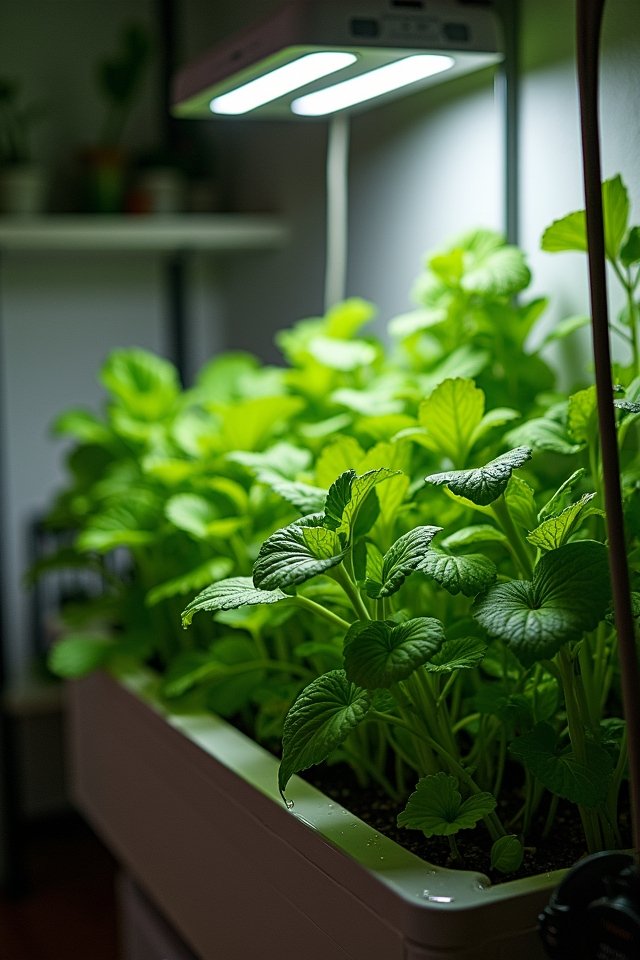
Investing in compact equipment can make a world of difference in your indoor hydroponics journey! When space is tight, sleek solutions can be your best friends. Think of compact systems as your hydroponic superheroes, swooping in to save the day!
Here are four must-have items to evaluate:
- Vertical Hydroponic Towers – They maximize your vertical space while looking stylish!
- LED Grow Lights – These energy-efficient lights are both powerful and compact, perfect for any nook.
- Portable Grow Tents – Easy to set up and move, they create a mini-greenhouse atmosphere.
- Hydroponic Kits – All-in-one sets simplify your setup and keep everything organized!
With these nifty tools, you’ll transform your small space into a thriving garden paradise! Ready to grow?
Monitor Temperature and Humidity
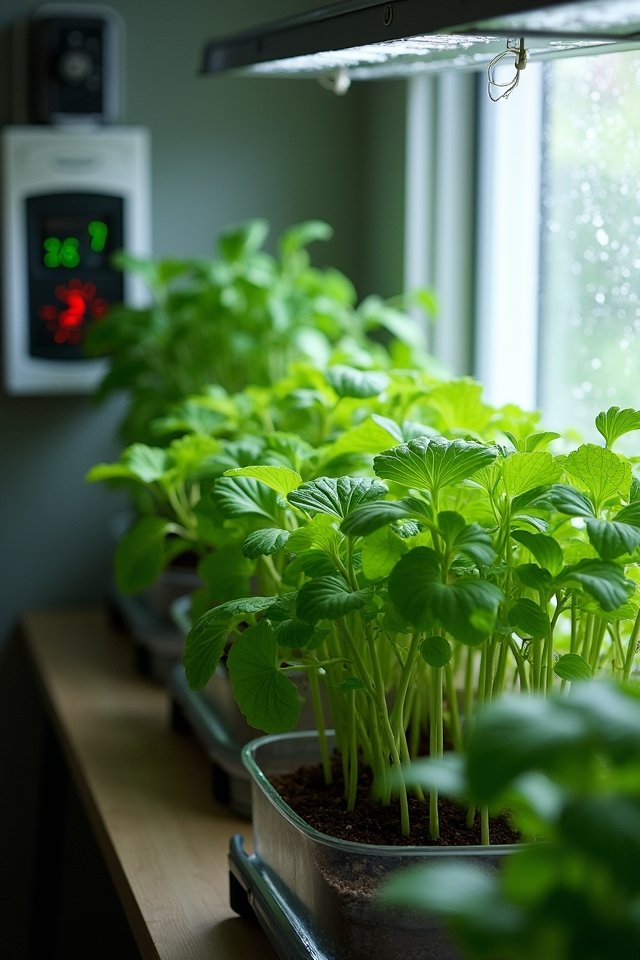
Keeping an eye on temperature and humidity is essential for your indoor hydroponic garden to thrive! Think of your plants as delicate little divas—they need just the right conditions to show off their beauty. Temperature control is key; aim for 65-75°F during the day and a slightly cooler night. You wouldn’t want to bake your greens, right?
Humidity management is equally important. Keep it around 40-70% for ideal growth. Too dry, and your plants might feel like they’re in a sauna; too humid, and they could catch a nasty fungal bug! Use hygrometers and thermometers to monitor conditions, adjusting fans or heaters as needed. Your plants will reward you with vibrant growth and delicious yields! Isn’t that what we all want?
Implement Smart Watering Practices
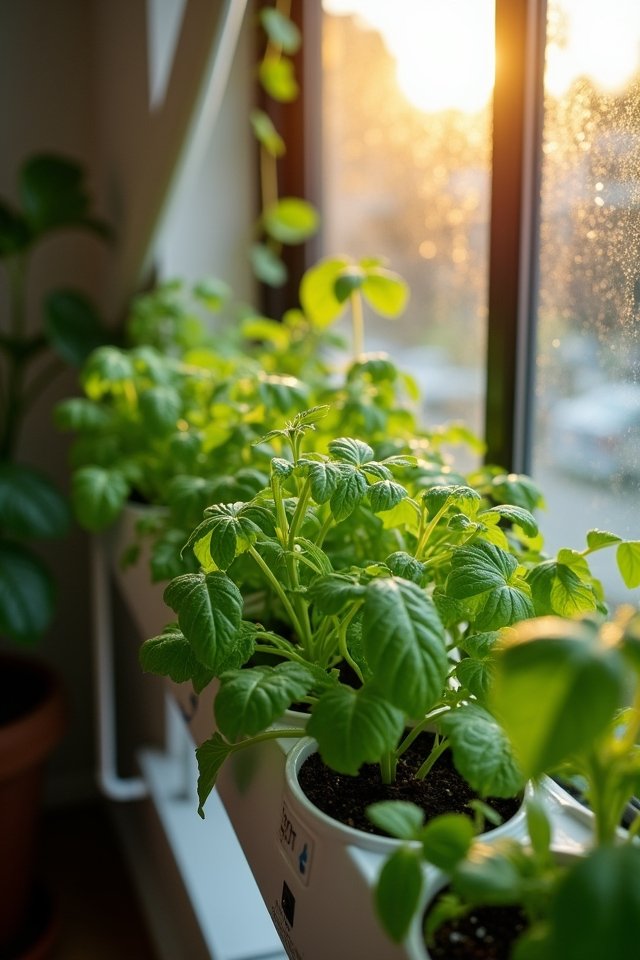
Once you’ve nailed the temperature and humidity, it’s time to turn your attention to watering—think of it as the revitalizing sip your plants need to strut their stuff! To maximize your hydroponic success, consider these smart watering practices:
- Drip Irrigation: This method delivers water directly to the roots, cutting waste and keeping plants happy.
- Moisture Sensors: Install these nifty gadgets to monitor your plant’s water needs, ensuring they never go thirsty!
- Schedule Wisely: Water early in the morning or late in the evening to reduce evaporation and keep your plants refreshed.
- Check pH Levels: Regularly test your water’s pH to maintain ideal nutrient absorption for your leafy friends!
Embrace these techniques and watch your indoor garden thrive!
Frequently Asked Questions
How Much Does Indoor Hydroponics Cost to Set Up?
Setting up indoor hydroponics can range from a few hundred to several thousand dollars! Your initial investment includes equipment like grow lights, nutrient solutions, and containers. It’s like assembling your own mini farm! On top of that, you’ll have ongoing expenses for electricity and nutrients. Think of it as a delightful hobby that keeps giving—fresh herbs and veggies right at your fingertips! Isn’t that worth every penny?
Can I Use Tap Water for My Hydroponic System?
Can you really use tap water for your hydroponic system? Sure, but watch out for water quality! Tap water often contains chlorine and minerals that can throw off your nutrient balance. Think of it like a smoothie—too many additives and it just doesn’t taste right! If you can, let the water sit for a day or use a filtration system. Your plants will thank you, and they’ll grow lush and vibrant!
What Pests Are Common in Indoor Hydroponics?
You’ve got to watch out for pests in indoor hydroponics! Common culprits include aphids, spider mites, and whiteflies. Pest identification is key; check your plants regularly! You can tackle these nuisances with prevention methods like sticky traps or introducing beneficial insects like ladybugs. Remember, a thriving garden shouldn’t feel like a bug buffet! Keeping your plants clean and healthy is the best way to stop those unwelcome guests in their tracks!
How Often Should I Change the Nutrient Solution?
You might think changing your nutrient solution is a chore, but it’s like giving your plants a spa day! Ideally, you should change it every one to two weeks. Monitor the nutrient concentration and solution temperature—too hot or too low can stress your plants. Imagine those roots sipping fresh nutrients! A little routine can make a world of difference. So, treat your greens right, and watch them thrive like they’re on vacation!
Is Hydroponics Suitable for Beginners?
Absolutely, hydroponics is perfect for beginners! You don’t need fancy equipment—just some basic supplies, like a simple reservoir and grow lights. Understanding nutrient basics is key; think of nutrients as the fuel for your plants. It’s like giving them a gourmet meal! You’ll be amazed at how quickly they grow. Plus, it’s fun experimenting with different herbs and veggies. So, roll up your sleeves and plunge into this exciting, innovative world!