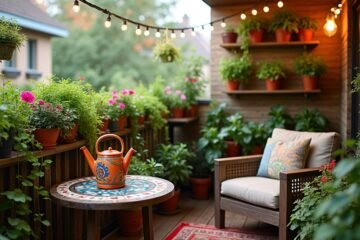
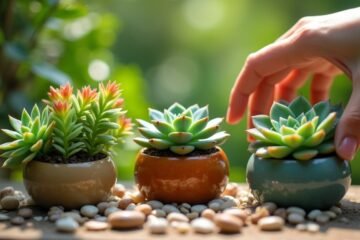
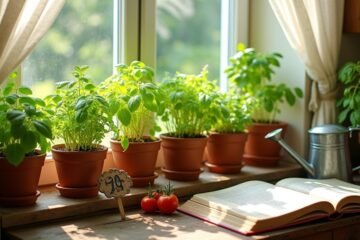
Ready to turn your apartment into a herb haven? Start by picking herbs like basil, mint, and rosemary that thrive in your space! Choose stylish containers with drainage holes – terracotta and metal pots look fabulous! Make sure they get 6 hours of bright, indirect sunlight daily, or add grow lights for extra boost. Water wisely and keep an eye on moisture levels; nobody wants a wilted basil plant! Stick with us, and discover more tips to nurture your green thumb!
Choosing the Right Herbs for Apartment Gardening
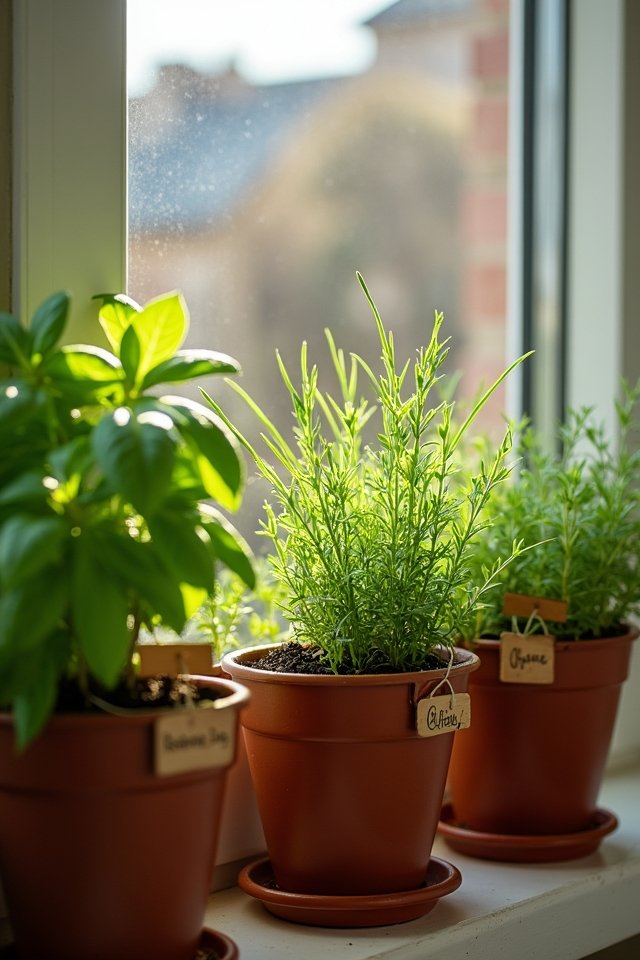
Have you ever wondered which herbs might thrive in your cozy apartment? Choosing the right ones can turn your space into a green wonderland! Popular herbs like basil, mint, and thyme are perfect picks for urban gardeners. Imagine snapping fresh basil for your pasta, or mint for a rejuvenating drink—it’s like having a little flavor factory at home! Explore herb varieties that suit your sunlight conditions; for shady spots, try cilantro and parsley. If you’ve got a sunny window, rosemary and oregano will thrive! So, welcome your inner innovator! The excitement of plucking fresh herbs enhances meals, boosts aromas, and fills your apartment with vibrant life. Get ready to dig in and transform your space into a mini herb haven!
Selecting the Perfect Containers for Your Herbs
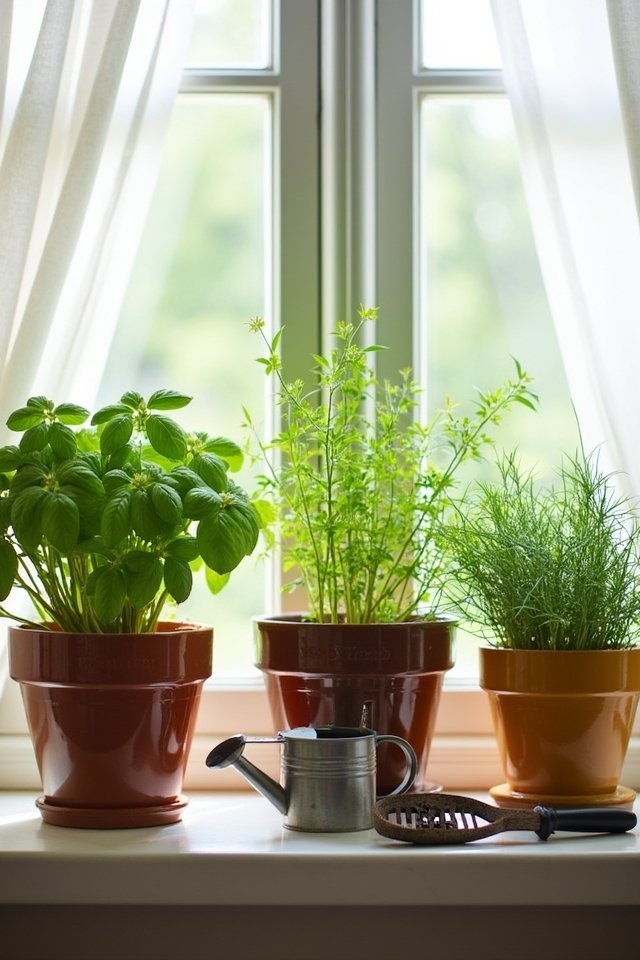
Finding the right herbs to grow is just the beginning of your apartment gardening adventure—next up is selecting the perfect containers to showcase your culinary garden! The right pots not only enhance your herbs’ beauty but also support their growth. Remember to take into account these factors when choosing your containers:
- Container materials: Think lightweight terracotta or shiny metal for style!
- Pot drainage: Verify there are holes to prevent soggy roots—nobody likes root rot!
- Size: Choose pots that allow your herbs to spread their foliage like a glorious green explosion!
Opt for unique designs that reflect your taste and brighten your space. You’re not just planting herbs; you’re crafting a stunning green display that can inspire delicious meals! Happy gardening!
Understanding Light Requirements for Indoor Herbs
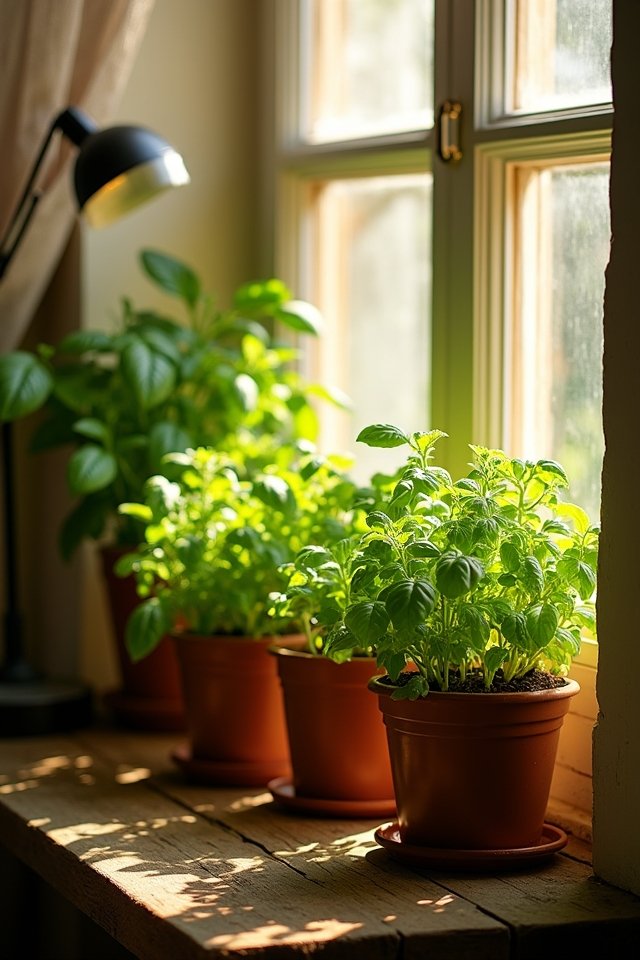
Did you ever think about how crucial light is for your thriving indoor herb garden? It’s like the sun’s warm hug for your plants! Understanding light intensity is key—most herbs love bright, indirect sunlight for about six hours a day. Consider placing your pots near windows where natural light streams in, but don’t fry those delicate leaves! A south-facing window is usually perfect. If the sunlight’s duration isn’t ideal, you can turn to grow lights; they mimic sunshine brilliantly and keep your herbs happy. Remember, too much darkness can leave them feeling melancholy, while excess light can lead to scorching. So, balance is essential in your little green oasis! Happy gardening! 🌿
Soil and Fertilization Tips for Apartment Herb Gardening
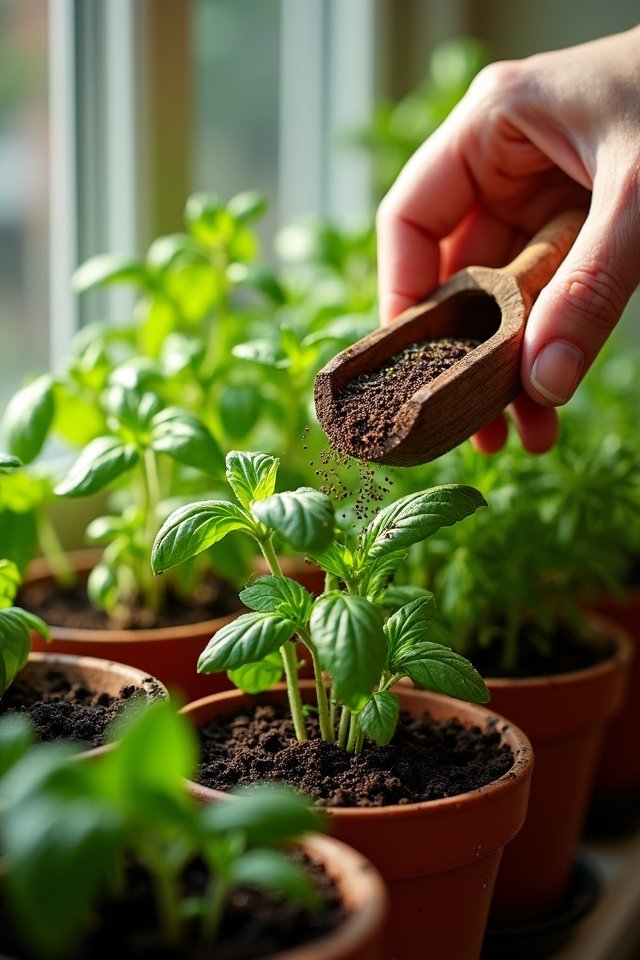
While you might think the sun is the star of your indoor herb garden, the soil you choose deserves a spotlight too! You want a winning mix that’s rich, draining well yet holding moisture. Consider using a combination of potting soil, compost, and your favorite organic fertilizers to nourish those precious herbs.
Here are three tips to elevate your soil game:
- Explore composting techniques to create your nutrient-rich blend at home!
- Go for organic fertilizers that are gentle on your plants and the environment.
- Mix in perlite or vermiculite to guarantee your herbs won’t sit in soggy soil.
Trust me, with the right soil, your herbs will dance like they’re soaking up the sun—no matter where they are!
Watering Techniques for Healthy Herb Growth
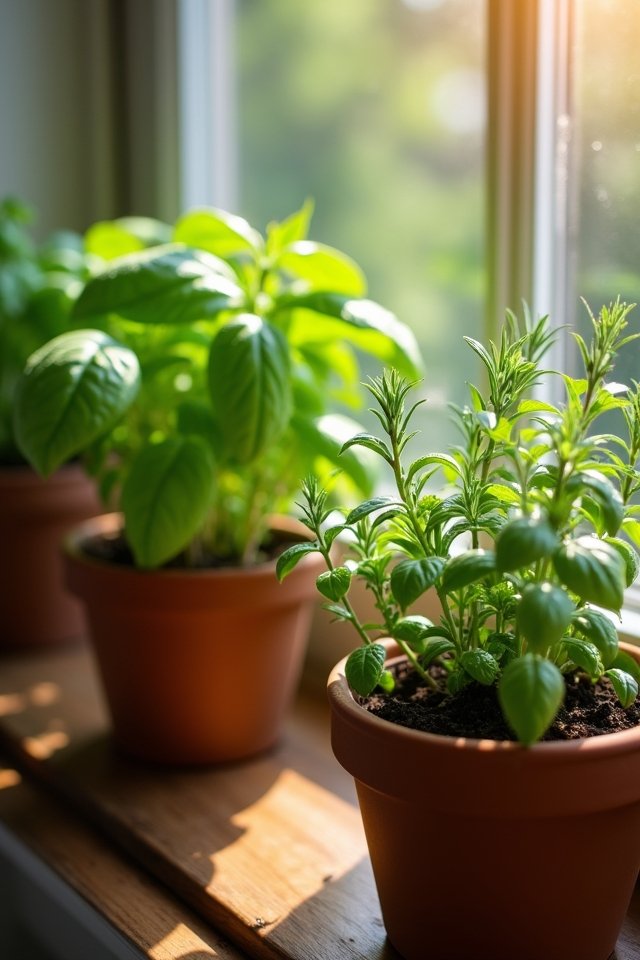
Great soil gets you halfway there, but let’s chat about the other half of the equation: watering! Imagine your herbs sipping water like they’re on a luxurious spa day—ah, invigorating! To keep them thriving, focus on smart drainage solutions. Whether you’re using terracotta pots or self-watering systems, make sure excess water can escape; it helps prevent root rot. Now, don’t forget moisture monitoring! Use a simple moisture meter or stick your finger into the soil—if it feels dry an inch down, it’s time to water. When you do, soak the soil deeply, then let it dry slightly between waterings. Your little green friends will thank you with vibrant growth and aromatic leaves! Happy watering! 🌿
Maintaining Ideal Temperature and Humidity Levels
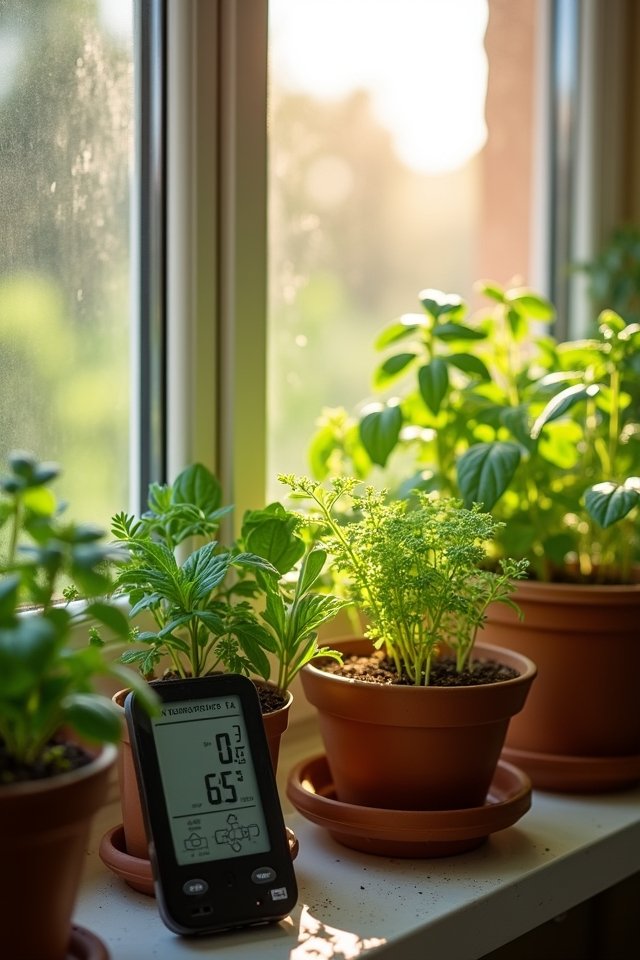
To grow happy herbs, finding that perfect balance of temperature and humidity is a necessity! Think of it as creating a cozy paradise for your plants. You can achieve this with some savvy humidity control and temperature regulation techniques.
- Keep it warm: Aim for a temperature between 65°F to 75°F. Your herbs love it toasty!
- Mimic nature: Use a humidifier or pebble trays to maintain humidity levels around 40-60%. Think of it as a spa day for your greens!
- Rotate regularly: Moving your pots ensures even light and air distribution, avoiding those grumpy, wilting leaves.
Pests and Diseases: Prevention and Management
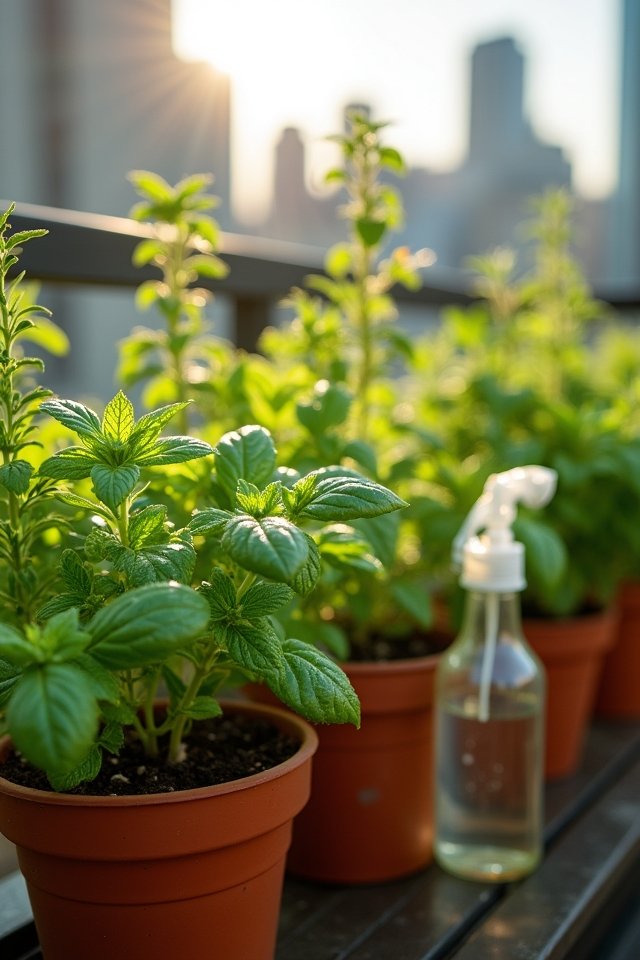
Even if you’ve taken every step to create a lush herb haven, pesky pests and sneaky diseases can still crash the party! To keep your herbs thriving, start with pest identification; look out for aphids and spider mites, those little party crashers. You can spot aphids by their tiny, soft bodies, often clustered on new growth. When it comes to disease control, maintain proper air circulation and avoid overwatering—damp soil can quickly turn into a disease buffet! Remember, a weekly check can save your herb garden from doom. If you notice trouble, spray organic insecticidal soap or a homemade garlic solution. It’s like giving your plants a superhero cape! With vigilance, you’ll guarantee your herbs stay happy and healthy!
Pruning and Harvesting Your Herbs Effectively
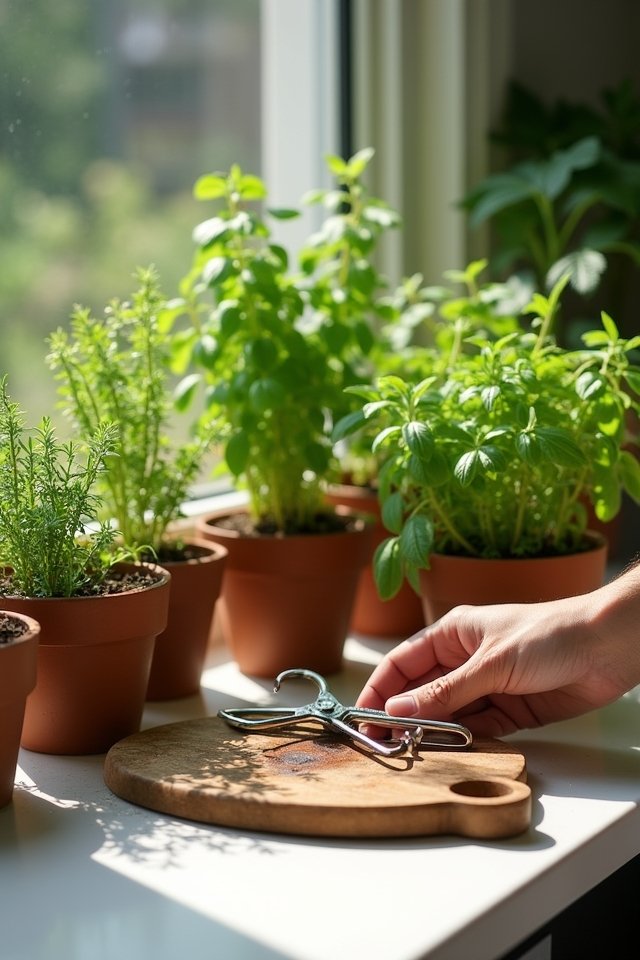
After tackling pests and diseases, your herb garden deserves a little loving care through proper pruning and harvesting! Think of pruning as giving your plants a stylish haircut, allowing them to flourish! Here are some essential pruning techniques and harvesting tips to keep your herbs thriving:
- Cut above the leaf nodes: This encourages new growth, making your herbs bushier and happier.
- Pinch the tips regularly: It’s like giving your plants a gentle nudge to produce more leaves.
- Harvest in the morning: Herbs are packed with flavor when the sun isn’t too harsh, preserving their aromatic oils and zest!
With these tips, you’ll not only keep your herbs healthy, but you’ll also enjoy a bountiful harvest that’s bursting with flavor! Happy gardening!
Creative Ways to Display Your Indoor Herb Garden
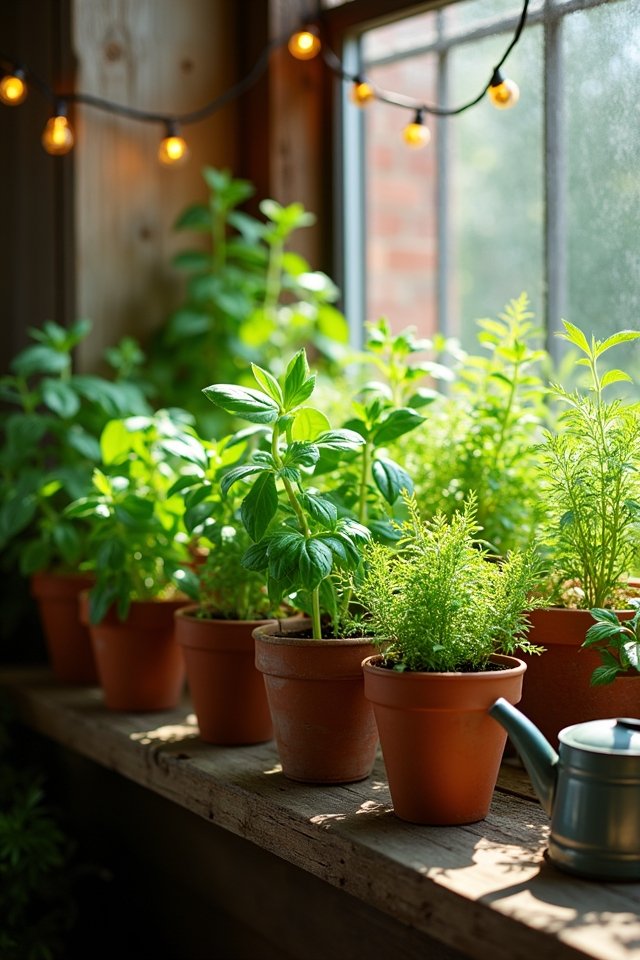
While you might think herbs belong in a garden bed outside, bringing them indoors can turn your kitchen into a mini botanical oasis! Get creative by using hanging planters to let your herbs trail gracefully down, or install wall shelves to showcase vibrant decorative pots. Those tiered stands? Perfect for maximizing space while adding a charming touch! And don’t forget the kitchen windowsill—your basil will love the sunlight there. For a unique twist, try herb spirals or vertical gardens to make the most of those treasured herbs! Ever thought about repurposed containers? A vintage mug or tin can make an eye-catching conversation starter! With these ideas, your apartment will definitely bloom with personality and flavor!
Frequently Asked Questions
Can I Grow Herbs From Kitchen Scraps?
Who knew that throwing scraps could lead to a kitchen herb party? You can absolutely grow delicious herbs from kitchen scraps! Try basil and green onion, which are both prime candidates for herb regrowth techniques. Simply place the roots in water, and watch them sprout new life! Just imagine the fresh aroma filling your kitchen! So, let those little scraps be your green thumb’s best friends—who knew compost could be such a flavor booster?
How Long Does It Take for Herbs to Grow?
How long does it take for herbs to grow? Well, that depends on the herb varieties! Basil and cilantro often sprout in just a week or two, while rosemary takes its sweet time, usually around two months. Think of it like waiting for your favorite dish to cook—slow and steady wins the race! Keep that watering can handy, and soon you’ll have a fragrant garden right on your windowsill, ready to spice up your meals!
Which Herbs Are Easiest to Grow Indoors?
Are you ready to transform your apartment into a fragrant oasis? The best indoor herbs for beginners are basil and mint! They’re like gardening superheroes, thriving with minimal effort. Just imagine plucking fresh basil for your pasta or mint for a revitalizing tea. Other easy options are chives and parsley, which add zing to your meals. So, arm yourself with a few pots and plunge into the aromatic joy of indoor herb gardening!
Do I Need Special Grow Lights for Herbs?
You don’t necessarily need special grow lights for herbs, but they can work wonders in indoor gardening! If sunlight’s limited, consider using LED lights; they’re like sunshine on a cloudy day! These bright wonders mimic natural light and help your herbs thrive. Just remember, they love about 12-16 hours of light daily. So, set a timer, and watch your little leafy friends flourish. Who knew indoor gardening could be this much fun? Keep growing!
How Often Should I Repot My Herbs?
Think of your herbs as vibrant dancers! They thrive in their herb container until they start to feel cramped. Generally, you should repot your herbs every year or when they outgrow their pot—roots poking out? Time to switch it up! If you notice slow growth or yellow leaves, it’s a sign they’re in need of a new home. Give your herbs room to grow, and they’ll reward you with lush greenery and flavor!