Want to transform your urban garden into a buzzing paradise? Start by choosing native plants like vibrant sunflowers and fragrant lavender! Create diverse habitat zones with flowers blooming year-round, making changes easier for our buzzing friends. Don’t forget to build bee hotels for solitary bees and leave some bare soil for ground-nesters! And please, skip the pesticides—those little critters have enough to worry about! Stick around; there’s so much more sweetness to discover!
Choose Native Plants for Your Garden
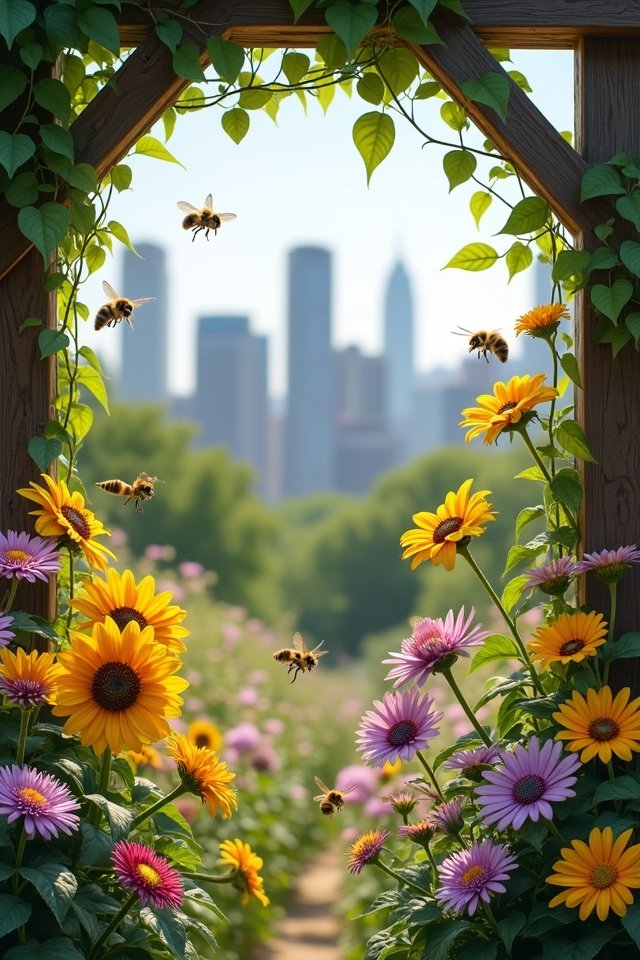
When you choose native plants for your garden, you’re not just selecting pretty flowers; you’re creating a buzzing paradise for bees! These local blooms, like goldenrods and bee balm, are designed for pollinator preferences, ensuring your garden buzzes with life. Imagine watching honeybees dance from one vibrant blossom to another, their fuzzy bodies covered in pollen. Plus, incorporating regional biodiversity means supporting the ecosystem right in your backyard! As you welcome native plants, you’re helping to create a harmonious environment that invites both bees and colorful butterflies. You might even find yourself in awe of the vibrant colors and soothing fragrances. So, let those native beauties lead the way, transforming your garden into a crucial sanctuary for urban pollinators—everyone wins!
Incorporate a Variety of Flowering Species
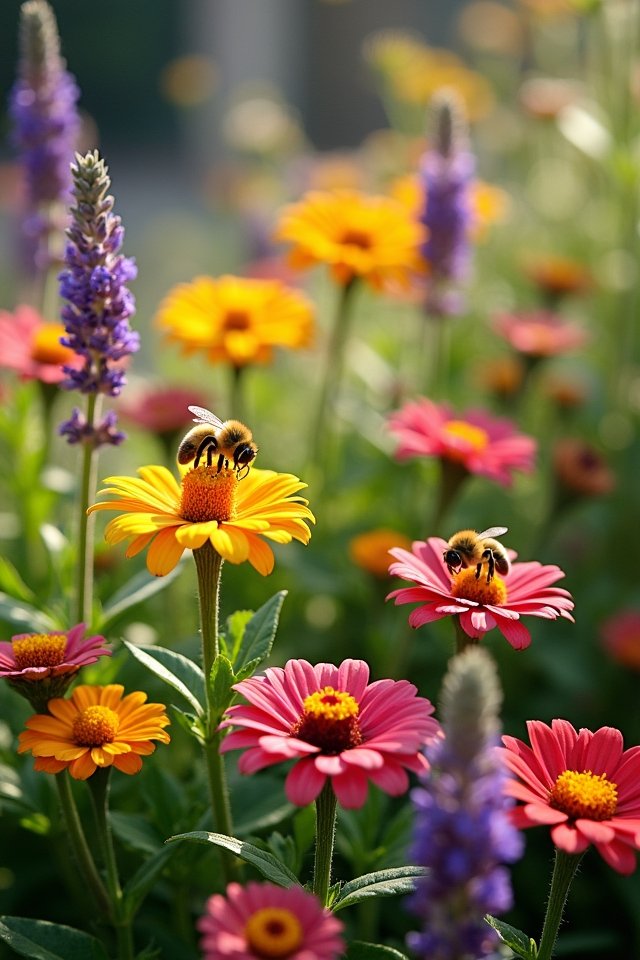
Choosing native plants is just the beginning of your floral adventure! To really wow your buzzing buddies, mix in a variety of flowering species. Think of your garden as a buffet, delighting bees with choices throughout the year! By incorporating plants that bloom during different flowering seasons, you’ll keep those pollinators buzzing happily. Imagine planting bright sunflowers, delicate lavender, and vibrant asters! Each flower type caters to specific pollinator preferences, creating a fragrant playground for your tiny friends. Ever seen a bee dance in delight over a patch of clover? Magical! So, why not blend colors and shapes? Your garden can be a stunning spectacle, full of life and humming with bee joy—now that’s urban innovation at its best!
Create Diverse Habitat Zones
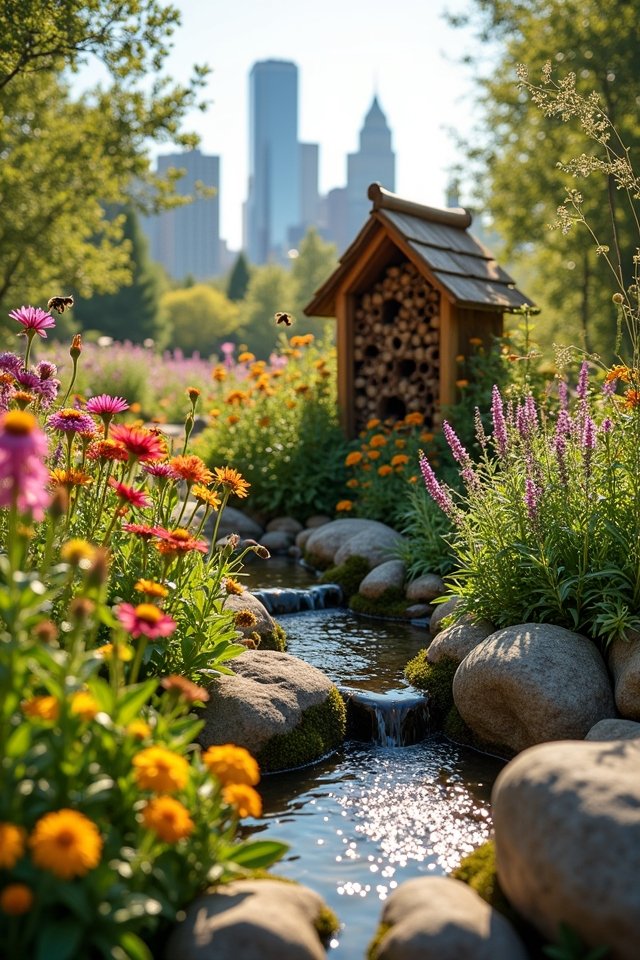
To really buzz up your urban garden, think about creating diverse habitat zones that invite bees and other pollinators to stick around! Imagine this: a vibrant patch of colorful wildflowers right next to a thicket of native bushes—hard to resist, right? These varied spots form pollinator pathways, guiding bees from one delightful zone to another. Mix it up with a charming herb garden and maybe a cozy nook with birdhouses! This kind of urban landscaping doesn’t just look gorgeous; it’s a feast for pollinators! Try incorporating small ponds or native grasses; they’ll feel right at home. You’re not just planting—you’re crafting a mini ecosystem! So, ready to turn your garden into a buzzing paradise? Let’s get started!
Opt for Open-Flower Shapes
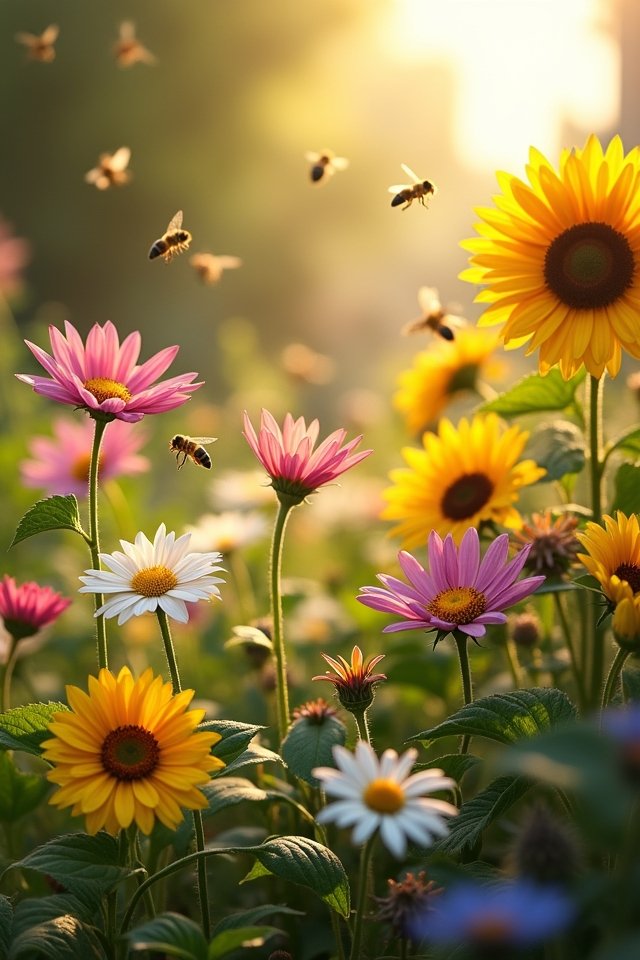
After you’ve created those inviting habitat zones filled with diverse plants, let’s focus on the flowers themselves! To really charm those buzzing friends, opt for open-flower shapes. These beauties offer several flower shape benefits.
Here are three exciting bee attraction methods you can try:
- Daisies: Their flat tops resemble tiny landing strips for bees, making it easy for them to visit.
- Sunflowers: With their broad, open petals, these giants are bee magnetism at its finest!
- Wildflowers: Varieties like black-eyed Susans invite bees with their simple, accessible shapes.
Avoid Pesticides and Herbicides
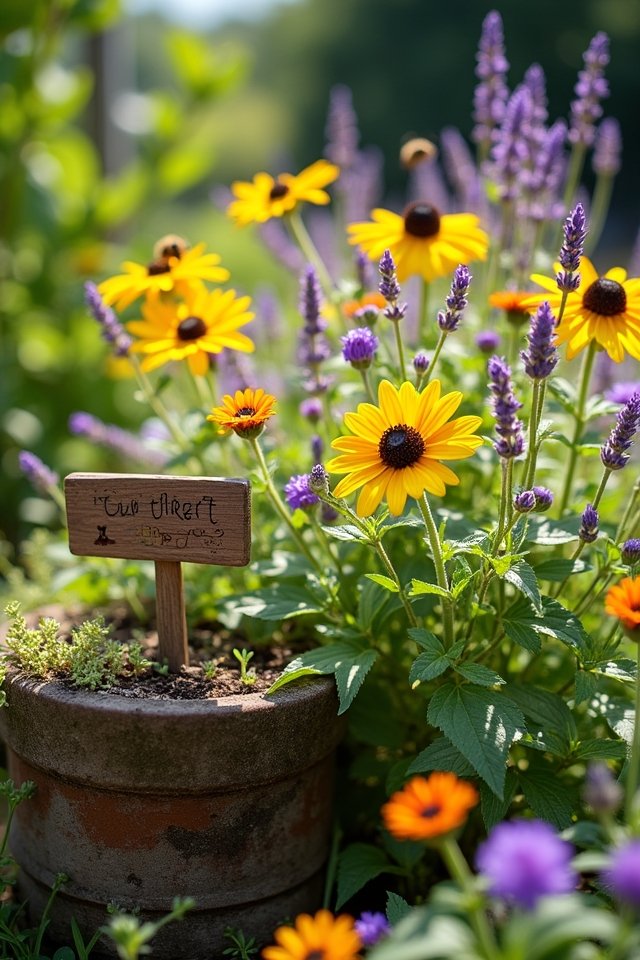
While creating a buzzing haven in your urban garden sounds delightful, using pesticides and herbicides can be like throwing a wet blanket on the party! These chemicals send bees packing faster than you can say “pollinator paradise.” Instead, welcome the vibrant world of organic gardening! You’ll find a treasure trove of natural, chemical alternatives that keep your garden flourishing without scaring off those essential buzzers. Think of introducing ladybugs or using neem oil—nature’s little bodyguards against pests! By choosing these safer options, you’ll foster a lively ecosystem where bees thrive, flitting from flower to flower. It’s not just about flowers; it’s about creating a community! So, ditch the chemicals and let your garden become the talk of the bees!
Provide Water Sources
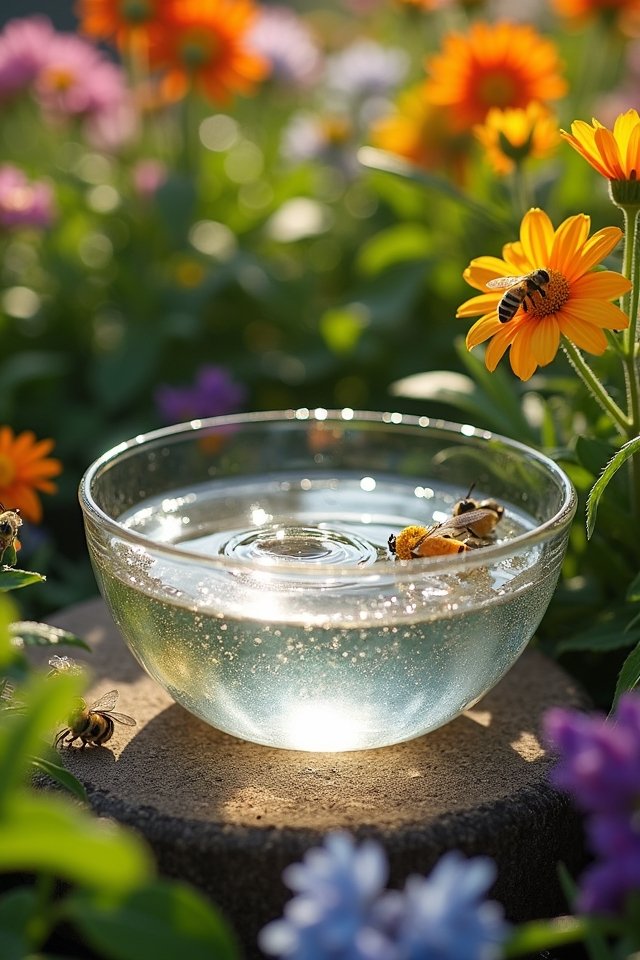
If you want to make your urban garden a true oasis for bees, don’t forget to provide water sources—they’re just as thirsty as we are! Bees need hydration, so creating a bee-friendly watering hole can work wonders. You don’t need a grand fountain; simple solutions do the trick!
Here are three innovative ideas to contemplate:
- Bird baths: Fill shallow bird baths with water and add stones for bees to perch on while they drink.
- Rain gardens: Capture rainwater in a designated area with native plants, providing both shelter and moisture.
- Puddling stations: Create small depressions in your soil to hold water, like nature’s tiny pools!
These sources will make your garden the go-to spot for thirsty bees—what’s not to love?
Implement Companion Planting
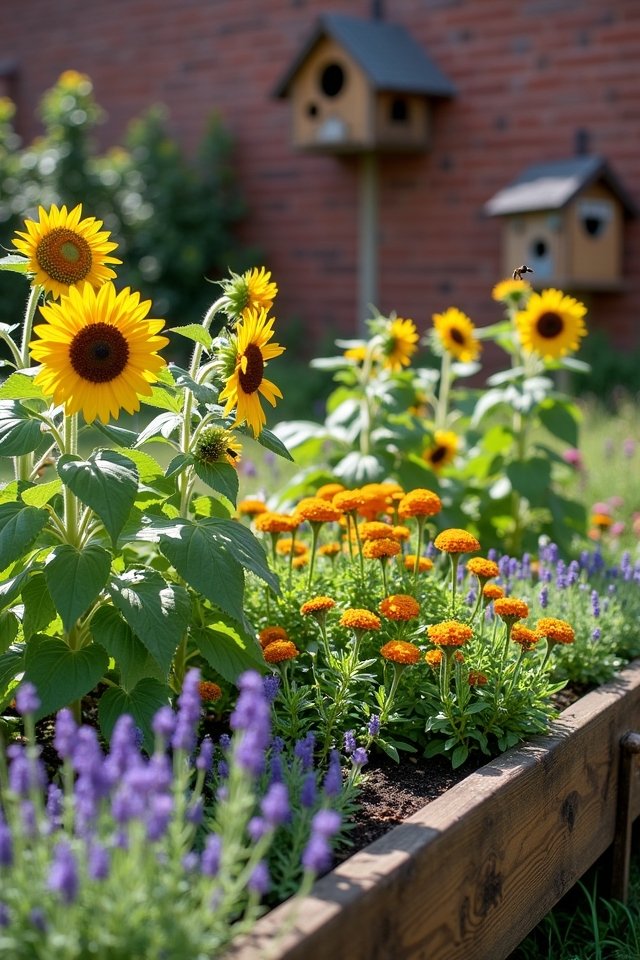
When you pair plants wisely in your garden, it’s like throwing a party where everyone gets along splendidly! Companion planting creates cozy pollinator partnerships that buzz with excitement. Imagine combining colorful sunflowers with aromatic basil—those bees won’t know what hit them! This duo attracts diverse nectar-seekers while promoting plant diversity, which boosts the overall health of your garden.
Ever tried mixing clover with lettuce? The clover’s tiny flowers draw in those busy bees while helping your leafy greens thrive. Incorporating joyful marigolds can ward off pesky pests too, giving your plants a friendly hug! So, let creativity flow, and watch your garden become a bustling hub of life, filled with delightful sights and sounds. For bees, it’s a dream come true!
Build Bee Hotels or Nesting Sites
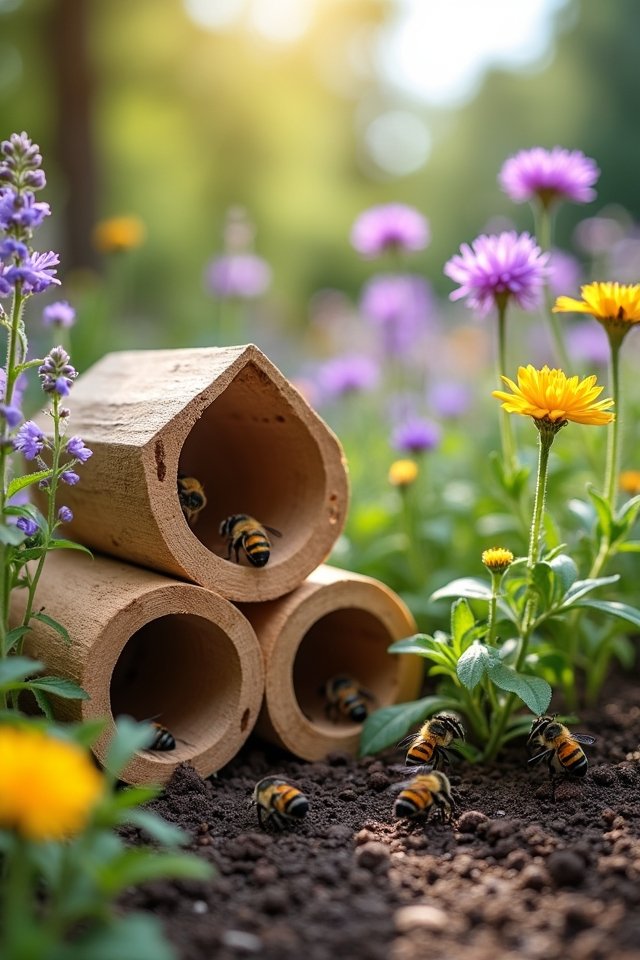
Creating a welcoming space isn’t just about what you plant; it’s also about where bees can call home. Think of your garden as a buzzing little village! Building bee hotels or nesting sites can really help these important pollinators thrive.
Try these innovative bee hotel designs:
- Wooden Blocks: Drill holes of varying sizes into untreated wood. Bees love cozy nooks!
- Paper Tubes: Fill a small box with rolled-up paper tubes. They’re like mini condos for solitary bees!
- Natural Materials: Incorporate twigs, pinecones, and straw. It’s a cozy, rustic retreat for nesting materials!
With a bit of creativity, you can provide much-needed shelter and witness nature’s magic unfold right outside your window! Plus, it’s a charming conversation starter!
Encourage Ground Nesting Bees
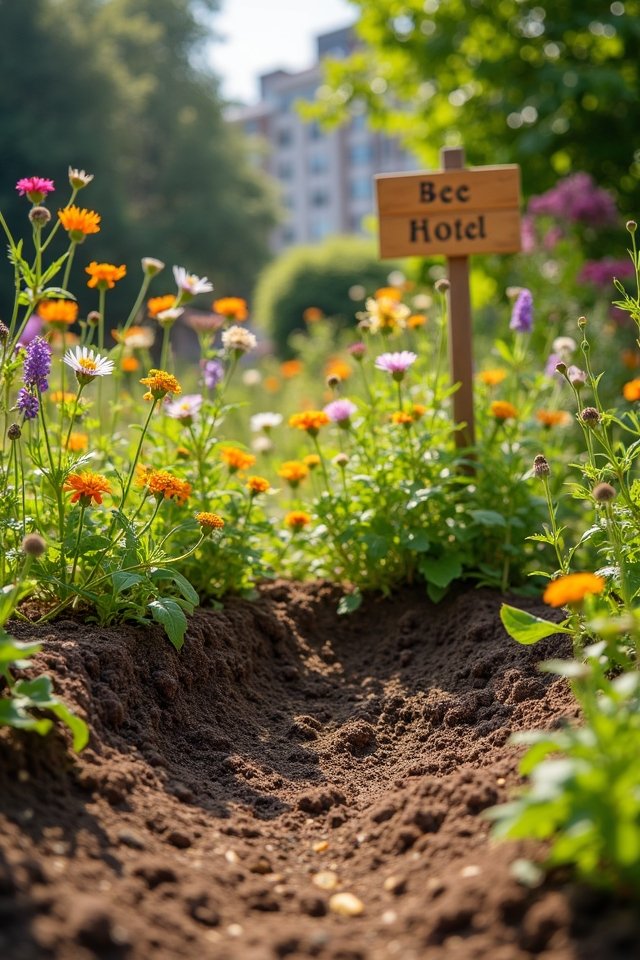
While it may surprise you, many bees actually prefer nesting right in the ground! You can easily create a welcoming habitat by focusing on soil composition. These ground-nesting bees love loose, well-draining soil. If you’ve got sandy patches or clay textures, perfect! Add a sprinkle of organic mulch or dried grasses as nesting materials, and you’ll be a bee magnet!
Consider creating mini patches of bare soil, too; it’s like a five-star resort for these busy pollinators! Now, don’t forget to avoid using pesticides, which can scare them away. Instead, cherish the beauty of imperfection in your garden, as a little wildness invites these marvelous creatures in! You’ll be amazed at the buzzing activity rewarding your innovative efforts!
Plan for Year-Round Blooming
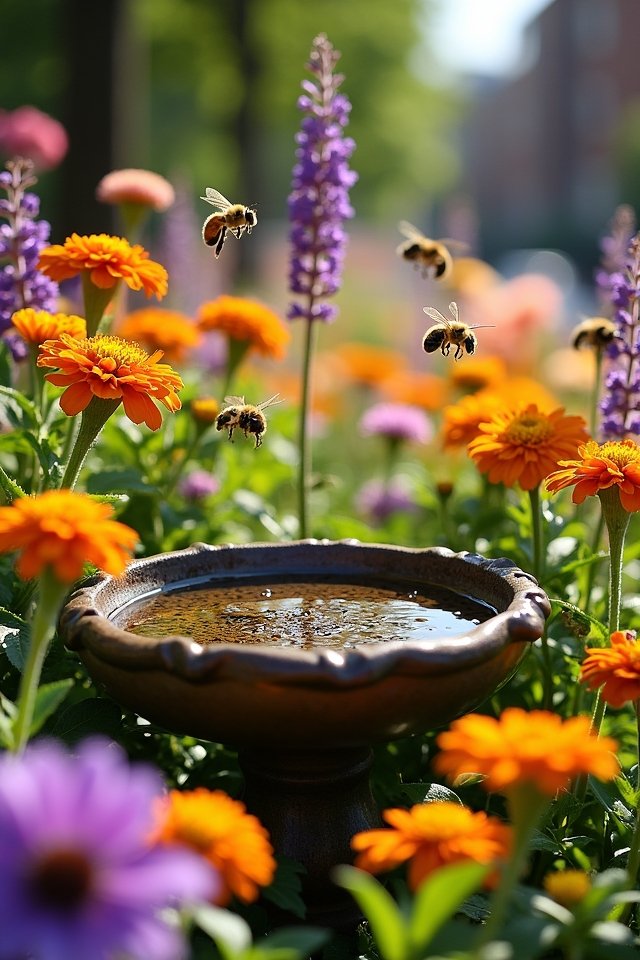
To keep your garden buzzing with life throughout the year, plan for a delightful array of blooms—you’ll be amazed at how easy it is! Think of your garden as a stage, where each seasonal bloom performs its own show. To guarantee a busy bee audience, focus on:
- Diverse Plant Selection: Incorporate early bloomers like crocuses and snowdrops, followed by vibrant sunflowers and asters as summer fades.
- Staggered Bloom Times: Choose plants with staggered bloom times. This way, you’re always serving up refreshments for our furry friends.
- Pollinator-Friendly Variety: Opt for native plants that bees adore—like coneflowers and bee balm!
With a little planning, your urban oasis can dazzle throughout every season, attracting bees like kids to a candy store! 🌼✨
Frequently Asked Questions
How Can I Tell if a Plant Is Bee-Friendly?
You can spot bee-friendly plants by looking for nectar-rich flowers that are bright and vibrant! Think of sunflowers, lavender, and daisies—each one’s like a buffet for these buzzing buddies! When you see plants that bloom with colors, like purple and yellow, you’ve got a winner! And hey, if you notice bees happily flitting among the petals, you know you’ve struck gold. Isn’t nature amazing? Get ready to invite these little pollinators to your garden!
What Time of Day Are Bees Most Active?
You’ll find bees buzzing with energy during their morning activity! Early sunlight sparks their excitement, as they flit from flower to flower, collecting pollen like tiny golden treasure hunters! But don’t forget the evening foraging; they’re still on the prowl, savoring those last sweet moments before sunset. So, set your garden’s alarms — you’ll want to be there when these little wonders are at their busiest, don’t you think? Nature’s symphony awaits!
Are There Specific Colors That Attract Bees?
Have you ever wondered what colors make bees buzz with excitement? Bees are drawn to bright colors—particularly blues, purples, and yellows! These vibrant hues signal delicious nectar. Their flower shapes matter too; tubular flowers invite their long tongues, while flat ones provide landing zones. Imagine a garden bursting with sunflower gold or lavender purple, enticing bees like sweet candy! So, grab those colorful blooms and transform your space into a bee paradise!
How Many Flowering Plants Do I Need for Bees?
You’ll want at least 10-20 diverse flowering plants to really get those bees buzzing! Think of it like a buffet; they adore variety. Mix in seasonal blooming plants like lavender and sunflowers that bloom at different times for a steady feast. Imagine their tiny wings dancing from blossom to blossom—joyful little workers! Don’t forget, more blooms equal more pollinators. So, let your garden be a colorful hive of activity—just like a party!
Can Urban Noise Affect Bee Visitation in My Garden?
Urban noise can really mess with bee visitation. Imagine your garden buzzing with life, but then, a car honks loudly, startling those little pollinators! Sound pollution adds chaos, making it tough for bees to communicate. A study showed that louder environments decrease their foraging time, so keep it serene. Think gentle wind chimes, not roaring engines, to create a haven for urban wildlife. Your garden deserves harmony, don’t you think?