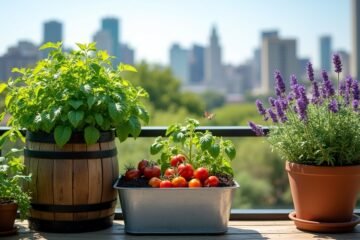
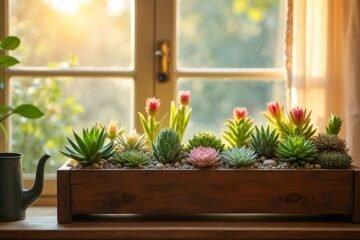
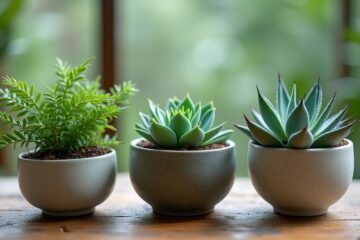
Want nutrient-rich soil for your container gardens? Start by choosing a potting mix that’s like a cozy blanket for your plants—think peat moss, vermiculite, and compost! Next, sprinkle in some organic matter, like well-aged compost or shredded leaves, to energize the soil. Finally, keep that soil moist and spongy, so it can hold nutrients like a champ! Curious about more tricks to make your plants thrive? Stick around for more tips!
Choose the Right Potting Mix
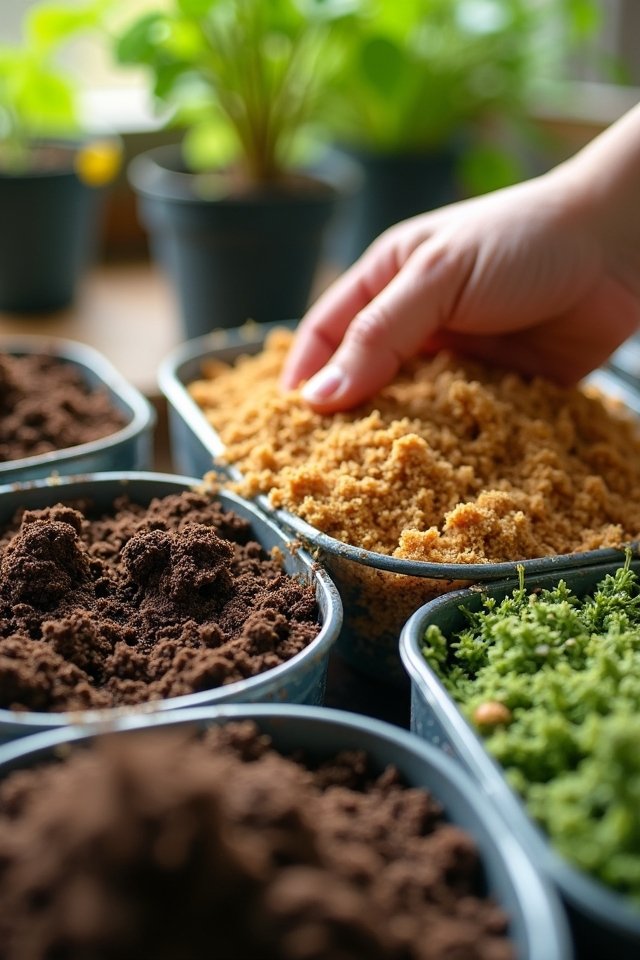
When you’re diving into the wonderful world of container gardening, choosing the right potting mix is your golden ticket to blooming success! Imagine your plants thriving, roots dancing in the perfect blend! The secret lies in potting mix ingredients. A blend of peat moss, vermiculite, and compost not only boosts aeration but also retains moisture like a sponge. Cheers to happy plants!
Before you rush to the garden store, think about your container size. A larger pot often demands a richer mix—your plants need room to spread their roots! If the container’s small, consider a lighter mix, providing just enough munchies to keep your leafy friends satisfied. It’s like gourmet dining for your plants! So, ready to revolutionize your gardening game?
Incorporate Organic Matter
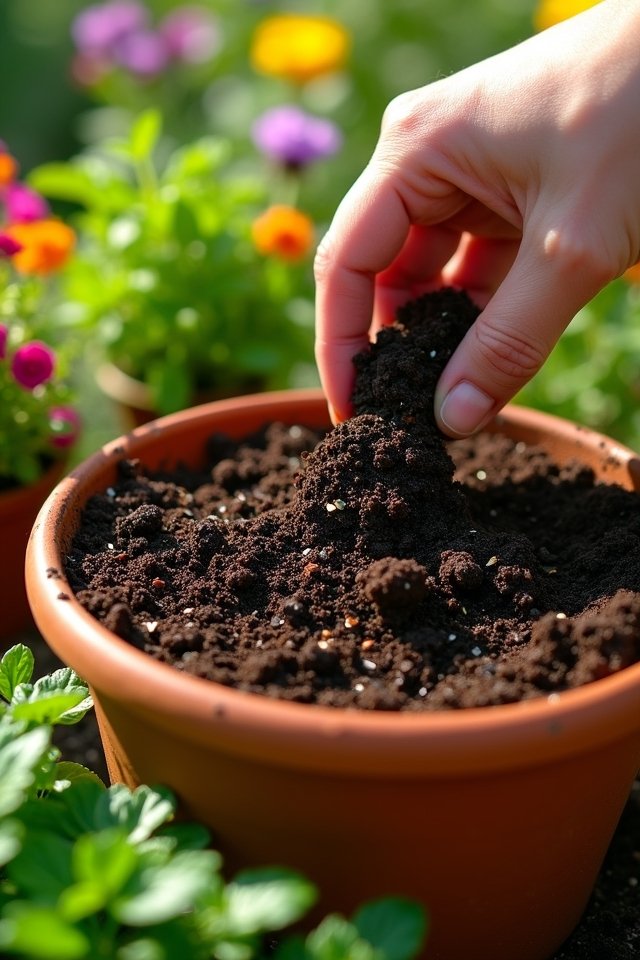
You’re not just done with selecting the perfect potting mix; it’s time to kick your gardening skills up a notch! Incorporating organic matter is your secret weapon for vibrant, healthy plants. Think of compost benefits as a magic potion for your soil! Mixing in well-aged compost or other soil amendments like worm castings can improve drainage, aeration, and nutrient availability. Imagine your plants dancing in a nourishing blend that feeds their roots! You could also use shredded leaves or grass clippings—easy and free. As they break down, they’ll bring life and energy to your containers. So, don’t hold back—dig in, pile it on, and watch your green friends flourish like never before! Ready to transform your gardening game? Let’s go!
Optimize Nutrient Retention
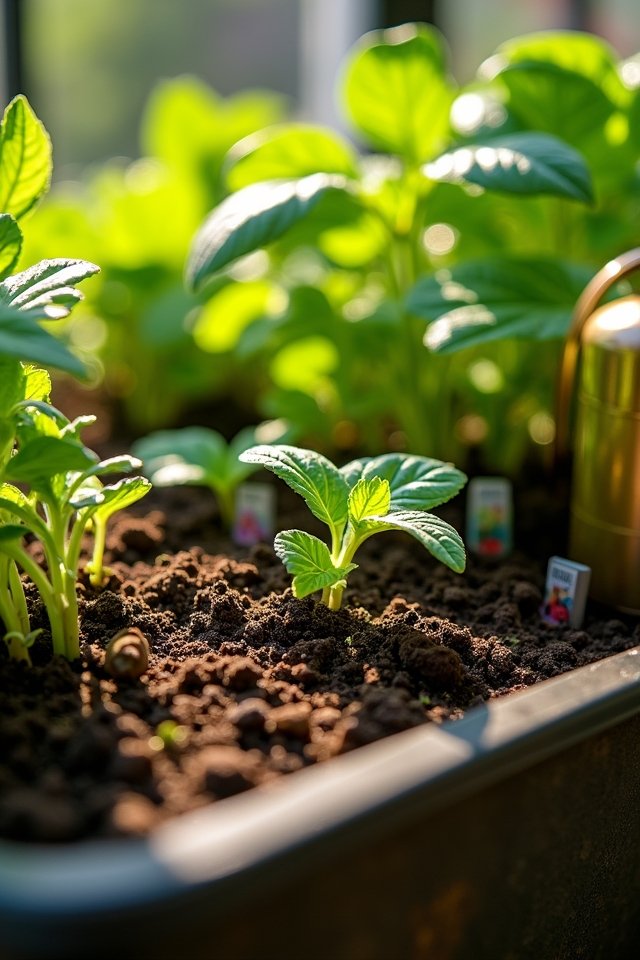
To guarantee your plants thrive and bask in all their glorious green, optimizing nutrient retention in your containers is key! Think of your soil as a sponge; you want it to hold onto every drop of goodness. Here’s how you can enhance that nutrient reservoir:
- Add Soil Amendments: Ingredients like compost or worm castings provide a nutrient boost while improving structure.
- Incorporate Mulch: A layer on top of the soil slows evaporation, helping moisture retention and preventing pesky weeds!
- Utilize Smart Watering: Water deeply but less frequently, encouraging roots to reach for that delicious moisture.
Frequently Asked Questions
How Often Should I Change the Potting Mix?
So, how often should you change your potting mix? It really depends! Typically, you’ll want to refresh it every 6 to 12 months. Look for soil health indicators like poor drainage or wilting plants. If it resembles a sad, compacted sponge, it’s time for a change! Keeping the mix vibrant helps your plants thrive. Think of it like giving your garden a nutritious smoothie – it gets all the good stuff flowing again!
Can I Use Garden Soil in Containers?
Using garden soil in containers is like inviting a raccoon to your picnic—exciting but risky! While garden soil offers benefits, like nutrients and microbes, it often leads to container gardening drawbacks like poor drainage and compaction. Instead, consider a mix designed for containers—it’s like the VIP treatment for your plants! They’ll thrive beautifully without battling soggy roots. So, when planting, think carefully and choose wisely for that lush greenery you crave!
What Are Signs of Nutrient Deficiency in Plants?
When you notice yellowing leaves or stunted growth, it’s time to check for nutrient symptoms! Did you know that dark spots might signal a potassium deficiency? Or if your plant’s stems are weak and spindly, that could point to a lack of nitrogen. Keep an eye out for these sneaky signs during your plant care routine! Remember, a happy plant is like a song—when it’s off-key, you’ll know something’s wrong!
How Do I Know if My Soil Is Too Compact?
If your soil feels like concrete, it’s probably too compact! You’ll notice poor soil aeration if water pools instead of sinking in. Pull out your plant, and check for tightly packed roots. Compaction effects can stifle growth, turning vibrant plants into sad little sticks. Tap the soil and listen—does it sound hollow? A healthy, crumbly texture means it’s ready to dance with nutrients! Don’t let that soil rest without a little love!
What Plants Prefer Less Nutrient-Rich Soil?
When you think about low nutrient plants, consider those that thrive in less-than-perfect soil. For instance, succulents, like jade plants, or some herbs, such as rosemary and thyme, adapt beautifully to these conditions! They don’t need all that fancy stuff. Instead, they bring a unique charm and resilience to your garden. Imagine a vibrant succulent standing tall, defying the odds! Why not welcome their toughness and add them to your collection? They’re fabulous!