Ready to transform your little space into a buzzing haven? Start by finding a sunny spot that gets about six hours of light—just like a cozy café! Choose native plants, like coneflowers and bee balm, to attract our fuzzy friends. Spice things up with vertical gardening using trellises and wall planters—who knew saving space could be so creative? Don’t forget to add habitat features! There’s much more to explore and make your garden thrive!
Choosing the Right Location
When it comes to choosing the right location for your pollinator garden, think of it as giving your buzzing buddies a VIP section! Pick a spot with plenty of sun exposure—around six hours daily, if you can swing it. Your pollinators adore warmth! Next, consider soil quality; rich, well-draining soil is a must for happy plants. A little compost can work wonders. Don’t forget about shelter, either! Position your garden near a fence, wall, or even a few shrubs. This’ll create a cozy oasis, protecting your pollinators from harsh winds. So, scout your space wisely! With a little ingenuity and the right balance of sunshine and earthy goodness, you’ll create the buzzing hotspot of the neighborhood! Can you feel the excitement building?
Selecting Native Pollinator Plants
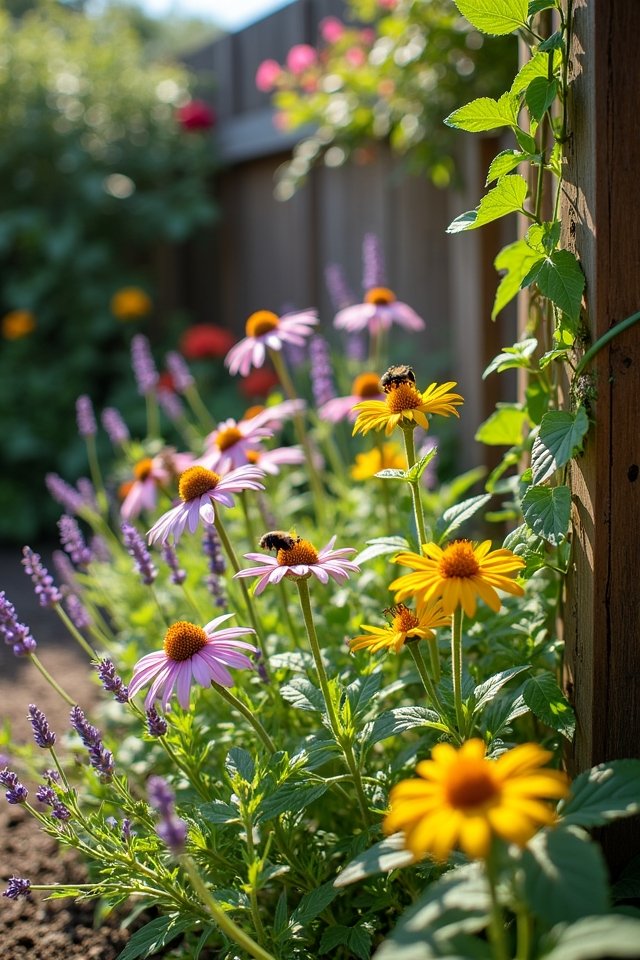
Have you ever wondered which plants would make your pollinator garden a buzzing paradise? Choosing native plants is key! Think of flowers like coneflowers or milkweed, bursting with nectar and colors that’ll attract a dance of butterflies and bees. These beauties come with native plant benefits—they’re drought-resistant, low-maintenance, and perfectly adapted to your area’s climate!
Mix and match pollinator plant combinations like bee balm and asters for a vibrant tapestry. Imagine the delight as hummingbirds flit from one bloom to another, as if they’re at an all-you-can-eat buffet! So go ahead, release your creativity and watch your tiny garden transform into a lively haven where nature thrives and you become the proud host of buzzing visitors!
Incorporating Vertical Gardening Techniques
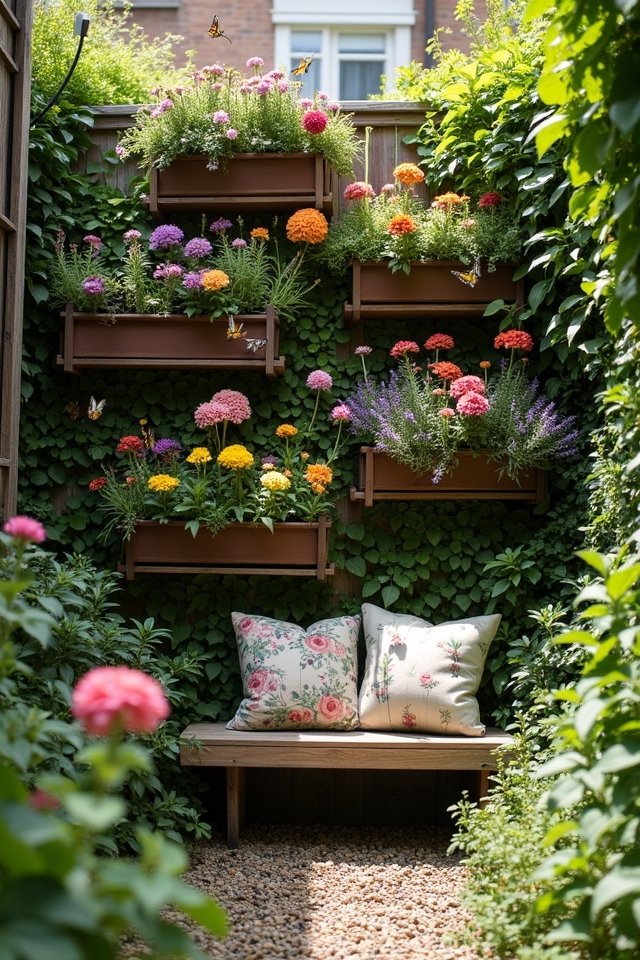
Imagine your tiny garden bursting with life, even if you’re short on space! Vertical gardening techniques are your ticket to a vibrant oasis. You’ll love how easy it is to use creative solutions like:
- Wall planters: These clever creations maximize your vertical space, allowing you to stack a variety of flowers and herbs.
- Climbing vines: Picture beautiful blooms winding up a trellis; they not only save ground space but also draw in those busy pollinators!
- Trellis designs: Customize your garden with artistic trellises that can host a mix of plants—turning your wall into a living canvas!
Grab some pots, and let your creativity climb! A stunning vertical garden awaits you! Why not let those plantings reach toward the sky?
Utilizing Container Gardening Solutions
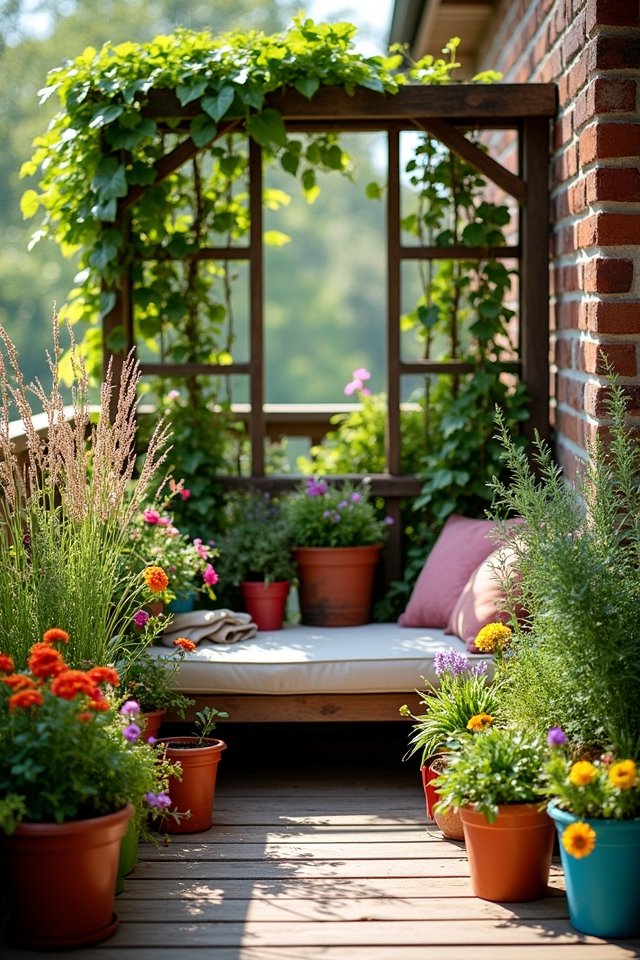
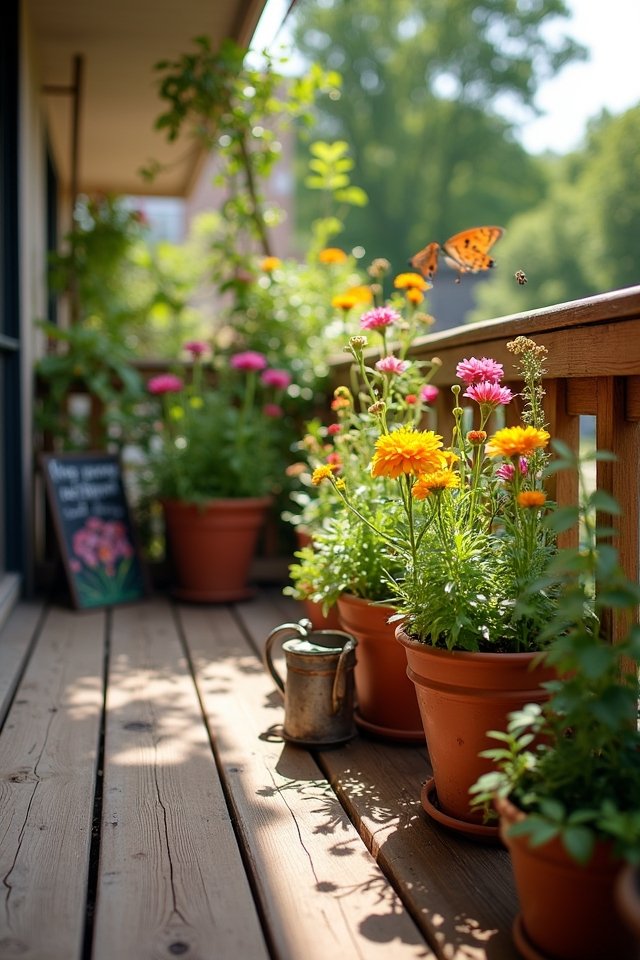
Whether you’ve got a balcony, a patio, or just a sunny windowsill, container gardening can transform your small space into a delightful pollinator paradise! Start by choosing vibrant container types—ceramic pots, hanging baskets, or even recycled tin cans can work wonders. Each offers unique aesthetics and drainage options to suit your plants. For soil choices, blend rich potting soil with compost; it’s like giving your plants a hearty breakfast! This nutrient-packed mix will nourish flowering herbs like mint and lavender, buzzing with pollinators’ energy. Remember to position your containers where they’ll get sun, like spreading warmth on a lazy Sunday! Ready to invite bees and butterflies? Grab your containers and let creativity bloom in your charming little garden oasis!
Creating Shelter and Habitat Features
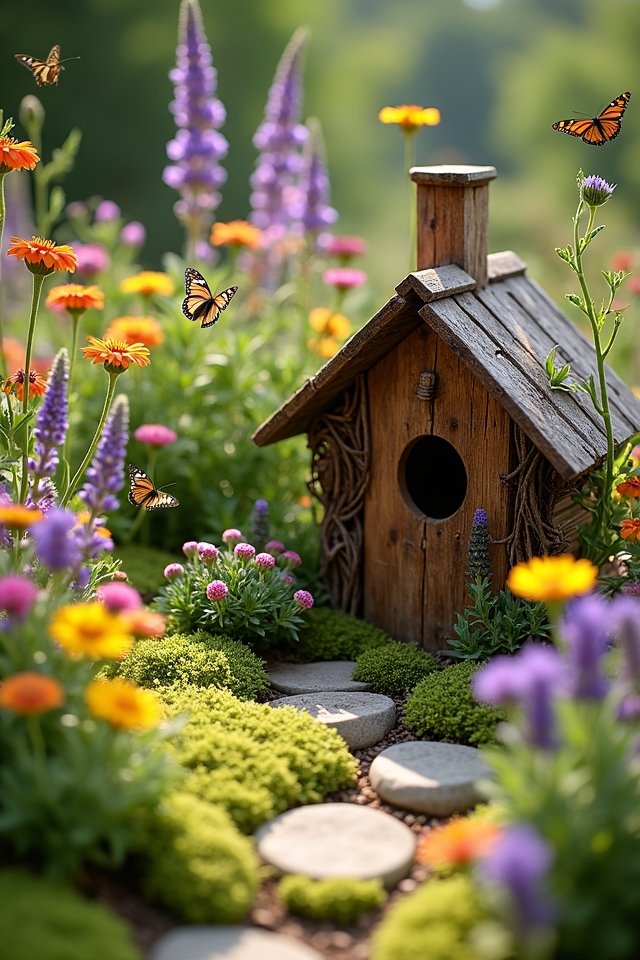
While you may think a small garden can’t provide a cozy retreat for pollinators, creating shelter and habitat features can do wonders! Think of it as building a tiny hotel for your insect friends! Here’s how to get started:
- Brush Piles: Gather twigs and leaves to create a natural haven – it’s like a luxurious lodge for ladybugs!
- Bee Hotels: Use simple wood blocks with drilled holes or bamboo tubes, offering perfect private suites for busy bees.
- Flowerpots: Fill them with stones or straw to create safe nooks for hibernation – think of it as a wintertime spa!
Using Succession Planting for Continuous Bloom
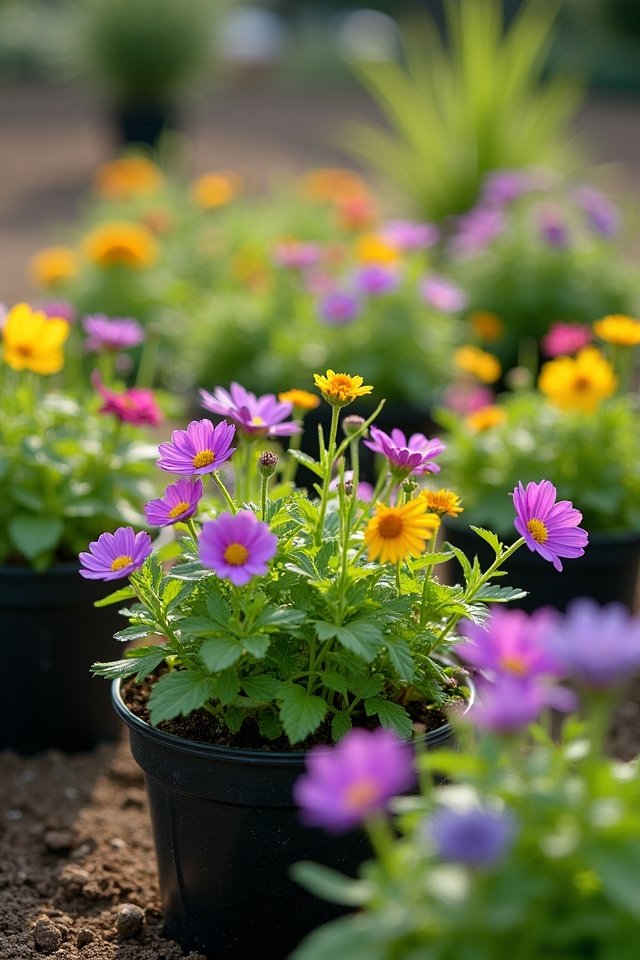
To keep your garden blooming and buzzing all season long, you’ll love the magic of succession planting! Imagine swapping out your fading blooms for fresh bursts of color—like a floral encore! Start with early risers like snapdragons or pansies, then follow up with summer’s stars, such as zinnias or cosmos. You can mix these seasonal blooms to create stunning plant combinations! As one group fades, the next takes the spotlight, keeping those pollinators coming back for more. Ever tried a staggered approach with dahlias and asters? Pure garden poetry! By thoughtfully planning your plantings, you’ll cultivate a vibrant, living tapestry that dances in the breeze, igniting joy and attracting a swarm of buzzing friends. Isn’t nature a marvel?
Watering Techniques for Small Spaces
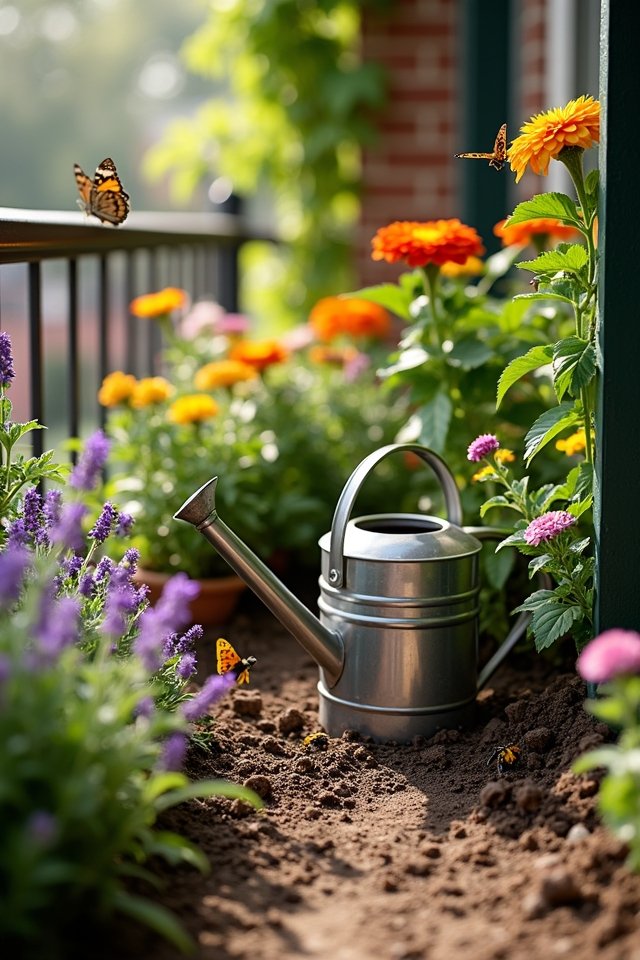
When you’re working with limited space, watering techniques can make all the difference! You want your cozy pollinator garden to thrive, right? Let’s explore some innovative methods that fit your little patch perfectly:
- Drip irrigation: This is like giving your plants a gentle, soothing shower! It delivers water right where it’s needed, minimizing waste.
- Hand watering: Think of it as a personal touch; you get to know each plant’s needs while creating a bond with them. Plus, it’s a great way to sneak in some relaxation time!
- Self-watering containers: These clever setups work their magic by consistently providing moisture, keeping your plants happy on their own!
Try these techniques, and watch your garden flourish!
Attracting Pollinators With Special Features
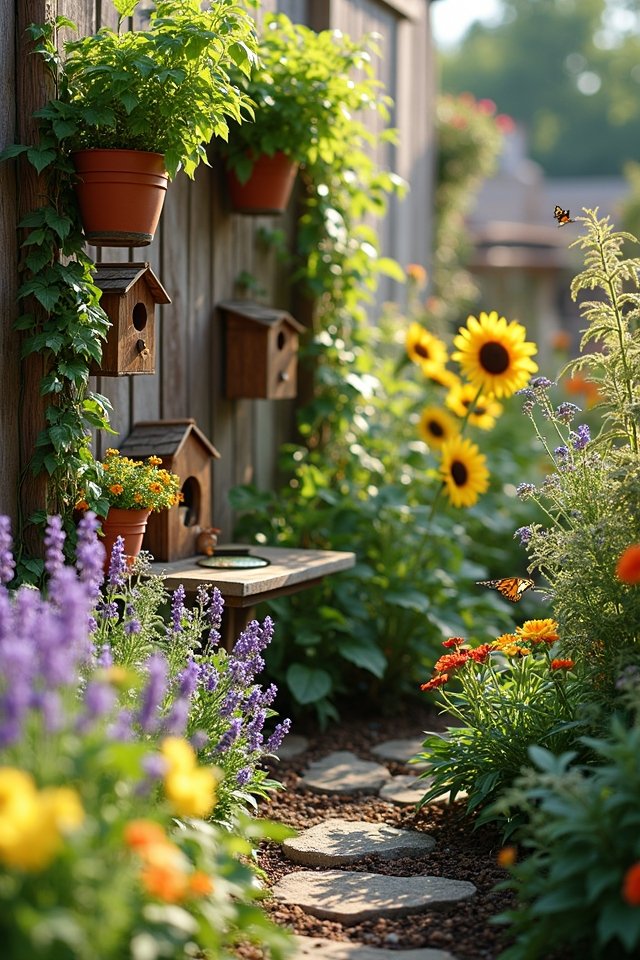
Attracting pollinators in your cozy garden can feel like throwing a fabulous party just for them, and who wouldn’t want to be the host of such a buzz-worthy event? To really amp up the attraction, consider layering your garden with flowers that bloom in different flowering seasons. This guarantees there’s always something delightful for your buzzing guests! Add sensory elements like fragrant herbs—think rosemary or mint—to thrill their delicate noses. You could even incorporate colorful decorations, like bright butterfly feeders or whimsical garden stakes, to catch their eye. Imagine bees and butterflies flocking to a vibrant, scented oasis! Are you ready to transform your space into a pollinator paradise? Your garden will become the talk of the insect town!
Maintaining Your Cozy Pollinator Garden
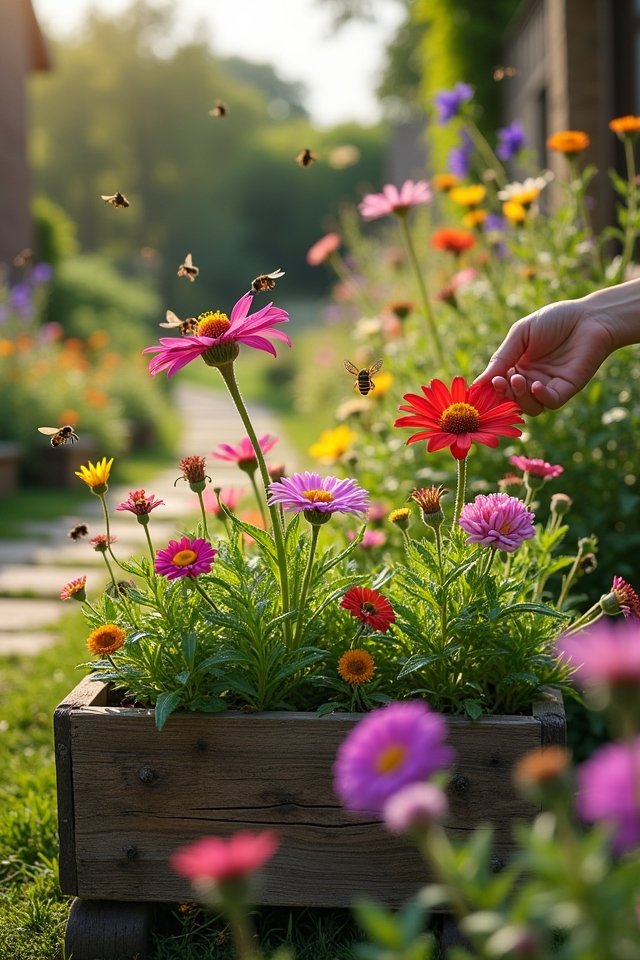
Your cozy pollinator garden doesn’t just attract buzz-worthy guests; it needs a little TLC to keep it thriving! Think of it like a tiny ecosystem party that requires some dance moves to stay lively! Here are three vital tips:
- Monitor Soil Health: Test your soil regularly to guarantee it’s rich and nutrient-packed. Healthy soil means happy plants that attract more pollinators!
- Pest Management: Welcome natural pest controls, like ladybugs or neem oil. They’re your garden’s best friends against pesky intruders!
- Regular Watering: Keep the thirst-quenching flow going! Pollinators love a hydrated garden, especially during those sizzling summer days!
Frequently Asked Questions
How Can I Attract Specific Pollinator Species to My Garden?
To attract specific pollinator species to your garden, start with native plants! They’re like a buffet for pollinators, offering the snacks they crave. For instance, if you want butterflies, plant milkweed; honeybees love sunflowers. By considering pollinator preferences, you’ll create a delightful ecosystem. Mix colors and scents to create a vibrant feast that makes them say, “Wow!” Trust me, you’ll feel like a garden superhero as they flutter around!
What Time of Year Is Best for Planting Pollinator Gardens?
The best time for planting your pollinator garden is in spring! That’s when nature wakes up, and pollinators are buzzing with excitement. You’ll want to prepare in the fall too, so those enthusiastic seeds have a head start. Think of it as prepping the stage for a grand performance. Just picture colorful blooms feeding hungry bees and butterflies—what a show! So grab your trowel, and let’s get planting those irresistible flowers!
Do I Need to Remove Weeds in My Pollinator Garden?
Absolutely, you need to tackle those pesky weeds! Think of weed management as your garden’s personal trainer—keeping everything fit and fabulous! When weeds munch on nutrients, they steal from your beautiful plants. Regular garden maintenance helps keep the garden thriving. Picture a bright, sunny patch filled with blooming flowers, not a weed in sight! Pull them out before they take over; it’s like weeding your ongoing Netflix list—refreshing and oh-so-satisfying!
How Can I Educate Others About My Garden’s Purpose?
To educate others about your garden’s purpose, consider hosting fun garden workshops! Invite friends over, share fascinating facts, and let them get their hands dirty. Bright educational signage around your garden can spark curiosity, making it easier for visitors to connect with your message. Why not compare your garden to a mini nature classroom? When they see the pollinators buzzing happily, they’ll appreciate your efforts! Isn’t that a fantastic way to spread the word?
Are There Any Companion Plants That Benefit Pollinators?
Companion planting is like a well-choreographed dance, bringing plants together for mutual benefit! Some fabulous combos include marigolds with tomatoes—marigolds lure beneficial insects that keep pesky pests at bay! You’ll also love planting borage with strawberries; borage attracts bees, while its leaves shade strawberries, protecting them from sunburn. By pairing these delightful plants, you’re not just boosting pollination, but you’re creating a lush sanctuary that invites nature’s helpers to join the party!