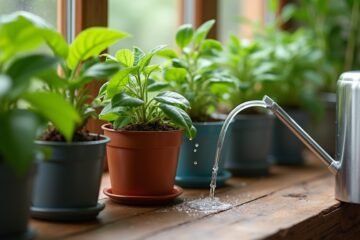
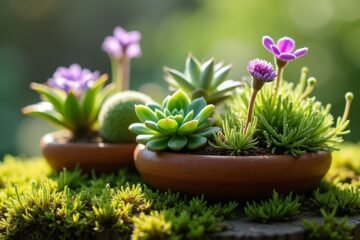
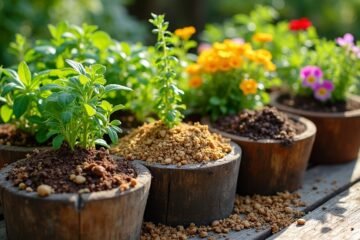
Starting an indoor herb garden in small spaces is as easy as pie! You just need stylish pots—think vibrant ceramics or rustic terracotta—that drain well. Pick herbs like lively basil, revitalizing mint, or resilient rosemary that suit your cooking style! Give them enough sunlight, water them when the top inch of soil’s dry, and watch them flourish! Ready to transform your kitchen into a fragrant oasis? There’s so much more to discover about creating your perfect herb garden!
Choosing the Right Containers for Your Herbs
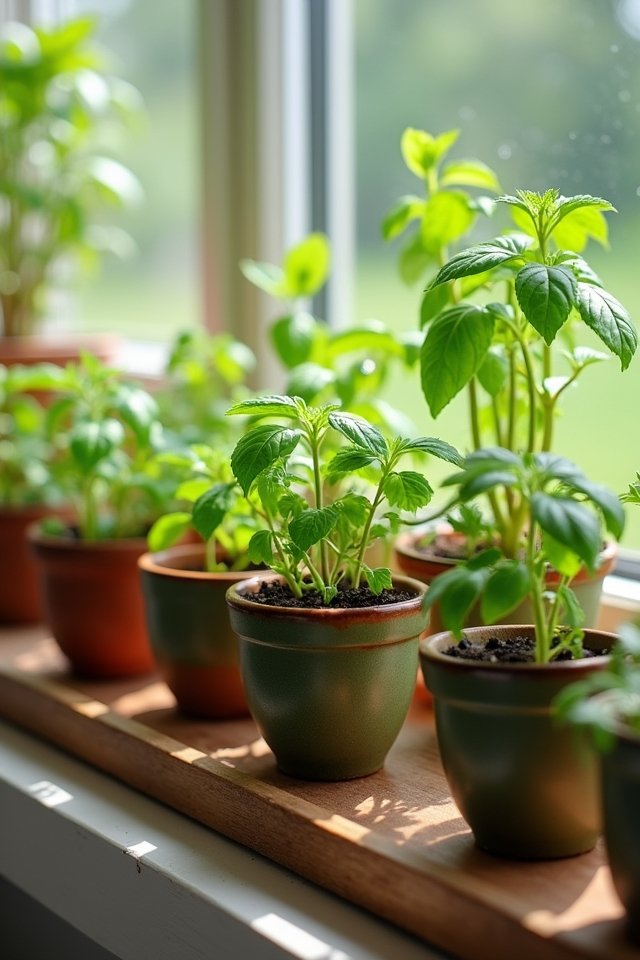
Choosing the right containers for your herbs is like picking the perfect outfit for a big occasion—it’s absolutely essential! You want stylish but functional pots that suit your space. Consider vibrant ceramic or sleek metal; they add flair and make a statement! Don’t forget about drainage solutions, though—your herbs will thrive with pots that have holes at the bottom, allowing excess water to escape. Imagine your basil lounging in a terracotta pot, soaking up the sun, without drowning in soggy soil! Plastic containers can also work wonders if they provide proper drainage. So, mix and match different container materials to create your indoor herb paradise. Ready to get planting? Your herbs are waiting for the perfect home!
Selecting Herb Varieties Suitable for Indoor Growth
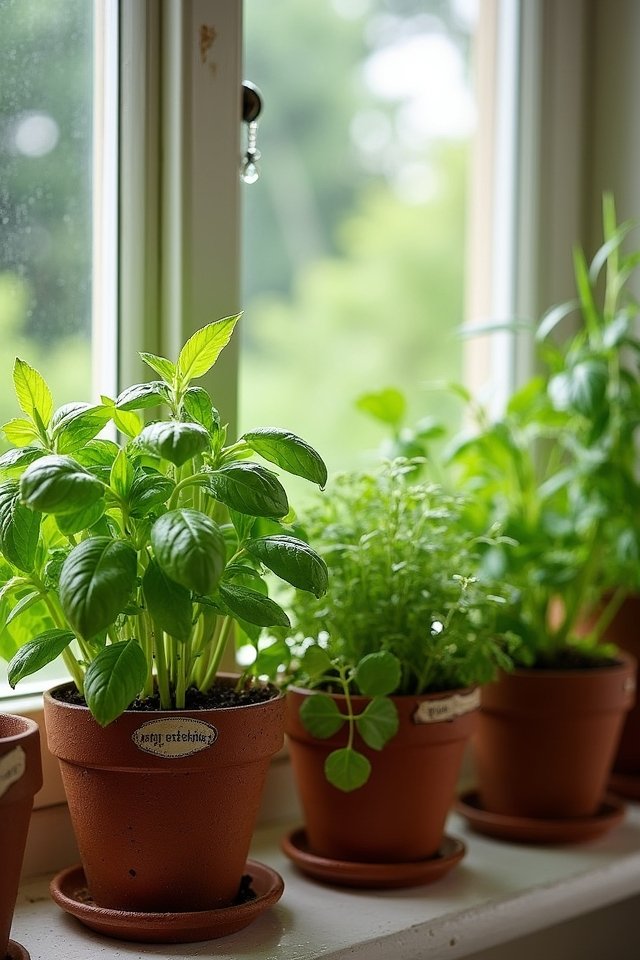
When you think about your indoor herb garden, you’ll want to select herb varieties that not only thrive in smaller spaces but also delight your taste buds. Basil, with its sweet, aromatic leaves, grows like a dream in an indoor climate! You can easily snip fresh leaves for pasta or pizza. Mint, with its invigorating scent, adds a zesty twist to drinks and desserts. Plus, chives offer a lovely onion flavor, perfect for seasoning dishes! Consider rosemary, too—it’s fragrant and can stand up to a bit of neglect! So, make your selection based on your cooking style and let your herb growth be as vibrant as your culinary adventures. Get ready for a flavorful garden right in your kitchen!
Ideal Soil and Nutrient Requirements for Herbs
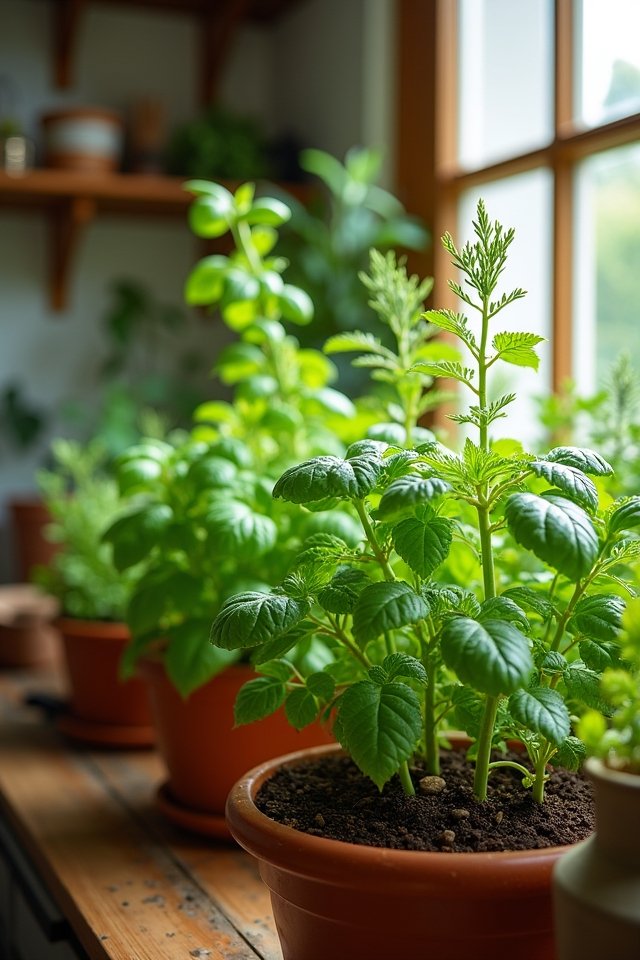
To guarantee your herbs flourish indoors, you need to set them up with the right soil and nutrients! Think of soil as a cozy bed for your herb babies. Aim for a soil pH between 6.0 and 7.0, creating a perfect snuggle zone for their roots. You’ll want a well-draining mix; try combining potting soil with perlite and vermiculite for that airy texture!
Now, let’s talk nutrient balance! Herbs love a balanced diet. Consider a diluted, organic liquid fertilizer every couple of weeks to keep them happier than a cat in a sunbeam! Harvesting your fragrant herbs will be more satisfying when they’re thriving in their ideal environment. Ready to dig in? Let’s make your indoor oasis come alive!
Understanding Light Conditions in Small Spaces
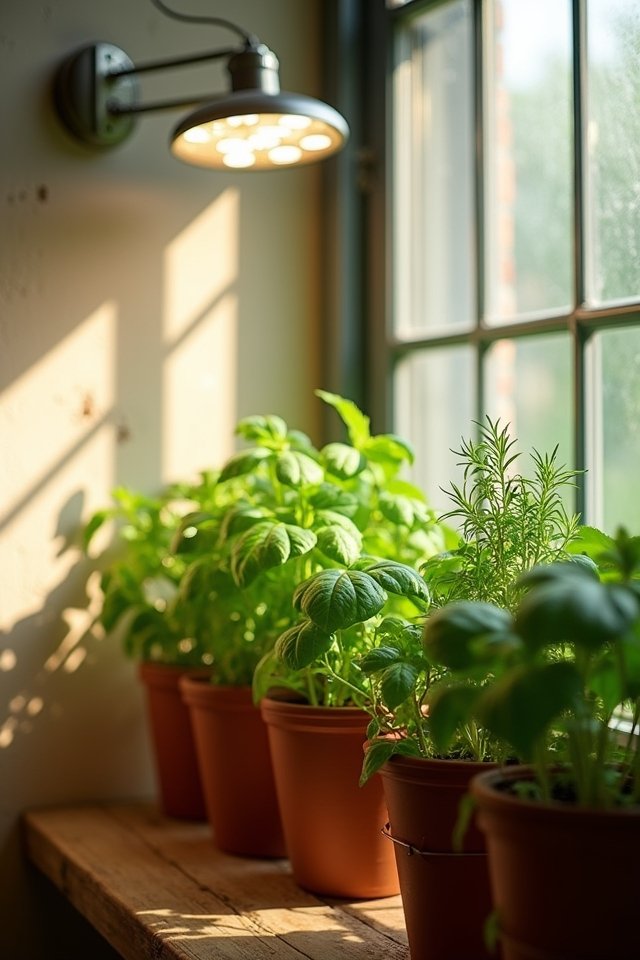
How can you make the most of limited sunlight in your tiny indoor garden? Maximizing light sources is key! Consider using full-spectrum fluorescent bulbs; they mimic the sun’s glow, giving your herbs the boost they crave! Think of them as little sunshine providers, ready to turn your kitchen into a vibrant oasis.
Position your pots where they can soak up every ounce of indoor lighting, like cheerful sunbathers on a summer day. A south-facing window is perfect, but if that’s not an option, don’t fret—LED grow lights are fantastic alternatives. They’re energy-efficient and can fit snugly in small spaces! Your herbs will thrive, and you’ll revel in the rewards of your green thumb. How exciting is that?
Watering and Maintenance Tips for Indoor Herbs
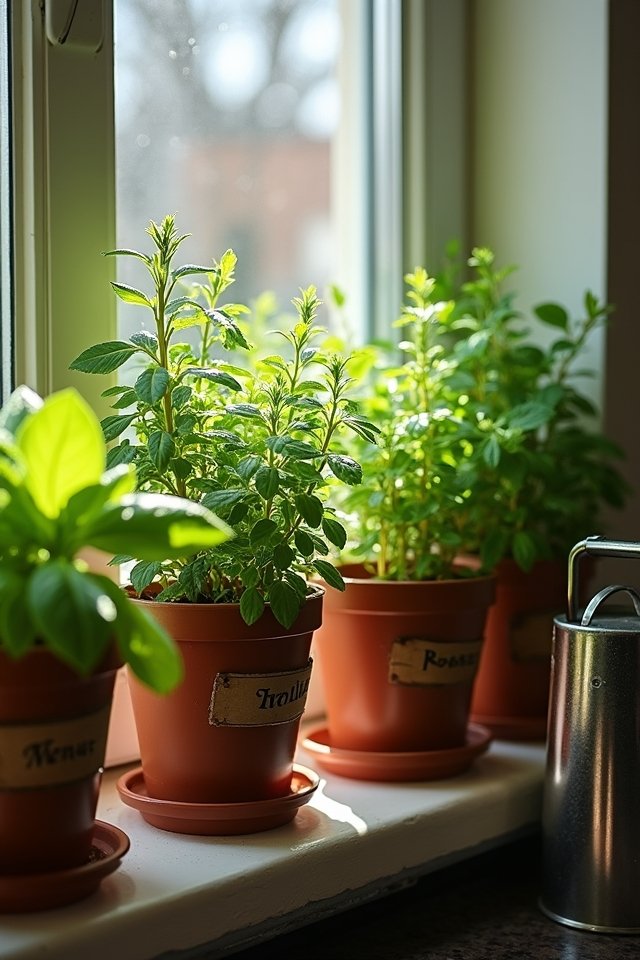
Getting your indoor herb garden thriving takes more than just good lighting; it’s all about the water and care! To keep your herbs happy, stick to a routine with these tips:
- Water consistently: Lightly mist your herbs when the top inch of soil feels dry.
- Create a watering schedule: Check your plants weekly; consistent moisture is key!
- Watch for pests: Inspect your herbs often to catch any critters early. One tiny aphid can lead to a whole infestation!
- Provide air circulation: Give your herbs space to breathe – it keeps mold and pests at bay.
Creative Ways to Maximize Vertical Space
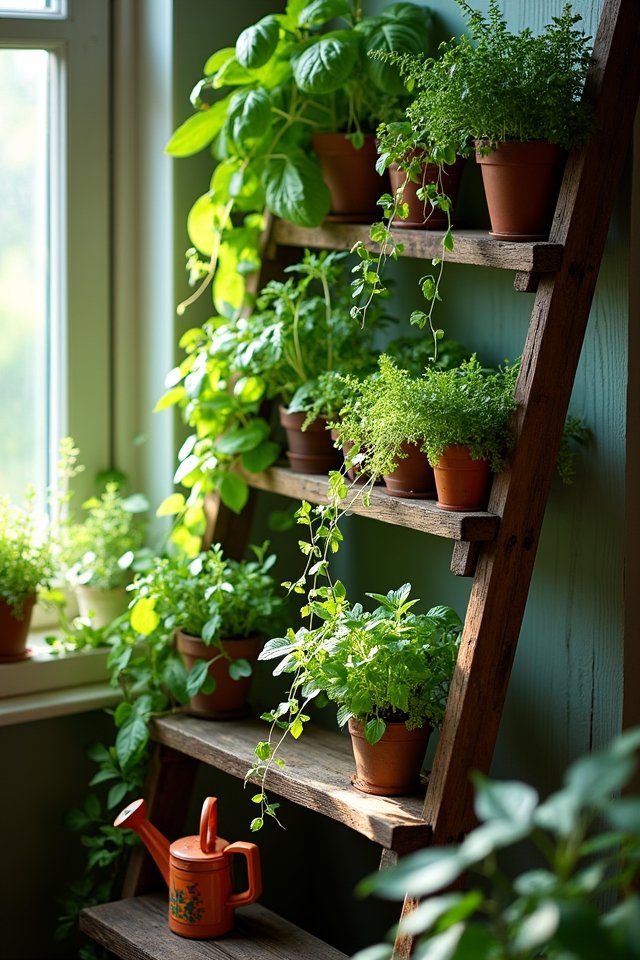
If your indoor herb garden is buzzing with life, why stop at the countertop? Think vertical! Wall planters are a fantastic way to add greenery to any wall space, transforming an ordinary room into a lush oasis. You could create a living art piece with cascading herbs that dance in the sunlight! And don’t forget about hanging racks—these make gardening accessible with a touch of whimsy. Just imagine fresh basil or mint swaying gently as you walk by. It’s not just practical; it’s a conversation starter! Use colorful pots to brighten up that rack or wall, and let your creativity flow. Welcome the vertical! After all, who said you can’t have a mini herb forest in your kitchen?
Harvesting and Using Your Homegrown Herbs
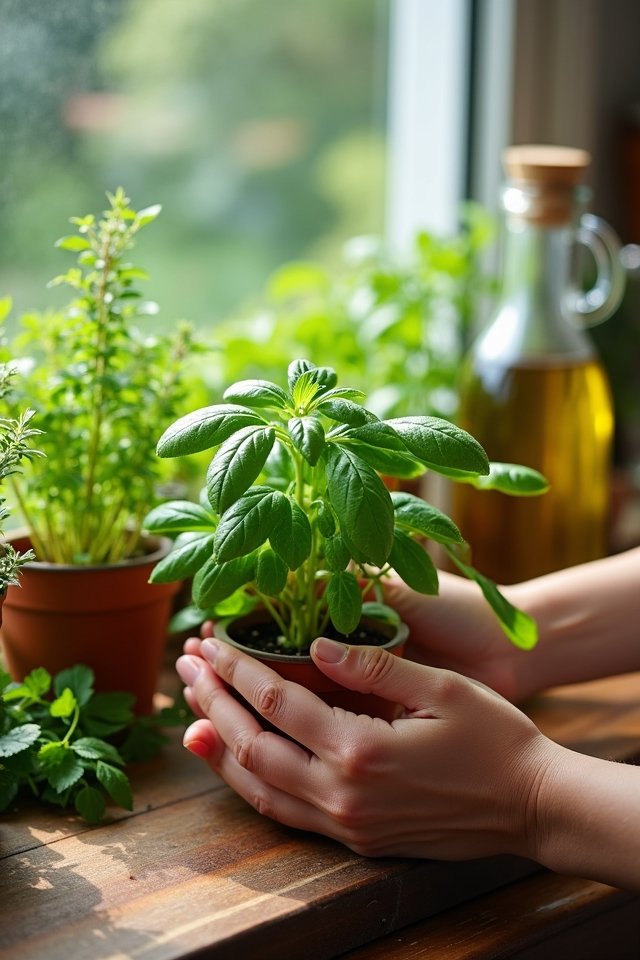
Your indoor herb garden is more than just a pretty sight; it’s a treasure trove waiting to be explored! Harvesting your vibrant herbs requires a touch of finesse. Use these innovative harvesting techniques to guarantee maximum flavor and longevity:
- Snip leaves early in the morning for peak freshness
- Cut above a leaf node to encourage growth
- Rotate your herbs to promote an even harvest
- Bundle and dry herbs in a dark, cool space for later use
Wondering how to use them? Sprinkle your fresh basil on homemade pizza, toss rosemary into roasted veggies, or brew a revitalizing mint tea! With your homegrown herbs, every meal becomes a delicious adventure! Why wait? Immerse yourself in your herbaceous bounty today!
Frequently Asked Questions
Can I Grow Herbs Indoors Without Access to Natural Light?
Can you really grow herbs indoors without natural light? Absolutely! With the magic of artificial lighting, you can create your own indoor garden oasis. Imagine lush basil and vibrant cilantro thriving under LED bulbs that mimic sunlight! It’s a game-changer. Just position those lights about 12 inches from your plants, and keep them on for 12-16 hours a day. Who knew that indoor gardening could be this exciting and rewarding? Let your herbs flourish!
How Often Should I Rotate My Herb Pots?
You should rotate your herb pots every week to guarantee they receive ideal light from all angles! Think of it like giving your herbs a little dance party—every spot they spin into gets them glowing! If you notice one side stretching more, it’s time for a twirl. Trust me, your basil and thyme will thrive, growing lush and vibrant. Who knew a little rotation could create such a flavorful indoor garden? Happy growing!
Are There Any Herbs Toxic to Pets?
Did you know that around 70% of common herbs can be toxic to pets? Isn’t that wild? When you’re considering herb safety, especially for your furry friends, avoid planting basil, chives, or dill, as they’re not pet-friendly herbs. Instead, think about mint or rosemary, which are safe and scentsational! Keeping your home harmonious means creating a green paradise for you, while ensuring your pets roam free and happy—sounds perfect, right?
What Pests Should I Watch for in Indoor Herb Gardens?
In your indoor herb garden, keep an eye out for pesky pests like spider mites and tiny aphids! These little devils can wreak havoc on your precious plants. You’ll want to act fast; aphid control can involve a simple soap spray. Spider mites sometimes leave webbing—like tiny, annoying spider silk! Check under leaves and don’t let them crash your herb party! With vigilance and care, your herbs will flourish beautifully!
Can I Use Kitchen Scraps to Grow Herbs Indoors?
You can use kitchen scraps to grow herbs indoors, and it’s surprisingly fun! Just think—your leftover basil stems can sprout fresh shoots in water. Simply place them in a jar, watching as they dance and wiggle toward the light! Imagine snipping off a sprig from your very own regrowth, adding that burst of flavor to your meals! It’s like magic, turning waste into green gold—who knew sustainability could taste so good?