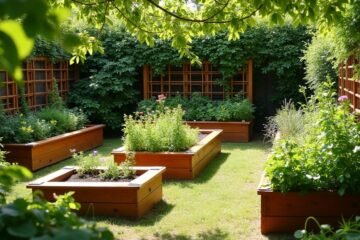
Creating budget-friendly raised beds for small gardens is a fantastic way to elevate your outdoor oasis! Find a sunny spot, ideally bathed in six hours of light, and steer clear of shady trees. Try using sturdy wooden pallets or chic concrete blocks to keep costs low yet stylish. Make your raised bed about 4 by 8 feet, with a height of 12-18 inches, so you won’t strain your back. Curious about soil prep and planting tips? Keep exploring for more exciting ideas!
Choosing the Right Location for Your Raised Bed
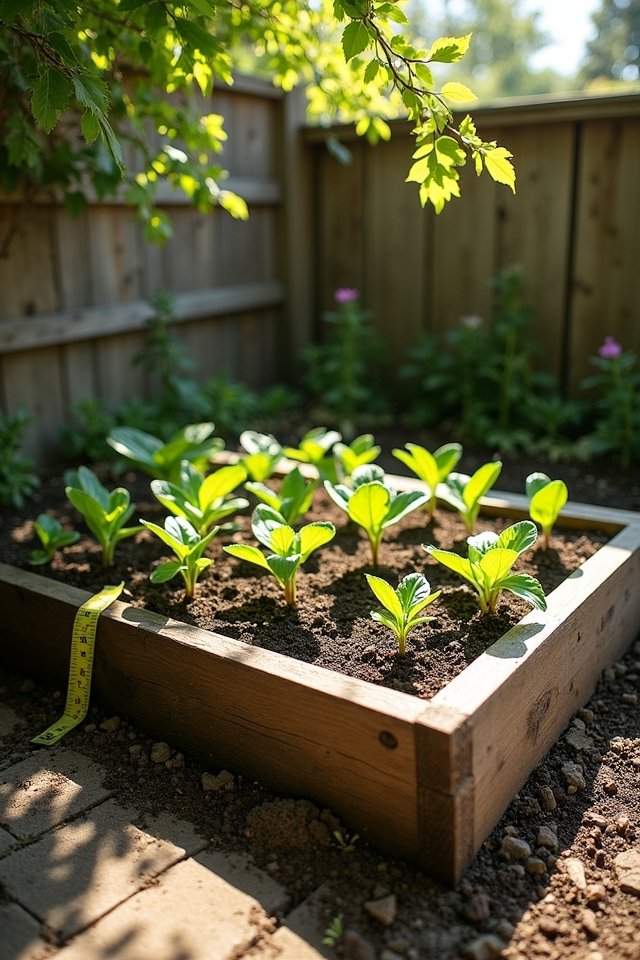
Where’s the best spot for your raised bed? Imagine a sun-kissed corner of your garden, basking in brilliant sunlight—perfect for your greens! Seek out a location that gets at least six hours of direct sun daily; your veggies will thank you! Avoid shady spots like that big oak tree trying to steal the spotlight. You’ll want good drainage too—think of your garden as a thriving city, where water flows freely, not a stagnant pond! A flat surface is ideal, but don’t fear minor slopes; they can add character! Finally, consider proximity to a water source; dragging the hose like a heavy anchor isn’t exactly fun. Happy gardening, and may your tomatoes soar like the mighty eagles!
Materials for Budget-Friendly Raised Beds
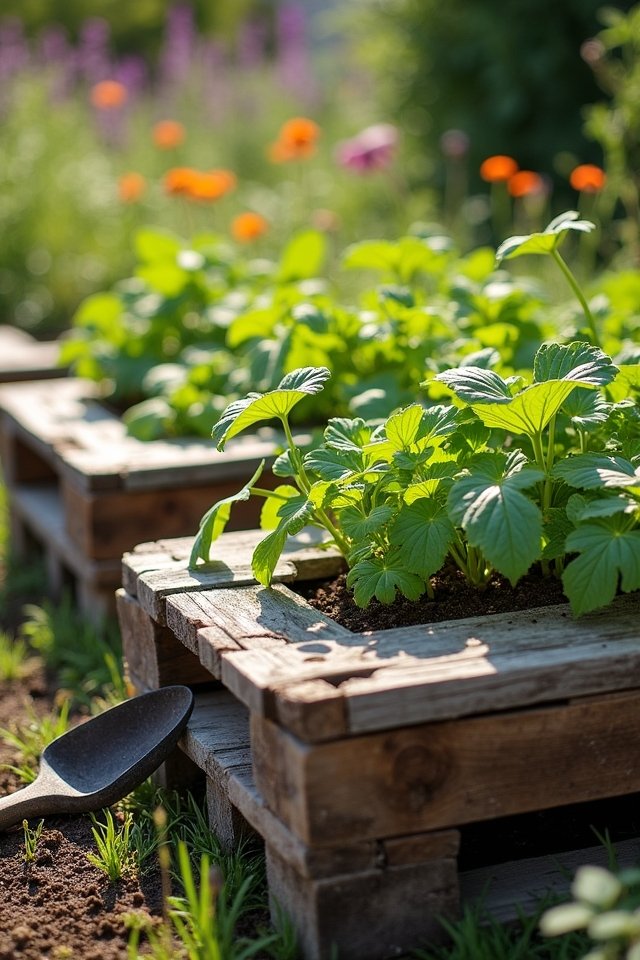
Crafting the perfect raised bed starts with choosing the right materials, and believe me, you don’t have to break the bank! For a budget-friendly option, consider repurposing old wooden pallets. They’re sturdy and give your garden that rustic charm! You could also try using concrete blocks – not only are they cost-effective, but they can create a sleek, modern look! If you’re feeling adventurous, why not utilize recycled plastic or corrugated metal? They’re durable and weather-resistant! Just imagine the vibrant veggies thriving in those cozy spaces! Each material tells a story, making your garden unique. Why compromise when you can garden innovatively, save money, and still get that “wow” factor? Your green thumb will thank you later!
Basic Design Dimensions for Small Gardens
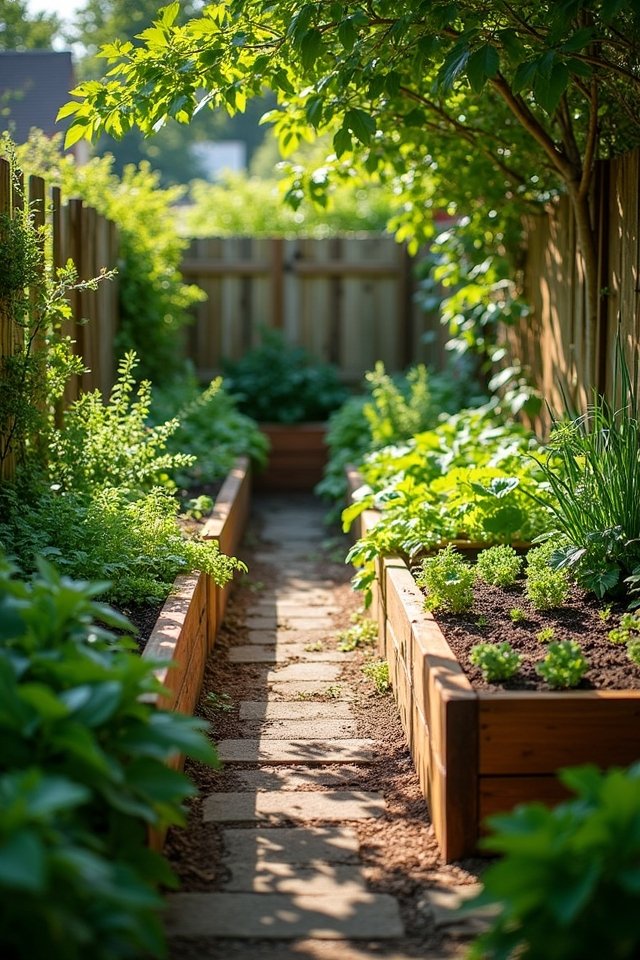
Designing a small garden can feel like solving a delightful puzzle! You’ve got limited space, but with clever dimensions, you can create a lush paradise. Think about raised beds; 4 feet by 8 feet is a magic size that gives you ample room to grow. A height of 12-18 inches guarantees you won’t have to do too much bending.
To maximize your greenery, consider spacing your beds about 2 feet apart, allowing for easy access while you dance around your fresh veggies! Don’t forget to layer in paths—gravel or stepping stones add flair and functionality. Imagine basking in your own garden oasis, where every corner bursts with vibrant leaves and fragrant blooms! Who wouldn’t want that? Exciting, isn’t it?
Step-by-Step Construction Guide
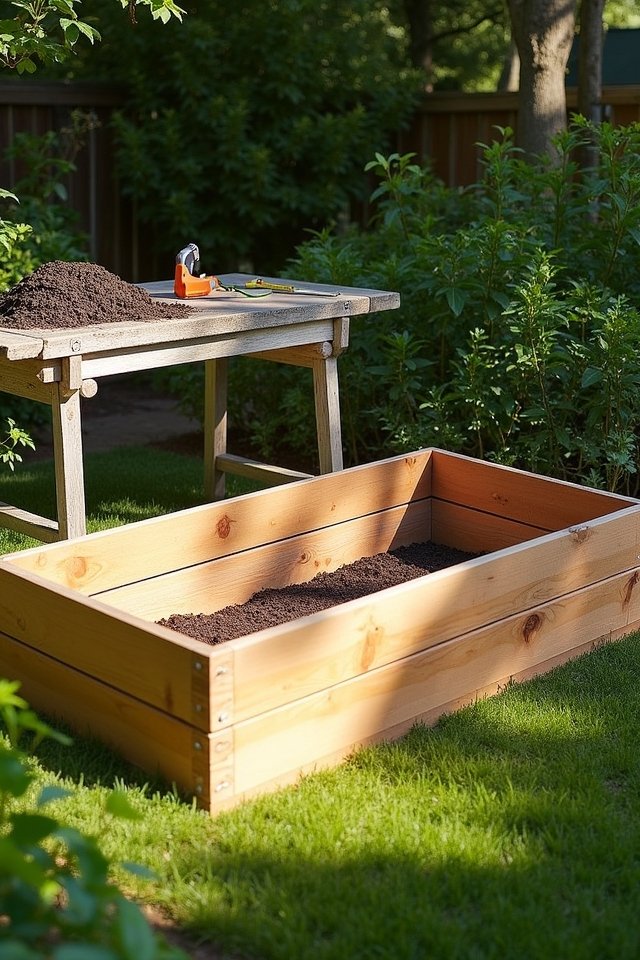
Ready to roll up your sleeves? Building a raised bed is like crafting your own edible treasure chest! First, gather your materials: rot-resistant wood, screws, and a saw. Measure your desired dimensions—it’s your garden, after all! Cut the wood to size and fit the pieces together like a puzzle, using screws for sturdy assembly. Secure the corners tightly—no wobbly beds here! If you’re feeling adventurous, create variations in height for a dramatic, tiered look. Once assembled, place your masterpiece in a sunny spot, ensuring it’s level for your plant’s comfort. Voila! You’ve just constructed a delightful haven for your future veggies! Isn’t that satisfying? Get ready; there’s joy ahead when you start planting!
Soil Preparation Tips for Optimal Growth
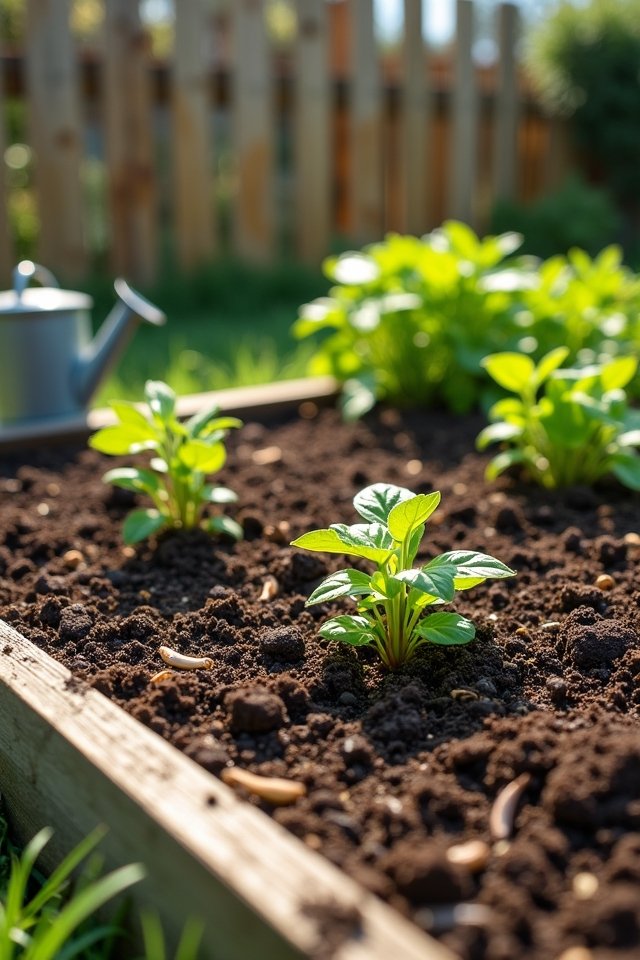
Before you dive headfirst into planting, let’s chat about the secret ingredient that truly makes your garden thrive: healthy soil! Think of it like the Swiss Army knife of gardening—versatile and essential! Start by mixing in organic matter like compost or well-rotted manure, which can enhance your soil’s structure and nutrients. Don’t forget to check pH levels! Most veggies prefer a slightly acidic to neutral zone, around 6.0 to 7.0. And remember, good drainage is key—no one wants a soggy, sad garden! To finish, add a sprinkle of mulch to keep moisture in and weeds out. Who knew that prepping soil could be this fun? Get ready, because ideal growth is just a few scoops away!
Planting Ideas for Miniature Raised Beds
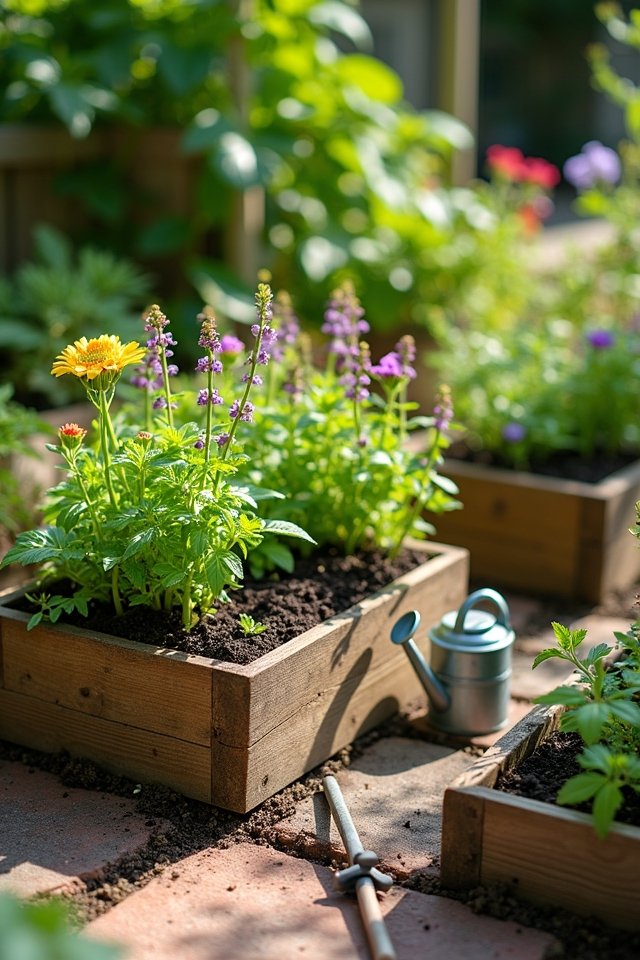
If you’re dreaming of a mini garden that packs a punch, you’re in for a treat! Imagine your raised bed bursting with vibrant herbs, like basil and mint, enticing you with their aromatic fragrances—perfect for your culinary adventures! Don’t forget the compact veggies; cherry tomatoes cling to their vines, while radishes pop up beneath the soil, ready for a crunchy snack. Consider colorful flowers like pansies, flaunting their cheerful faces, or zinnias bursting with hues that’ll make your heart sing. How about a pollinator paradise? Just add bee balm and butterfly weed, and watch your little oasis come alive! With a sprinkle of creativity and vibrant plants, your miniature raised bed will truly be a delightful spectacle!
Maintenance Tips for Long-Lasting Beds
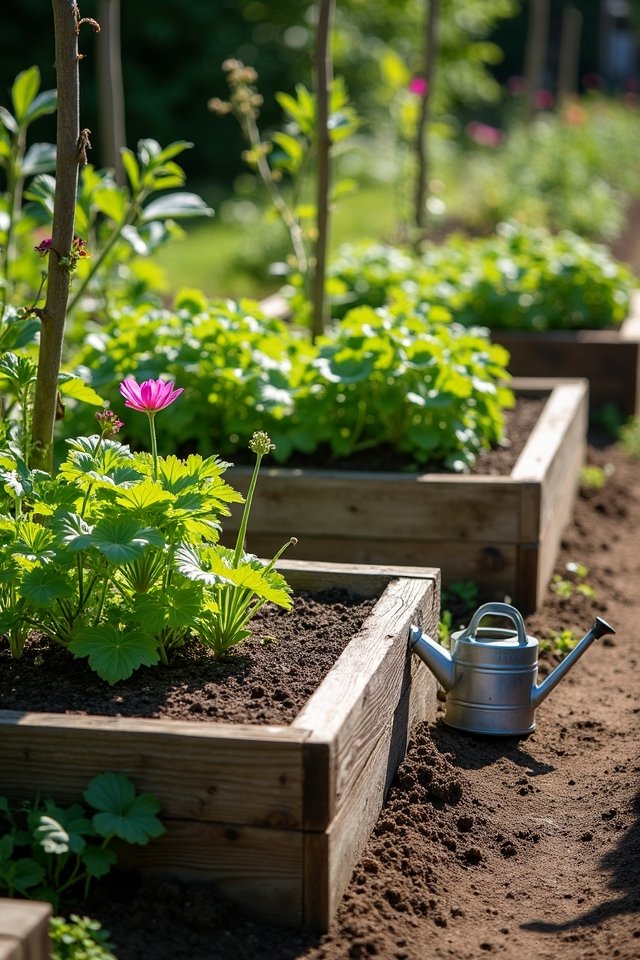
Your miniature garden bursting with colors and scents is just the beginning of the adventure! To keep those raised beds thriving, regular maintenance is key. First, check for weeding—it’s like keeping your wardrobe fresh from pesky moths! Water your plants deeply but less frequently; think of it as giving your veggies a spa day. Next, refresh your soil with organic compost twice a year, feeding your plants like a gourmet restaurant. Mulch can also help conserve moisture—it’s like a cozy blanket for your roots! Finally, inspect for pests; a quick check is easier than calling an emergency meeting! Also, remember to rotate your plant varieties. It’s like switching up your wardrobe, keeping things exciting and sustainable! Happy gardening!
Creative Ideas for Vertical Gardening
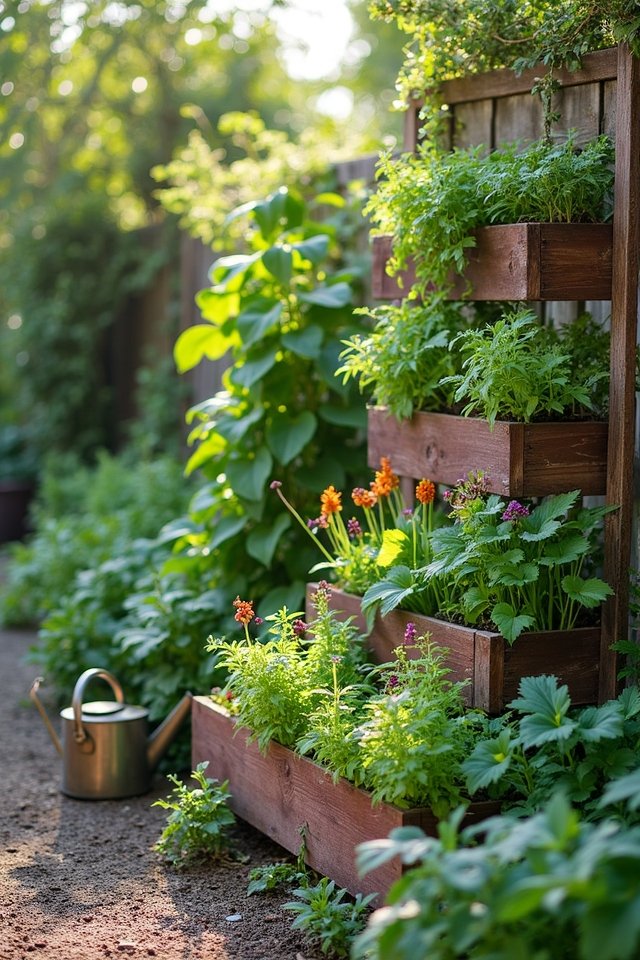
As you immerse yourself in the world of vertical gardening, you’ll discover it’s like transforming a blank canvas into a stunning mural of greens and blossoms! Think of repurposed pallets leaning against a fence, bursting with vibrant herbs and flowers. Or, how about hanging terracotta pots filled with cascading vines? They’ll dance in the breeze, creating a lively spectacle! You could also build a charming ladder-garden, where each step holds a different plant, climbing toward the sun. And, don’t forget sturdy trellises; they’re perfect for supporting climbing vegetables, like sweet peas or juicy tomatoes. Who knew that vertical spaces could be so lively and bountiful? Let your imagination run wild, and enjoy the unexpected beauty of your garden!
Cost-Saving Alternatives for Plant Supports
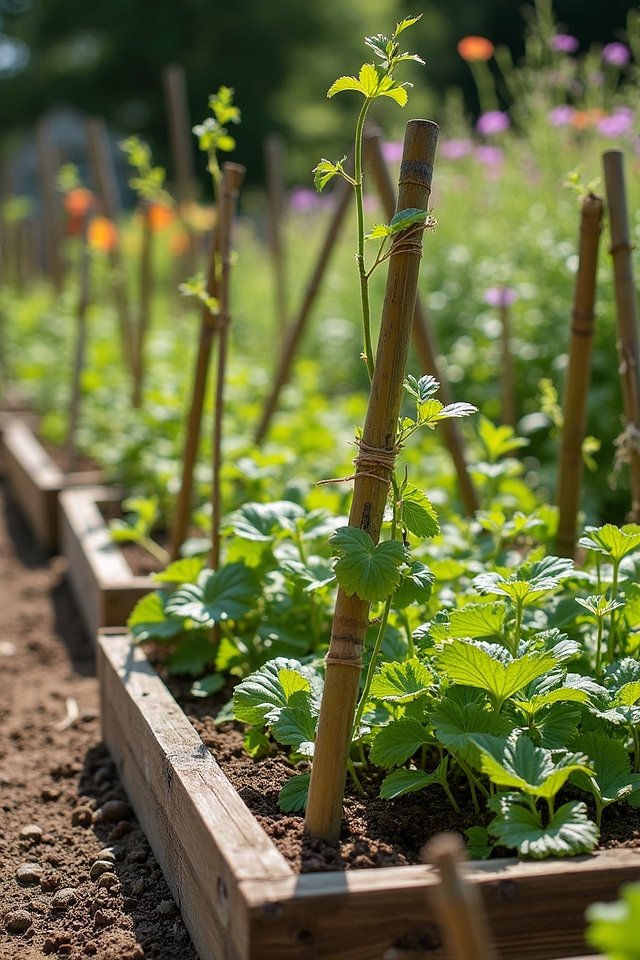
Plant supports don’t need to break the bank! You can craft stunning supports from items around your home. Old wooden ladders become unique trellises, and bamboo stakes are perfect for tomatoes; it’s like giving your plants a VIP section! Think about using wire fencing—just bend it into shapes for beautiful archways, or why not repurpose an old coat hanger? They make fabulous mini supports! If you’re feeling adventurous, scrap wood can transform into charming A-frames; your plants will feel like they’re living in a luxury condo! The best part? These alternatives are not only budget-friendly but also give your garden a personal touch! So, roll up your sleeves and let your creativity bloom! Your plants will love the attention!
Frequently Asked Questions
Can I Use Salvaged Materials for My Raised Bed Construction?
Absolutely, you can use salvaged materials for your raised bed construction! Imagine transforming old pallets or weathered bricks into a charming garden oasis! Just make sure they’re free of chemicals. Think of it as giving your garden a funky, eco-friendly personality! How about using those vintage wooden crates for a rustic look? With a little creativity, your garden will thrive, and you’ll feel like a sustainable superhero! Let those materials tell their stories while nurturing your plants!
How Deep Should My Raised Bed Be for Root Vegetables?
Ever dreamed of pulling up fresh carrots that taste like sunshine? For root veggies, make your raised bed at least 12 inches deep! This gives them room to stretch their roots, much like a child on a trampoline. If you’re growing deeper roots, like potatoes, aim for 18 inches. Trust me, those crunchy delights will thank you for it. So, dig deep and let your garden dreams flourish! Happy planting!
What Are Effective Pest Control Methods for Raised Beds?
When it comes to pest control in raised beds, you’re in for some fun! Start with companion planting—marigolds paired with tomatoes can deter pesky critters. You could also sprinkle diatomaceous earth like magical fairy dust to keep slugs at bay. And don’t forget about introducing friendly bugs—ladybugs and lacewings are your garden warriors! Why settle for boring methods when you can make your garden a vibrant, pest-free paradise? What a win-win!
Can I Grow Flowers Alongside Vegetables in My Raised Bed?
Imagine your raised bed is a cozy café, where flowers and veggies dine together, sharing stories! You can definitely grow flowers alongside your vegetables—it’s a delightful partnership! Flowers like marigolds or nasturtiums not only brighten up your garden but also attract beneficial pollinators. Plus, they’ll help deter pests! Why not sprinkle some color in your vegetable haven? It’s like adding sprinkles to a cupcake—extra sweet and visually irresistible! Happy gardening!
How Often Should I Water My Raised Bed Garden?
You should water your raised bed garden regularly, ideally every 2-3 days. Think of your plants like thirsty dancers at a party—they need hydration to keep grooving! Stick your finger into the soil; if it’s dry an inch down, it’s time to water. Early mornings are best—before the sun sips all the moisture away! Feel the rich, moist earth beneath your fingertips, and watch your garden flourish like never before!