If you’re on the hunt for the best low light indoor plants, you’ve struck gold! The Snake Plant’s striking sword-like leaves won’t demand much from you. Pothos can adapt like a pro, while the ZZ Plant adds a touch of elegance. Love flowers? The Peace Lily’s stunning blooms will brighten your day! And don’t forget the Spider Plant, which loves to spread its little “spiders”! Ready to enhance your space and boost your mood? There’s more to explore!
Snake Plant
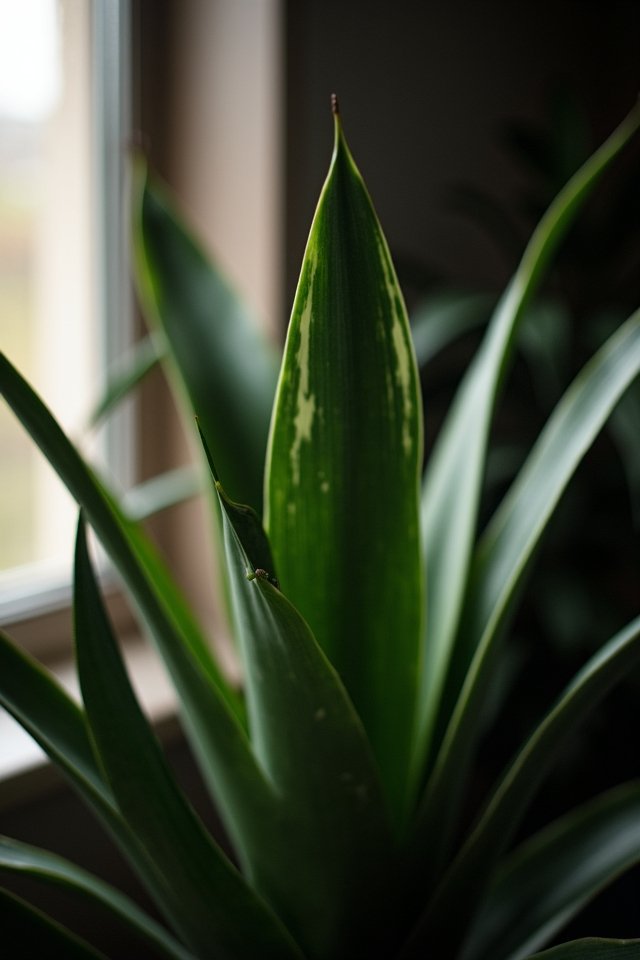
If you’ve ever wished for a plant that practically thrives on neglect, meet the Snake Plant! This resilient beauty offers incredible snake plant benefits, like purifying the air while adding a modern touch to your space. With its striking, sword-like leaves, it’s like having a piece of art that doesn’t need much attention. You’ll love how easy snake plant care is—just place it in low light and water it every couple of weeks. Seriously, that’s it! Imagine the satisfaction of owning a plant that not only survives but flourishes despite your busy lifestyle. Plus, it’s a great conversation starter! So, go ahead and bring home a Snake Plant; it’s the perfect low-maintenance companion for your innovative life!
Pothos
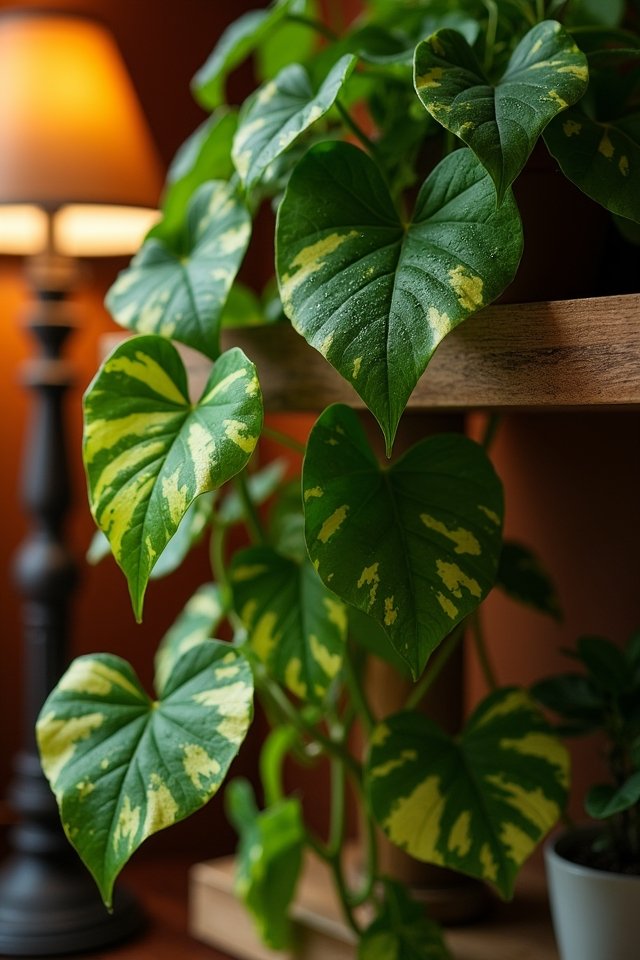
Pothos, often called the “cape of good hope” for indoor gardening, is like having a loyal friend that brightens your home without demanding much in return! With its stunning heart-shaped leaves, this plant can thrive in low light and adapt to your space effortlessly.
To make pothos care even easier, consider these exciting aspects:
- Variety Galore: From Marble Queen to Golden Pothos, you’ll find a look that matches your vibe!
- Air Purifying: It’s not just pretty—pothos cleans the air while you relax at home!
- Low Maintenance: Forget constant watering; just let it dry out between sips!
ZZ Plant
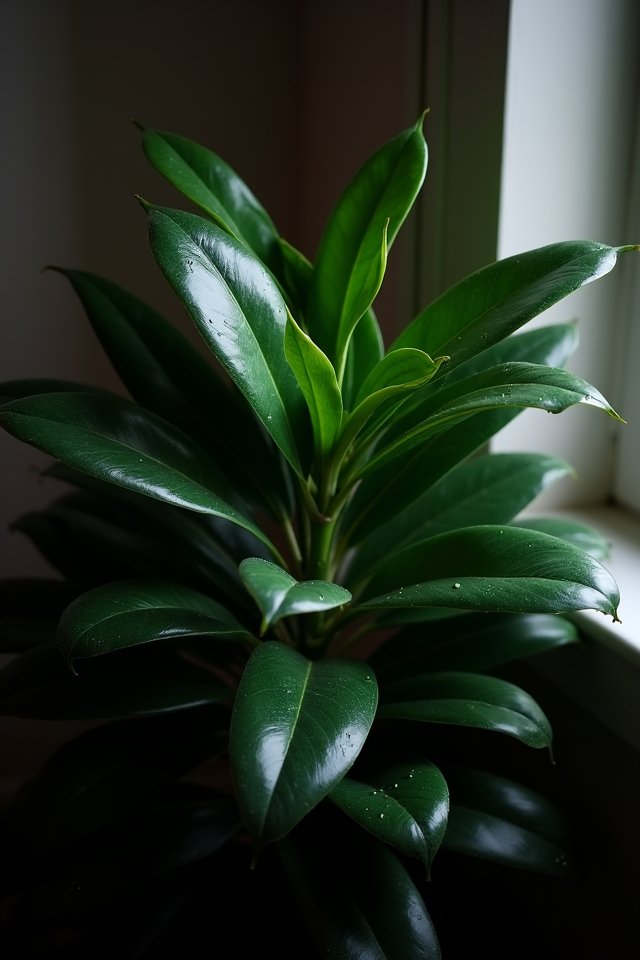
Get ready to meet your new best buddy in the plant world—the ZZ Plant! This remarkable beauty thrives in low light, making it perfect for those cozy corners of your home. With its glossy, dark green leaves, it’s like a little piece of elegance that’ll brighten your space. ZZ plant care is a breeze; just give it a drink when the soil dries out, and it’s happy as can be!
But wait, it gets better! The zz plant benefits include purifying the air, making your environment healthier. Imagine breathing in fresher air while enjoying the stunning sight of this resilient plant. Plus, it practically laughs in the face of neglect! So, why not invite a ZZ Plant into your life? You won’t regret it!
Peace Lily
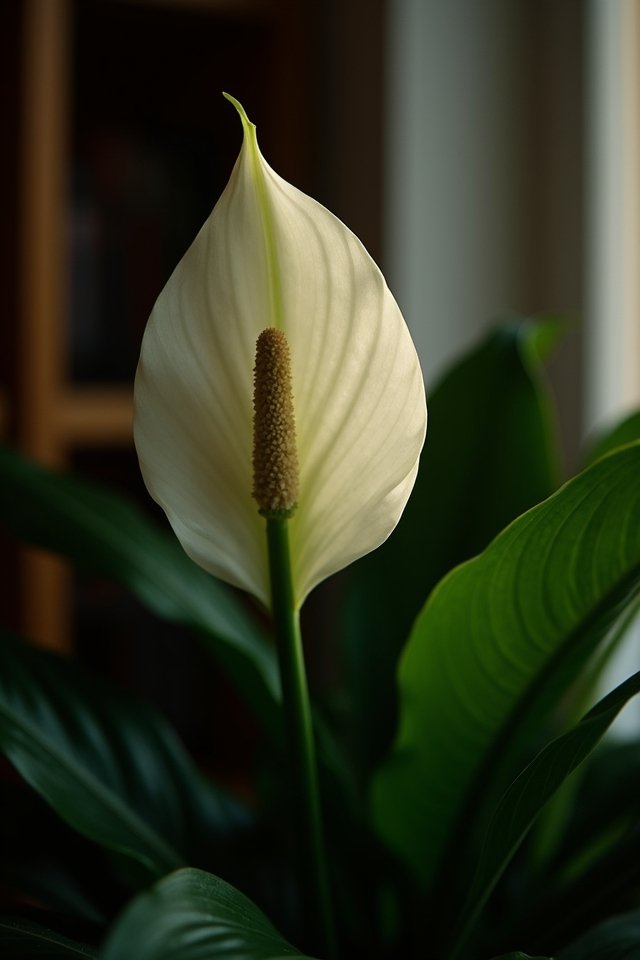
Now that you’ve met the charming ZZ Plant, let’s shine a light on another low-light superstar—the Peace Lily! This beauty not only graces your home with elegance but also boasts stunning white flowers that bloom like a gentle whisper.
Here are some care tips to keep your Peace Lily thriving:
- Watering: Keep the soil moist but not soggy; it loves a good drink!
- Light: Place it in indirect sunlight for the best flowering characteristics.
- Humidity: Give it a little extra humidity, and it’ll reward you with those gorgeous blooms!
With its glossy leaves and delicate flowers, the Peace Lily is like nature’s way of saying, “You’ve got this!” So, why not bring this stunning plant into your space?
Spider Plant
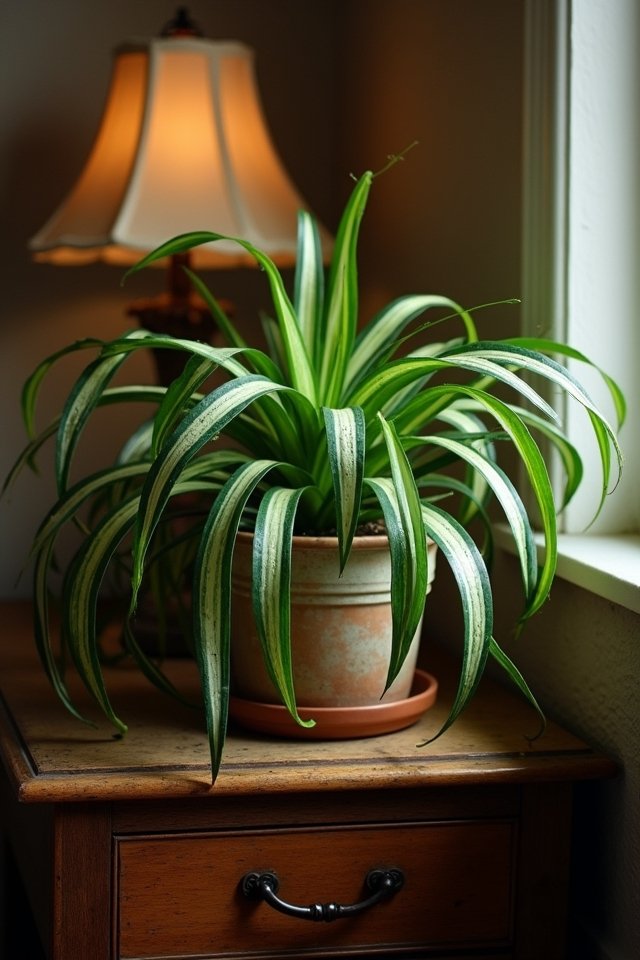
If you’re looking for a plant that’s as easy to care for as it is charming, the Spider Plant is your perfect match! This delightful green companion thrives in low light, making it an ideal choice for any indoor space. With just a sprinkle of water and occasional pruning, you’ll have a lush display of arching leaves that resemble a green waterfall!
But wait, there’s more! Spider plants are natural air purifiers, removing toxins and filling your space with fresher air. Imagine breathing in that clean, crisp atmosphere! Plus, their adorable baby “spiders” can be propagated easily, giving you new plants to share or keep for yourself. So, plunge into spider plant care and enjoy the numerous spider plant benefits today!
Frequently Asked Questions
How Often Should I Water Low Light Indoor Plants?
You’ve got to keep an eye on that watering frequency! Low light indoor plants like to sip rather than gulp. Check the soil’s moisture—if it’s dry an inch down, it’s time for a drink! Generally, every 1-2 weeks should do the trick. Remember, overwatering can drown your leafy friends, so just give them a gentle splash, not a deluge. Your plants will thrive, and you’ll feel like a proud plant parent!
Can Low Light Plants Survive in Complete Darkness?
Can low light plants survive in complete darkness? Not really! While they’re champions of low light, they still need some light to thrive. Think of them like us: without a little sunshine, they can’t make food and grow. If you put them in a closet, they’ll struggle, losing their vibrant green charm. So, give your leafy friends a bit of indirect light, and watch them flourish! Remember, even the toughest plants appreciate a little glow!
Do Low Light Plants Need Fertilizer?
Imagine your plants basking in a cozy corner, but do they need a little boost? Absolutely! Low light plants still have nutrient needs, and a sprinkle of fertilizer can work wonders. Consider liquid or slow-release types, like balanced or organic options, to keep them happy. Just like a good meal, your plants crave nourishment too! So, don’t forget to feed them occasionally, and watch them thrive in their little green paradise!
Are Low Light Plants Safe for Pets?
Wondering if low light plants are safe for your furry friends? Great question! Some plants are pet-friendly, like spider plants and Boston ferns, while others can be toxic species, like pothos and peace lilies. Keep your curious kitty or pup safe by choosing wisely! Imagine their little noses sniffing around those vibrant greens—adorable, right? Always double-check before bringing new greenery home. Your pets will thank you for the safe, lovely jungle!
How Can I Tell if My Plant Is Getting Enough Light?
Is your plant thriving like a superstar or drooping like a sad puppy? To check its light requirements, look for vibrant leaves and steady growth. If it’s stretching towards the window, it’s craving more sunshine! On the flip side, yellowing leaves might signal too much light. Remember, each plant has its own personality, so keep experimenting! You’ll find that perfect balance to boost your plant’s health and happiness! Isn’t that exciting?