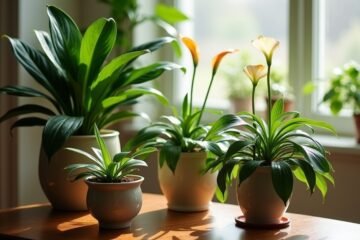
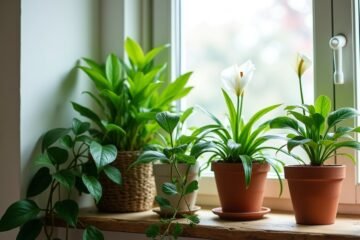
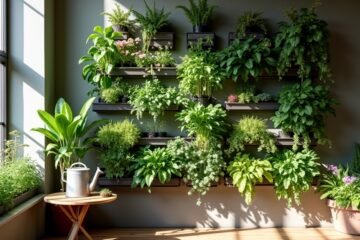
Want to turn your cozy corners into thriving green havens? Try snake plants for low-light spots—they’re as tough as nails! Peace lilies add elegance with their lovely white blooms. Mix in cheerful aloe on sunny windowsills, and consider cascading vines for a magical touch! Remember, humidity is key—aim for 40-60% for that tropical feel. Trim and care for your plants, and watch them flourish like little indoor jungles! Keep going, you’ll discover even more fabulous tips!
Choosing the Right Plants for Limited Space
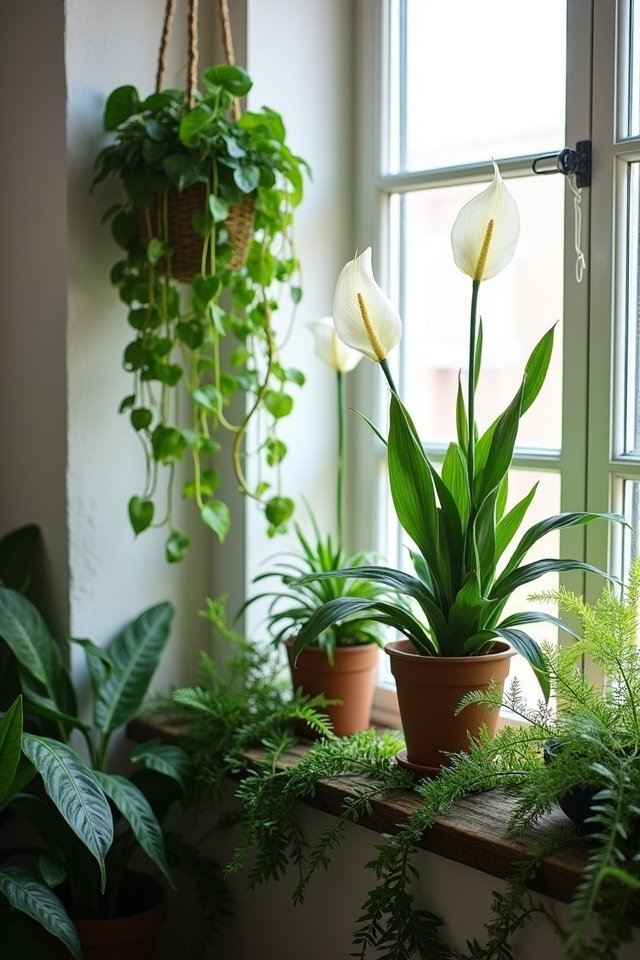
When you’re surrounded by walls that seem to close in, finding the right indoor plants can feel as tricky as solving a Rubik’s Cube! For those compact spaces, you’ve gotta think creatively. Consider space-saving arrangements like vertical shelves or hanging pots that free up valuable floor area. When choosing plants, pay attention to plant size considerations—tiny succulents or cascading vines can dramatically enhance your room without overwhelming it. Picture a vibrant pothos draping down a shelf or a cheerful aloe perched on your windowsill… pure magic! Remember, these little green companions can transform your cozy corners into thriving oases. So, are you ready to nurture your very own indoor jungle? Let’s get planting and breathe life into those compact nooks!
Low-Light Plant Options for Cozy Corners
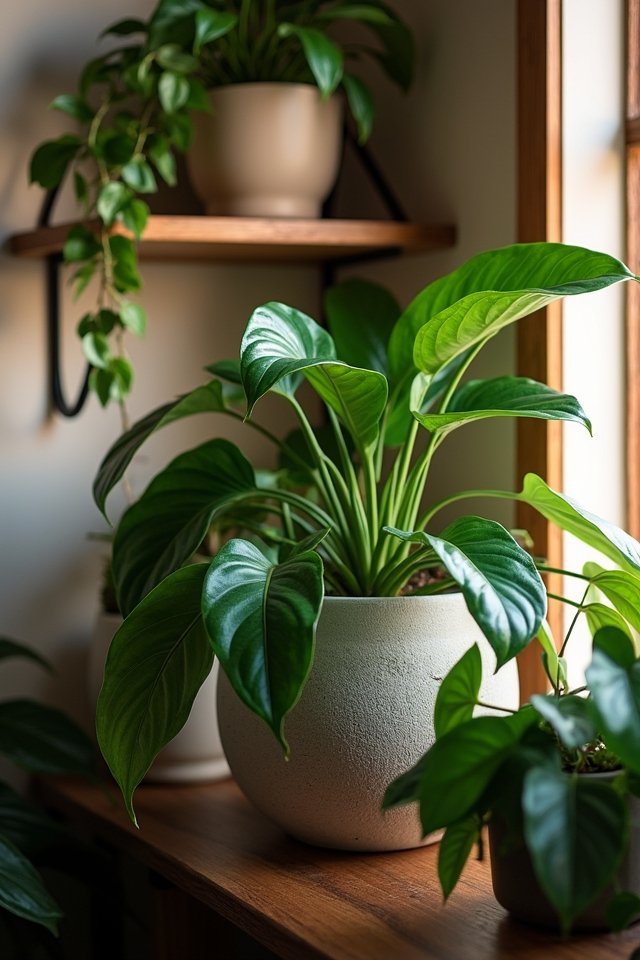
In cozy corners that seem to play hide-and-seek with natural light, there’s still hope for an indoor green paradise! Imagine curling up with a snake plant, its sleek leaves reaching up like enthusiastic friends waiting for sunlight! These hardy beauties thrive even in the dimmest nooks, adding a modern twist to your space.
Then there’s the peace lily, as graceful as a ballet dancer, with its elegant white blossoms brightening the shadows! These stunning plants not only spruce up your corners but also purify the air. Who wouldn’t want a little fresh atmosphere in their cozy retreat? So, why not welcome these low-light wonders? You’ll bring life into the shadows, turning your home into a lush haven!
Maintaining Humidity and Temperature for Indoor Plants
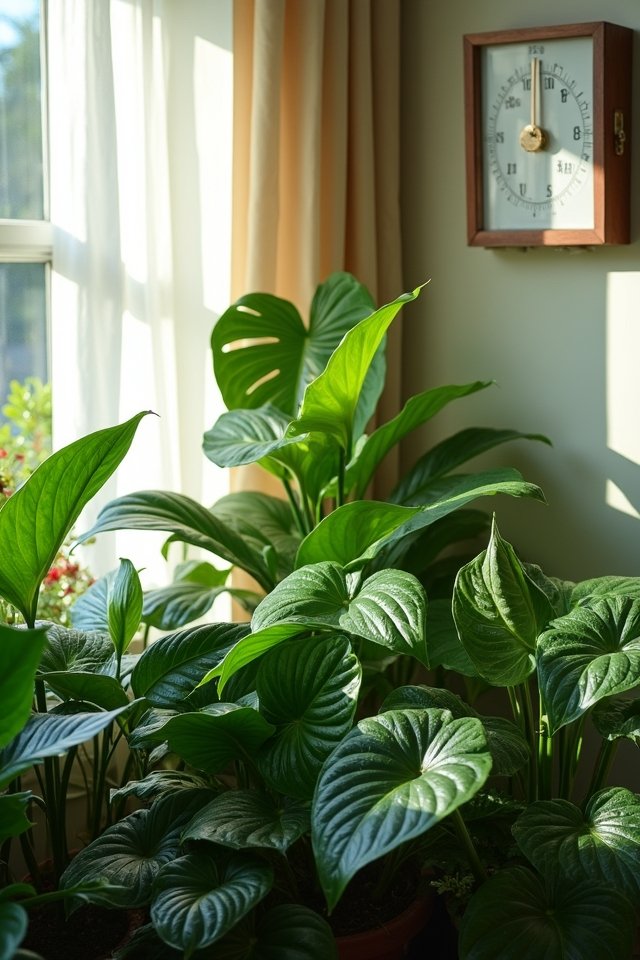
To keep your indoor plants as happy as a clam, you’ve got to pay attention to humidity and temperature! Imagine your plants basking in cozy, tropical vibes—humidity levels around 40-60% help them thrive. You can achieve this by misting them or using a humidifier to create a lush, rainforest-like atmosphere.
Now, let’s talk temperature control! Most houseplants prefer a toasty range of 65-75°F. Avoid drastic fluctuations; plants don’t enjoy dramatic temperature swings! Placing a thermometer near your plants can help you monitor their environment.
Think of it this way: your indoor oasis is a sanctuary, and with the right humidity and temperature, your plants will reward you with vibrant growth and stunning leaves. Happy planting!
Creative Placement Ideas to Maximize Space
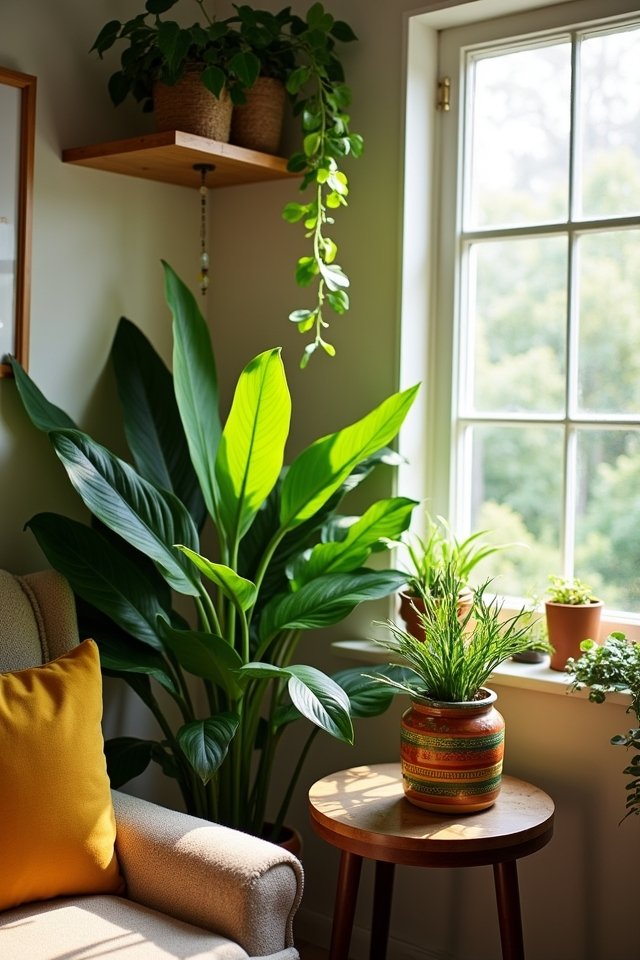
Ready to make the most of your indoor space? Think shelf arrangements and vertical gardens! Imagine this: a cluster of vibrant pots on a sleek floating shelf—each plant spilling lush greenery over the edge like a joyful waterfall. Or, how about a vertical garden in a sunny corner? You’ll transform that forgotten spot into a living masterpiece!
Experiment with different heights and colors; use wall-mounted planters to create a living tapestry. Stagger plants in varying sizes for drama and eye-catching appeal. And don’t forget the windows! A cascading row of herbs can turn your kitchen into a fragrant oasis. With a little creativity, your cozy spaces can overflow with life and delight—who wouldn’t want to come home to that?
Essential Care Tips for Thriving Indoor Plants
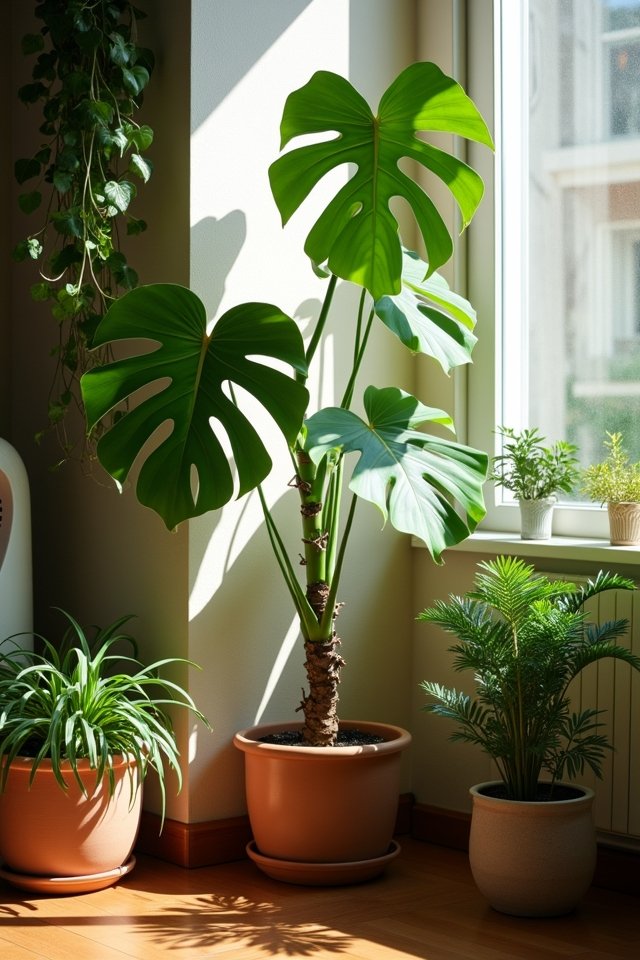
Once your cozy spaces are beautifully adorned with plants, keeping them healthy and happy is a must! First, nail those watering schedules. Think of your plants like toddlers—too much water can lead to a muddy mess! Check the soil; if it’s dry an inch down, it’s time for a drink. Next, choose the right soil types, as they’re like comfy beds for your green friends! A well-draining mix can make all the difference. Consider using potting soil with added perlite for an airy feel. And don’t forget, each plant has unique light preferences! Give them a sun-soaked spot or a cozy nook based on their needs—trust me, they’ll thrive and reward you with lush greenery everywhere! 🌱
Frequently Asked Questions
Can I Keep Indoor Plants Safely Around Pets?
Keeping indoor plants around pets is like balancing on a tightrope! Sure, you’ll want to choose pet safe plants, like spider plants or Boston ferns, to avoid any indoor plant toxicity disasters. Think of your furry friends as tiny adventurers, curious and ready to explore! Why risk it with questionable foliage? Welcome greenery that adds beauty without jeopardizing their health—your home can bloom brilliantly while keeping everyone safe! Let’s make your indoor jungle thrive!
How Often Should I Repot My Indoor Plants?
You should repot your indoor plants every 1 to 2 years, depending on their growth and pot size. Think of it like a cozy upgrade for your plant! If the roots are peeking out or your plant’s growth seems sluggish, it’s time for a fresh start. Healthy soil boosts plant health, so choose a mix that lets it breathe! Don’t worry, they’ll thank you with vibrant leaves and maybe a little growth spurt!
Are There Any Indoor Plants That Help Purify Air?
Imagine stepping into a fresh, clean oasis right in your living room! Indoor air purifying plants can help you do just that. Think of the spider plant, with its graceful leaves, or the resilient peace lily, which not only brightens your space but also filters out toxins. These green wonders not only beautify your home, but they also work hard to improve your air quality—now, who wouldn’t want that? Let’s get planting!
What Are the Best Soil Types for Indoor Plants?
When it comes to soil types for indoor plants, think of it as choosing a cozy blanket! You’ll want potting mixes that offer excellent soil drainage to keep your green friends happy. A blend with peat moss, perlite, and pine bark is ideal. It’s like the perfect hug for their roots! Don’t forget to check pH levels too, as they might get a bit grumpy otherwise. Happy planting and may your plants thrive!
How Can I Tell if My Plant Is Overwatered?
Worried your plant might be drowning? Look for overwatering signs like yellowing leaves, mushy stems, or a sad, droopy appearance. It’s like your plant’s giving you the silent treatment! If it’s too much water, don’t panic! You can turn things around. Let it dry out and cut back on watering. Soon enough, your leafy friend may be back to its vibrant self, thriving like a champion in sunshine!