Choosing the right wood for your raised beds isn’t just about looks; it’s the backbone of your garden’s success! Durable woods like cedar and redwood fight off rot, while softer options, like pine, might bow under pressure. You wouldn’t want chemicals from treated wood seeping into your soil like unwelcome guests, right? Plus, selecting sustainable materials can make your garden feel like a little green oasis! Stick around, and you’ll uncover more secrets to elevate your gardening game!
Understanding the Benefits of Raised Beds
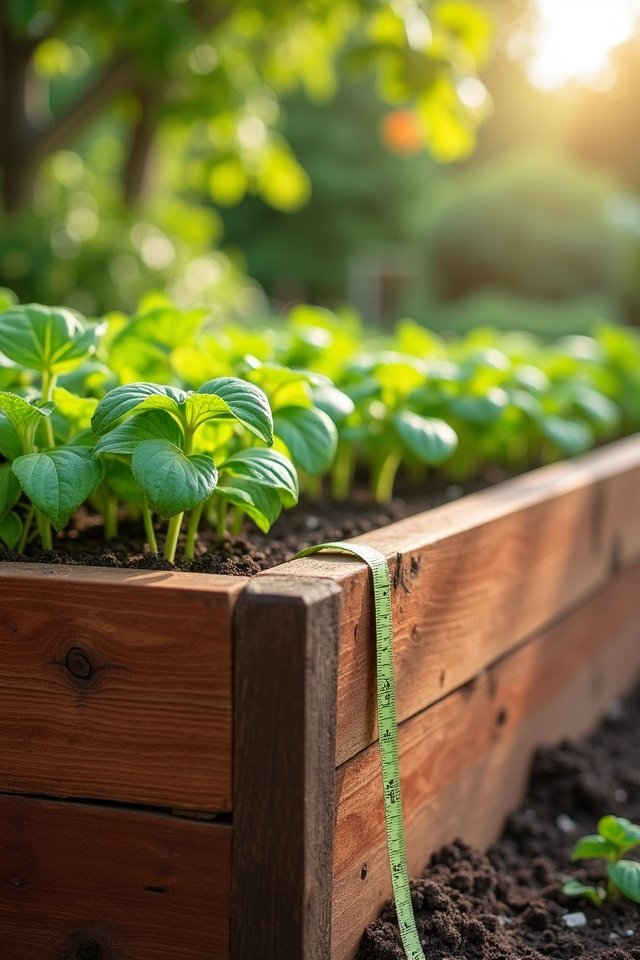
When you think about gardening, what pops into your mind? Picture vibrant veggies and lush flowers thriving in a cozy raised bed! Raised bed advantages are hard to ignore. They’re like little islands of productivity, elevating your plants and giving them a head start. You’ll find that gardening efficiency skyrockets! With better drainage, warmer soil, and fewer weeds, you’ll spend less time fighting nature and more time enjoying the fruits of your labor. Imagine plucking ripe tomatoes without bending over! Plus, they’re perfect for those pesky pests. Instead of battling bugs, you can focus on growing. So, why not adopt this innovative approach? Your garden’s waiting for a boost, and raised beds are the perfect secret ingredient!
Types of Wood Used in Raised Bed Construction
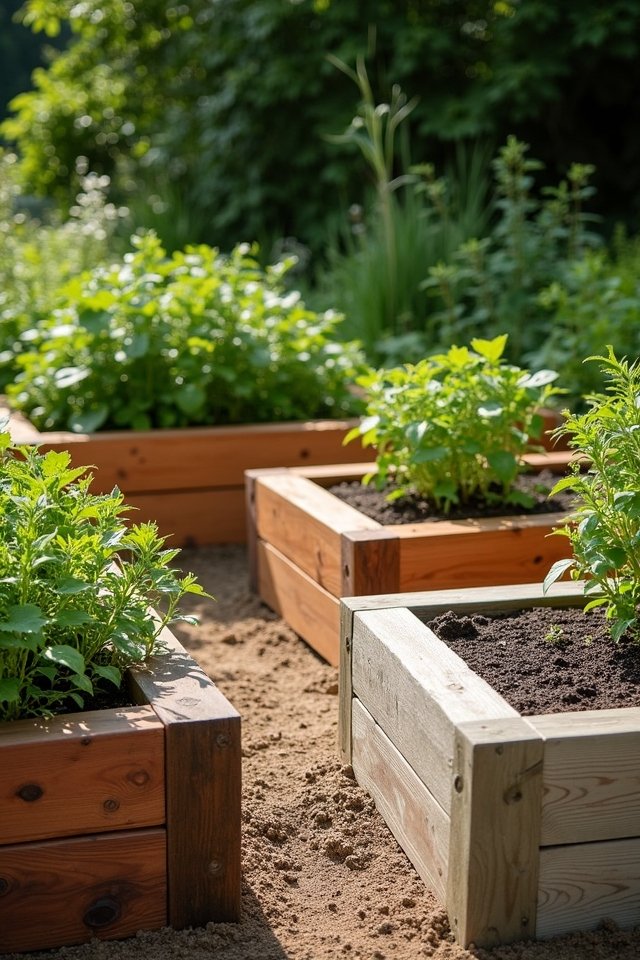
Gardening in raised beds is a fantastic way to elevate your green thumb game! When it comes to wood selection, you’ve got exciting choices. Cedar options are a gardener’s dream! They’re naturally resistant to decay and pests, making them perfect for those innovative minds who want longevity. Plus, the aromatic scent is a delightful bonus while you dig in the dirt. On the flip side, pressure-treated wood offers durability that can withstand the test of time and weather. Just keep in mind, there are chemicals involved, so lining your beds is a smart move! Ultimately, choosing the right wood transforms your garden into a thriving oasis. Ready to make your raised bed the envy of the neighborhood? Let’s get building!
Durability of Different Wood Species
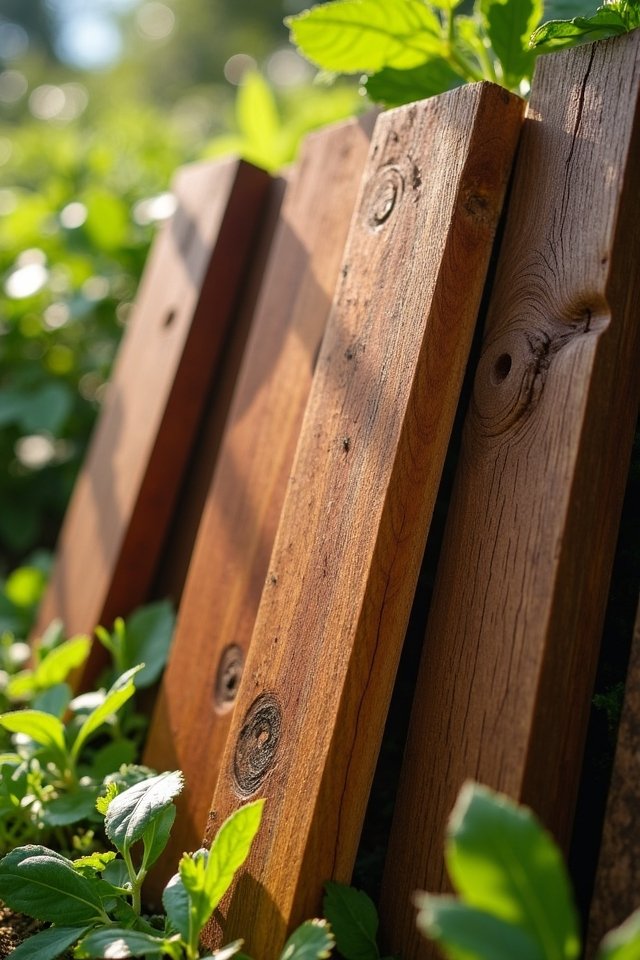
Choosing the right wood for your raised beds is like picking the perfect partner for a dance—some just last longer and hold up better! When you think about wood species, consider cedar and redwood; they’re like the rock stars of durability! They naturally resist rot, so your raised beds will stand strong against the elements. On the other hand, softer woods like pine might be charming, but they won’t last long—more like a fleeting fling! Plus, think about the environmental impact. Sustainable options like reclaimed wood not only look fantastic but also reduce waste. So, welcome your creativity! Choosing durable wood means your garden will flourish for years, and you’ll enjoy the fruits of your labor, worry-free!
The Impact of Chemical Treatments
Before you dive headfirst into building those beautiful raised beds, let’s chat about the impact of chemical treatments on wood! You might think those treatments prolong wood’s life, but beware of chemical leaching! It can sneak into your soil, affecting your plants. Here’s what you need to know:
- Pressure-treated wood often uses chemicals like arsenic.
- Cedar and redwood are naturally resistant, no treatments needed!
- Non-toxic treatments exist, but they’re less common.
- Composite materials can be a great alternative, yet they might not have the same aesthetic.
- Always check for certifications to guarantee safety.
Choosing the right treatment type can keep your garden healthy and chemical-free! Your plants deserve the best, don’t they?
Sustainability and Eco-Friendliness of Wood Choices
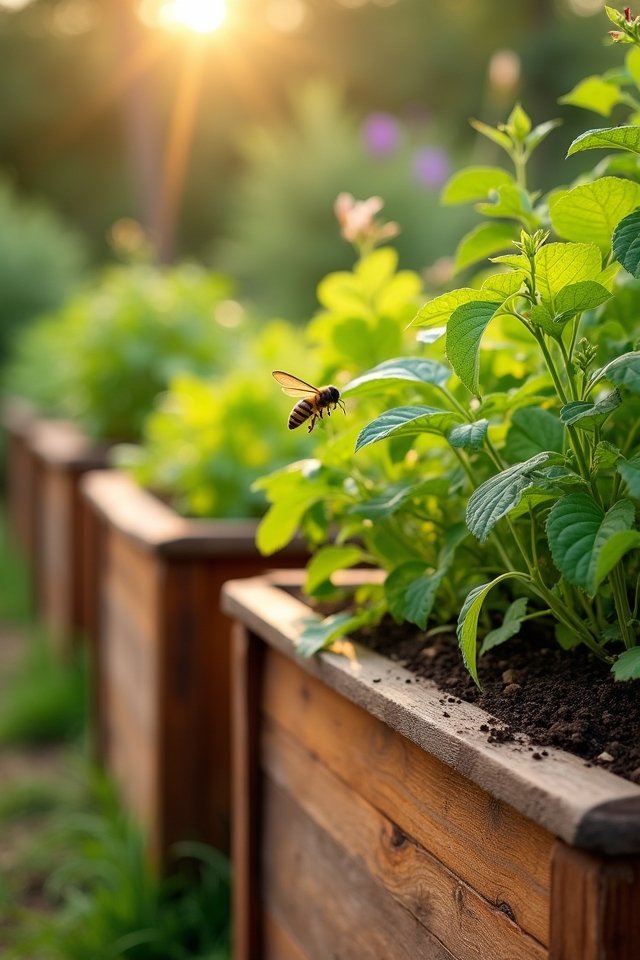
When you’re selecting wood for your raised beds, considering sustainability and eco-friendliness can make a world of difference! Imagine growing your veggies in a bed made from sustainably sourced wood that’s as kind to the Earth as it is to your garden. Choosing wood with eco-friendly treatments means you’re not just building a garden; you’re crafting a greener future! Think about using reclaimed wood—it’s like giving old timber a new life, and it adds character to your setup. You can also explore options like bamboo, which grows faster than a rabbit on a sugar rush! So, immerse yourself in innovative wood choices that support sustainable practices, and watch your garden flourish while you do your part for the planet! Isn’t that a win-win?
Cost Considerations for Various Woods
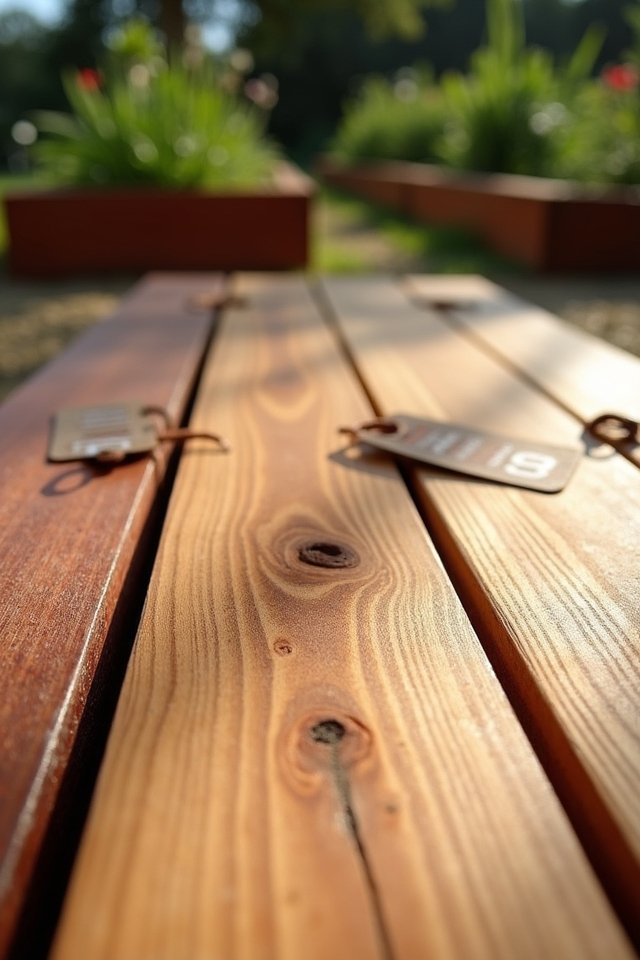
While it might be tempting to rush into picking the fanciest wood for your raised beds, pricing can really throw a wrench in your plans! To guarantee you’re making a smart investment, it’s vital to conduct a cost comparison during your budget planning. Here are some wood options to evaluate:
- Cedar: Naturally rot-resistant but can be pricey!
- Pine: Affordable and easy to find, though it may not last as long.
- Redwood: Gorgeous and durable, but your wallet might feel a pinch!
- Composite: Eco-friendly and low-maintenance, yet can be costly upfront.
- Untreated hardwood: A beautiful choice, but prepare for a hefty price tag!
Each option has its pros and cons, so weigh them carefully to fit your garden dreams!
Aesthetic Appeal and Garden Design
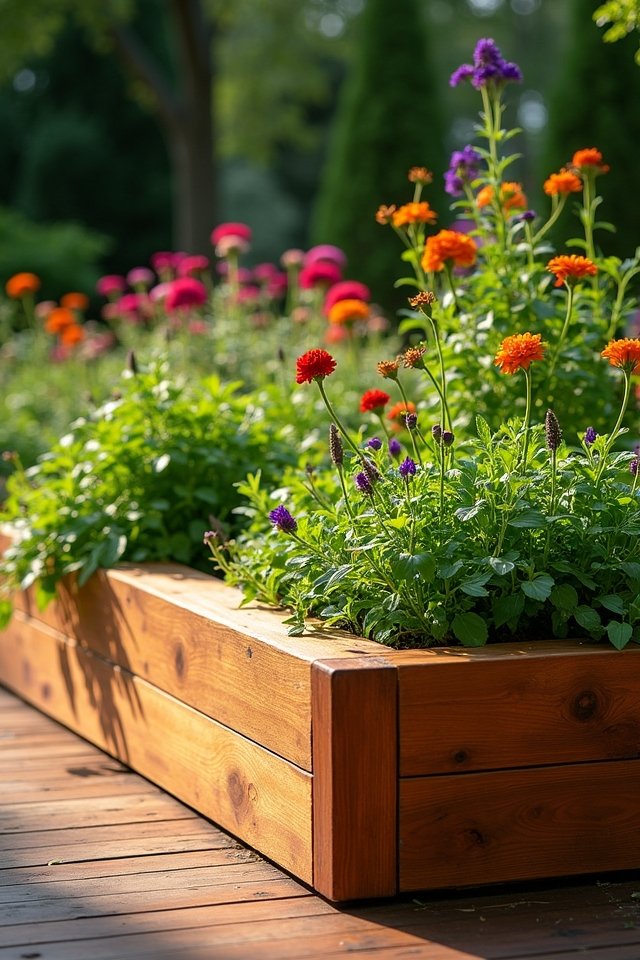
A beautiful garden isn’t just about the plants; it’s also about the fantastic structures that frame them! When you choose the right wood for your raised beds, you elevate your garden’s aesthetic appeal. Think about color coordination—rich, dark woods can contrast stunningly with vibrant flowers, while lighter woods create a fresh, airy vibe. You can play with design themes too! Imagine rustic cedar beds paired with wildflowers or sleek, modern beds accenting minimalist plants. Your raised beds can be the art pieces in your green canvas! So, why settle for plain when you can create a masterpiece? With thoughtful wood selection, you can transform your garden into an enchanting retreat that delights the senses and inspires creativity! 🌼✨
Resistance to Pests and Decay
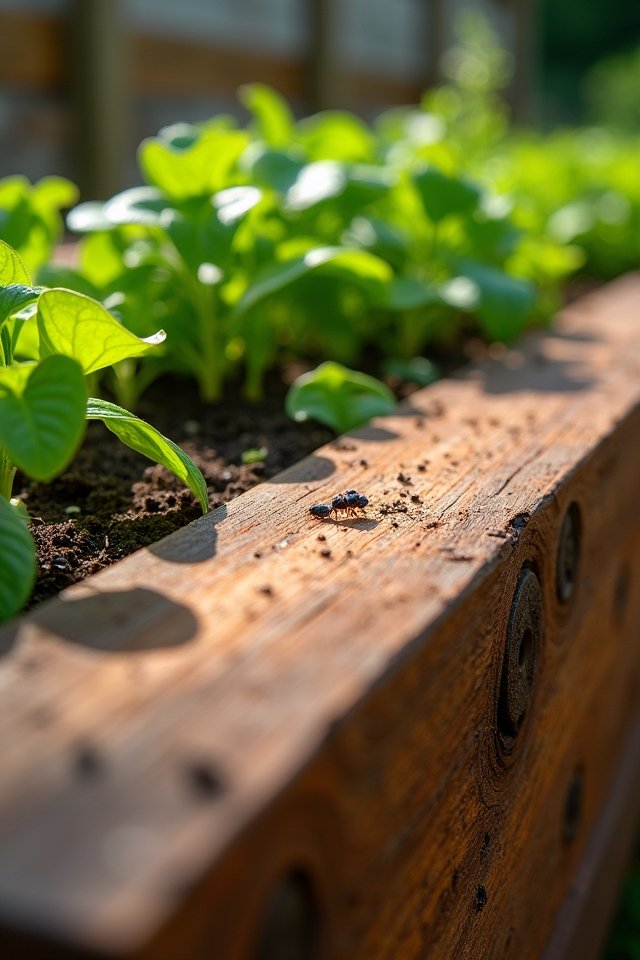
Choosing the right wood for your raised beds can make a world of difference, especially when it comes to resisting pests and decay! You want your garden to thrive, not become a buffet for bugs or a soggy mess. Here’s how to guarantee pest resistance and decay prevention:
- Opt for naturally rot-resistant woods like cedar or redwood.
- Treat your wood with eco-friendly preservatives that deter pests.
- Elevate beds to keep them dry and reduce moisture buildup.
- Use hardware cloth to protect the soil from pesky critters.
- Regularly inspect and maintain your beds for any signs of trouble.
With the right wood selection, you’ll cultivate a flourishing garden that stands strong against nature’s challenges. Let’s get growing—your plants will thank you!
Size and Height Considerations for Wood Selection
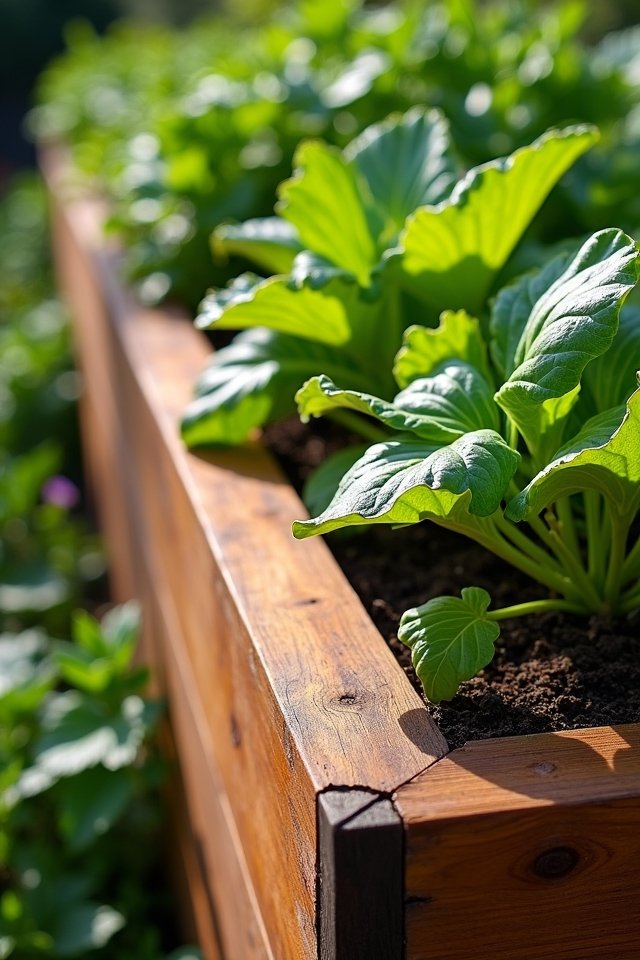
When it comes to building your raised beds, size and height really matter! You want your bed dimensions to be just right, allowing for easy access to your plants while maximizing their growth potential. Think about height adjustments! A taller bed can provide better drainage and keep pesky critters at bay. But wait, don’t make it too high; you don’t want to feel like you’re climbing Mount Everest every time you harvest! Aim for 12 to 24 inches, depending on what you’re planting. For instance, root vegetables love depth while herbs may not need as much. So, measure twice, build once, and create a stylish, functional oasis that makes gardening feel like a walk in the park! Happy planting!
Maintenance and Longevity of Raised Beds
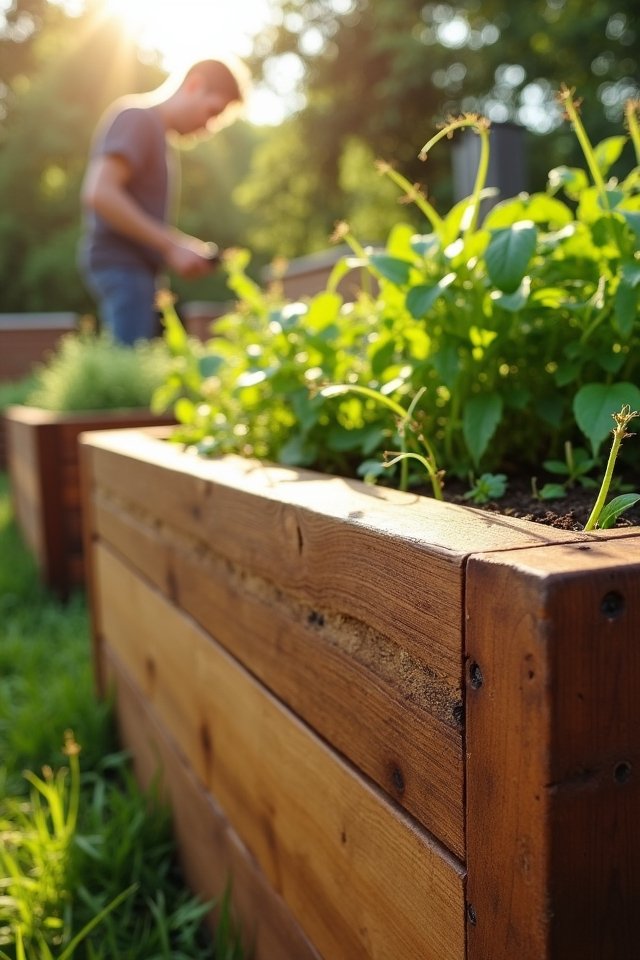
While you might be dreaming of lush veggies and vibrant blooms, keeping your raised beds in tip-top shape is just as important! Neglecting wood maintenance can lead to rotting and a shorter lifespan. Let’s keep those beds thriving for seasons to come! Here are some key longevity factors to reflect on:
- Regularly inspect for rot, cracks, or pests.
- Apply a non-toxic sealant to protect the wood.
- Rotate crops yearly to prevent soil depletion.
- Use a tarp or cover during harsh weather.
- Replace any damaged boards promptly.
Frequently Asked Questions
Can I Use Reclaimed Wood for Raised Beds?
Did you know that using reclaimed wood can reduce waste by up to 80%? That’s right! You can create beautiful raised beds while being eco-friendly. Reclaimed wood benefits your garden by adding character and history, plus it can save you money! Just make sure it’s free of harmful chemicals for reclaimed wood safety. Imagine growing veggies in a rustic masterpiece! So, go ahead—transform that old wood into a garden gem! Your plants will thank you!
How Does Wood Selection Affect Soil Temperature?
The wood you choose can really shake up your soil temperature! Different woods have varying thermal conductivity, which means some will keep your soil warmer or cooler. For instance, cedar offers great soil insulation, keeping those precious roots cozy during chilly nights! On the flip side, a denser wood might heat up faster, making your plants sweat. So, pick wisely—your plants are counting on you to keep their home just right!
What Is the Best Wood for Organic Gardening?
Did you know that untreated wood can last up to five years in your garden? For organic gardening, you’ll want to choose rot-resistant options like cedar or redwood. These durable woods not only look beautiful but also keep pests at bay, just like a knight guarding a castle! Plus, their natural oils help maintain a healthy environment for your plants. So, why not go for the best when growing your delicious veggies?
Are There Any Wood Alternatives for Raised Beds?
You’re in luck! There are fantastic wood alternatives for your raised beds that blend wood durability with cost effectiveness. Consider using composite materials, like recycled plastic, which look great and last for years without rotting! Or, try metal beds—think shiny corrugated steel! They’re sturdy and add a modern twist to your garden. Plus, they’re super easy to clean! So, why not get creative and make your garden a stunning masterpiece?
How Often Should I Replace My Raised Bed Wood?
You should replace your raised bed wood every 5 to 10 years, depending on its wood longevity and maintenance frequency. Imagine your garden as a cozy home for plants! If you notice rot or splintering, it’s time to act. Regularly inspect your beds, just like you’d check a beloved car. Fresh wood can rejuvenate your garden, making it feel alive again! After all, your plants deserve the best, don’t they? Keep it fresh!