Want to turn your tiny garden into a vibrant oasis? Companion planting is your secret weapon! Pair sweet basil with your tomatoes for a flavor explosion, while marigolds keep pesky bugs at bay! Imagine colorful zinnias dancing in the breeze, enchanting pollinators to boost your yields. Don’t forget those climbing beans—they’ll soar high, saving space below! It’s a plant party in your plot! Stick around to discover even more exciting combinations that’ll make your garden thrive!
Understanding Companion Planting Principles
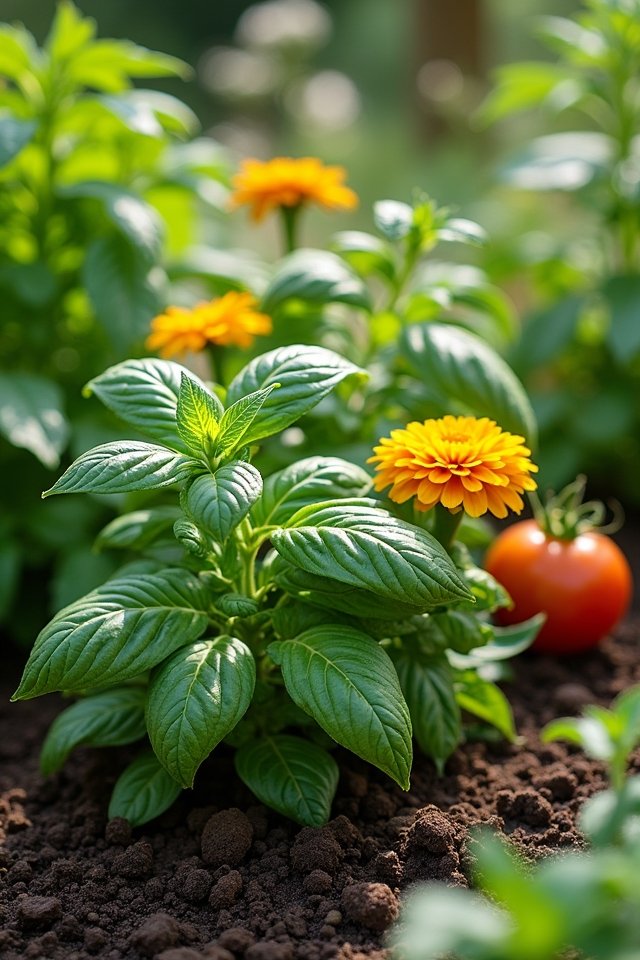
When you immerse yourself in the world of companion planting, you’ll discover a garden of possibilities that can make your small space flourish! Imagine the magic when tomatoes cuddle up with basil; their plant pairings not only maximize space but also enhance flavors. What’s that? A little lag in growth? No worries! By strategically placing marigolds alongside your veggies, you’ll deter those pesky pests. Think of it as a protective hug around your plants, boosting their health! Plus, certain flowers naturally attract pollinators, amplifying your growth benefits. Are you ready to mix and match? Immerse yourself in this garden party, and let your plants thrive together—after all, teamwork makes the dream work! You won’t believe how vibrant your garden can truly become!
Top Companion Plants for Small Gardens
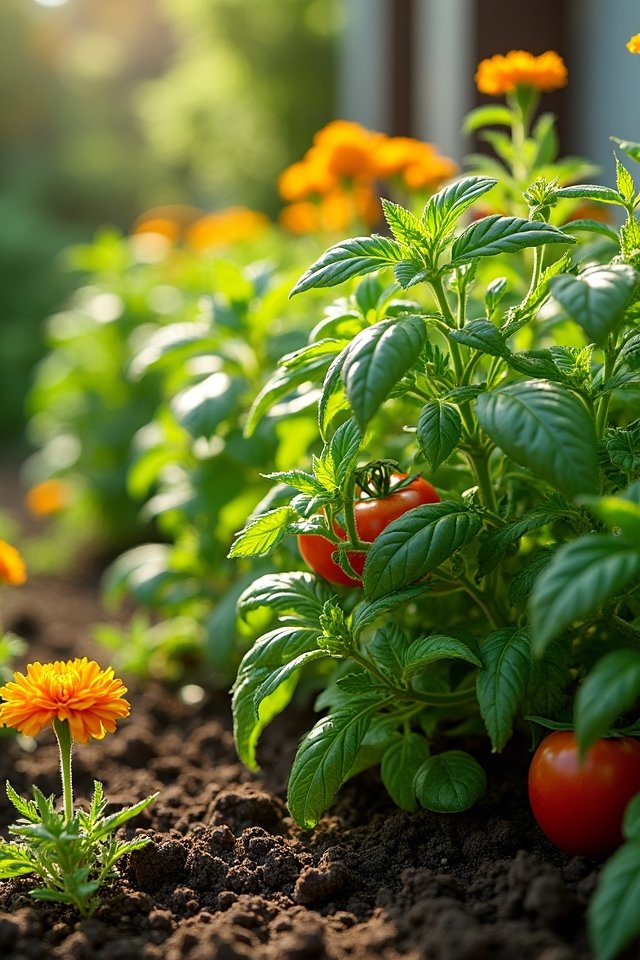
Even if you’ve got a small garden, you can still pack a punch with the right companion plants! Imagine vibrant marigolds dancing beside your tomatoes, keeping pesky pests at bay—what a duo! For delicious herb pairings, mix basil with your peppers; their flavors soar like a perfect duet. As for flower companions, think zinnias with your squash; they’ll attract pollinators while brightening up your space. Don’t shy away from unique blends, either! Consider planting lavender next to your rosemary for an aromatic extravaganza. Who wouldn’t want a garden that smells as good as it looks? Immerse yourself in these combinations and watch your small garden turn into a thriving paradise, bursting with color and life! Happy planting!
Enhancing Soil Health With Companion Combinations
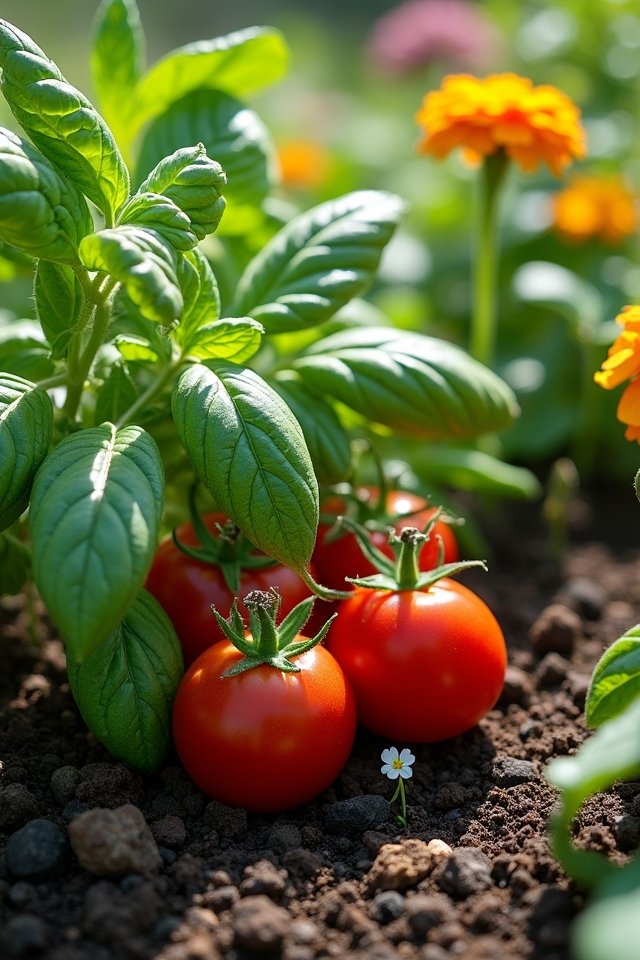
Just because your garden is small doesn’t mean it can’t be a powerhouse of soil health! By mixing certain plants, you can energize your soil microorganisms and jumpstart nutrient cycling. For instance, pair legumes like beans with leafy greens, as the beans fix nitrogen in the soil, giving those greens a nutrient boost! Imagine your garden as a bustling café, where plants serve each other delicious nutrients instead of coffee! This symbiotic relationship not only feeds your plants but also promotes a lively ecosystem below. Want an instant upgrade? Add herbs like basil alongside tomatoes; they enhance each other’s growth while encouraging beneficial microbes. Combine these tactics, and watch your little garden thrive into an innovative, nutrient-rich paradise!
Pest Management Through Companion Planting
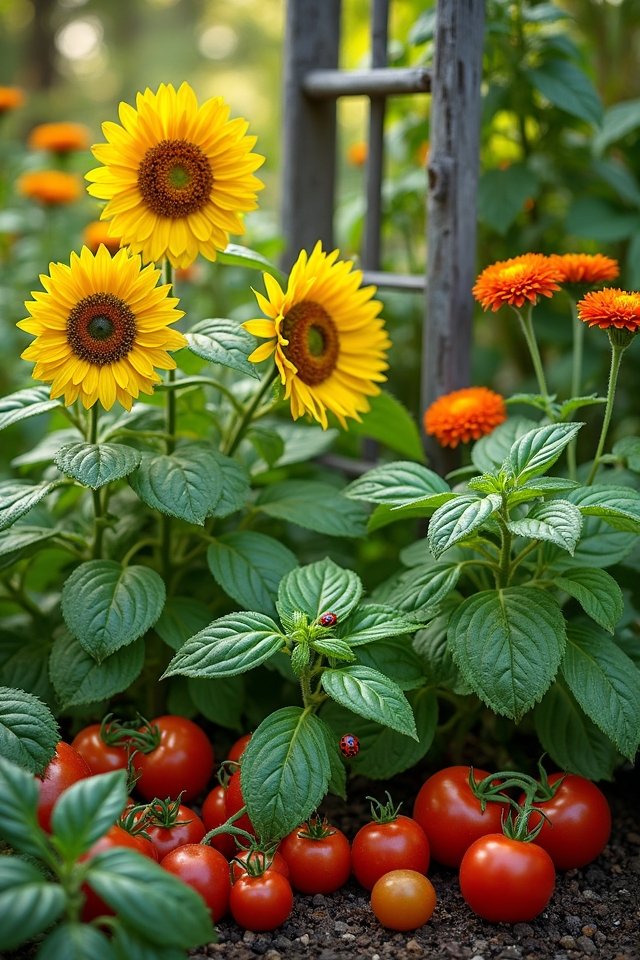
Mixing compatible plants can do wonders for your pesky pest problems! By strategically placing plants that act as pest deterrents, you not only protect your garden but also attract beneficial insects. Who knew that nature’s own little helpers could be just a few plants away?
Here are some fun combos to take into account:
- Marigolds paired with tomatoes to fend off nematodes and whiteflies.
- Basil alongside peppers to confuse and deter aphids!
- Nasturtiums mingling with cabbages to lure away those pesky cabbage worms.
These delightful pairings create a harmonious ecosystem in your garden, leaving pests scratching their heads while beneficial insects do the heavy lifting. So, let’s dig in and let nature’s innovations work their magic!
Maximizing Yield With Vertical Gardening Techniques
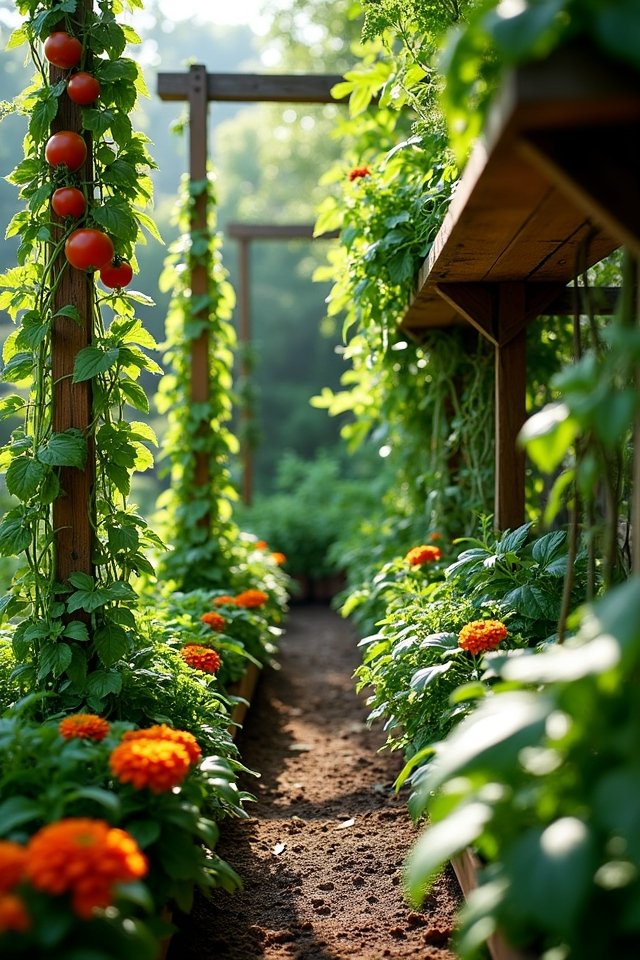
If you’ve ever wished for a magical way to grow more food in less space, vertical gardening is your answer! Imagine transforming your tiny garden into a lush, multi-layered paradise. By utilizing vertical space, you can fit more plants without cramming them together. Think of trellises, wall planters, and hanging pots that not only maximize yield but also enhance your garden aesthetics! Picture vibrant strawberries cascading down a wall or beans climbing enthusiastically towards the sky. It’s the ultimate win-win! You’ll enjoy fresh produce while creating an eye-catching display that even your neighbor will envy. Why not turn your little patch of earth into a vertical wonderland? Get ready to revolutionize your gardening experience with innovative techniques!
Seasonal Companion Planting Strategies
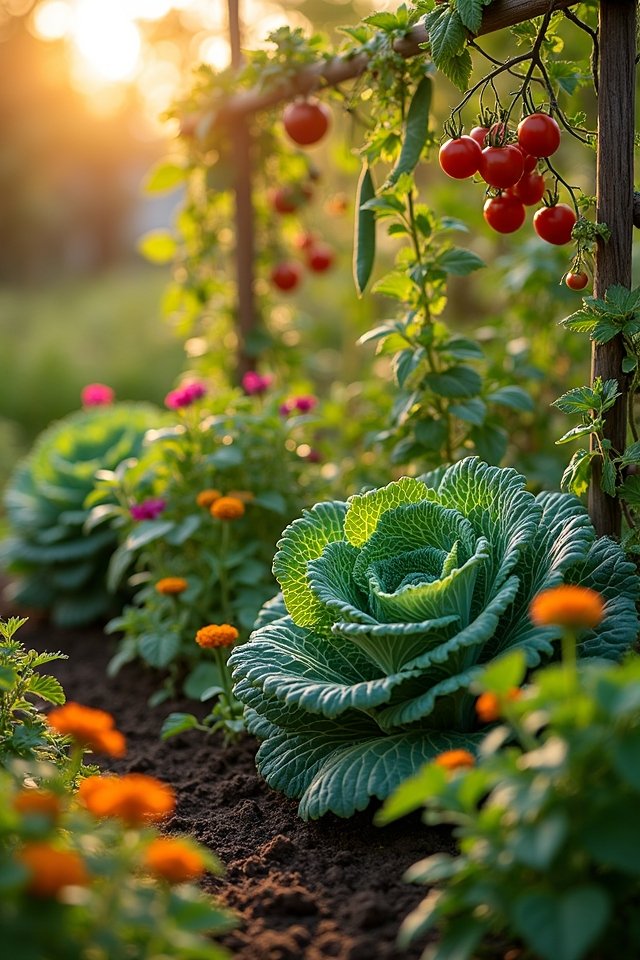
While you might think of planting as a solo sport, high-fiving a partner can work wonders in your garden! Seasonal companion planting strategies are your secret weapon. In spring planting, think vibrant marigolds paired with tomatoes to keep pests at bay. For fall planting, cozy up your carrots with onions; they deter each other’s foes!
- Basil and peppers: A sizzling combo that enhances flavor.
- Nasturtiums: They attract aphids while your veggies thrive!
- Cabbage with dill: An aromatic duo that confuses cabbage moths.
Using these savvy pairings not only maximizes space but also boosts your yields. Each season brings new chances for growth—so why not make it a team effort? Your garden’s about to shine!
Frequently Asked Questions
How Do I Choose Plants That Actually Pair Well Together?
Choosing plants that pair well together is like matchmaking for your garden! First, check their plant compatibility—some thrive together while others can’t stand each other. For instance, tomatoes love basil, but beware of planting them near corn. Next, consider soil preferences; some plants crave rich, loamy earth, while others are happy in sandy soil. Trust your instincts—observe, experiment, and you’ll discover your own unique garden symphony! It’s all about the right blend for harmony!
Can Companion Planting Be Done With Flowers Too?
Absolutely, you can use companion planting with flowers! Picture vibrant marigolds nestled beside your tomatoes, warding off pesky bugs while attracting delightful pollinators. Think about the cheerful daisies enhancing the beauty of your beans, creating a feast for the eyes and bees alike! It’s like throwing a party in your garden, where every bloom brings a friend. So, why not get creative? Mix those colors, and watch your plants thrive together! 🌼
What Are the Signs of Poor Companion Plant Relationships?
You’ll spot poor companion plant relationships when leaves droop and colors fade. That’s your plants showing signs of stress! Maybe they’re battling over nutrients or sunlight—like two kids fighting for the last cookie. You might also see stunted growth or pests taking over—real trouble! Keep an eye out for these stressors and watch your plants thrive instead of compete! Let your garden become a harmonious paradise, not a chaotic battleground!
How Does Companion Planting Affect the Harvesting Schedule?
Companion planting can seriously jazz up your harvest timing! When you pair crops wisely, you can stagger your harvests like a well-choreographed dance. For instance, planting radishes with carrots allows radishes to mature first, leaving room for newly sprouted carrots. Plus, crop rotation keeps your garden fresh and productive! Why not mix those secrets for a bountiful garden full of flavor and color? Happy planting; your taste buds will thank you!
Are There Any Plants That Should Never Be Grown Together?
Some plants just don’t play nice together. Think of tomatoes and potatoes; they’re like those annoying neighbors who never get along! These incompatible pairs can lead to disease and poor growth. Likewise, avoid pairing onions with beans—they’ll just cramp each other’s style! Keeping harmful neighbors apart allows your garden to thrive, bursting with vibrant colors and tasty flavors! So, when planning, consider who’s vibing and who’s just not!