Want to turn your raised beds into a garden wonderland? Start by pairing tomatoes with fragrant basil—it’s like a spaghetti dream team! Don’t forget carrots and onions, they protect each other from pests, kind of like best buddies. And herbs? Try planting mint and oregano together for a delightful aroma. Keep your plants cozy, but don’t crowd them. Curious about more fantastic combos? There’s a whole world to explore that’ll have your garden buzzing with life!
Understanding Companion Planting Principles
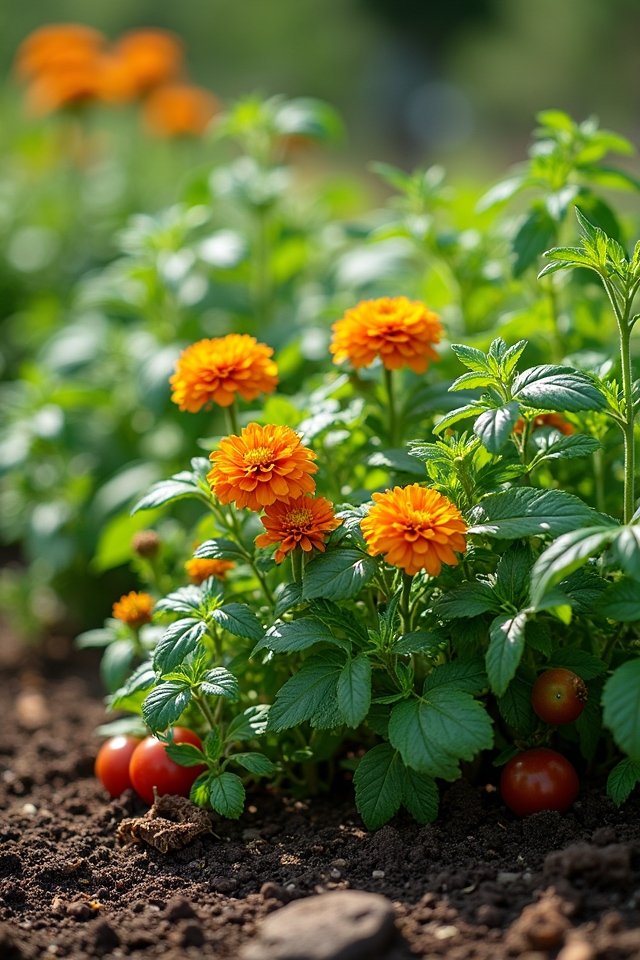
When you plunge into the world of companion planting, you’ll discover a magical dance between plants that can elevate your garden to new heights! Envision this: plants teaming up like best friends, enhancing each other’s growth through clever plant interactions. Some plants naturally repel pests, while others attract beneficial insects—it’s like a secret garden club! You’ll also boost soil health by choosing companions that improve nutrient uptake, making your dirt rich and thriving. For instance, pairing nitrogen-fixing legumes with leafy greens can create a nutrient powerhouse underground! Imagine your veggies flourishing and your garden buzzing with life! So, grab your gardening gloves and get ready to experiment—who knew your plants could be such great buddies? Let’s innovate our way to a stunning garden!
Best Companion Plants for Vegetables
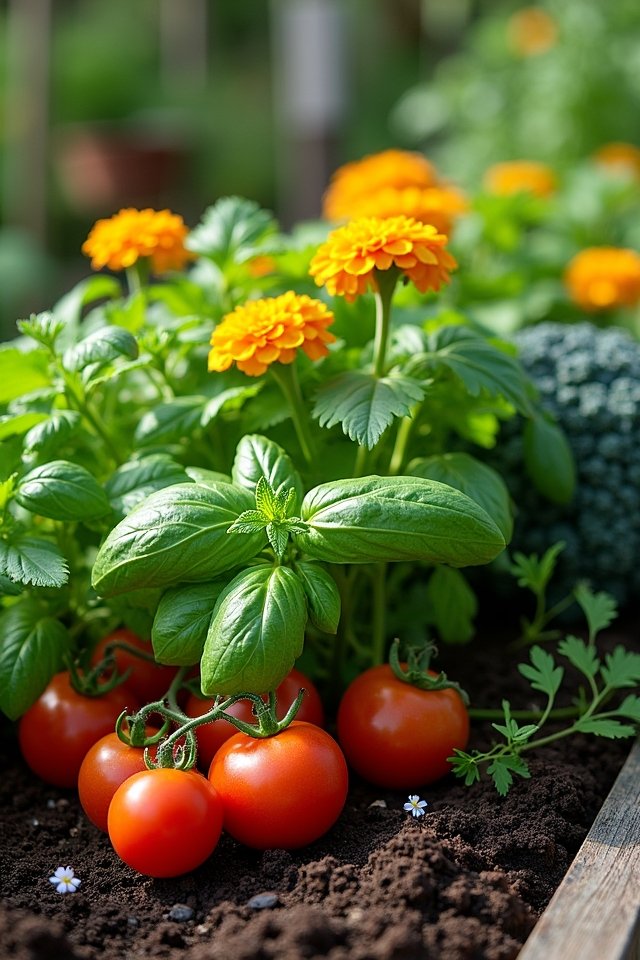
As you plunge into the delightful world of companion planting, you’ll find that choosing the right buddies for your veggies can turn your garden into a vibrant masterpiece! Visualize this: your luscious tomatoes thrive alongside aromatic basil, creating a match made in culinary heaven. Basil not only enhances the tomato’s flavor but can also help repel pesky pests. Now, let’s not forget the dynamic duo of carrots and onions! When planted together, they create a symphony of flavors while warding off each other’s enemies. Imagine pulling fresh, sweet carrots from the earth, with the scent of onions wafting through the air! So, why settle for ordinary when you can create extraordinary? Incorporate these pairings for a flourishing garden!
Herbs That Thrive Together in Raised Beds
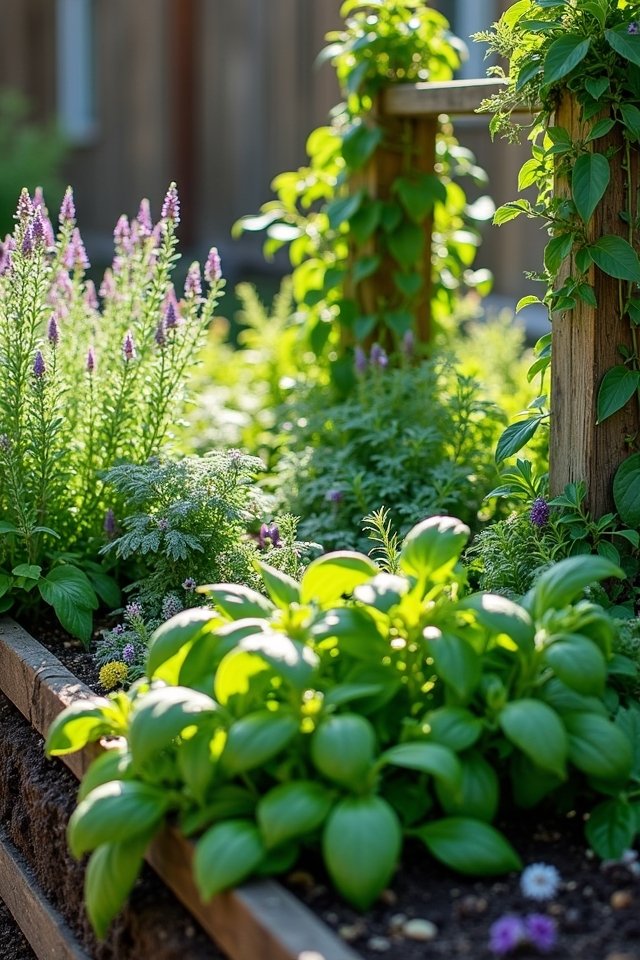
If you think herbs are just for seasoning, think again! Imagine a raised bed bursting with flavors, where basil and chives hold hands, creating a culinary dream team. These herbs not only complement each other, but they also thrive together! Basil’s sweet aroma mingles with chives’ mild oniony scent, making your garden a fragrant oasis.
Now, toss in some mint and oregano, and you’ve got a herb fiesta! Mint spreads joy like confetti, while oregano adds a robust kick. Just remember, mint can be a bit bossy—give it its own corner! So, plant these herbs together, let them dance in the sun, and watch your culinary creations transform into something extraordinary! Who knew gardening could be this delicious?
Flowers That Attract Beneficial Insects
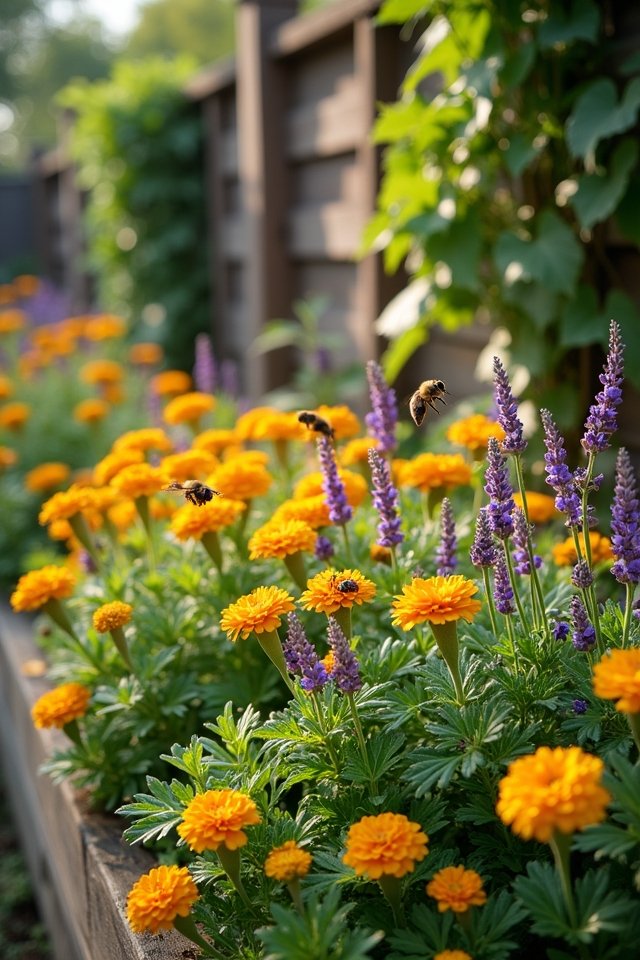
While you’re busy creating a lush garden in your raised beds, don’t forget that flowers can be your secret weapon for attracting beneficial insects! Imagine a vibrant patch of pollinator friendly flowers like sunflowers and marigolds, dancing in the breeze, beckoning bees and butterflies to your garden. These beauties not only enhance your space but also act as natural pest repellents. By inviting ladybugs and lacewings, you’ll have tiny warriors battling aphids for you! Plus, planting cosmos or zinnias adds pops of color and charm, making your garden an irresistible oasis. So, why not sprinkle these floral gems throughout your beds? You’ll create a buzzing paradise, brimming with life and productivity—who wouldn’t want that? Happy planting!
Strategies for Maximizing Space in Raised Beds
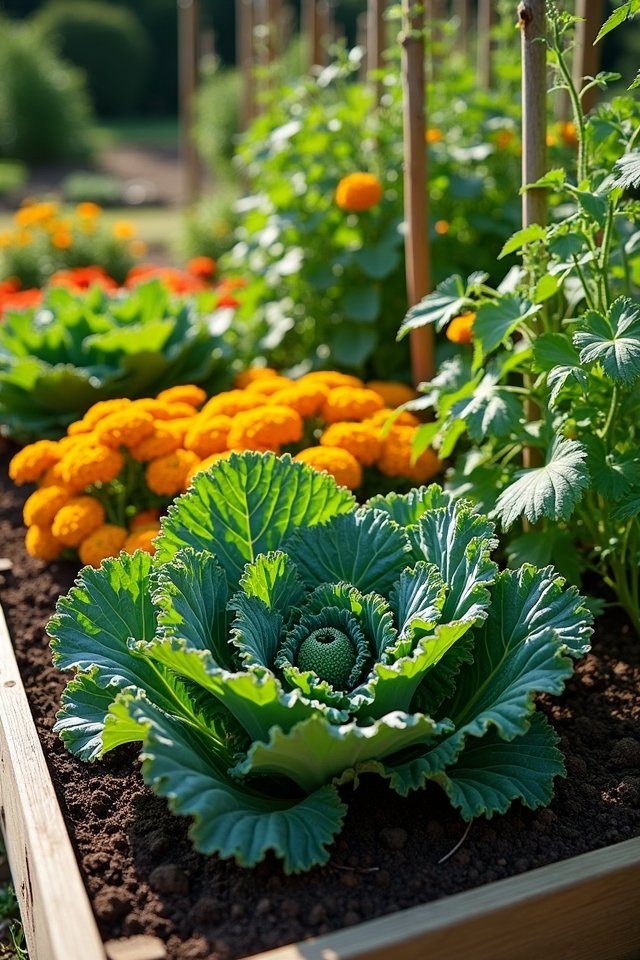
Creating a vibrant garden is like piecing together a beautiful puzzle, and your raised beds are the perfect canvas! To maximize your space, think vertically and adopt intensive planting. Why not let your garden reach for the sky while packing in those delicious veggies?
Here are some fun strategies to try:
- Trellises and arches: They’re not just pretty; they can support climbing plants like beans and cucumbers!
- Succession planting: Plant fast-growing crops, like radishes, alongside slower ones, ensuring every inch is filled.
- Companion pairings: Mix plants that thrive together, like tomatoes with basil, maximizing both space and flavor!
With these innovative ideas, you’ll transform your raised beds into a lush, productive paradise! Isn’t gardening just the best?
Common Mistakes to Avoid in Companion Planting
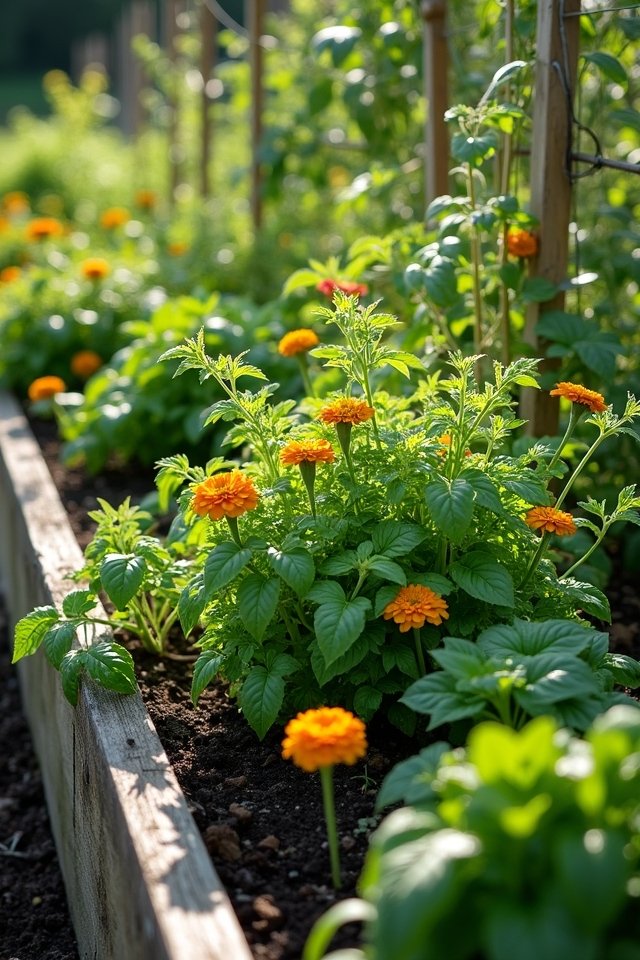
When you immerse yourself in the world of companion planting, it’s easy to make a few blunders that could turn your garden dreams into a tangled mess! One major pitfall is ignoring plant compatibility. Just because they look good together doesn’t mean they’ll thrive! For instance, pairing basil with tomatoes works wonders, while planting it with rue? Not so much!
Another common misconception is spacing. Crowding plants can lead to a battle for nutrients, leaving your greens feeling starved. Remember, it’s not just about mixing; it’s about harmony!
Lastly, don’t forget the seasons! Some plants love the sun, while others prefer shade. So, plan wisely! Avoid these mistakes, and you’ll cultivate a flourishing, vibrant raised bed garden!
Frequently Asked Questions
Can Companion Planting Reduce the Need for Chemical Fertilizers?
Can companion planting really cut down your need for chemical fertilizers? Absolutely! By promoting nutrient cycling, your plants share their goodies like friends at a potluck. Plus, some plants act as pest deterrents, keeping harmful critters at bay. For example, marigolds can protect your tomatoes, letting them thrive without extra chemicals. Imagine your garden flourishing naturally, like a vibrant symphony of colors, scents, and tastes—who wouldn’t want that? Immerse yourself in this eco-friendly adventure!
How Do I Know if Plants Are Compatible for Companionship?
To figure out if your plants are compatible, look at their characteristics and growth habits! For instance, try pairing tall sunflowers with low-growing basil. The sunflowers provide shade while basil thrives below. Isn’t that a match made in garden heaven? Also, consider their watering needs—cacti and ferns? Not a good combo! By observing how plants interact, you’ll create a vibrant ecosystem that sings with life and color! Happy planting!
What Is the Best Time to Plant Companion Plants?
You’ll want to plant your companion plants during spring planting for a vibrant garden! As the earth warms, it’s like a cozy invitation for your plants to thrive together. Fall planting can also work, especially for cold-weather buddies like kale and garlic. Just imagine the delicious flavors mingling in your meals! Remember, timing’s everything—like a well-timed joke that gets everyone laughing! So, check those local frost dates and get excited!
How Can I Amend Soil for Companion Planting Success?
To amend your soil for companion planting success, think of it as giving your garden a delicious feast! You’ll want to boost those soil nutrients with organic amendments like compost or well-rotted manure. Mixing in some bone meal can really pump up phosphorus levels, while adding kelp meal provides essential trace minerals. Just imagine your plants dancing with joy as they thrive! So, roll up those sleeves and start mixing for a vibrant, healthy garden!
Do Companion Plants Need the Same Watering Requirements?
Ever noticed how some plants seem to thrive together while others wilt? It’s essential to match watering techniques for companion plants! If one plant craves hydration while another prefers to dry out, you’re in for a gardening drama. For example, tomatoes love moisture, while lavender enjoys a drier spell. Keep an eye on plant hydration needs, and you’ll create a thriving oasis that sings with life! Isn’t that the dream?