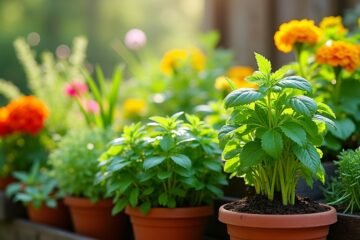
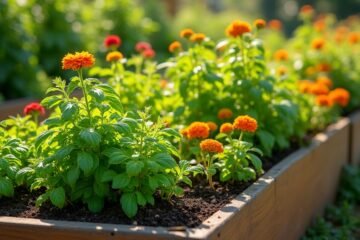
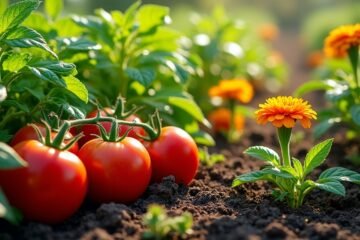
Want to maximize your small garden? Start with companion planting! Pair tomatoes with basil to fend off pests while corn supports climbing beans—what a dynamic duo! Use trellises to grow cucumbers sky-high and creative hanging baskets for herbs. Don’t forget those edible flowers like nasturtiums, adding color and flavor! By grouping sun and shade lovers together, your garden will be thriving. And when you practice succession planting, you’ll create a continuous harvest that keeps giving! Curious for more fun tips?
Choose the Right Plant Pairings
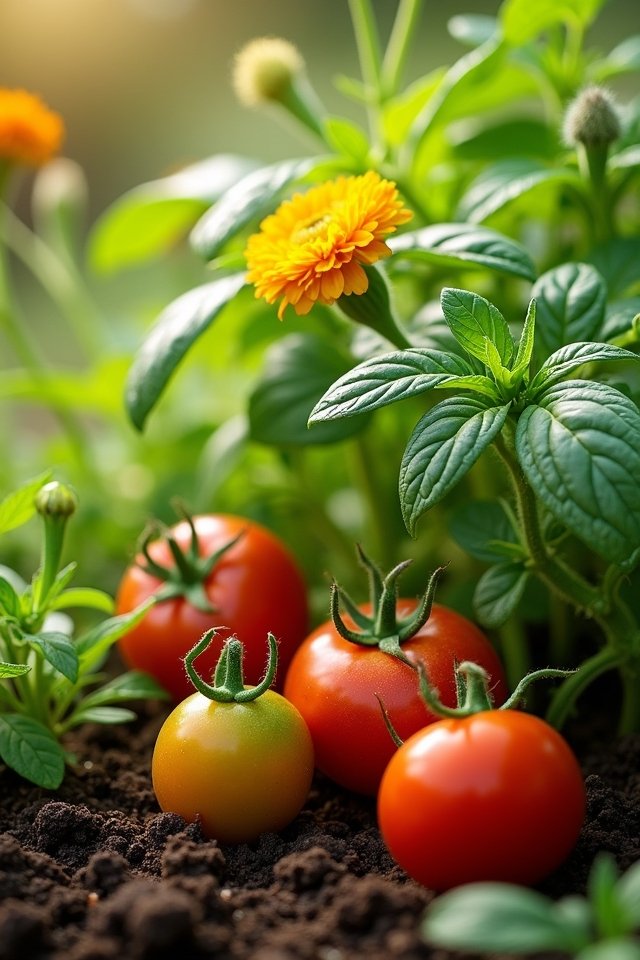
When you explore companion planting, it’s essential to choose the right plant pairings; after all, you wouldn’t mix hot sauce with chocolate, right? Imagine your tomatoes thriving alongside basil—those fragrant leaves not only elevate flavors but also fend off pesky pests! Or picture corn standing tall, with climbing beans weaving around its stalks like a natural trellis. Isn’t that a delicious visual? Pairing marigolds with almost anything adds cheerful bursts of color while repelling harmful insects. You need creativity here! Think outside the box, like matching carrots with onions—these buddies enhance each other’s growth while creating a savory garden friendship. So, adopt plant pairings that complement one another, and watch your small garden flourish like never before! Isn’t that exciting?
Maximize Vertical Space
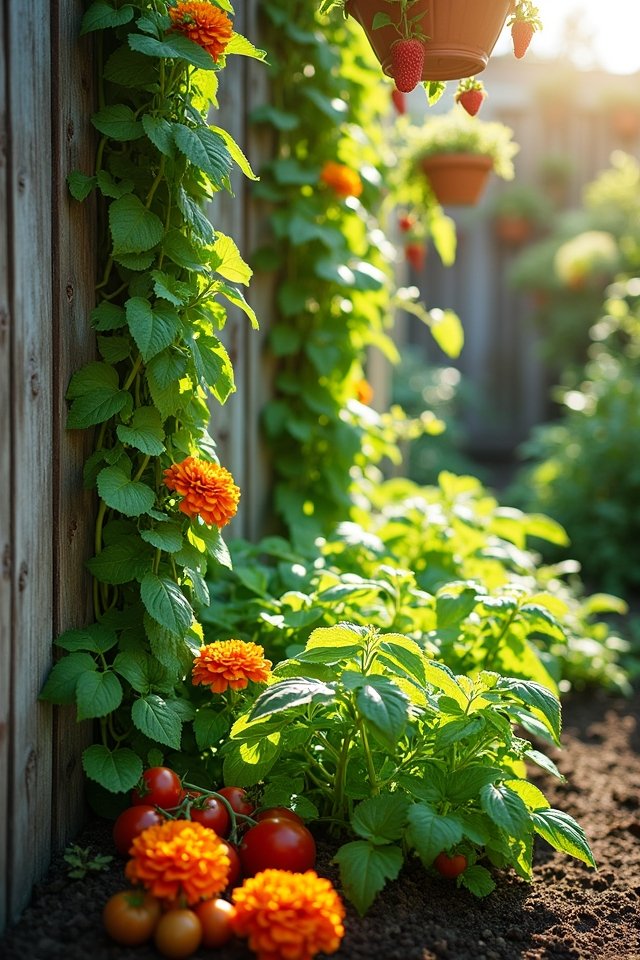
Why let your small garden feel cramped and cluttered when you can reach for the sky? Vertical gardening isn’t just practical; it’s like releasing a green rocket! Try using trellises or hanging baskets to create a lush tapestry of plants. Imagine cucumbers climbing high, their tendrils twisting around sturdy supports—like nature’s acrobats.
You can also use wall-mounted pockets to grow herbs or strawberries. They’ll dangle like gems, bursting with color and flavor! And don’t overlook repurposing an old ladder to showcase your beautiful blooms; it’s quirky and functional! So, maximize your vertical space! It’ll transform your garden into a vibrant, delightful haven that’s as fresh as spring itself! Don’t just plant—elevate your gardening game!
Utilize Edible Flowers
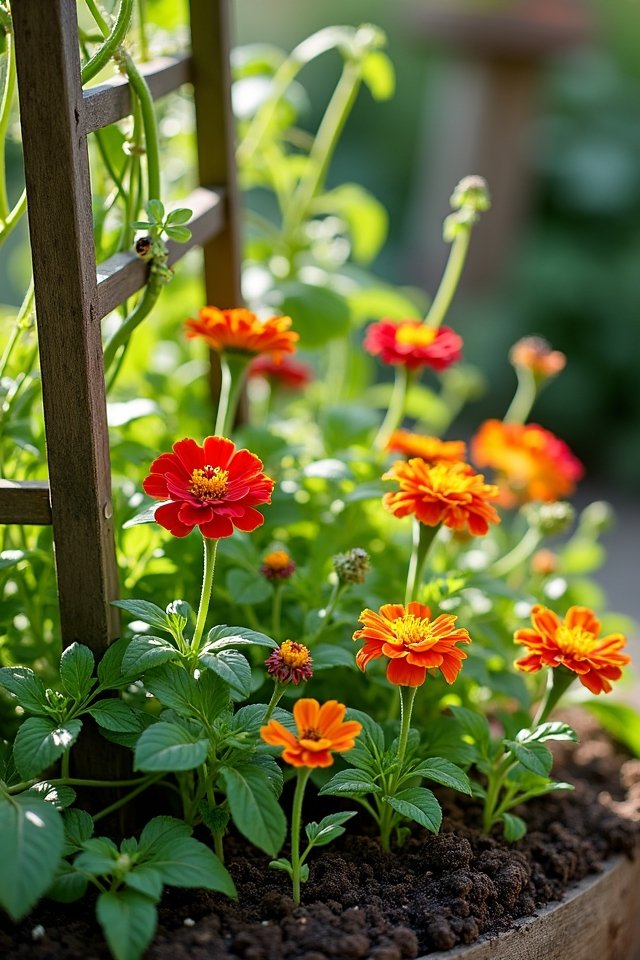
Ready to add a splash of color and flavor to your garden? Edible flowers are your ticket! Imagine picking vibrant nasturtiums, their peppery zing igniting your salads, or delicate pansies adding whimsy to your desserts. These beauties don’t just look good; they attract pollinators too! Picture your garden buzzing with life.
Lavender is a stunning choice, infusing dishes with a calming fragrance, while calendula petals can brighten even the dullest meals. Let’s not forget zesty marigolds, which help deter pests—talk about a double win! So, go ahead and sprinkle some edible blooms among your vegetables. Who knew beauty could be so delicious? Your taste buds and your garden will thank you for this delightful twist!
Implement Succession Planting

Imagine savoring fresh produce from your garden all season long! Succession planting is your secret weapon for a bountiful harvest. Instead of letting your garden sit empty, plant new crops as soon as you harvest the old. For example, after picking ripe radishes, don’t just stare at the soil—sow in some quick-growing lettuce! You’ll double your bounty and keep those tasty flavors coming.
Want to push the limits of your garden? Try interplanting varieties with different growth rates. Picture your sweet peas climbing while you pluck juicy cherry tomatoes below. It’s a dance of growth and flavor! So, get ready to thrill your taste buds, because with succession planting, every season’s a celebration of your innovative green thumb!
Incorporate Herbs for Pest Control
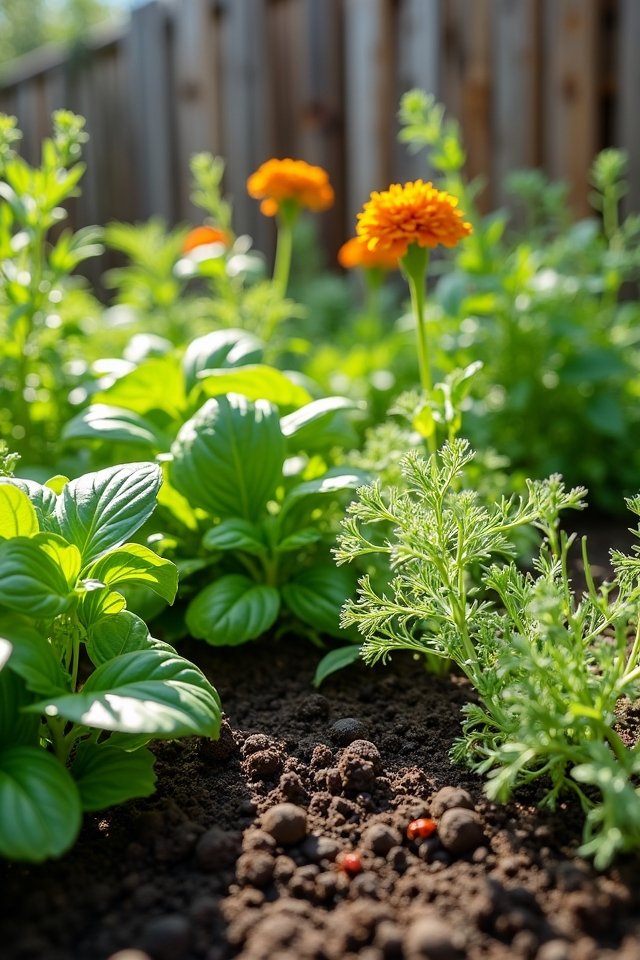
When you dig into your herb garden, you’ll discover a vibrant world of pest-fighting power! Imagine the aromatic scent of basil mingling with the savory kick of oregano, weaving a protective spell around your veggies. Planting herbs like mint or rosemary can send insects packing faster than a cat in a room full of cucumbers! Have you ever thought about a marigold-mint alliance? This combo not only smells divine, but also repels nasty pests like aphids and ants. And don’t forget about dill—it’s a tasty herb that attracts beneficial insects like ladybugs. With these green warriors, you’ll transform your small garden into a thriving oasis of flavor and innovation, while the bugs are left scratching their heads in confusion!
Group Plants With Similar Needs
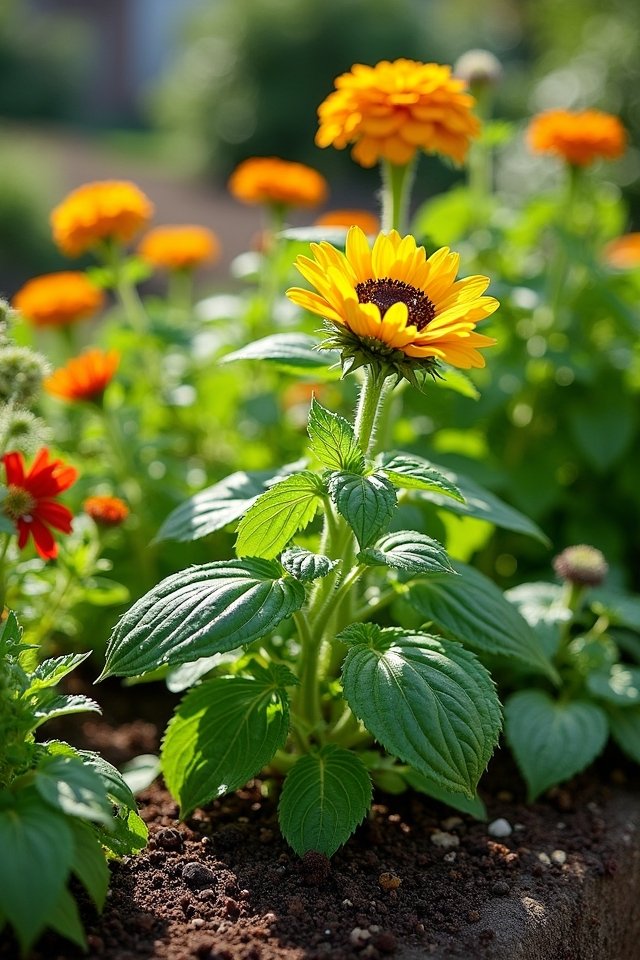
Grouping plants with similar needs can make your small garden thrive like a well-conducted orchestra! Imagine creating a harmonious space where sun-lovers like tomatoes and peppers bask together in bright, cheerful sunlight. Meanwhile, shade-loving herbs, such as thyme and mint, can find their cozy nook tucked beneath leafy greens like spinach—perfect harmony!
Now, think about water requirements: Why not pair thirsty cucumbers with equally parched zucchini? They’ll toast under the sun, keeping each other hydrated! And don’t forget nutrients! Heavy feeders, such as corn, can team up with legumes, which fix nitrogen in the soil. This symbiotic relationship keeps your garden buzzing with life. So, why go solo when you can plant a thriving community? Your garden will adore you for it!
Rotate Crops for Soil Health

While it might seem tempting to plant the same vegetables year after year, you’d be surprised at how much your soil loves a little variety—think of it as a rejuvenating menu change! When you rotate crops, you’re not just mixing up your garden’s look; you’re also giving the soil the nutrients it craves. For instance, after growing nutrient-hungry tomatoes, plant legumes like beans! They’ll replenish the soil with nitrogen, making it rich and ready for your next planting season. This dance of crops prevents pests and diseases, like a clever game of hide-and-seek. So, shake things up! Try kale one year, then peppers the next, and watch your little garden thrive in remarkable ways!
Frequently Asked Questions
How Do I Choose Plants Based on Their Growth Rates?
Choosing plants based on their growth rates can feel like picking your favorite dessert! You want a delightful mix, right? Fast-growing varieties, like radishes, can be paired with slow-growing gems like carrots, making your garden burst with life. Just watch out—don’t let the slowpokes get overshadowed! Their cozy, leafy canopies offer shade and protection. So, blend them wisely, and turn your garden into a lively, flourishing masterpiece that’s simply irresistible!
Can Companion Planting Improve Flavor in My Vegetables?
Absolutely, companion planting can jazz up the flavor of your veggies! Envision this: basil cozied up next to tomatoes, enhancing their sweetness like sunshine on a summer day. When you plant garlic near greens, you’re not just warding off pests; you’re also boosting their earthy richness! It’s like creating a secret ingredient list—who wouldn’t want tastier harvests? Immerse yourself in this delicious duo dance, and your taste buds will thank you with every bite!
Are There Plant Pairings That Attract Beneficial Insects?
Did you know that planting marigolds alongside vegetables can increase beneficial insect activity by up to 50%? That’s right! These vibrant blooms attract ladybugs and lacewings, nature’s tiny pest controllers, like a magnet. Pairing them with tomatoes, for instance, not only brightens your garden but also keeps pesky aphids at bay! So, next time you garden, think of marigolds as your floral bodyguards, ensuring your veggies thrive and taste amazing! Isn’t that fantastic?
What Common Mistakes Should I Avoid in Companion Planting?
When it comes to companion planting, avoid the all-too-common mistake of overcrowding! Just picture a jigsaw puzzle crammed into a shoebox—it doesn’t work, right? You’ll also want to steer clear of planting incompatible plants, like tomatoes and potatoes. They’d rather not hang out! Finally, don’t ignore the soil! Healthy soil is like a spa day for your plants! They’ll thrive, grow stronger, and might even throw you a thank-you party!🌱🎉
How Can I Create a Companion Planting Schedule for My Garden?
Creating a companion planting schedule? You’re in for a wild, colorful ride! Start by listing your plants, and pair them like peanut butter and jelly—tomatoes love basil! Next, chart planting dates like a culinary Picasso, weaving in growth times and harvests. Keep things exciting by applying seasonality; mix early blooms with late finishes! Remember, gardening’s like a dance; don’t just follow the rhythm—make your own crazy, beautiful beat!