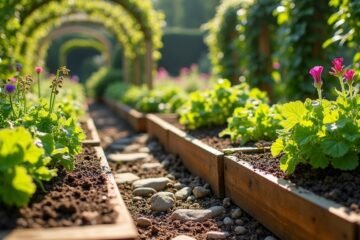
Building raised bed gardens is a fun way to create a plant paradise! Start by picking a sunny spot with good drainage—think of it as your plants’ comfy home. Use rot-resistant wood or chic metal for materials. Aim for the perfect height, around 24 to 36 inches, so you don’t break your back! Prepare that soil like a pizza chef, mixing in compost for a rich feast. Keep your green friends happy, and there’s more to discover!
Choose the Right Location
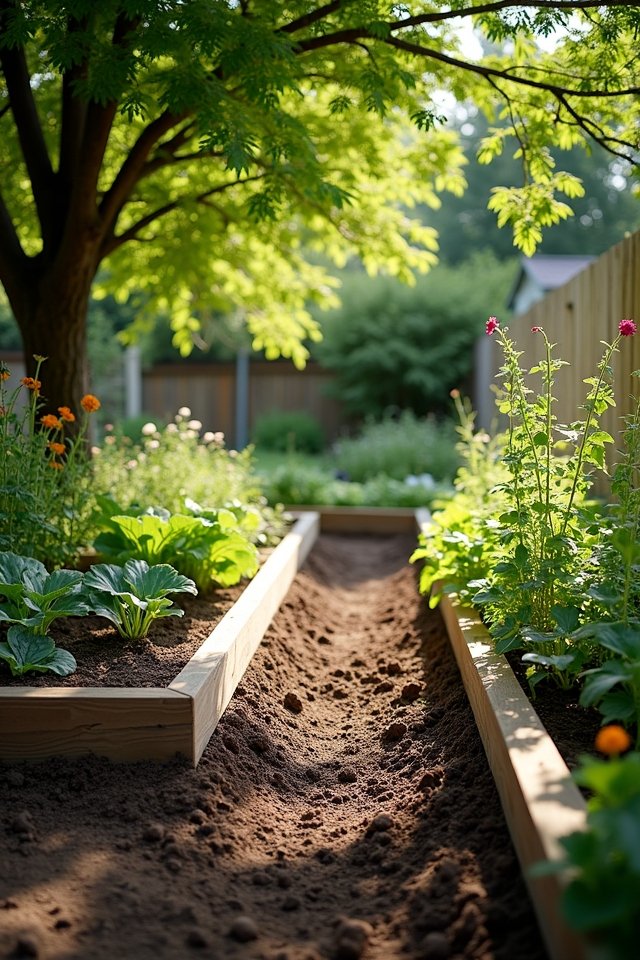
Choosing the right location for your raised bed garden is like picking the perfect spot for a picnic—sunshine, fresh air, and a little bit of space to stretch out! You’ll want at least six hours of sunlight exposure daily, so scout out areas where sunlight dances joyfully. Think about those pesky winds, too! A cozy corner sheltered by trees or a fence can offer wind protection, keeping your plants happy and thriving. Picture your seedlings soaking up the sun while swaying gently, not battling gusty breezes. An innovative spot with good drainage makes a world of difference—no one likes soggy roots! So, take a stroll around your yard and find that ideal haven for your green dream! Happy gardening!
Select Suitable Materials
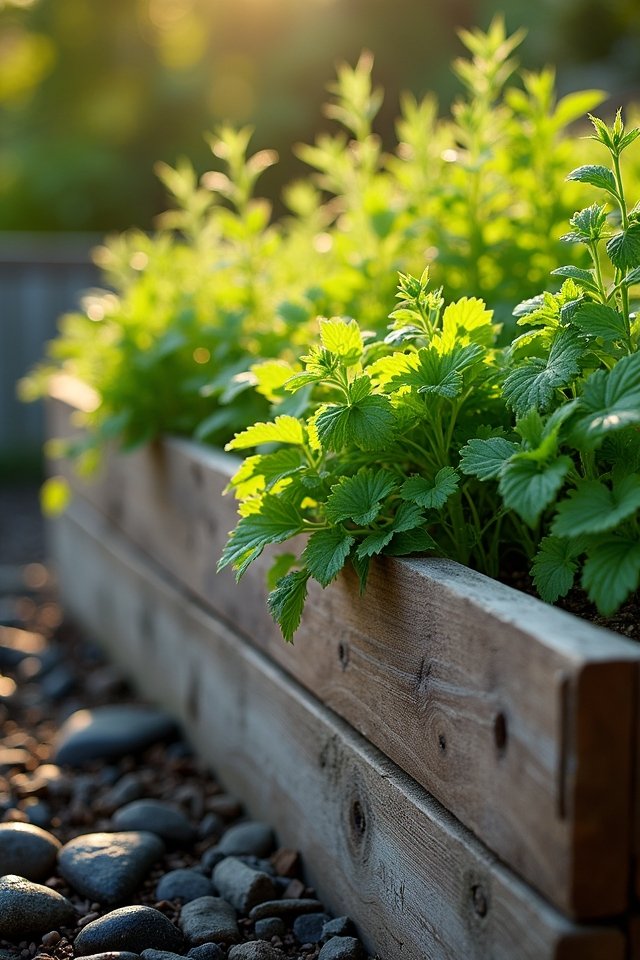
When it comes to selecting suitable materials for your raised bed garden, you’ve got a world of options at your fingertips! Think about the charm of wood options, like cedar or redwood, which not only look great but also naturally resist rot. Imagine the warm, earthy scent while you dig your hands into the soil! But don’t overlook metal alternatives, such as galvanized steel or corten, for a sleek, modern touch. They’re durable and can create a fantastic contrast with vibrant greenery! Just picture those shiny edges gleaming in the sunlight! So, whether you’re leaning towards rustic vibes or contemporary chic, let your creativity flow and choose materials that inspire you. Your garden deserves it! Happy building!
Determine the Ideal Size and Height
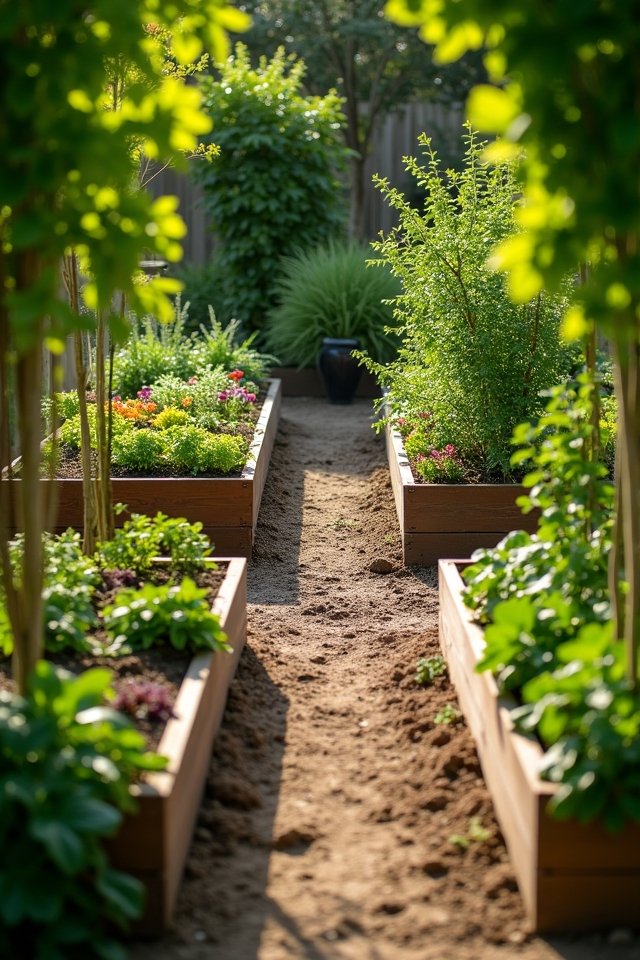
After selecting the perfect materials for your raised bed garden, it’s time to think about size and height—because who wants to bend over like a pretzel while gardening? For a comfortable experience, aim for a height of 24 to 36 inches, which keeps your back happy and your plants thriving. Consider size variations too! A 4×8-foot bed offers ample space for a colorful mix of veggies, while a cozy 3×3-foot option fits snugly in smaller yards. Don’t forget, your height considerations might change based on what you want to grow. Taller plants may need more elevation, while herbs love to be closer to the ground. So, get creative, and design a garden that makes you smile! Happy gardening!
Prepare the Soil Properly
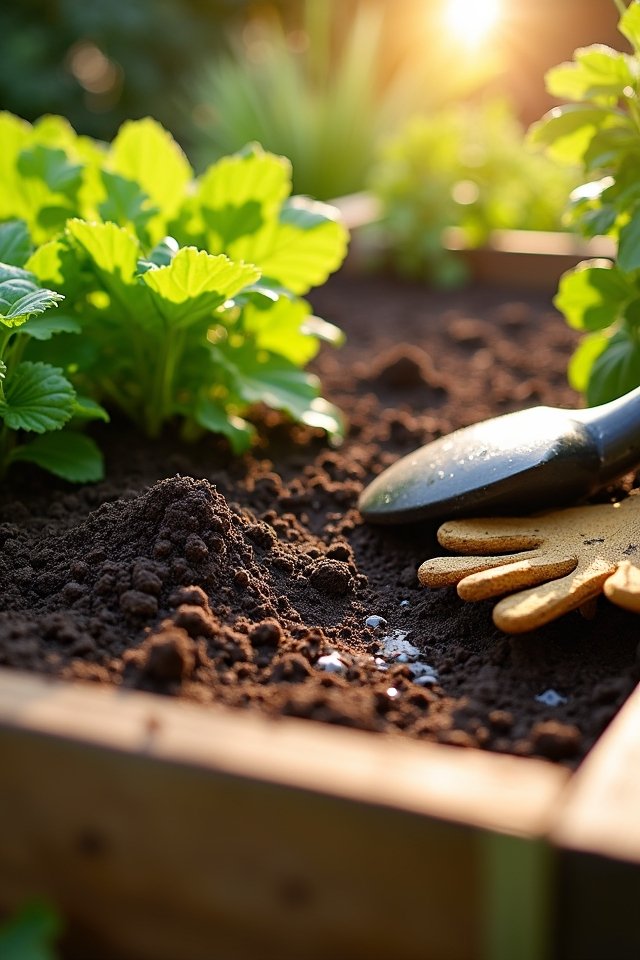
Before you plunge into planting, let’s talk about the soil, which is basically your garden’s best friend! Think of it as the cozy blanket your plants need to thrive. First, you’ll want to conduct pH testing to guarantee your soil’s acidity level is just right. Most plants love a slightly acidic range of 6.0 to 7.0. Next, sprinkle in some soil amendments like compost or aged manure, which act like a magical booster shot for nutrients! Mix it all together, and you’ll create a rich, fluffy environment where roots can dance and grow. Remember, happy soil equals happy plants! So roll up your sleeves and get ready to pamper that earth! Your future garden will thank you!
Incorporate Drainage Solutions
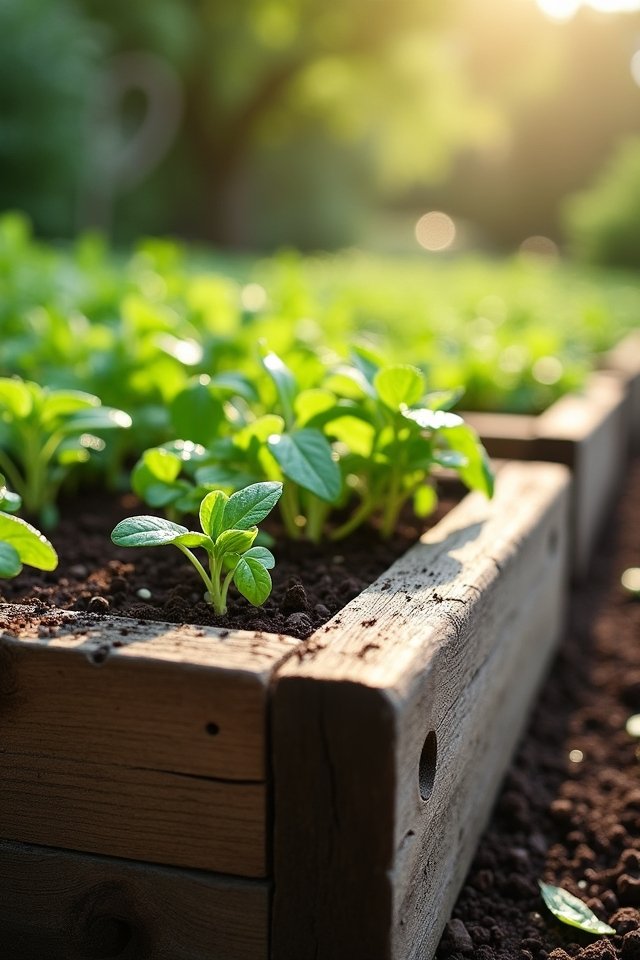
Now that you’ve got your soil prepped and ready to go, it’s time to think about how well that soil will handle water. You don’t want your plants swimming in soggy soil, right? Incorporating smart drainage techniques is essential for effective water management! Consider adding a layer of gravel at the bottom of your raised bed—think of it as your garden’s very own superhero cape, saving your plants from drowning. You might also install drainage pipes or perforated tubes to whisk away excess water. And don’t forget about mulch! It acts like a cozy blanket, helping retain moisture while allowing excess water to escape. With these innovative solutions, your plants will thrive, and your garden will shine!
Plan for Plant Spacing and Companion Planting
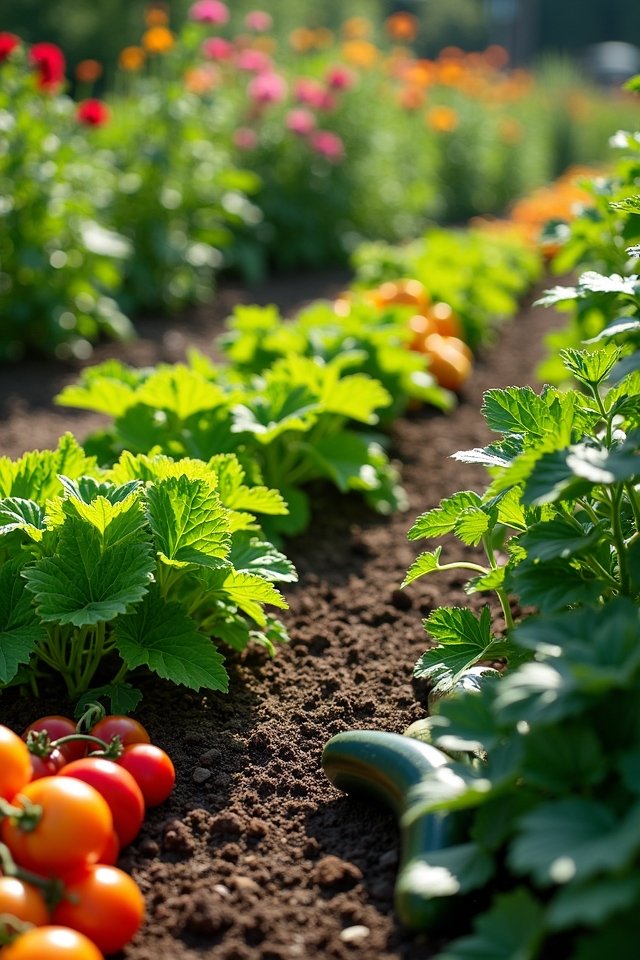
When you’re planning your raised bed garden, think of it like a cozy dinner party where everyone needs their own space and the right company! You wouldn’t cram everyone at one end of the table, right? Space your plants wisely—tomatoes thrive with basil, while carrots love sharing space with onions. This friendly arrangement keeps pests at bay and attracts beneficial insects like ladybugs, turning your garden into a vibrant ecosystem! Plus, don’t forget about crop rotation; switching up your plants each season prevents nutrient depletion and reduces pesky diseases. So, plan your layout carefully, and your garden will flourish like a gourmet feast, with each plant playing its perfect part! Get ready to enjoy the bountiful harvest!
Maintain Your Raised Bed Garden
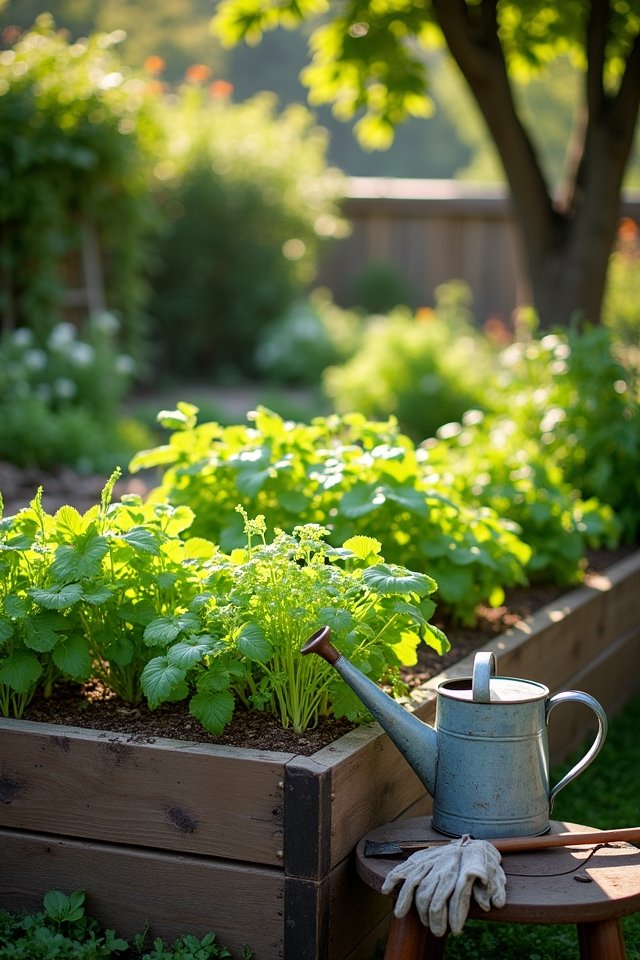
Your garden’s not just a pretty face; it needs a little TLC to keep that vibrant ecosystem thriving! Immerse yourself in seasonal maintenance like a pro—mulch those beds to retain moisture and keep pesky weeds at bay. Speaking of pests, adopt innovative pest management techniques! Try introducing beneficial insects, like ladybugs, or using organic repellents made from garlic or neem oil. Don’t forget to inspect your plants regularly; a little early intervention can save a whole crop! And remember, rotating your crops each season isn’t just smart; it’s like giving your soil a rejuvenating spa day! With these simple steps, your raised bed garden will flourish, bursting with color and life! Ready to dig in? Let’s keep that garden glowing!
Frequently Asked Questions
Can I Use Treated Wood for My Raised Bed Garden?
You might be tempted to use treated wood for your raised bed garden, but let’s think about garden safety first! Treated wood can contain chemicals that leach into the soil, which isn’t great for your veggies. Imagine biting into a juicy tomato and tasting a hint of chemicals—yikes! Instead, consider using untreated wood or alternative materials like composite boards. Your plants will thrive, and you’ll have peace of mind knowing they’re safe and healthy!
How Often Should I Water My Raised Bed Garden?
Think of your garden as a thirsty friend waiting for a revitalizing drink! You should check your raised bed’s soil moisture regularly, aiming for about one inch of water per week. A simple watering schedule can help: water deeply once or twice a week, especially during hot spells. If the soil feels dry an inch down, it’s time to water! Your plants will reward you with vibrant growth and bountiful harvests!
What Plants Are Best for Beginners in Raised Beds?
If you’re just starting out, you’ll love easy-to-grow vegetables like radishes, lettuce, and zucchini! They sprout quickly, giving you that instant gardening gratification. For a splash of flavor, try planting best herbs like basil and parsley—they’ll make your dishes sing! Imagine snipping fresh basil for a pasta sauce or crunching crisp lettuce in a salad. Doesn’t that sound delightful? So go ahead, dig in, and let your garden adventure begin!
Can I Reuse Soil From Last Year’s Garden?
Sure, you can absolutely reuse last year’s soil! Think of it as giving your garden a second chance—like a revival! Just remember to mix in some fresh compost, using compost mixing methods to breathe new life into it. You could also try soil rejuvenation techniques, like adding earthworms for that extra boost. With a little love and care, your soil can be richer than ever—almost like a gourmet meal for your plants!
How Do I Protect My Garden From Pests?
Protecting your garden from pesky pests can be a fun adventure! Think of natural predators like ladybugs as your garden’s tiny superheroes—these little guys munch on aphids like they’re candy! You can also use organic repellents, like garlic spray, to keep those critters at bay. Just imagine your plants thriving, bathed in sunshine, while pests run away screaming! Who knew garden defense could be so exciting? Plunge in and watch your garden flourish!