Ready to transform your gardening game? Try a vertical garden raised bed for a lush, green wall of tomatoes and strawberries! Or whip up a wheelchair accessible raised bed, making gardening a breeze for everyone, no matter their reach. Don’t forget the herb spiral raised bed, where basil basks in the sun while mint enjoys the shade—you’ll create a delightful mini ecosystem! How cool is that? Stick around to discover even more exciting gardening plans!
Vertical Garden Raised Bed
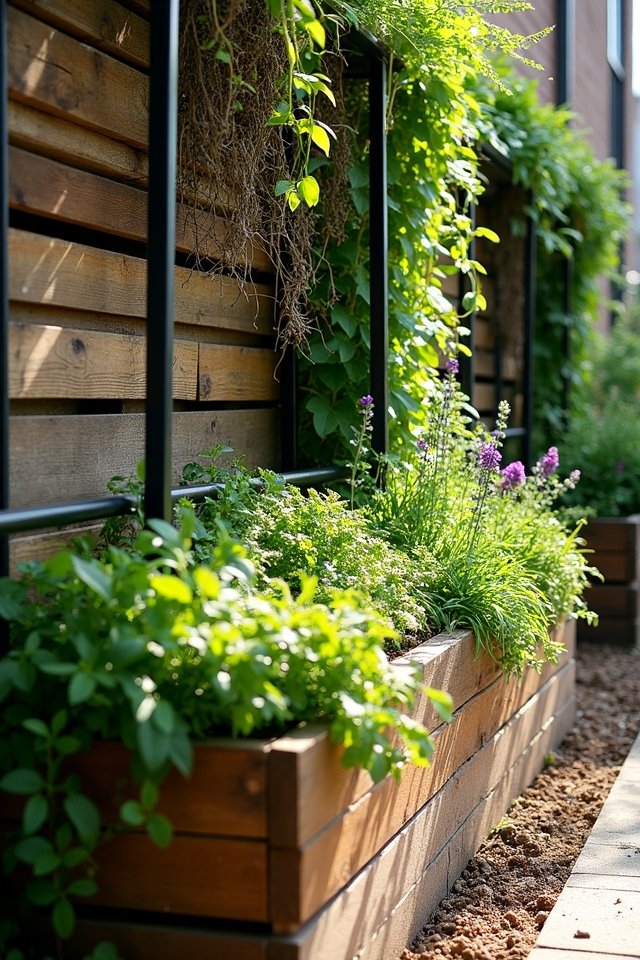
If you’ve ever dreamed of growing a lush garden but thought you didn’t have enough space, a vertical garden raised bed is your answer! Imagine a stunning wall of green, bursting with vibrant colors and fragrant herbs. You can maximize every inch with clever plant selection, using climbing plants like tomatoes, peas, and even strawberries. This isn’t just gardening; it’s space optimization at its finest! Picture your small patio transformed into an urban oasis, where leafy greens cascade down like a waterfall. Plus, maintenance is a breeze—just a quick snip here and there! Why not take your gardening game to new heights? Literally! So, grab those planters, and let your creativity blossom, because your vertical garden adventure awaits!
Wheelchair Accessible Raised Bed
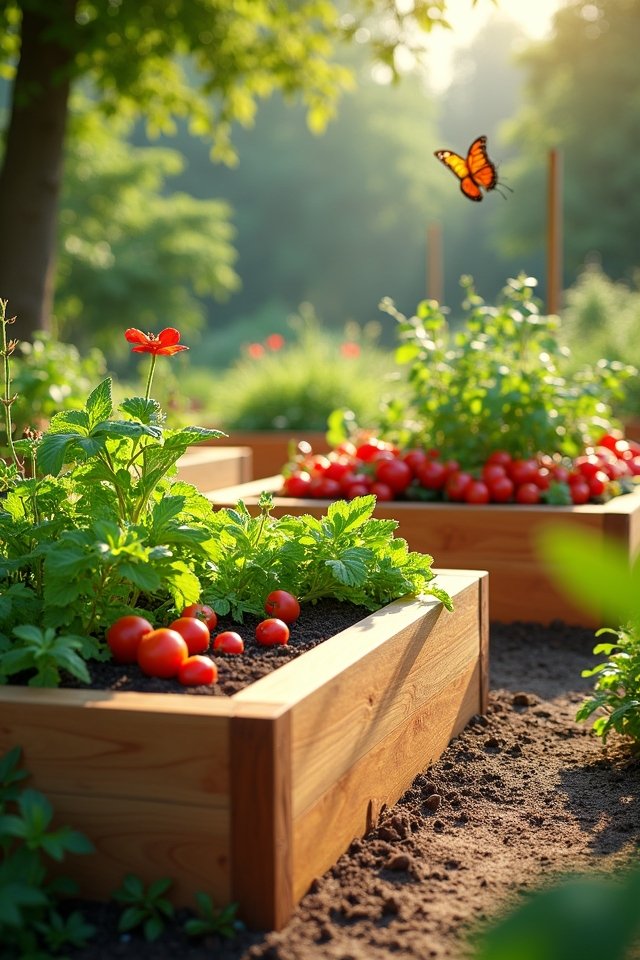
Have you ever wished that gardening could be more accessible for everyone? With a wheelchair accessible raised bed, you can transform that dream into reality! This adaptive design lets you dig, plant, and nurture without obstacles. Here’s how to create your ideal space:
- Height Matters: Build your beds at least 30 inches tall for easy reach.
- Width Wisdom: Keep the width around 3 feet so you can access all sides comfortably.
- Smooth Surfaces: Use level pathways, eliminating bumps and making it easier to move.
- Smart Tools: Invest in ergonomic gardening tools that fit your needs like a glove!
With these innovative ideas, you’ll find joy in gardening like never before! Let’s cultivate that green thumb together!
Herb Spiral Raised Bed
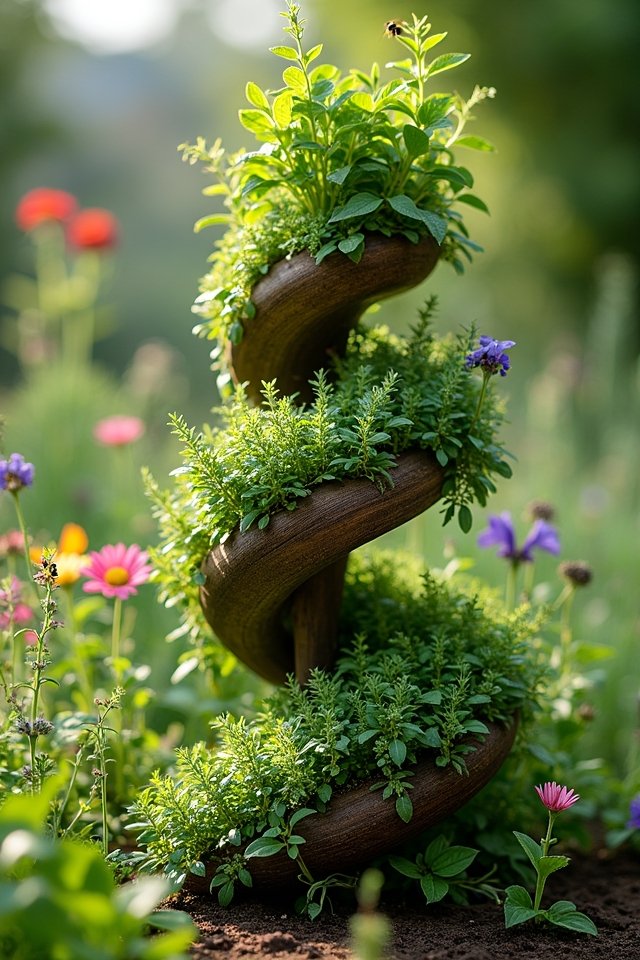
Imagine walking through a lush garden, where vibrant herbs spiral upward like a green staircase, inviting you to explore their delightful scents and flavors! The herb spiral raised bed is a stunning way to maximize your herb selection while creating a visually striking feature. The spiral design allows you to grow a variety of herbs, from sun-loving basil at the top to moisture-loving mint at the bottom. This layout not only saves space but also creates microclimates that suit each herb’s needs. Picture yourself plucking fresh rosemary for your roast or fragrant thyme for a stew! Plus, it’s a conversation starter! So, roll up your sleeves and let your creativity bloom with this innovative garden structure!
Frequently Asked Questions
What Materials Are Best for Building Raised Garden Beds?
When it comes to building raised garden beds, you’ve gotta think outside the box! Recycled materials like old pallets or bricks can save you cash and add character, while natural alternatives like cedar or redwood resist rot beautifully. Imagine your vibrant veggies thriving in a cozy, inviting space! So, why not mix and match? You’ll create a unique garden that not only looks great but also nurtures the earth. Happy gardening!
How Deep Should a Raised Bed Be for Vegetables?
When it comes to raised bed depth, you’ll want at least 12 to 18 inches for your vegetable roots to stretch comfortably. Think of it like giving them a cozy apartment! Carrots and tomatoes thrive with that space, while leafy greens are pretty happy in 12 inches. If you’re feeling ambitious, 24 inches lets you plant deeper-rooted veggies too! Who knew digging could lead to such delicious rewards? Let’s get growing!
Can I Use Treated Lumber for Raised Beds?
Sure, you can use treated lumber for raised beds, but it’s a bit like inviting a wolf into your garden! Treated lumber can leach chemicals, raising concerns about treated lumber safety for your veggies. Instead, consider alternative materials like cedar or composite wood—both are durable and chemical-free. Think of them as the reliable sidekicks to your gardening adventure! Your plants will thrive, and you’ll enjoy fresh produce without the worries! How great is that?
How Often Should I Water Raised Bed Gardens?
You should water your raised bed gardens about once a week, but it depends on the weather! Think of your plants as thirsty little sponges—they need moisture retention to flourish. If it’s hot and dry, give them a good soak more often! Check the soil; if it’s dry an inch down, it’s time to water. Remember, overwatering can drown them too! So, get that balance right, and watch your garden thrive!
What Plants Grow Best in Raised Beds?
When you think about plants thriving in raised beds, consider companion planting! Pairing tomatoes with basil not only boosts flavor but also keeps pests at bay. You’ll love the vibrant colors and scents! Herbs like rosemary and thyme flourish beautifully, adding a fragrant touch. Imagine the delight of snipping fresh herbs for dinner! So, get creative and mix it up; your raised bed can become a little ecosystem, bursting with life and flavor!