Want to grow delicious edibles in tiny spaces? Start with dwarf varieties like ‘Tom Thumb’ peas and ‘Baby Boo’ pumpkins! Use containers and wall planters to maximize every inch. Don’t forget trellises for climbing plants—think of them as your garden’s skyscrapers! Mix in companion plants like basil with tomatoes to boost growth. Water consistently, but avoid a soggy mess! Excited about fresh flavors? You’ll discover more fantastic tips and tricks to transform your tiny patch into a bountiful paradise!
Choosing Space-Efficient Vegetable Varieties
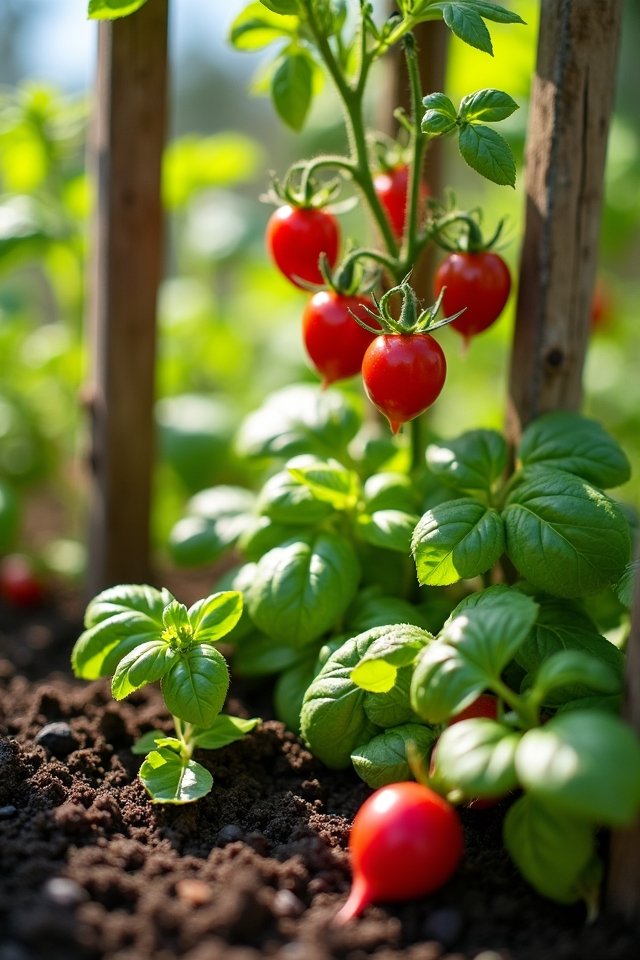
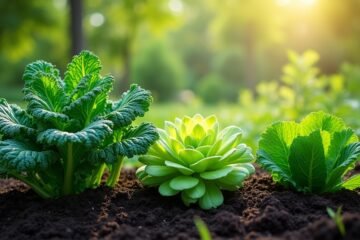
When you’re working with tiny garden spaces, choosing the right vegetable varieties can feel like solving a puzzle! Don’t fret; there are clever options just waiting for you. Dwarf varieties, like ‘Tom Thumb’ peas or ‘Baby Boo’ pumpkins, are game-changers—these mini marvels pack flavor without hogging space. You’ll love compact crops too! Imagine growing vibrant, space-efficient kale or a colorful mix of cherry tomatoes that twinkle like jewels in your garden. With each bite, you’ll relish the joy of fresh produce! Got a sunny spot? Why not try radishes, too? They grow fast and taste fantastic! So, adopt innovation, and let your creativity flourish in your tiny garden oasis! Thriving flavors await you! Ready to dig in?
Vertical Gardening Techniques for Small Spaces
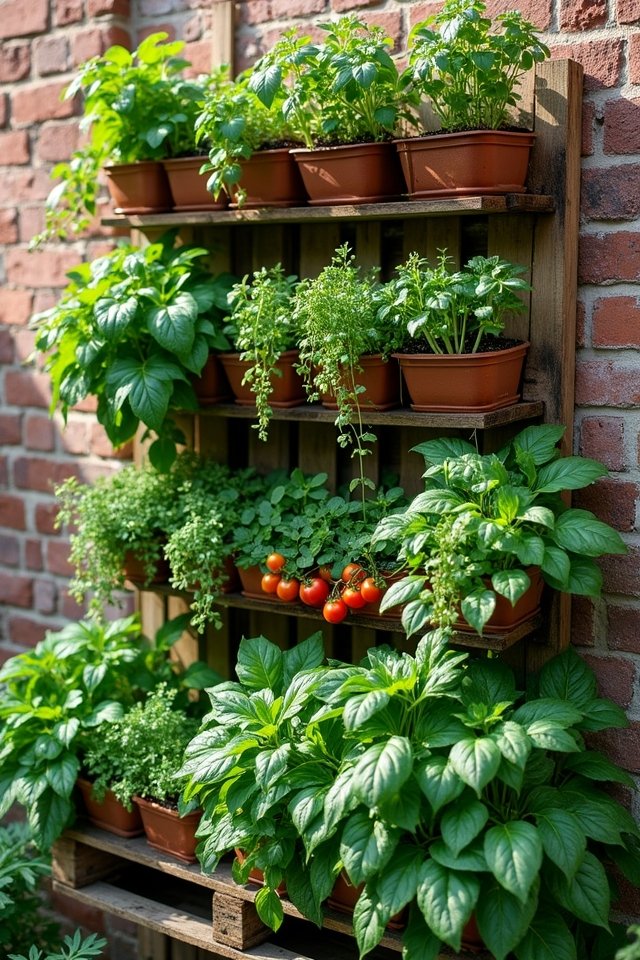
If you’ve ever gazed at your tiny garden space and thought, “How on earth can I make the most of this?” you’re in good company! Vertical gardening techniques can transform your area into a lush, green paradise. By utilizing vertical structures, you can maximize production while keeping everything tightly spaced. Here’s how to get started:
- Choose trellises for climbing plants like peas and beans.
- Use wall planters to grow herbs, making them easily accessible.
- Repurpose pallets for a unique planting surface, stacking them up for extra height.
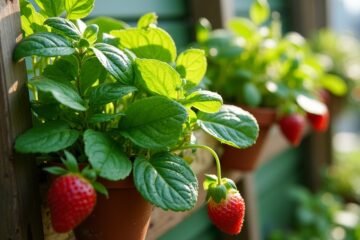
- Install hanging baskets for plants like strawberries or cherry tomatoes, adding vibrant splashes of color.
With a bit of creativity and strategic plant spacing, you’ll be amazed at what you can cultivate!
Container Gardening for Edible Plants
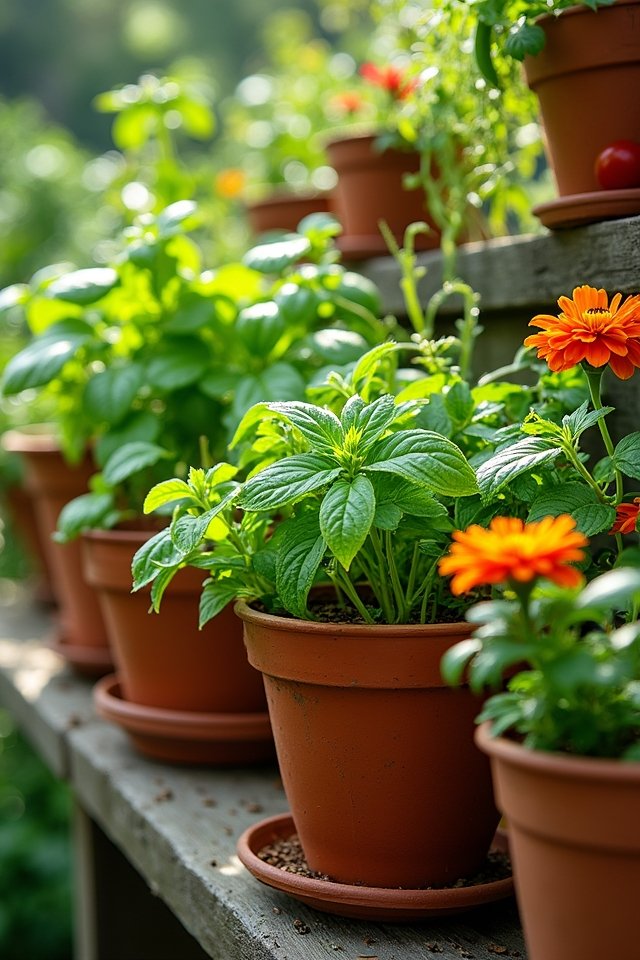
Imagine biting into a juicy, homegrown tomato, still warm from the sun—now that’s a taste of summer you won’t want to miss! Container gardening is perfect for urban gardening enthusiasts like you. Use small pots with proper container drainage, and you’ll be amazed at the variety you can grow. Try herb containers filled with basil or rosemary, or maybe add some edible flowers like nasturtiums to your collection. Compact fruits, like strawberries, thrive in potting mix and bring delightful sweetness to your meals. Just remember to choose the right container placement—sunny spots work wonders! So, roll up your sleeves, get creative, and transform your tiny garden space into a tasty paradise. Happy planting!
Maximizing Vertical Space With Trellises
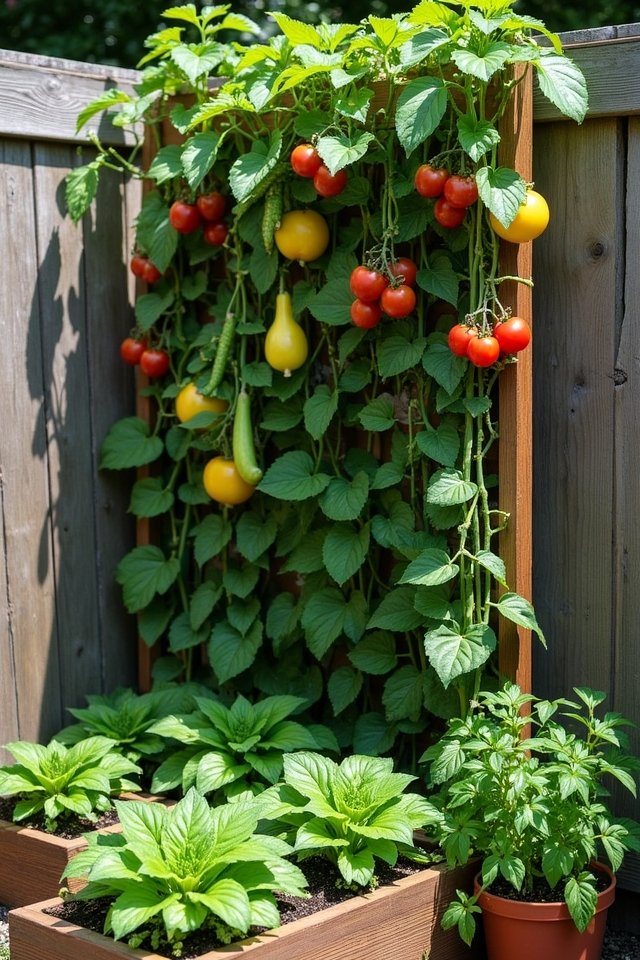
While you might think that limited ground space means limited gardening options, trellises are here to save the day! These vertical wonders let you release your inner garden guru, transforming tiny spaces into lush havens. To get started, consider these tips for choosing trellis materials and climbing plants:
- Bamboo poles for rustic charm.
- Metal grids for added durability and sleek design.
- Wooden lattices for classic appeal.
- Wire frames for flexibility in size and shape.
With trellises, you’ll give your climbing plants a strong backbone, allowing them to thrive upward. Imagine lush tomatoes, vibrant peas, or fragrant beans cascading from your vertical garden. You’re not just gardening; you’re elevating your outdoor oasis! Ready to climb higher?
Companion Planting for Increased Yields
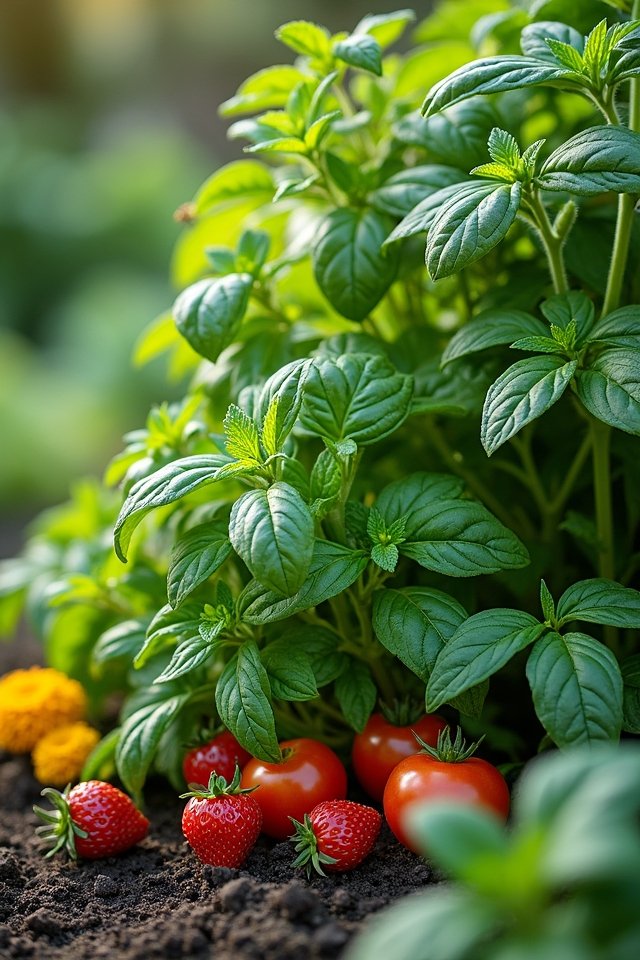
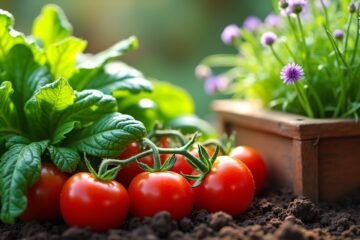
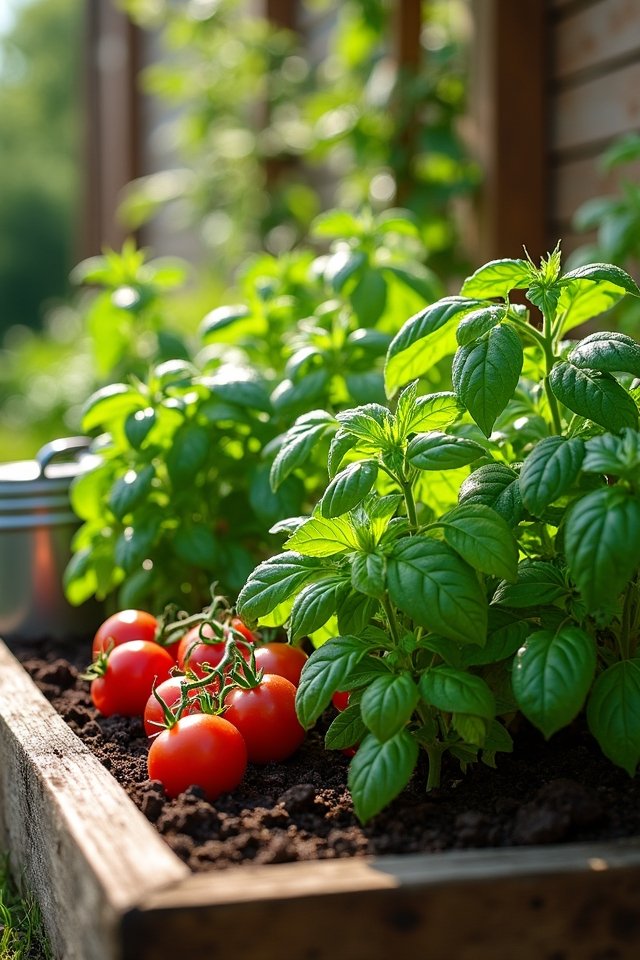
When you pair plants wisely in your tiny garden, you’re not just planting; you’re orchestrating a botanical symphony! Combining companion herbs, like basil with tomatoes or peppermint with carrots, creates a harmony that boosts yields. These floral friends can repel pests, making your garden a sanctuary for beneficial insects like ladybugs and lacewings, which feast on unwanted critters. Imagine the thrill as butterflies flutter by, while your plants flourish together! Have you ever seen marigolds fend off aphids? It’s pure magic! By strategically placing plants, you enhance flavor and growth, turning your tiny plot into a vibrant canvas of edible delights. So, why not start pairing today? Your garden’s future depends on it, and an abundance of deliciousness awaits!
Utilizing Window Boxes for Herb Gardens
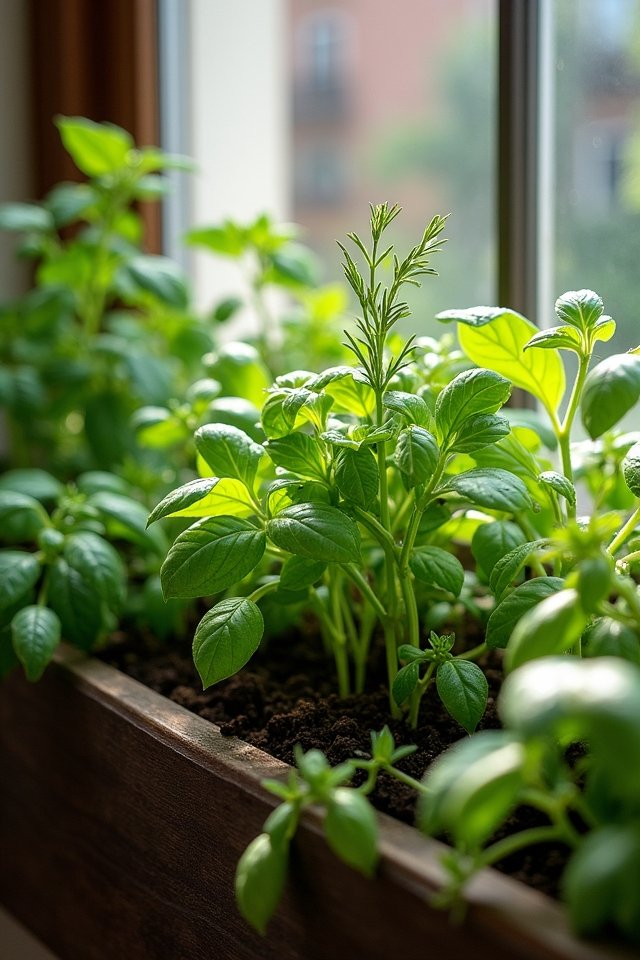
You don’t need a sprawling backyard to grow your own herbs! Window boxes are perfect for sprucing up your space with fresh flavors. Here’s how to get started:
- Choose Your Herbs: Opt for culinary favorites like basil, mint, or thyme.
- Consider Sunlight Requirements: Make certain your window box gets at least six hours of sunlight daily—it’s vital!
- Use Quality Soil: A good potting mix keeps your herbs happy and thriving.
- Water Wisely: Don’t let them drown! Guarantee proper drainage and water just when the soil feels dry.
Transform your little window ledge into a mini herb garden paradise! Imagine snipping fresh basil for pesto or mint for tea—talk about gourmet magic at your fingertips!
Growing Multi-Use Plants
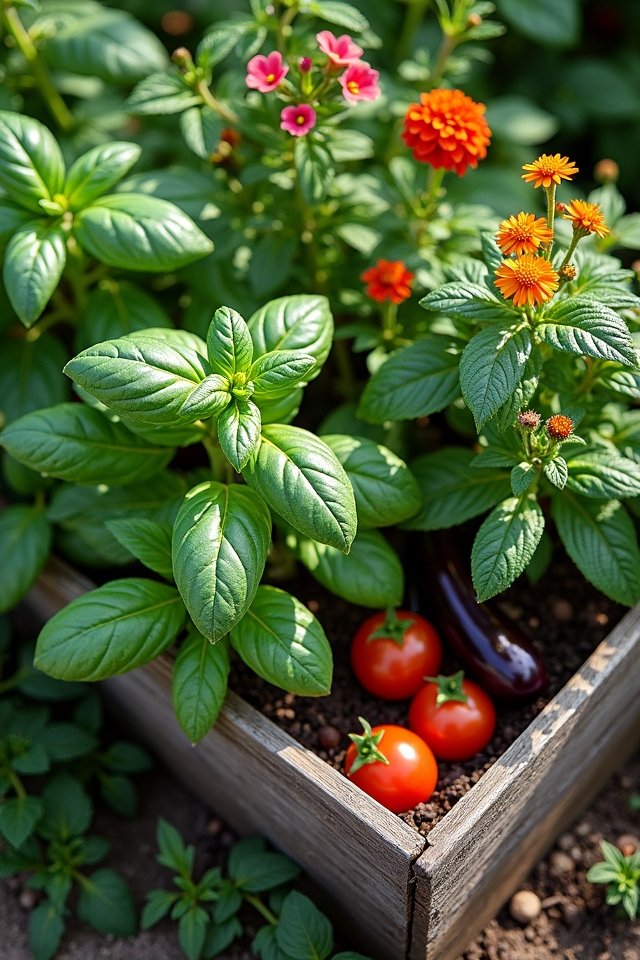
Imagine stepping outside to a lush garden packed with plants that not only look great but also serve double duty! Why settle for ordinary herbs when you can grow vibrant multi-use herbs like basil and mint? They not only spice up your dishes, but they also make your space smell heavenly! Then there are dual purpose vegetables like kale, which can be enjoyed in salads and as a stunning backdrop for your garden. Exciting, right? You’ll love discovering that edible flowers, like nasturtiums, add a pop of color while being delicious in salads. Who knew functionality could look this good? So, why not transform your tiny space into a breathtaking edibles haven that feeds both your eyes and your belly? Enjoy the innovation!
Soil Management in Small Gardens
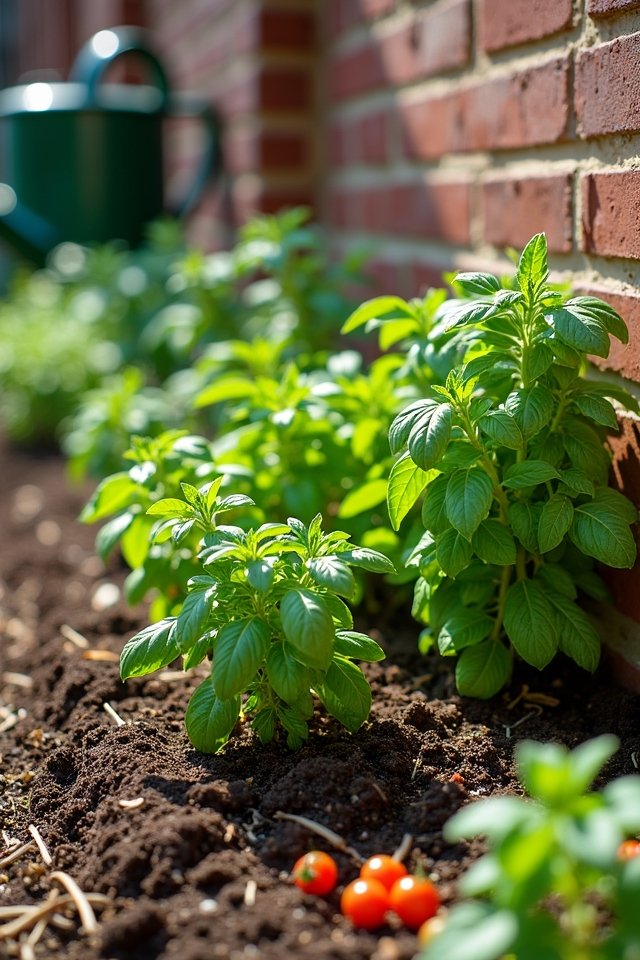
Every vibrant garden starts with a solid foundation—yeah, that means your soil! If you want those edible beauties to thrive, let’s talk soil management. It’s the secret sauce! Here’s how to get that perfect blend:
- Test Your Soil’s pH: Use a simple kit from a garden store—your plants will thank you!
- Add Soil Amendments: Boost your soil with compost or vermiculite for better drainage and nutrients.
- Mix in Organic Matter: Incorporate leaves or kitchen scraps to strengthen the soil game.
- Rotate Crops: Keep things fresh; change plant locations each season for nutrient balance and pest control.
With these tips, you’re on your way to a tiny garden that’s positively bursting with flavor! Let’s get digging!
Seasonal Planting Strategies
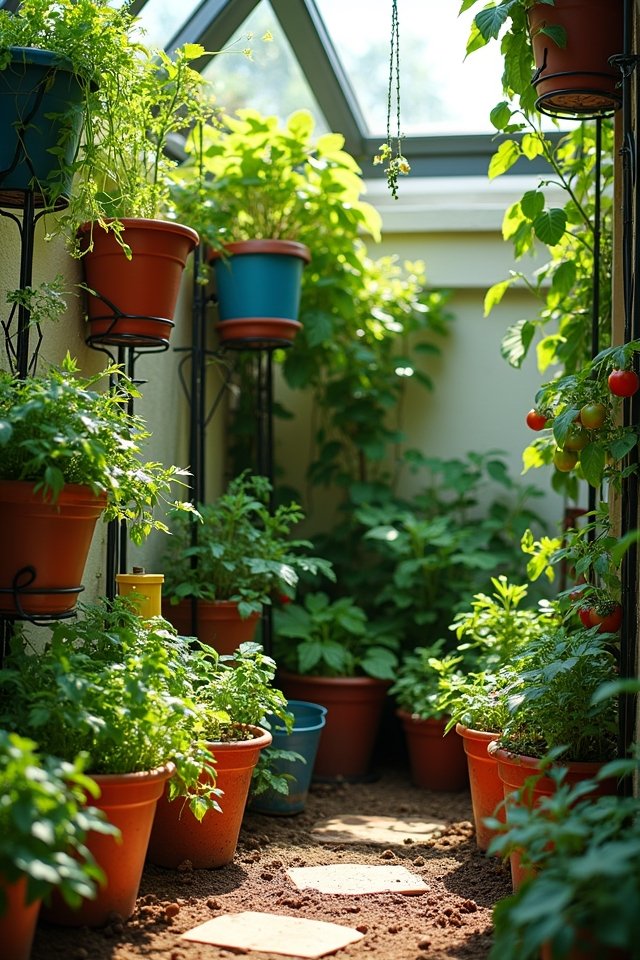
When the seasons shift, so do the opportunities for your tiny garden! Welcome the art of seasonal crop rotation—it’s like giving your plants a vacation! Each season brings fresh chances to grow a mix of veggies; for example, try hearty kale in winter and zesty tomatoes in summer. Not only will this keep your soil happy, but it also helps with climate adaptation, allowing your garden to flourish despite unpredictable weather. Imagine biting into crisp veggies, all thanks to your clever planning! Consider using vertical space, too; with some clever planting strategies, every nook can bloom. So, what are you waiting for? Immerse yourself in seasonal planting! Your palette of flavors is ready to explode! Let the garden magic begin!
Regular Maintenance for Healthy Growth
While nurturing your tiny garden, it’s crucial to remember that regular maintenance is the secret ingredient for healthy growth! You want those vibrant veggies, right? Here’s how you can keep everything in tip-top shape:
- Pest Control – Use natural sprays or companion planting to keep those pesky bugs at bay!
- Watering Techniques – Try drip watering or self-watering pots to guarantee your plants drink up without drowning.
- Fertilization – Feed your plants with organic fertilizers for a nutrient boost; think of it as a spa day!
- Pruning – Trim dead leaves and branches regularly to encourage robust growth—like a good haircut for your greens!
With these steps, watch your garden thrive and delight you with its delicious rewards! Happy gardening!
Frequently Asked Questions
What Are the Best Herbs for Indoor Tiny Gardens?
Looking to spice up your indoor space with fresh flavors? Consider basil, thyme, and mint! These sturdy indoor herb varieties not only thrive in small containers but also add a burst of fragrance that’ll perk up your day! Remember, proper lighting is key—those herbs love the sun! Use well-draining soil, and don’t forget to water them just enough! Now, imagine snipping fresh herbs for your cooking—it’s simply delightful! Who wouldn’t love that?
How Often Should I Water My Container Plants?
Imagine your container plants as thirsty little friends waiting for a drink! You should water them based on their size and the weather. Small containers dry out quicker—check them daily! Larger ones can go a few days. Use smart watering techniques; a drenching is great, but let them dry a bit between sips. Test the soil with your finger—if it’s dry two inches down, it’s time for a splash! Your plants will thank you!
Can I Grow Edible Plants in Shaded Areas?
Absolutely, you can grow shade-loving vegetables! Think leafy greens like spinach and Swiss chard, which thrive in dim corners. Using container gardening techniques, you can create a vibrant green oasis! Just imagine plucking fresh leaves right from your balcony, with the sun barely touching them. It’s like having a secret garden! You’ll surprise friends with your clever choices. So, grab those pots and start planting—shady spots can be delightful, too! Who knew?
What Pests Commonly Affect Small Garden Spaces?
Pests can be pesky little intruders in your garden! Aphids, spider mites, and whiteflies often invade, causing havoc. Don’t fret! You can keep them at bay with some clever pest prevention strategies. Think about introducing natural predators like ladybugs and lacewings, or using organic solutions such as soap sprays. It’s a bit like hosting a wildlife party in your backyard! Who knew protecting your plants could be so innovative—and fun? Get ready for action!
How Do I Know When to Harvest My Plants?
You know it’s harvest time when you spot those harvest indicators! Check your plants daily for vibrant colors and firm textures; they’ll show you their readiness. For instance, ripe tomatoes should feel slightly soft like a baby’s cheek, while leafy greens should be young and tender. Ideal timing is key—pick too soon, and they won’t burst with flavor; wait too long, and they might get bitter. Don’t miss that delicious moment!