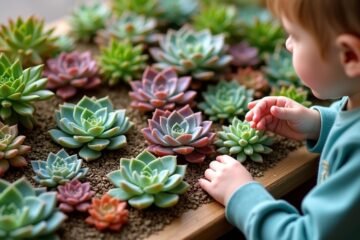
Gardening with your kids in small spaces can be a blast! Start by choosing safe, edible plants like strawberries and cherry tomatoes. Use colorful, child-friendly tools that fit in their tiny hands, and create a vibrant gardening corner with fun decorations. Remember to teach them about plant safety and supervise their little hands at work. Dress them in protective clothing, and keep an eye out for any sneezes or sniffles. Ready to dig deeper into more tips?
Choose Safe Plants for Small Spaces
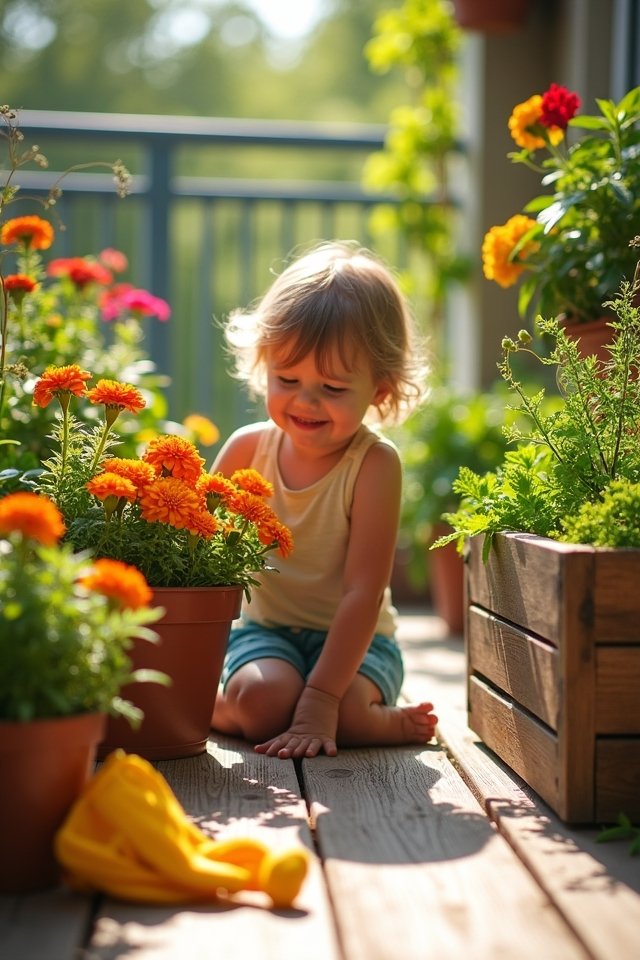
When you’re setting up a cozy little garden for kids, choosing the right plants is key to keeping everyone safe and happy! You’ll want to include delicious, edible plants like strawberries, which make tasty snacks, and sweet cherry tomatoes that’ll burst in their mouths. Non-toxic flowers, like marigolds and nasturtiums, add vibrant colors while keeping your little ones safe—think of them as the confetti of your garden, brightening up those little spaces! As you plan, remember, it’s not just about safety; it’s about creativity and fun! Imagine their delight while picking fruits and smelling flowers that are as safe as they are beautiful. So, get ready to spark their curiosity and imagination with your unique, joyful garden!
Use Child-Friendly Gardening Tools
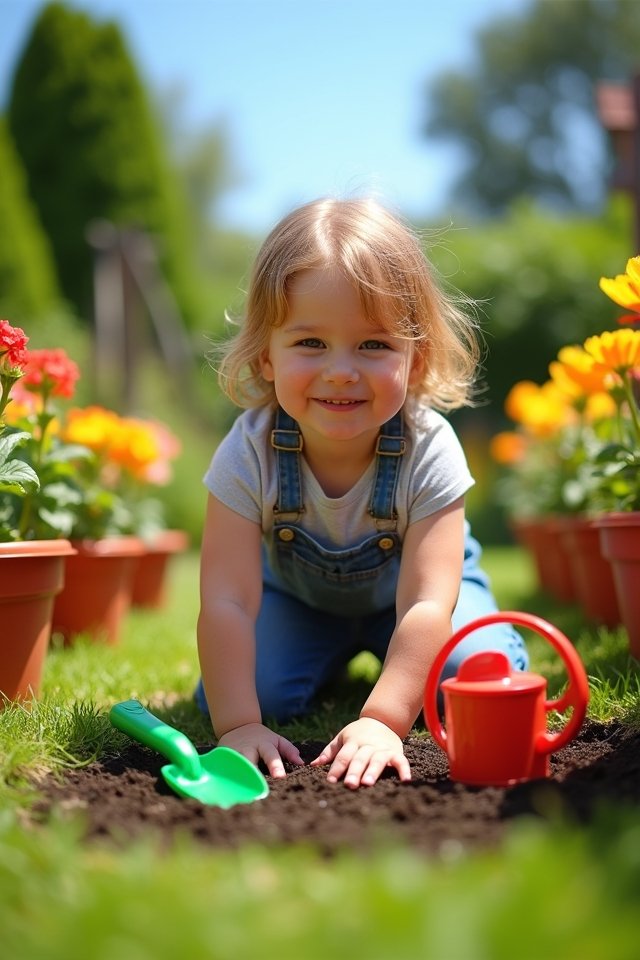
Gardening can be a towering adventure for kids, especially when you outfit them with the right tools! Using child-friendly gardening tools makes all the difference. Choose gear with an ergonomic design, ensuring little hands can grip comfortably and work effectively without strain. Lightweight materials are also essential, keeping the fun flowing without the hassle of heavy equipment!
Consider these exciting tools for your young gardeners:
- Small spades and trowels perfect for tiny hands
- Watering cans made from durable, playful plastic
- Kid-safe pruning shears designed for easy use
- Colorful gloves that fit snugly while protecting fingers
With the right tools, your kids will be itching to dig, plant, and celebrate their green thumbs! Ready to dig in?
Create a Designated Gardening Area
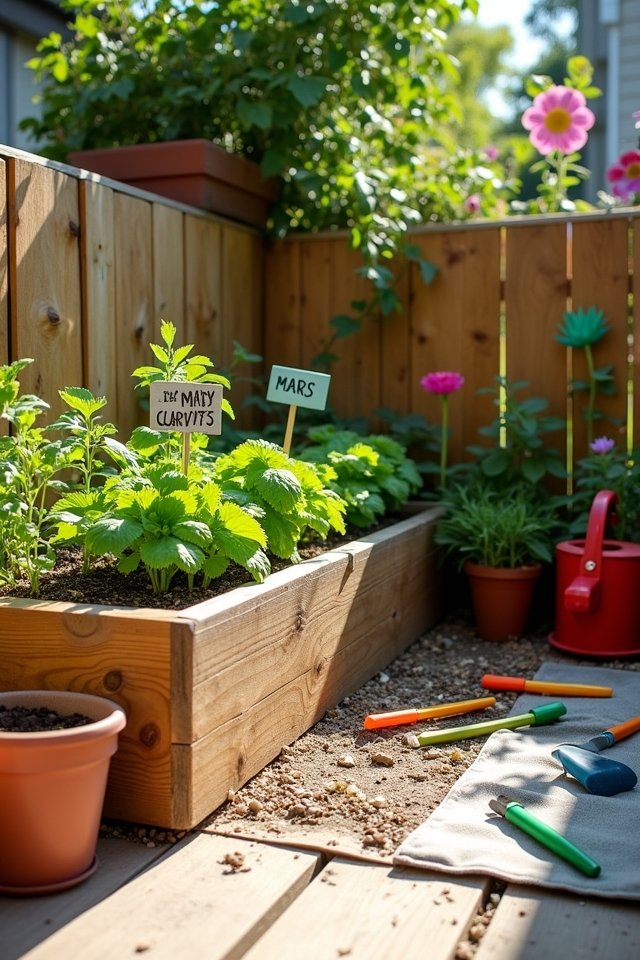
Now that your young gardeners have the perfect tools in hand, it’s time to set the stage for their green adventures! Create a designated gardening area where imagination can flourish. Think of it as their mini paradise! Choose a corner of your yard or balcony to transform into a vibrant gardening zone. Use colorful containers or wooden boxes to define the space. Adding a few decorative stakes or fun garden gnomes can spark creativity, too.
Don’t forget to lay down a soft mat or old blanket where they can sit and dig in the dirt! Isn’t it thrilling to watch small hands getting muddy while they explore nature? Let their tiny green thumbs take charge in their cozy kingdom!
Teach Kids About Plant Safety
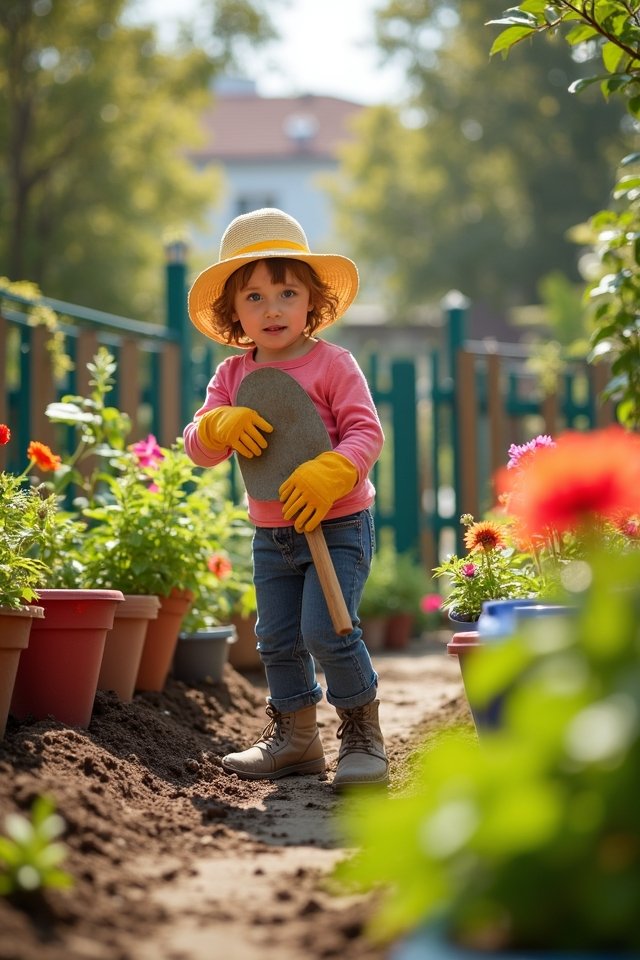
How can you guarantee your little ones stay safe while exploring the world of plants? Teaching them about plant safety is crucial. Kids love to get their hands dirty, but it’s essential to guarantee they can identify which plants are safe and which aren’t! Here are some tips to get you started:
- Show them how to recognize safe plants, like herbs and flowers.
- Explain the importance of safe handling—no yanking or munching without checking first!
- Introduce them to basic plant identification methods—like using pictures or apps.
- Share fun facts about poisonous plants to spark their curiosity!
With these steps, you’ll empower your kids to explore the green wonders around them, ensuring they stay safe while having a blast! 🌱
Supervise During Gardening Activities
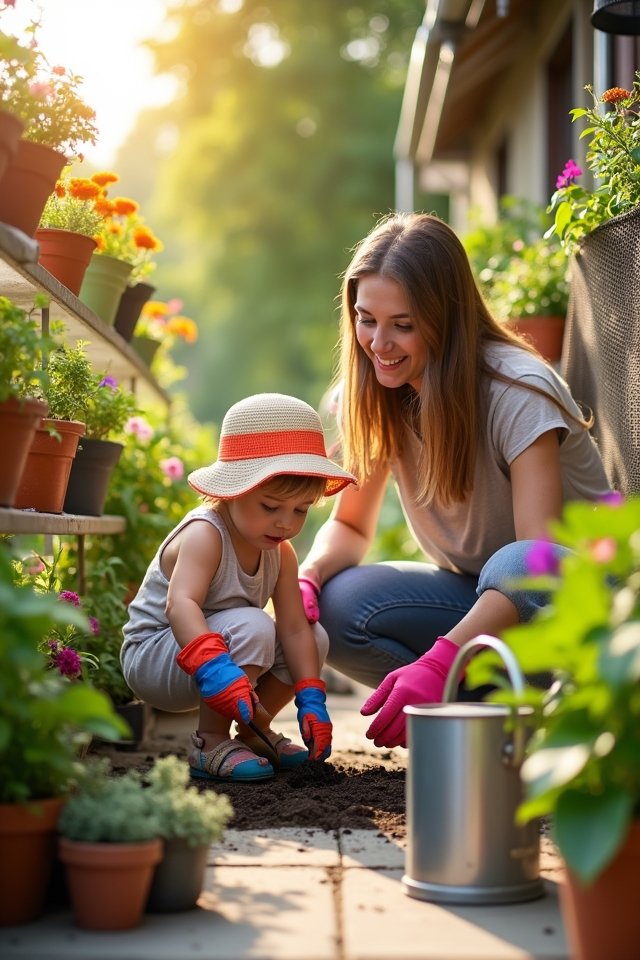
Even the most adventurous little gardeners need a watchful eye, so keep your supervision game strong! Imagine this: your kids immerse themselves in interactive gardening games, excitedly digging up dirt and discovering buzzing bees, but they might also stumble upon sharp tools. Keep your presence nearby, guiding them with positive reinforcement techniques. Celebrate their achievements! When they plant a seed correctly or spot a worm, cheer them on with enthusiastic high-fives or little dances. It’s all about turning safety into fun! Ask questions like, “What’s your favorite flower, and how can we plant it safely?” By actively participating, you create an unforgettable gardening experience filled with learning, laughter, and budding memories. So, stay close, and let those tiny hands explore—safely!
Demonstrate Proper Hand Washing Techniques
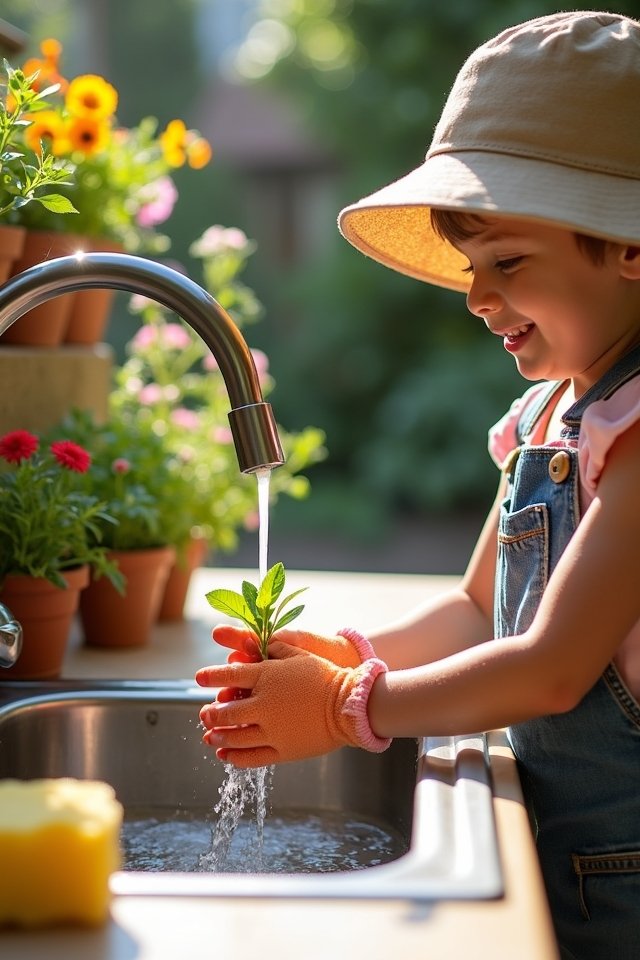
Anyone who’s ever dug in the dirt knows that gardening can get messy! After planting those vibrant seeds, it’s essential to practice proper hand washing. Clean hands aren’t just for looks; they’re a fun way to keep everyone healthy! Here’s how you can make it a breeze:
- Wet your hands with clean, running water
- Lather up with soap and scrub for at least 20 seconds
- Rinse your hands thoroughly under running water
- Dry your hands with a clean towel or air dryer
Avoid Toxic Chemicals and Fertilizers
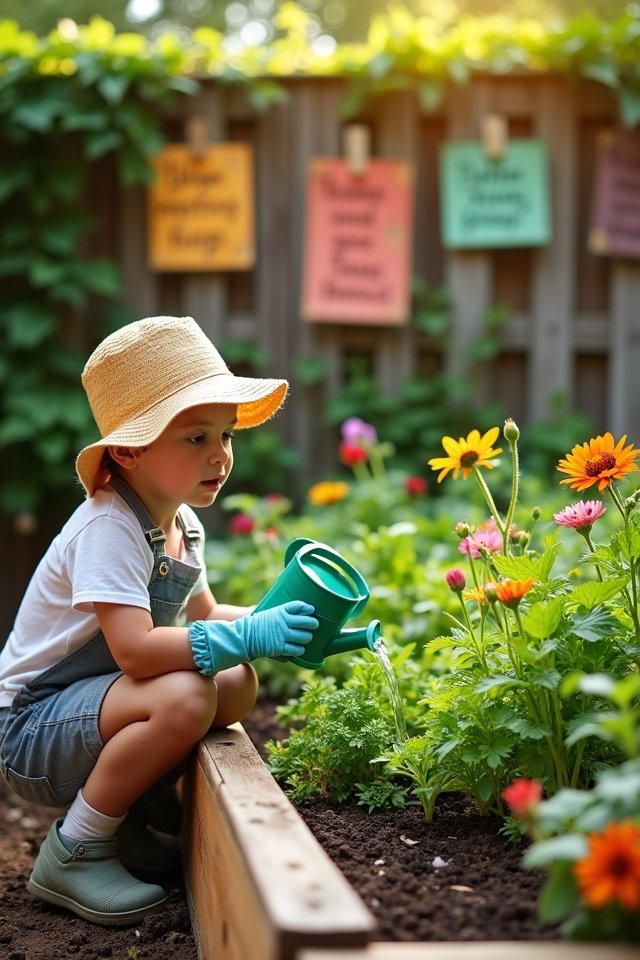
After washing those little hands free from dirt, let’s talk about keeping them safe from stinky chemicals and fertilizers. You want your kids to thrive in the garden, right? Instead of toxic stuff, adopt organic alternatives! Think of using compost as your garden’s best friend—nourishing, natural, and oh-so-smelly in a good way! You can also rely on safe pesticides derived from neem oil or soap; they work wonders without the scary side effects. Encourage your budding gardeners to create a welcoming habitat for ladybugs and bees, too! Who doesn’t love those friendly little critters? By swapping out harsh chemicals for greener options, you’ll cultivate a happy, safe space for your kids to dig, plant, and explore! Gardening can be so fabulous!
Establish Clear Gardening Rules
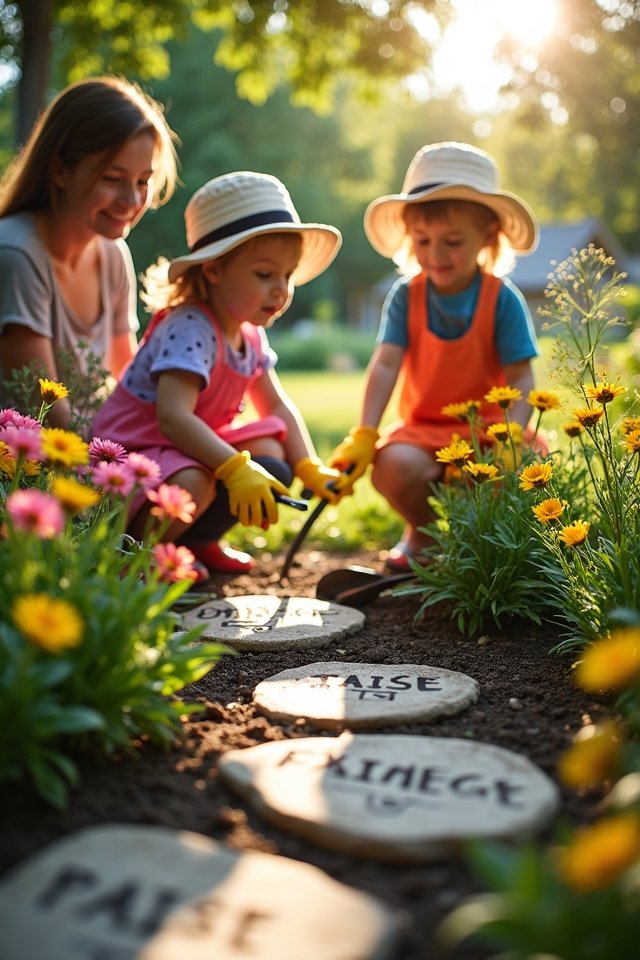
While planting seeds of curiosity about gardening, it’s just as important to cultivate a solid set of rules for your little green thumbs! Establishing clear gardening rules guarantees they grasp garden etiquette and understand safety consequences—nobody wants to accidentally step on a sleeping worm, right?
- Always ask an adult before using tools.
- Keep pathways clear to avoid tripping over toys or plants.
- Respect all creatures—bees are friends, not foes!
- Wash hands after handling soil to keep dirt from becoming dinner!
These rules can spark delightful discussions about responsibility. Remember, the garden is a tiny universe thriving on teamwork and respect. With your guidance, your child will bloom into a responsible gardener in no time!
Encourage Protective Clothing
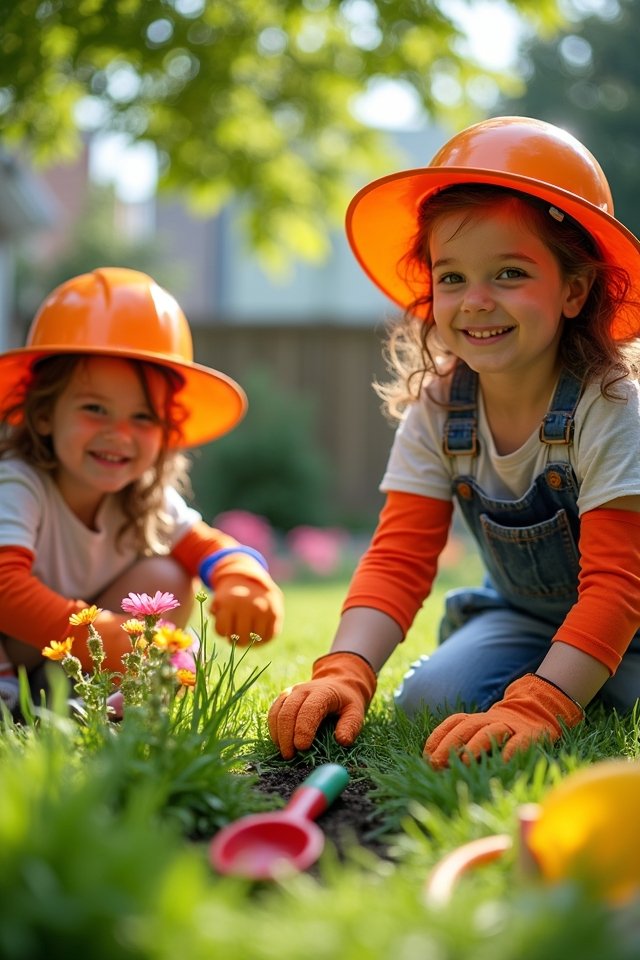
So, you’ve set the stage for a safe gardening adventure with clear rules—now it’s time to gear up! Imagine your little ones, all set with vibrant sun hats, ready to combat the sun’s rays like superheroes! Protective gloves are essential, too; they’re like armor against prickly thorns and dirt. Encourage your kids to pick colorful ones they adore. “Look at my garden gloves!” they’ll shout, proud of their stylish gear. Explain how these simple items can keep their hands safe and their skin protected. Gardening isn’t just planting; it’s an experience! With the right protective clothing, you’ll turn every hour spent in the garden into a delightful, memorable escapade. Ready to dig in? Let’s cultivate some fun!
Monitor for Allergies and Sensitivities
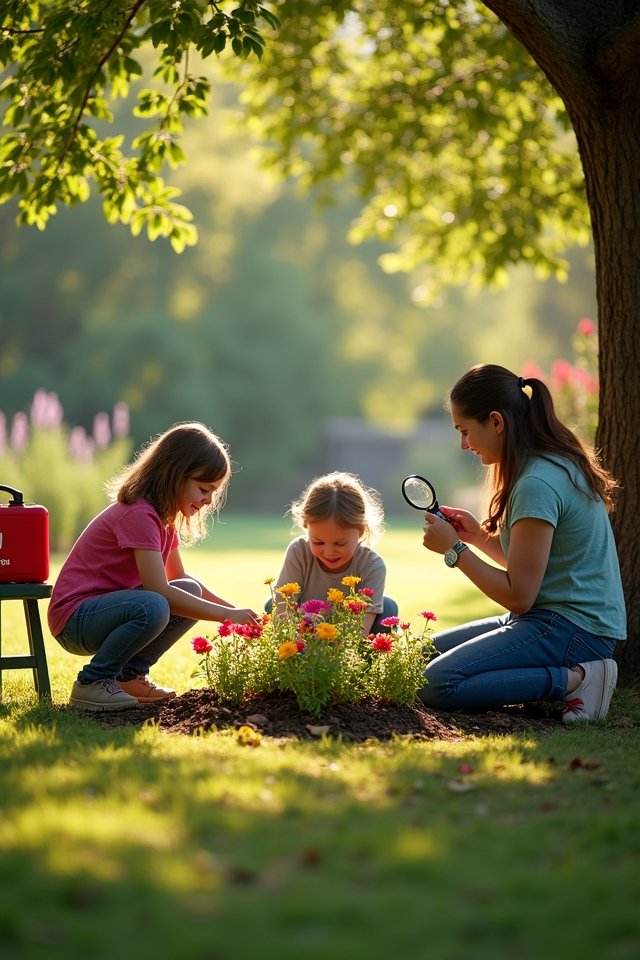
Before diving into the dirt and planting those gorgeous flowers, it’s essential to keep an eye out for allergies and sensitivities! Kids may be enthusiastic to garden, but pay attention to potential allergy awareness. Keep their noses happy, and monitor for sensitivity signs in your little gardeners:
- Itchy skin or rashes
- Sneezing and watery eyes
- Swelling around the face
- Difficulty breathing or wheezing
Before you leap into the flower frenzy, introduce new plants gradually! This way, you can spot any reactions early. Did you know that some common garden plants can cause irritation? Be mindful! By ensuring a safe gardening experience, you create joyful memories without the drama of unexpected allergies. Happy gardening! 🌼
Frequently Asked Questions
What Are the Best Plants for Kids to Grow in Small Spaces?
What’s more delightful than nurturing a mini-garden? In small spaces, you can thrive with easy-to-grow herbs like basil and chives, lending flavor to your meals! Add in some colorful flower options like marigolds or zinnias—what a cheerful sight! You’ll feel like a tiny horticulturist right from your balcony! Just imagine the scents, colors, and joy blooming under your careful touch! Isn’t gardening simply magical? Let’s dig in and watch those plants grow!
How Can I Encourage My Child’S Interest in Gardening?
To spark your child’s love for gardening, make it a creative adventure! Try planting fun, quirky seeds like rainbow carrots or mini tomatoes! Turn gardening into a treasure hunt—let them discover where each plant grows. Welcome fun activities, like painting pots with their favorite colors. Your garden becomes a vibrant playground where imagination blossoms! Why not share some silly plant facts? They’ll giggle, and before you know it, they’re hooked on gardening!
What Safety Gear Should Kids Wear While Gardening?
When your little gardener steps into action, safety gear’s a must! Grab those gloves—perhaps colorful ones that feel like superhero armor! They’ll protect tiny hands from prickles and dirt. And don’t forget eye protection! This can be as fun as wearing goggles while splashing in a pool, keeping their peepers safe from dust. So, equip your budding botanist with the right gear, and let them dig into gardening joyfully and safely! 🌱✨
Are There Age Restrictions for Gardening Tools Usage?
Imagine a buzzing bee, flitting from flower to flower, never pondering tool safety! When it comes to gardening tools, age guidelines are key. Kids under six should skip sharp objects; their imaginations are wild enough! Instead, they can safely wield a trowel or watering can. For older children, teach them to respect tools like small shears. Age doesn’t define ability—supervision does! So, let’s gear up and make gardening fun and safe together!
How Can I Teach My Child About Insect Safety?
Teaching your child about insect safety’s like guiding them through a jungle filled with curious critters! Start with insect identification—show them colorful butterflies, busy ants, and buzzing bees. Create a “bug book” together that highlights safe handling techniques; tell them to gently observe without grabbing! Ask questions like, “What do you think this spider’s up to?” It sparks their curiosity! With a dash of caution and excitement, they’ll explore nature’s wonders confidently!