Want your urban garden to thrive like a bustling city park? Start by pairing plants like tomatoes and basil that love each other! Use marigolds to ward off pesky bugs, and plant sunflowers to attract cheerful bees. Vertical gardening can skyrocket your herbs to great heights, while legumes enrich the soil like nature’s little fertilizer machines. With smart placements and fun plant pals, your garden can truly flourish! Stick around to discover even more tips for urban gardening magic!
Enhance Biodiversity in Limited Spaces
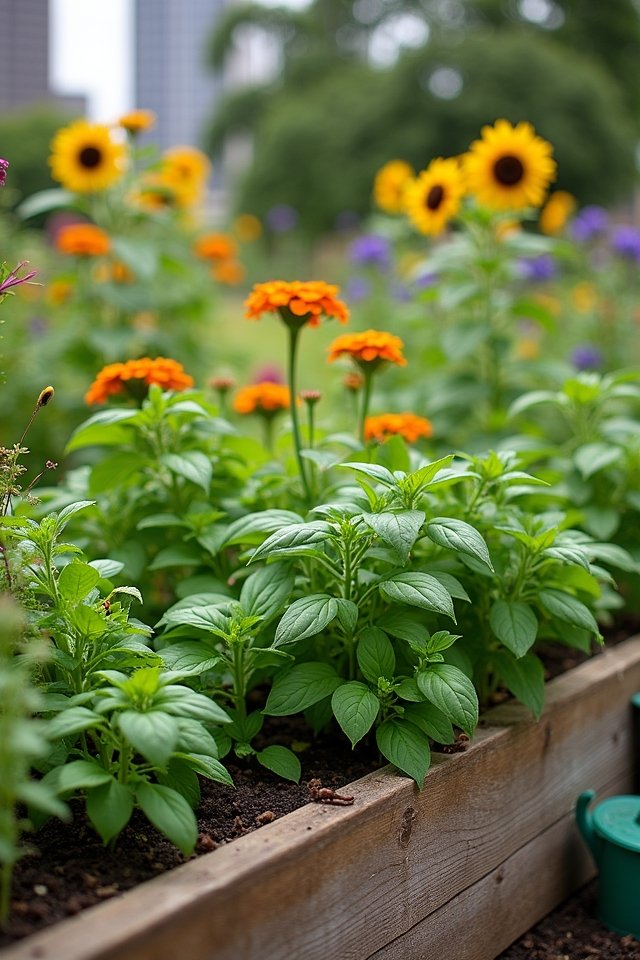
When you think about creating a mini-ecosystem in your city garden, it’s easy to feel daunted by limited space. But don’t worry! You can enhance biodiversity by integrating native species into your garden. Imagine a buzzing hive of urban wildlife flitting between colorful blooms! Native plants draw in local pollinators and beneficial insects, creating a deliciously dynamic environment. Try planting Coneflowers alongside Milkweed to attract butterflies or Coreopsis for friendly bees. Pair these with herbs like Basil, which not only smell divine but also repel pests. Your small garden can burst with life and color! Who knew that attracting urban wildlife could be this fun? It’s time to welcome the beauty of nature right at your doorstep!
Optimize Space With Vertical Companion Planting
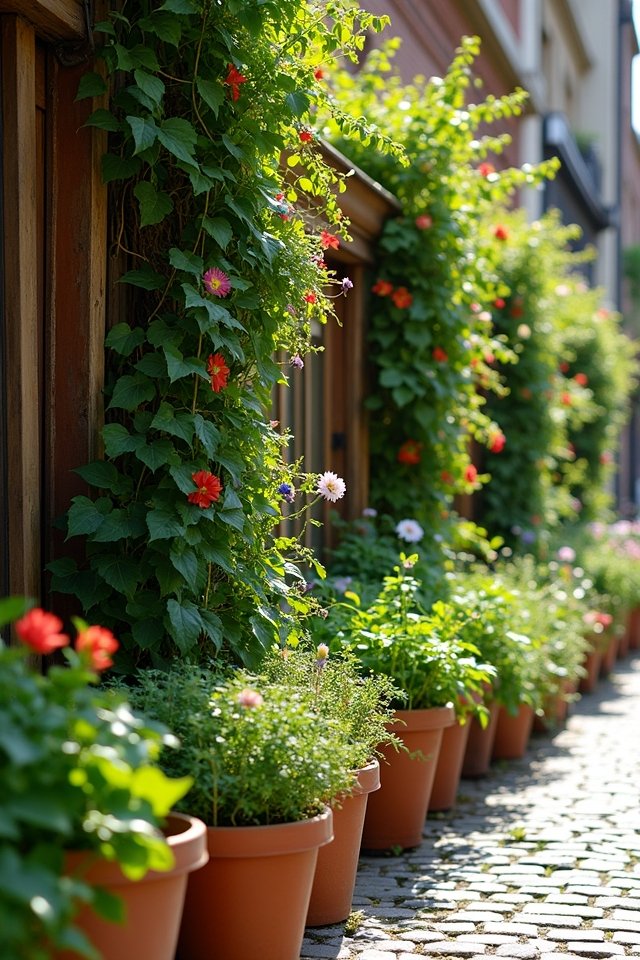
Ready to make the most of your limited garden space? Vertical gardening is your secret weapon for achieving amazing space efficiency! By growing upwards, you’ll transform your tiny urban oasis into a lush paradise. Here are four innovative ideas for vertical companion planting:
- Trellis Ideas – Use a trellis for climbing beans and sweet peas; they weave beautifully into your vertical design!
- Wall Planters – Invest in wall-mounted planters filled with herbs like basil and parsley; they smell divine!
- Hanging Baskets – Hang baskets of strawberries above ground plants; their vibrant color will steal the show!
- Pallet Gardens – Repurpose old pallets; they’re perfect for stacking a variety of leafy greens like lettuce and kale!
Improve Pest Control Naturally
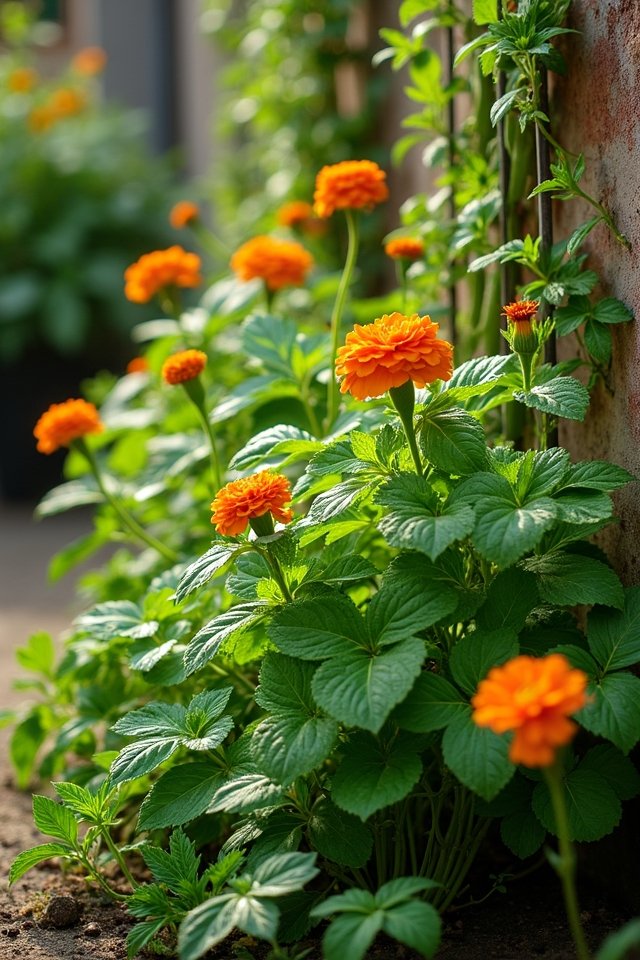
Imagine stepping into your garden and spotting vibrant plants thriving, while pesky pests are nowhere in sight! Sounds like a dream, right? You can make it a reality with natural repellents like marigolds or garlic. Plant these beauties among your greens, and they’ll emit scents that send insects packing! Also, consider using trap crops—like radishes—to attract pests away from your beloved vegetables. Once those little troublemakers are drawn in, you’ll have your garden safe and sound! It’s like hosting a garden party but kicking out the uninvited guests! By embracing these eco-friendly techniques, you’ll not only protect your plants but also nurture a harmonious environment. So, let’s keep those pests at bay—naturally!
Promote Pollinator Attraction
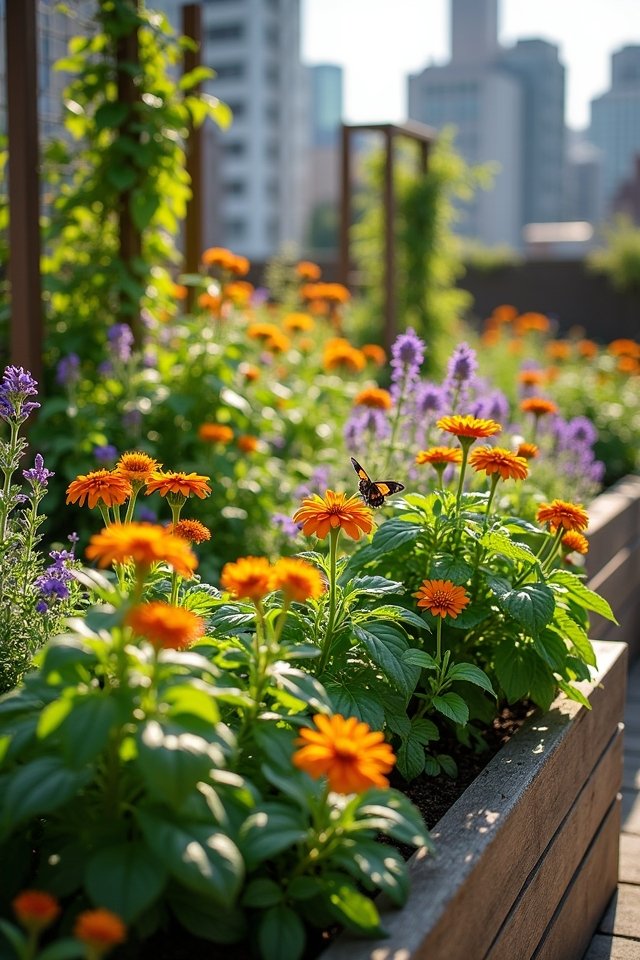
Creating a garden that buzzes with life is easier than you might think! Pollinators are like the secret sauce of your garden, and adding these plants can really spice things up:
- Lavender – Its aroma draws bees from miles away!
- Sunflowers – Their big, bright faces are irresistible to butterflies.
- Echinacea (Coneflower) – Nectar-rich flowers that help sustain pollinators all summer long.
- Borage – This stunning blue plant is not only beautiful but a magnet for honeybees!
Mixing these pollinator-friendly flowers is a fantastic way to support these busy creatures while bringing a splash of color to your space. Imagine the lovely hum of wings buzzing around your charming little oasis! Isn’t that what urban gardening is all about?
Boost Nutrient Availability in Soil
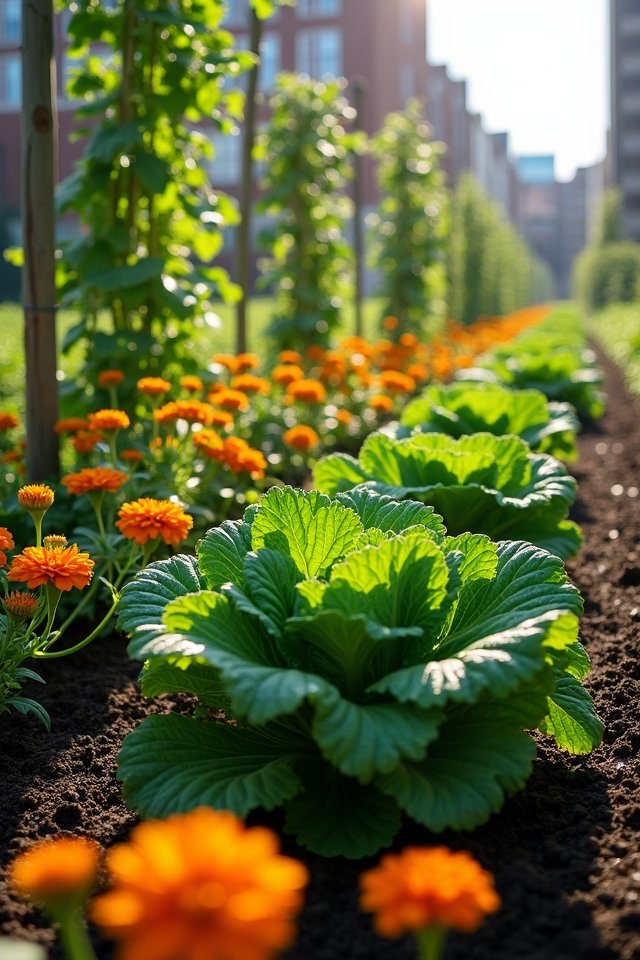
After you’ve lured in the delightful buzz of pollinators, it’s time to think about the foundation of your garden—the soil! To boost nutrient availability, consider innovative soil amendments like compost and worm castings. These organic wonders not only enrich your soil but also ignite nutrient cycling, turning your garden into a thriving ecosystem. Imagine your plants hosting a luxurious feast with every root sip!
You could also try planting legumes—they’re nature’s little nitrogen factories! So, why not mix them in with your leafy greens? Each interaction supports a symphony of nutrients, ensuring your urban garden flourishes. And remember, healthy soil equals happy plants! Isn’t that what we all want? Let’s get those roots dancing with joy!
Maximize Yields With Complementary Growth

When you pair the right plants together, you can turn your urban garden into a bounty of fresh produce! It’s like a symphony, where each plant plays its part in harmony. To maximize yields, think about these four tips:
- Embrace crop rotation – Switch up your plants each season to rejuvenate your soil and keep pests guessing!
- Boost plant diversity – Mixing plants protects them from disease and attracts helpful critters.
- Companion planting – Pair tomatoes with basil; they thrive side-by-side, enhancing flavor and growth.
- Use space efficiently – Tall plants can shade shorter ones, creating a layered effect in your garden!
With these strategies, your garden will flourish like a vibrant artist’s palette, bursting with color and taste! Happy planting!
Utilize Natural Shade and Support

Your urban garden can become a cozy retreat where plants support each other like good friends! Why not welcome natural shade and sturdy support structures? Shade-loving plants, like hostas or ferns, thrive beautifully underneath taller flowering plants, bringing a lush vibe to your space. Think of climbing beans or sweet peas twirling around a trellis—they’ll thank you for the upper hand! By creating deliberate layers, you enhance both beauty and functionality. And who doesn’t love the idea of seeing vibrant colors against a backdrop of luscious green?! Consider inviting sunflowers; their towering presence not only creates shade but also attracts pollinators! So, go ahead, let your plants mingle and offer each other that much-needed support—your garden will become the talk of the neighborhood!
Create a Balanced Ecosystem
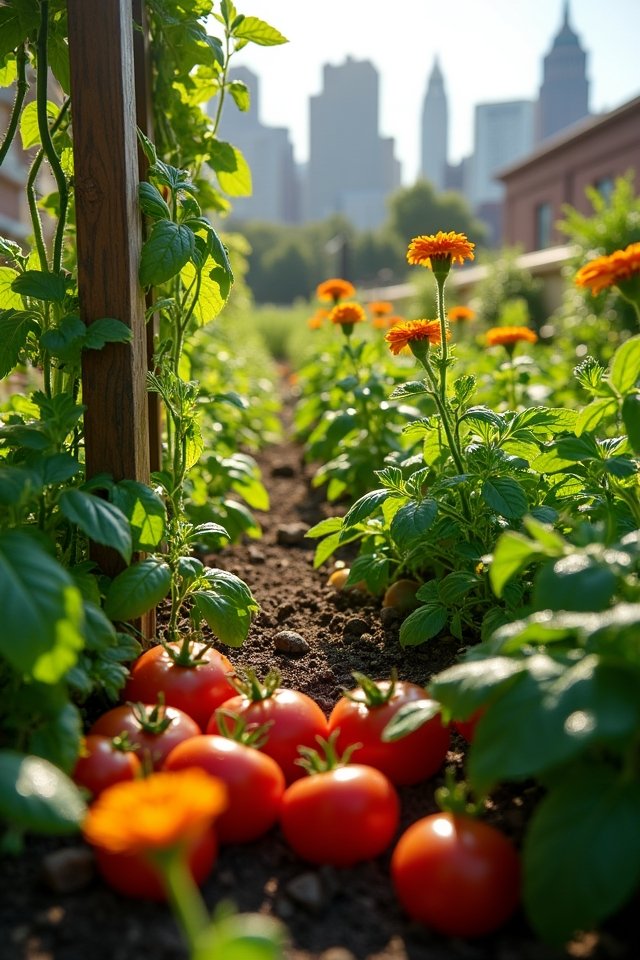
Creating a balanced ecosystem in your urban garden is like orchestrating a lively symphony, where every plant plays its part in harmony! To achieve that delightful ecosystem balance, focus on enriching your soil health and enticing beneficial insects. Here are four key tips to help you get started:
- Diverse Planting: Integrate varied types of plants, including flowers, herbs, and vegetables, to attract pollinators and repel pests.
- Companion Pairing: Pair plants wisely; for instance, basil loves tomatoes—nearly as much as pizza!
- Natural Pest Control: Encourage ladybugs and lacewings by planting dill or yarrow—they’ll munch on pesky aphids!
- Maintaining Soil: Regularly add compost to boost soil health and provide nutrients—think of it as a gourmet meal for your plants!
Happy gardening!
Reduce Water Usage Through Strategic Planting
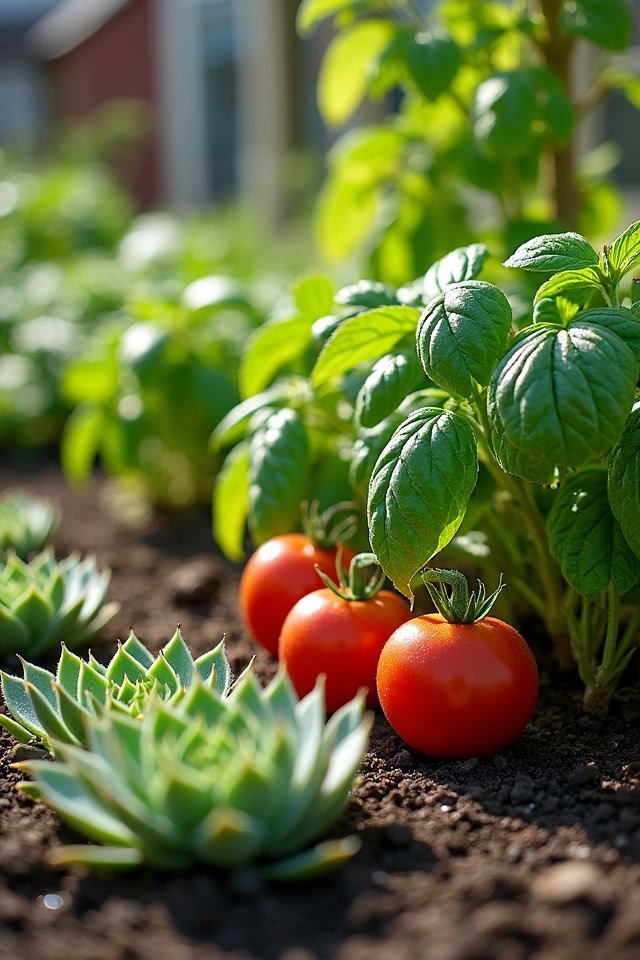
By strategically choosing your plants, you can considerably cut down on the amount of water your urban garden needs, making it both eco-friendly and wallet-friendly! Think of drought-resistant plants as your garden’s superheroes—courageously thriving in tough conditions! For instance, consider succulents like sedum or agave, which require minimal moisture yet bring stunning textures and shapes. Pair them with moisture-retaining mulch to create a protective blanket for your soil, keeping it hydrated longer. This combo not only saves water but also reduces weeding time—yes, please! You’ll feel like a gardening magician, creating a lush oasis without drowning in water bills. Why not brainstorm a plant palette that’ll flourish with less? Your garden—and your wallet—will thank you!
Encourage Beneficial Microorganisms in Urban Soils
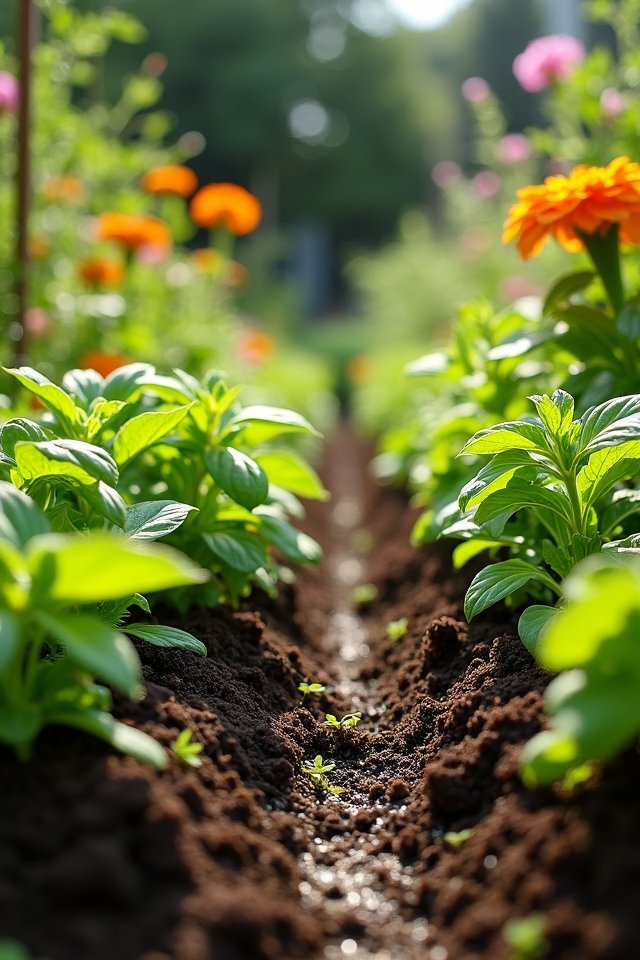
After trimming down your water usage, it’s time to focus on boosting the health of your urban garden soil! Healthy soil, rich in microbial diversity, brings your plants to life! Here’s how you can encourage those tiny soil superheroes:
- Add Organic Matter: Toss in compost or aged manure to ignite microbial activity!
- Rotate Your Crops: Switch up plants each season to keep beneficial microbes on their toes!
- Plant Cover Crops: Introducing clover or rye can improve soil health and beneficial microbial habitats!
- Limit Chemicals: Ditch synthetic fertilizers; they can scare off your essential microorganism allies!
Frequently Asked Questions
What Are the Best Companion Plants for Urban Vegetable Gardens?
When it comes to companion plants in your urban veggie patch, think delicious herb pairings! Basil loves tomatoes, warding off pesky bugs like a superhero. Ever tried marigolds? They’re like alarm systems, calling out pests before they can steal your harvest! Planting garlic with kale can deter those munchy critters, too! You’ll love seeing how well these companions thrive together, creating a vibrant ecosystem that’s not just productive but bursting with flavor!
Can Companion Planting Improve Urban Soil Quality?
Did you know that healthy soil can boost plant productivity by up to 30%? When you combine the right plants, you create a vibrant urban ecosystem that thrives! Companion planting helps improve soil health by enhancing nutrient levels and promoting beneficial microorganisms. Imagine your veggies growing stronger, like superheroes powered by their plant buddies! So, yes, let those roots mingle and watch as your urban garden transforms into a lush paradise! Isn’t that exciting?
How Does Companion Planting Affect Plant Growth Rates?
Companion planting does wonders for your garden’s growth rate! It’s like giving your plants a team of cheerleaders. For instance, pairing basil with tomatoes can boost their overall health and enhance growth rates faster than a speeding bullet! When plants support each other, they share nutrients and fend off pests together. So, imagine vibrant veggies thriving side by side, contributing to each other’s success! Isn’t that just magical? Your garden will thank you!
Are There Specific Ratios for Plant Spacing in Companion Planting?
When diving into companion planting, you’ll find specific ratios for plant spacing can make a world of difference! Think of planting densities like a dance floor—too crowded, and you can’t move! Aim for ratios like 1:1 or 3:1, depending on plant size and needs. For instance, plant three basil plants close to one tomato. They’ll thrive together! Keep it cozy, not cramped; your garden will thank you for the thoughtful touch!
Can Companion Planting Work in Containers or Raised Beds?
Companion planting thrives in both container compatibility and raised bed arrangements! Imagine this: a vibrant cherry tomato cozying up to fragrant basil, while radishes keep those pesky pests at bay! You can arrange marigolds alongside your greens for a burst of color and protection. Isn’t that delightful? Just remember, give each plant enough space to spread their roots. It’s nature’s little party, and you’re the guest of honor! Who wouldn’t want that?