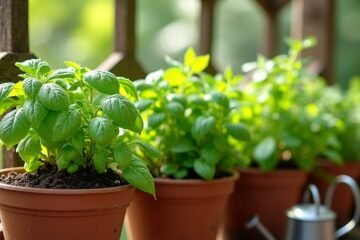
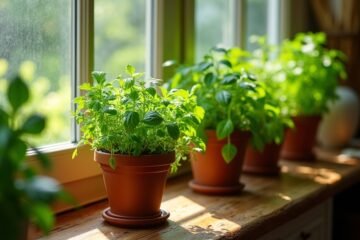
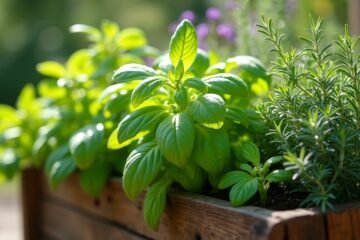
Growing herbs in containers can be so much fun! First, pick the right pots—like clay for breathing roots or flashy plastic for lightweight fun. Next, choose vibrant herbs like basil and fragrant rosemary. Don’t forget drainage! Elevate your pots and use quality potting mix to keep them happy. Sunlight’s essential, so give them 6-8 hours daily. Water smartly and trim them regularly for lush growth. With these tips, your herb garden will be a delightful masterpiece! Curious for more?
Choose the Right Containers
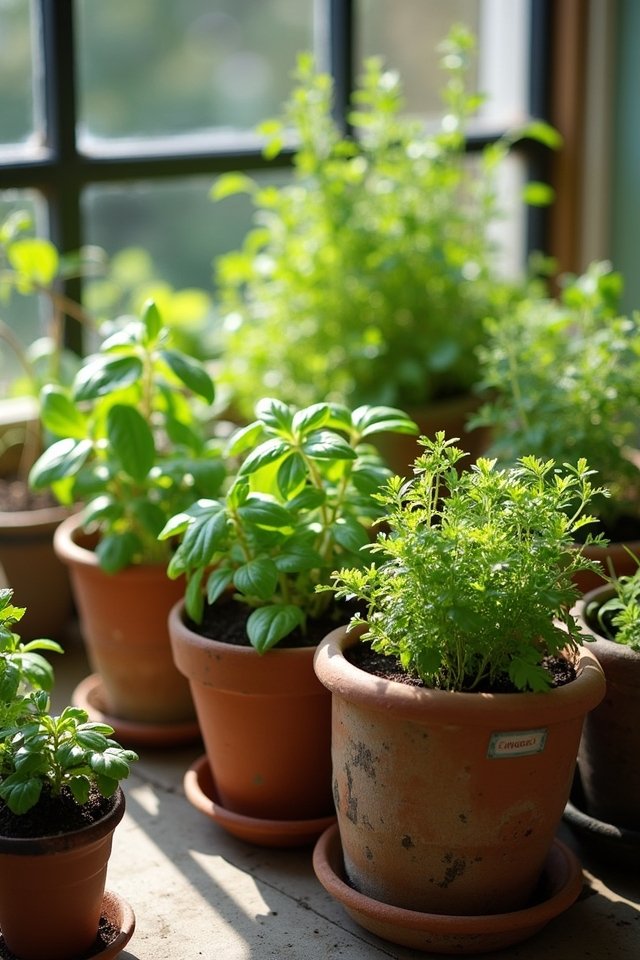
When you’re diving into the delightful world of growing herbs in containers, choosing the right pots is like picking the perfect shoes for a big event—comfortable, stylish, and just the right fit! Think about container materials: clay pots breathe well, while plastic ones are lightweight and easy to move. You’ll love how each option has its perks! Now, consider container size. Smaller herbs need pots around 6-8 inches, but larger varieties like basil thrive in 12-inch homes. Imagine your fragrant herbs basking in the sun, their vibrant greens popping against the pot’s earthy tones! So, mix and match your containers to create a stunning herb garden that’s not just functional, but also a feast for the eyes! Happy planting!
Select Suitable Herbs for Containers

Selecting suitable herbs for containers can feel like choosing your favorite ice cream flavor—so many delicious options, and each one brings its own unique twist! Think about vibrant basil, which dances in the sun, or fragrant rosemary that whispers culinary secrets. When choosing herb varieties, consider your container size; larger pots can accommodate sprawling plants like mint, while smaller ones suit compact herbs like thyme. Don’t overlook the joy of mixing colors and scents! Picture a container bursting with bright parsley, zesty cilantro, and rich oregano. Imagine the fragrant symphony as you snip fresh herbs for your dishes! So, which delightful herb combo will you create? The possibilities are endless, and the garden is calling!
Ensure Proper Drainage
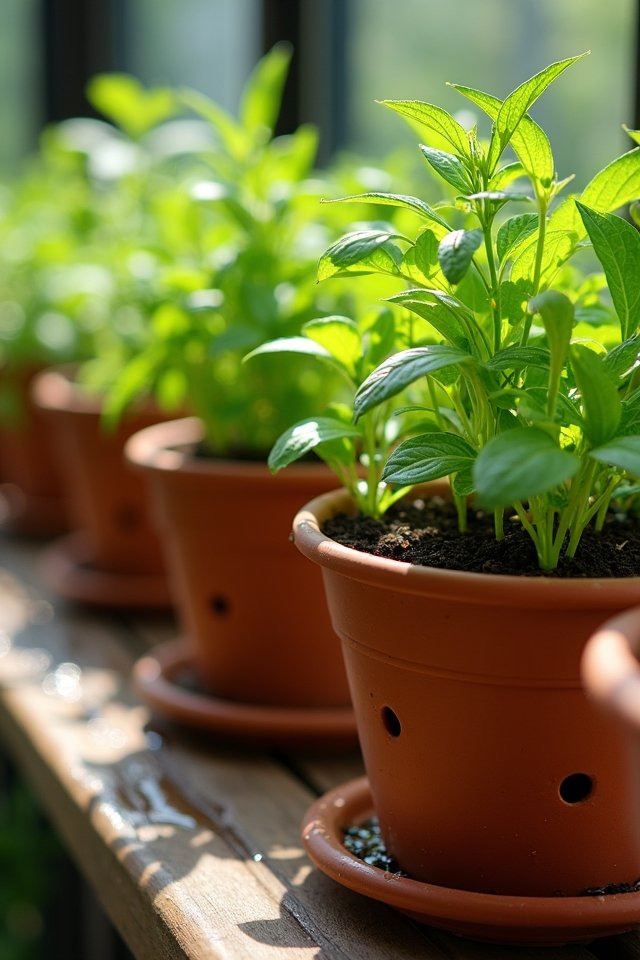
While you might dream of a lush herb garden, nothing ruins that vision faster than soggy roots and droopy leaves! To guarantee your herbs flourish, start by choosing containers with drainage holes. These little openings are like lifelines, preventing water from pooling and suffocating your plants. Don’t stop there! Elevate your containers slightly using pot feet or stones, giving excess water a chance to escape. Imagine your herbs, standing tall and vibrant, rather than wilting in a watery grave! You’ll not only protect their roots but also create an inviting space that’s visually appealing. So, let’s keep those herbs happy and thriving—because the only thing droopy should be your favorite salad dressing, not your herbs!
Use Quality Potting Mix

The secret to happy, thriving herbs lies in the potting mix you choose! Think of it as a cozy blanket for your plants. Quality potting mixes offer incredible potting benefits, like improved drainage and nutrient retention. You wouldn’t want your herbs to sit in soggy soil, right? Instead, opt for organic options loaded with rich compost and natural fertilizers. Imagine your basil basking in a nutrient-dense environment, growing lush and fragrant! When selecting, look for mixes specifically designed for container gardening—these blends often include perlite or vermiculite for that extra aeration. Remember, your herbs crave the good stuff just like you do! So, give them the best foundation, and watch them flourish like never before! What’s not to love?
Provide Adequate Sunlight
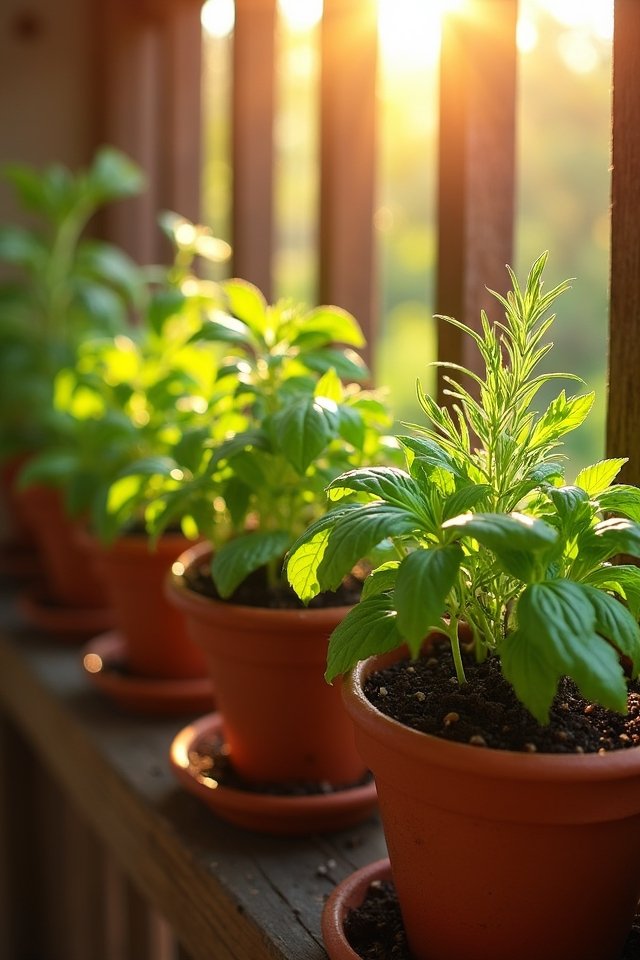
If you want your herbs to thrive, then giving them plenty of sunlight is key! Imagine your basil basking in warm, golden rays, soaking up all that life-giving energy. Most herbs love six to eight hours of sunlight exposure daily—just like you’d want a good sunbathe on a lazy weekend! Check your herbs’ light requirements; some, like mint, can even handle partial shade. So, if your balcony or patio doesn’t get full sun, don’t sweat it. You might need to rotate your containers, making sure each plant gets its share of those glorious rays. Remember, a little sun goes a long way in transforming those humble pots into lush, fragrant gardens! Your culinary dreams are just a sunbeam away!
Water Wisely

Although it might seem simple, watering your herbs can feel like a delicate dance! You need to find the perfect water frequency for each variety. For instance, basil loves a good soak, while rosemary prefers to dry out a bit between drinks. Keep an eye on moisture retention in your containers; adding a quality potting mix can work wonders! This mix helps hold water without drowning your precious plants.
Feel the soil—if it’s dry an inch down, it’s time for a splash! And remember, it’s better to underwater than overwater. Think of your herbs as thirsty little friends, enthusiastic for just the right amount of hydration. So, let’s keep that dance flowing, shall we? Happy watering!
Regularly Prune and Harvest
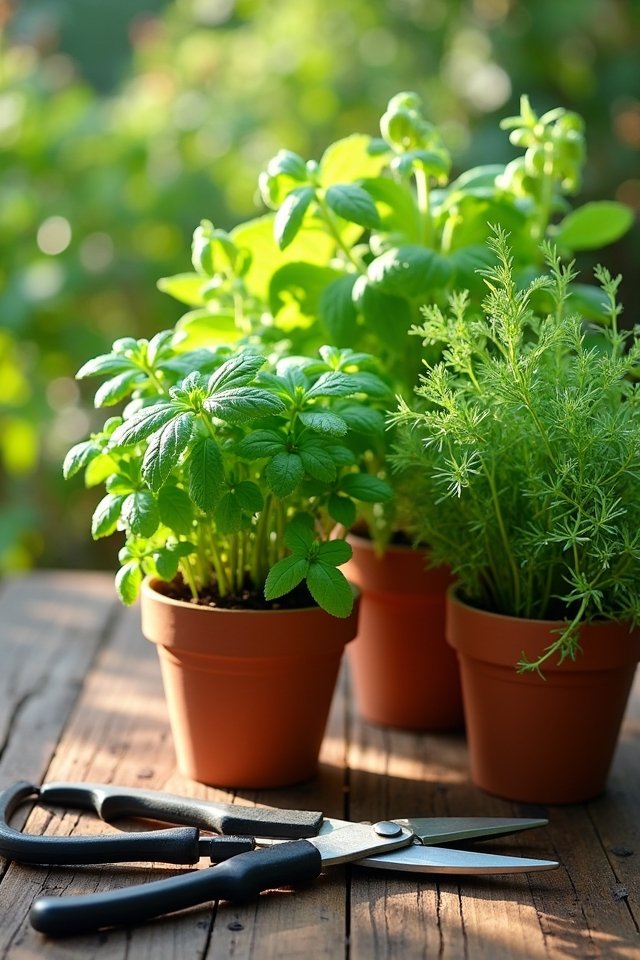
Snip those leaves and brighten your culinary adventures! Regularly pruning and harvesting your herbs isn’t just a chore; it’s an art form! Mastering pruning techniques can release a wave of fresh flavors in your dishes. Trim the tops to encourage bushy growth, and don’t be shy—harvest frequently! Aim for every couple of weeks; your plants will thrive, and so will your taste buds. Imagine plucking vibrant basil or fragrant rosemary right from your container, ready to elevate your pasta or roasted veggies. Plus, keeping the herbs trimmed prevents them from getting leggy, like a wild hairstyle gone wrong! So grab those scissors, let your creativity flow, and welcome the joy of fresh herbs in your kitchen!
Frequently Asked Questions
Can I Grow Herbs Indoors Year-Round in Containers?
Absolutely, you can grow herbs indoors year-round in containers! Imagine snipping fresh basil or mint while winter’s chill lingers outside. For successful indoor gardening, focus on bright light and good drainage in your pots. Rotate your herbs for even growth, and remember to give them a little love! With proper herb care, like regular watering and occasional feeding, your kitchen can become a vibrant, fragrant oasis. Who doesn’t want that? Happy herb-raising!
How Do I Prevent Pests on Container Herbs?
To prevent pests on your container herbs, adopt organic solutions like neem oil or insecticidal soap. They’re the superheroes of pest control! Regularly check your plants for tiny intruders—like an undercover detective on a mission. You can also plant herbs like basil or mint, which naturally repel bugs. Keep your herbs healthy with proper watering and sunlight; a happy plant is a pest’s worst nightmare! Isn’t gardening just the best?
What Temperature Is Best for Growing Herbs in Containers?
The ideal temperatures for growing herbs in containers usually hover between 60°F and 75°F. Think of it as a cozy blanket for your plants! However, seasonal variations can throw a wrench in your plans. In summer, keep an eye on heat; herbs can wilt like a sad flower if it gets too hot. Conversely, chilly nights can stunt their growth. So, grab a thermometer and be their temperature superhero! Your herbs will thank you!
Can I Use Leftover Garden Soil in Containers?
You can definitely use leftover garden soil in containers, but watch out for soil quality! Mix it with fresh potting mix to guarantee your herbs thrive. Good drainage is key, so consider adding perlite or sand. Just like a cozy bed needs fluff, your container needs that perfect blend! And hey, if your soil’s got pests or diseases, it’s time to say goodbye. Your herbs deserve a fresh start, don’t they? Happy planting!
How Often Should I Fertilize My Container Herbs?
Fertilizing your container herbs is like giving them a spa day—everyone loves a little pampering! You should fertilize every four to six weeks during the growing season. Use liquid fertilizers for a quick boost or slow-release types for consistent nourishment. This helps your herbs thrive, promoting lush growth and robust flavors! Just remember, over-fertilizing can lead to leafy chaos instead of tasty goodness. Keep it balanced, and your herbs will thank you!