Want to keep your urban garden buzzing with life and free from pests? Start by spotting common culprits, like sneaky aphids! Use marigolds as cheerful guards, repelling pests while adding color. Create harmony with companion plants—basil and peppers are a delicious duo! Don’t forget to invite beneficial insects, like ladybugs, to help manage pests. With a little creativity and strategic thinking, your garden can flourish! Ready to transform your space into a pest-free paradise? Let’s dig in!
Understanding Common Pests in Urban Gardens
When you step into your urban garden, vibrant colors greet you, but beware of those sneaky little pests lurking nearby! To keep your garden thriving, you need to master pest identification techniques. Spotting a tiny aphid from a distance could save your beloved plants! It’s not just about seeing them; understanding their lifecycle is essential. For instance, did you know that knowing when caterpillars hatch can help you protect your seedlings? Think of it as a game of hide-and-seek; only this time, you’re using your keen observation skills to outsmart them. You’ll feel like a garden detective! Accept this challenge, and let’s transform those pesty invaders into a thing of the past, one informed choice at a time!
Preventative Measures for Pest Control

While you might not think about it every time you step outside, keeping pests at bay is an essential part of your urban gardening adventure! Imagine your tomatoes thriving, untouched by those sneaky pests—sounds great, right? One solid way to achieve this is through crop rotation; change up what you plant each season! It confuses pests, which can’t keep up with your garden’s secrets. Also, welcome garden diversity! By combining various plants, you can attract helpful insects that’ll join the fight against harmful ones. Think of it as building a tiny ecosystem! Your vibrant marigolds might just be the superheroes swooping in to save the day. So gear up, and let’s make pest problems a thing of the past!
Natural Pest Deterrents and Attractants
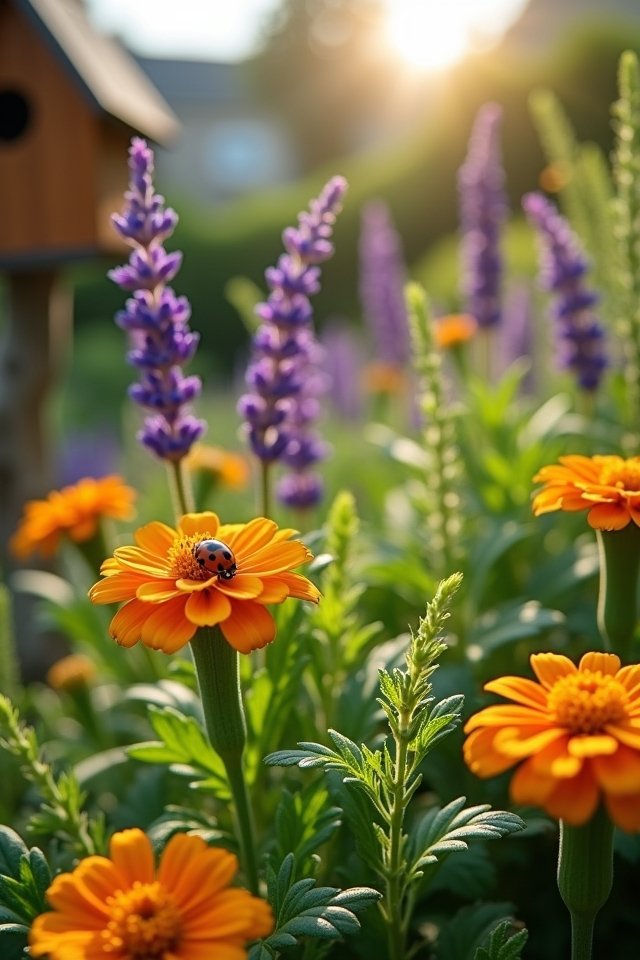
To keep your urban garden buzzing with life and free from pesky invaders, utilizing natural pest deterrents and attractants is a game-changer! Imagine spritzing your plants with aromatic herbal sprays made from lavender or peppermint—it’s like giving your garden a delightful perfume that bugs just can’t stand. You’ll find that plant oils, like neem or eucalyptus, not only repel those unwelcome guests but also nourish your greenery. Want to attract beneficial insects instead? Planting flowers like marigolds is like rolling out the red carpet for ladybugs! By embracing these innovative natural solutions, your garden will be a vibrant ecosystem. Ready to kick those pests to the curb? Let’s get spraying and enjoy your bug-free oasis!
Companion Planting Strategies

Ready to give your garden a boost? Companion planting can be your secret weapon against pests! Think of it like a matchmaking service for plants. When you practice crop pairing—like planting marigolds next to tomatoes—you encourage plant synergy. Those marigolds can deter pesky nematodes, making your tomatoes thrive! Imagine the vibrant colors of your garden, boundaries ablaze with life!
Try mixing basil with your peppers; the aromatic basil can enhance flavor while keeping aphids at bay. How cool is that? Or pop some nasturtiums in with your cucumbers; they’ll attract pests away, while you enjoy a salad full of fresh tastes! By teaming up these plants, you create an innovative tapestry that not only delights the eyes but also flummoxes unwanted critters!
Utilizing Beneficial Insects
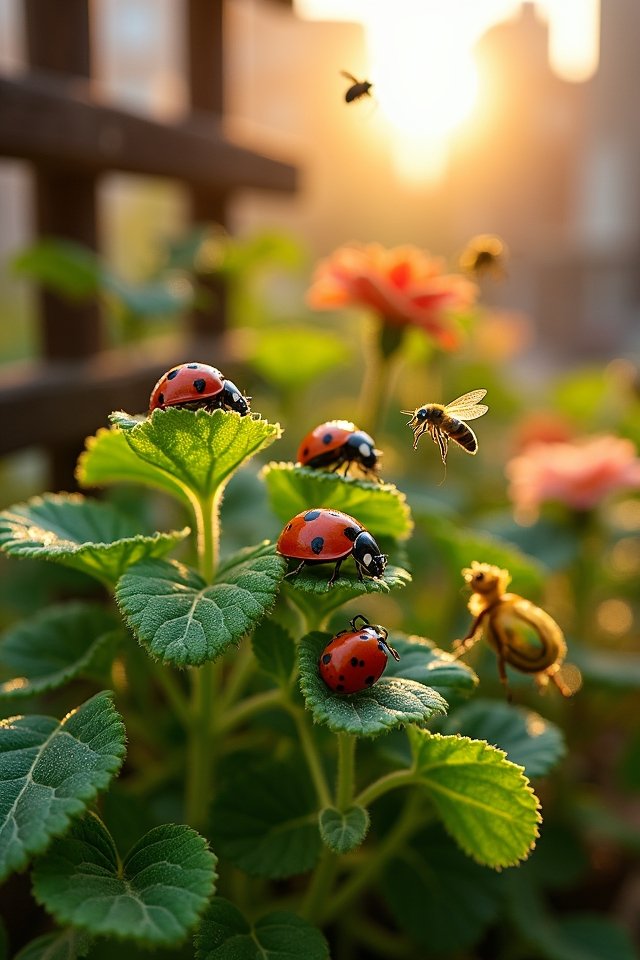
When you’re wrestling with pesky pests in your garden, think of beneficial insects as your tiny, flying superheroes, swooping in to save the day! These little allies are essential to a balanced pest ecology. They combat harmful critters naturally, letting you garden with ease!
Here’s how you can enlist their help:
- Ladybugs munch on aphids faster than you can blink!
- Praying mantises are fierce predators that’ll tackle a buffet of garden pests.
- Lacewings swoop in to lay eggs that hatch into hungry larvae, gobbling up unwanted bugs!
- Predatory wasps help control caterpillar populations, keeping your plants safe.
Embrace these active partners, and watch your garden thrive while they do the dirty work! Isn’t nature amazing?
Organic Pesticides and Their Application

While inviting helpful bugs like ladybugs and lacewings can work wonders in your urban garden, there are times when you might need additional support in your pest-fighting arsenal. Enter organic pesticides! Different organic pesticide types, like neem oil and insecticidal soap, can be game-changers. Applying them might sound challenging, but it’s actually a breeze. Spray neem oil early in the morning or late afternoon, when beneficial insects are less active. Mix insecticidal soap with water and watch those nasty pests disappear! Imagine your plants thriving, free from those little invaders! Just remember to test a small area first. With the right application techniques, you’re not just fighting pests—you’re nurturing a vibrant ecosystem! Who knew pest control could feel so rewarding?
Physical Barriers and Traps

Imagine your garden as a fortress, brimming with tender greens and vibrant blooms under siege from pesky critters! To defend your precious plants, you can utilize physical barriers and traps that are clever and innovative.
- Use netting solutions to drape over crops, acting like a protective shield against birds and insects.
- Set up trap techniques like sticky traps and bait stations for sneaky pests that love to munch.
- Create row covers for seedlings, keeping them safe while they grow deliciously.
- Consider companion planting to confuse pests with strategic pairings, nearly like a magical duo in a fairy tale!
With these defenses, you’ll keep those pests at bay and your garden thriving! How’s that for a fortress?
Maintaining Garden Hygiene

To keep your garden in top shape and free from unwanted visitors, maintaining hygiene is key! Think of your garden as a vibrant stage; any clutter can steal the spotlight! Regular debris removal—like dead leaves and fallen branches—creates a clean canvas for your plants to shine. A tidy space not only enhances garden cleanliness but also keeps pests from finding cozy hideouts. Grab your trusty rake and don’t forget those gloves; pulling weeds and cleaning up after the last harvest feels oh-so-satisfying! Remember, a little routine goes a long way—make it a fun task! Challenge your family or friends to a garden cleanup race; laughter is the best fertilizer for teamwork! Keep it clean, keep it thriving!
Monitoring and Assessing Pest Damage

As you explore evaluating pest damage, you’ll quickly realize that a keen eye is your best ally! Identifying what’s munching on your beloved plants can be a bit of a challenge, but using effective pest identification techniques can save the day.
Consider these damage assessment methods:
- Inspect leaves for holes or discoloration: It’s like checking for bite marks at a picnic!
- Look for webbing or droppings: Nature’s little clues can lead you to the culprits.
- Monitor plant growth: Stunted plants scream for help, don’t they?
- Track pest activity: It’s like detective work—stay vigilant!
Stay observant, and you’ll spot any issues before they become garden disasters! Remember, knowledge is power, and your garden will thank you for it!
Frequently Asked Questions
How Do I Identify the Lifecycle of Common Garden Pests?
To identify the lifecycle of common garden pests, you’ve gotta observe their behavior closely! Start by noticing their lifecycle stages—eggs, larvae, pupae, and adults. For instance, caterpillars munch leaves while hidden. Imagine tiny, hungry monsters! Keep a journal of sightings and changes; it’s like creating their biography! Take care, though. Recognizing these stages helps you outsmart them, making your garden a fortress full of flowers instead of bugs! Ready to be a pest detective?
Can Pets Affect Pest Control Methods in My Garden?
Can pets affect pest control methods in your garden? Absolutely! Their playful antics can stir up trouble for your pest management strategies. For instance, a curious cat might pounce on beneficial insects while seeking out a sunny patch! Garden safety is essential too; some sprays can be harmful for your furry friends. So, always read labels and supervise your pets as they explore rambunctiously. Think of them as adorable garden detectives, investigating every corner!
What Impact Do Weather Conditions Have on Pest Populations?
Weather patterns can wreak havoc on pest populations! Think about when it rains; pests rejoice! Warm, humid days can spark pest outbreaks like a party nobody wants to attend. Cold snaps? They send pests scurrying but can also reduce their numbers temporarily. You’ve got to stay sharp! Observing these fluctuations can help you combat pesky intruders in your garden. So, when the sky changes, will you change your pest control tactics too?
How Can I Encourage Natural Predators Without Harming My Plants?
Imagine your garden buzzing with life, where beneficial insects, like ladybugs and lacewings, dance among your plants! To encourage these tiny protectors, try companion planting—mixing marigolds with tomatoes, for instance. Those vibrant marigolds attract predators while keeping pests at bay! You’ll find yourself smiling as they swoop in, turning your garden into a natural fortress! Just think of it: your plants thriving, defended by their little allies! What’s not to love?
Where Can I Find Pest Management Resources Specific to My Region?
You’re on a quest for pest management resources, and you’re in luck! Check out your local extension office, where friendly experts offer a wealth of knowledge tailored to your region. They’ve got everything from pest identification guides to innovative control techniques! Plus, pest control associations are a treasure trove of tips and tricks. Imagine swatting away pesky invasives like a pro! Don’t hesitate; plunge in and explore these local gems!