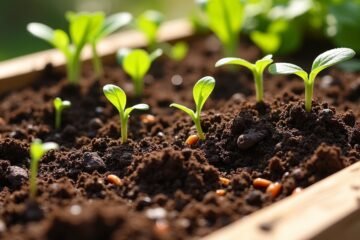
Starting a raised bed garden today is like opening a door to a delightful world of homegrown goodies! Imagine plucking juicy tomatoes, fragrant basil, and crunchy peppers right from your garden. Raised beds warm up quicker in spring and keep your soil moist, making plants thrive. Plus, they’re easier on your back—no bending down! Wondering how to get the perfect setup? Keep going, and you’ll discover all the tips to create your own green paradise!
Benefits of Raised Bed Gardening
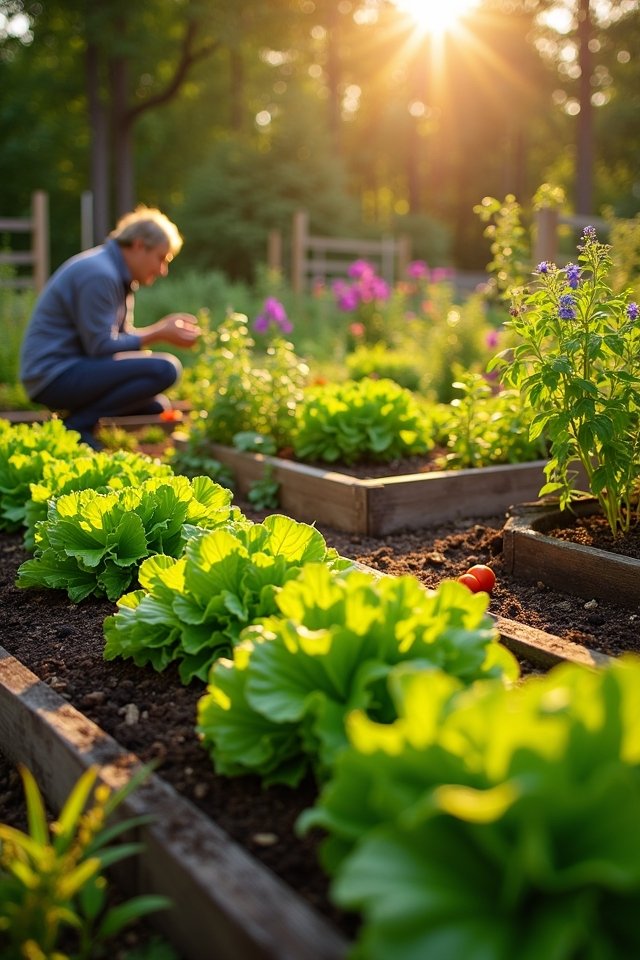
When you immerse yourself in the world of raised bed gardening, you’ll discover a treasure trove of benefits that can make your gardening experience not just easier, but downright delightful! Imagine having a vibrant garden right at your fingertips, where pest control becomes a breeze. By utilizing companion planting, you can cleverly pair plants that naturally repel pests. For instance, basil’s sweet aroma can deter those pesky aphids while boosting your tomato plants’ flavors. Plus, raised beds warm up faster in spring, letting you engage in gardening sooner! You’ll save on water too, as the soil retains moisture better. So, why wait? Immerse yourself in this innovative gardening style and watch your green thumb flourish like never before!
Choosing the Right Location
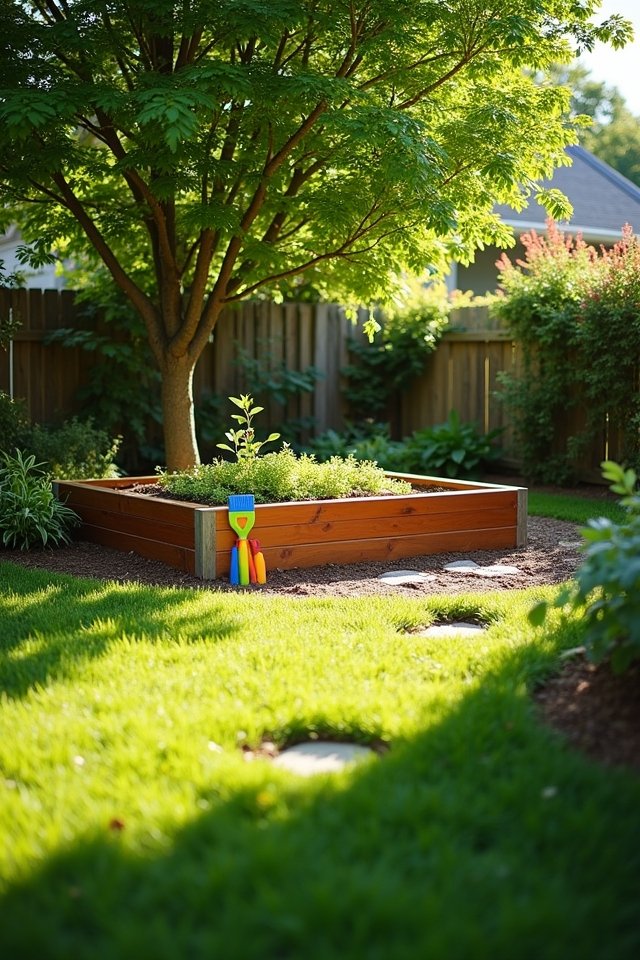
Have you ever thought about how the right location can make or break your raised bed garden? Picking the perfect spot is vital for success! You want your plants to thrive, right? Focus on sun exposure and water drainage to keep them happy.
- Aim for at least 6 hours of sunlight daily, like your plants are sunbathing on a tropical beach.
- Guarantee good water drainage—nobody likes soggy roots!
- Choose a spot close to your water source, so you can hydrate your green friends without a trek.
With the right location, you’re not just planting; you’re creating a flourishing oasis! So, grab your map, and let’s find that golden spot for your garden adventure!
Materials for Building Raised Beds
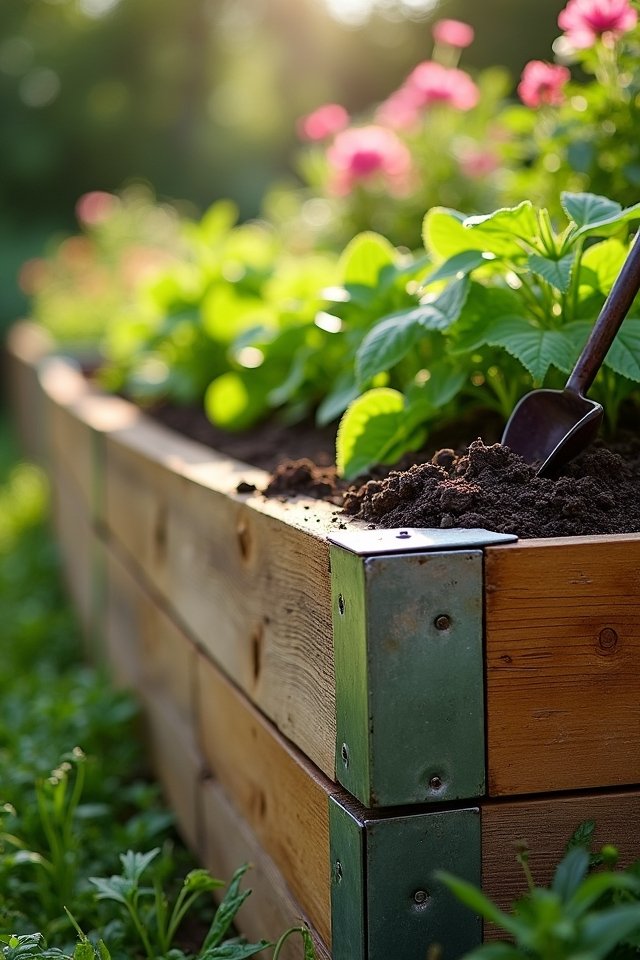
While you might dream of lush veggies and vibrant flowers, the materials you choose for building raised beds can be the backbone of your gardening success! Think of timber options like cedar or redwood, which not only look great but also resist rot. Want something a bit different? Consider composite materials; they’re eco-friendly and durable! If you’re short on space, container choices like repurposed wine barrels or stylish metal troughs can be fantastic alternatives. Imagine a colorful array of blooms spilling over the edges! Just remember, whatever you pick, guarantee it’s safe for growing edibles. With the right materials, your garden will thrive, and you’ll be the envy of the neighborhood! So, what are you waiting for? Let’s get building!
Soil Preparation and Plant Selection
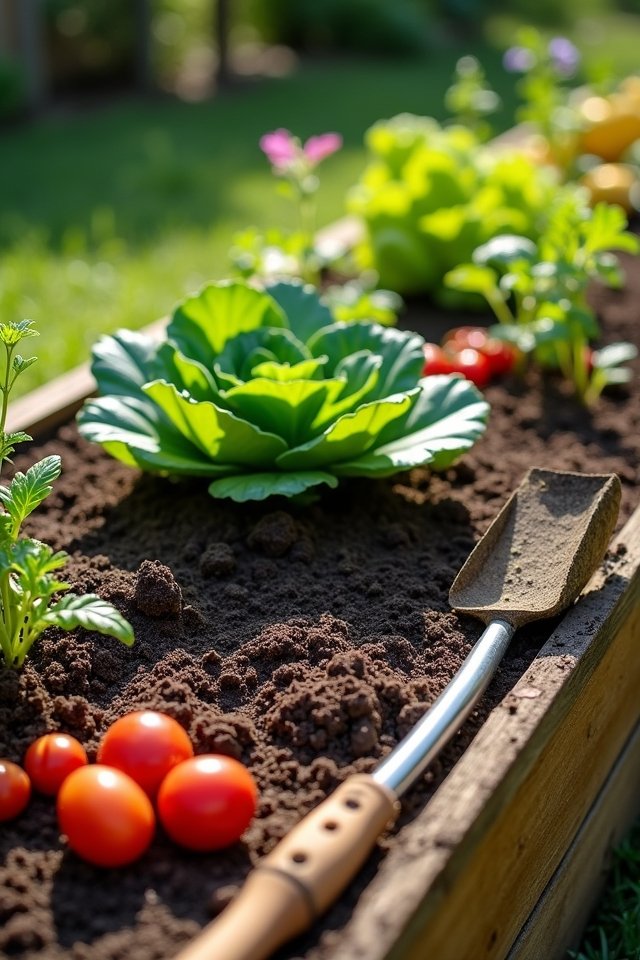
Before you dive headfirst into planting, let’s talk about soil preparation and plant selection—your garden’s secret weapons! The right soil is like a magic potion; it nurtures your plants to thrive. To kickstart your garden journey, consider these essentials:
- Compost types: Mix in rich, organic compost, like worm castings or kitchen scraps, for a nutrient boost!
- Soil amendments: Add perlite or peat moss to improve drainage and aeration for those roots!
- Plant selection: Choose vibrant seedlings or seeds that suit your climate, like tomatoes or peppers!
With the perfect blend of soil and plants, you’ll set the stage for a flourishing garden that’ll make your neighbors green with envy! Ready to dig in? Let’s get growing!
Maintenance Tips for a Thriving Garden
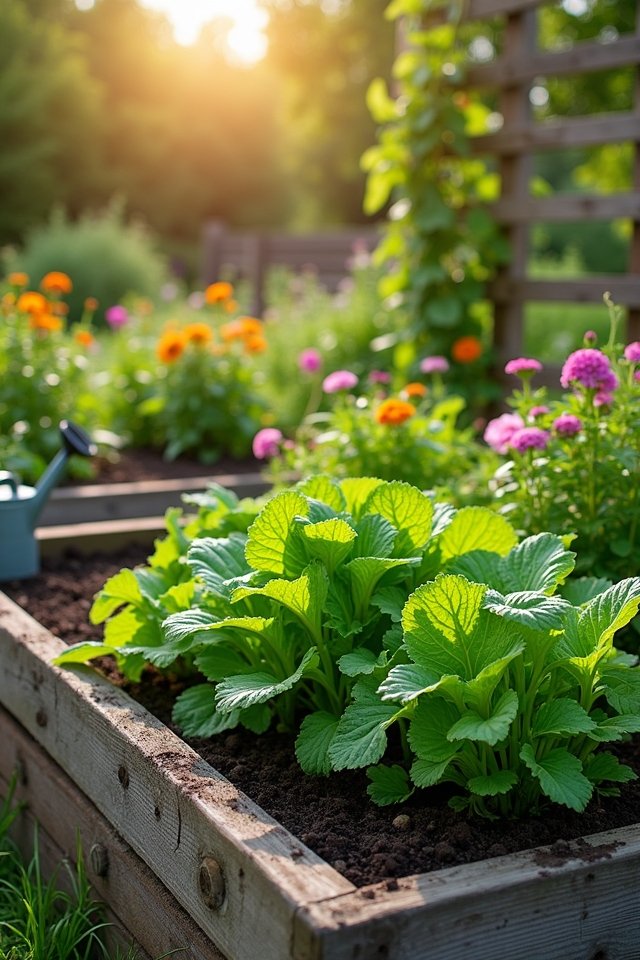
To keep your garden thriving, it’s essential to stay on top of maintenance like a dedicated gardener superhero! First, implement effective pest management strategies, like introducing ladybugs to feast on pesky aphids. It’s nature’s way of keeping your garden balanced! Next, master your watering techniques. Water early in the morning or late in the evening to minimize evaporation—think of it as giving your plants a revitalizing drink on a hot day. Try drip irrigation for precision, ensuring every drop counts! Don’t forget to regularly check your plants for signs of stress; yellow leaves can signal trouble. By embracing these innovative methods, you’ll nurture a vibrant oasis that flourishes with life, color, and delicious veggies. Happy gardening!
Common Challenges and Solutions
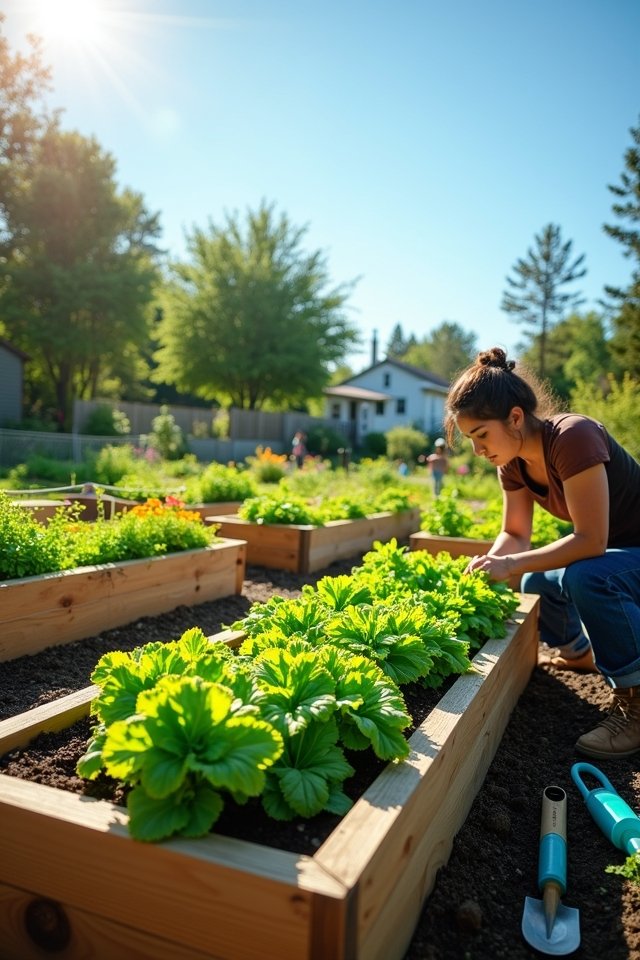
Even with all your superhero maintenance skills, challenges can sneak into your raised bed garden like uninvited guests at a party! But don’t worry; you’ve got this! Here are some common hurdles and their savvy solutions:
- Pest management: Use companion planting to confuse those pesky bugs! Marigolds can deter aphids and other invaders.
- Weather challenges: Build a simple shade cover for those scorching days, protecting your plants from heat stress and wilting.
- Soil health: Regularly test your soil and enrich it with compost to keep nutrients in check.
Frequently Asked Questions
Can I Use Recycled Materials for Raised Beds?
Did you know that over 70% of garden enthusiasts use recycled materials for their projects? Yes, you can absolutely use recycled wood for your raised beds! It’s not just eco-friendly; it also adds a unique charm to your garden aesthetics. Imagine vibrant vegetables growing in rustic, weathered wood! Just make sure the wood isn’t treated with harmful chemicals. So, get creative! Why not repurpose old pallets or fence boards for your green oasis?
What Vegetables Grow Best in Small Raised Beds?
When you’re gardening in small raised beds, think compact and clever! Carrots and radishes thrive close together, creating a colorful patchwork of veggies. Don’t forget companion planting! Pair tomatoes with basil for a fragrant feast, while peppers and onions make a spicy duo. Just remember, proper vegetable spacing is key—give each plant room to stretch and flourish. With a bit of planning, you’ll have a thriving mini-garden that’s bursting with flavor!
How Deep Should My Raised Bed Be for Root Vegetables?
Did you know root vegetables like carrots can grow as deep as 3 feet? For your raised bed, aim for at least 12 to 18 inches deep! This depth guarantees they have enough room to stretch and thrive. Plus, good soil quality helps them reach their full potential. Imagine pulling out plump, vibrant veggies! Just think—your garden could be a treasure trove of deliciousness, waiting to be unearthed! Isn’t that exciting?
Do Raised Beds Require More Watering Than Traditional Gardens?
Absolutely, raised beds can require a bit more watering than traditional gardens! Why? Their soil composition often drains faster, leaving roots thirsty. But don’t fret! You can enhance water retention by adding organic matter like compost, which acts like a sponge. Imagine your plants sipping water joyfully! Plus, a well-mulched bed can keep moisture in longer. So, if you’re ready to quench your garden’s thirst, you’ll reap the rewards of vibrant growth!
Can I Plant Flowers in My Vegetable Raised Bed?
Absolutely, you can plant flowers in your vegetable raised bed! Picture vibrant marigolds cozying up next to your tomatoes—talk about flower compatibility! These beauties not only add color, but they also attract pollinators and deter pests through companion planting. Just imagine the delightful scent and buzzing bees! So, don’t hesitate to mix it up; your veggies will thrive, and your garden will look like a blooming masterpiece! Isn’t that a win-win?