To keep your raised bed garden thriving, you need to stay on top of a few essential tasks! Regularly check soil moisture, water when the top inch feels dry, and watch your plants perk up! Mix in rich compost for nutrients and use mulching to keep weeds at bay like a trusty shield. Don’t forget to rotate your crops, keep an eye out for pests, and prune away dead bits. Ready to make your garden even better?
Regularly Check Soil Moisture Levels
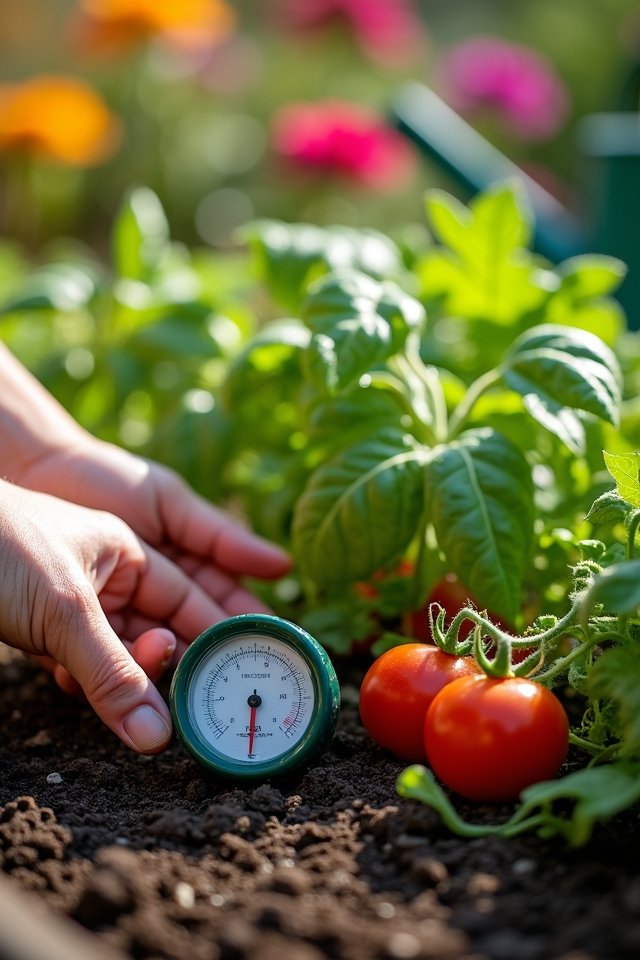
When you immerse yourself in the wonderful world of raised bed gardening, it’s crucial to keep an eye on one important element: soil moisture! Think of soil moisture as the lifeblood of your plants. You wouldn’t want to drown them, right? Regularly checking moisture levels guarantees your greens thrive! Use moisture indicators, like simple soil probes or even your trusty finger, to gauge moisture like a pro. If the top inch feels dry, it’s time for a splash! Picture your veggies, thirsty and waving at you! They’ll flourish with just the right amount of hydration. So, adopt that watering can, and remember: a happy garden means happy harvests. Why settle for less when your plants could be the envy of the neighborhood?
Implement a Crop Rotation Schedule
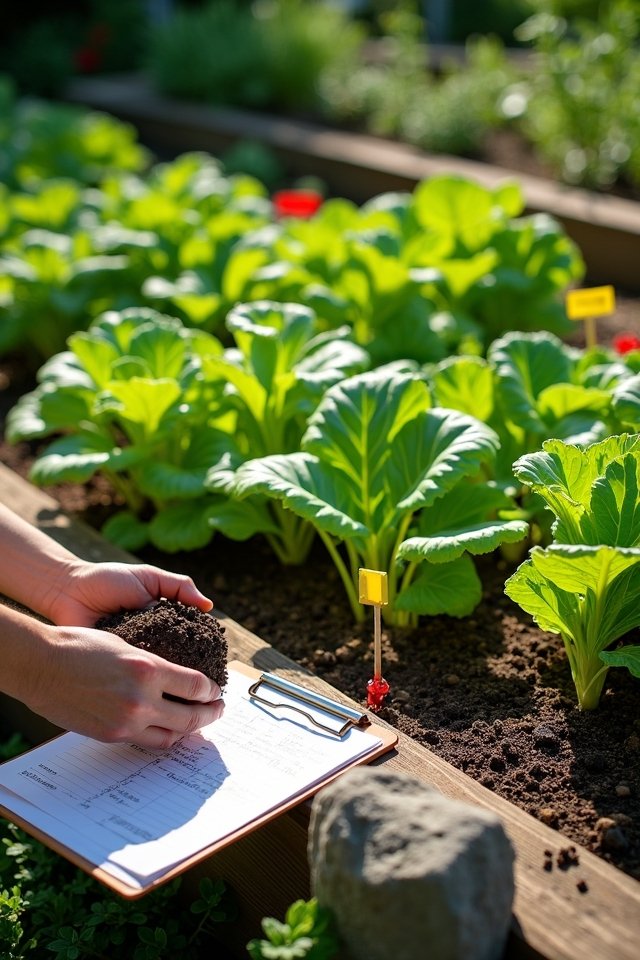
Implementing a crop rotation schedule isn’t just a smart move; it’s like giving your garden a little spa day! By changing where you plant your crops each season, you boost crop diversity and enhance soil health. Think of it as a fun garden dance! Here’s how to get started:
- Group plants by family: Rotate vegetables from different families, like legumes, nightshades, and brassicas, to prevent pest buildup.
- Plan your planting: Map out your beds to guarantee no crop returns to the same spot for at least three years.
- Monitor soil nutrients: Regularly check soil health and adjust your rotation based on nutrient needs.
Add Organic Matter and Compost
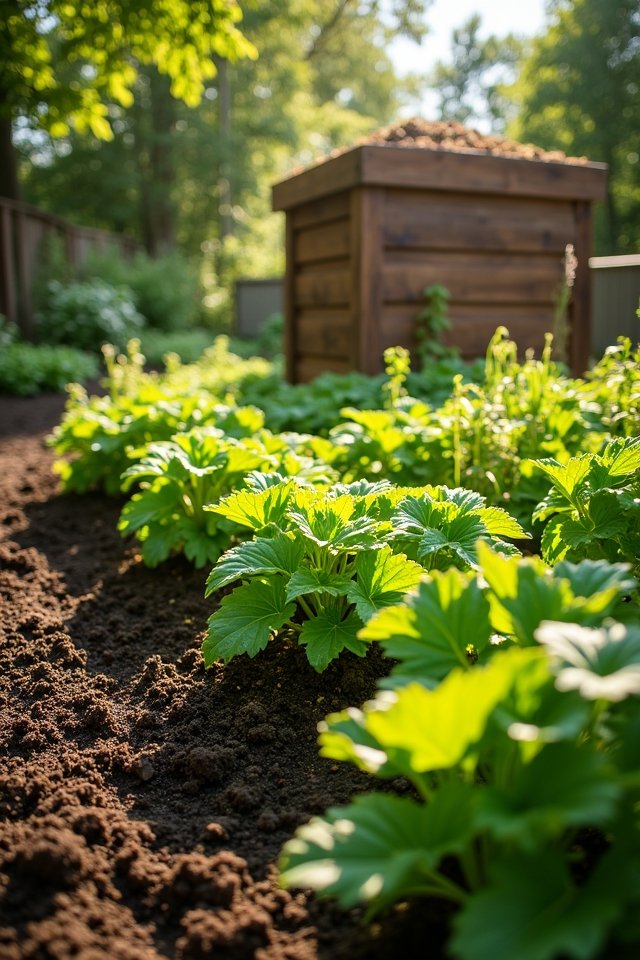
Adding organic matter and compost to your raised bed garden is like giving your soil a nutrient-packed hug! Imagine your plants thriving in rich, dark soil that’s bursting with life. That’s the magic of compost benefits! By mixing organic amendments like kitchen scraps or well-rotted manure into your beds, you’re not just feeding your plants; you’re boosting soil structure and moisture retention. Want your veggies to grow big and strong? Don’t skip the compost! It acts as a superhero, fighting off nutrient deficiencies and making your garden more resilient. Plus, it’s a sustainable way to recycle waste! So, grab that shovel, and start layering in that compost. Your plants will thank you with a vibrant display of health! Happy gardening!
Monitor for Pests and Diseases
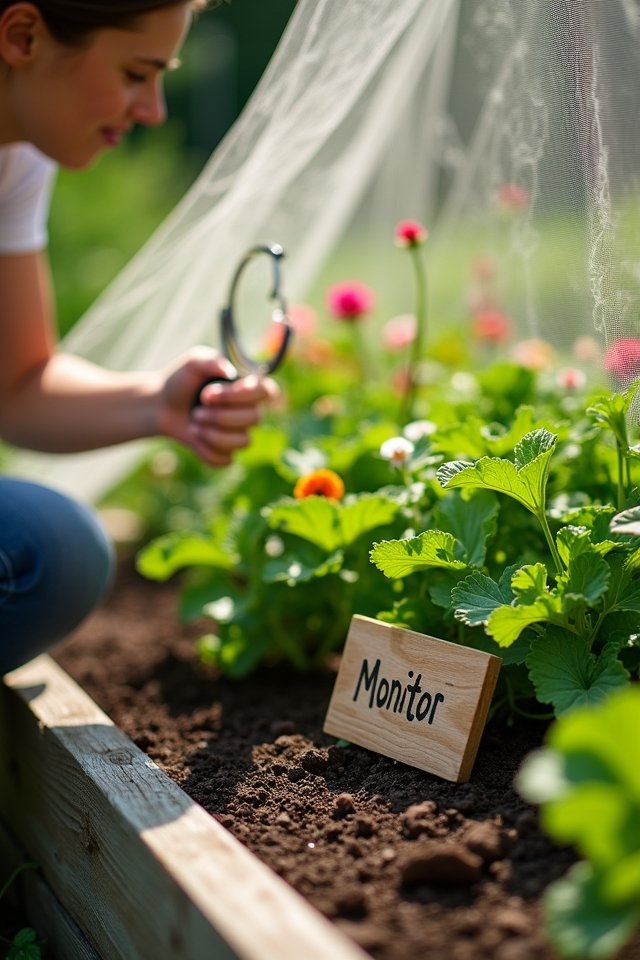
Keeping an eye out for pests and diseases is like being a vigilant superhero in your garden! You’ve got to stay sharp, ready to swoop in at a moment’s notice. Here’s how to tackle pest identification and disease prevention effectively:
- Inspect your plants regularly for unusual spots, wilting, or critters lurking beneath leaves.
- Research common pests and diseases specific to your plants, so you can recognize them instantly!
- Act quickly! Use organic remedies or natural predators to combat any threats before they spread.
Your plants depend on your watchful eye! By monitoring for pests and diseases, you’ll protect your garden’s health and guarantee a bountiful harvest. Who knew gardening could be this thrilling?
Prune and Deadhead Plants as Needed
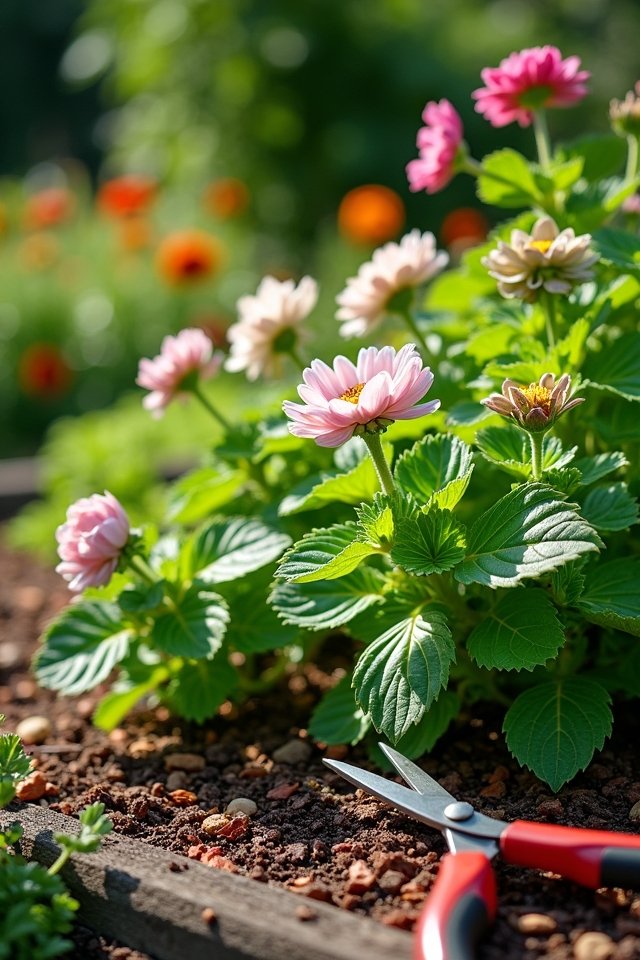
While your garden may look like a flourishing paradise, it could use a little TLC now and then! Regularly using pruning techniques can transform your plants from scraggly to stunning. Think of it as giving your greenery a stylish haircut—who doesn’t love a fresh look? Trim away dead leaves and branches, letting your plants breathe and thrive!
And don’t forget about deadheading! The deadheading benefits are immense: it encourages new blooms, keeps your garden vibrant, and prevents energy drain. Imagine those bright, cheerful flowers sprouting, all thanks to a little snip here and there! So grab your shears, put on some tunes, and let’s elevate your garden to new heights of beauty and productivity! Your plants will thank you!
Use Mulch to Retain Moisture and Suppress Weeds
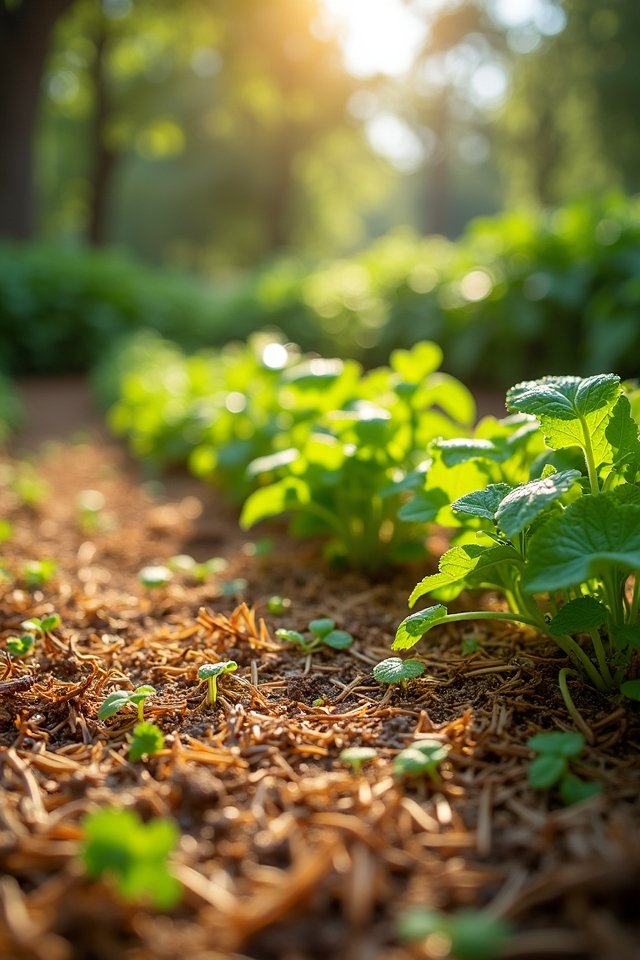
When you want your raised bed garden to thrive, think of mulch as your garden’s cozy blanket! It not only keeps the soil snug but also helps with moisture retention, keeping your plants hydrated. Plus, it’s a superhero against pesky weeds!
Here are three innovative mulch types you might consider:
- Wood Chips: They break down slowly, offering long-lasting support.
- Straw: Light and airy, it allows water to seep through while blocking sunlight.
- Grass Clippings: They decompose quickly, giving your plants a quick nutrient boost!
Prepare for Seasonal Changes and Planting Cycles
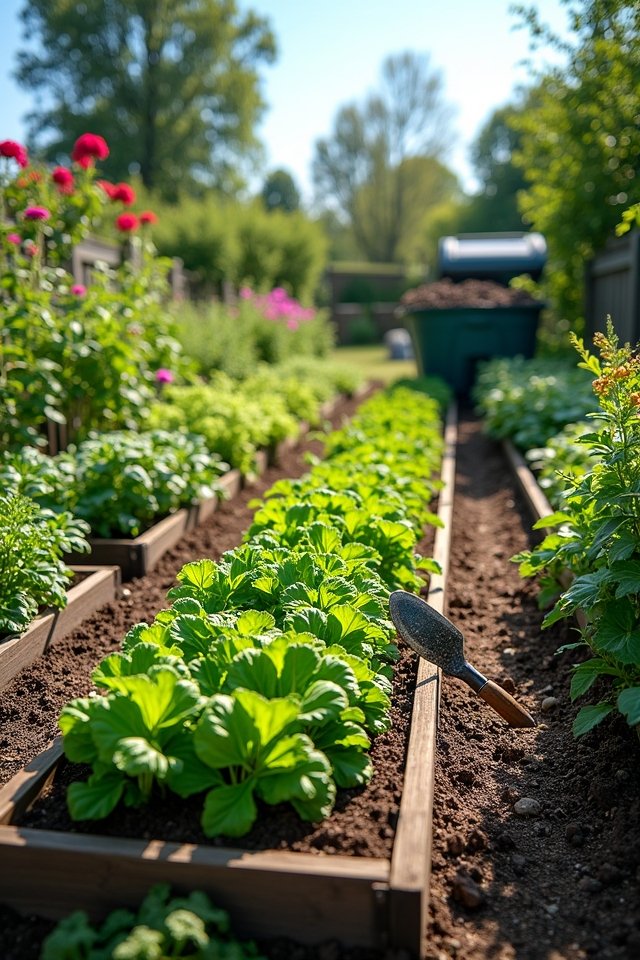
As the seasons change, your raised bed garden needs a little TLC to keep it flourishing! Welcome seasonal planting like a pro—think vibrant spring veggies and cozy winter greens! Start your garden preparation by clearing out the old plants and adding fresh compost. It’s like giving your garden a rejuvenating spa day!
Don’t forget to check your soil; it should be as rich as a chocolate cake! For those sweltering summer months, consider shade cloths to protect delicate seedlings. And when fall rolls in, plant garlic; it’s a garden superhero!
Frequently Asked Questions
How Deep Should Raised Beds Be for Optimal Root Growth?
For ideal root growth, you’ll want your raised beds to be at least 12 to 18 inches deep! This depth lets roots stretch and spread, like a kid jumping on a trampoline. If you’re growing veggies like carrots or potatoes, consider 24 inches for those deep-digging roots! Just think of it as giving your plants their own mini underground mansion. Who wouldn’t thrive in such luxury, right? Happy gardening!
What Materials Are Best for Building Raised Garden Beds?
So, you’re ready to build your raised garden bed, huh? Think outside the box! While classic wood’s charming, wood alternatives like composite materials or even corrugated metal can really spice up your bed design. Imagine your plants thriving in style! Plus, these materials often last longer and require less maintenance—talk about a win-win! Why not add a splash of color with a funky paint job? Your garden deserves a little flair, don’t you agree?
Can I Use Treated Wood for Raised Beds?
You might be wondering if treated wood is a good choice for your garden beds. Well, here’s the scoop! While it’s durable and resists rot, you need to evaluate garden safety. Chemicals in treated wood can leach into the soil—yikes! Instead, think about using cedar or redwood, which are naturally resistant to decay. They’ll keep your veggies safe and thriving! Remember, your garden deserves the best—let’s keep it healthy and happy!
How Do I Prevent Soil Erosion in Raised Beds?
To prevent soil erosion in your raised beds, think of your soil like a cozy blanket—it needs protection! You can enhance soil retention by applying a thick layer of mulch, like a delicious icing on a cake. Bark chips, straw, or even grass clippings work wonders! This not only keeps moisture in, but also shields your soil from pesky rain and wind. So, let’s keep that soil snug and happy, shall we?
What Plants Grow Best in Raised Bed Gardens?
You might think growing plants in raised beds is a walk in the park, but it’s more like a dance! For a vibrant garden, try companion planting—pairing tomatoes with basil or carrots with onions. Seasonal crops like zucchini and radishes thrive too, bringing color and flavor. Imagine the fresh scents wafting through the air! So, grab your trowel and let those plants mingle; your garden will thank you with bountiful harvests!