Ready to tackle those pesky invaders in your raised beds? Mastering organic pest control is like being the superhero of your garden! Start by spotting those sneaky cabbage worms that munch away at your greens. Mix up a garlic spray or dab on some neem oil—easy-peasy and super effective! Don’t forget to plant basil alongside your tomatoes to boost growth and flavor. Stick with us, and you’ll uncover even more tips to keep your plants thriving!
Understanding Common Pests in Raised Beds

When you start growing your veggies in raised beds, you might think you’re in the clear from pests, but hold on! Pests know no boundaries, and they love a gourmet meal just as much as you do. That’s why pest identification is essential—can you tell the difference between a cabbage worm and a harmless critter? Understanding their life cycles is key, too. For instance, some pests hatch in the spring and feast on your plants before you even see them! Keep your eyes peeled for telltale signs, like chewed leaves or tiny eggs. You don’t want to become the buffet! By recognizing these little munchers early, you can better protect your garden and enjoy a bountiful harvest. Happy gardening!
Benefits of Organic Pest Control
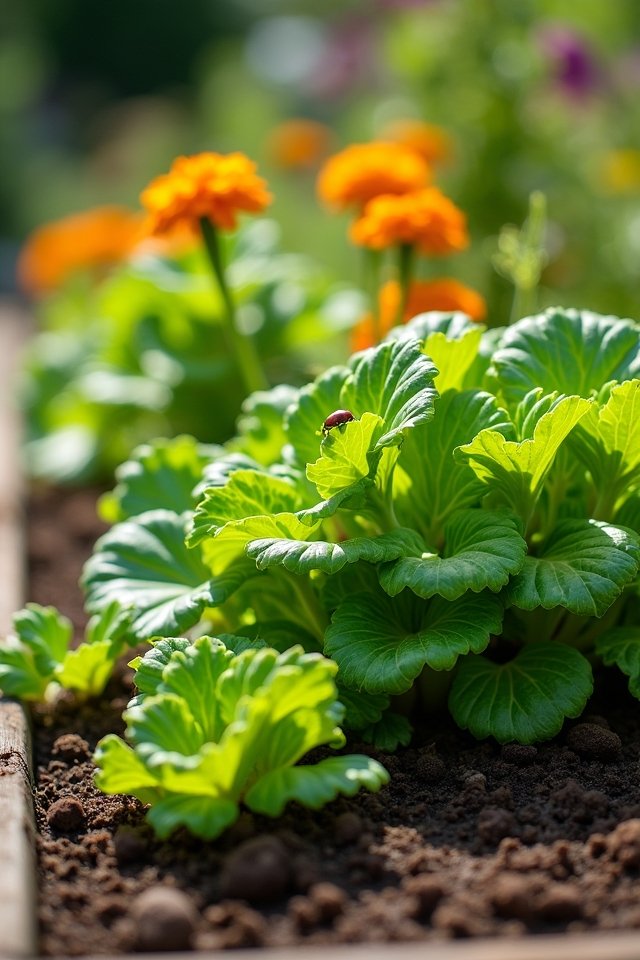
Now that you’ve got a handle on identifying pests in your raised beds, it’s time to talk about how you can tackle them—with a little help from Mother Nature! Embracing organic pest control isn’t just smart; it’s a revolutionary leap towards sustainability practices. Think about it—when you opt for natural methods, you’re not just fighting pests; you’re also fortifying your soil health. Healthy soil means thriving plants, and thriving plants mean a bountiful harvest you can be proud of! Plus, who doesn’t love the idea of keeping harmful chemicals away from your veggies? It’s like giving your garden a cozy, natural blanket! So, let’s champion eco-friendly solutions that not only protect but also nourish our beloved garden ecosystems!
Essential Natural Deterrents

To make your raised beds a no-go zone for pesky insects, you’ll want some tried-and-true natural deterrents that really get the job done! Think of these as your garden’s secret bodyguards, ready to protect your precious plants. Here are three amazing natural repellents you can whip up today:
- Garlic spray – Blend garlic cloves with water, strain, and spray it all around your plants. Bugs hate it!
- Neem oil solution – Mix neem oil with water; it repels various pests while being gentle on your garden.
- Chili pepper spray – Combine chili powder with water and a drop of soap for a spicy surprise that bugs can’t handle!
With these homemade sprays, you’ll have insects running for the hills! Isn’t that fantastic?
Companion Planting Techniques
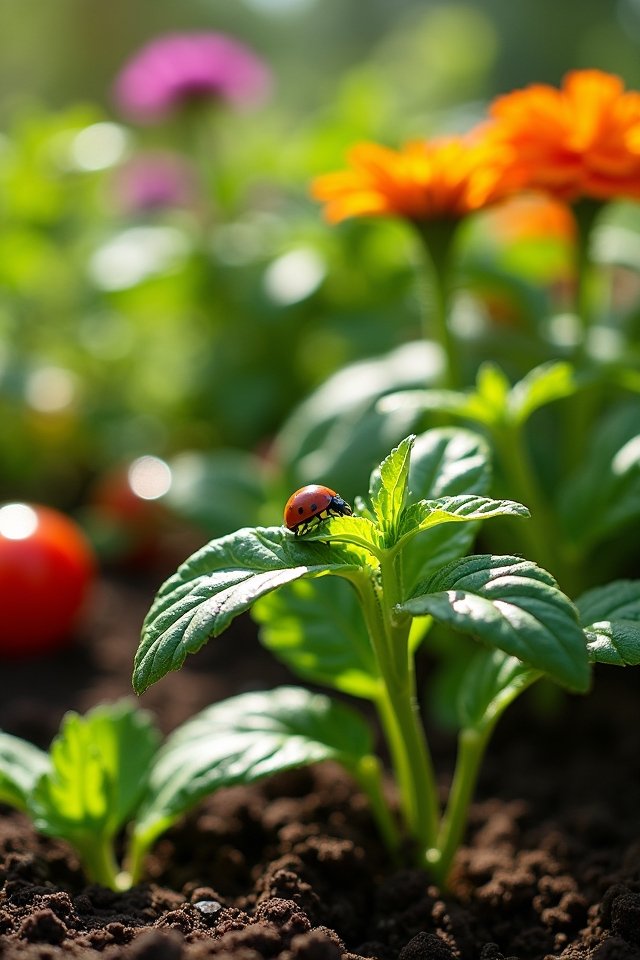
Companion planting techniques can transform your garden into a thriving ecosystem! Imagine a delicious dance between plants—like tomatoes and basil, which aren’t just good on pizza but also boost each other’s growth and pest resistance. You’ll want to explore various plant pairings that work well together. For instance, marigolds can protect your green beans from pesky bugs, while carrots love being near onion plants to confuse those aphids. Isn’t nature clever? Try mixing your flowers with veggies to create a vibrant patchwork of colors and scents. Plus, you’ll enjoy the delightful aromas wafting through the air! So, go ahead—dive into companion planting, and watch your garden flourish like a well-rehearsed musical!
Attracting Beneficial Insects

While your garden flourishes with vibrant colors and tantalizing scents, attracting beneficial insects can help you create a natural army of pest controllers! Welcome these helpful critters into your space with a few simple strategies:
- Pollinator Gardens: Plant a variety of nectar-rich flowers like lavender and sunflowers. These beauties’ll draw in bees and butterflies, making your garden a buzzing paradise!
- Insect Hotels: Provide cozy nooks where beneficial insects can take shelter. A simple wooden structure with bamboo sticks or twigs allows them to nest and thrive.
- Diverse Planting: Mix herbs, vegetables, and flowers to create a food buffet for ladybugs and lacewings.
With a little creativity, your garden can transform into an enchanting ecosystem that supports harmony in nature! Isn’t that sweet?
Organic Pest Control Methods
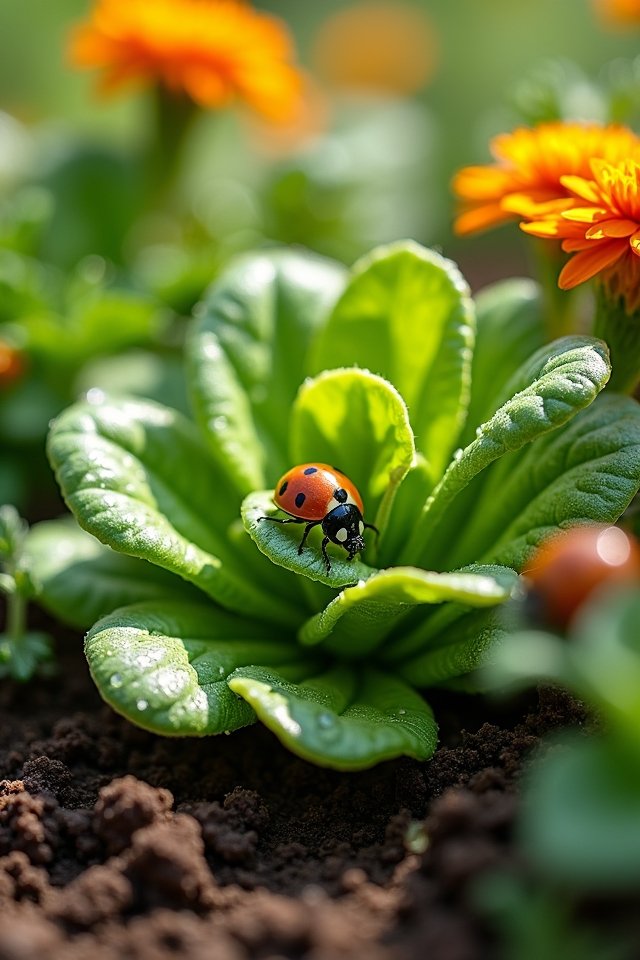
As your garden buzzes with life thanks to those friendly pollinators, it’s time to tackle any pesky invaders that dare to disrupt your paradise. Say goodbye to harsh chemicals and adopt innovative organic pest control methods! Start with cultural practices like crop rotation and companion planting—they’re like giving your plants a protective army. For a quick defense, consider using organic pesticides made from natural ingredients, such as neem oil or insecticidal soap. They’re gentle on your garden but tough on pests! Imagine spraying a fragrant mix that sends aphids packing without harming bees! So, get ready to nurture a pest-resistant ecosystem while enjoying your bountiful harvest; your veggies will thank you with vibrant life and juicy flavors!
Monitoring and Prevention Strategies
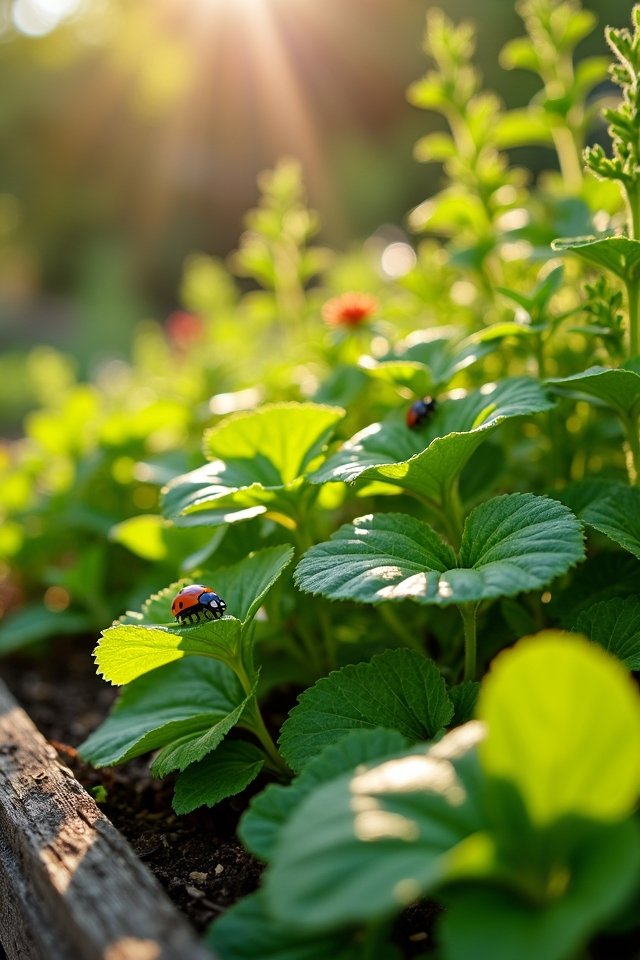
To keep your garden thriving and pest-free, monitoring and prevention strategies are your best pals! You won’t just sit back and wait for trouble; you’ll take action to stay ahead. Here are three innovative tips:
- Pest Monitoring: Check your plants regularly! Look for drooping leaves or unusual spots—these whispers might signal an invasion!
- Prevention Techniques: Use companion planting! For example, marigolds can deter pesky aphids while brightening your garden.
- Traps and Barriers: Incorporate physical traps! Utilize sticky traps or floating row covers to keep pests away from your prized veggies!
Resources for Further Learning

Successfully managing pests in your raised beds isn’t just about the tactics—it’s also about continually sharpening your skills and knowledge! To expand your expertise, plunge into some recommended books like “The Organic Gardener’s Handbook of Natural Pest and Disease Control,” where you’ll discover treasures of wisdom, or “Pest Control for Home and Garden,” full of practical tips.
Don’t overlook online courses—sites like Udemy or Coursera offer innovative approaches to organic pest management. Learning in bite-sized pieces will keep you engaged and excited! So, why not transform your gardening game by investing a little time? After all, a well-informed gardener wields the ultimate power—don’t you want that? Adopt these resources and watch your raised beds flourish like never before!
Frequently Asked Questions
How Do I Identify Specific Pests in My Raised Beds?
To identify pesky bugs in your raised beds, start with visual pest cues, like tiny holes or sticky residue! Use pest identification techniques such as discussing with local gardeners or checking guides online. Look for signs like wilting leaves—it’s like a plant’s way of whispering its troubles. Snap photos and compare them with pest profiles. Your garden’s like a puzzle, and you’re the detective solving it! Isn’t that thrilling? Happy hunting!
Can Organic Pest Control Harm Beneficial Insects?
You might worry that organic pest control will hurt those essential beneficial insects buzzing around. But fear not! Most organic methods focus on targeting specific pests, like a hawk swooping down on an unsuspecting mouse. For example, natural pesticides like neem oil can deter pests without harming your ladybugs or lacewings. Just remember, balance is key! You want a thriving ecosystem, not a battlefield. So, keep it friendly and watch your garden flourish!
What Are the Costs of Implementing Organic Pest Control?
When you immerse yourself in organic pest control, you’ll need a solid cost analysis! Think of it as crafting a delicious recipe—you’ll have to gather your ingredients first. Budget planning is key! You might invest in natural repellents or beneficial bugs, and while the costs can add up, the payoff is a thriving garden. So, don’t fret! Just like planting seeds, it takes time and care, but the harvest’s worth it! How exciting is that?
Are There Any Risks Associated With Homemade Pest Deterrents?
Imagine crafting a magic potion in your kitchen—it’s thrilling, right? But homemade pest deterrents can carry risks! Their effectiveness comparison with store-bought options can vary wildly. Some might be too strong or weak, harming your plants. Plus, you’ll want those safety precautions in place. Think of it like dancing with the unknown; you’ve got to know your steps! So, while innovation is exciting, tread carefully, and always double-check your ingredients!
How Often Should I Monitor My Raised Beds for Pests?
You should monitor your raised beds for pests at least once a week! Imagine this: you’re inspecting your vibrant plants, scanning for sneaky critters hiding under leaves. Early detection is key! If you spot trouble, you’ll have time to act quickly. Keep an eye out after rain, too—pests love those cozy, damp spots. So, grab your magnifying glass and enjoy the treasure hunt of pest monitoring! Your plants will thank you for it!