Ready to transform your raised beds into a pest-free paradise? Start by mastering pest identification—like spotting sneaky aphids under leaves! Delight in organic methods that boost soil health without the chemical nasties. Invite ladybugs and predatory wasps as your garden buddies to keep pests at bay. Pair plants smartly, like tasty basil with tomatoes, for extra benefits! Your plants will sing with joy! Stick around, and you’ll discover even more tricks to keep your garden thriving!
Understanding Common Pests in Raised Beds

When you start growing your own veggies in raised beds, the excitement can be just as overwhelming as a swarm of hungry locusts! You’ll quickly encounter pests that threaten your green paradise. Start sharpening your pest identification techniques—ask yourself: “What’s munching on my leaves?” Understanding pest life cycles is essential, too. For instance, aphids can multiply faster than rabbits! Keep an eye out for the tiny critters hiding underneath leaves or on stems. Use sticky traps to catch them in the act! And don’t forget about those sneaky caterpillars; they love to feast on tender greens. By becoming a pest detective, you’ll cultivate a thriving garden while outsmarting those unwelcome guests. Happy gardening, and may your veggies flourish!
Benefits of Organic Pest Control
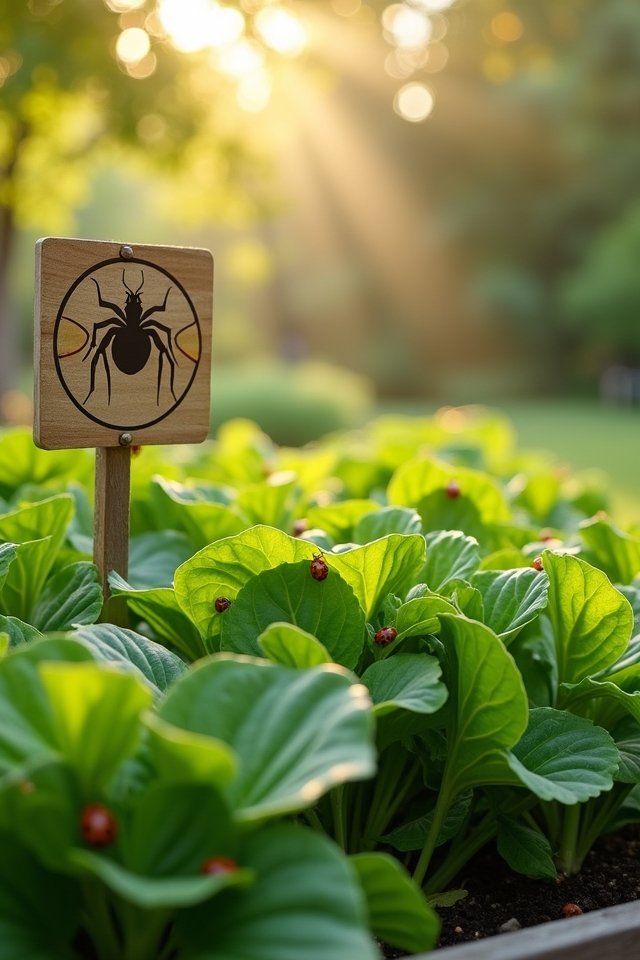
While you might think that pest control means harsh chemicals and complicated procedures, it’s actually a chance to welcome the wonders of nature! Embracing organic methods not only helps your garden thrive but also supports sustainable gardening practices that nurture ecological balance.
- You’ll enhance soil health, making it rich and vibrant!
- You can attract beneficial insects that naturally curb pests.
- Your harvest will be chemical-free, bursting with flavor and goodness.
- You’ll contribute to a healthier planet for future generations!
Isn’t it rewarding to know your garden’s thriving because of natural solutions? By going organic, you’re not just protecting your plants, you’re fostering a beautiful ecosystem right in your backyard! How cool is that?
Natural Predators and Beneficial Insects
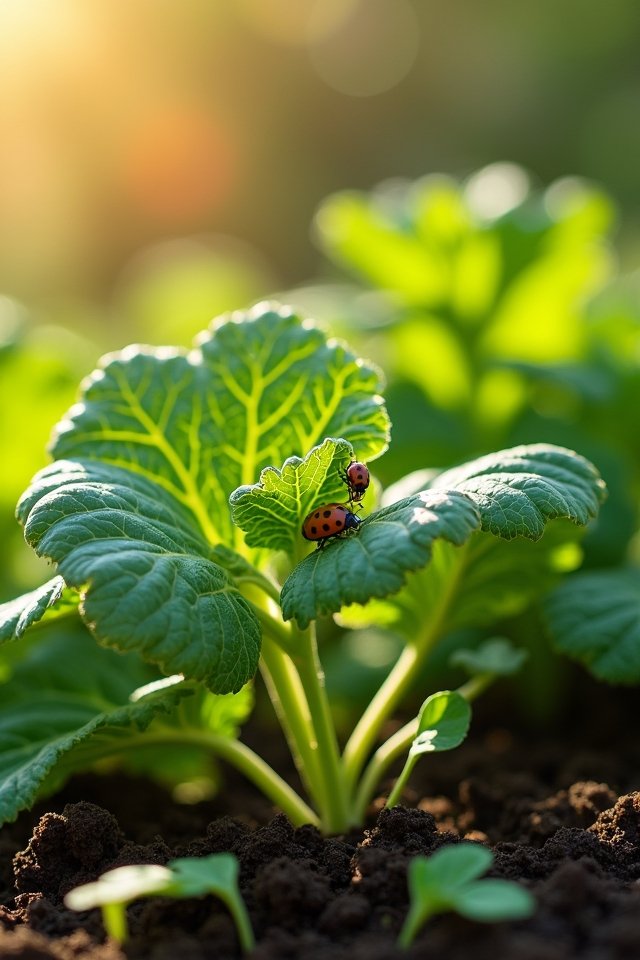
Imagine strolling through your garden, surrounded by vibrant blooms and lush greenery, knowing you’ve invited nature’s very own pest-fighting squad! Picture ladybugs gracefully fluttering about—those tiny red superheroes are not just cute; their ladybug benefits include munching on pesky aphids that threaten your plants. You’ll love watching them in action!
And don’t forget predatory wasps, the stealthy ninjas of pest control. These wasps lay their eggs in harmful pests, ensuring that your garden stays healthy and thriving. By fostering these natural allies, you create an eco-friendly oasis where every creature plays a part. So, why not welcome these little warriors? They’ll turn your garden into a delightful battleground against pests, reducing your need for chemical solutions!
Companion Planting Strategies
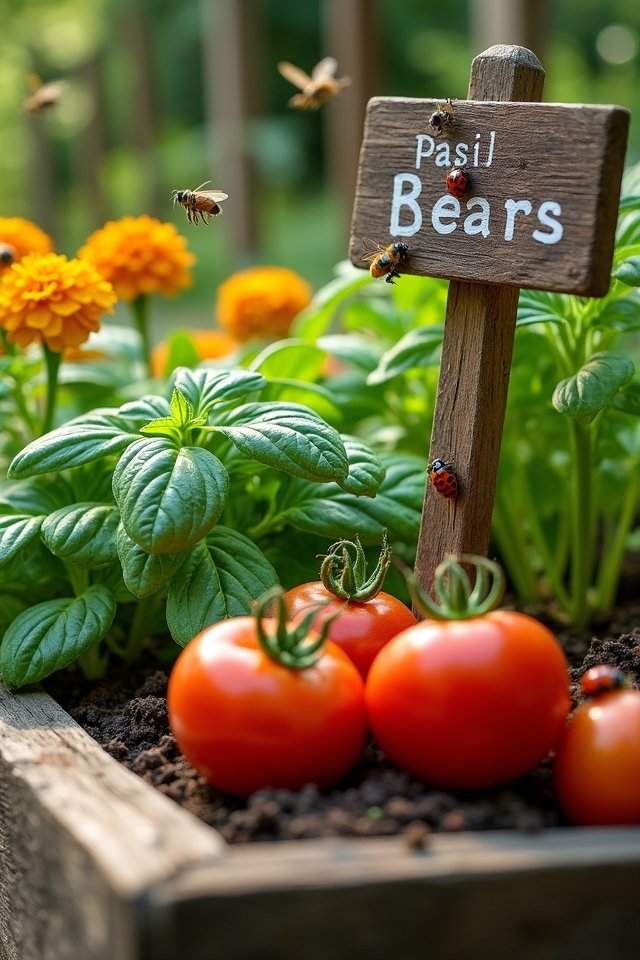
Companion planting isn’t just a gardening technique; it’s like creating a harmonious symphony in your raised beds! By mixing different plants, you can enhance growth and flavor while keeping pests at bay. Think of it as a garden party where everyone gets along!
- Pair basil with tomatoes for a flavor boost.
- Use marigolds as companion flowers to deter nematodes.
- Implement intercropping techniques with carrots and onions to confuse pests.
- Combine beans and corn for a nutrient-sharing friendship.
When you plan your garden like this, you’ll see vibrant plants thriving together. It’s not just smart; it’s a fun way to innovate your gardening! So, ready to throw the best plant party ever? Your raised beds will thank you!
Organic Pest Control Methods

When it comes to keeping your raised beds thriving, organic pest control methods are like your garden’s secret weapon! First, master pest identification techniques—knowing your enemies helps you choose the right battles. For instance, spotting aphids is vital; they multiply faster than rabbits! Once you’ve identified pests, explore organic pesticide options like neem oil or insecticidal soap. They’re gentle yet effective, acting like a superhero’s shield for your plants. You’ll be amazed at how quickly those pesky invaders retreat! And remember, prevention is key—encourage beneficial insects like ladybugs to join your garden party. With a little creativity and a dash of innovation, you can protect your plants without harsh chemicals. Your garden deserves the best, right? Let’s grow together!
Homemade Pest Repellents

Creating your own homemade pest repellents is like crafting a secret potion for your garden! You’ll feel like a wizard, conjuring up herbal sprays and garlic solutions that keep those pesky intruders at bay. Imagine spritzing your plants with a delightful blend of nature’s best ingredients!
Here are some innovative ideas to get you started:
- Pepper spray: Blend hot peppers with water for a fiery deterrent!
- Soap solution: Mix mild soap with water to trap soft-bodied pests.
- Garlic solution: Soak crushed garlic in water, then spray it to repel unwanted visitors.
- Herbal sprays: Use essential oils like peppermint or lavender to create a fragrant shield.
Now, let the magic unfold in your garden!
Monitoring and Maintaining Plant Health
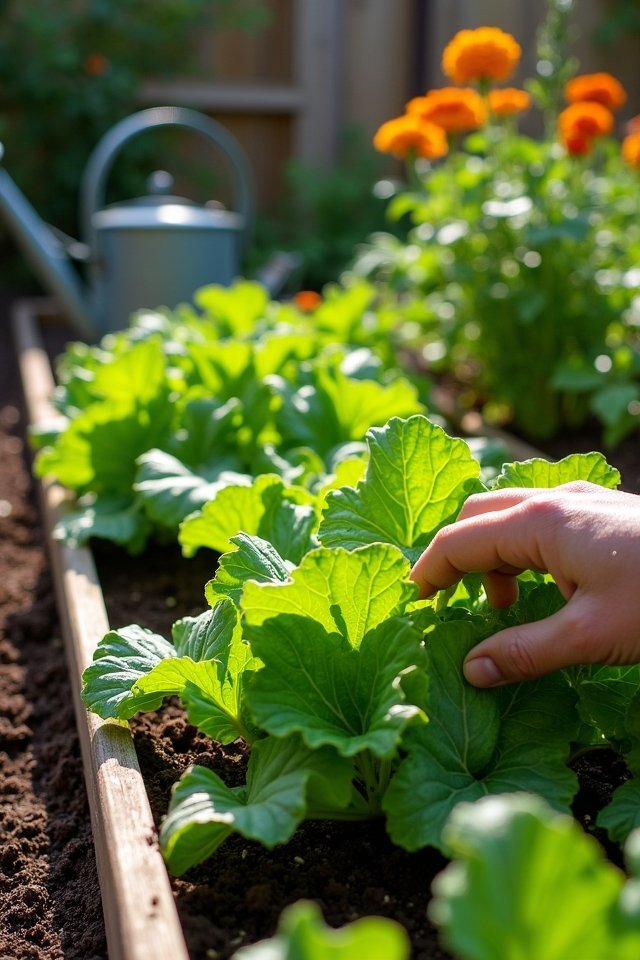
To keep your garden thriving, you’ll want to keep a close eye on your plants, almost like a proud parent watching over a toddler! Regularly check their leaves, stems, and soil for any signs of distress. Healthy plants thrive on ideal plant nutrition, so don’t skimp on organic fertilizers. Think of them as a delicious snack for your green babies!
Monitor soil health by testing pH levels and moisture content. If your soil’s too compact, it’s like trying to breathe in a stuffy room—no fun for your plants! Consider adding compost or mulch for that extra love. Remember, happy plants mean fewer pests. So, let your garden flourish, and enjoy the vibrant colors and fresh scents! It’s a win-win!
Seasonal Pest Management Tips
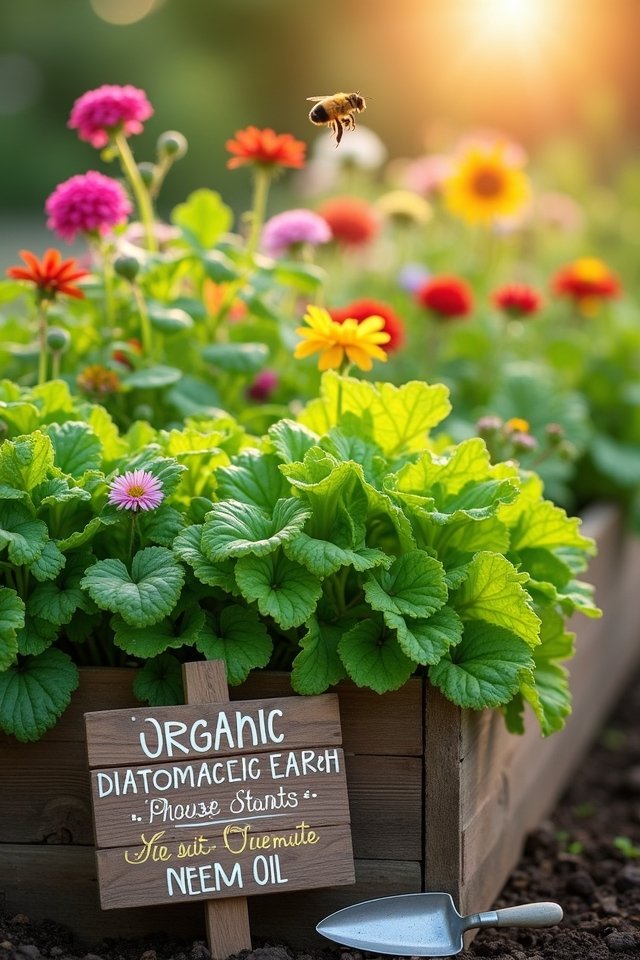
As the seasons change, so do the pesky garden visitors you’ll encounter! Each season brings new challenges in pest life cycles, but don’t worry—you’ve got this!
Consider seasonal planting to outsmart those critters. For instance, planting marigolds can deter nematodes and aphids, creating a fragrant, colorful barrier.
Keep these tips in mind:
- Timing is everything: Plant early to dodge pests’ peak seasons.
- Rotate crops: Change your plant locations yearly to confuse pests.
- Companion planting: Pair plants that repel pests with those that attract beneficial insects.
- Natural barriers: Use row covers to protect tender seedlings from hungry mouths.
With a little strategy and creativity, your garden will thrive, and pests won’t stand a chance! Happy gardening!
Frequently Asked Questions
How Can I Identify the Specific Pests in My Raised Beds?
To identify those pesky pests in your raised beds, you’ll want to adopt some fun pest identification techniques! Start by closely inspecting your plants; look for telltale signs like holes or sticky residue. Common garden pests, like aphids or caterpillars, often leave clues! Snap a pic and compare it to online resources. Remember, it’s like a treasure hunt for troublemakers—exciting yet essential for your garden’s health! Happy hunting! 🌱✨
What Are the Costs Associated With Organic Pest Control Methods?
When you’re diving into organic pest control, think of it like preparing a gourmet meal—there’s always a cost! A solid cost analysis can help you whip up a budget that doesn’t break the bank. Natural pesticides can range from $10 to $50, while homemade remedies might cost just a few dollars! Investing in beneficial insects or traps can also add up. Planning ahead guarantees your garden flourishes without financial weeds! Isn’t that sweet?
Are There Any Organic Pest Control Products Available in Stores?
Absolutely, you’ll find a variety of organic pest control products at your local store! Think of natural repellents like neem oil, which works wonders in keeping those pesky bugs at bay. You can also check out commercial options, like insecticidal soaps, that are safe for your plants. It’s like giving your garden a superhero cape! So, why not try some today? Your plants will thank you with vibrant colors and bountiful harvests!
How Often Should I Monitor My Raised Beds for Pests?
You should monitor your raised beds for pests at least once a week! Think of it like checking in on a beloved pet—your plants need love too! Regular pest monitoring helps catch those sneaky little invaders before they wreak havoc. Look for signs like nibbling leaves or tiny droppings. During peak seasons, you might want to check even more often. After all, a little prevention goes a long way in maintaining a thriving garden!
Can Organic Pest Control Methods Harm Beneficial Insects?
Sure, you might wonder if pesticide alternatives can harm beneficial insects. The truth is, some organic methods can affect them too! Using strong garlic sprays? They might deter pests but can also send ladybugs packing! Instead, try introducing natural predators like lacewings or applying diatomaceous earth carefully. It’s like creating a bug buffet where your friends thrive! So, keep your garden buzzing with life while keeping those pests at bay! Isn’t that a win-win?