Want to outsmart pesky garden invaders? Start by knowing your foes—those little sap-sucking aphids won’t know what hit ‘em! Rotate your crops each year and partner plants like basil and tomatoes for a flavor boost and a pest shield. Draw in helpful bugs with a colorful flower garden, and toss some row covers over your plants for extra protection. Keep that soil happy and healthy, and you’ll set the stage for a flourishing veggie paradise! And there’s even more to discover!
Understanding Common Garden Pests
In the bustling world of your vegetable garden, pests can feel like uninvited guests at a lively party! To keep your plants thriving, you must master pest identification techniques. Start by examining leaves closely for holes or discoloration—these are classic pest damage signs. Think of aphids as tiny green ninjas, stealthily sucking the life from your greens. Spotting them early can save your lettuce! Look for webbing that signals spider mites, or sticky residue, which might hint at a mealybug invasion. Use innovative strategies like smartphone apps for identifying pests, transforming you into a garden detective. By staying vigilant and curious, you’ll turn your garden into a vibrant sanctuary, free from those pesky party crashers! Who wouldn’t want that?
Implementing Crop Rotation
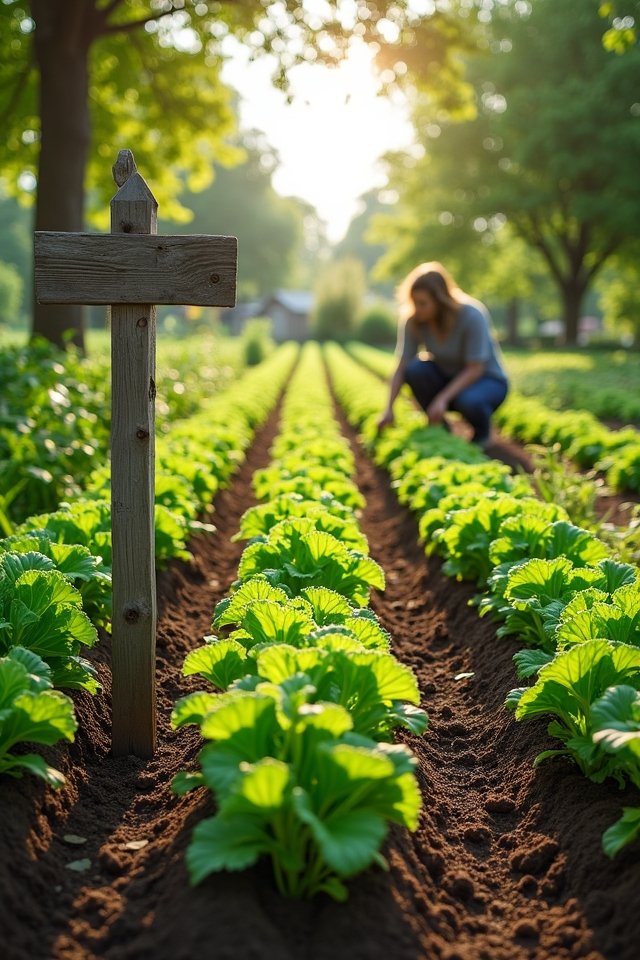
While you might think your vegetable garden is a fixed paradise, incorporating crop rotation can feel like a revitalizing dance, keeping your plants happy and healthy! By changing the location of your crops each season, you boost crop diversity and disrupt pest cycles. Here’s how to get started:
- Plan your layout: Map out different crop families for each section.
- Follow a seasonal rotation: Rotate your crops every year, grouping by their nutrient needs.
- Monitor soil health: Use cover crops to enrich and protect your soil.
- Stay flexible: Adapt your plan based on what worked best last season!
Embrace this rhythmic approach, and watch your garden thrive, free of pesky invaders! Who knew pest control could be so fun?
Utilizing Companion Planting
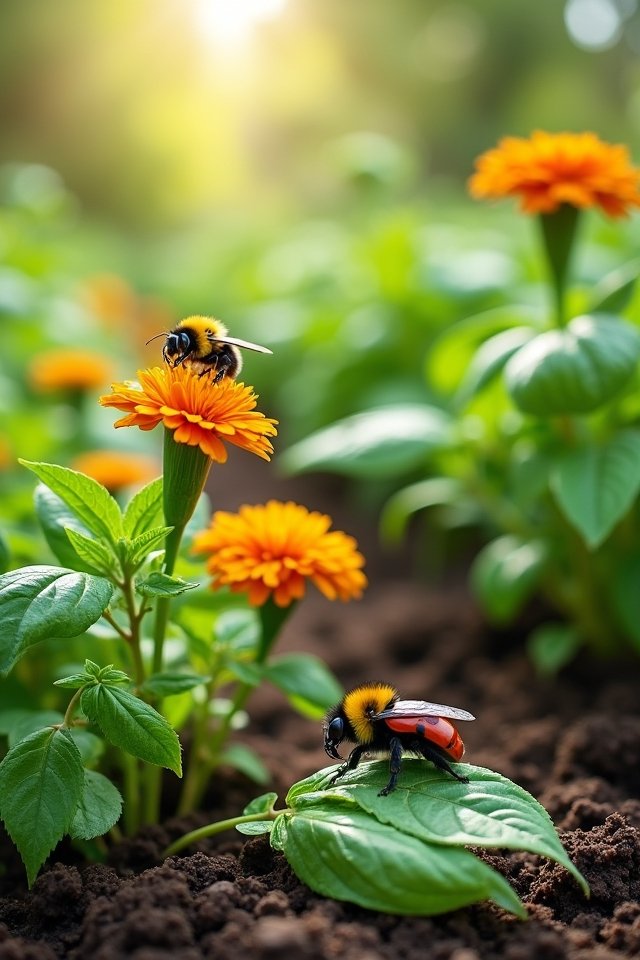
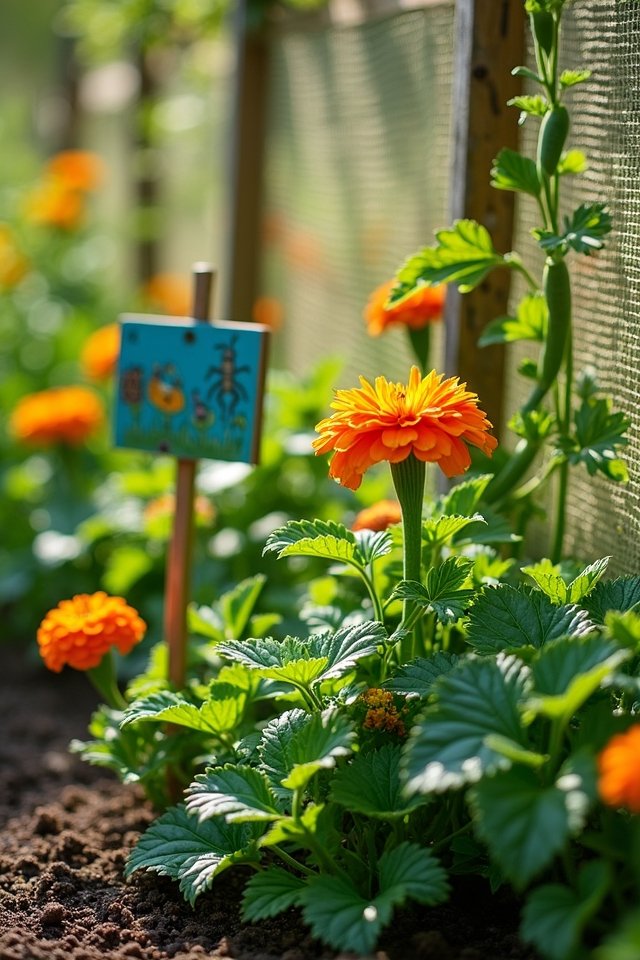
Companion planting is like throwing a garden party where the guests are your plants, and everyone brings something special to the table! Imagine tomatoes and basil, two best buds that not only taste amazing together but also create a natural pest deterrent! These delightful plant pairings can confuse pests and keep them at bay. Marigolds, for instance, are like the bouncers of your garden, warding off nematodes and aphids with their vibrant blooms. You could also plant carrots with onions—those aromatic buddies deter carrot flies! By thoughtfully choosing your plant companions, you’re not just growing a garden; you’re crafting a thriving ecosystem! So, why not let your plants mingle and work together for a healthier harvest?
Attracting Beneficial Insects
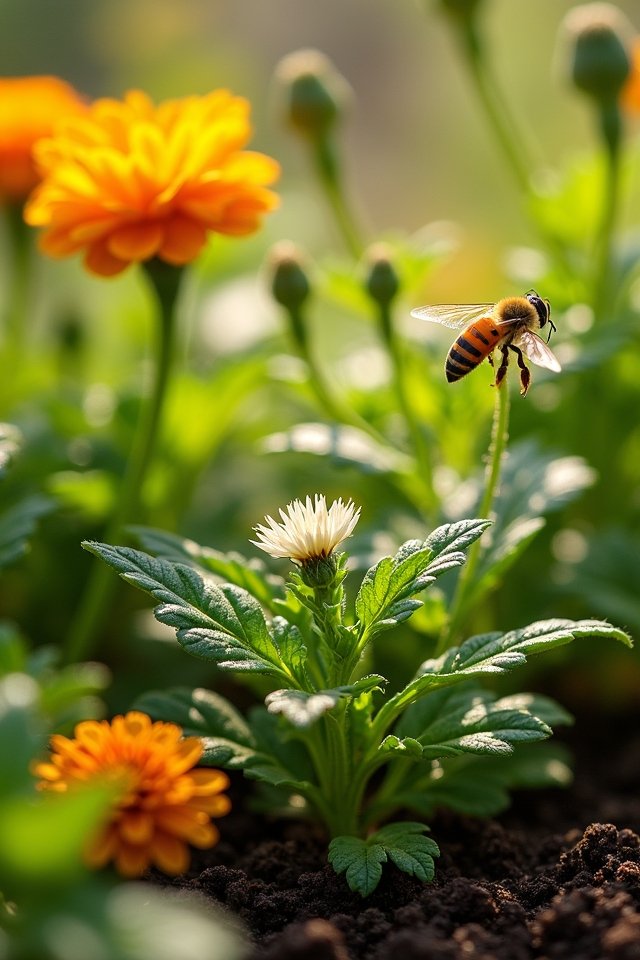
Attracting beneficial insects to your vegetable garden is like inviting nature’s little superheroes to save the day! These friendly critters help pollinate plants and control pesky pests. To create a buzz-worthy environment, try these innovative strategies:
- Plant a pollinator garden filled with bright flowers like lavender and sunflowers.
- Build insect hotels using natural materials like wood and bamboo—it’s their cozy retreat!
- Avoid pesticides that can harm these heroes—let nature do its magic!
- Provide water sources with shallow dishes or small puddles to keep them hydrated.
Embrace these tips, and soon your garden will flourish, buzzing with life and color! Who knew saving your veggies could be so exciting?
Creating Physical Barriers
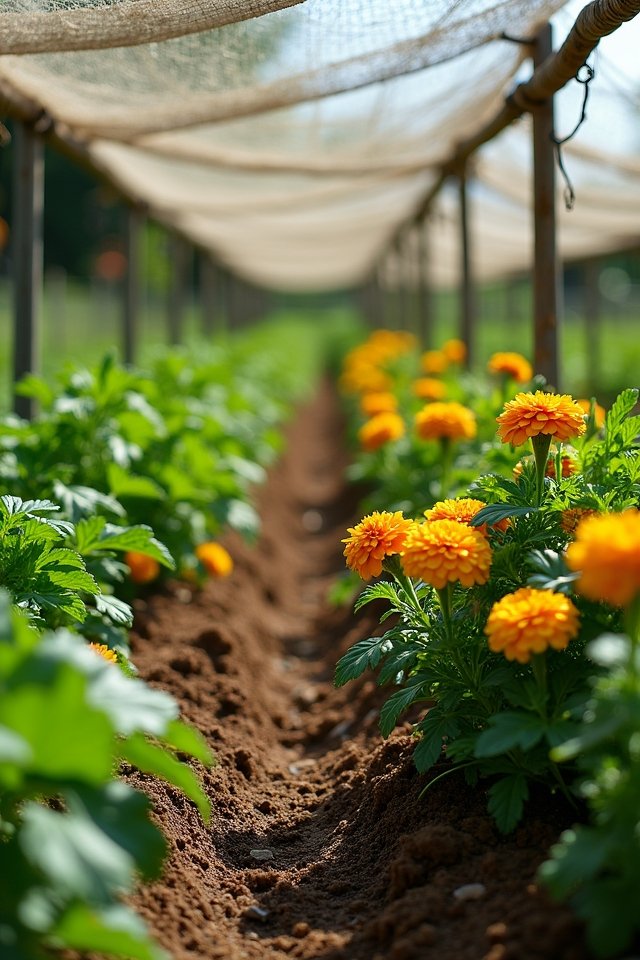
After inviting beneficial insects into your garden, it’s time to think about how to keep those sneaky pests at bay! Creating physical barriers can be your garden’s superhero! Start with row covers—these lightweight fabrics shield your veggies while letting sunlight and rain in. They’re like cozy blankets for your plants! Next, consider innovative fence designs; a simple chicken wire fence can deter larger critters like rabbits. And don’t forget about netting options! A fine mesh can protect delicate fruits from hungry birds. When planning your garden layout, think strategically—position taller plants as natural shields. With these clever barriers, pests won’t stand a chance, and your veggies will thrive! Who knew pest control could be this much fun?
Applying Organic Pest Control Solutions
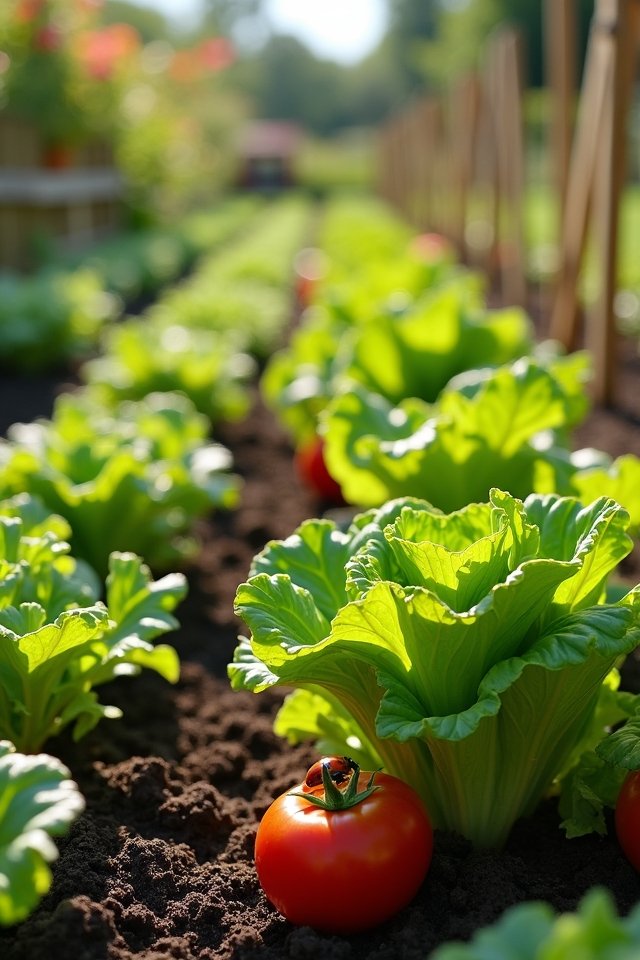
When it comes to keeping pests away, you’ll be thrilled to discover the power of organic solutions! Welcome the beauty of nature with these innovative strategies:
- Natural insecticides: Use neem oil or diatomaceous earth to create an invisible shield against pests.
- Homemade sprays: Mix water with crushed garlic or hot peppers for a spicy deterrent that bugs can’t stand!
- Essential oils: Try peppermint or lavender oils, which not only smell divine but also repel unwanted visitors.
- Companion planting: Grow marigolds alongside your veggies; they’ll attract beneficial insects and confuse the pests!
Regular Monitoring and Inspection
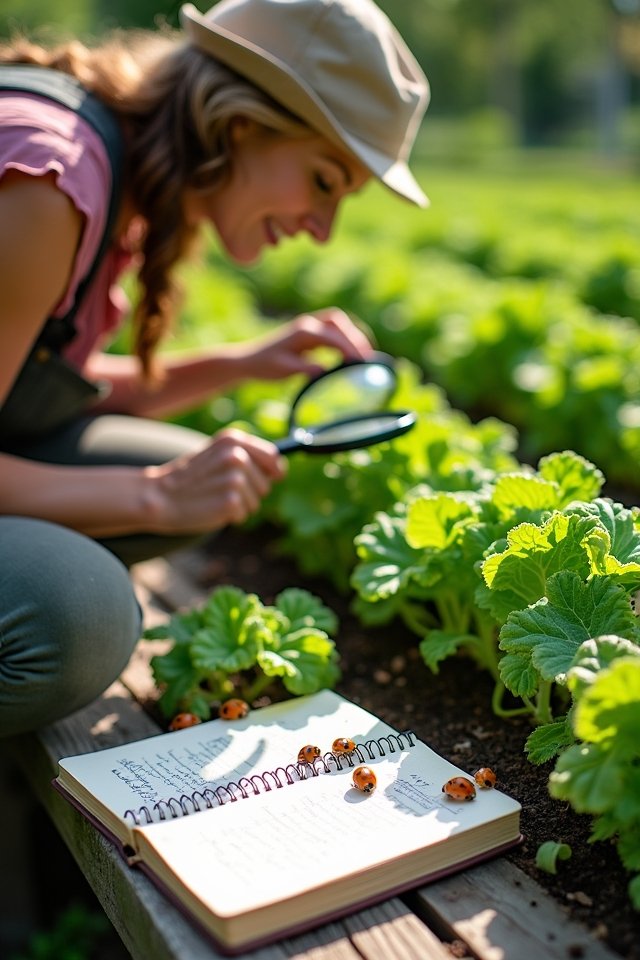
Keeping an eye on your vegetable garden can feel like being a detective on a mission! You’ll want to inspect your plants regularly, ideally every few days, to catch any sneaky pests before they become a full-blown invasion. Think of it like a fun game of “Where’s Waldo?” but with aphids and caterpillars! Effective pest identification is key—look for leaf holes, sticky residue, or unusual spots that could signal trouble. By checking often, you’ll stay one step ahead, spotting those little troublemakers early on. Don’t forget to take notes on what you find; consistency helps you track pest patterns and devise better strategies. So, grab that magnifying glass and welcome your inner garden sleuth! Happy hunting!
Maintaining Healthy Soil
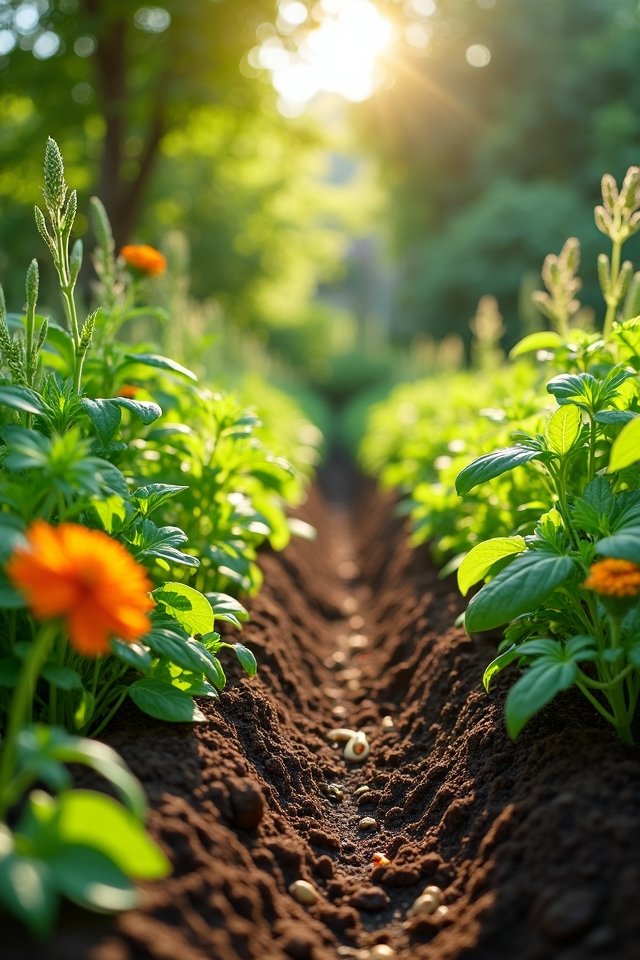
Soil, the unsung hero of your vegetable garden, deserves some serious love! Think of it as the cozy bed your veggies snuggle into. To keep it thriving, focus on a few key strategies:
- Add soil amendments like compost or aged manure to boost fertility.
- Test your soil regularly to maintain the perfect nutrient balance. It’s like checking your garden’s health score!
- Rotate your crops each season to avoid nutrient depletion and pesky pests.
- Mulch generously to retain moisture and keep those weeds at bay!
With these practices, your soil will be a nutrient powerhouse, giving your plants everything they need to flourish! After all, happy soil means happy veggies! Who wouldn’t want that?
Timing Your Planting Correctly

Ah, the art of timing your planting—it’s like a dance between you and nature! To achieve ideal planting, you’ve gotta tune in to the seasons. Imagine your garden as a stage where each crop takes its turn to shine! Pay attention to local frost dates and adjust your planting schedule accordingly. For instance, planting tomatoes too early can lead to sad, frostbitten plants. Instead, aim for that sweet spot in late spring when the soil warms up. Don’t forget to reflect on companion planting, too; some plants thrive together, while others create drama! By making these seasonal adjustments, you’ll craft a vibrant garden that not only flourishes but also keeps pests at bay. Ready to waltz with the weather? Let’s get planting!
Using Traps and Baits
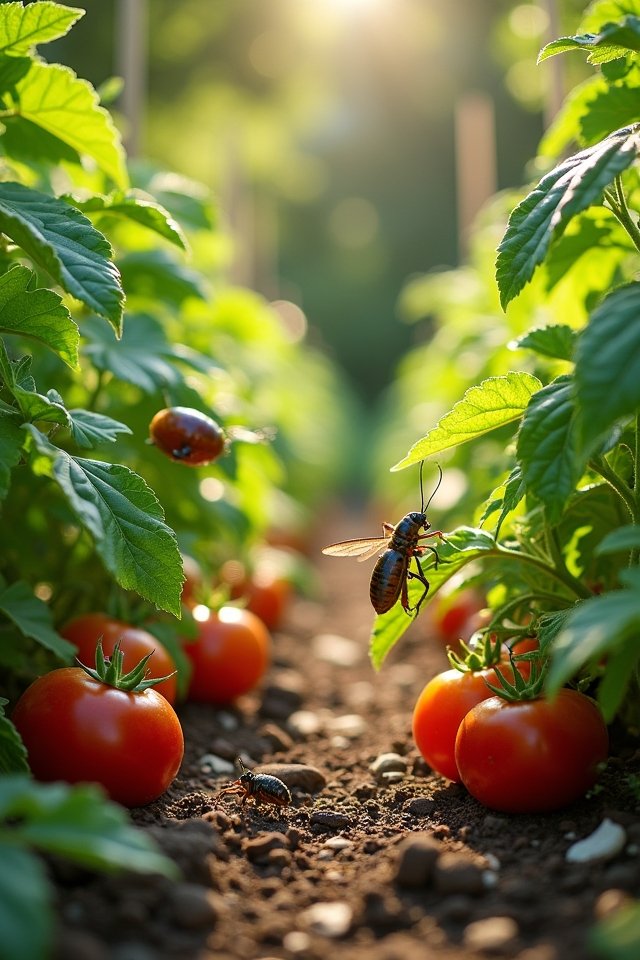
When it comes to managing pesky garden invaders, traps and baits can be your secret weapons! These clever tools help you keep your veggies safe and sound. Here’s how to make the most of them:
- Choose sticky traps for easy monitoring of flying nuisances.
- Set up bait stations with enticing treats to lure in unwanted critters.
- Use pheromone lures to attract specific pests and send them packing.
- Create homemade traps using simple materials—you’ll feel like a mad scientist!
Don’t forget about trap placement and bait selection to maximize bait effectiveness. Regular trap maintenance guarantees you catch those sneaky pests before they munch on your garden! Happy hunting!
Educating Yourself on Pest Life Cycles
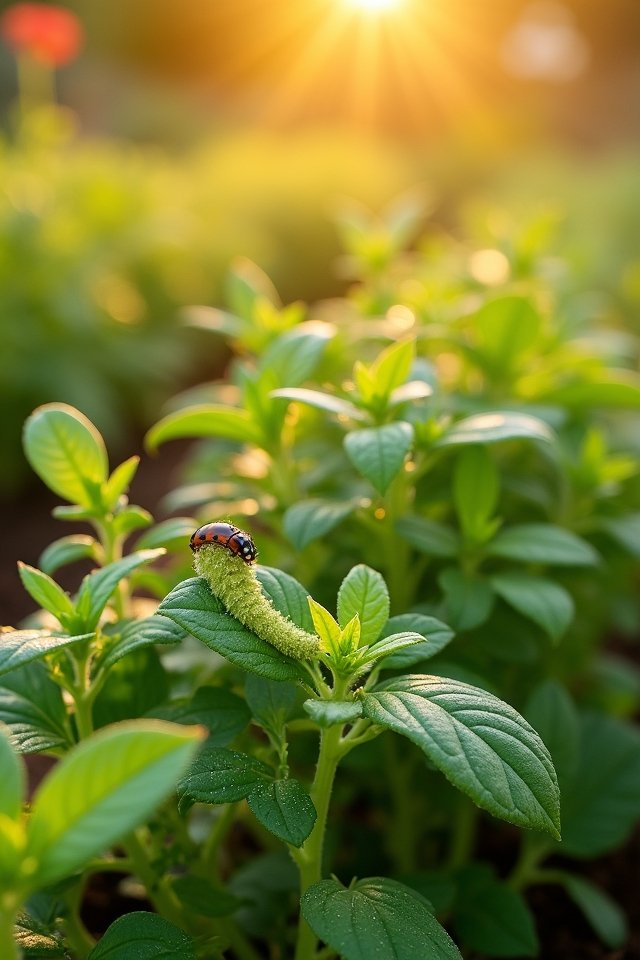
Have you ever wondered how those pesky pests seem to appear out of nowhere, munching on your beloved veggies? Understanding pest life cycles is key to keeping your garden thriving! Start with pest identification—know who your enemies are. Some pests, like aphids, can go from egg to adult in just a week. Imagine the chaos! By recognizing lifecycle stages, you can time your defenses perfectly. For instance, targeting caterpillars before they turn into butterflies can save your leafy greens. Plus, knowing when pests are most active helps you use innovative methods like beneficial insects or organic sprays effectively. So, plunge into the world of pests—it’s like detective work for your garden! Your veggies will thank you with bountiful harvests!
Frequently Asked Questions
What Pests Are Most Common in Small Vegetable Gardens?
In your small vegetable garden, you’ll likely encounter common garden pests like aphids, snails, and spider mites. These little troublemakers can wreak havoc on your plants! For effective pest identification tips, look for sticky leaves or tiny webs. Have you noticed any munching marks? Those are clues! Keep an eye out; even the tiniest pests can become your garden’s biggest foes. Let’s outsmart them and keep your veggies thriving!
How Can I Tell if My Plants Are Infested?
You can spot infestation symptoms by keeping an eye out for wilting leaves, strange spots, or tiny critters hiding beneath foliage. Are those pesky aphids munching on your plants? Look closely! If your veggies start looking sad, it’s time for pest identification. Check for sticky residue or webbing—those are telltale signs. Remember, catching them early is like finding treasure before the pirates! So, stay vigilant, and treat your garden like the gem it is!
Are There Any Non-Toxic Pest Control Options?
You can use organic repellents like neem oil or garlic spray to keep those pesky bugs at bay. Isn’t that cool? Plus, consider companion planting—like pairing marigolds with your veggies. It’s like having a garden buddy that says, “Not today, pests!” Just picture vibrant flowers protecting your greens! With these non-toxic options, you’ll create a thriving garden ecosystem that’s both safe and delightful. Who knew pest control could be this fun?
How Often Should I Inspect My Garden for Pests?
Envision this: you’re in a garden paradise, dancing with veggies, when suddenly—pests crash the party! To keep them at bay, regular pest monitoring is a must. Inspect your garden at least once a week. Look for sneaky signs like tiny holes or sticky residue. Think of it like a treasure hunt—finding pests before they wreak havoc! Your veggies deserve the best, so stay vigilant, and let those pests know they’re not welcome!
What Signs Indicate a Healthy Garden Ecosystem?
You’ll know your garden’s thriving when you spot beneficial insects buzzing around, like nature’s little superheroes! Healthy soil has a rich, earthy aroma and crumbles easily in your hands. If you see vibrant colors in your plants, that’s a great sign too! Look for butterflies dancing and bees buzzing; they’re like garden cheerleaders! And don’t forget the chorus of chirping birds! Isn’t it wonderful when nature’s symphony plays in your backyard?