Want a pest-free flower bed that’s the envy of the neighborhood? Start by inspecting your plants regularly—spot those sneaky pests before they cause trouble! Try companion planting, like pairing marigolds with roses to keep aphids at bay. Don’t forget about organic pesticides, like neem oil, or attracting beneficial insects with native flowers. Keep your soil healthy with compost and mulch, and guarantee proper watering. Curious to uncover even more delightful strategies? Stick around!
Regular Inspection and Monitoring
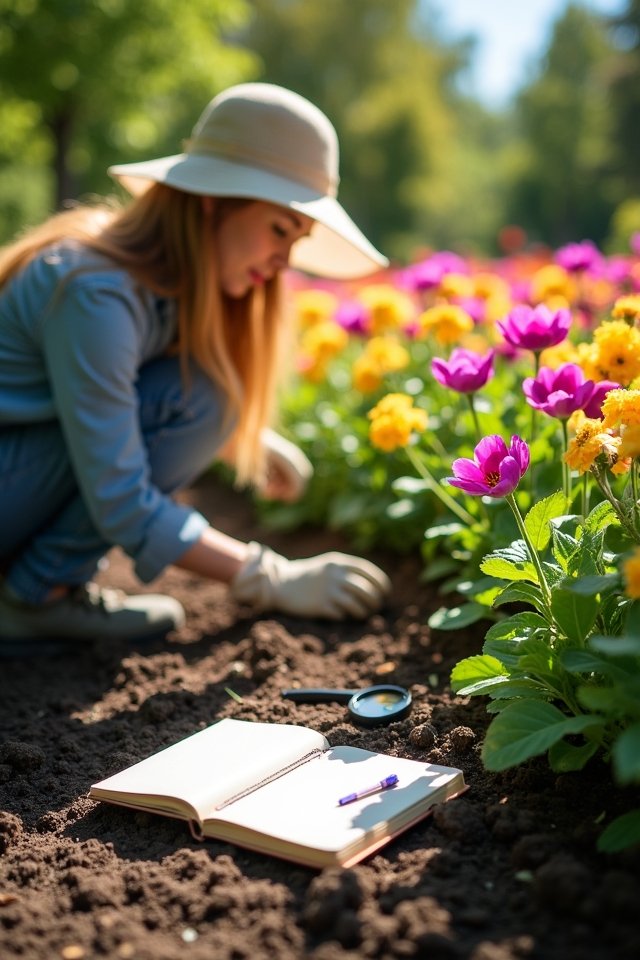
When you step into your vibrant flower bed, it’s like entering a colorful paradise, but lurking in those blossoms could be pesky pests! Regular inspection and monitoring are essential to keep your garden thriving. Picture yourself with a magnifying glass, ready to set off on a bug-hunting adventure! You’ll want to master pest identification—spotting aphids or spider mites before they wreak havoc. Remember, an early damage assessment can save your blooms! Check for wilting leaves or tiny holes as signs of trouble. Don’t forget to jot down your findings; it’s like keeping a diary for your flowers! With keen eyes and a watchful heart, you’ll outsmart those intruders and make certain your flower bed remains a stunning sanctuary!
Implementing Companion Planting
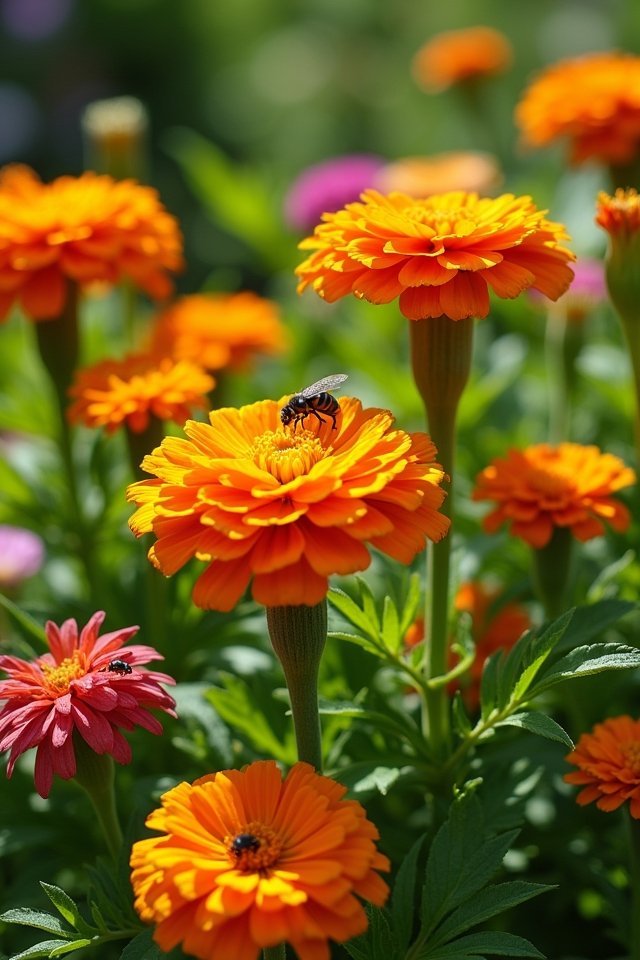
While you may think pests are the only challenge in your flower bed, you can actually turn the tables with companion planting! Imagine creating a vibrant community of plants, where some act as pest deterrents, protecting their neighbors. For instance, pairing marigolds with your roses not only adds a splash of color but also repels aphids! Or how about planting garlic near your tulips? It’s like giving those flowers an invisible shield! These clever plant pairings can transform your garden into a natural fortress. By mixing flowers with herbs, like basil and nasturtiums, you create a dazzling display that’s both beautiful and functional. So, why not give companion planting a try? Your flower bed will thank you!
Utilizing Organic Pesticides
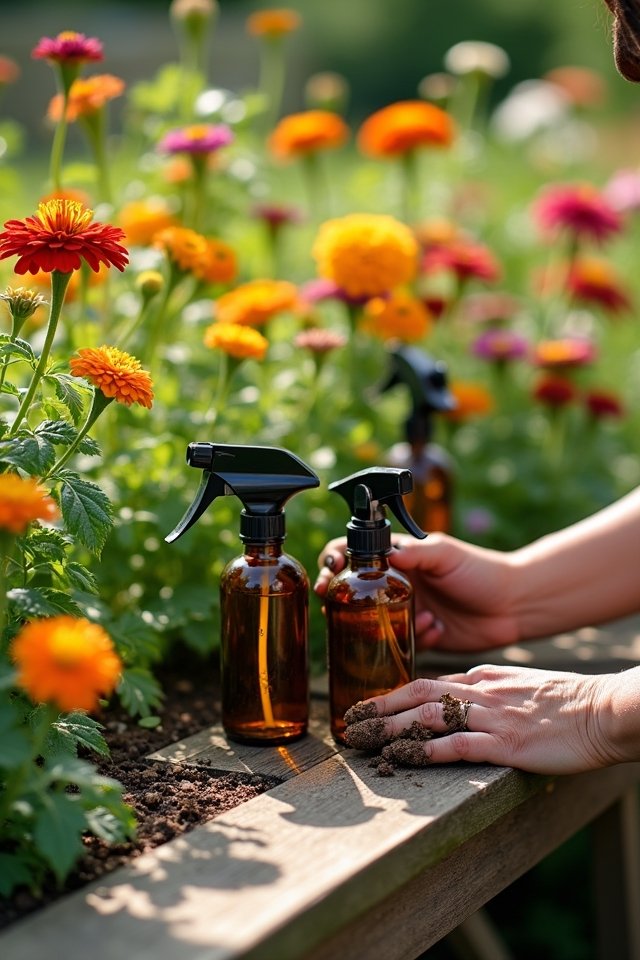
After you’ve set the stage with companion planting, it’s time to tackle those pesky pests head-on with organic pesticides! You’ll love the power of natural ingredients that are friendly to your plants and the environment. Here are some innovative application techniques to contemplate:
- Neem Oil: Derived from the neem tree, it disrupts insect growth and repels pests.
- Diatomaceous Earth: Sprinkle this fine powder to create a barrier against soft-bodied bugs.
- Garlic Spray: Mix crushed garlic in water; it’s a potent pest deterrent!
- Soap Solutions: A mild soap mixed with water can suffocate pests on contact!
Attracting Beneficial Insects
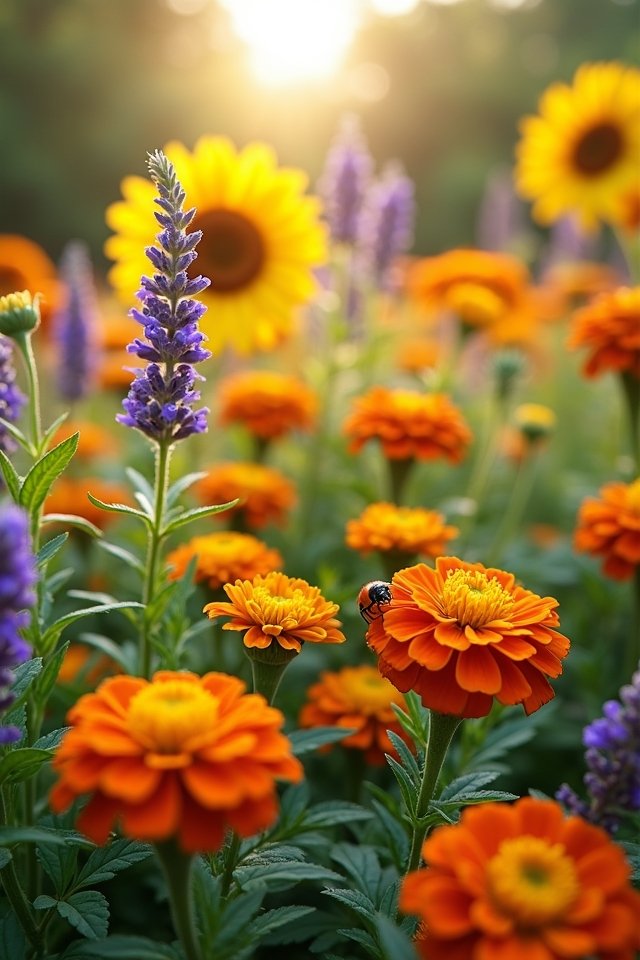
Attracting beneficial insects to your flower bed can feel like hosting a superhero convention for your garden! Imagine a buzzing crowd of bees, ladybugs, and lacewings swooping in to save the day. To create a vibrant pollinator garden, start by planting native flowers like coneflowers and milkweed, which draw in diverse insect allies. Mix in herbs like basil and dill—these act like VIP invitations for hungry pollinators! Don’t forget to leave some bare patches of soil for ground-nesting bees. You’ll be amazed at the insect diversity that flourishes. By inviting these little heroes, you’ll not only boost your blooms but also promote a balanced ecosystem. So, why wait? Your garden’s superhero team is just a few plants away!
Maintaining Healthy Soil
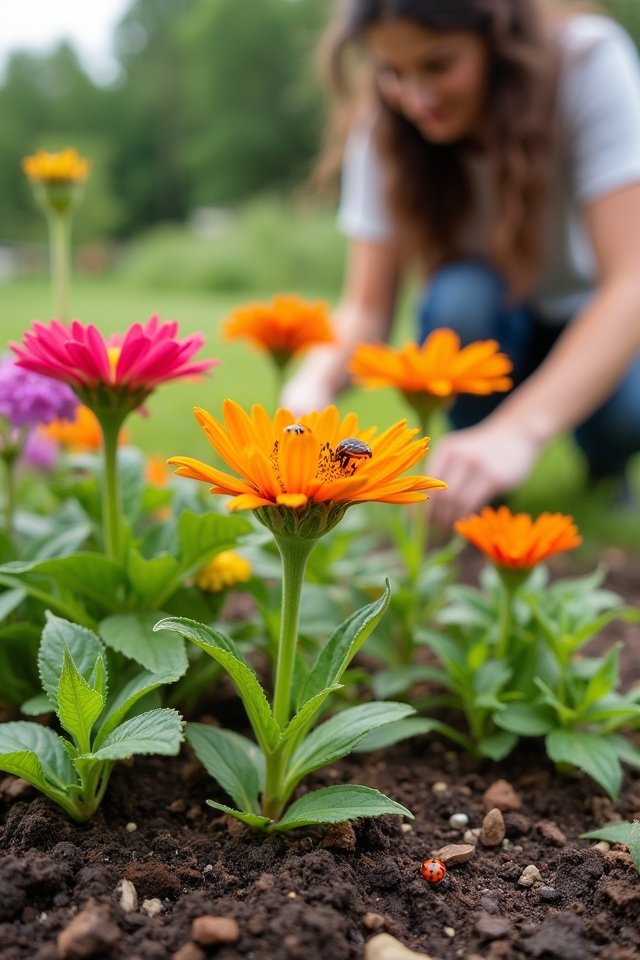
Maintaining healthy soil is like giving your garden a cozy blanket, ensuring it stays warm and nourished! To keep your flower beds thriving, focus on achieving a nutrient balance that’ll make your plants sing! Here are four innovative strategies to enhance your soil:
- Add soil amendments – Incorporate compost or well-rotted manure for rich nutrients.
- Test your soil – Regular testing helps you understand pH and nutrient levels.
- Rotate crops – Changing plant locations prevents nutrient depletion and pest build-up.
- Mulch regularly – A layer of mulch retains moisture and suppresses weeds.
With these techniques, you’ll create a vibrant ecosystem where your flowers can flourish! Isn’t that the dream? 🌼
Proper Watering Techniques
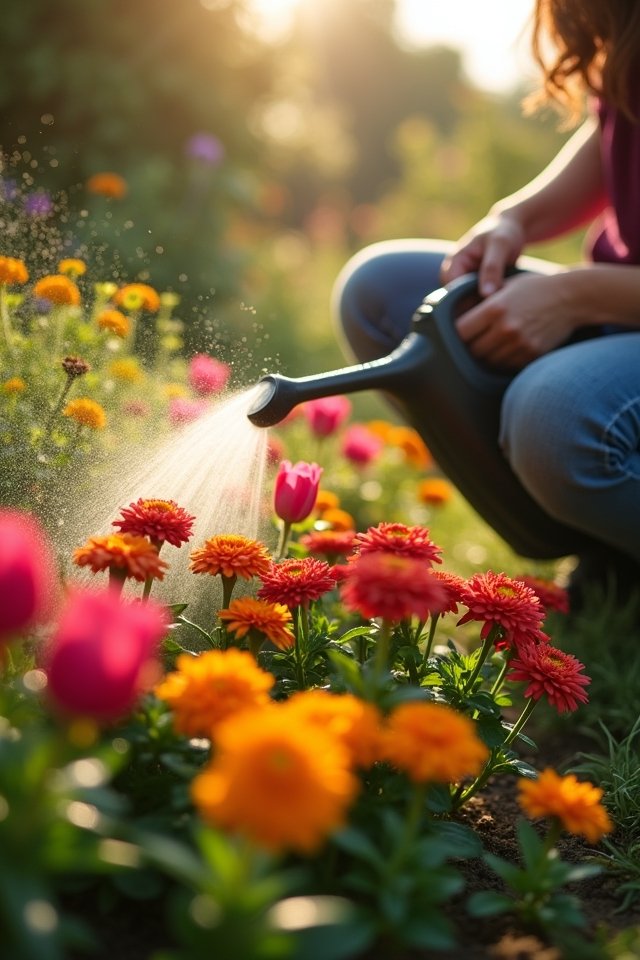
Watering your flower beds can feel like a delicate dance, where each step counts! You want to guarantee your blooms thrive, so consider implementing drip irrigation. This innovative system delivers water directly to the roots, minimizing waste and maximizing moisture retention. Think of it as giving your flowers a rejuvenating spa day!
You don’t want your plants to feel stressed, right? Water early in the morning or late in the evening to prevent evaporation. And remember, consistency is key! Adjust your watering based on weather, soil type, and plant needs. By doing so, you’ll keep pests at bay and help your flowers stand tall and vibrant. Who knew watering could be so rewarding? Happy gardening!
Physical Barriers and Traps
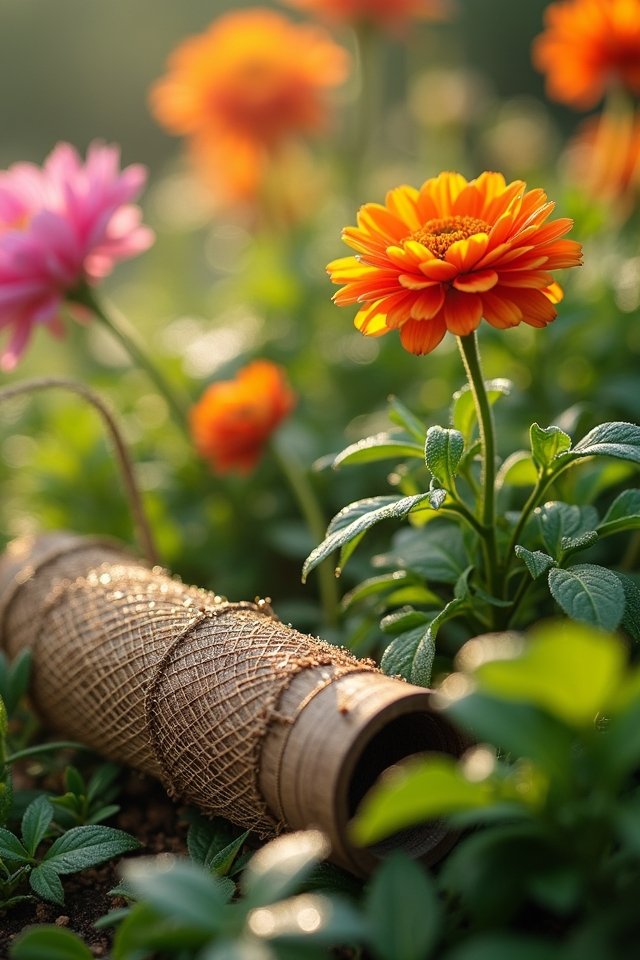
Imagine this: your beautiful flower bed, vibrant and blooming, but suddenly invaded by pesky pests! Don’t panic! You can create physical barriers and traps to protect your garden. Here are some innovative strategies:
- Row Covers: These lightweight fabrics shield your flowers from insects while letting sunlight and rain in. It’s like a cozy blanket for your blooms!
- Sticky Traps: Install these vibrant, adhesive boards around your plants. They catch wandering pests faster than a cat chasing a laser pointer!
- Copper Barriers: Use copper tape around the bed to deter slugs and snails. It gives them a shocking surprise!
- Handpicking: Get your hands dirty and remove pests directly. It’s like a treasure hunt for your garden’s health!
With these tools, you’ll keep your flowers thriving and stunning!
Frequently Asked Questions
What Are the Signs of a Pest Infestation in Flower Beds?
Noticing signs of a pest infestation in your flower beds can feel like a detective game! You might spot chewed leaves, wilting plants, or tiny pests scuttling around. Keep an eye on your blooms with regular flower bed monitoring—it’s like giving them a daily check-up! Using pest identification techniques, you can pinpoint culprits quickly. So, is that a ladybug or a sneaky aphid? Let’s solve this mystery together and keep your garden thriving!
How Often Should I Inspect My Flower Beds for Pests?
Ever thought about your flower bed like a superhero’s fortress? You should inspect it weekly for pests! Keeping an eye on those beautiful blooms guarantees you catch any sneaky critters before they wreak havoc. During your flower bed maintenance, look for signs like wilted leaves or tiny holes. If you find something suspicious, act fast! It’s way more fun to enjoy vibrant flowers than to battle pests later on! Happy gardening!
Can I Use Chemical Pesticides Alongside Organic Methods?
Absolutely, you can mix chemical pesticides with organic methods, but you’ve gotta be cautious! Think of it like a dance – you want them to complement each other without stepping on toes. Using chemical pesticides safely guarantees they don’t harm the beneficial bugs you love. Meanwhile, organic methods can be incredibly effective, like a superhero swooping in to save the day! Just remember to read labels and time your applications wisely! Happy gardening!
What Is the Best Time of Day to Apply Pesticides?
Timing your pesticide application can feel like a game-changing secret weapon! For the best results, aim for a morning application when the air’s still cool and calm. This helps the pesticide stick without evaporating too quickly. Alternatively, evening effectiveness shines when pests are more active and temperatures drop. Just imagine your flowers thriving while the bugs flee! So, which time works for you? Let’s make your garden the envy of the neighborhood!
How Can I Identify Beneficial Insects in My Garden?
Identifying beneficial insects in your garden can be a delightful adventure! Look for ladybugs, those tiny red gems, munching on aphids. Check for lacewings, too—they’re like little green fairies, protecting your plants. You can also spot bees buzzing around, playing their essential role in garden biodiversity. So, grab a magnifying glass and start observing! Isn’t it amazing how nature’s helpers work tirelessly for your blooming paradise? Happy bug hunting!