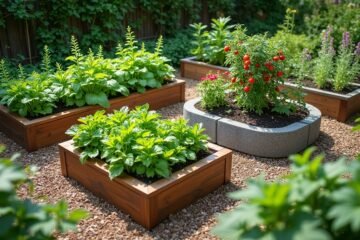
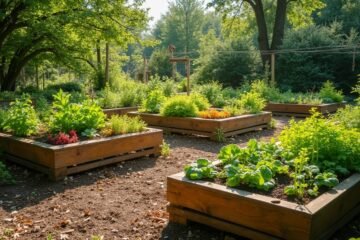
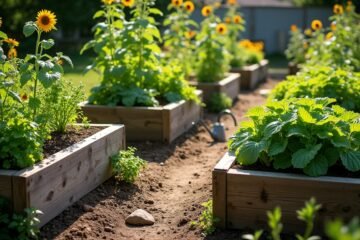
Ready to transform your tiny space into a blooming paradise? Start by picking a sunny spot with good drainage—nobody likes soggy roots! Use rot-resistant wood or rugged metal for your raised beds, making sure they’re 12 to 18 inches high. Fill them with nutrient-rich soil, and think vertical—stack those plants like a garden skyscraper! Don’t forget to mulch and check for pests! Stick around, and you’ll uncover even more tips to make your garden sizzle!
Choose the Right Location
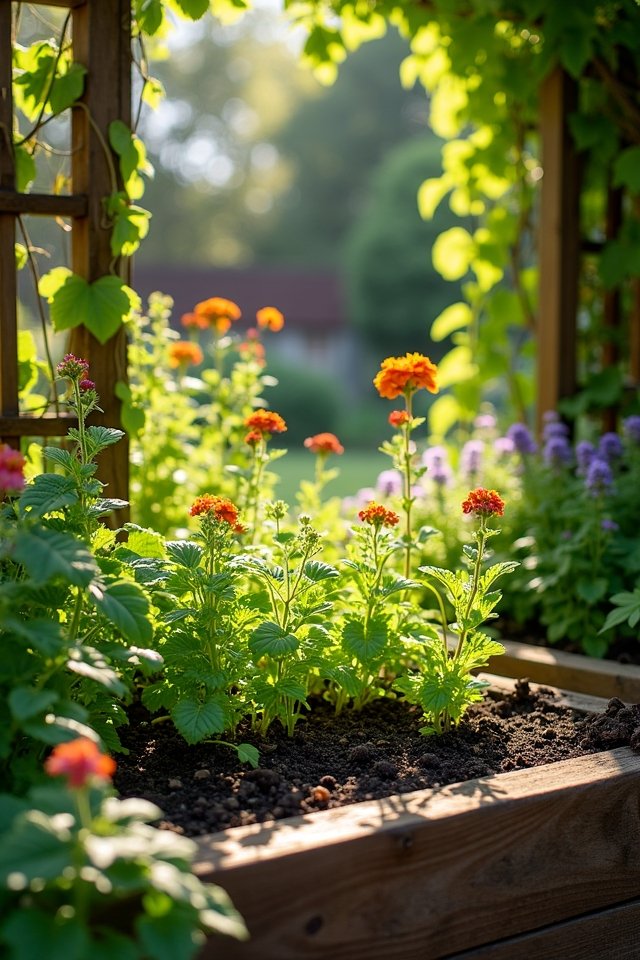
When it comes to raised bed gardening, picking the right spot can make all the difference—seriously! You want a location that gets at least six hours of sunlight exposure daily. Imagine your plants basking in the sun, soaking up those golden rays like sunbathers on a beach! Don’t forget about drainage considerations, too. If your garden’s sitting in a puddle after rain, your plants will drown faster than a goldfish at a water park! Consider elevated areas or slopes for better drainage—think of them as your garden’s lifeguard! Scout out spots that combine sunlight and proper drainage, and you’ll create a thriving, lush oasis that makes your neighbors green with envy. Ready, set, grow!
Select Suitable Raised Bed Materials
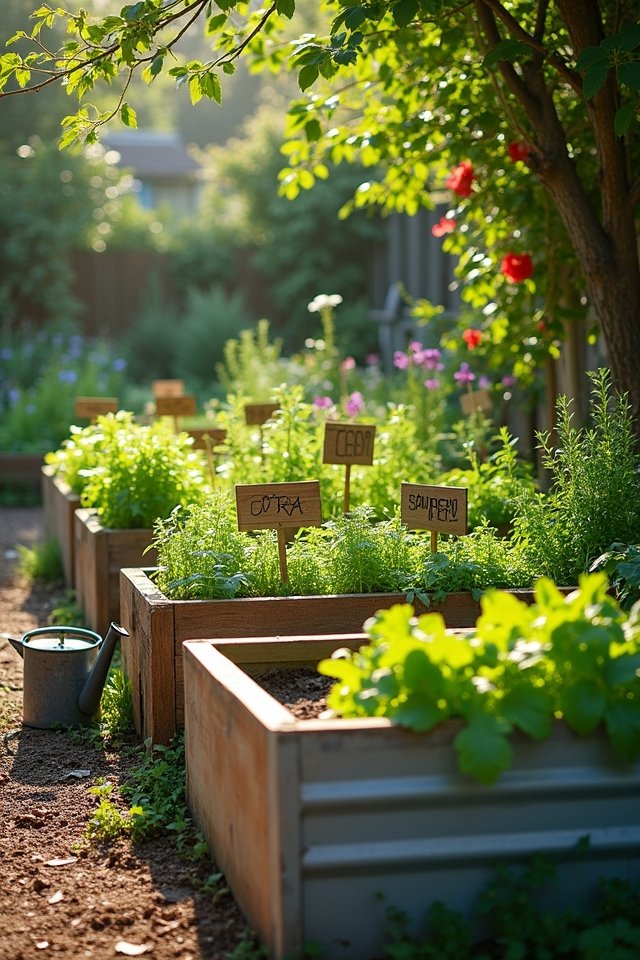
Now that you’ve found that perfect sunny spot with great drainage, it’s time to think about what materials you’ll use to build your raised bed. When it comes to wood options, consider cedar or redwood; they’re naturally resistant to rot and give your garden a charming rustic vibe. If you’re feeling a bit edgy, metal choices like galvanized steel or corrugated iron can add a sleek, modern touch, plus they’re durable! Just imagine the contrast between vibrant greens and shiny metal! Don’t forget to line the inside to protect your soil from rust. Whatever you choose, make sure it fits your style and the plants’ needs. Happy building! Your garden’s future is looking bright!
Optimize Bed Dimensions
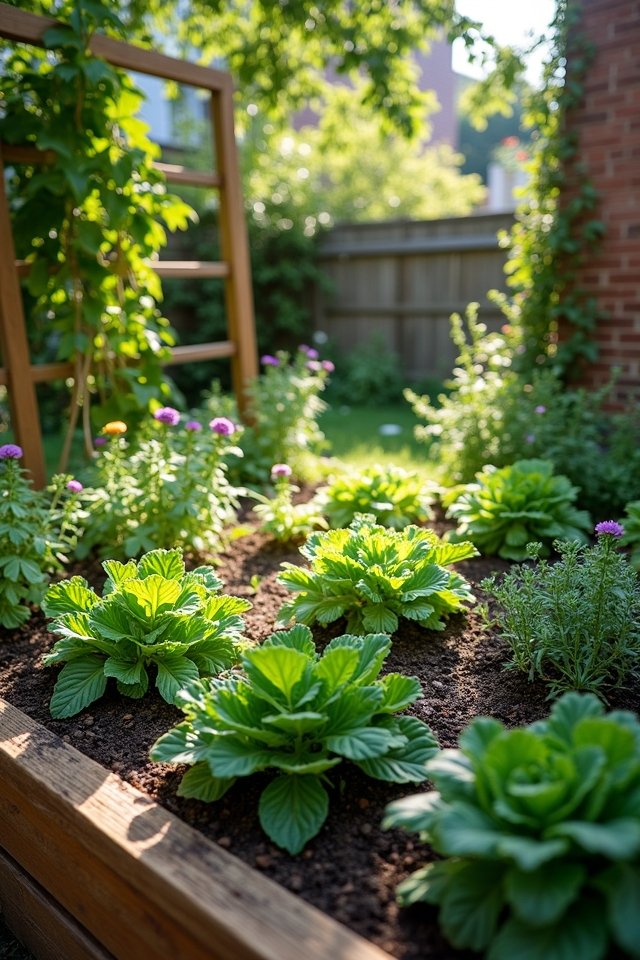
Optimizing your raised bed dimensions can truly transform your gardening experience! Imagine a cozy space where every inch counts. Start with bed height: a height of 12 to 18 inches is perfect for easy access and keeps pesky weeds away. Now, let’s talk bed width. A width of 3 to 4 feet guarantees you can reach every delectable plant without a contortionist act! Want to go vertical? Don’t shy away from tall beds; they can be showstoppers! Remember, your layout is like a canvas—design it thoughtfully. Picture vibrant veggies cascading down, inviting you to harvest! So, are you ready to create a stunning, functional masterpiece in your small space? Let’s get those dimensions just right and watch your garden thrive!
Use Quality Soil Mix
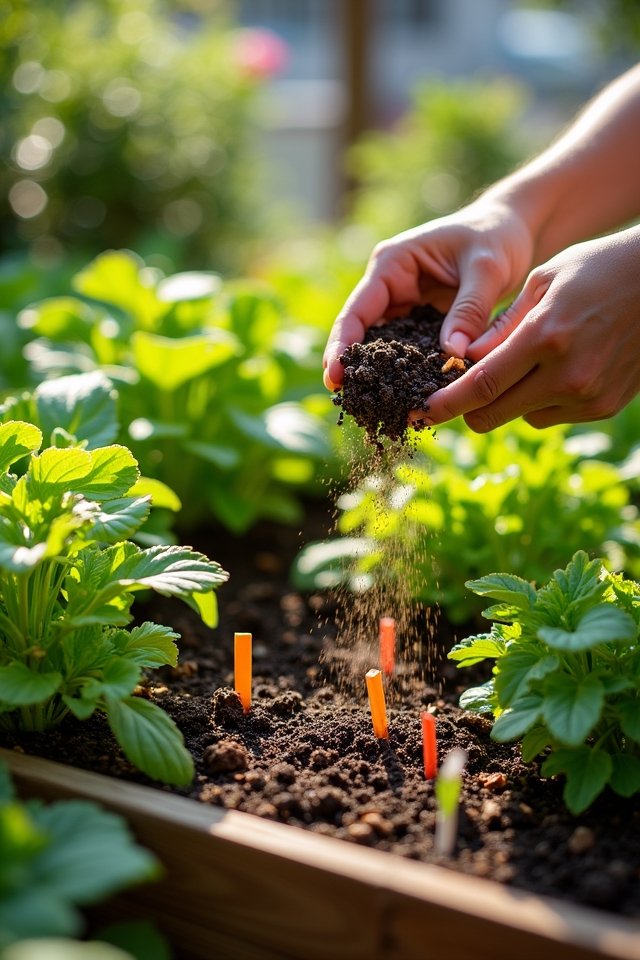
Soil is the heart of your garden, and using a quality soil mix is like giving your plants a five-star meal! You wouldn’t feed your body junk, right? So, why do it to your greens? Explore different soil types, like loamy blends or compost-rich mixes, to find what works best for your plants. A well-balanced nutrient mix is essential for vibrant growth and bountiful harvests! Think of it as a buffet for your veggies, filled with everything from nitrogen to potassium. Don’t just grab the cheapest bag; invest in premium soil that’ll make your plants dance with joy! Remember, happy roots lead to happy plants. Are you ready to nourish your garden’s soul? Let’s dig in!
Implement Vertical Gardening Techniques
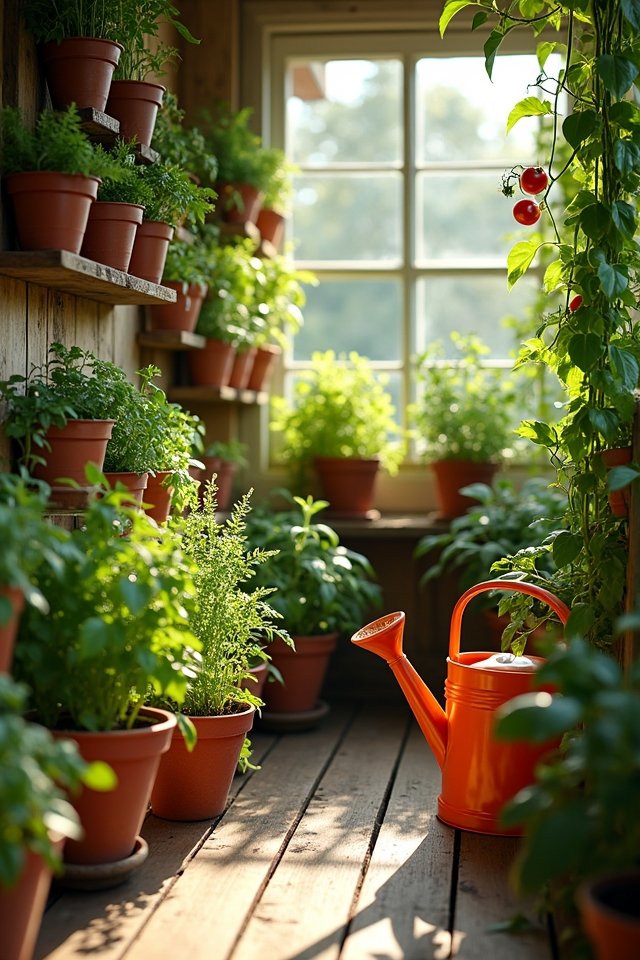
If you’ve ever dreamed of a garden that reaches for the sky, vertical gardening techniques are your ticket to a lush, green paradise! Imagine a stunning wall of vibrant blooms or luscious veggies, all thanks to clever trellis systems and hanging planters. You can train climbing plants like peas and cucumbers to scale those trellises, creating a magnificent green tapestry! Hanging planters, on the other hand, are perfect for herbs or trailing flowers that cascade down like nature’s waterfall. Plus, they free up valuable ground space for other plants. Why not turn that empty wall into a vibrant masterpiece? With just a little creativity and some innovative structures, you can transform your small space into a vertical Eden!
Plan Companion Planting
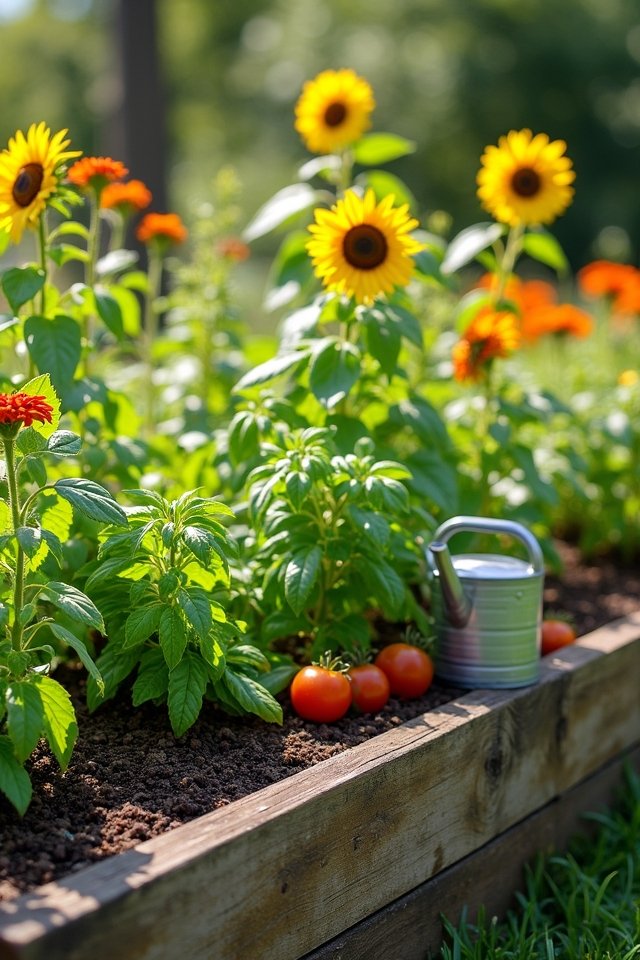
When you pair plants wisely, you’re not just growing a garden—you’re crafting a vibrant ecosystem! Think about planting combinations like tomatoes and basil. These two are a match made in garden heaven, with basil enhancing the flavor of tomatoes while keeping pesky bugs at bay. Or consider carrots and onions; they help each other thrive, deterring pests together. By choosing beneficial plants, you’re not just maximizing space—you’re creating a symphony of growth! Want a colorful touch? Add marigolds to your raised bed. They’re beautiful and help repel harmful insects. So, get creative! Experiment with different combinations and watch your small space transform into a lush paradise. It’s not just gardening; it’s a delightful adventure!
Utilize Space-efficient Planting Methods
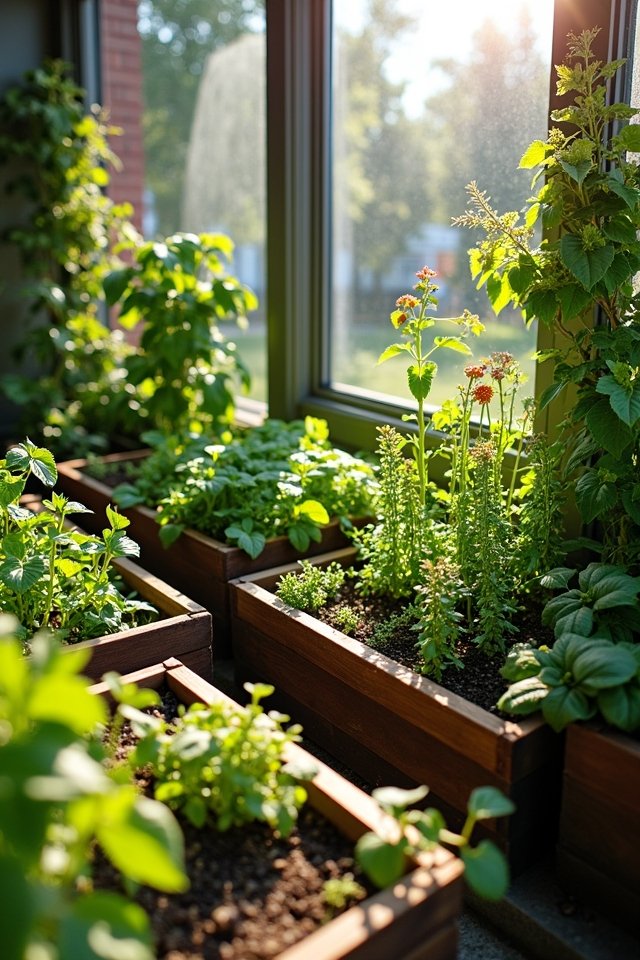
Pairing plants is just the beginning of your small space gardening adventure! To maximize your tiny garden, immerse yourself in innovative space-efficient planting methods. Try these transformative tips:
- Intercropping strategies: Mix short and tall crops! Plant lettuce beneath tomatoes for a dynamic duo that optimizes light and space.
- Container gardening: Use vertical planters to save ground space while growing herbs like basil or mint—perfect for those tasty summer dishes!
- Succession planting: After harvesting, quickly replant. Grow radishes, followed by carrots—it’s like a relay race in your garden!
- Trellising: Train climbing plants like cucumbers to go vertical, freeing up precious ground space for other veggies!
Incorporate Drip Irrigation Systems
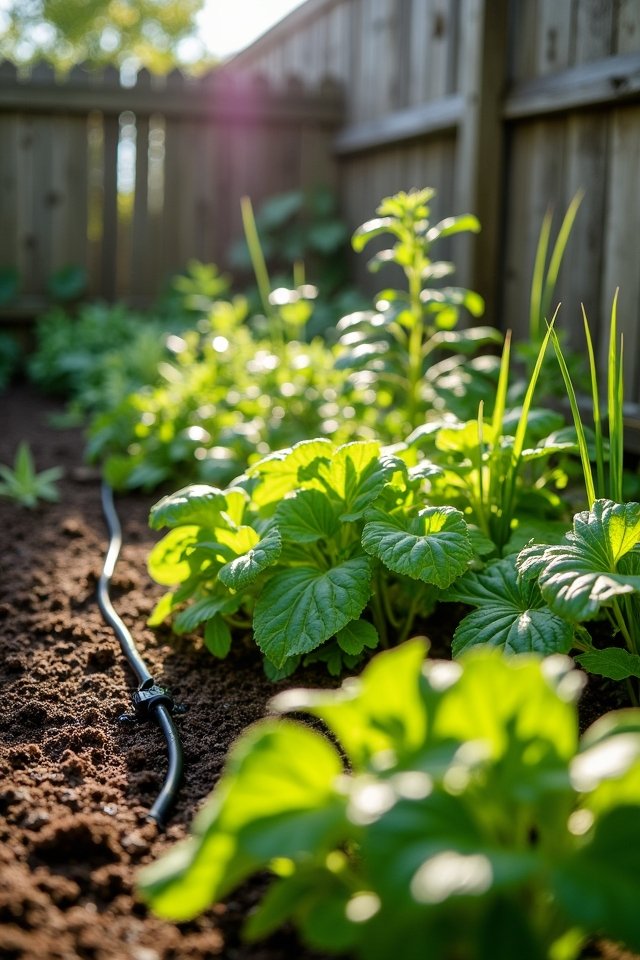
Imagine your plants sipping water like they’re at a fancy spa—now that’s some serious pampering! By incorporating drip irrigation systems into your small space garden, you’re not just saving time; you’re giving your plants a daily treat. These automatic watering systems provide precise hydration, delivering moisture right to the roots where it’s needed most. You’ll enjoy the drip irrigation benefits of reduced water waste and healthier plants, all while keeping your garden thriving through droughts. Plus, you can customize the setup to fit your unique layout! Imagine never dragging a hose around again. Instead, your plants can luxuriate in their own little oasis while you kick back and sip your favorite drink. How’s that for innovation?
Regular Maintenance Practices
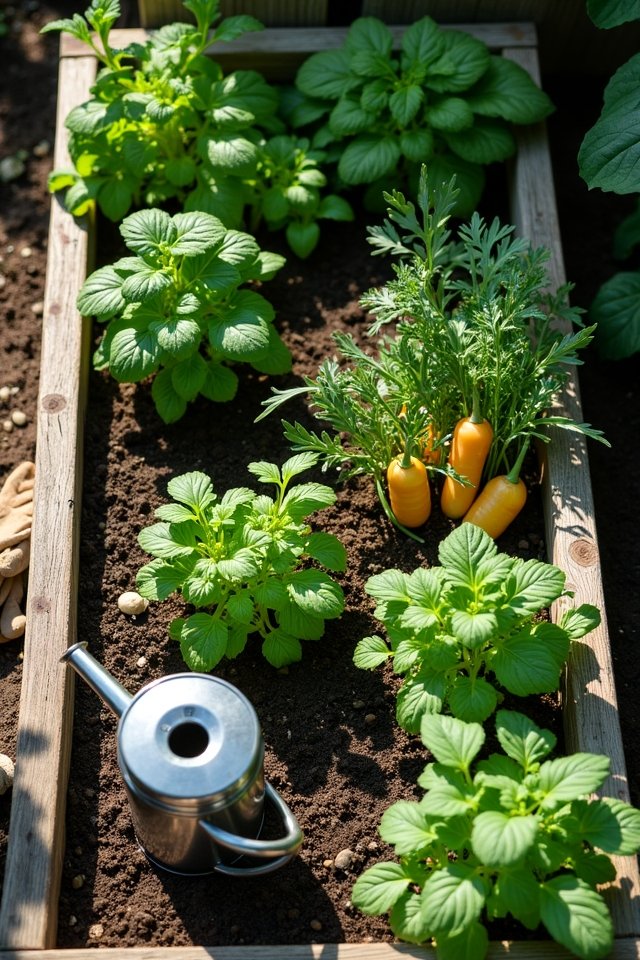
Your garden’s success doesn’t just come from fancy watering systems; it thrives on regular maintenance practices too! Keeping your plants healthy and vibrant requires a bit of love and attention. Think of it as giving your plants a spa day! Here are four essential practices to guarantee peak plant health and effective pest management:
- Regular Weeding: Pull out those pesky weeds before they steal nutrients!
- Consistent Watering: Keep the soil moist, but not soggy—your plants prefer a drink, not a swim!
- Mulching: Apply a good layer of mulch to retain moisture and suppress weeds.
- Pest Checks: Regularly inspect for bugs; catch them early and save your greens from a munching frenzy!
Happy gardening!
Extend the Growing Season
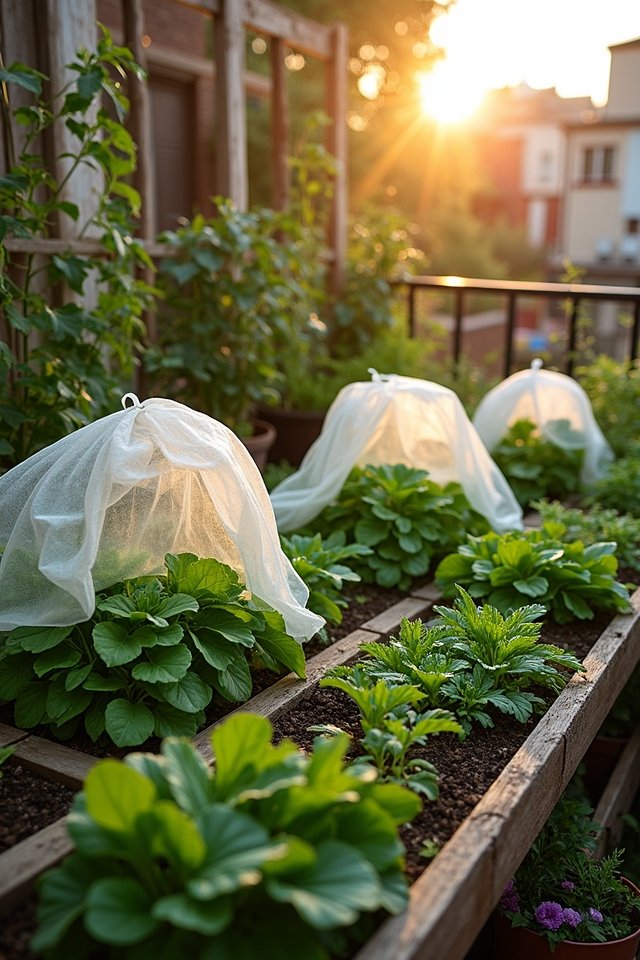
If you want to keep your garden thriving long after summer’s warmth fades, extending the growing season is the way to go! Think of cold frames as your garden’s cozy winter jacket—they trap heat and keep plants toasty. Row covers work like a soft blanket, providing frost protection while encouraging growth. Explore greenhouse options for the ultimate season extenders; they’re like a tropical vacation for your veggies! Don’t forget to check your planting calendars; timing is everything! You can even dabble in winter gardening with hardy greens. By maximizing heat retention and using smart techniques, you’ll transform your raised bed into a year-round haven. So get creative, and let your garden shine through the chill!
Frequently Asked Questions
What Vegetables Grow Best in Small Raised Beds?
When you’re working with small raised beds, think compact vegetable varieties like cherry tomatoes or baby carrots! These little gems thrive in tight spots. Ever tried companion planting? Pairing basil with tomatoes not only enhances flavor but also keeps pests at bay! Imagine plucking fresh, fragrant leaves while your tomatoes burst with juiciness! So, get creative, mix and match, and watch your tiny garden flourish with vibrant life and delicious produce! Who knew small could be so mighty?
How Can I Deter Pests in a Small Space Garden?
Ever tried to shoo away pesky critters like they’re in a game of tag? You can use natural deterrents like garlic spray or neem oil to keep them at bay. Plus, companion planting works wonders—mix marigolds with your vegetables to confuse those munching pests! It’s like giving them a maze to navigate. With a little creativity and some clever plant pairings, you’ll transform your garden into a pest-free paradise! Isn’t that exciting?
Can I Use Recycled Materials for Raised Beds?
Absolutely, you can use recycled materials for raised beds! Think about using reclaimed wood; it adds character and saves the environment! Old pallets, wine crates, or even sturdy containers can work wonders. Just make sure they’re free from harmful chemicals. Imagine planting vibrant tomatoes in a rustic, wooden frame—how charming is that? You’re not just gardening; you’re creating a masterpiece while being eco-friendly. So, roll up your sleeves and get creative!
How Often Should I Water My Raised Bed Garden?
Watering your raised bed garden is a bit like finding the perfect balance on a seesaw—too much or too little can tip the scale! Typically, you’ll want to water every 1-2 days, but check the soil’s moisture retention first. Stick your finger in the soil; if it’s dry an inch down, it’s thirsty! Keep an eye on your plants, and they’ll reward you with vibrant colors and bountiful harvests! Happy gardening!
What Are Some Common Mistakes to Avoid in Small Space Gardening?
When you’re diving into small space gardening, watch out for common pitfalls! First, don’t cram plants together like sardines; proper plant spacing lets them breathe and thrive. Next, don’t skimp on soil quality—think of it as your garden’s foundation! Using rich, well-draining soil is like giving your plants a cozy blanket. And remember, if you see droopy leaves, it’s time to reassess your watering routine! Happy gardening!