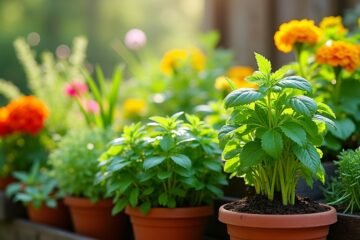
Want to outsmart those pesky garden pests? Companion planting is your best friend! By pairing tomatoes with basil, you’ll confuse those critters while enhancing flavor. Marigolds are like tiny, colorful bodyguards against aphids, and they can attract pollinators too! Don’t forget about herbs like rosemary and mint that keep the bugs at bay. Just imagine a garden bursting with life and flavor! Stick around, and you’ll discover even more snazzy tricks for a thriving garden!
Understanding Companion Planting Basics
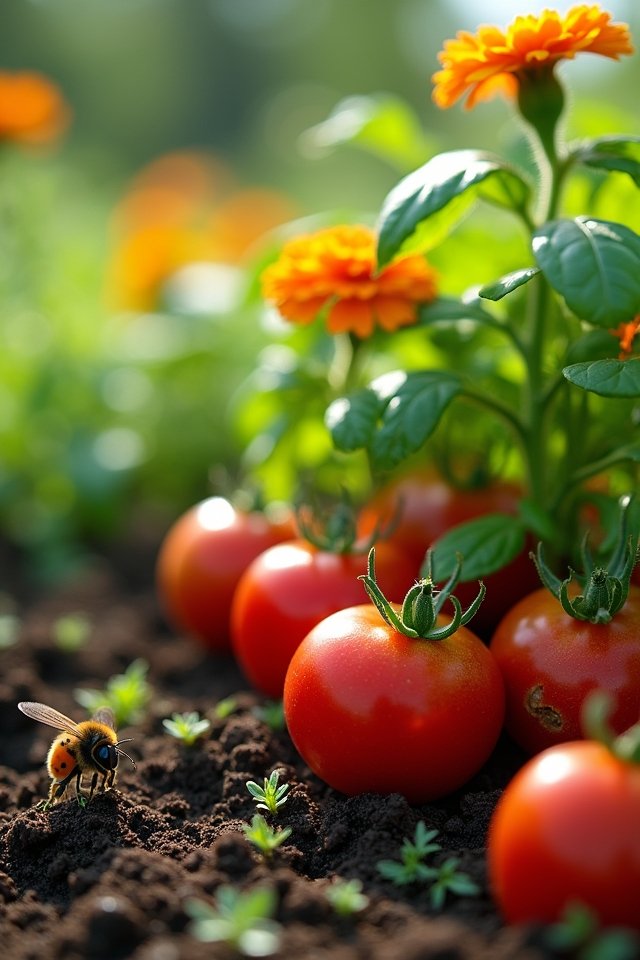
When you think about gardening, you might picture rows of flowers or vegetables flourishing under the sun. Now, imagine enhancing that beauty and productivity by teaming up plants! Companion planting is like hosting a fabulous garden party, where the right guests bring out the best in each other. For example, plant basil alongside tomatoes; the basil’s aroma confuses pesky pests, while enhancing the tomatoes’ flavor! Just like a good friend, marigolds can deter unwanted bugs, adding vibrant color to your garden. So, why not let nature’s besties work together to create a thriving oasis? Give companion planting a try—the results may just leave you grinning from ear to ear! Who knew gardening could be this innovative and fun?
The Role of Marigolds in Pest Control
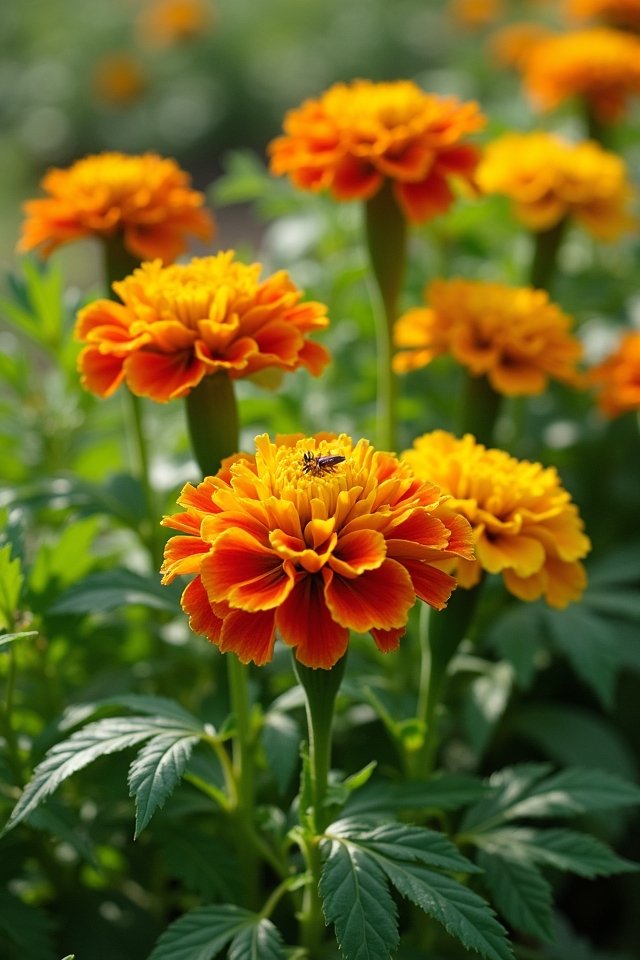
If you’ve ever been puzzled by pesky garden pests, marigolds might just be your new best friends! These vibrant blooms don’t just brighten your garden—they battle those uninvited munchers, too! With their strong scent, marigolds repel unwelcome guests like aphids and nematodes, like a knight defending your plants. Imagine planting them alongside your tomatoes; the delicious smell keeps the bugs at bay while adding a pop of color! Plus, marigolds attract pollinators, sprinkling a bit of magic into your garden’s ecosystem. It’s like hosting a garden party where flowers are the bouncers! So, why not sprinkle some marigold seeds in your plot? Your plants—and your eyes—will be grateful while keeping pests at arm’s length!
Beneficial Insects Attracted by Companion Plants

While weeds might steal the spotlight for being annoying, let’s not forget the unsung heroes of your garden—the beneficial insects! These little helpers can be your garden’s best friends, working hard to keep pesky pests at bay. When you use companion plants wisely, you’ll attract these tiny warriors naturally!
Here’s what you’ll often find buzzing around:
- Ladybugs: They feast on aphids like it’s a buffet!
- Lacewings: Their larvae munch on a variety of garden pests.
- Pollinators: Bees and butterflies are drawn to colorful flowers, boosting your veggies’ productivity!
- Parasitic wasps: They lay eggs in undesirable pests, doing the dirty work for you!
Pairing Vegetables for Enhanced Pest Resistance
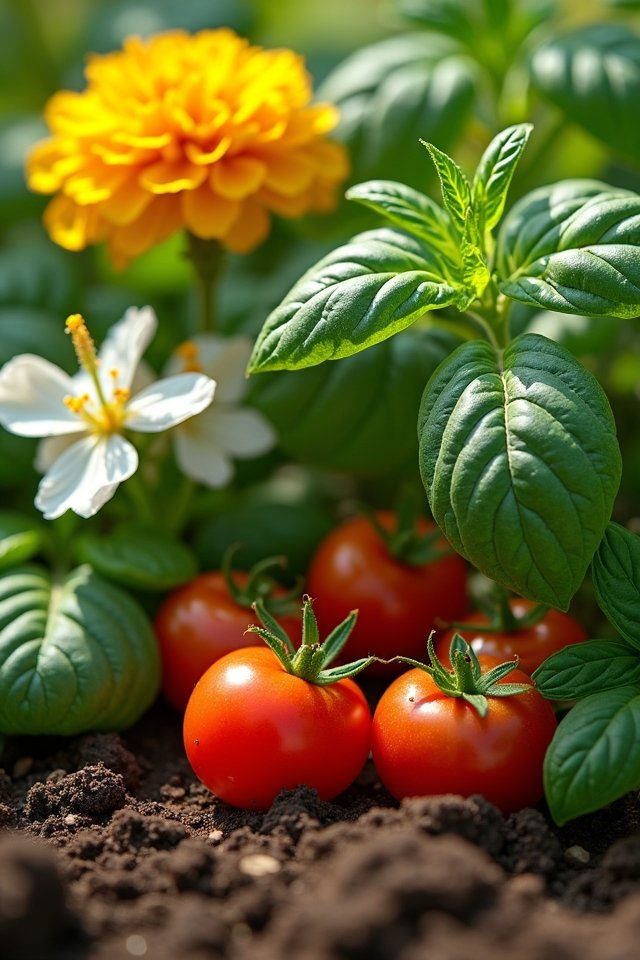
Pairing vegetables for enhanced pest resistance can feel like a secret weapon in your gardening arsenal! Imagine this: tomatoes and basil thrive together, not only joyfully but also protecting each other from pesky bugs. You could plant marigolds alongside your squash, creating a colorful barrier that confuses aphids and other invaders. Carrots love growing near peas, which naturally deters root maggots while promoting healthy growth. How about putting garlic next to your broccoli? That pungent aroma helps keep those cabbage worms at bay! Each pairing creates an eco-friendly symphony, a dance of defense in your garden. So, don’t hesitate—experiment with these combos and watch your plants thrive like the vibrant orchestra they were meant to be! What a delightful revolution!
Herbs That Deter Common Garden Pests
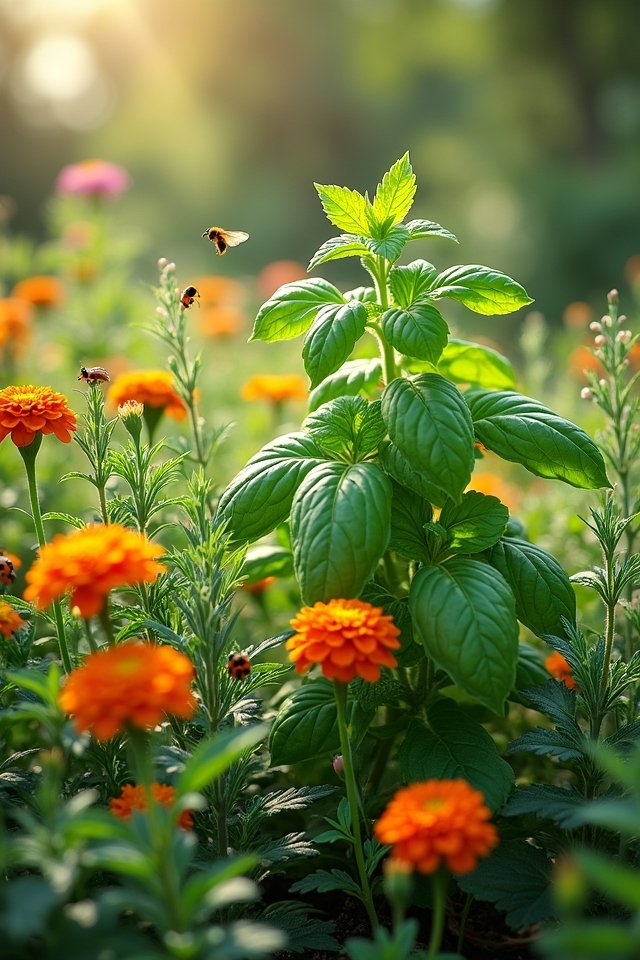
Adding herbs to your garden can work wonders when it comes to keeping those pesky pests at bay! Think of herbs as your garden’s secret superheroes—armed with scents that make pests hit the road! Here are a few must-haves:
- Basil: Its aroma confuses mosquitoes and flies; they’ll be lost in the scent!
- Mint: This minty fresh powerhouse can repel ants and aphids—who knew freshness could kick pests to the curb?
- Rosemary: Its needle-like leaves drive away spiders, making your garden a no-spider zone!
- Thyme: This fragrant herb keeps cabbage worms at bay. Your veggies will thank you!
Timing and Location for Optimal Plant Pairing
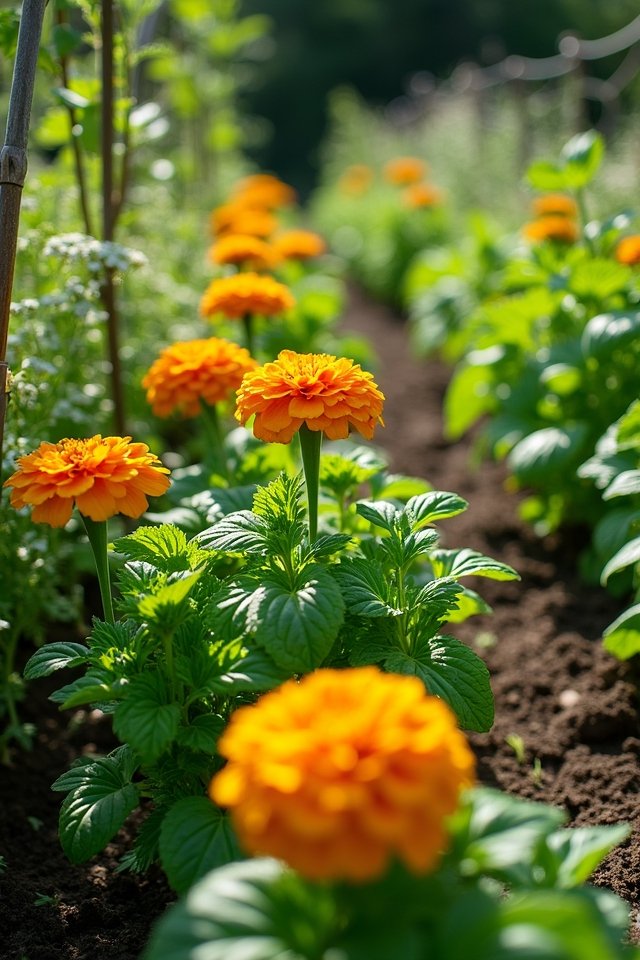
When you’re orchestrating your garden’s lineup, timing and location are like the secret ingredients in a scrumptious recipe! Think of planting basil and tomatoes together, but wait—plant your basil a couple of weeks earlier! This way, those fragrant leaves repel pests and invite pollinators just in time for your tomatoes to flourish.
Position tall sunflowers on the northern edge, casting shade over delicate greens that crave a cool touch for daytime growth. And don’t forget about rotating crops—it’s like a dance party for your soil! By aligning the right plants in the right spots at the right times, you’ll create a vibrant symphony of growth that’ll make your neighbors green with envy!
Monitoring and Adjusting Companion Planting Strategies

While nurturing your garden, keeping an eye on how your companion plants interact is key to thriving growth! After all, you wouldn’t want your tomatoes sulking between competitive peppers, right?
To guarantee harmony, monitor and adjust your pairing strategies actively. Look out for these four essential signs:
- Growth Rate: Are some plants outpacing others? It might be time to switch things up!
- Pest Activity: Notice any sudden pest invasions? Consider swapping your allies!
- Soil Nutrients: Is the soil feeling drained or neglected? Boost it with nutrient-rich companions.
- Disease Resistance: Are you seeing signs of illness? Choose more resilient partners to promote health.
Frequently Asked Questions
Can Companion Planting Improve Soil Health in Small Gardens?
Absolutely, companion planting can boost your soil health! Imagine planting nitrogen-fixing clover alongside your veggies—it’s like giving your garden a vitamin shot! Those little clover roots enrich the soil while you enjoy fresh produce. Plus, when you pair tall sunflowers with delicate lettuce, you create shade, keeping the soil cool and moist. Who knew gardening could be this dynamic? It’s like teaming up for a double win—delicious veggies and thriving soil! Isn’t that fantastic?
How Do I Choose Plants for Diverse Climates?
Choosing plants for diverse climates can feel like a treasure hunt! Start by matching plants to your zone; for instance, consider colorful zinnias in warmer areas or resilient pansies for cooler spots. Don’t forget about native species; they thrive with little fuss! Imagine your garden bursting with vibrant blooms and buzzing bees—pure magic! And remember, if a plant’s unhappy, it’s like inviting a party crasher. Seek harmony, and your garden will dance!
Are There Any Drawbacks to Companion Planting?
Sure, companion planting has its quirks! Sometimes, your chosen plants just don’t get along—like that frenemy who always steals your fries. Certain combinations might attract pests instead of deterring them. And hey, overcrowding can choke your garden’s growth, making your veggies sulk! Plus, if you plant too many varieties, you could confuse your pollinators. Aren’t they just delicate little artists? So, balance is key—embrace the chaos, but with a strategy!
Can Companion Plants Affect Soil Ph Levels?
Absolutely, companion plants can influence soil pH levels! It’s like a dance, where certain plants help each other thrive. For instance, legumes can fix nitrogen and subtly change the pH—mixing magic in your garden! If you plant them near acid-loving friends like blueberries, watch for potential shifts. Wondering how to balance it all? Think of your garden as a recipe—each ingredient plays a part! Isn’t nature just fascinating? Keep experimenting and enjoy the blooms!
How Often Should I Rotate Companion Plants?
Imagine your garden as a bustling marketplace, where plants negotiate their roles like enthusiastic vendors! You should rotate companion plants every year to keep the soil lively and nutrients fresh. For instance, if you had tomatoes and basil together, switch them with carrots and marigolds next season. This mix-up prevents pests from overstaying their welcome. Isn’t it a delight to watch your plants thrive in their new friendships? Let the garden games begin!