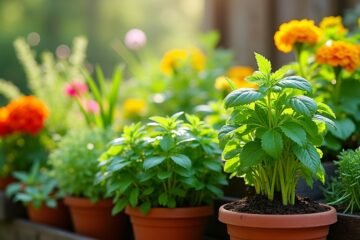
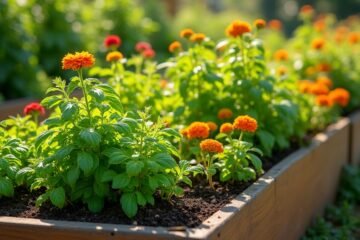
If you’re short on space, companion planting is your secret weapon! Imagine teaming up basil and tomatoes—it’s like they’re best buddies, boosting each other’s growth! Or how about pairing marigolds with your lettuce to shoo away pesky pests? Keep your garden lively with colorful blooms like lavender that attract pollinators while enticing beneficial insects. Just think of them as your garden’s little helpers! Stick around, and you’ll discover even more garden magic and tips for thriving in cozy spaces!
Maximizing Space With Herbs and Vegetables
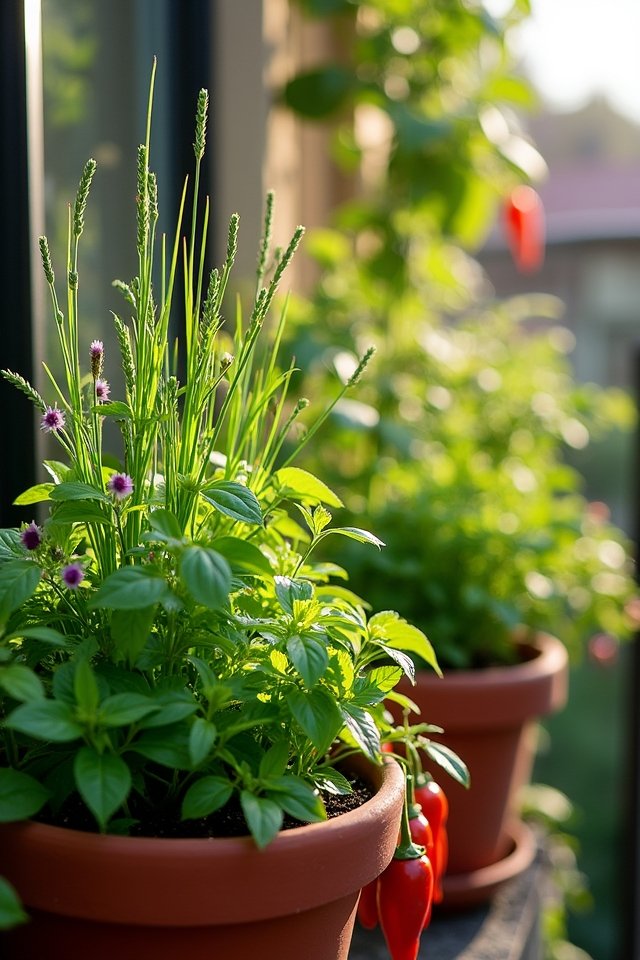
When you think about gardening in a small space, it’s easy to feel a bit overwhelmed—after all, how can you grow vibrant herbs and hearty vegetables in just a tiny patch? But here’s the scoop: you can maximize your space with clever choices! Imagine planting basil and tomatoes side by side. The basil loves the sun, and those juicy tomatoes will thrive with a little company. Ever tried vertical gardening? A trellis lets cucumbers climb, saving precious ground space for other delights! Don’t forget about container gardening—herbs like thyme and oregano can thrive in pots on a sunny balcony. Who knew small could pack such a punch? With a bit of creativity, your mini-garden can burst with flavor and life!
Flower and Vegetable Pairings for Pest Control
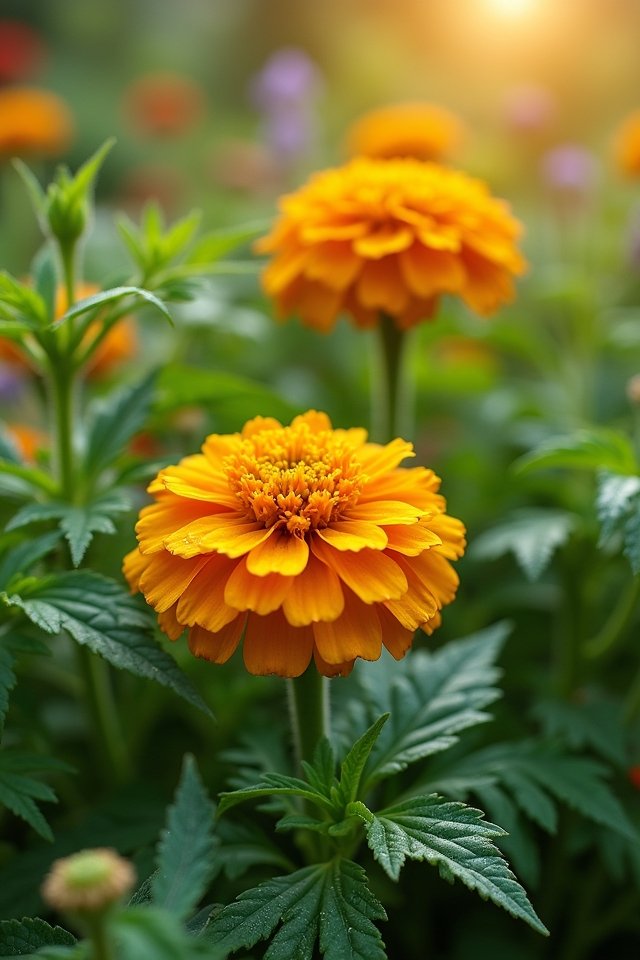
While you’re dreaming up your garden’s layout, don’t forget that some flowers are fantastic allies for your vegetables! These vibrant companions not only beautify your space but also help keep pesky critters at bay. Imagine a world where your lettuce and marigolds thrive in harmony!
- Bright marigolds repel aphids like a superhero warding off villains.
- Lush nasturtiums attract aphids away from your prize veggies, acting like a decoy.
- Fragrant basil can fend off those pesky flies, just by sharing its aroma.
Pairing flowers with vegetables isn’t just practical; it’s a clever dance of nature! Why not create a garden that’s both eye-catching and bug-repellent? Let those flowers protect your veggies while you enjoy the bounty!
Companion Planting for Improved Growth Rates
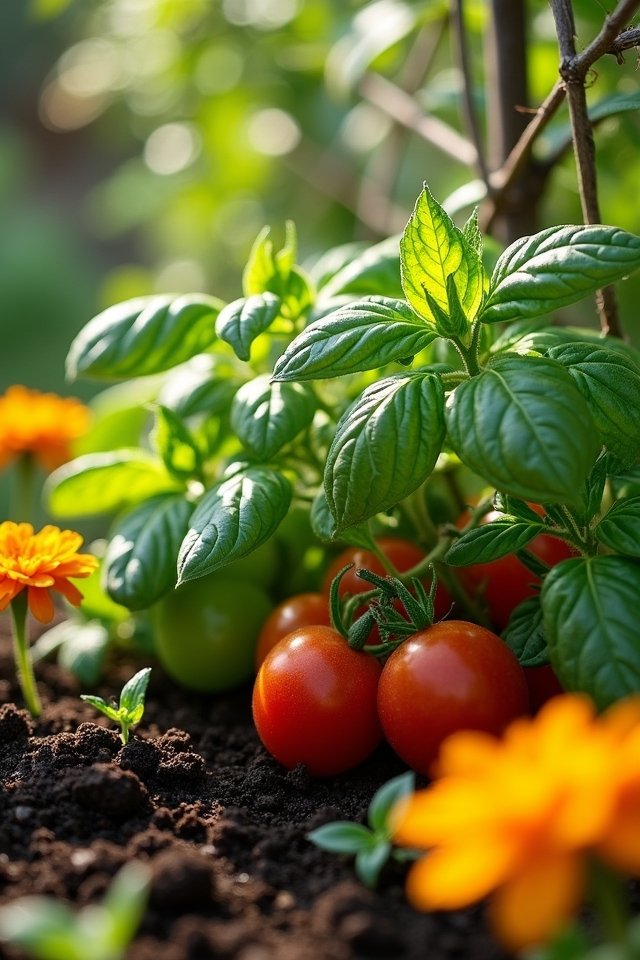
Companion planting is like pairing the perfect wine with a gourmet meal, and it can do wonders for your small space garden! Imagine planting basil alongside your tomatoes; they boost each other’s growth! It’s like a leafy duo on a rendezvous of flavor and vigor!
Or how about mixing beans with corn? Those beans fix nitrogen in the soil, feeding your corn like a gourmet feast! Your garden will be thriving in no time!
Don’t forget about marigolds; while they’re charming, they also help your nearby veggies grow faster. Who wouldn’t want a garden that flourishes with a little teamwork? Immerse yourself in companion planting and watch your small space bloom with excitement and delicious rewards! Ready for garden success? Let’s go!
Attracting Beneficial Insects With Colorful Blooms

If you want your small space garden to buzz with life, consider planting colorful blooms that attract beneficial insects! These tiny helpers not only pollinate but also control pesky pests. Imagine vibrant flowers bringing a delightful symphony of activity to your garden!
- Sunny Marigolds: Their bright orange and yellow petals act like beacons for buzzing bees and fluttering butterflies!
- Lavender: The sweet scent lures pollinators while keeping unwanted bugs at bay, like a fragrant shield.
- Echinacea (Coneflowers): With their striking purple spikes, they draw in ladybugs—nature’s tiny superheroes.
Embrace these charming companions, and watch your garden transform into a lively paradise full of color and energy! Who wouldn’t want that kind of magic?
Seasonal Companion Planting Strategies for Small Gardens
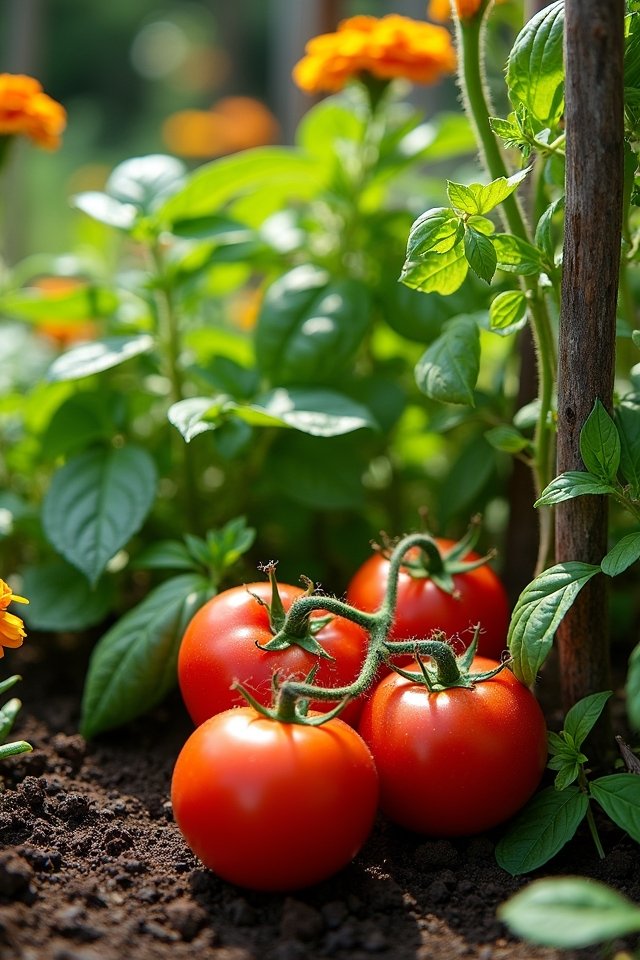
As you immerse yourself in seasonal companion planting, think of it as choreographing a beautiful ballet in your garden! In spring, pair bright marigolds with delicate lettuce; the marigolds fend off pesky pests while letting your greens stretch gracefully. As summer approaches, consider placing basil near tomatoes—it’s like giving your tomatoes a fragrant, leafy best friend! When autumn whispers in, introduce radishes alongside your hardy kale, as they help break up the soil, creating a perfect stage for the kale to flourish. By rotating these combinations, you’ll not only maximize space but also create a vibrant tapestry that dances through the seasons! Who knew revolutionizing your garden could be so much fun? Let your plants steal the spotlight!
Frequently Asked Questions
Can Companion Planting Benefit Indoor Small Space Gardens?
Imagine a tiny jungle where every plant plays nice! You’ll find companion planting turns your indoor garden into a symphony of flavors and scents. Pair basil with tomatoes, and enjoy irresistible pasta sauces, while marigolds chase away pesky bugs, almost like a superhero team! Mixing herbs and veggies not only saves space but boosts growth too! Isn’t it thrilling to know that your little haven can flourish like a big garden?
What Tools Help With Companion Planting in Limited Spaces?
When you’re diving into companion planting in tight spots, a few tools really sprout to life! A compact container garden makes planting easy—think window boxes or pots stacked like a fun party pyramid! A garden planner app can guide you, showing tips like pairing basil with tomatoes for flavor perfection. You’re gonna love a good pair of scissors too! They’re your sneaky sidekick for trimming and maintaining those plant friendships. Happy gardening!
Are There Any Companion Plants to Avoid Together?
You’ll want to steer clear of planting tomatoes and potatoes together. It’s like inviting your two clashing friends to the same party—chaos ensues! They compete for nutrients, leaving both plants crying for help. Similarly, avoid pairing carrots with dill; they just can’t get along. Instead of harmony, you’ll get a garden grumbling with stress. Who wants that in their patch of paradise? Keep your gardening friends happy, and your plants will thrive!
How Do I Know if My Plants Are Compatible?
To know if your plants are compatible, look for their sunlight and water needs, like two dance partners finding their rhythm! Keep an eye out for plants that repel pests or attract beneficial bugs. For instance, basil loves tomatoes—it’s like a delicious friendship on your plate! Avoid planting strong-smelling herbs next to delicate flowers; it’s like putting too much cologne on a beautiful bouquet! Trust your instincts, and soon enough, your garden will thrive!
What Soil Types Are Best for Companion Planting?
When it comes to soil types for companion planting, you want to hit the nail on the head! Well-draining, loamy soil enriched with organic matter works wonders. Think of it as the cozy bed your plants dream in! If you can, mix in compost or well-rotted manure to provide nutrients. And don’t forget about pH levels—aim for slightly acidic to neutral, around 6.0 to 7.0! Your plants will thank you with bountiful harvests!