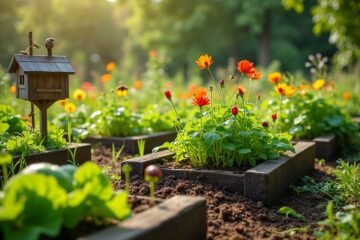
You’re in for a treat! Starting your patio vegetable garden is like opening a treasure chest of flavors. First, choose containers that suit your style—think stylish ceramic pots or breathable terracotta to keep roots cool! Pick veggies your taste buds crave, like juicy tomatoes or zesty bell peppers, and let them bask in at least six hours of sunshine daily. With nutrient-packed soil and a splash of water, your plants will thrive. Stay tuned for more tips on nurturing your garden!
Choosing the Right Containers
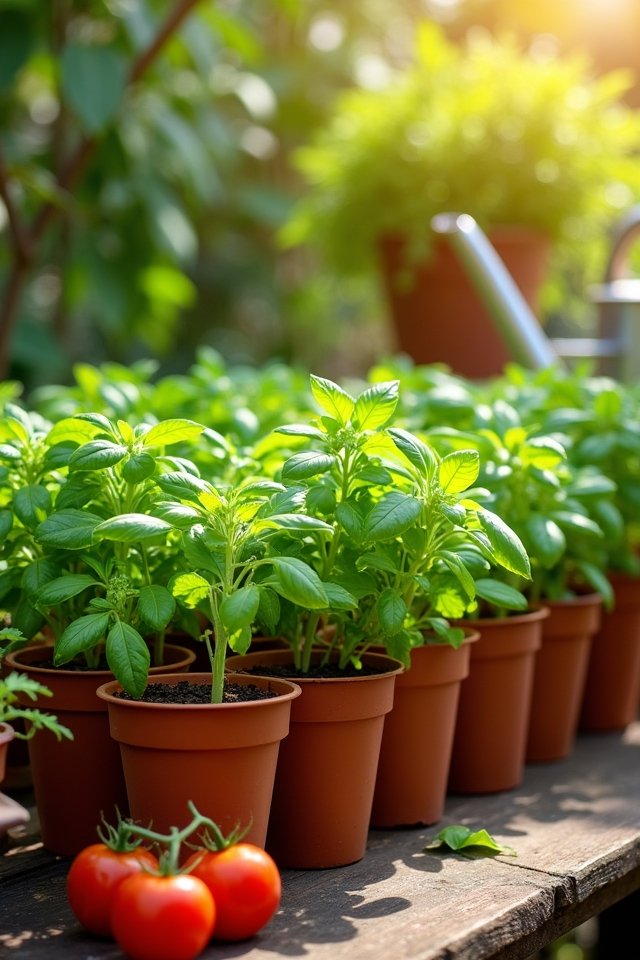
When it comes to choosing the right containers for your patio vegetable garden, think of them as the cozy homes your plants will thrive in! You’ve got options galore—ceramic, plastic, wood, and even fabric! Each container material has its perks, like how terracotta breathes, keeping roots cool.
Now, let’s chat about size considerations. Bigger isn’t always better, but your veggies need room to spread their roots. For instance, a 5-gallon bucket’s perfect for tomatoes, while herbs can cozy up in smaller pots!
Don’t forget drainage! A happy plant has well-drained soil. So, get creative and design your garden with style and function. Ready to make your plant dreams come true? Let’s dig in!
Selecting Suitable Vegetables
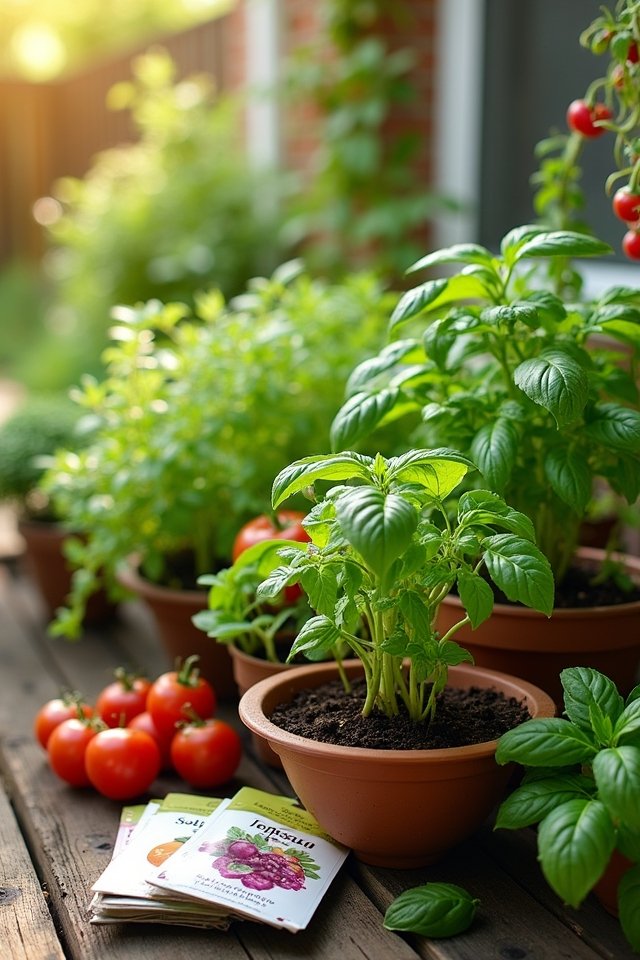
To kick off your vegetable selection adventure, think about what you truly love to munch on! If you can’t resist juicy tomatoes or crunchy bell peppers, you’ll want to make those your stars! Consider companion planting, too—pairing veggies like basil with tomatoes can boost flavor and keep pests at bay. Start with seasonal vegetables; rocket (arugula) and radishes are quick-growing delights that’ll have you snacking in no time! Picture a vibrant salad bursting with colors and flavors! And hey, don’t forget about herbs—like parsley or cilantro—to jazz things up! The joy of harvesting your favorites is simply unbeatable. So, gather your ideas, get creative, and let your patio bloom with delicious possibilities! What are you waiting for? Let’s get planting!
Understanding Sunlight Requirements
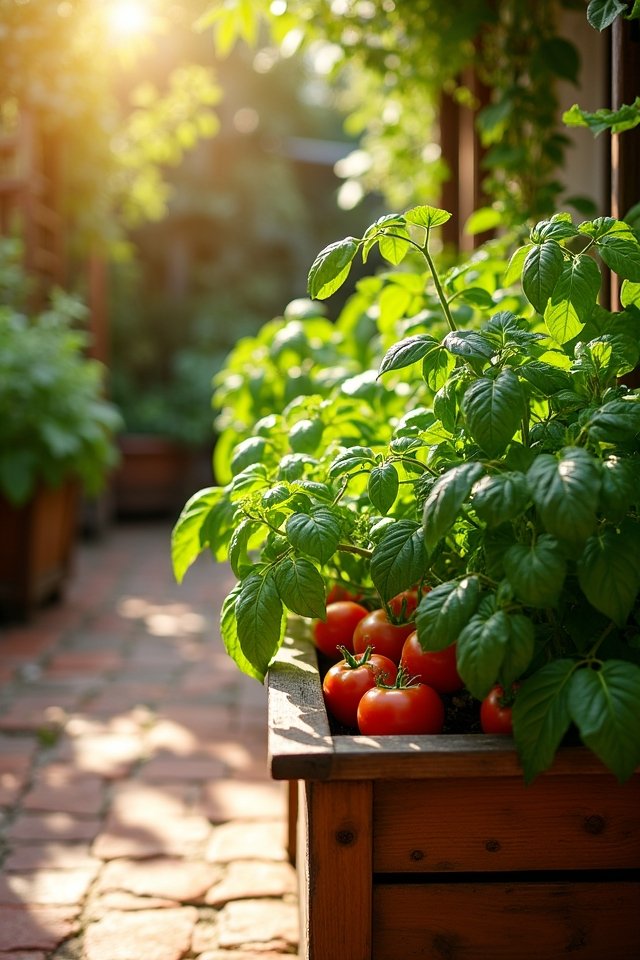
How much sunlight do your veggies really need? Well, that depends on what you’re growing! Most vegetables crave at least six hours of direct sunlight exposure daily. Think of your sun-loving tomatoes; they’ll thrive like kids at a playground in the summer! On the flip side, some veggies, like leafy greens, boast shade tolerance and can flourish with just four hours of sun. So, don’t fret if your patio isn’t a sun-drenched paradise! Try placing taller plants on the side to avoid casting shadows on their shorter companions. Experimenting with different spots can make your patio garden a delightful buffet of vibrant colors and fresh flavors! Remember, finding that perfect balance is your secret ingredient to success!
Preparing Quality Soil
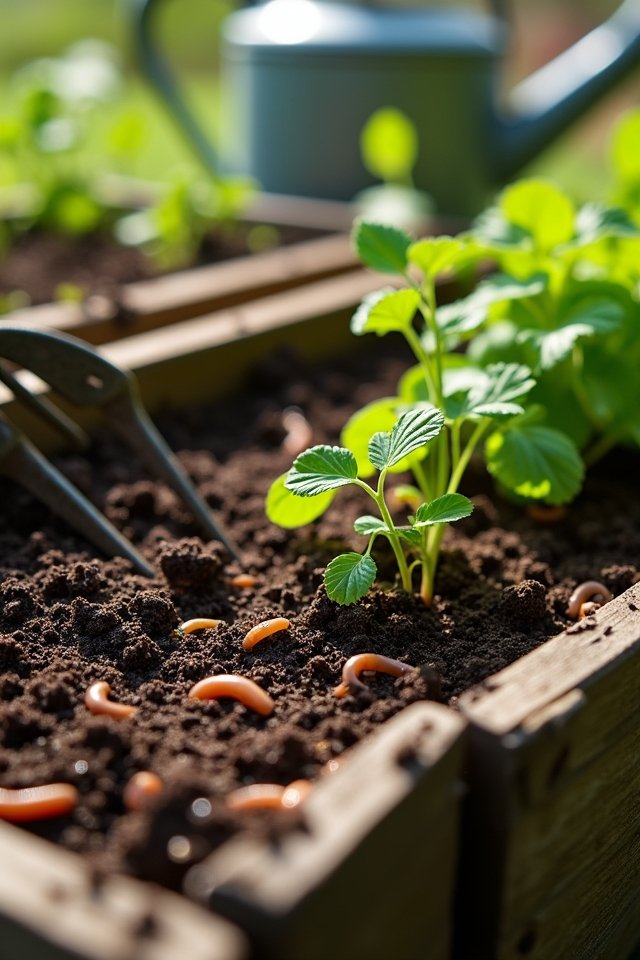
While you might think growing veggies is all about sunlight, the truth is, it starts with the soil! Quality soil is your veggie’s best friend. To prepare it right, consider these key steps:
- Add soil amendments like compost or well-rotted manure for nutrients.
- Mix in peat moss to boost moisture retention and aeration.
- Incorporate perlite or vermiculite for excellent drainage solutions that keep roots happy.
- Test the pH level to guarantee it’s just right—most veggies love a slightly acidic to neutral soil!
With these actions, you’re giving your plants a luxurious home to thrive in! So, roll up your sleeves and let’s dig into the goodness of high-quality soil! Your veggies will thank you with bountiful harvests!
Watering Techniques for Container Gardens
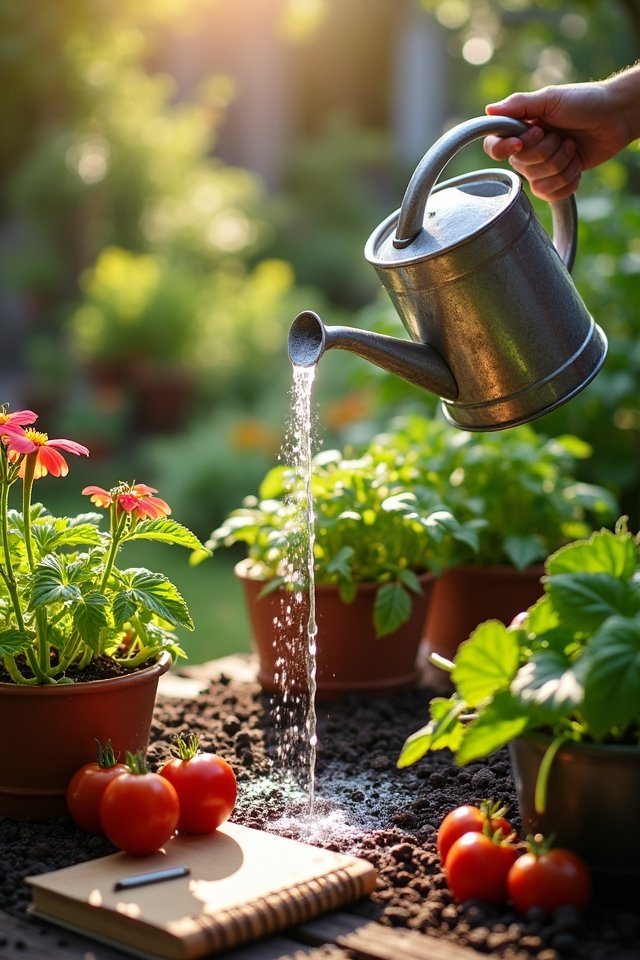
Even though you might think watering is as simple as turning on a hose, container gardens have their own special needs! Think of your plants as thirsty little Sponges—they crave consistent moisture. To keep them happy, consider using a drip irrigation system. This innovative method delivers water slowly and directly to the roots, ensuring they’re never parched.
Plus, you can enhance moisture retention by adding materials like coconut coir or water-retaining crystals to your potting mix. These clever tricks can help you avoid that dreaded “Oops, I overwatered!” moment. Remember, each plant has its own preferences, so keep an eye on them. Happy gardening! Keeping your greens hydrated is key to a flourishing patio vegetable garden!
Fertilizing Your Plants
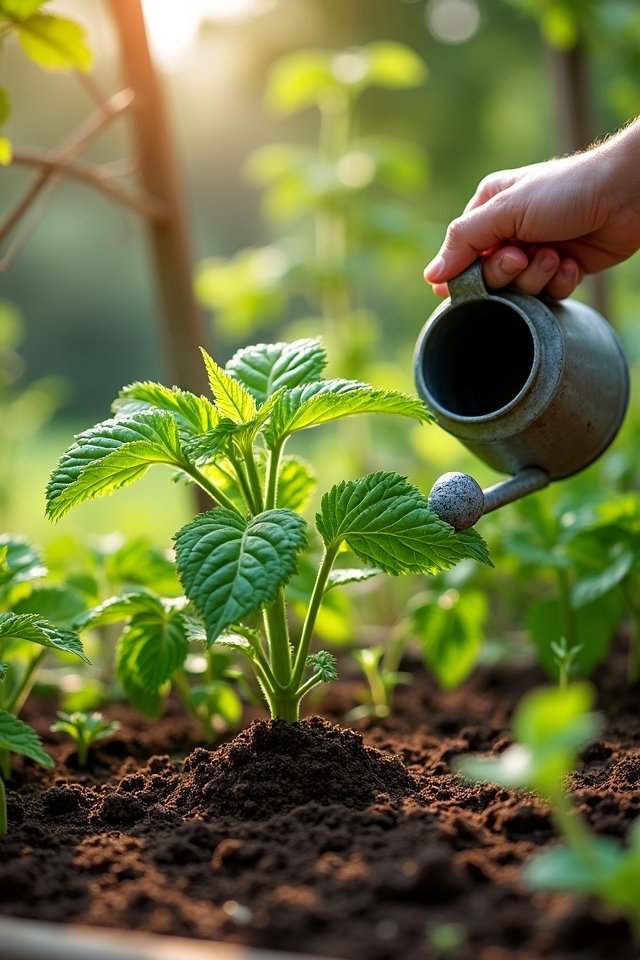
When you start feeding your plants, you’ll release a world of vibrant growth and delicious harvests! To achieve that nutrient balance your veggies crave, you can utilize organic fertilizers that are both eco-friendly and effective. Here’s how to get started:
- Compost: Turn kitchen scraps into black gold, enriching your soil with life!
- Bone Meal: Sprinkle this powerhouse for a phosphorus boost, promoting root development!
- Fish Emulsion: Delight your plants with this smelly secret weapon, packed with nutrients!
- Kelp Meal: Add a dash for trace minerals, giving your veggies a superfood treatment!
Pest and Disease Management
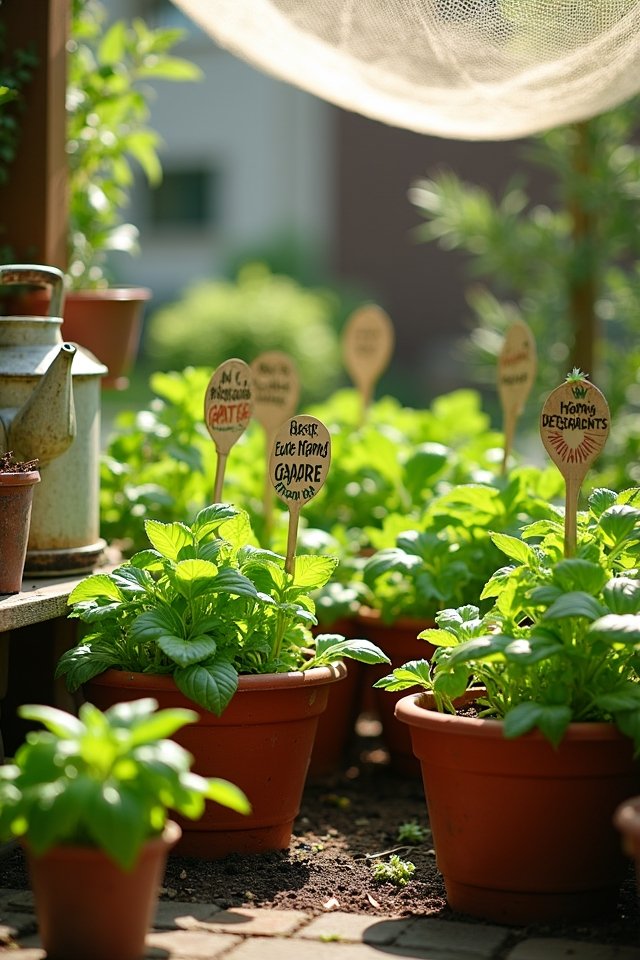
Managing pests and diseases in your patio vegetable garden can feel like a battle, but don’t worry—you’ve got this! Start with pest identification; knowing your enemy is half the war. Keep an eye out for those sneaky aphids or pesky caterpillars. Once you spot them, you can release your secret weapon: organic treatments! Think of neem oil as your garden’s superhero cape, swooping in to save the day. You can also try introducing ladybugs—nature’s tiny, munching allies. And don’t forget about companion planting; basil loves to keep those tomato thieves at bay! Remember, it’s all about balance. So, roll up your sleeves, accept the challenge, and let your garden flourish like a vibrant canvas of deliciousness!
Harvesting and Enjoying Your Produce
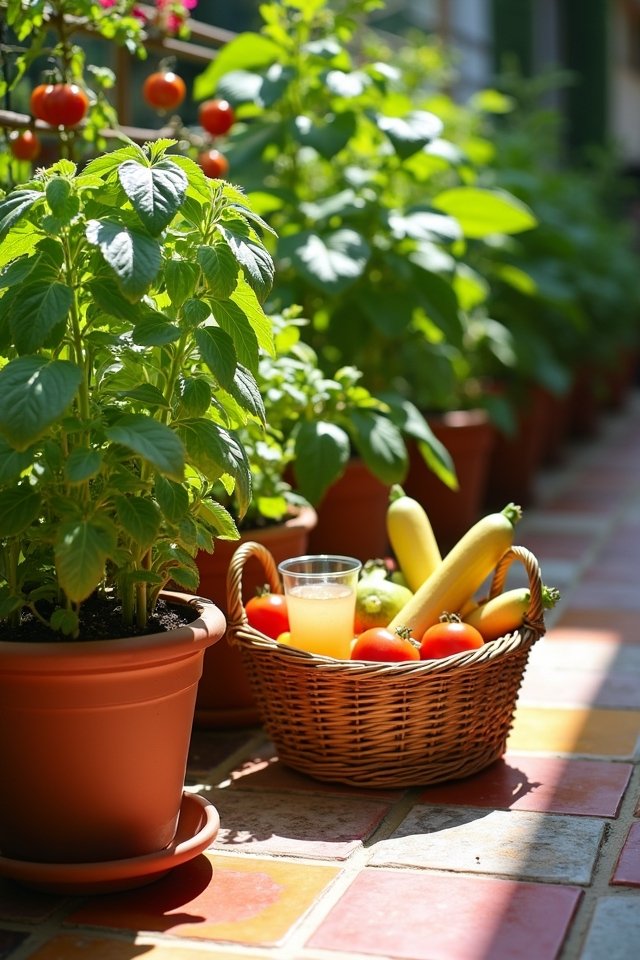
There’s nothing quite like the thrill of harvesting your own homegrown veggies! It’s a moment of triumph, and you can savor it with some clever cooking tips. Here’s how to enjoy your bounty:
- Pick at Peak: Know your harvest timing—like tomatoes when they’re deep red and firm.
- Fresh Salads: Toss your crisp greens with a zesty vinaigrette for a revitalizing dish.
- Sautéed Sensations: Quickly sauté zucchini with garlic for a vibrant side that pops!
- Freezing for Future: Blanch and freeze excess veggies to enjoy later, like storing sunshine in your freezer!
Frequently Asked Questions
Can I Start a Patio Vegetable Garden in the Winter?
They say, “When life gives you lemons, plant ’em!” Yes, you can definitely start a patio vegetable garden in winter! Choose sturdy containers like ceramic or insulated ones to keep your plants cozy. Try growing hardy greens like kale or spinach that thrive in the chilly air. Imagine fresh salads right from your patio! Just be ready to give them extra love, like a warm blanket on a frosty night! Ready to dig in?
How Can I Attract Beneficial Insects to My Patio Garden?
Attracting beneficial insects to your patio garden can be as easy as pie! Plant pollinator plants like lavender and sunflowers—they’re like magnets for bees and butterflies! Plus, consider adding an insect hotel; it’s like a cozy Airbnb for ladybugs and lacewings! Keep your garden vibrant and buzzing with life by mixing colors and scents. Who wouldn’t want a lively garden party? With these tips, you’ll have nature’s helpers flocking to your space!
What Are the Best Companion Plants for Patio Vegetables?
Imagine your patio bursting with life, like a vibrant painter’s palette! For best companion plants, think herb companions like basil and parsley; they not only enhance flavors but also deter pesky insects. Marigolds are pests’ worst nightmares, protecting your veggies while adding a splash of color. Ever tried planting garlic among your tomatoes? It’s a natural pest deterrent! Pairing these plants creates a harmonious garden, where every leaf and petal plays a role in your success!
Can I Reuse Soil From Last Year’s Garden?
Absolutely, you can reuse soil from last year’s garden! Just think of it as giving your soil a spa day! Use soil sterilization methods, like solarization or boiling water, to zap any pesky pests. Then, sprinkle in nutrient replenishment techniques, such as compost or worm castings, to wake it back up! Your veggies will appreciate the rich, revitalized mix! So, ready to give that soil a fresh start? Let’s dig in!
How Do I Extend the Growing Season on My Patio?
Why let frost steal your veggies’ glory? To extend your growing season on the patio, adopt season extension techniques! Use row covers or mini greenhouses to create a cozy climate. You could also plant cold-hardy crops like kale and spinach, which thrive in cooler temps. Consider using pots that retain heat, too! With a little creativity, your patio can be a year-round veggie wonderland. Who knew growing could be so much fun?