To keep your hydroponic garden thriving, start by regularly checking your pH levels—you want them between 5.5 and 6.5 for happy plants! Next, inspect your nutrient solution concentration; too strong is a nasty burn, while too weak leaves your plants starving. Don’t overlook water temperature; keep it cozy between 65°F and 75°F. Also, evaluate your light conditions, circulate air well, and promptly identify any pests. Curious about other tips? There’s more to uncover!
Check Your Ph Levels Regularly

When it comes to hydroponics, checking your pH levels is like being the captain of your own ship—without the right course, you could end up lost at sea! You wouldn’t want your plants to suffer from pH fluctuations that could stunt their growth, right? Regular pH testing is your trusty compass, guiding you to a thriving garden. Aim for a pH between 5.5 and 6.5 for ideal nutrient absorption. Imagine the vibrant colors of healthy plants sprouting before your eyes! So, grab that testing kit and plunge in. It’s quick and easy! Just a few drops, and you’ll be steering your hydroponic system towards success. Keep those levels in check, and watch your green dreams flourish!
Inspect Nutrient Solution Concentration
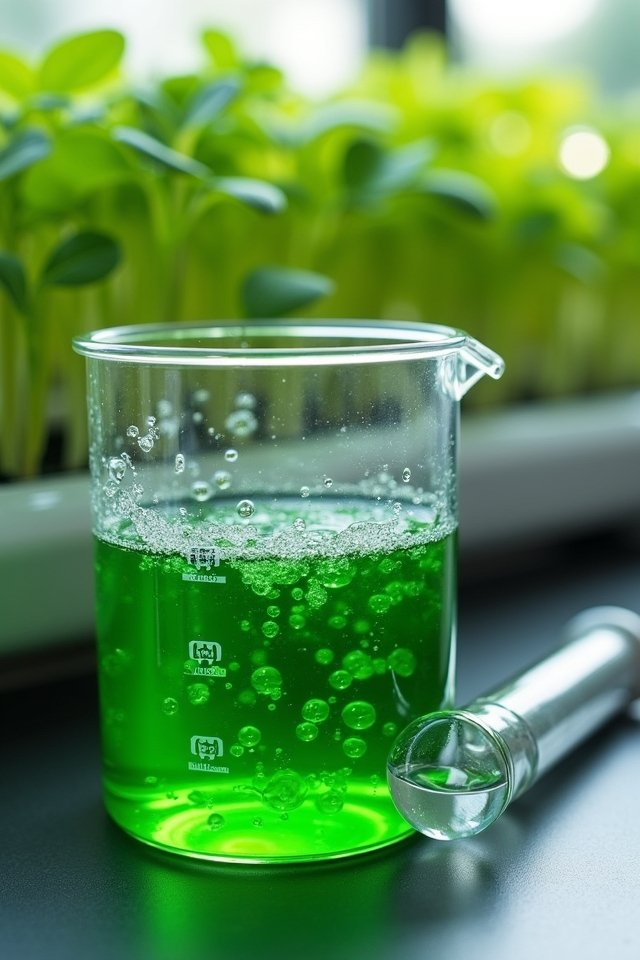
Just as a chef wouldn’t toss ingredients into a pot without measuring, you shouldn’t overlook the concentration of your nutrient solution! A perfect blend keeps your plants thriving, while nutrient imbalances can lead to sad, droopy leaves. So, grab that refractometer and check those numbers!
Remember, the right concentration is essential, just like seasoning in a gourmet dish. If it’s too strong, your plants might suffer from nutrient burn—yikes! And if it’s too weak, they’ll be begging for more like a hungry toddler.
Also, keep an eye on solution temperature; it affects nutrient uptake like a warm hug on a cold day! So, measure, adjust, and watch your hydroponic garden flourish! Happy growing!
Monitor Water Temperature
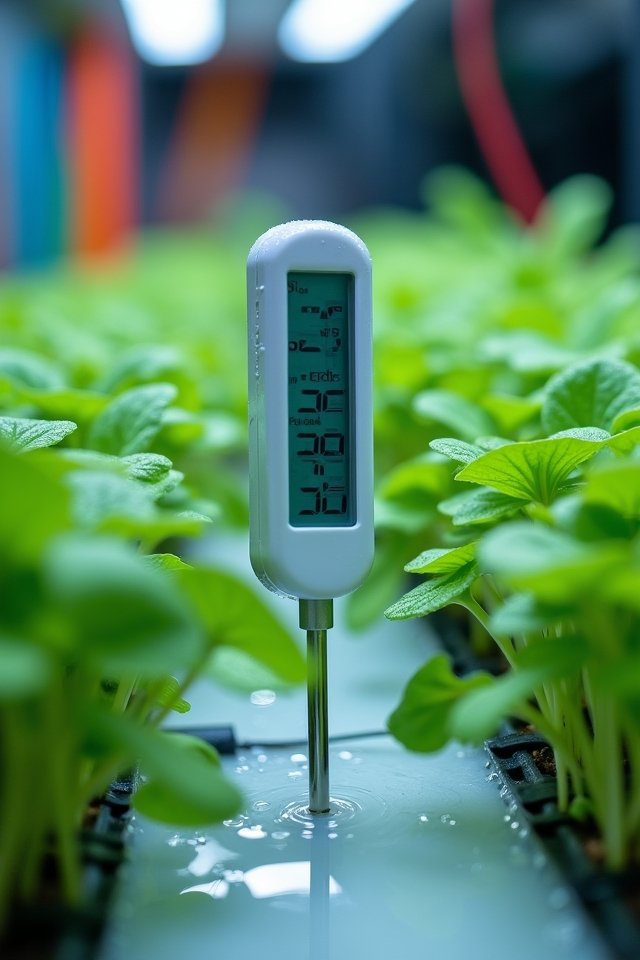
Keeping an eye on your water temperature is essential for your plants’ happiness—just like a cozy blanket on a chilly night! The perfect water temperature for most hydroponic plants lies between 65°F and 75°F. If it dips too low or spikes too high, your plants might get stressed, leading to poor growth or even root rot! Imagine your favorite plant shivering in icy water—yikes! You can easily monitor this with a simple thermometer. If temperatures rise, consider adding a chiller or adjusting your setup. On the flip side, if it’s too cold, a heater can work wonders! Remember, keeping your water temperature in those ideal ranges can mean the difference between a thriving garden and a struggling one!
Evaluate Light Conditions
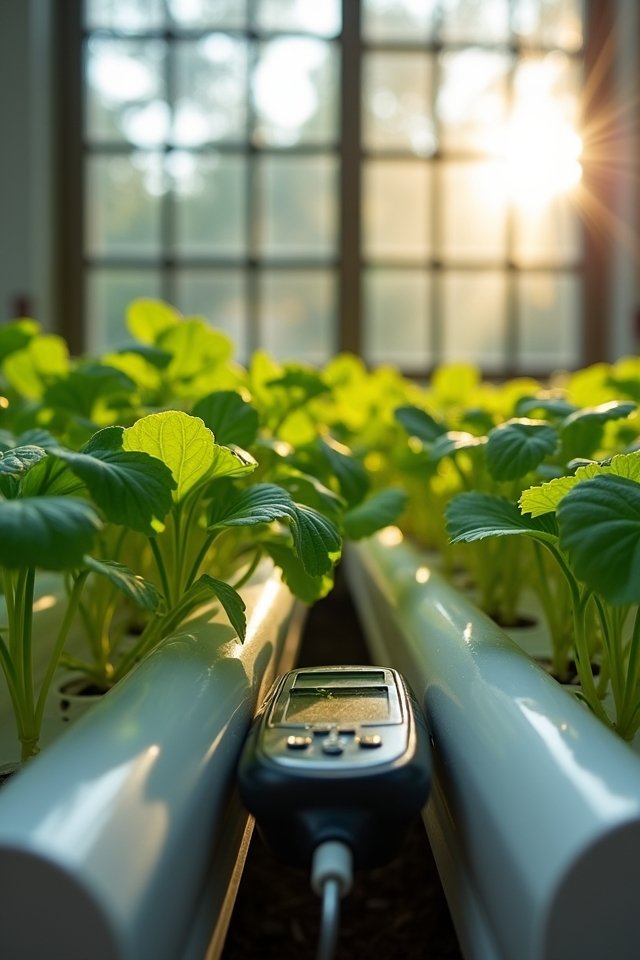
Have you ever wondered if your plants are basking in the right amount of light? Evaluating light conditions is vital for thriving hydroponics! You need to take into account both light intensity and light spectrum to guarantee your green friends are happy and growing. Here are some tips to help you out:
- Check if your plants are stretching for light—this means they’re not getting enough!
- Use a light meter to measure intensity—too high or too low can be a problem.
- Verify you’re using the right spectrum for your plants—think reds and blues!
- Adjust the distance of your lights—too close can burn them, while too far can stunt growth!
- Monitor light duration—most plants thrive with 12-16 hours of light daily!
Light matters; don’t let your plants go on a dim adventure!
Assess Air Circulation and Humidity

While you might think your plants are just lounging around, they actually need good air circulation and the right humidity to thrive! Imagine your plants enjoying a revitalizing breeze, just like you do on a sunny day. That’s where airflow optimization comes in! Make sure fans are strategically placed to promote gentle air movement, preventing stagnant pockets that can suffocate your leafy friends.
Now, let’s talk humidity control! Keep it balanced—too dry and your plants might wilt, too high and you could invite unwanted mold. Aim for 40-60% relative humidity. You can use hygrometers to monitor levels. So, check your setup! With the right airflow and humidity, you’ll create a vibrant, healthy environment, and your plants will reward you with lush growth!
Identify Pests and Diseases Promptly
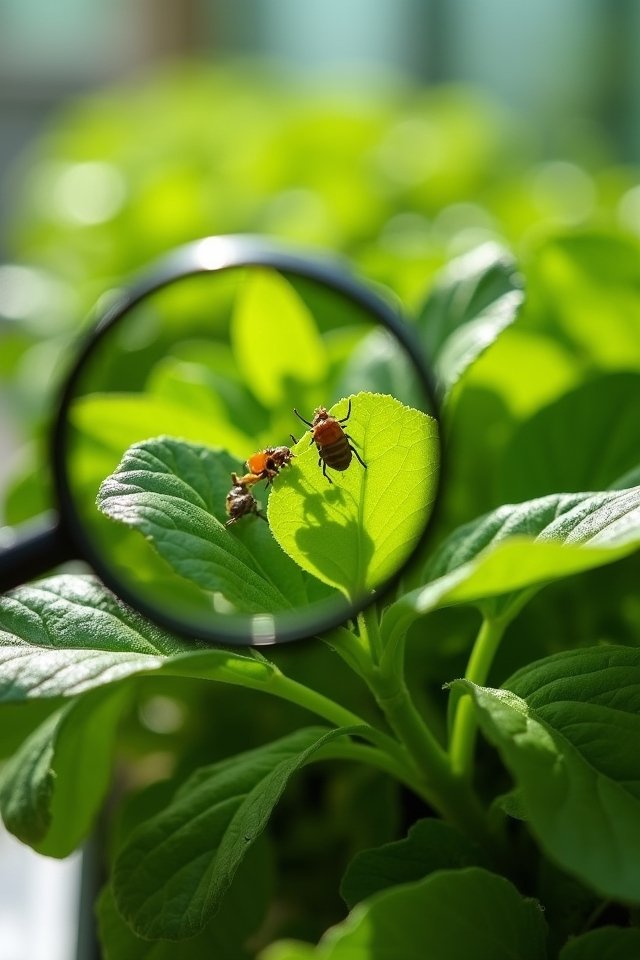
Good air circulation and humidity set the stage, but don’t forget to keep an eye out for sneaky pests and nasty diseases! Prompt pest identification and disease management are vital for thriving plants. You wouldn’t want a tiny bug party crashing your hydroponic garden, right? Here are some signs to watch out for:
- Discolored leaves: Yellow or brown patches can signal trouble.
- Webbing: Spider mites love to weave their homes on your plants!
- Sticky residue: Aphids leave a sugary mess—yuck!
- Wilting: Sudden droopiness might hint at root rot or disease.
- Fungal growth: White, powdery spots aren’t a good look for your greens!
Stay vigilant, and your plants will thank you with vibrant growth!
Review System Components for Malfunctions
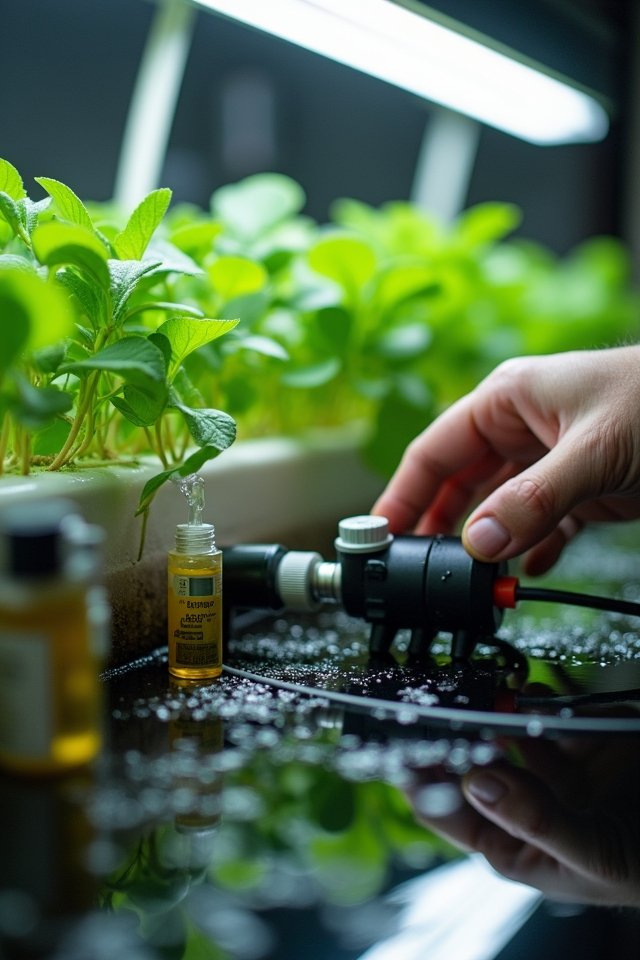
Before diving into your hydroponic haven, it’s essential to check that all system components are in tip-top shape! Start by inspecting your pump; pump failure can derail your entire setup faster than you can say “drowning plants!” Next, take a close look at your reservoir. Are there any suspicious drips? Reservoir leaks can sneak up on you, turning your lush oasis into a soggy mess. Check hoses and connections—those little guys can be tricky! Remember, even the tiniest crack can lead to big problems. Tighten any loose fittings and replace worn-out parts. You want your system to run like a well-oiled machine, right? After all, a happy hydroponic garden means you’ll be harvesting delicious veggies in no time!
Frequently Asked Questions
How Often Should I Change My Nutrient Solution?
You should change your nutrient solution every two weeks to keep your plants thriving! Think of it like a invigorating smoothie— your plants need that perfect nutrient concentration and ideal solution temperature to really flourish. If your solution looks murky or smells funky, it’s definitely time for a change! Why let your plants sip on stale nutrients? Keep things fresh, vibrant, and oh-so-delicious for your green friends! Happy growing!
Can I Use Tap Water in My Hydroponic System?
Imagine your friend, Alex, using tap water in their hydroponic system. At first, things seemed fine, but soon, they noticed odd algae growth due to poor water quality. You definitely can use tap water, but it’s essential to check for chlorine or heavy metals! A good filter can help, making your plants happier and healthier. So, before you plunge in, test that tap water, and keep your green friends thriving!
What Type of Plants Grow Best in Hydroponics?
If you’re diving into hydroponics, you’ll love how herb varieties like basil and mint thrive in this system! Imagine snipping fresh basil for your pasta—yum! For vegetable selection, consider crisp lettuce or juicy tomatoes; they flourish like stars in your indoor garden. Just picture vibrant greens bursting with flavor. With hydroponics, you’re not just growing plants; you’re cultivating a delicious, fresh experience right at home! Why not give it a try?
How Do I Prevent Algae Growth in My System?
Imagine your hydroponic garden as a beautiful symphony, where algae are the off-key notes ruining the melody. To prevent algae growth, focus on algae control and nutrient balance! Keep your nutrient solution at the right levels, and don’t let it sit stagnant—think of it as a dance that needs movement! Cover your reservoirs with opaque materials to block light, and keep things clean. Your plants will thank you with lush, vibrant growth!
What Is the Best Hydroponic System for Beginners?
If you’re diving into hydroponic basics, the Kratky method’s a fantastic choice for beginners! It’s simple, requires minimal equipment, and gets you growing fast. Imagine fresh basil or crunchy lettuce sprouting in your kitchen! Just set up a container with nutrient-rich water and watch your plants thrive. Beginner tips? Start small and don’t stress about perfection. You’ll be amazed at how quickly you’ll become a green-thumbed guru! Ready to get your hands dirty?