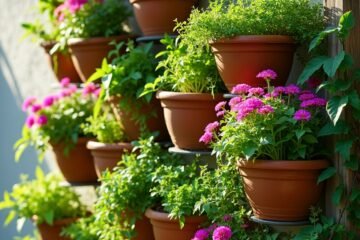
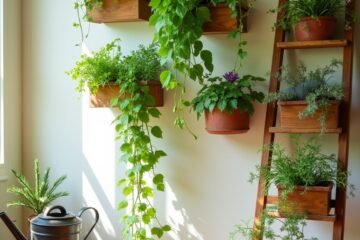
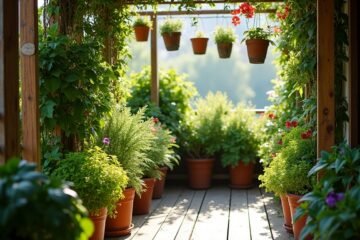
Want to transform your small space into a vibrant veggie haven? Start by choosing pocket planters for herbs, or hang repurposed wooden pallets for colorful tomatoes and dwarf kale! Don’t forget trellises for climbing vegetables – they’re the superheroes of vertical gardening! Consider stacking crates for a quirky, charming look. Need more sunshine? Reflective materials work like magic! Your garden can be a delightful jungle, bursting with life! Curious about more tips and tricks? Let’s explore further!
Choosing the Right Vertical Gardening Structure
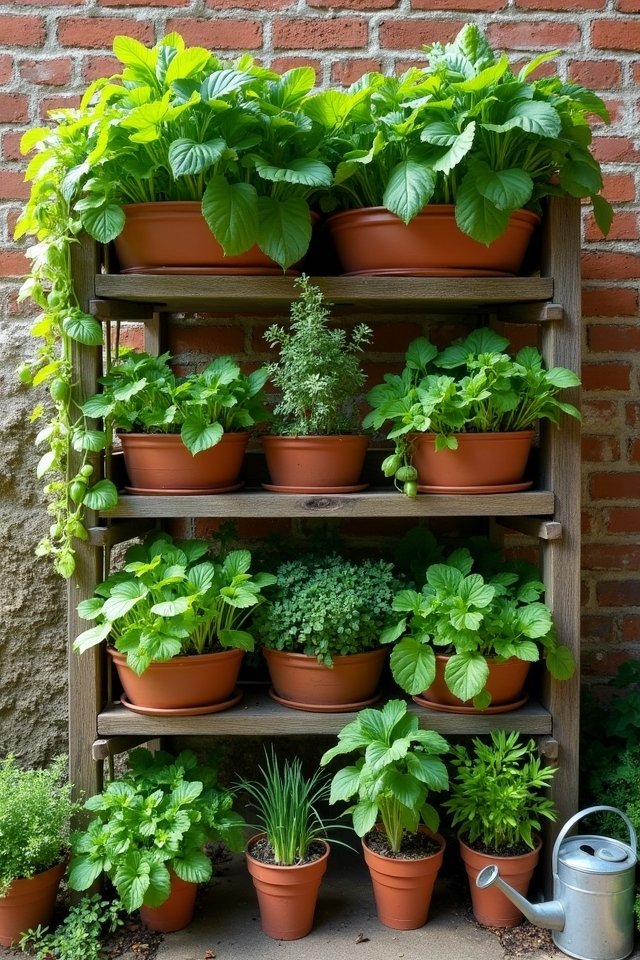
When it comes to choosing the right vertical gardening structure, there are three key options you might want to contemplate! First up, you’ve got pocket planters—think of them as the multi-pocketed jackets for your plants! They boast lightweight frame materials that keep your plants cozy and chic. Next, consider trellises; they provide essential structural stability, letting climbing veggies reach for the sky like they’re auditioning for a plant talent show! Finally, vertical pallets are a quirky choice, transforming salvaged wood into a rustic wonderland that’s both eco-friendly and practical. Whichever option you choose, just remember: a sturdy frame isn’t just a luxury—it’s a must! So, ready to grow upwards while keeping things lively and green? Let’s dig in!
Selecting Space-Efficient Vegetable Varieties
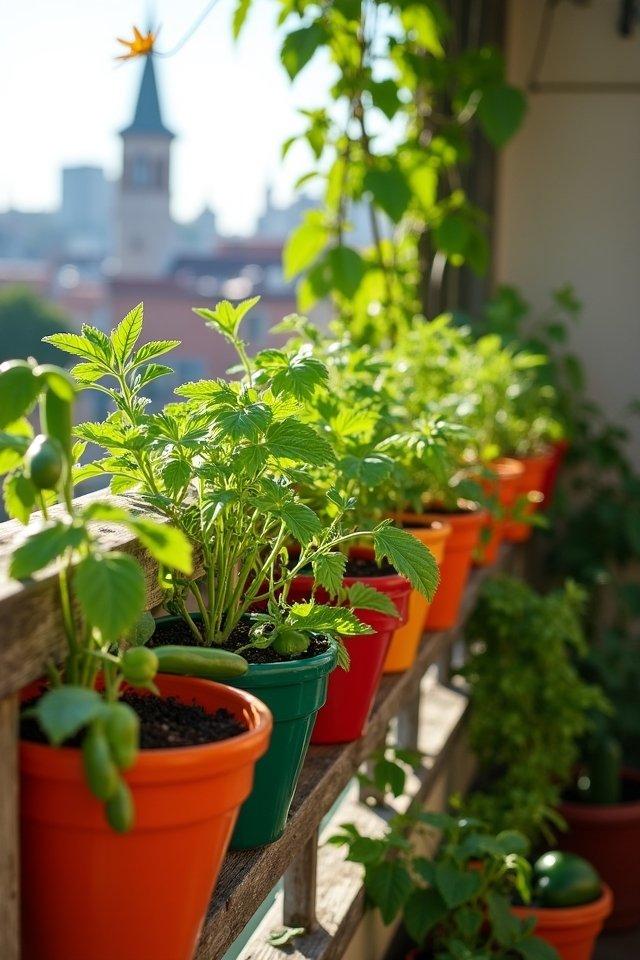
Selecting space-efficient vegetable varieties is like picking the perfect puzzle pieces for your garden masterpiece! You want veggies that not only taste great but also fit snugly into your vertical space. Check out these compact plants and heirloom varieties that’ll maximize your crop yield:
- Patio Tomatoes: Perfect for small spaces, they’re sweet and juicy!
- Dwarf Kale: Nutrient-packed and wonderfully vibrant, it’s a real superstar.
- Miniature Bell Peppers: Colorful and crunchy, these add a big punch in flavor!
- Heirloom Squash: With compact forms, they offer unique tastes that make your dishes special.
- Bush Beans: They’re vertically versatile and easy to harvest!
Maximizing Light With Vertical Gardens
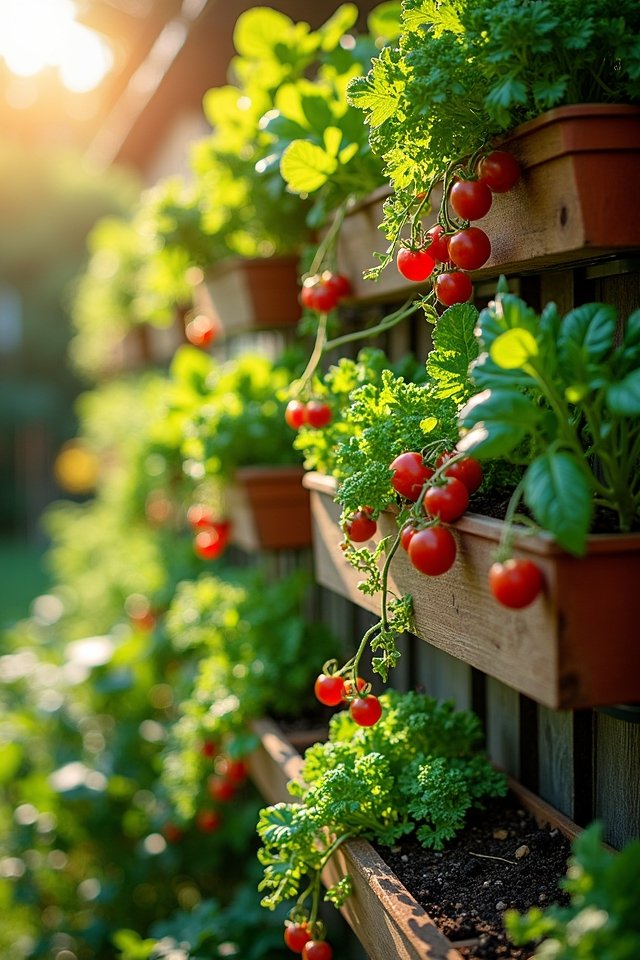
Got your small veggie varieties in place? Great! Now, let’s talk light exposure. Position your vertical garden to bask in sunshine, maximizing every bright ray. Remember, plants like cherry tomatoes and snap peas love that light! But what about those shady corners? Don’t fret! Many hearty greens, such as kale and lettuce, thrive on shade tolerance. Think of your vertical garden as a stage; each plant thrives in its own spotlight. Use reflective materials, like white or metallic surfaces, to bounce light around, ensuring even those back-row veggies get their fair share. With a little creativity, you can create a lush, thriving oasis, whether it’s sun-drenched or slightly shadier. Time to reap the benefits! Happy gardening!
Creative Container Ideas for Vertical Gardening
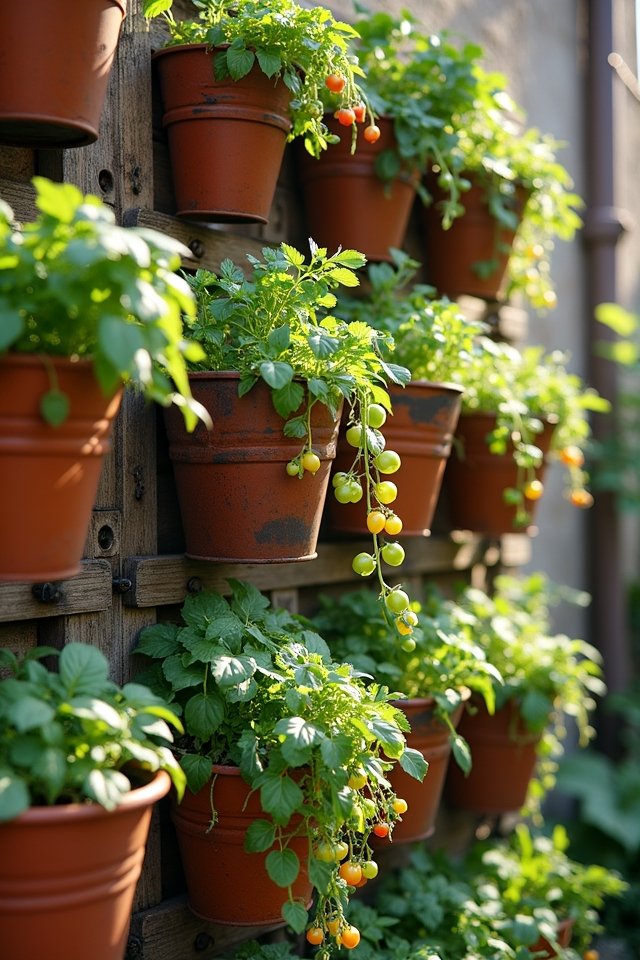
Imagine standing in a vibrant garden, where herbs and veggies reach for the sky! You can get creative with your vertical gardening using innovative containers. Think outside the box—literally! Check out these fun ideas:
- Hanging planters made from old buckets: Perfect for herbs like basil or mint!
- Repurposed wooden pallets: A rustic charm brings life to your tomatoes and peppers.
- Old shoe organizers: Fill those pockets with strawberries or radishes for a quirky twist!
- Plastic bottles: Cut and hang them to create modern, eco-friendly garden spots.
- Stacked crates: Arrange them for a playful garden tower!
These recycled materials don’t just save money; they spark joy in your gardening journey! Let your creativity flourish!
Utilizing Wall Space for Climbing Vegetables
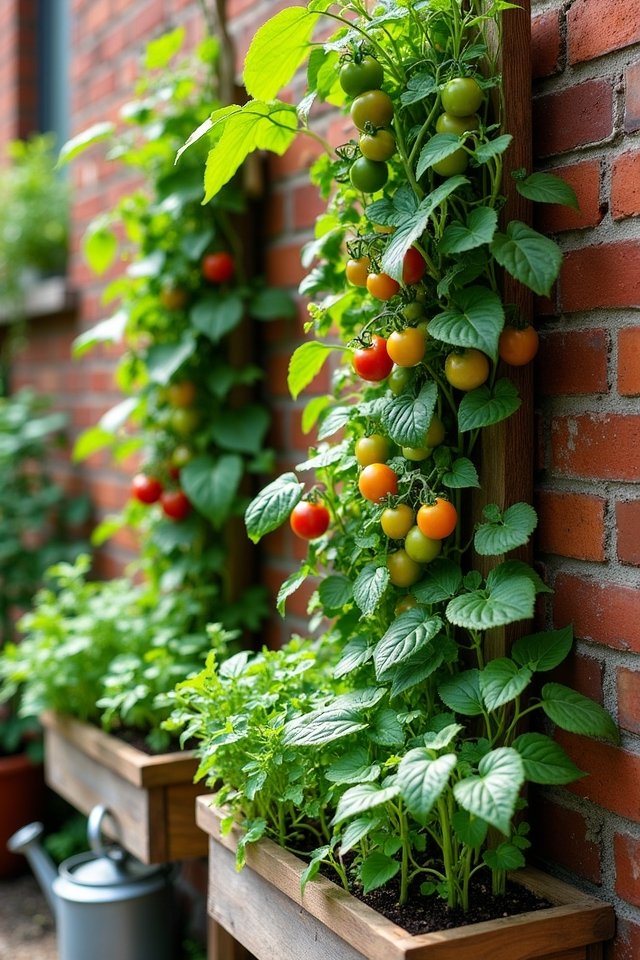
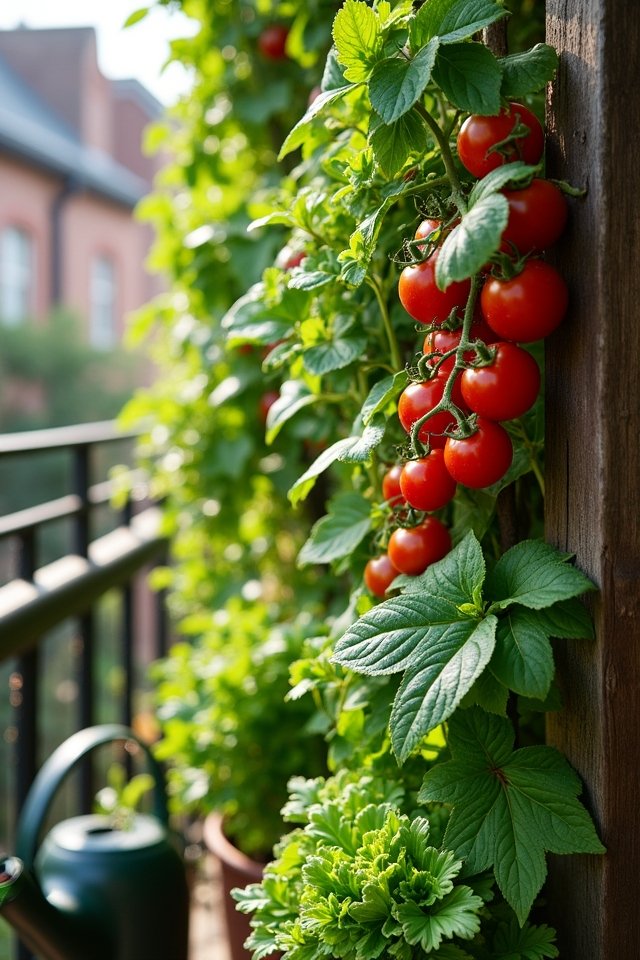
When it comes to maximizing your garden space, utilizing wall space for climbing vegetables is a game-changer! Picture vibrant green beans or cascading cherry tomatoes thriving on a sunny wall! With climbing supports such as trellises and vertical grids, you can elevate your gardening game. Imagine wall-mounted planters brimming with herbs like basil and mint, right at your fingertips. These innovative solutions not only save floor space but also create a stunning vertical palette. Why not lean your wall into a garden masterpiece? With a touch of creativity, your once-bare walls can burst with life! So, dust off those climbing veggies, grab your climbing support, and let your walls tell a fresh, delicious story! Happy gardening!
Incorporating Vertical Tiers or Shelves
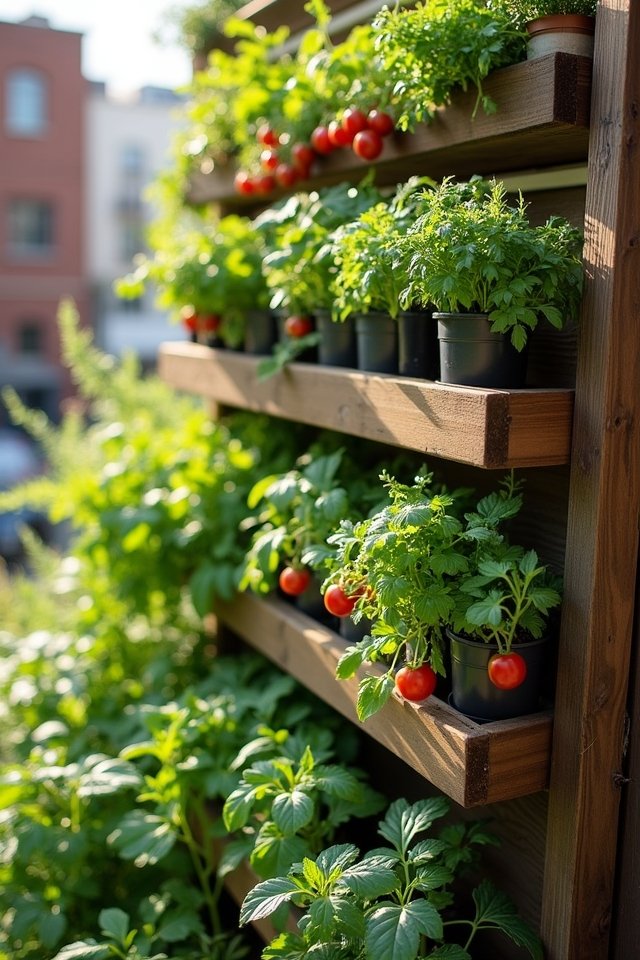
Ready to take your vertical gardening to the next level? Incorporating vertical tiers or shelves is a game-changer! These innovative structures maximize your space while adding flair. Here’s how to create a stunning vertical garden:
- Choose strategic shelf placement for ideal sunlight
- Experiment with different tier heights for visual interest
- Use lightweight containers to reduce strain on shelves
- Combine veggies and flowers for a colorful display
- Include drip trays to catch excess water!
Picture your fresh basil, tomatoes, and vibrant greens cascading down the shelves! By varying tier height, you create depth and excitement. So, grab your tools and let your vertical garden take off—who knew gardening could be such a blast? Let’s elevate your space together!
Vertical Hydroponics for Small Veggies
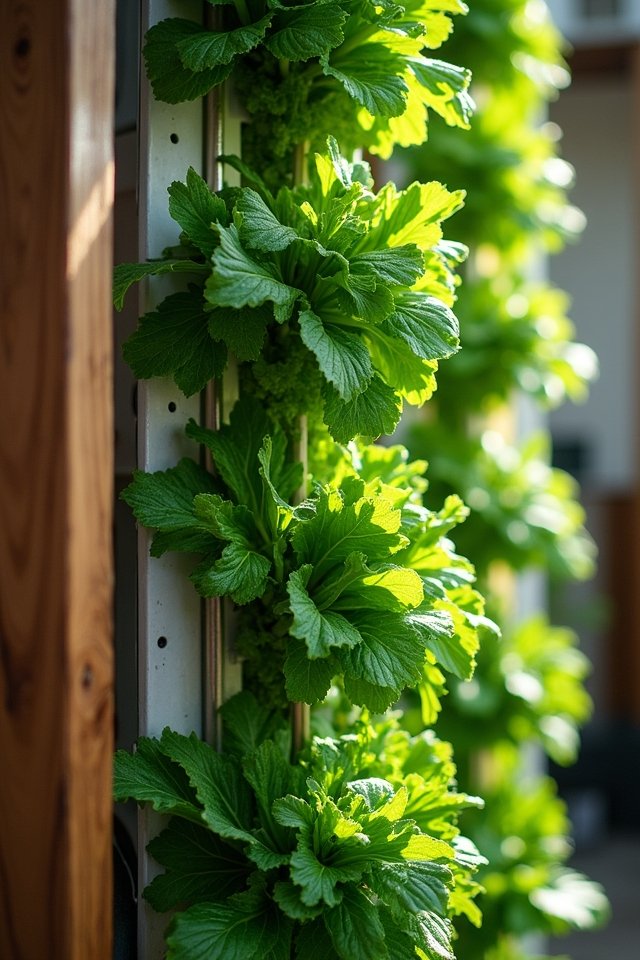
If you’re looking for a way to grow delicious veggies without taking up much room, vertical hydroponics might just be your new best friend! Imagine lush, vibrant greens like basil and lettuce thriving in a compact space, all thanks to innovative hydroponic systems. These systems use nutrient solutions to nourish your plants, ensuring they get everything they need to flourish. It’s like giving them a gourmet meal tailored just for veggies! You can stack your plants vertically, maximizing sunlight exposure and keeping pests at bay. Plus, you’ll save water—how cool is that? With the right setup, you can create a mini garden that’s both functional and stunning! Ready to welcome hydroponic magic? Let’s get growing!
Maintenance Tips for Vertical Vegetable Gardens
Even the most beautiful vertical vegetable gardens can start to look a little ragged if not properly cared for! To keep your plants thriving, follow these innovative maintenance tips:
- Regularly check and enhance soil health with compost or organic fertilizers.
- Implement smart watering techniques, using drip irrigation to prevent water waste.
- Prune and trim plants regularly, encouraging healthy growth while preventing overcrowding.
- Watch for pests and diseases; act quickly to protect your garden’s beauty.
- Rotate crops each season for nutrient diversity and improved soil health!
Frequently Asked Questions
How Much Water Do Vertical Gardens Need Compared to Traditional Gardens?
Did you know that vertical gardens can use up to 50% less water than traditional gardens? With efficient vertical watering systems, you’ll quench your plants’ thirst with delightful ease! Instead of letting water dribble away, you can create a whimsical waterfall effect that nourishes each layer. Imagine cascading greens thriving with less effort! Plus, those beauties can flourish in tighter spaces, proving that innovation can make even your plants dance! How cool is that?
Can I Use Recycled Materials for My Vertical Gardening Setup?
Absolutely, you can! Recycled containers are perfect for vertical gardening, turning trash into treasure. Imagine stacking old pallets or using tin cans — they’re not just functional; they’re stylish! You could even hang used bottles for a quirky herb garden. It’s eco-friendly and showcases your creativity! Plus, it gives your plants a unique flair. So, grab those leftovers, and transform your vertical space into a green haven! Your garden will thank you!
What Pests Are Common in Vertical Vegetable Gardens?
When it comes to vertical veggie gardens, you’ve gotta stay on your toes! Common pests like aphids, whiteflies, and spider mites can uninvitingly invite themselves to your harvest party. For effective pest management, consider organic solutions like neem oil or insecticidal soap—nature’s little bouncers! Regularly inspect your plants, catching them before they get out of hand. After all, you want your veggies thriving, not dining on uninvited guests! Happy gardening!
How Do I Prevent Soil Erosion in Vertical Planters?
To prevent soil erosion in your vertical planters, you’re gonna want to focus on soil retention and effective drainage solutions. Try layering coarse gravel at the base—like a cozy, sturdy blanket for roots! Add organic mulch up top to lock moisture in place, making your plants feel right at home. And remember, regular watering is essential; think of it as giving your plants a revitalizing drink at their favorite café! Happy gardening!
Is Vertical Gardening Suitable for All Climates?
So, is vertical gardening suitable for all climates? Well, picture tomatoes climbing to the sky like acrobats! Sure, vertical gardening shines in many places, but climate adaptability matters. In scorching heat, consider shade cloth! In chillier regions, seasonal considerations are crucial—using frost covers can work wonders. It’s like giving your plants a cozy sweater! Overall, with creativity and care, you can make vertical gardening flourish, no matter where you’re planting!